The Cowley’s experience

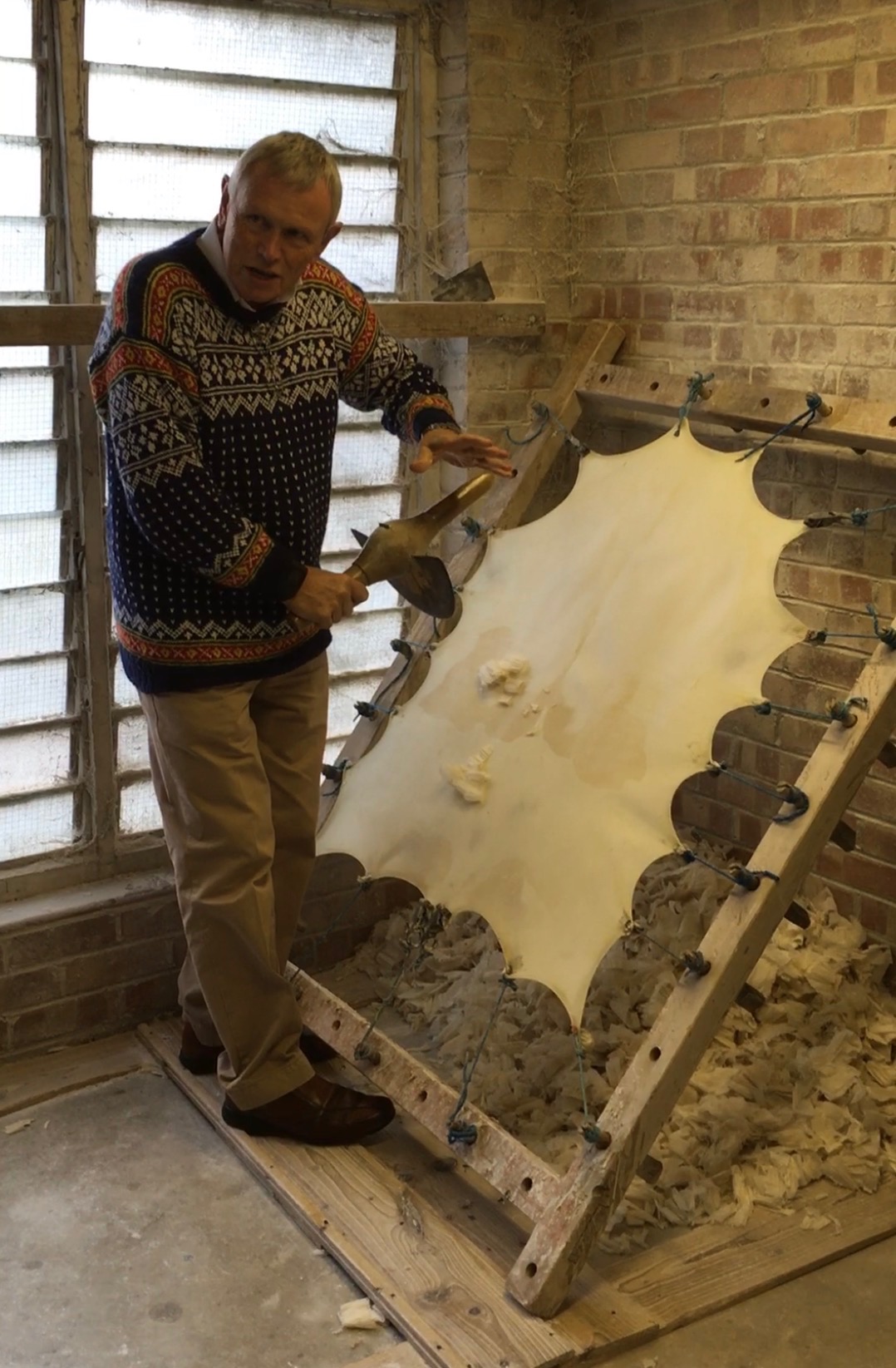
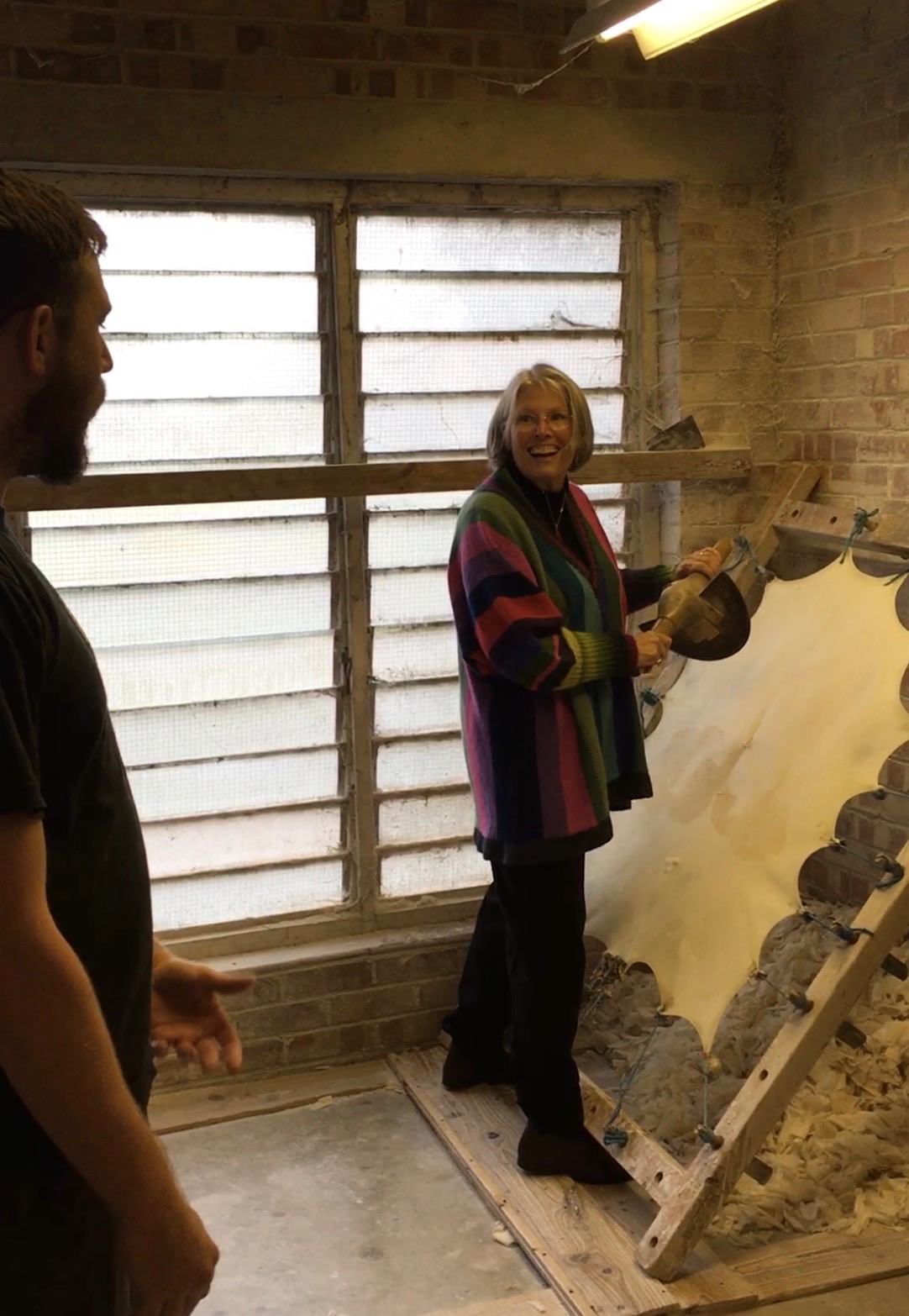
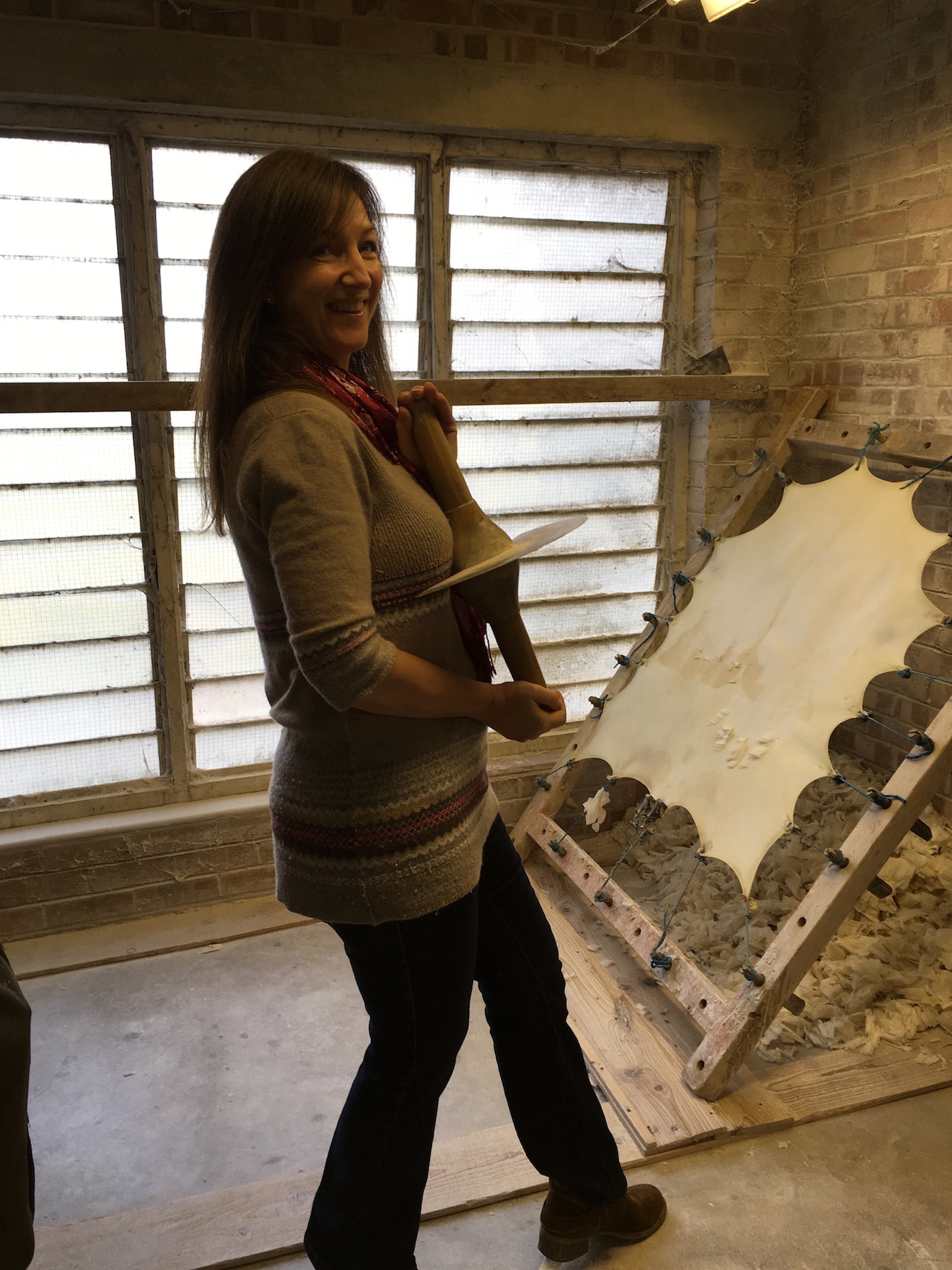
For those who don’t know, William Cowley’s is the last remaining vellum maker in the UK and the only one in the world to hand-finish the skins. They make  use of the skins left over from our meat consumption, so that almost none of the animal is wasted. That is an important fact; no animal is slaughtered for the production of vellum. It is a waste product that would otherwise go to land-fill.

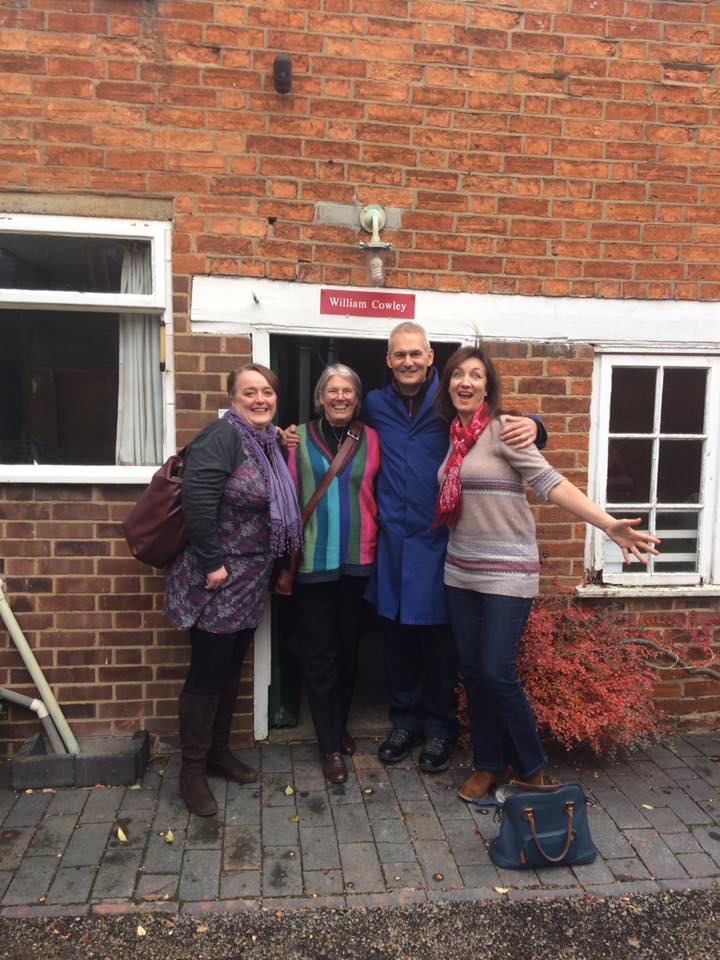
Today, four botanical artists and a self-proclaimed bag-man visited Cowley’s. We were looked after royally. I think in fact that they will need a day to recover from our visit!

Welcome at Cowley's
Welcome at Cowley’s
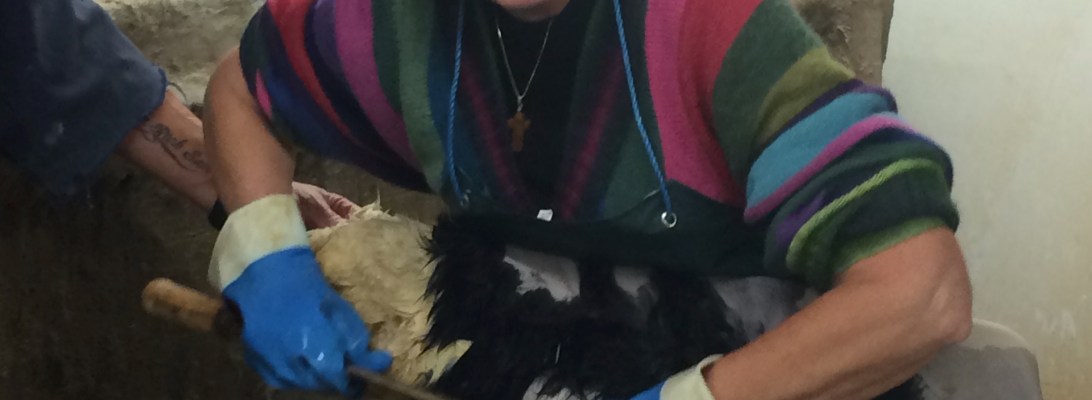
Gaynor, starting the preparation.
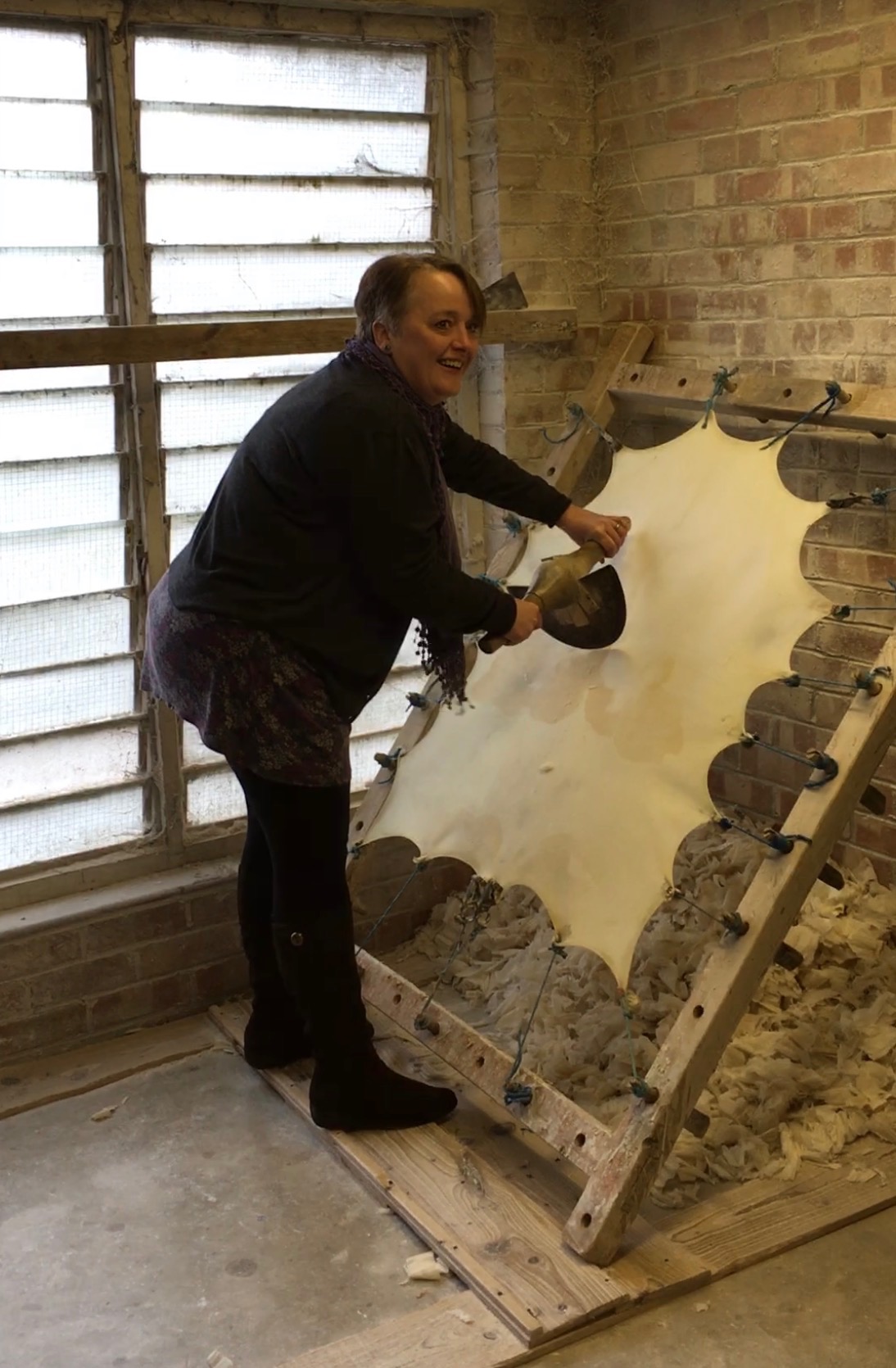
Dianne Sutherland making her own vellum
Dianne Sutherland shaving her own vellum
Sarah Morrish thinking about her bugs and beasties for her vellum.
Robin, no longer bag-man, but preparer of vellum.
What happens if this goes through the skin?
Shevaun Doherty found this Ooooh worthy!
Paul, catering to all our needs!
Four happy botanical artists.
Four very happy botanical artists.

Pittsburgh ASBA conference and beyond

My hats off to the ASBA who managed the biggest annual conference ever. It was big, but didn’t feel it. I got to meet a lot of people from around the world, many of whom had been Facebook ‘friends’ – and of course still are. But now, having met some of them it helps to have even better communication.

Apart from going to the conference to meet a lot of like-minded botanical artists, and as well as teaching, I also wanted to learn. The more I learn, the less I know and the more I want to learn. I tutored at one workshop, demonstrated once, saw three others demonstrating, went to two amazing workshops and an additional conference at the end of the main one. It was busy.

The first of the two workshops I attended was with Carol Woodin on juror training. Carol is responsible for planning the exhibitions and getting the relevant people together. She has an incredible amount of experience in the area and was able to impart some of her knowledge to us. We also did a practice run on putting an exhibition together from a lot of submitted pictures. The results and reasoning behind the results were very interesting and funnily enough quite similar.

The other workshop was with Jean Emmons. I met Jean and Denise Walser-Kolar (who organised the teaching at the conference) in 2010 when we all three had exhibits in the RHS. Since then I have remained in touch with both. They work mostly on vellum and have encouraged me to learn to paint on vellum.

As a teacher, Jean too has such a lot of knowledge to impart and she also does this in a lovely way. I struggled a little as I suddenly realised that my subject would not be available to me when I returned home to England. Therefore I started doing the opposite of what we were being taught – I tried to rush. Stupid! The four main things we learnt apart from actual techniques was, slow, light, very little water and don’t go back over anything until completely dry. I did the opposite of all that when I started worrying about time. But at least I learnt.

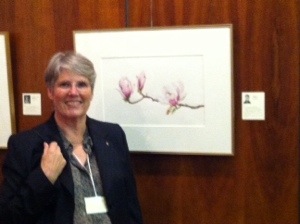
There are no pictures to show from the above workshops, but I do have one from the Hunt exhibition opening. The UK were well represented this year but with only one artist present – Robert McNeill. However, several of the UK tutors had work in the Hunt collection from previous years.

hunt
The Hunt 15th International Exhibition of Botanical Art and Illustration
Version 2
The British, Irish, Australian and American table
Version 2
Martin Allen & me
Christie Bruzenak & me
Christie Bruzenak


On Saturday evening there was a banquet with some sad farewells and happy prize and sponsor giving.

We left Pittsburgh after staying for the International Congress of Botanical art, and spent our first night in Erie, a town on the edge of the lake.

Yesterday we went through some incredible landscape and increasingly strong leaf colour until we reached our present destination Old Forge in the Adirondacks. On arrival, the heavens opened with the additional huge flashes of light every now and again. Today its beautiful with a forecast due to be 25 degrees. At the end of the week, snow is forecast, so I have to get out there.

Here are some colours from the journey.


The pineapple and arrival of Rory McEwen vellum

This week has been and will continue to be quite eventful. On Sunday, we drove up to London to deliver pictures for the SBA exhibition in April at Westminster. Several assignments have arrived from London Art College to mark and I have started these. This morning I had my usual weekly class and this afternoon a friend arrived from Norway ready to take part in the workshop I am holding this weekend – Friday to Sunday.

Tomorrow we plan to go to Kew and of course the highlight will be to visit the Shirley Sherwood Gallery of botanical art. Hopefully I will be able to write a bit about it in the evening.

But today there was a big knock on the door. I could see the sun flooding in through the glass in the door and the shadow of a person standing outside. I opened the door and there stood our very smiley ( and helpful) postman with a parcel in his hand. I saw straight away that it came from the Hunt Institute, Pittsburgh. It was the vellum! I was so excited and the poor man got dragged inside to be told the story behind it all.

I understand that not everyone is entirely sure what vellum is. It is animal skin – often goat or lamb, which has been collected from abattoirs and prepared by specialists for painting or writing on. It is parchment, the same material that old documents were written on. In fact all acts of Parliament are still written on parchment.

Why use vellum/parchment rather than paper? Well, the archival properties of parchment are far greater than that of paper. For important documents this is an important consideration. For artwork this too is very important, but there are additional benefits ( and difficulties). Watercolour is applied with a dry brush technique as unlike paper, the pigment lies on the surface of the skin. In doing so, the pigment reflects its colour well as it is not absorbed into the skin and dulled in any way. Rory McEwen’s pictures really do show this fact very well.

But as I haven’t yet decided what to paint on the vellum, it is likely to be a few months before I get started with it.

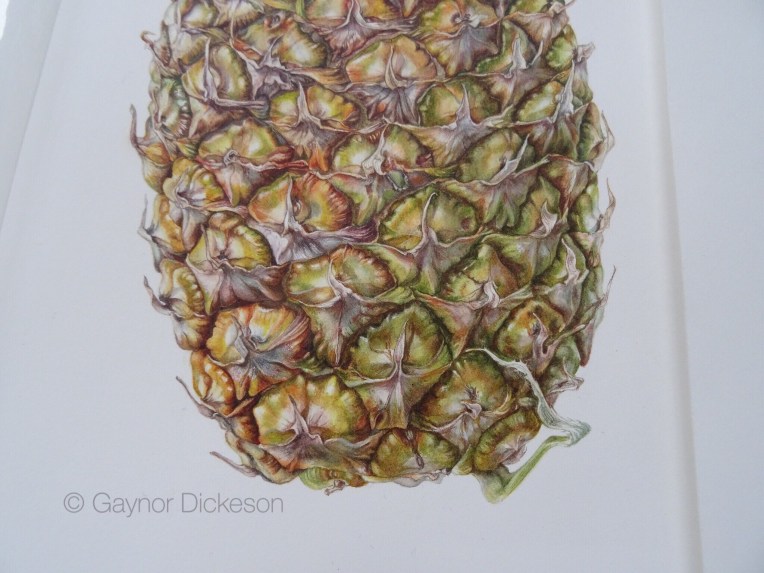
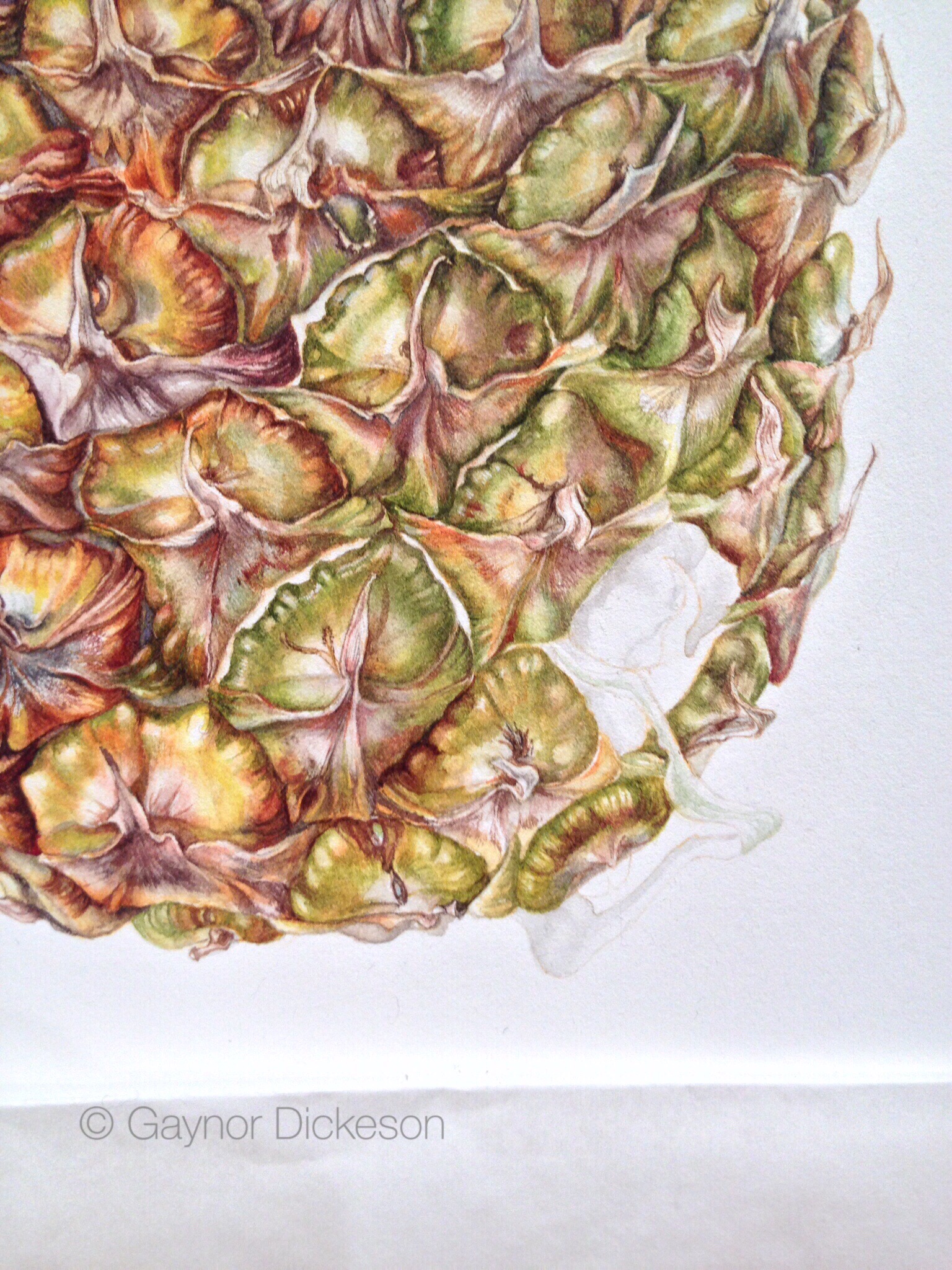
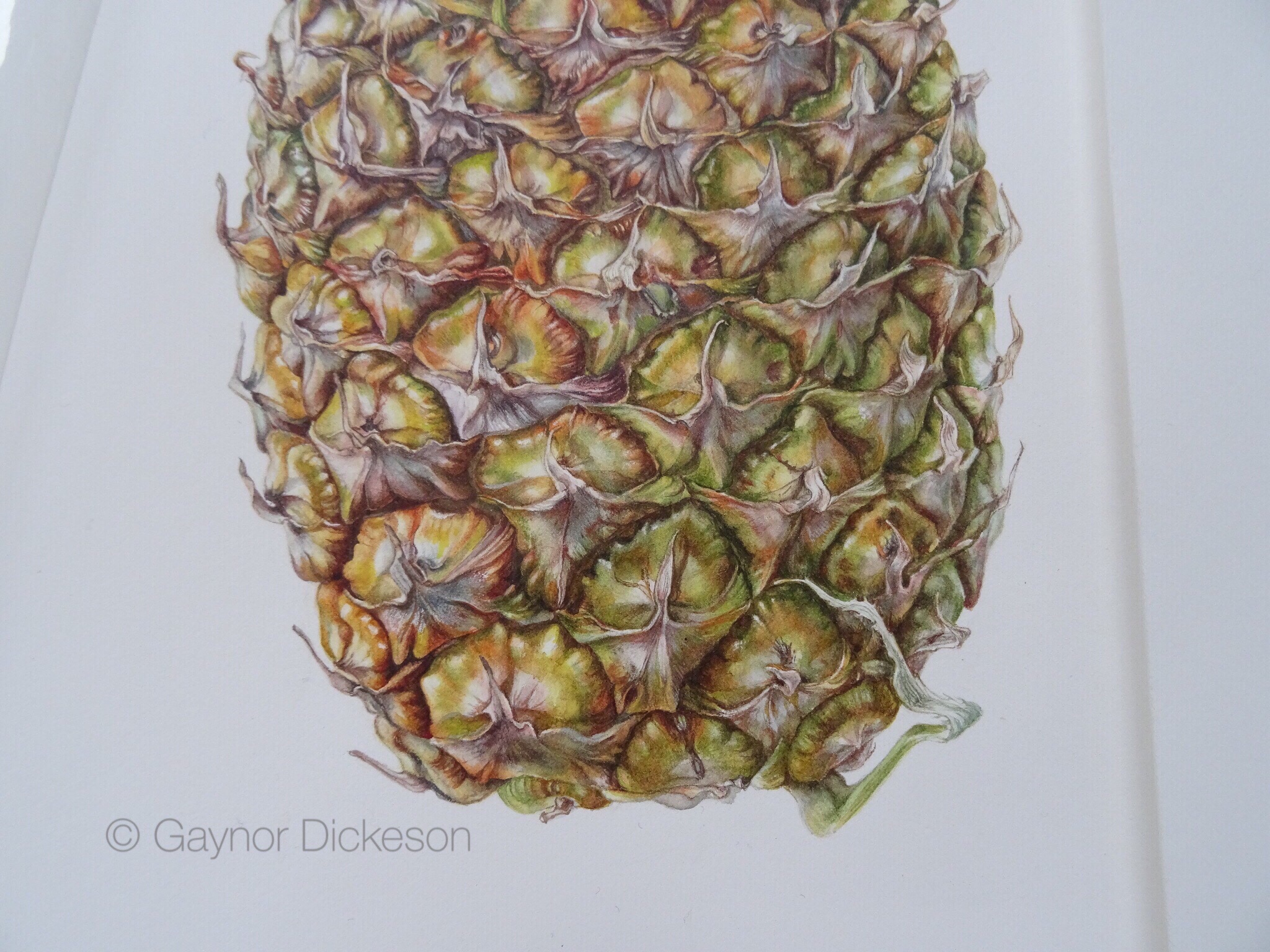
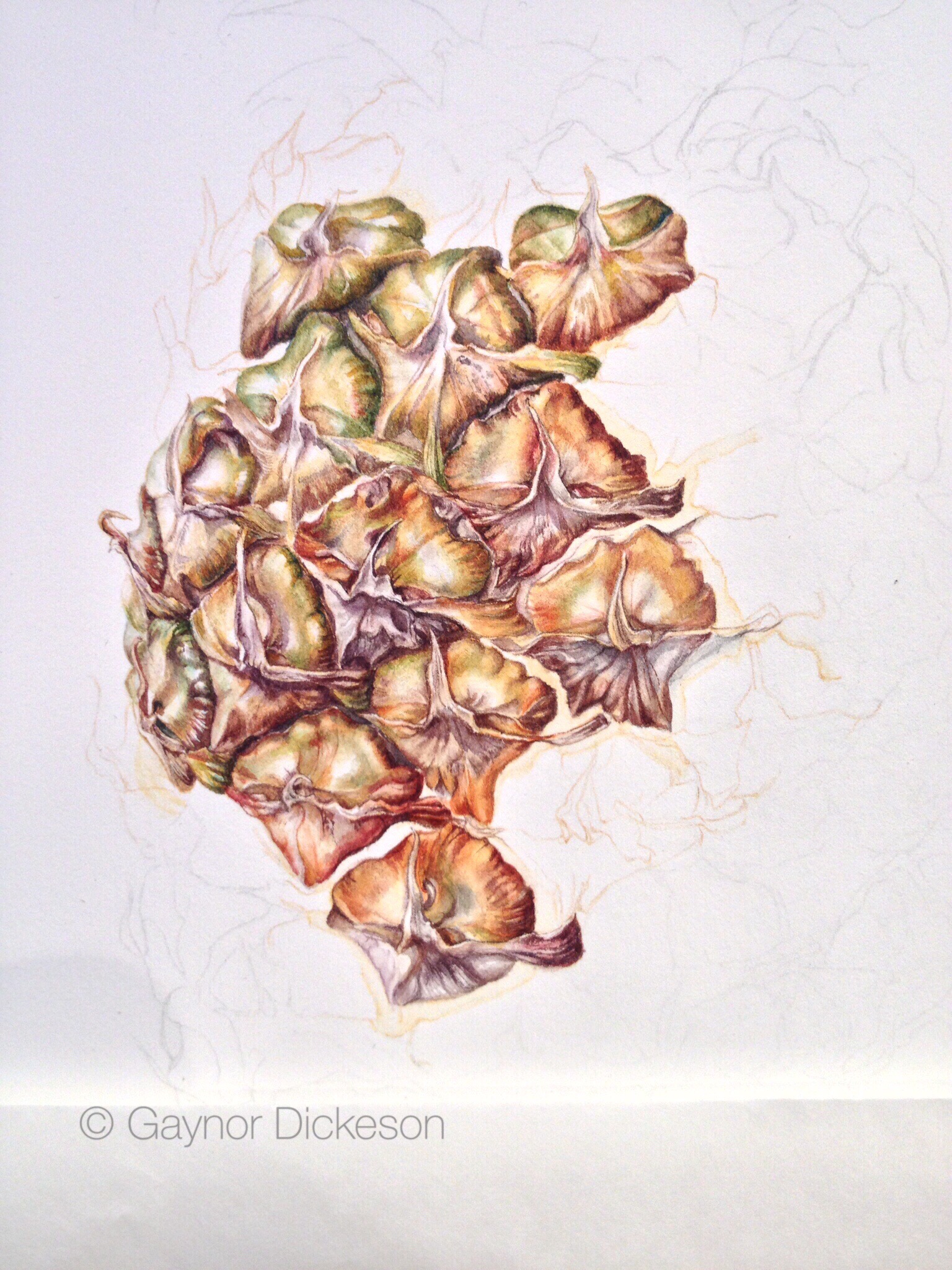
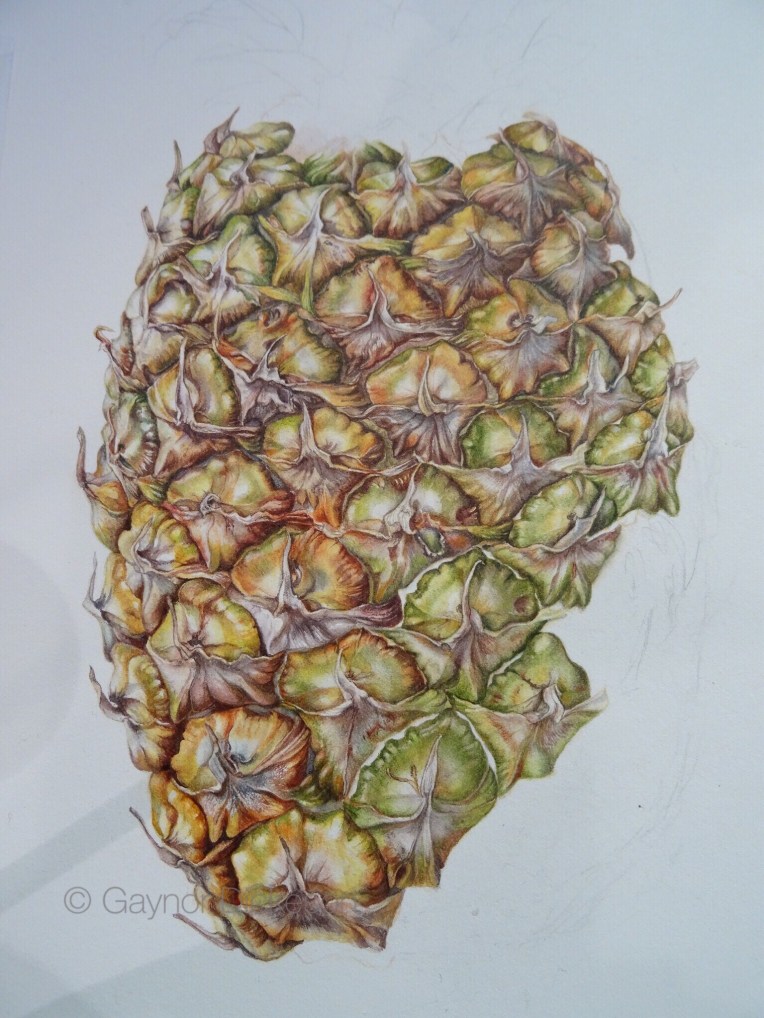
Last of all, how is the pineapple doing? In showing these pictures, I am being careful not to show how I have pulled the painting together as a whole. I think it important that the person who is to receive it, should see it first as a complete picture. Once that happens, I will then post it on my blog.

More pictures!
IMG_0073

IMG_0074

IMG_0075

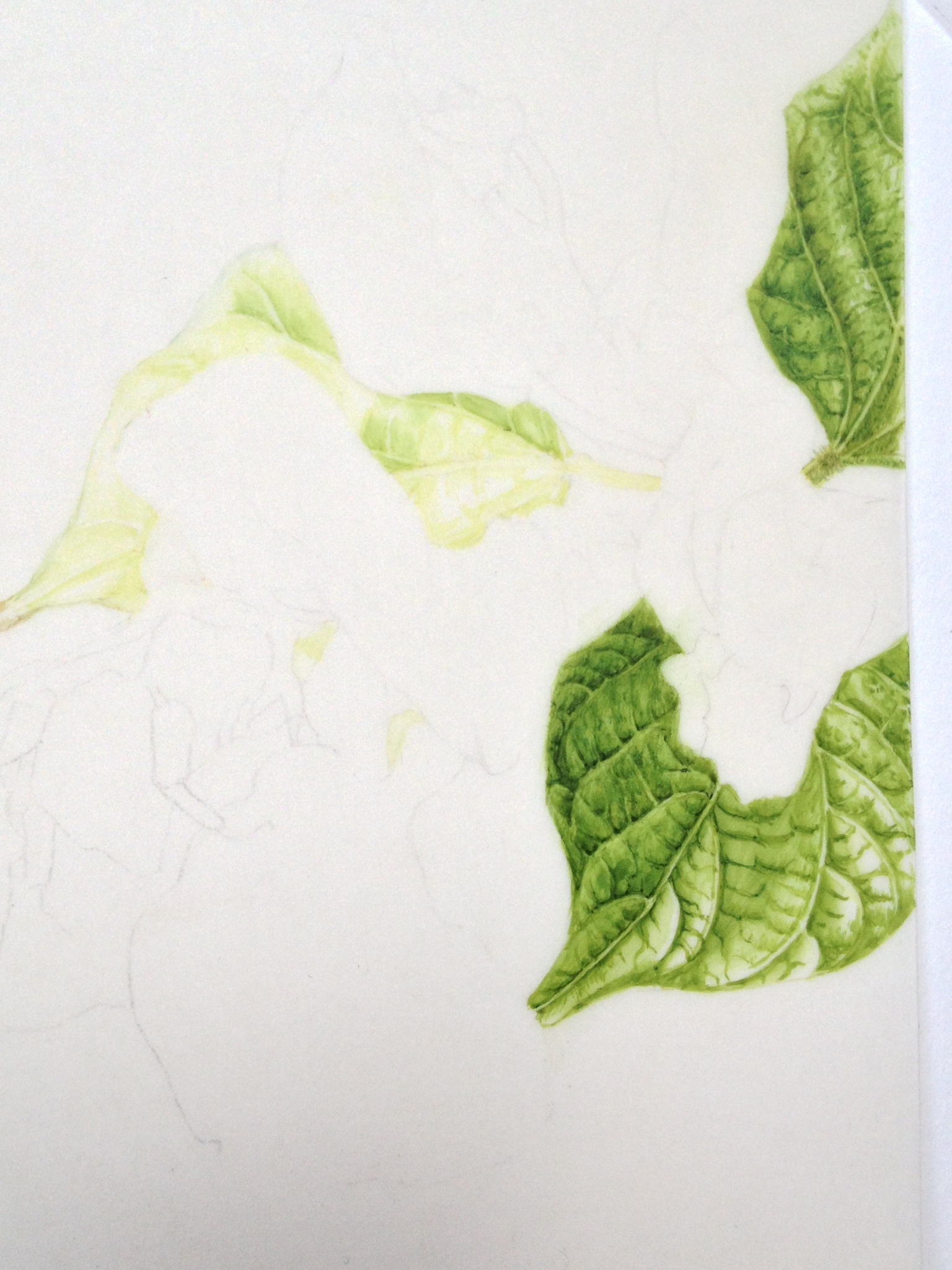
From the fruit to the leaves. I read somewhere the other day about someone needing to get into the ‘zone’, when painting a picture. That really struck me with this pineapple, because it was so different from the last piece of work I did. It had to feel right before I actually started putting paint on the paper. I had to feel confident that the colours I was going to use were the right ones, and that the sequence of colours and the way I laid them, were right for this picture too.

I now had this feeling all over again. I was going to use exactly the same colours as I used for the fruit, but in different mixes. The textural effect I wanted would be completely different. It felt like starting from the beginning and needing to get in the ‘zone’ – but more importantly I couldn’t afford to make any mistakes at this stage. I had to be confident of what I was doing, before I did it.

I started off with painting the shadows in a neutral mix. This was to establish where the light came from, and therefore how the shadows would have an effect on the shape of the leaves. I couldn’t do this in the same way with the fruit part of the picture, because I knew I would be using a series of pineapples and painting each segment from the ‘fresh pineapple of the moment’. By the way, I used four pineapples for the fruit.

Have you noticed how the pineapple fibre really gets caught between your teeth?

Back to painting the leaves. Once I had established where the shadows would be, I started painting the leaves where I could see the upper surface, which was a darker green and quite shiny. I needed to make sure I had some good tonal contrasts in these areas. Am I succeeding?

IMG_0076

Rory McEwen and my pineapple.

There is nothing to connect Rory McEwen and my pineapple – other than botanical art.

But I am dead chuffed and sad at the same time. I watched the programme on BBC today about Rory McEwen and felt so sad that such a gifted person died so young and in such a manner. I so wish I had been around when he was doing his wonderful paintings.

When I was at the Hunt Institute in Pittsburg two years ago, I had to pinch myself that because my work was accepted in the Hunt, and while there I was allowed to see whatever works that they had in their collection. I wanted to see Rory McEwen’s work and saw it in the ‘flesh’ without being protected by glass. It was amazing.

Four minutes after the end of the Rory McEwen programme today I got an email from the Hunt to tell me that I had been gifted a piece of Rory McEwen vellum. When he died, his vellum was given to the Hunt Institute and pieces have been gifted to botanical artists over the years. Now I am one of them. I can’t believe it.

Painting on vellum is hugely different to painting on paper. I will have to think of something really special to paint on it in due course.

But my pineapple. More pictures.

IMG_0065

IMG_0066

IMG_0067

IMG_0068

Botanical art on Vellum

Again I haven’t done too much painting over the last week as we have had family staying and we took the opportunity to have a little bit of a holiday with them.

But now I’m back to painting.

Whilst in Pittsburgh last year there were several botanical artists who tried to persuade me about the benefits of painting on Vellum. I saw some really beautiful work there and was really tempted. My husband bought me a few small sheets for Christmas and it has been lying there. Since then I have seen some more work on vellum and I wasn’t too enamoured. It definitely was not of Rory McEwen quality! You see I aim for the best.

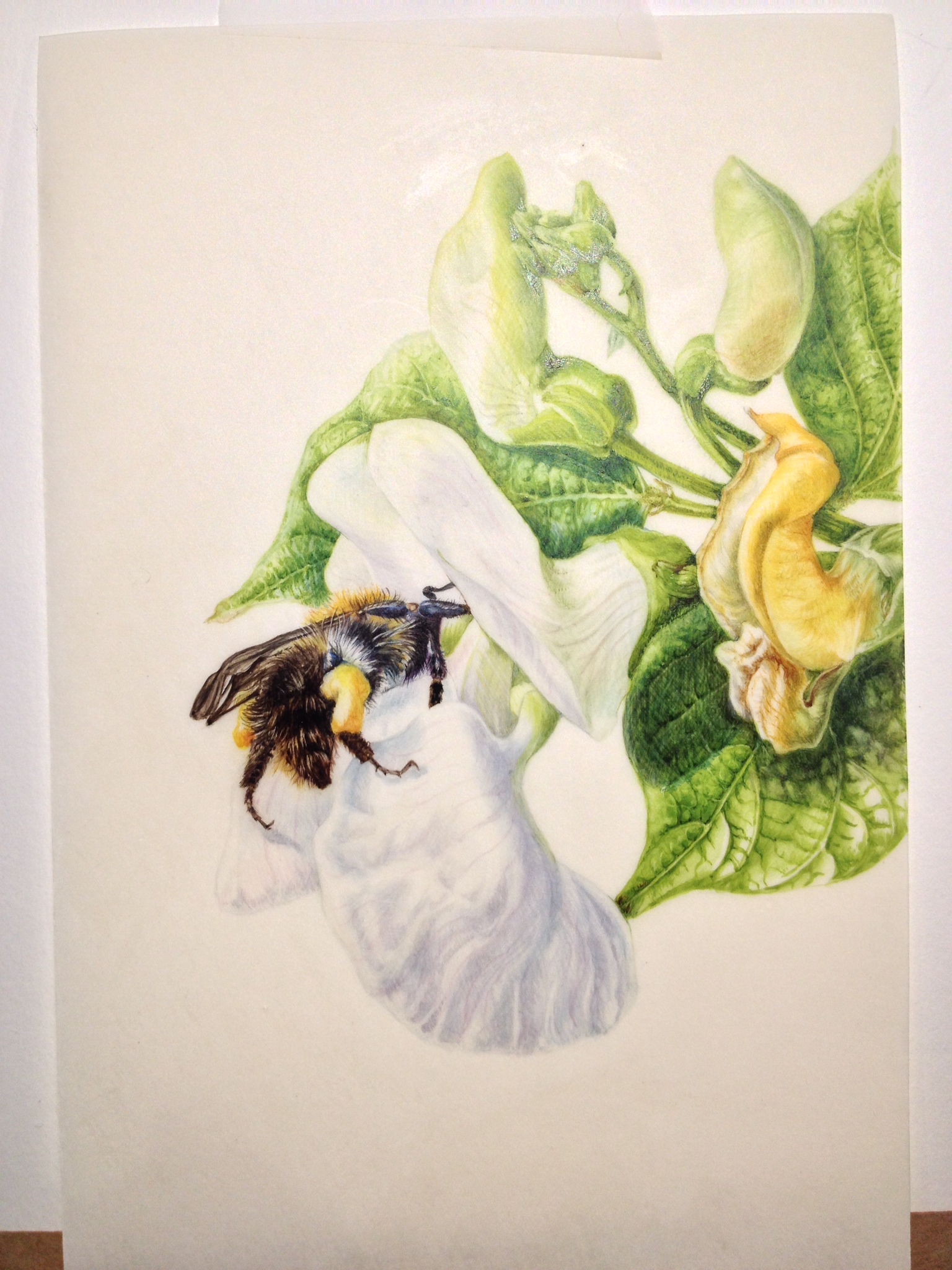
I have been painting a small picture on vellum during the last few days. I had taken a photo of a bee on the runner beans and wanted to do this. Normally I only paint from real life and obviously this was a problem as I didn’t have the bee although did have the runner beans. I did some research on the bee and found out that it is called a Bombus pascuorum worker. It also meant that I had some other bee pictures to make sure that I got the details right. I’m not happy if I haven’t got the subject actually in front of me.

For once I decided to paint it oversize. This is another thing I don’t normally do, so I have several ‘firsts’ here. I know that I had to paint using a dry-brush technique, but still wasn’t sure how. I therefore examined the pictures in the Rory McEwen book ‘The colours of reality’. I had to refer back to this book on several occasions as I built up the layers. I thought that as I had painted on Porcelain many years ago, that I could adopt a similar process. I’m afraid that didn’t work! But I gradually began to get the hang of it and also take advantage of the fact that you can lift out mistakes.

I will put a couple of pictures in this blog, but add a few more as an album on my Facebook page.

If anyone has any tips, please let me know. I haven’t stretched the vellum, but would like to do so on larger pieces.

Runner bean leaves, first washes and details
The bee
The bee
Runner bean flower
Runner bean flower
Finished painting
Finished painting

Thursday in Pittsburgh

A busy and exciting day. This is the first full day of the ASBA annual conference and the opening of the Hunt’s 14th International Exhibition of botanical art and illustration.

This morning started off with a Portfolio session where many members lay out their work for query, comment and I suppose critique. There was a huge variety of styles and it was very interesting. Many had done their work on vellum, but there were other techniques too. I was encouraged to try vellum although it is extremely expensive. Also suggested that I use the sort available in the UK as this is the best.

I am told that the latest ASBA magazine has a very good article on how to paint on vellum. For people out there who paint botanically, I recommend that you join this organisation. Membership has quite few benefits.

I saw some beautiful silver point work, and some very good pen and ink work. I wish I could describe some of it as it is obviously a new technique to try and learn. Unfortunately I didn’t take any pictures.

Towards the end of the Portfolio session I went to a talk on the history of Vellum. Unfortunately, it was more a history of the family who produced Vellum in the US. Parts of it definitely were interesting, but I feel that I know little more now than I did before I went into the talk.

We had a long lunch combined with AGM.

The afternoon was filled with a techniques showcase. Three different artists with three different techniques and materials demonstrated for us. The topics were Graphite, watercolour and coloured pencil. They were very good. Although other workshops were going on at the same time, the auditorium was pretty well full of interested artists.

20130927-000226.jpg

20130927-000245.jpg

Then the opening of the Hunt Exhibition. Several school buses picked us up at the hotel and drove us to the Hunt. We went to the top floor (walked!), where we were greeted with nibbles and punch. A friend of mine who started nursing at the same time as me 50 years ago in Set 231, now lives in Pittsburgh. She came to hep celebrate with her neighbour.it was lovely having them there too.

All the pictures were hung in a large room and some speeches were made to open the exhibition. Unfortunately I can’t repeat what was said as you couldn’t hear. But a good time was had by all, even when the fire alarm evacuated the building.

We were turfed out into the balmy evening air, but it didn’t deter any conversation.

20130927-001547.jpg

20130927-002312.jpg