Completed from the last botanical art workshop; when is the next?

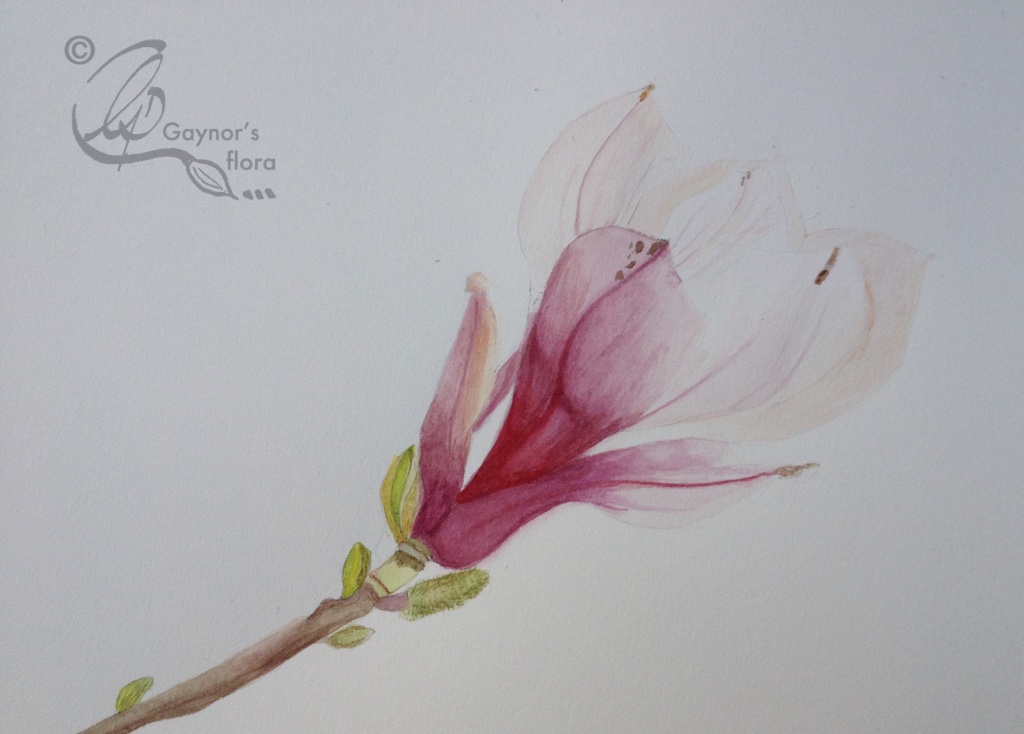
I thought that it would be pleasing to show one picture started in the last workshop, completed. Sue James sent me this message and gave her permission to use use her name and her image.

‘Finished article! Thanks for a great workshop, learned a lot! Looking forward to the next one’.

Version 2

I am sure that you will like it as much as I do. Painting the hairy buds of the Magnolia x solangeana in the technique that I use is not easy although it gives the best result. I think you will agree with me that she has achieved this very well.

There are plenty of opportunities to learn my techniques in workshops https://gaynorsflora.com/tuition-2/workshops/ ,

workshop holiday https://gaynorsflora.com/tuition-2/exclusive-botanical-art-painting-holiday-at-le-manoir-in-france/,

and the online botanical art course https://gaynorsflora.com/tuition-2/online-botanical-art-course/.

Because I limit the number of students at each workshop I teach in watercolour, coloured pencil and or graphite.

The next botanical art workshop in Bosham is ‘White flowers against dark ones’, although in reality the topic is really about what is to be gained by painting pale flowers against something darker in the background; leaves or darker flowers. The workshop is Thursday, Friday and Saturday 16 – 18 February and there are still a very few places available.

The workshop holiday at Le Manoir in the French Dordogne has only four painting places left, so if you want to come, sign up for this soon. Take advantage of being looked after from the botanical art point of view, and in relation to the holiday with well thought out afternoon trips and of course looking after your taste buds.

Last, but not least is the ongoing Online Botanical art course. Unlike many other online botanical art courses, this one takes a limited number of new students each month and is therefore continuous. It is spread over a longer period of time (18 months), allowing you to fit it in with your other commitments and life in general. Additionally, you can get in touch with me with any queries you have about the course at any time; you can communicate with other students participating in the course via a secret Facebook page; the feedback you get for each of your assignments is a several page long very detailed constructive critique about each of the pieces you send to me. I take on new students for February 1 tomorrow, and again 15 February. Get in touch.

It may be grey out there just now, but there is so much already in the garden (in the Northern hemisphere), just ready and waiting to explode. Down under, it is probably the hottest part of the year, but it is always exciting for me to see the subjects chosen to paint, which might be considered exotic in the UK. Oh how I love doing what I do!
 

I am sooo-o chuffed after this weekend’s workshop!

Yesterday and today was the first botanical art workshop of the year in Bosham. What do you paint in the wintery months? There are loads of interesting subjects in the hedgerows. The title of this workshop was textures and as usual I tried to make suggestions as to what these may be.

My workshops have a limited number of participants so that everyone gets help where they need it. This time people brought catkins, bark, ash keys, pine cones, algae and magnolia buds. I also brought in some lambs ears (leaves) and sticky buds (horse chestnut).  There was an ample supply of everything and people worked in coloured pencil, or watercolour, or graphite.

My workshops always begin with a little about composition; a subject everyone seems to be scared of, and drawing. Everyone always wants to jump straight into the painting, but of course the final painting is never better than the planning that has gone into it.

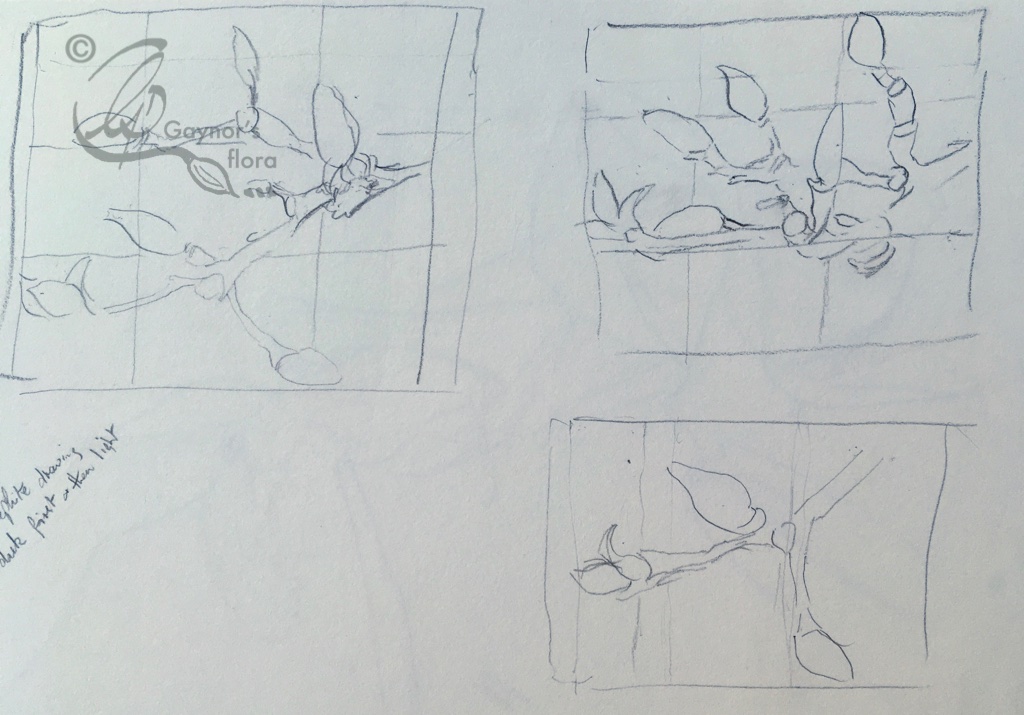
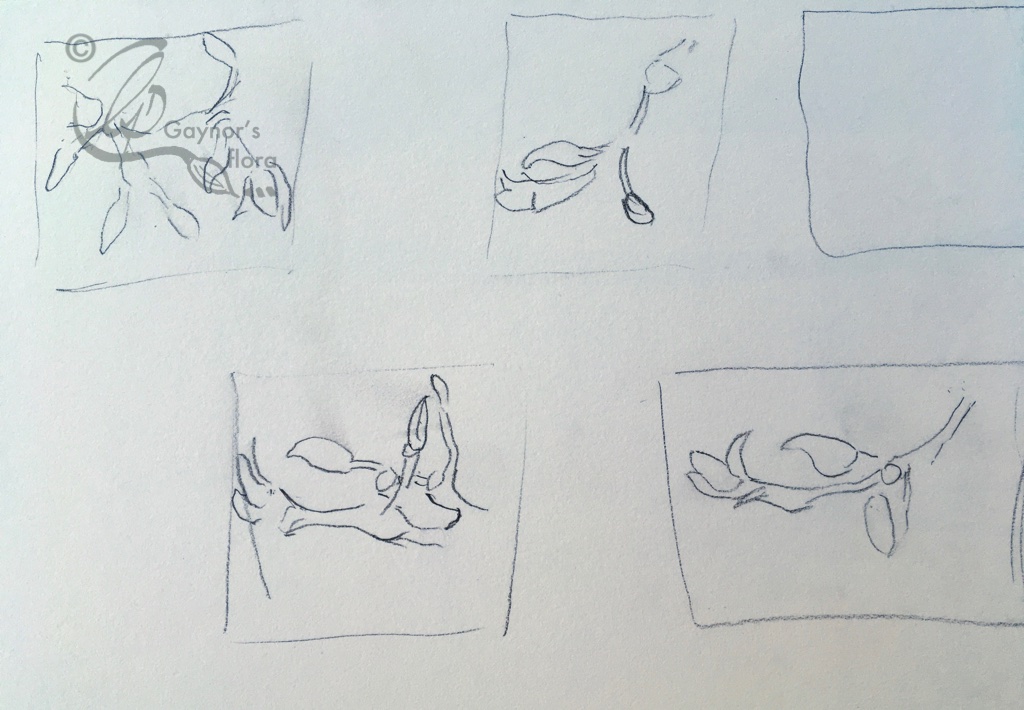
This time, as I knew everyone from previous workshops (normally there is at least one new person), they felt it was OK for me to concentrate more than usual on the compositional aspect of botanical art.  They duly did their thumbnails and decided which one they would focus on to create their line drawing. I am going to show you the progress of one student from thumbnails to where she got to today.

Magnolia soulageant buds

Version 2

We talked a lot about the Golden section, rule of thirds, diagonals and ignoring the lot!

Of course we mustn’t forget that the workshop was also about textures, so I demonstrated different techniques in all three media. Of course they found that the furry buds were the most difficult, but everyone persevered and got some amazing results.

This slideshow requires JavaScript.

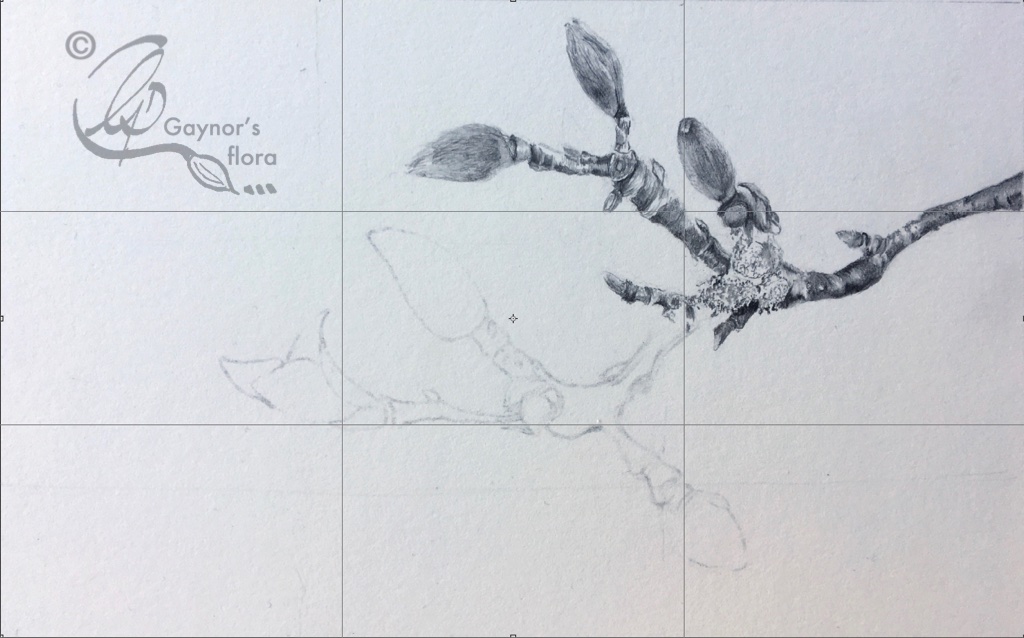
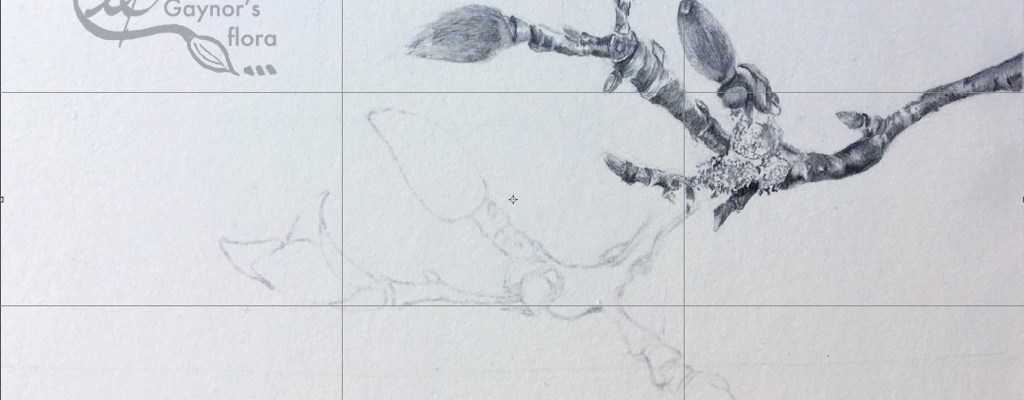
So finally, why am I so chuffed? Well, those who chose to do the Magnolia buds in watercolour, actually mastered the dry-ish brush technique that I use. Many do give up on this because the issue is the water/pigment mix, and taking care of brushes and picture at the same time. But I think the part giving me the biggest thrill were the compositions. I have superimposed two of the pictures with the three-by-three golden section divisions that help to find where the focal point is best placed. The eye was drawn in particular to these two pictures in main because of their composition, but also their fluffy buds. Remember they are half finished, but they just show how a well planned composition can have a good effect on completing a picture. Do you agree?

Magnolia x soulageana terminal buds in graphite.
Magnolia x soulageana terminal buds in watercolour.

Workshop schedule and booking forms now available

I had to work hard to finish the Liriope muscari ‘Moneymaker’ in time for handing it in at the beginning of this month. Including the sketches when I first got the plant in 2015, sketchbook drawings, colour matching and composing the picture to my satisfaction, it took 211 hrs.

I remember a comment that someone made not too long ago; when they started painting they thought that as they got better they would be quicker, but it didn’t work out that way. They too were a botanical artist.

I have to say that when I took up painting plants a few years ago, having painted birds in great detail previously, I too thought that I would get quicker as I got more experienced. The trouble is that as one becomes more experienced one knows what to look for and that getting the detail right is imperative. I suppose that this is affected too by my style of painting which is not wet-in-wet. I use a fairly dry technique generally, which allows for the finer detail. Added to which I am my own worst critic!

The finished painting can now be seen in my website portfolio. Follow this link: Liriope muscari ‘Moneymaker’

At last my schedule of botanical art workshops in 2017 is complete and you will find the detail and booking form here: Workshops for 2017

The booking form for the botanical art workshop holiday at Le Manoir in the Dordogne region of France is also ready. You can find this here: Le Manoir 2017. There has been a lot of interest for this workshop holiday, so grab your place as soon as you can. There is a lot packed into the holiday and if you want to take your partner, there will be plenty for them to do too – that is if they want to do anything outside the planned trips! You will be painting at least in the mornings and can choose to do the excursions if you wish.

As a reminder, all levels of experience in botanical art will be welcome because the class sizes are small. Life is about continually developing your skills, therefore to join a workshop, experience is not necessary, just the desire to learn.

You can use coloured pencil, graphite or watercolour on all of the workshops and the holiday – except for the workshop with vellum.

Botanical art workshop booking form for 2017
Le Manoir; Exclusive botanical art workshop holiday

Do get in touch if you have any queries.

Go back

Your message has been sent

Warning
Warning
Warning
Warning

Warning.

Botanical art workshops

This last weekend I had a very select group enjoying the peace and quiet of Bosham as well as individual botanical art tuition. The weather is gradually improving and picking subjects in the garden (the Magnolia) or in the vicinity (Eucalyptus), is no longer a trial. The following are a couple of photographs from the weekend:

© 1.IMG_1621 © 2.IMG_3428 © 3.IMG_3429

There are more workshops lined up, the next one is Friday and Saturday 8 -9 April.

So many people have asked me to have a workshop that focuses on drawing and shading. Now is your opportunity. It is called: Botanical drawing and shading in graphite.

So what is it that you want to draw in graphite? Is it a delicate flower, some twigs, leaves or what is it that takes your fancy?

Many plants started flowering in January and even before, but surprisingly enough there are still plenty of spring flowers. I am surprised that so many daffodils are flowering and there are swathes of them wherever you go.

I’m afraid that the Magnolia really suffered this year. Its been trying to flower since the beginning of January, but with the recent cold snap it hasn’t been happy. As you see, one of my students at the weekend produced a really lovely picture. The tree normally flowers in early April and is hugely spectacular – but I doubt that we will see much of its glory by then.

But there is still a lot of last years plants drying out in the hedgerows and they provide very interesting subjects for graphite. Some leaves just have skeletal remains and these are really attractive.

Do get in touch soon to book your place.

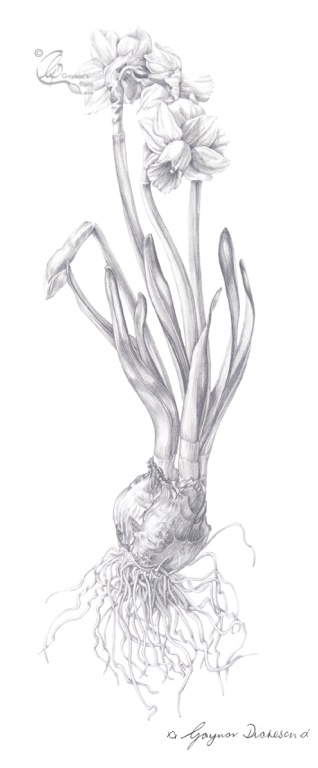
© Graphite daffodil 8bit+sig

Another workshop happening this year is in Norway, June 24 – July 1. If you want to save a little on this holiday, book and pay your deposit by 31 March. Go to the page on this website specifically dedicated to the holiday.

June and July is a very beautiful time of year to visit Norway and if you haven’t been there before, it is likely to give you a taste for more. That of course is in addition to the teaching – which I am told, is good.

Imagine being able to concentrate on doing what you love – or interested in starting, in the most amazingly beautiful surroundings. You will have a view over the Oslo Fjord and you will experience the crystal clean air and sparkling colours that derive from this.

Do get in touch if you have anything you are wondering about in relation to workshops in Bosham or the Workshop holiday in Norway.

Go back

Your message has been sent

Warning
Warning
Warning
Warning

Warning.


Coloured pencil or Watercolour for a botanical art subject?

In actual fact, I’m cheating a little, as I was going to write this blog this evening having spent a couple of days off from writing my botanical art online course, to sketch some Fritillaries in preparation for a commission in watercolour. But, I also got a query from a lady this evening, about the use of coloured pencils and how I choose whether to use watercolour or coloured pencil for a subject.

My answer to her and anyone else who asks ( as I do get the question fairly regularly), is that I have no idea. I just have a feeling that I want to do one or the other.

But, when I did my last RHS exhibit in 2014, I deliberately chose to do it in coloured pencil to show that solid subjects (crabapples), dainty subjects (blossom) and delicate detail (dissections), could be done in coloured pencil. The judges said they didn’t realise I had used CP and thought it was in watercolour!

Back to the commission; I had bought some Fritillaria meleagris at the local garden centre and Fritillaria Michailovskyi at Chelsea Physic Garden when I was there at the beginning of the month. I think we are innate plant hoarders! So this week I have been doing a series of small sketches in my sketchbooks.

Without thinking too much, I started out in a Stillman & Bern Epsilon sketchbook, realised what I had done (as the Zeta is better for watercolour), but continued in it, deciding to do my colour samples in coloured pencil. Although you can’t compare CP and watercolour by the names, or know how one colour mixes with another, I know the two mediums well enough to be able to convert fairly happily.

I’m afraid the following photo is not brilliant as I took it on my easel this evening, but I think you get a reasonably good idea of the results on the page.

Fritillaria meleagris in coloured pencil.

By the time I had finished these, the one dark flower I had was looking a bit faded as it was being subjected to being in the warmth of the shed during the day and outside during the cold night. I needed to concentrate on the foliage as it was a bluish green, except near the base, but felt I really should do this in watercolour.

I changed to the Stillman & Bern Zeta sketchbook. Shame they aren’t all in the same one – but never mind! I had hacked (dissected) the one flower to pieces and done one or two small sketches, so decided to draw a portrait of the bulbs. In the end, all of the sketches on the 2nd page are watercolour over graphite. The bulb is from the Fritillaria meleagris, but you also see the Fritillaria Michailovskyi. I have taken a photo of that one halfway through so you can see the amount of graphite shading I actually did. Before adding colour, I did a wash of clear water to ‘set’ the graphite so it wouldn’t discolour the colours I was going to use.

This slideshow requires JavaScript.


Adjusted yesterday’s blog and next botanical art workshop.

Yesterday’s blog was written at the end of a busy day – or at least in the middle of the night. I should have waited until I had been refreshed by a night’s sleep! My husband read it a short while ago and tried very diplomatically to tell me, that not all of it had read too well. I have therefore adjusted it to tell you that my ‘photographs’ were not good, but that the artwork was good. If you read last night’s version, please read it again.

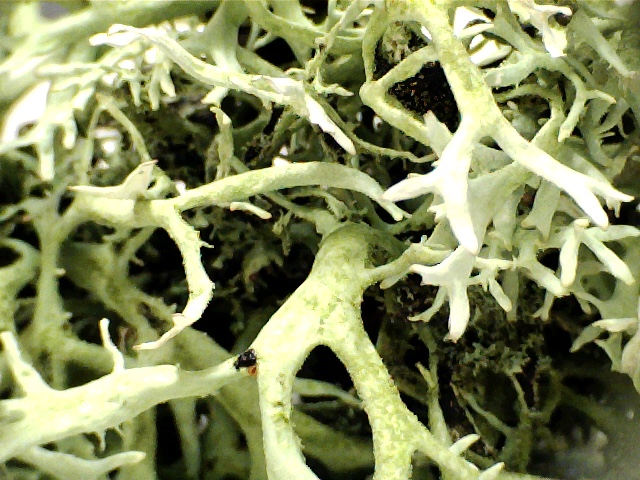
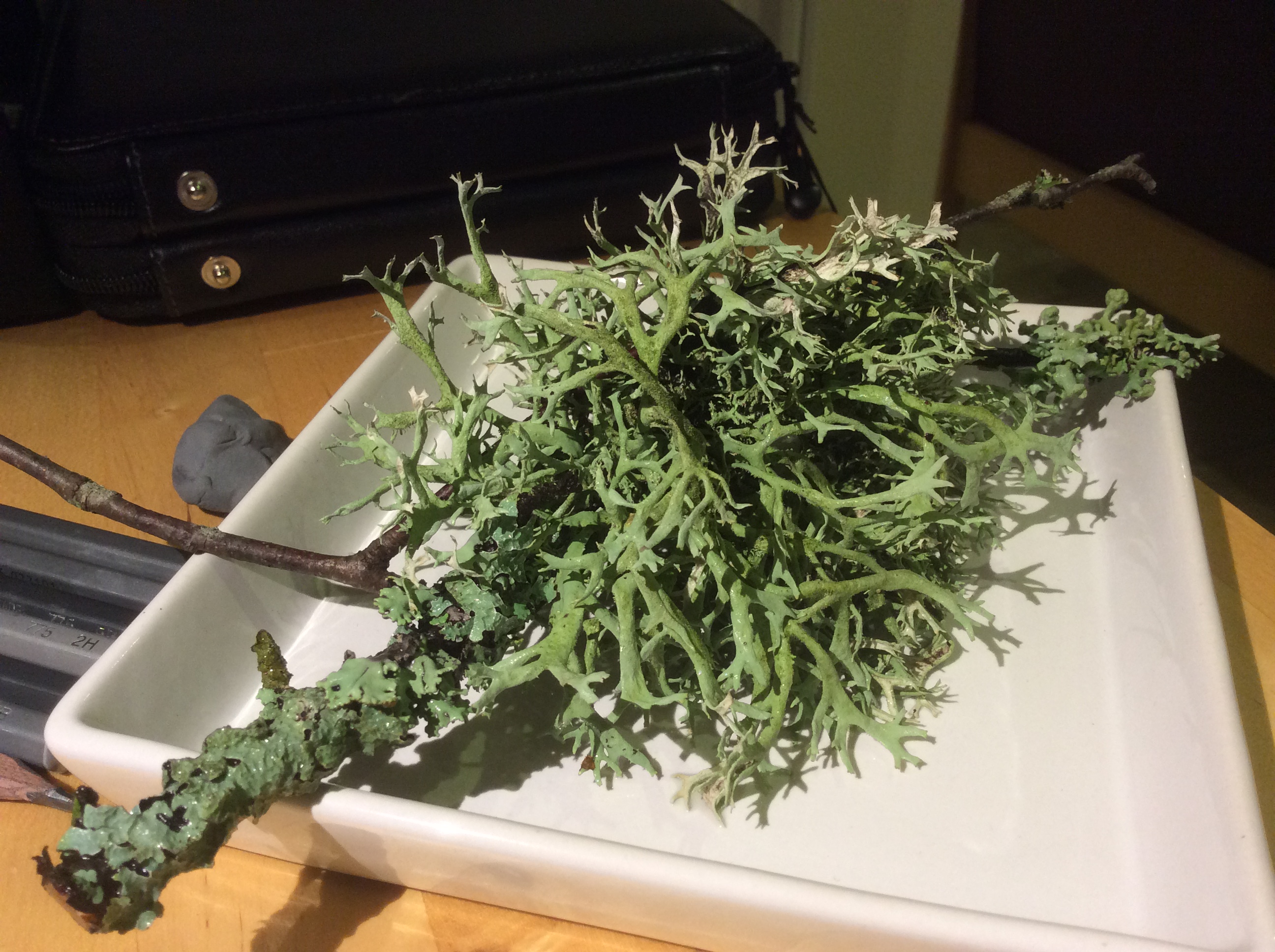
I thought I might add a couple of pictures of lichen. If anyone knows what they are exactly, please let me know.

1601311907_1 1601311908_3

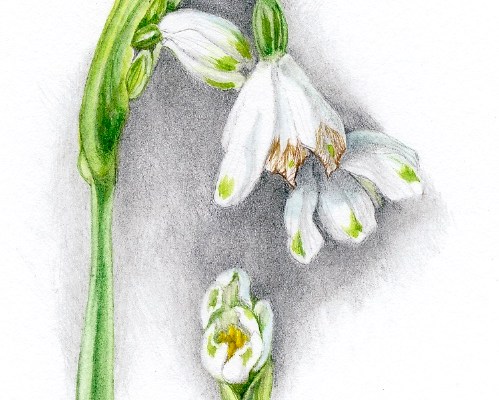
The next botanical art workshop will be Friday to Sunday, 26 – 28 February. The title is White Snowdrops against dark Hellebores. Now it is anyones guess if either will still be flowering by then. They are both flowering well in the garden now (much too early) and the Magnolia soulangeana buds are bursting! I did a very quick tiny picture a couple of days ago, of Leucojum aestivum – commonly known as ‘Summer snowflake’!!!!There are loads out at the moment.

'Summer snowflake' - Leucojum aestivum. Watercolour over graphite.
‘Summer snowflake’ – Leucojum aestivum. Watercolour over graphite.

Whether the Hellebores and Snowdrops are flowering or not, there will still be loads to paint. Or why don’t you grab the opportunity to work on something in which you know you can improve? There are a few places available, so get in touch soon.

Botanical art workshop: Textures – bark and moss.

In reality the workshop became textures , bark, lichen and leaves!

In the end, I felt it had been a very unusual workshop because four of the five students were coloured pencil artists and only one was a watercolour artist. Three of the CP students wanted to do graphite only instead of colour, to improve their tonal value skills as well as the use of graphite. The watercolour student wanted to improve ‘green’ skills. They were definitely students who knew what they wanted to do! Their intention was to improve various aspects of their skills in botanical art and it was such a pleasure – and honour to help them.

On the first day we focused a lot on preparation. This time we didn’t actually talk very much about composition, but we went through the first stages of drawing and making a rough tonal value reference drawing.

Lichen
Lichen
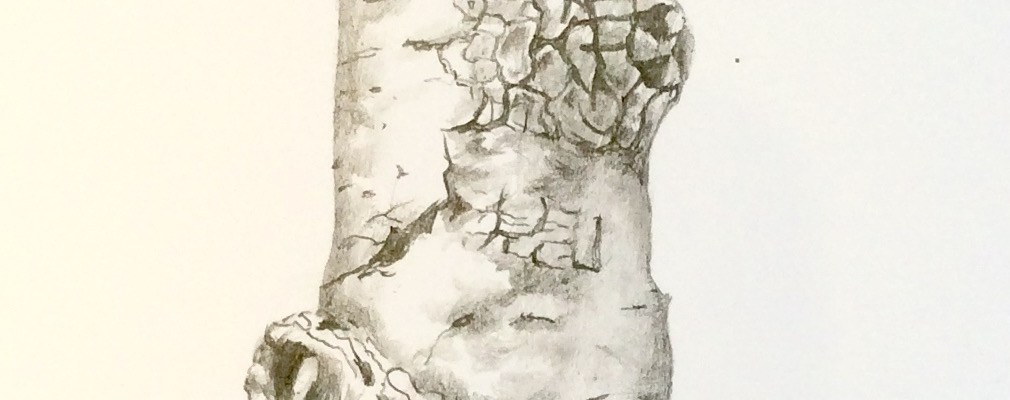
Broken piece of Birch
Drawing wood and lichen
Drawing piece of wood found on the beach.


As well as the different drawing techniques, we also looked at light and shade forming a solid object, and mixing greens. Unfortunately not all of the photographs turned out too well, but I think you will appreciate some of the results anyway.

Dried oak leaves
Dried oak leaves
The piece if wood with lichen


Of course the various types of lichen we had collected between us was worthy of more detailed investigation, so out came all the magnifying glasses and lenses that we could muster. The specimens were hugely intriguing and the colours definitely became accentuated when you see them in detail.

I was particularly pleased with the results and I am just sorry that the photograph of the CP picture did not do it justice. I’m afraid the light was failing when I took the picture, but the tiny detail of the lichen was actually very well done – and exhausting to do. It will obviously take time to finish that piece even though it is small. I hope that the artist will not lose patience with it and complete it at some point so that it can be shown again on the blog. I think the other photographs of the work have turned out reasonably well.

image


image

image
image

A new botanical art video: How to draw a Poppy seedcase in graphite

In actual fact, I ought to make a correction to the above title straight away; its How I draw a poppy seedcase in graphite.

Since we came back from Italy, I have been chasing my tail as usual. But there is a result, so the time wasn’t wasted.

I’m in the process of writing a new, online botanical art course starting off with graphite, moving to pen & ink and then either watercolour or coloured pencil (one or the other – the choice being the student’s). I have put a lot of work into the sections I have done so far and knowing that different people learn in different ways, I have thought a lot about this quite a bit.

My husband has been a beautiful model in some sections so that I have been able to explain in words and show in photographs, different techniques. That is the reading and seeing bit. But then we have audio input too, and that is where videos come in.

Some of the videos I have done so far are very short and will not be available unless through the course, but today I have actually finished one that shows how I do a botanical graphite drawing from line drawing to finished piece.

This is the finished artwork – only small and as yet I haven’t really found a title for it other than Poppy seedcase. But if you have some imaginative titles, please give me a prod. At the moment I am a little brain dead!


Poppy seedcase in graphite
Here is the link to the YouTube video. Comments are welcome: How to draw a Poppy seedcase in graphite. By the way, does anyone know the name of the species? It is rather unusual in that it doesn’t have the typical pepper-pot top. Apparently, the seeds remain within the capsule and it is a species that is collected as a source for poppy seed in cooking. I was told its name, but I didn’t make a note of it.

Botanical art workshops in Bosham for 2016, now available.

Phew! I have just managed to post the list of botanical art workshops for 2016. Do have a look at them and make your reservations for next year. The schedule and the booking form can be found under Tuition – Workshops. My UK based workshops are limited to 8 people so that I can concentrate on each person and give them advice to improve their skills.

I’m afraid that I haven’t got quite so far with the Norwegian botanical art workshop holiday. The hotel is booked for Friday 24 June to Friday 1 July 2016 and I have posted this in the relevant section under Tuition. However, all the details and booking form have yet to be completed. Do start saving. Fantastic weather has been booked yet again and the hotel is looking forward to looking after us. This year, everyone was amazed by all the flora that was out. Norway is now very careful about using sprays on roadsides etc, so now everywhere is fantastically beautiful as wild flowers are encouraged.

As well as working on botanical art painting and improvement, we will be taking trips out to collect subjects to paint, and hopefully organise an afternoon trip a little further afield too. I intend to offer  a two-day focus on pen & ink in addition to the mediums you normally use (watercolour, coloured pencil or graphite). I will be providing the materials for the pen & ink, so that no-one needs to worry about sourcing that equipment prior to the week’s holiday workshop.

I’m afraid that in looking through the pictures from the Norwegian workshop holiday this year, I got rather involved in them and as well as posting a few on the page about the holiday, I have included some more here. Please do enjoy. If you like the photos, imagine what it is like to see it all in real life!

I look forward to hearing from you soon.


View along the valley at Blåfarveværket
Looking at part of the exhibition in the held in the Mine managers house at Blåfarveværket.
Looking at part of the exhibition in the held in the Mine Director’s house at Blåfarveværket.
From the same exhibition.

This exhibition was very unusual as it was held in the Mine Directer’s barn. Torvald Moseid had embroidered a long frieze depicting Orfeus & Euridike. He had done it between 1978 and 1985 – apparently working on nothing else. Each section depicted beautifully the feelings throughout this story.

Flora from Mølen
Flora from Mølen
Screen Shot 2015-10-22 at 18.34.42
More flora from Mølen.

You need to bear in mind that Mølen is Norway’s largest beach of rolling stones, but apart from being an area of scientific interest, it is outstandingly beautiful.