Bad news and good news.

A few days ago we were walking round the garden and noticed that one of the Fuchsias seemed to have real problems with flowering. On closer examination the growing tips were curled up with the new flower buds curled into them. We then checked out another fuchsia in the front garden which had flowered. It was the only one we had with variegated leaves. But that too seemed to be infected. We had no idea what this was, so Robin had a look on the net.

Distorted growing tip of a Fuchsia plant

Apparently it is the Fuchsia gall mite and has been written about by the RHS. It had first been seen in Brazil in the late 1970’s and has since spread to areas with warm climates, reaching Fareham on the south coast of England only a short time ago.

The only thing to do with it is remove it completely as removing the distortions doesn’t get rid of the mite and neither do pesticides – which we wouldn’t want to use unless there was no other way. When removing the plant, it either has to be burnt or got rid of safely – not on the compost heap. The mode of transportation is you and I, birds and the wind. Therefore we have to be careful that we clean tools, change clothes and wash hands after handling it.

I have just found it in the back garden too, but so far it has only affected one of the fuchsias (all hardy). Therefore we have to get rid of it as soon as possible. However, before doing so I thought I would take some pictures. The mite is 0.25 mm long, therefore too small to be seen with the naked eye. But I have one or two microscopes and have taken some stills and a short video.

First, two stills so that you know what to look for:

Fuchsia gall mite still_1 copy


The same gall mites taken within seconds of the first picture.

I had hoped to show you a short video I took of a mite moving along a stem, but unfortunately I haven’t found a way to include it on a WordPress page. But needless to say, the mite is very bad news for those with Fuchsias at least living in the south of the UK . But perhaps this will be a warning to have a look at your Fuchsias and remove those infected as soon as you can.  This could minimise spreading.

Now the good news. The American Society of Botanical artist (ASBA) has its annual conference in Pittsburgh in October. I know I have mentioned this before. I was asked to teach and the online registration was opened on 23 July. I booked the workshops that I wanted to attend, but also checked out my own workshop.

I couldn’t believe it and I thought there was a difference between the meaning of the American and UK English words ‘waiting list’. I picked up the courage to ask and found that they meant the same thing. Already on the first day of registration, my workshop was fully booked with a waiting list! I have to keep my fingers crossed now that I can still get crab apples as subjects for the conference. At the moment, I have loads of different ones ripening here, but how they are ‘over there’ is another matter. Perhaps someone could tell me if they are likely to have any left at the time of the conference?

Screen Shot 2016-08-13 at 16.19.58

Places on botanical art workshop starting two weeks today.

Before I update a little more, there are still a few places on the ever popular botanical art workshop ‘Fruit and Veg’ or ‘Strawberries and Cream’. The last part isn’t intended to paint as we will be eating them. However, there is no reason why shouldn’t reserve some strawberries to paint.

Please do get in touch as soon as possible if you would like to attend the workshop, Friday and Saturday 19 & 20 August, between 10:00 and 16:00, including lunch.

The workshop is held in Bosham near Chichester. There are plenty of B&Bs in the vicinity and I have a list should you need it. But these days it is easy to find accommodation on the internet.

We have a kitchen garden, although not too much in it as we were away during a vital period. We took cucumber plants to my daughter in Norway; she has cucumbers, our plants died! But we do have exciting overgrown radishes, apples on the way and blackberries already here. The runner beans are beginning to produce, but the broad beans are few and far between. Our neighbours got plenty of Raspberries whilst we were away – all gone now, but you never know, some may pop up.

I will put a form at the end of this blog so that you can get in touch with me quickly should you decide you would like to join in the fund and games. More information and booking form at Gaynor’s Flora workshops.

In the last update on 1st of August, I mentioned that I had beens struggling with painting tomatoes in coloured pencil as I was trying out different papers. For my fourth attempt I used my trusty old supply of Fabriano and it is now finished. I will show it to you another time as in reality I only did it as a teaching video for my online botanical art course. I still have to edit the video.

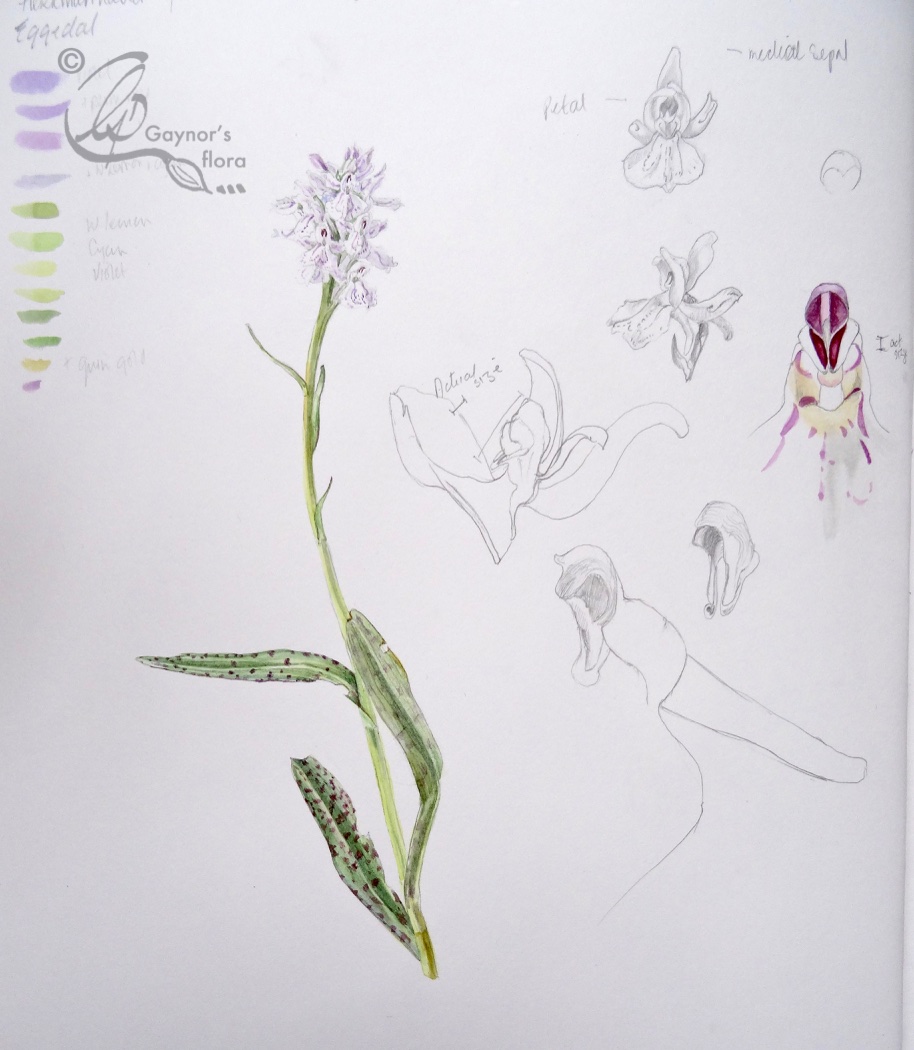
I also mentioned our trip into the mountains in Norway and showed you a list of plants that I might do for my next RHS submission. Here are a few sketches of the Heath spotted Orchid from my sketchbook.

Heath spotted Orchid sketchbook page
Heath spotted Orchid flower detail
Heath spotted Orchid leaf detail

They are in a Stillman & Bern Zeta sketchbook in watercolour.

Get in touch about the workshop in two weeks time.

← Back

Thank you for your response. ✨

Second Gaynor’s Flora update

Whilst I was away, I was filling in forms, writing CVs etc for the American Society of Botanical Artists (ASBA) conference in Pittsburgh and the exhibition in New York in November. I didn’t have access to all my paperwork to fill everything in, but thought I could rely on the information in my website. Not so! For some reason or other a couple of pages were empty, such as the one for awards, and several others were not updated. Why, I don’t know. But as my husband says it is because I’m human. That might be a surprise to some!

Have a look at my website, because some of the factual things were updated yesterday.

What has this got to do with botanical art? Find out in the botanical art course.

Whilst doing this vital function, I was reminded that I needed to mention that I have some places on the online botanical art course Online botanical art course .   I keep the number low for new people starting each month so that I don’t become overloaded with teaching, leaving no room for my own painting.

The feedback that students get back from me for each assignment is comprehensive – as those who are already doing the course can vouch for. Each assignment I receive often takes several hours to mark, so that as you embrace the tutorials and struggle with practicing for the work you send to me, you know that your efforts will be treated seriously.

The course is suitable for people starting out in botanical art and for those who want to improve. Generally speaking, the ‘wanting’ to improve in our botanical art practices applies to all of us and it sometimes helps to have someone else to guide us further along this path. Do sign up and give it a go.

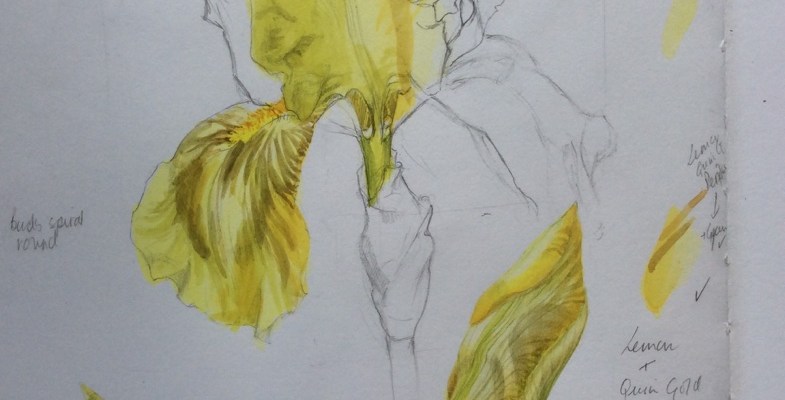
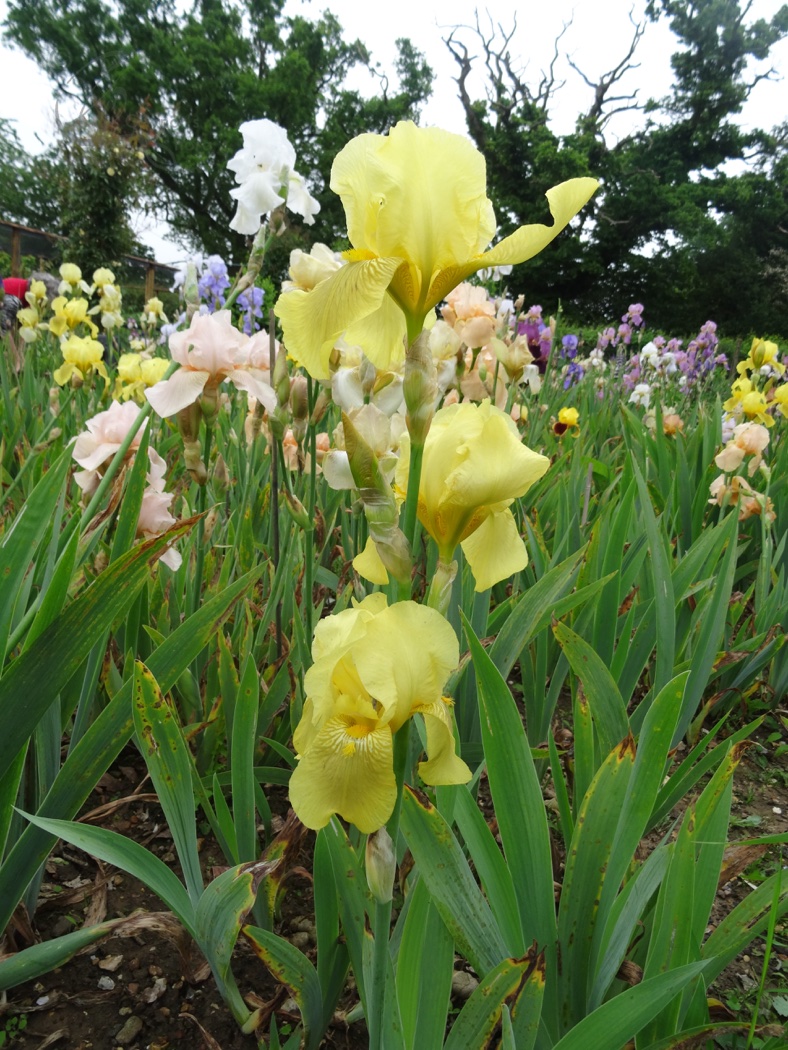
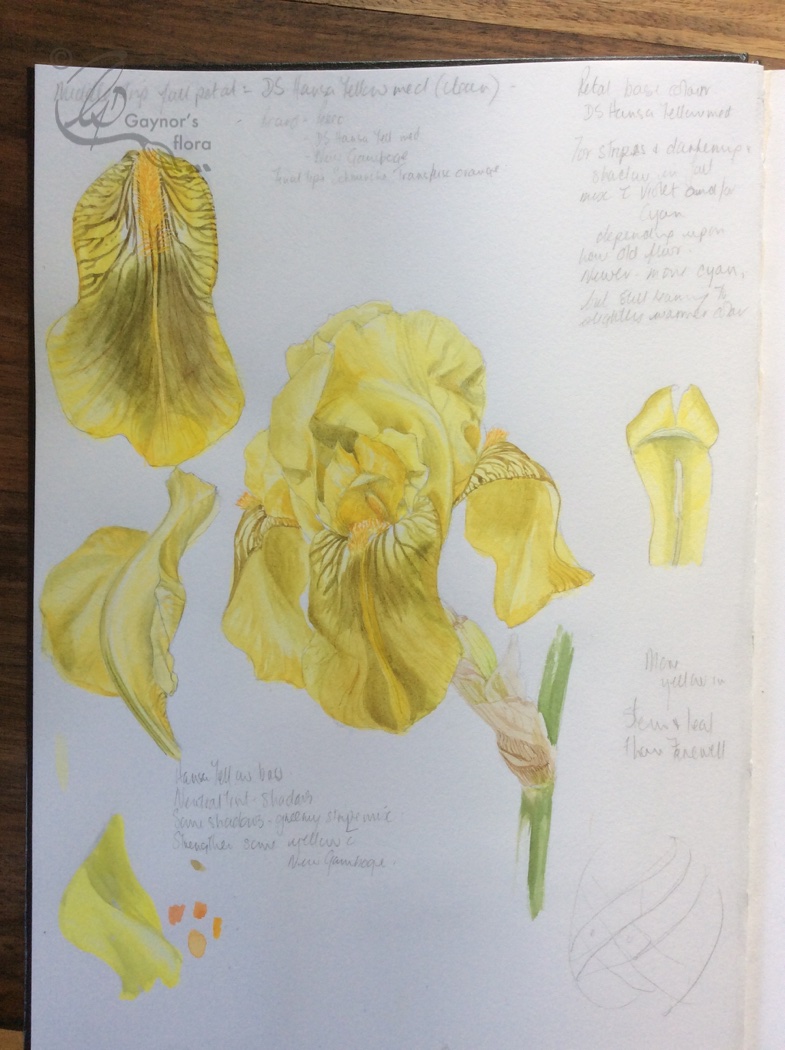
Going back to the beginning of June and the Cedric Morris collection of Irises; these are the pictures of the second Iris. This time it is the Benton Apollo. In the garden in Hadleigh, Suffolk, the Irises were at various stages of flowering. The Benton Farewell that I showed you yesterday had only just started flowering and there was only the one fully opened. However, the Benton Apollo Irises were very much in full bloom.

Iris Benton Apollo
Iris Benton Apollo

In this picture you can see some of the other Iris colours in background. And I believe that this part of the garden was secondary!! Anyway, again I was smitten. But who in their right mind would choose a yellow flower to paint?

Both white flowers and yellow flowers are considered very difficult to paint, but it all depends on whether you have leaves backing the flowers, and the way you do your shadows. In actual fact the Benton Farewell had a lot of subtle mauve tints in the white and the yellow iris has also some beautiful and interesting shades, particularly in the fall petals.

On Saturday evening I made my way home in the car. It was hot. For the first part of the journey, Julia accompanied me, sitting in the front seat holding her Iris cutting with all the windows wide open. My Iris was safely supported in the boot of the car – or so I thought! Julia’s Iris didn’t even flutter in the wind and mine was safely in the boot being torn to shreds.

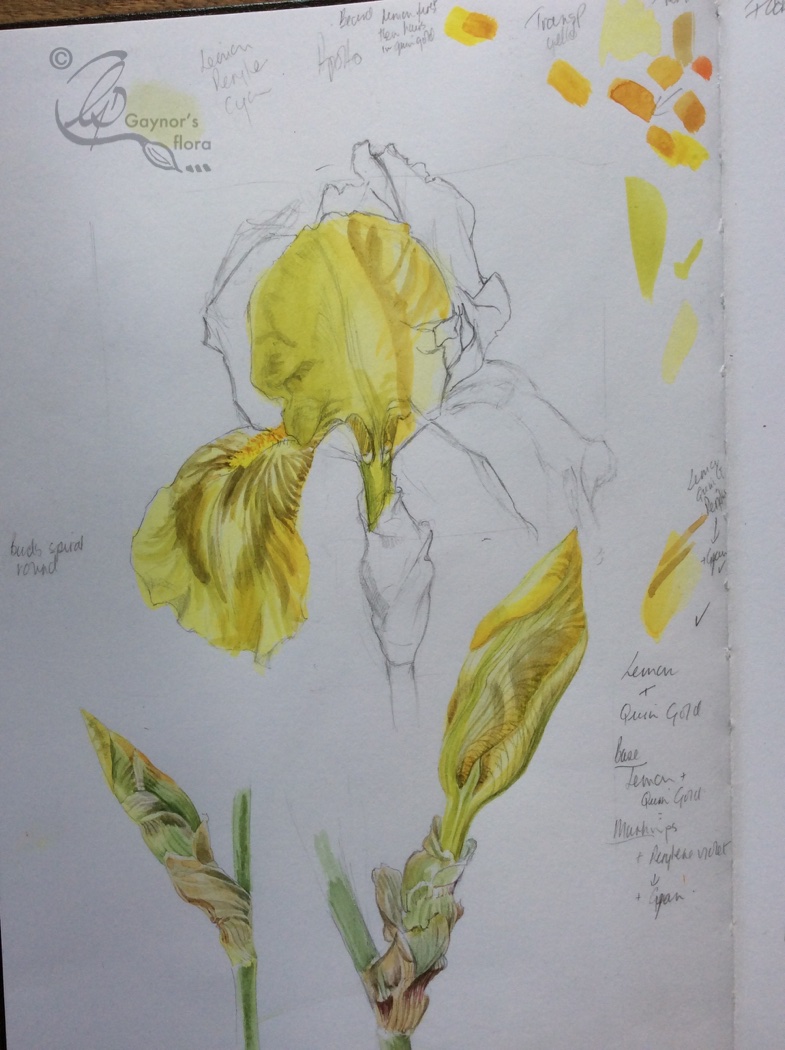
I was lucky enough to have some buds left on the cuttings and during the following week I did demonstrations on four days. What did I use for my subjects? The Irises of course.

Benton Apollo sketch done in situ.


Benton Apollo sketch from cutting

Both sketches are watercolour in a Stillman & Bern Zeta sketchbook.

Ménagerie à trois plus botanical art workshop

Please note the difference in spelling!

We have four cats, a pond with visiting ducks, a pair of Crows, Chaffinches, Wrens, Robins (as well as my husband and sister)Blackbirds, Goldfinches, Bearded Tits, Blue tits and Great Tits, two sorts of Woodpeckers, squirrels, rats and the normal rodents etc.

Although we have the cats, birds seem to feel very happy i the garden and seem to be left alone. In fact, one day there was a pheasant in the garden and the ginger one  – Fudge decided he wanted to join him, so walked towards the bird with his tail in the air. They seemed to spend a happy time following each other gently round the garden! The only things that seem to come to grief are the rats – 22 in 18 months!

During the workshop one of the students had her dog with her. She was a little worried at first as she thought her dog might chase the cats. The black & white cat – Allsorts (as in liquorice), brother of Fudge, knows how to deal with dogs. He just sits and stares them down. It always works. I think he took five minutes to train the dog!

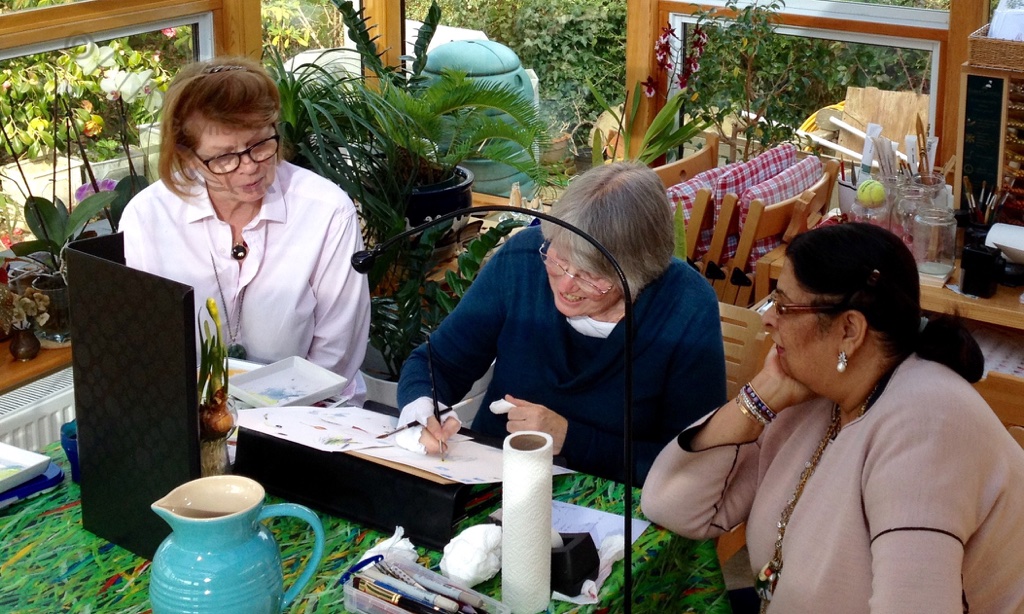
These were some of the views from the conservatory during the workshop at the weekend!

This slideshow requires JavaScript.

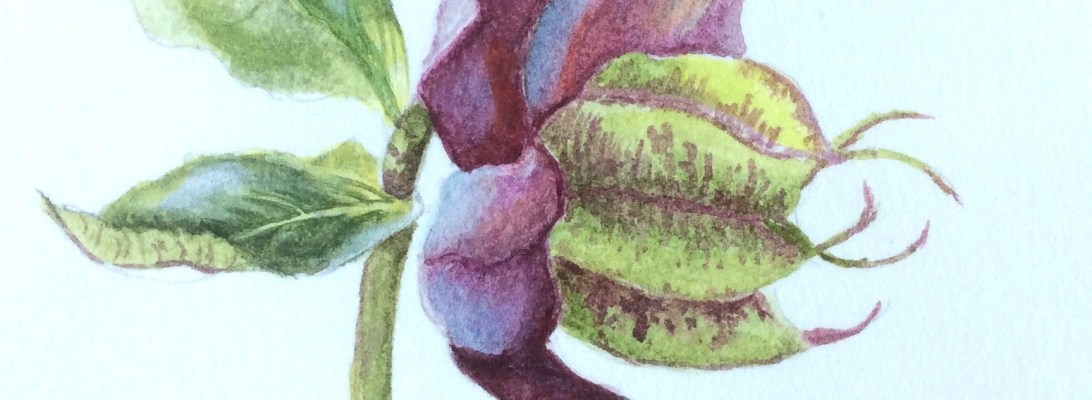
There was a botanical art class between Friday and Sunday. The title was May blossom and Irises. Irises are usually the topic of choice, but there was a whole garden to choose from. In the end there were 1 1/2 Iris pictures, two Canary Rose pictures, one crab apple blossom, a very pregnant Hellebore  and none of the yellow Irises from the pond. Three people used coloured pencil and two watercolour.

From my perspective the workshop was enjoyable and the feedback I have got is that those taking part also enjoyed it and learnt something too.

I am now taking on people who want to start the online botanical art course in June. To see what it is all about, have a look at my webpage on the subject. I restrict the number of people I take on board each month so that it is best to reserve your place as soon as possible. https://gaynorsflora.com/tuition-2/online-botanical-art-course/

This slideshow requires JavaScript.

And the results of the weekend so far. As I forgot to take it before packing up, there is one picture missing, but hopefully we will see the finished result in due course.

This slideshow requires JavaScript.


Botanical art workshops

This last weekend I had a very select group enjoying the peace and quiet of Bosham as well as individual botanical art tuition. The weather is gradually improving and picking subjects in the garden (the Magnolia) or in the vicinity (Eucalyptus), is no longer a trial. The following are a couple of photographs from the weekend:

© 1.IMG_1621 © 2.IMG_3428 © 3.IMG_3429

There are more workshops lined up, the next one is Friday and Saturday 8 -9 April.

So many people have asked me to have a workshop that focuses on drawing and shading. Now is your opportunity. It is called: Botanical drawing and shading in graphite.

So what is it that you want to draw in graphite? Is it a delicate flower, some twigs, leaves or what is it that takes your fancy?

Many plants started flowering in January and even before, but surprisingly enough there are still plenty of spring flowers. I am surprised that so many daffodils are flowering and there are swathes of them wherever you go.

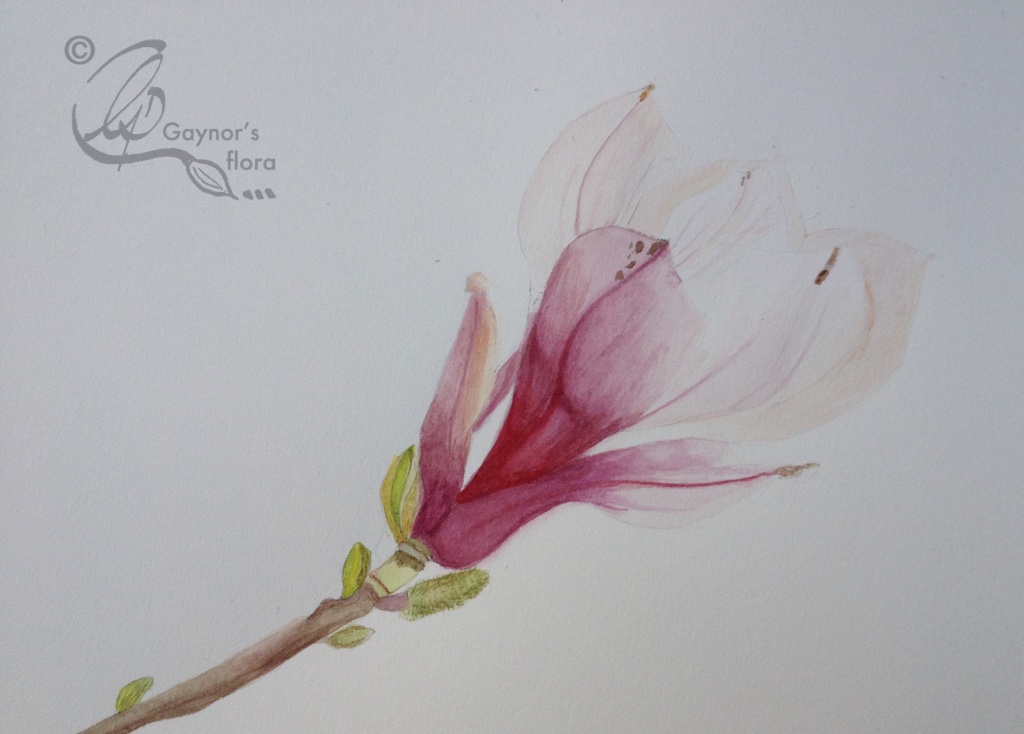
I’m afraid that the Magnolia really suffered this year. Its been trying to flower since the beginning of January, but with the recent cold snap it hasn’t been happy. As you see, one of my students at the weekend produced a really lovely picture. The tree normally flowers in early April and is hugely spectacular – but I doubt that we will see much of its glory by then.

But there is still a lot of last years plants drying out in the hedgerows and they provide very interesting subjects for graphite. Some leaves just have skeletal remains and these are really attractive.

Do get in touch soon to book your place.

© Graphite daffodil 8bit+sig

Another workshop happening this year is in Norway, June 24 – July 1. If you want to save a little on this holiday, book and pay your deposit by 31 March. Go to the page on this website specifically dedicated to the holiday.

June and July is a very beautiful time of year to visit Norway and if you haven’t been there before, it is likely to give you a taste for more. That of course is in addition to the teaching – which I am told, is good.

Imagine being able to concentrate on doing what you love – or interested in starting, in the most amazingly beautiful surroundings. You will have a view over the Oslo Fjord and you will experience the crystal clean air and sparkling colours that derive from this.

Do get in touch if you have anything you are wondering about in relation to workshops in Bosham or the Workshop holiday in Norway.

← Back

Thank you for your response. ✨


I forgot to give YouTube link in my last blog!

Do read my last blog in conjunction with this one. I posted it a few hours ago, but forgot to give the link to the YouTube video! How absent-minded can I get? My excuse is that I was called up to the house from the shed at the bottom of the garden.

Although my husband says he always adds a few minutes to things when I am needed for something or other, I still felt the pressure and rushed without checking properly. I just wanted to get the blog posted. More haste less speed.

The link to the new YouTube video is here: How to paint Shallots in watercolour – part 1

Again, this is the picture that is being painted.

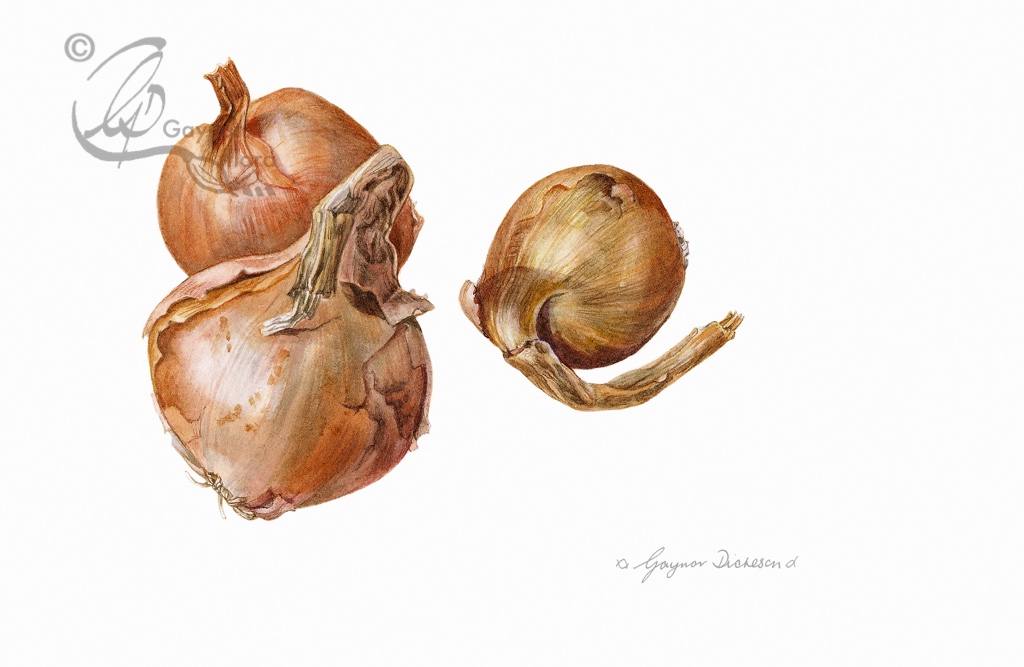
Shallots

The Botanical art workshop in April, Botanical Drawing and shading in graphite is 8-9 April.

Link to the Workshop page: Gaynor’s Flora workshops

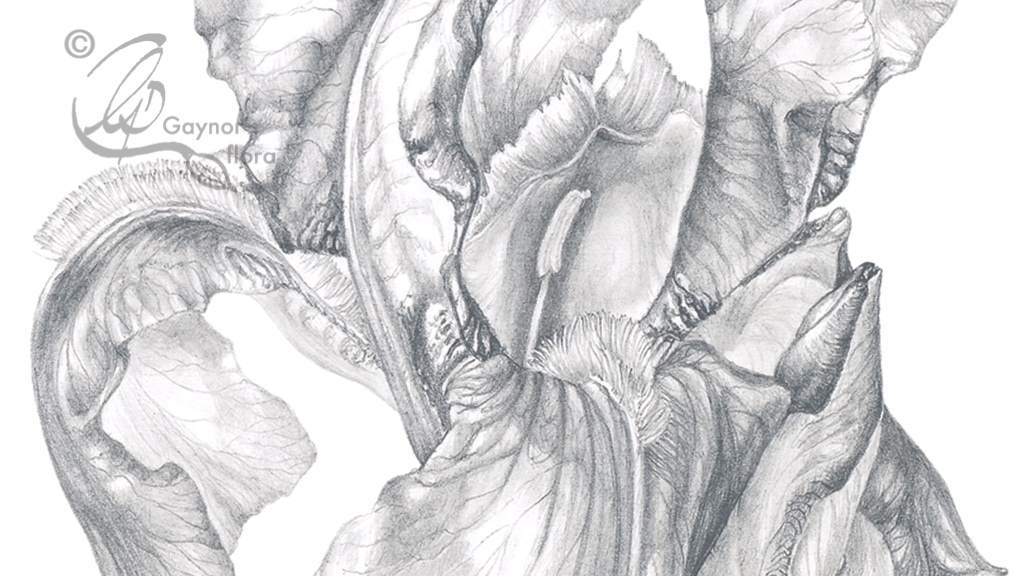
Bearded Iris

A new Youtube video – painting Shallots in watercolour

I have just this minute finished downloading two videos to YouTube. The first one is fully accessible and the second is only accessible at the moment through the online botanical art course.

Obviously doing these videos is the best way of actually seeing how a technique is done and, they are easy to film. What is not easy is all the work that needs to go into refining the video so that people both learn something from it and don’t get bored.

Botanical art is painstaking and can take quite a long time. Each stroke has to be thought about before it is applied. It therefore takes time. But with a video, people aren’t interested in seeing you spend time thinking! They want to see you apply that stroke and if there is anything special about it, they want to see what you need to do before you apply the stroke – how you fill your brush as an example. Unfortunately that bit is in the second video!

Another thing that is a source of interest, is seeing the painting develop, layer for layer – but in a reasonable time span.

The two videos are based on the same picture. The first one is a demonstration of the first washes on the three shallots, showing how the under-layer can also start creating form. It then goes on to show the painting of two of the shallots using time lapse photography. A short sequence in the middle is done in real time. Here is the link: How to paint Shallots in watercolour – part 1

The second video demonstrates the painting of the third shallot in detail. I have shown short sections in real time, to guide through the techniques I use. The rest is the real-time video speeded up a little. But at the moment this one is only available to those signed up for the online course.

Before I forget to mention it~the botanical art workshop in April is Friday & Saturday 8-9 April and is called ‘Botanical drawing and shading in graphite’. You will find the details and booking form under the section on Workshops. I look forward to hearing from you.

Shallots

Next botanical art workshop in Bosham

The next botanical art workshop in Bosham is Friday to Sunday, 18-20 March. The topic is ’Spring is on the way: flowers and bulbs’.

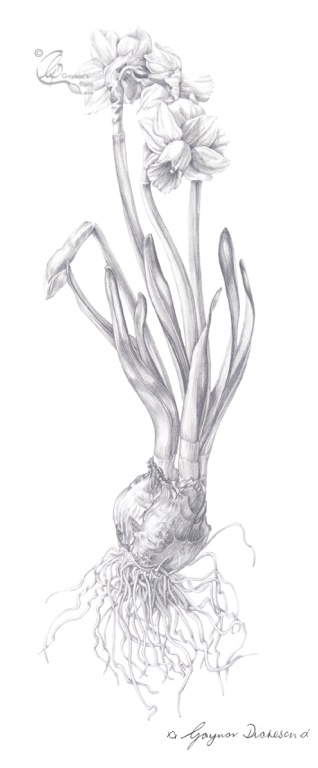
There is a huge opportunity to paint almost anything flowering in the garden, but particularly plants with their bulbs. I have noticed over the years that people love to see a flowering bulb. Painting the bulb is almost a welcome relief from the detail of the plant itself. Also, the difference in texture between the softness of the bloom and the solidness of the bulb gives additional opportunities for learning.

What is likely to be around then? It is only two weeks away and there is already a lot out there. I have some Crocosmia Lucifer corms growing in the garden, which you are very welcome to use as we have too much. The way they grow is quite intriguing and although they won’t have any flowers on them yet, the green spikes of the new leaves will be showing.

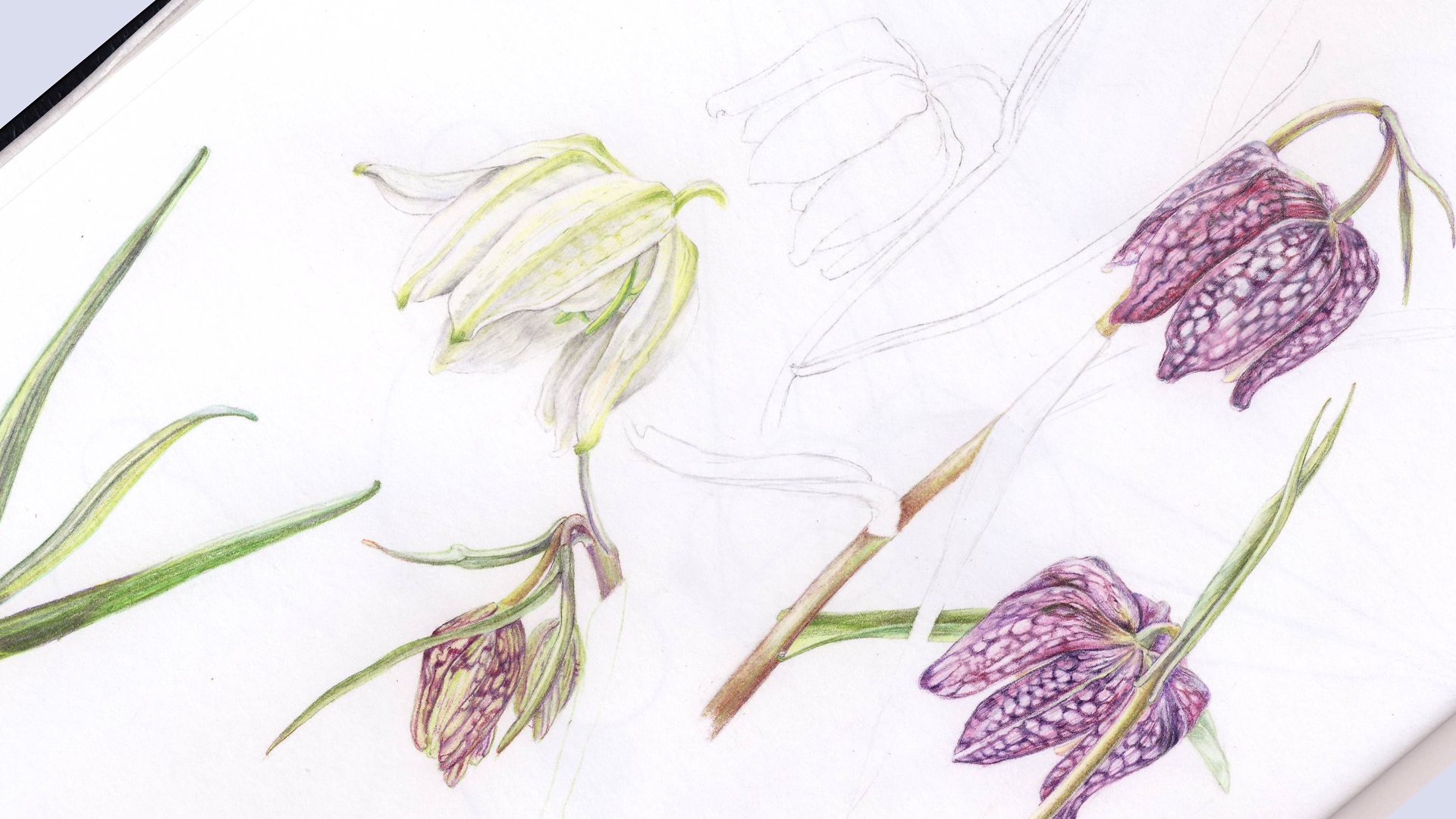
There are loads of flowering bulbs at the garden centre, such as small Irises, late flowering tiny daffs and even Fritillaria. If you have any in your garden, more the better. I know that normally the garden centre sell the flowering bulbs much earlier than they pop up in the garden. The Fritillaria below is the result of one such example. I don’t think they have begun to show in the garden yet, but the garden centres are selling them.

You can use either watercolour or coloured pencil. A delicious lunch is served each day as well as plenty of coffee, tea and biscuits.

Anyway, I still have some places available, so get in touch quickly to book your place.

Fritillaria meleagris FB event

← Back

Thank you for your response. ✨

New online botanical art course available from 1 March 2016

At last I have published details of the new online botanical art course. You will find information on the page of my website by clicking here: Gaynor’s Flora online botanical art course.

The course is based on six modules and is suitable for both experienced and inexperienced students. You choose your main medium;  either watercolour or coloured pencil and I have made YouTube videos to demonstrate techniques.

Unfortunately I will have to limit the number of new students that I take on at any one time, but take on new ones each month.

I look forward to hearing from you.

As it is almost the end of Hellebore time, I will pretty up this blog with ‘Hellebore mix’ in watercolour.

Hellebore mix in watercolour