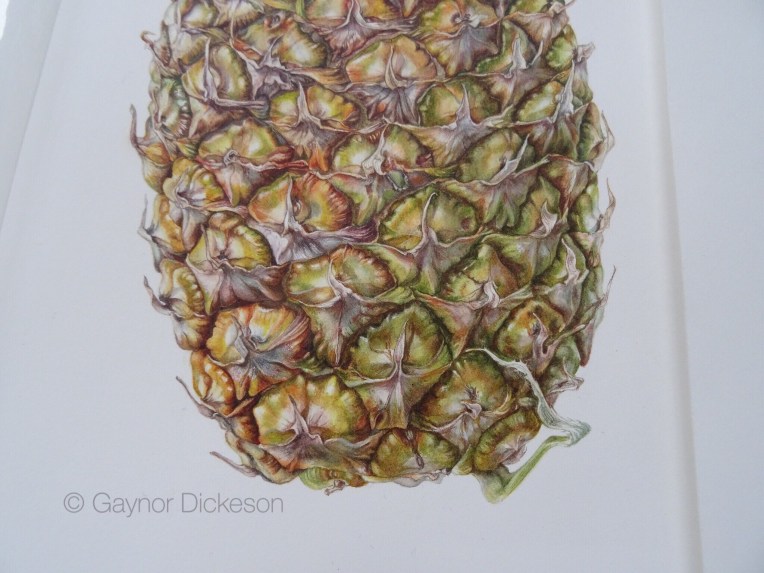
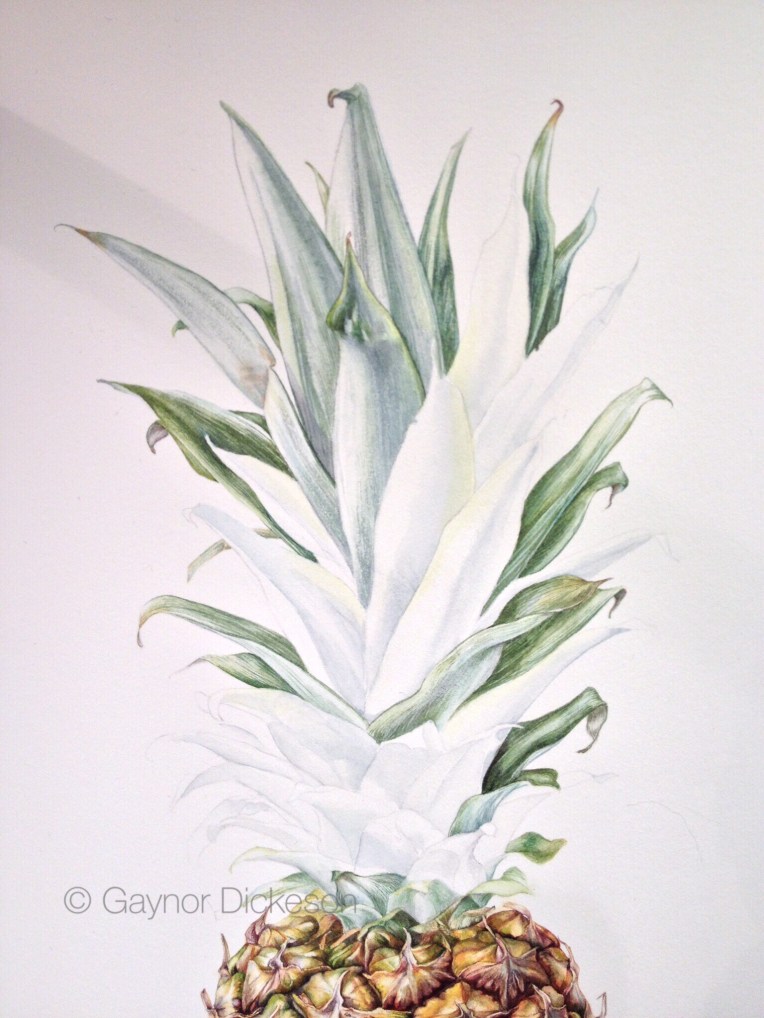
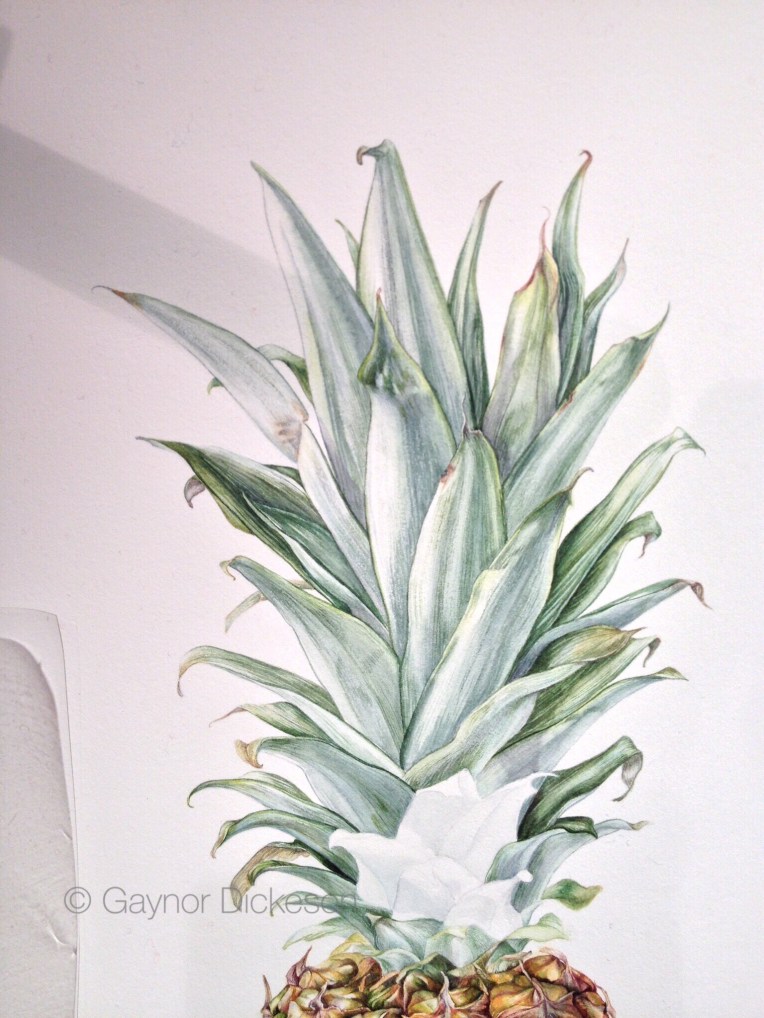
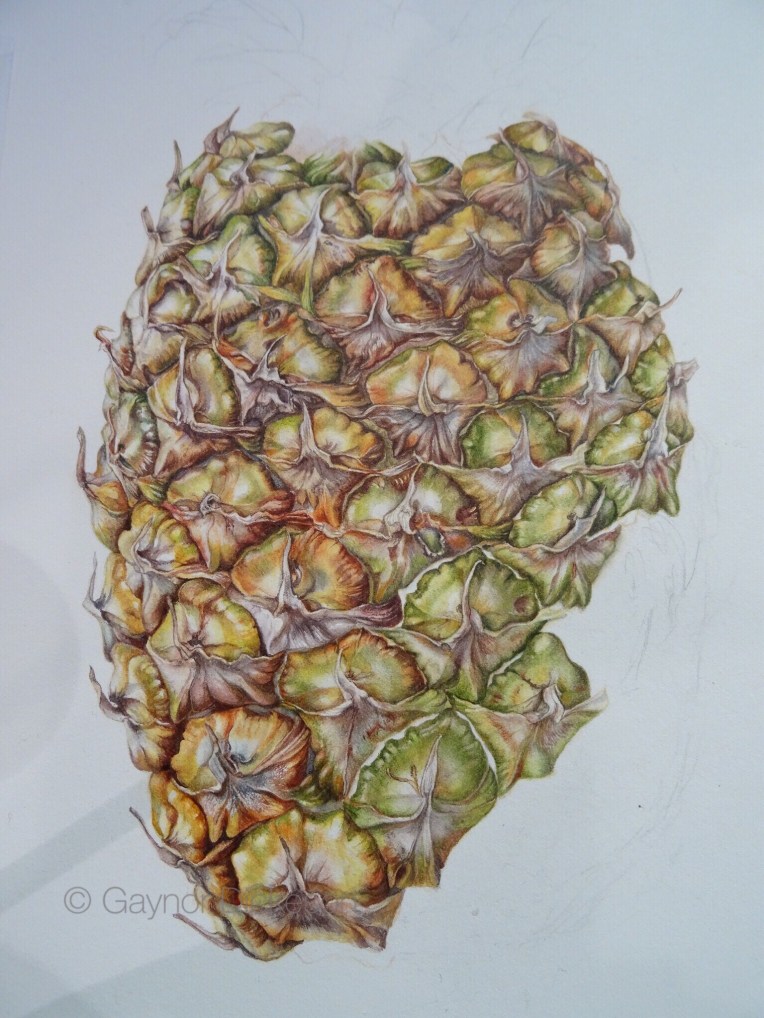
The Pineapple has gone for framing!

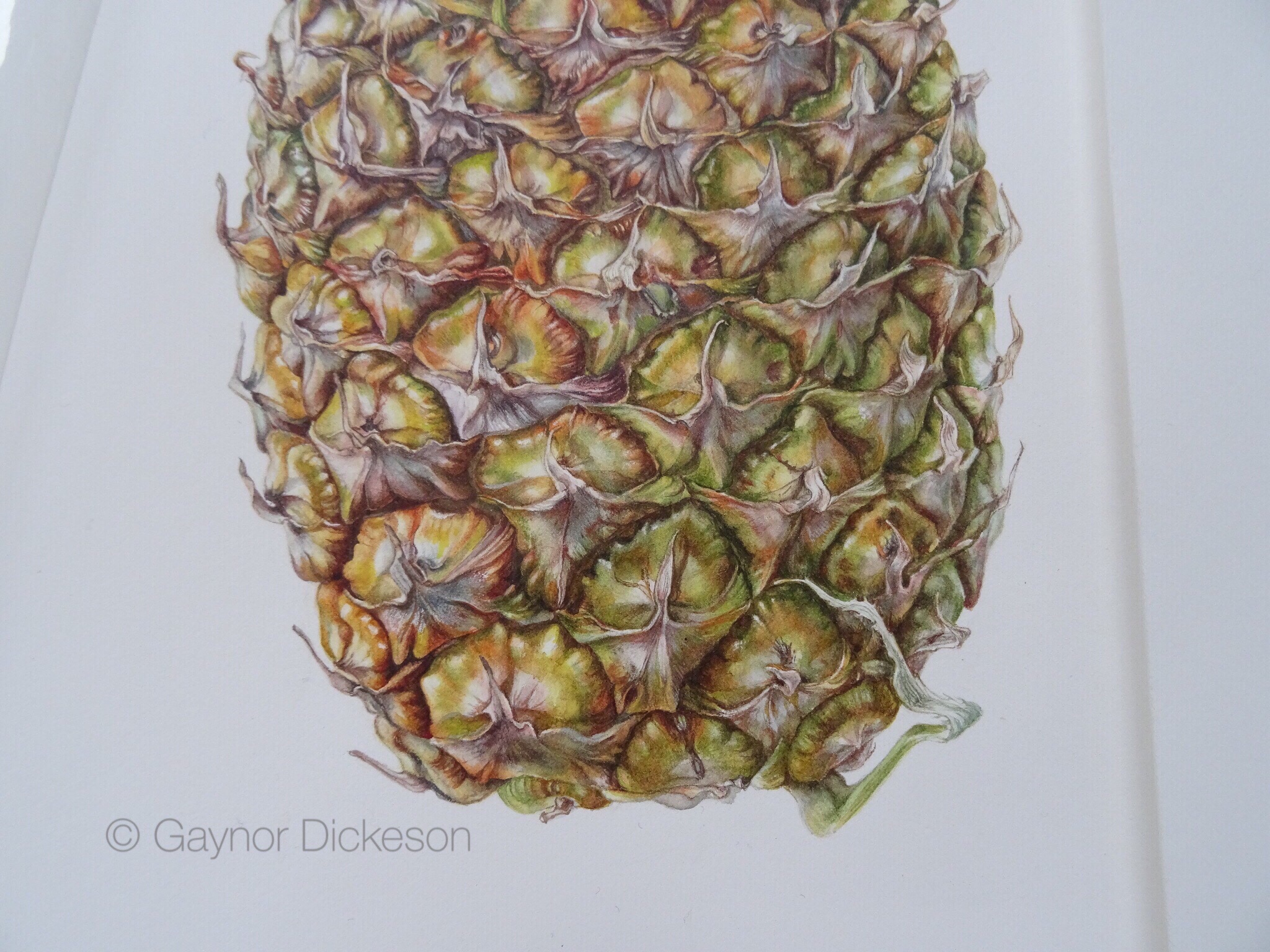
I believe that several people have wanted to see the finished pineapple. Today I took it for framing and very soon it will be out of my hands!

But, apart from teaching botanical art classes and workshops, I have started the small pictures that I will be giving to my nursing reunion friends in May. I don’t think that any of them follow this blog so I don’t have to worry that they will see the pictures in advance. They might not be particularly interested in botanical art, but hopefully I will be able to change their minds with the pictures. I’m just hoping that I haven’t bit off more than I can chew.  It is going slower than I wanted, but I still want the pictures to be done properly.

Whilst painting the pineapple, I had my camera on and hopefully in due course I will be able to post a video or two showing my technique. But that will definitely not be just yet.

In the meantime – the pineapple. I hope you approve.

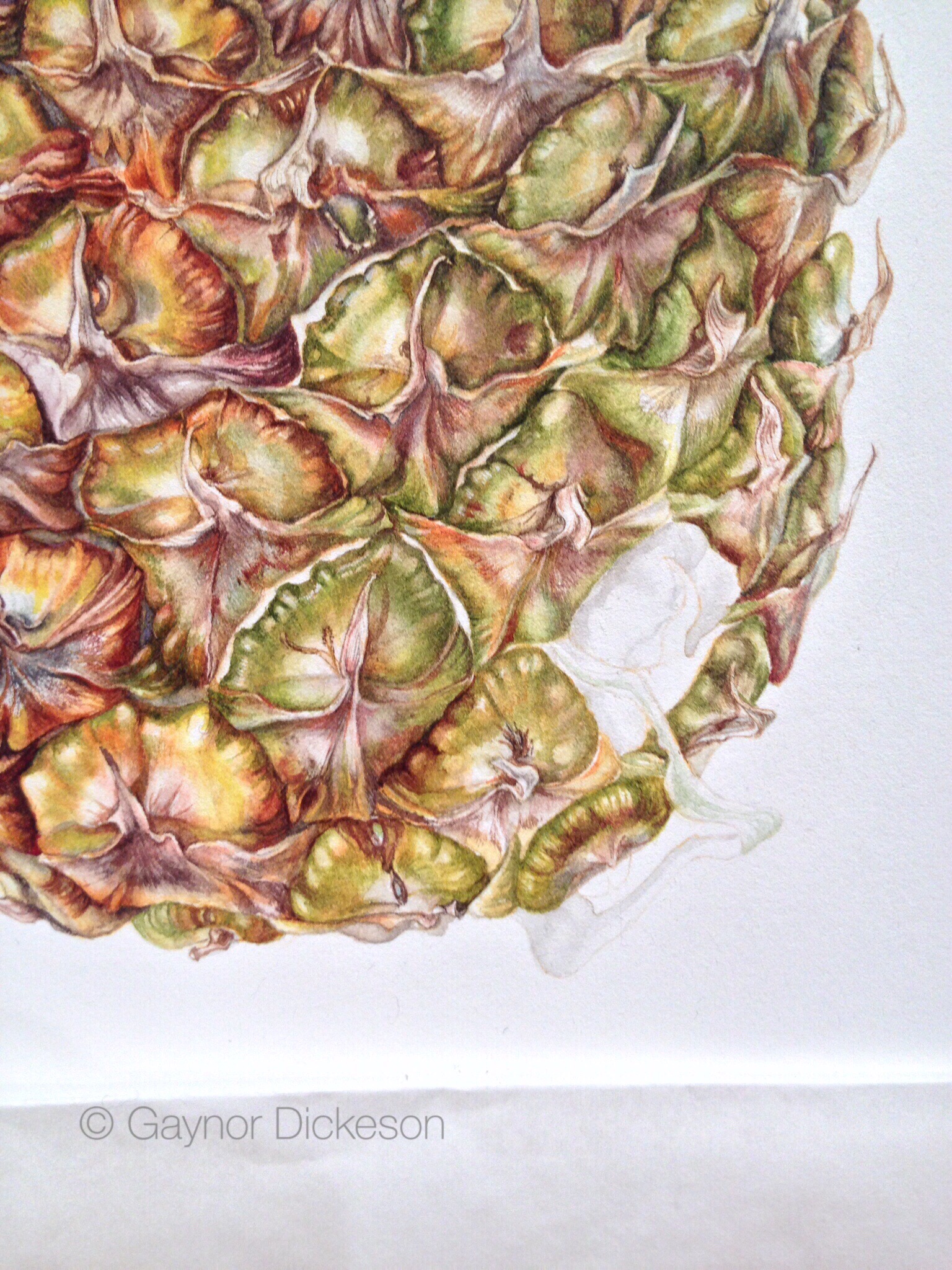
1.Pineapple 2015 +sig crop

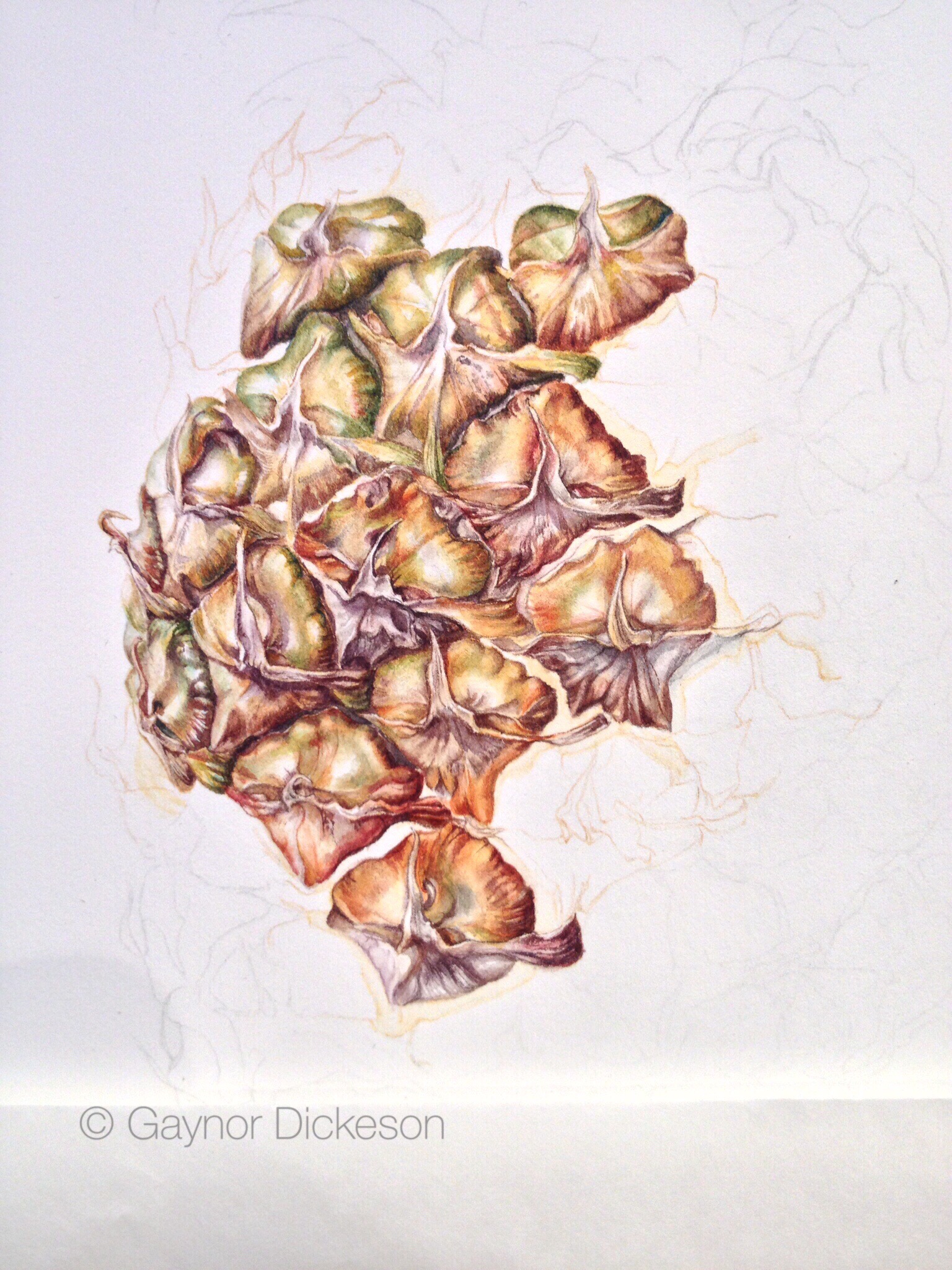
Last two ‘pineapple in progress’ pictures.

This is a very quick blog  – I hope.

The customer has seen the finished pineapple picture and is pleased with the results. Whew! It still has to be framed, but the recipient will not be getting it for a few more months. However, I have been given permission to release it.

Today I will just show the two remaing ‘in progress’ pictures and in the next few days I will post the final picture. I’m not sure which day as I have set aside the next two for concentrated painting – hopefully.

I and my set of 231 from the Queen Elisabeth School of Nursing, Birmingham, will be celebrating our 50th reunion in Bosham in May. As I am organising it, I thought I might do a series of small originals as presents for those coming.  By actually saying this, I suppose it will be documenting my intention. So watch this space and keep your fingers crossed that I can do 30 in that time. I am a terrible perfectionist and take a long time over each picture, so I will have to make a schedule, keep the pictures very small and keep to both intentions.


Institute of Analytical Plants Illustration (IAPI)

I have mentioned this organisation before. It is a very good group to get involved in, particularly for botanical artists and botanists. But have a look at the website and see for yourself  http://www.iapi.org.uk.

Yesterday, Robin and I drove up to Northampton for one of the regular meetings. They meet once every two months in different parts of the country and generally decide on a topic, get specialists in to talk to us, or as yesterday, use the very experienced members.

Last year we went to one of the meetings where Grasses was the topic. Yesterday, winter twigs was the subject. I have already described my feelings prior to and after the ‘grasses meeting’ and this time, prior to the day, I also thought winter twigs might be boring. If you have followed my blog you might remember that I was thrilled about what I learnt about grasses and yesterday was exactly the same. How could I even imagine that the subject could be boring!

I have found that when I am doing botanical painting, the result is usually better if I have studied the subject properly and not just painted it. For each of my RHS exhibits I did an awful lot of research and actually got quite hooked on finding out more about the subjects. I am also convinced that the research helped me get medals.

I am meant to be writing up notes on the meeting to get into the minutes, but I am doing this instead!

When we arrived at the meeting place, we were confronted with a table of twigs with numbers on and a sheet of paper with numbers on. The intention was to name the plants from which the twigs came and possibly include the scientific names as well. That was throwing me in at the deep end, but it wasn’t uncomfortable. We were there to learn. But I have to say that I didn’t identify many. Everyone was discussing and helping everyone else with this or that twig they thought they recognised, but couldn’t quite place. I was really amazed at some people with their wealth of knowledge whilst others were similar to me – although not quite as bad.

Roger Reynolds had put together the collection and created the list. Peter Mitchell talked to us about what we should be looking for to identify a twig.  He described the different types of tree shapes and growth habits; how the branches grew; the bark on the tree and the twigs; colour; texture; marks on the bark (also describing what they were there for); length of internodes; appearance of the terminal bud; how the buds repeated themselves round a branch; bud size and shape and a multitude of other things. So much made sense – but should I be surprised?

I think that one of the things I found most useful were the questions you need to ask yourself when faced with a unidentified twig.

Of course all the twigs in the selection were discussed in detail and we discovered what distinguished one from the other and why.

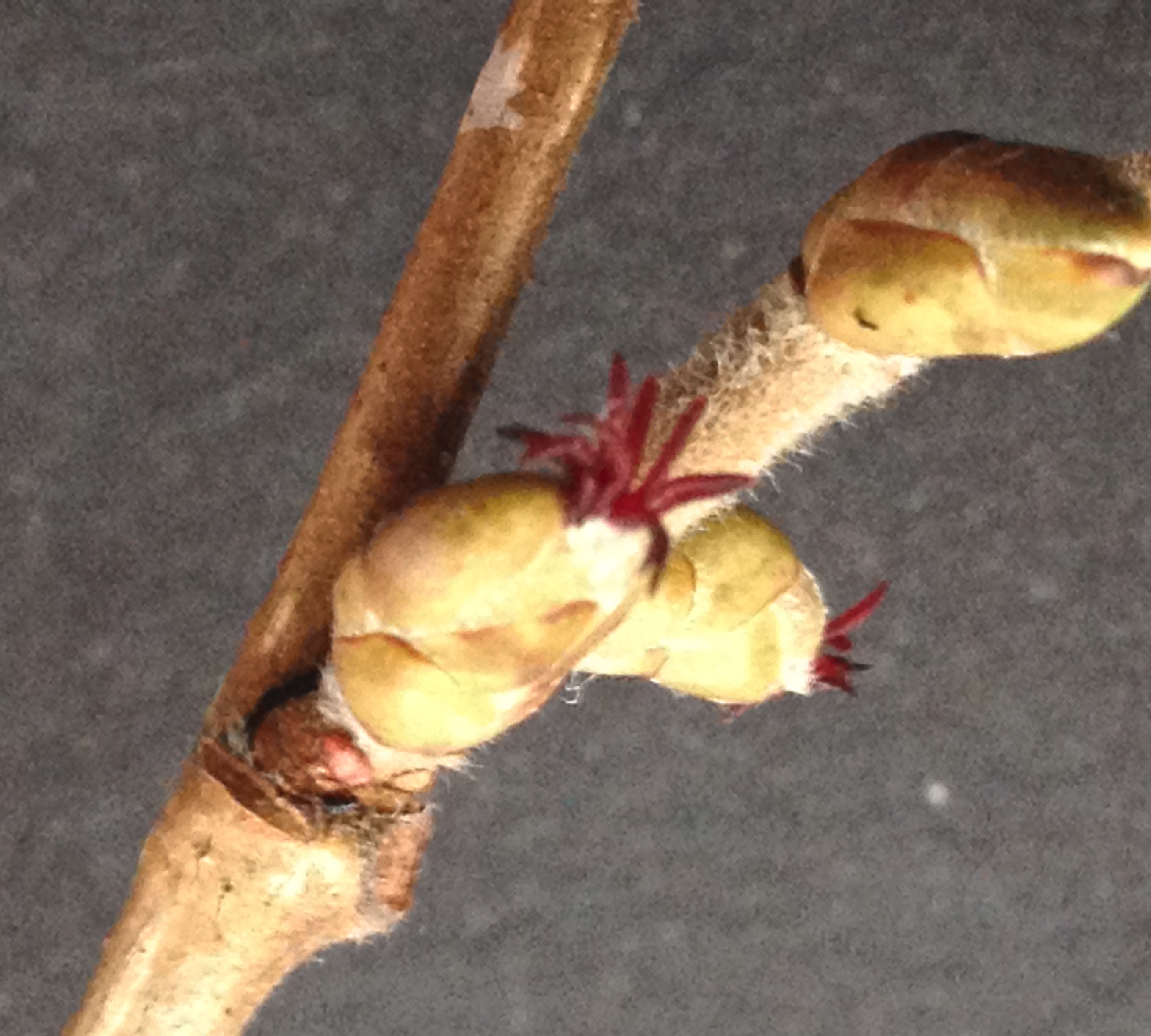
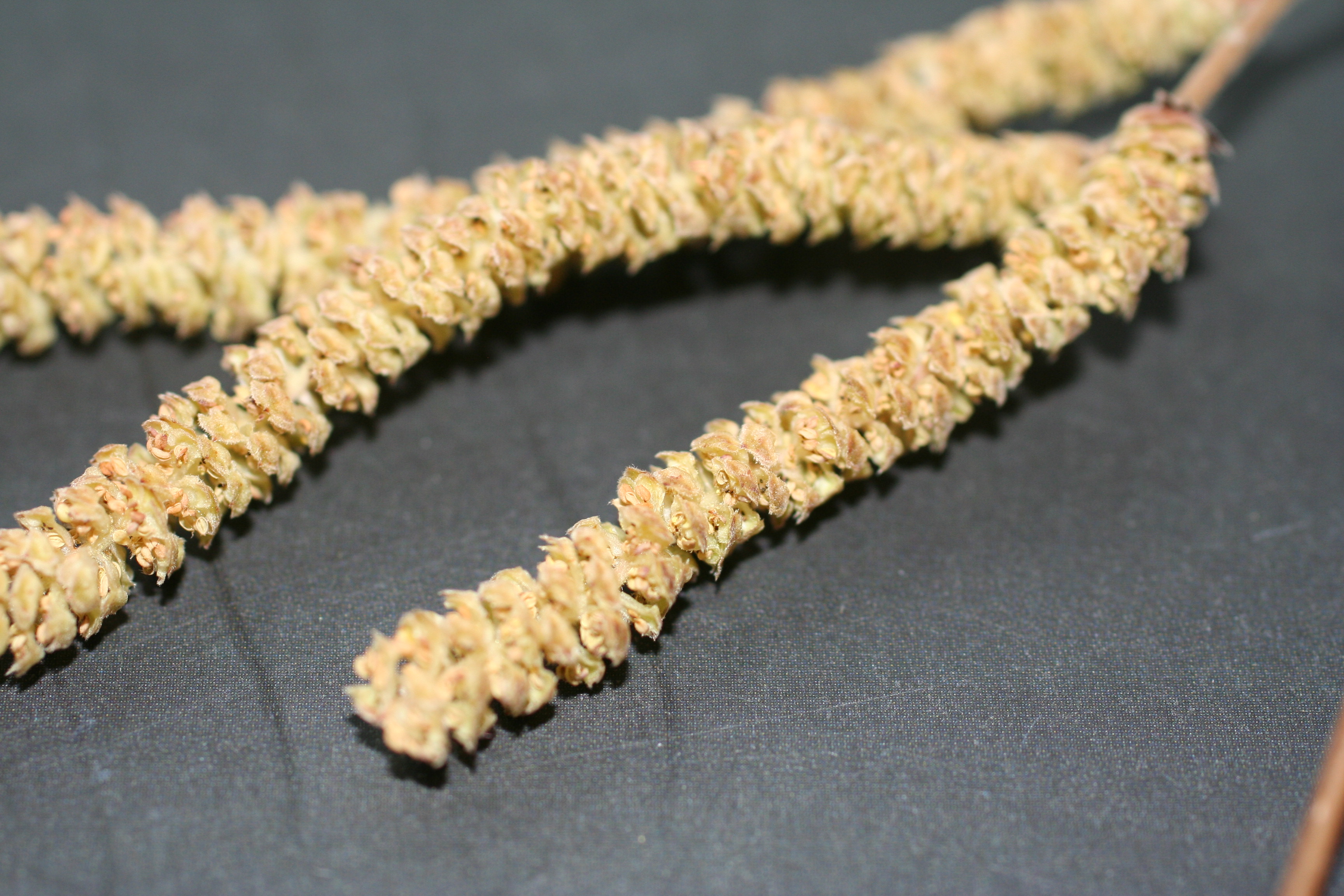
In the afternoon we had an opportunity to draw from the twig selection. I bought a couple of simple new microscopes which I intend to encourage my students to use. We used these to start some drawings and I tried to take one or two pictures of the detail from the hazel twigs, with male catkins and female buds. Unfortunately the pictures of the catkins through the microscope didn’t turn out too well, but I can vouch that the detail was very beautiful. I will be drawing or painting something from them at some point – although perhaps not just right at the minute.

Isn’t it funny how in botanical art and illustration, there is always something that is challenging you to do its portrait?

Hazel. The female bud seen through the microsope.
Hazel female bud from a different tree.
Hazel female bud. Notice the bud scales. The number can help determine species.
Hazel female buds in situ on the twig. Photo taken without the microscope.
Hazel catkins
Hazel catkins
Enlarged section of a Hazel catkin.
Enlarged section of a Hazel catkin. Hugely intricate

Promised Hellebore workshop pictures

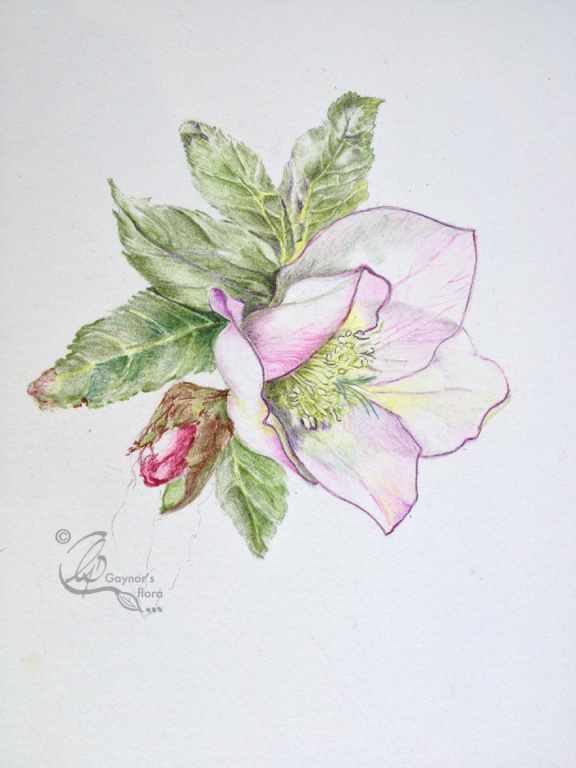
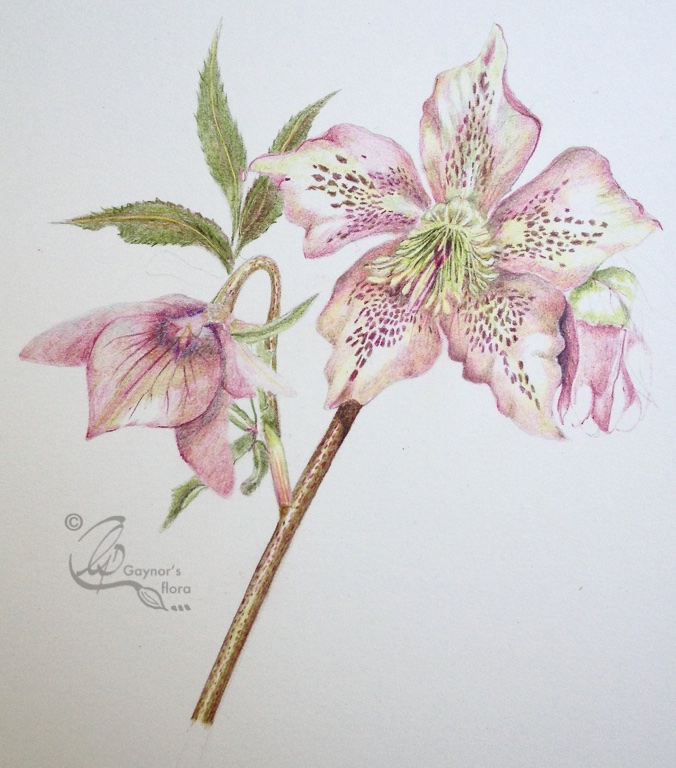
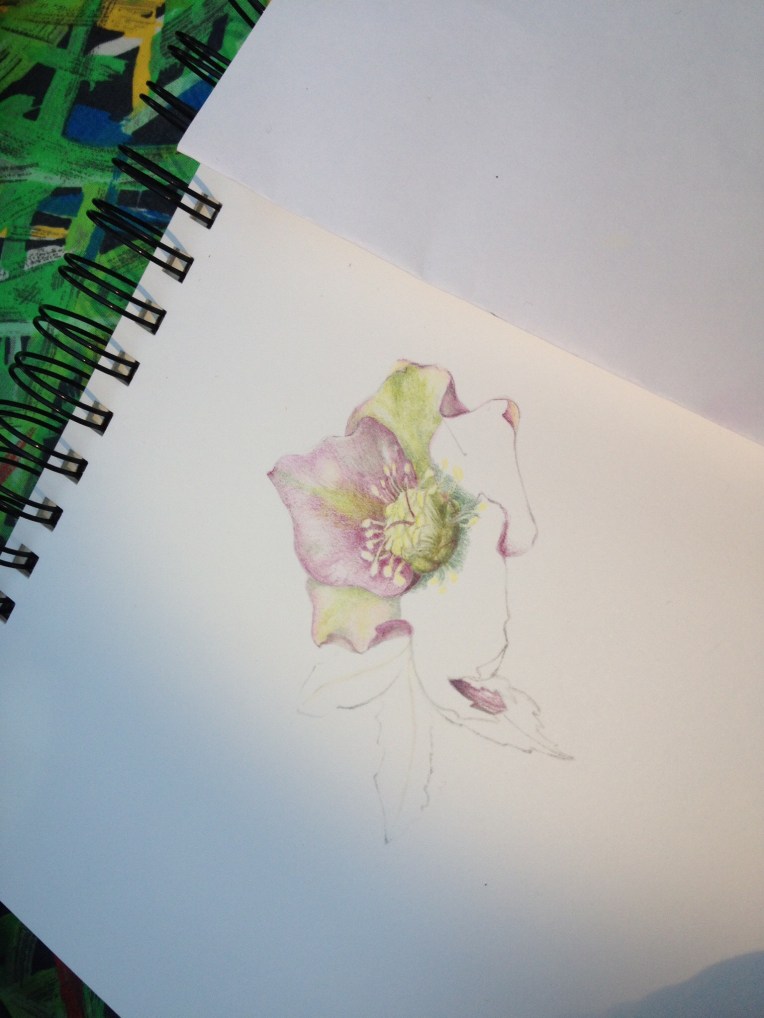
I promised to show the Hellebores following the botanical art workshop at the weekend.  Unfortunately I couldn’t do it before now as one student came back during the week for a class – taking advantage of being on holiday in the area; one went back to Norway; and one wanted to do some more at home after the workshop. However, here they are. I am really pleased with the pictures so far.  All the students decided to use coloured pencil, but painting Hellebores face exposed is not easy, whether using watercolour or coloured pencil. There is a lot of detailed work.

For those of you who do know a bit about coloured pencil and botanical art, no embossing tool was even near any of the pictures. They all decided to try doing it the hard way via controlling their pencil and carefully laying layers of colour. The results of this were really good.  Personally I feel that if you can avoid the embossing tool as much as possible, the result is more realistic and of course you don’t damage the paper. I think that In the end the students found the spots on the petals the most difficult.

It was the spot pattern on some of the Hellebores that had attracted several of them to choose these particular flowers, but they didn’t find it as easy as they had thought. The reason for this was that the spots guide the insects to the nectaries and this creates a specific pattern, but at the same time they accentuate the shape and fall of the petals – almost in the same way as the veins do. Not easy.

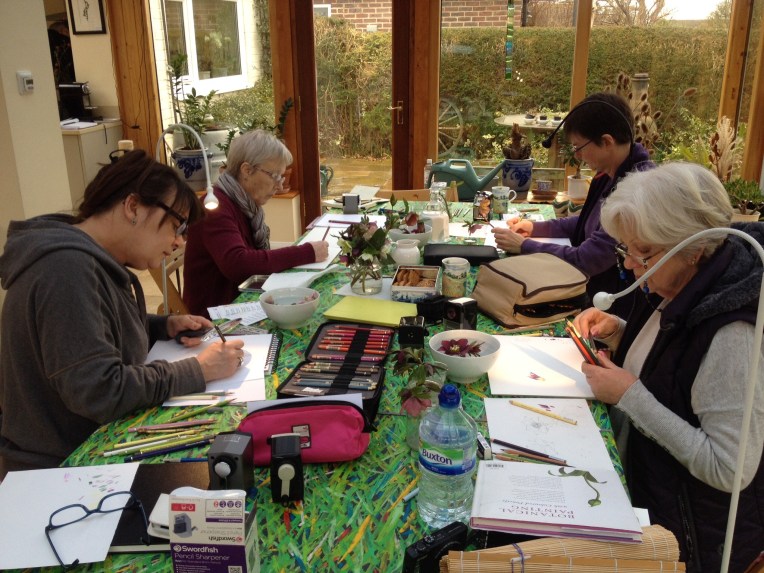
It was interesting listening to the conversation round the table about their individual choices of flowers. One felt she wasn’t able to get things really dark with CP, so chose the dark flower.  She found that spending time on choosing the right colours and deciding the order in which they were used, helps a lot – as does being conscious of contrast. Another person chose a pale flower as they had difficulty doing pale. One person didn’t really like Hellebores but wanted to learn how to do them.

As each of them benefitted from looking at each others work, it was quite rewarding. I think that all were surprised and pleased with their results.

Please enjoy.

1.IMG_2231 2.IMG_2259 3.IMG_2297 - Version 2 4.IMG_2280 - Version 2

Hellebore Botanical art workshop in Bosham

I started a three- day workshop in Bosham yesterday and was surprised to see that all those attending chose to use coloured pencil. Those artists who have already been to me before, know that I teach both coloured pencil and watercolour. I think it has only happened once before that the medium of choice for everyone was coloured pencil

Some people had brought Hellebores from their own gardens to paint, but in the end they all chose from our garden. You might already know that Hellebores are rather promiscuous and therefore breed more than rabbits do and aren’t too choosey about which variety they choose to mate with either! We have Niger ones, slate ones, pale ones, dark ones, spotty ones and a really lovely one we noticed today that was pink and green, with tips of lime green. Amazing.

People have been working hard and concentrating on what they were doing, except each time the pheasant appeared in the garden. He is quite beautiful with a white head and with wattles. I’m not exactly sure what type he is, but if anyone knows, please tell me.

Yesterday a lot of time went into planning the Hellebore picture. Although they probably wouldn’t finish the whole thing over the weekend, I felt it important to focus a little on composition so that when they added to the picture later,  the composition had been planned properly.

The colour was started yesterday, mostly around the stamens. Today they have been forging ahead and these were the results by about lunchtime today. Hopefully I will be able to show some finished results by end of play tomorrow.


The Norwegian Society for Botanical Artists – newly founded today!

This has been a very eventful day. As a result of the visit to Kew Gardens today, and a serious discussion there inspired by exhibits in the Shirley Sherwood Gallery, we decided to found the Norwegian Society of Botanical Artists – Den Norske Foreningen for Botaniske Kunstnere.

My friend Tone Minde from Norway lives on the south coast in a town called Arendal. She is a garden designer with a special interest in botanical art. She like me, has tried to find other botanical artists or even an organisation that has some interest in this subject in Norway. The only thing that either of us found, were organisations in relation to gardens, mountains, botany and the environment, but nothing in relation to botanical art or illustration. So we decided to try and do something to plug this obvious gap.

I am aware that there are a couple of illustrators living in Norway and attached to botanical gardens in the country.

I know that botanical art has been neglected for many years in some countries. In the UK it has become very popular, as it has in North America, South Africa and Australia, and parts of mainland Europe. It was brought home to us today at the Shirley Sherwood Gallery that Norway is being left behind.

There were three different exhibitions today at the gallery, including one from the Dutch Society of Botanical Artists formed within the last ten years. It was interesting to note that their aims included:

To provide information about botanical art and to bring it to the attention of as wide a public as possible.

To bring together botanical artists, illustrators and anyone interested in botanical art.

To improve the quality of botanical art in the Netherlands.

We would like to promote botanical art in Norway in the same way as has happened in other countries so that our children can learn to look and see and portray the beauty and the detail in the Norwegian landscape.

We are looking for like-minded people to join the group with the intention of developing an interest in studying and painting Norway’s beautiful flora. Do get in touch so that we can tell you more.

Last year I made a start on bringing more botanical art to Norway. I ran a successful workshop on painting Norwegian plants, in Åsgårdstrand in south-eastern Norway. This attracted two Norwegians, one American, one German and four British people. Following the popularity of last year’s event, I will run another workshop in Norway this June. Full details are on my website http://www.gaynorsflora.com.

Tone and Gaynor outside the Orangery at Kew today, after deciding to form the Norwegian Society for Botanical Artists.
Capturing crocii on camera to take home to the Norwegian winter.
Tone Minde - admiring the crocus display at Kew.
Tone Minde – admiring the crocus display at Kew.

The pineapple and arrival of Rory McEwen vellum

This week has been and will continue to be quite eventful. On Sunday, we drove up to London to deliver pictures for the SBA exhibition in April at Westminster. Several assignments have arrived from London Art College to mark and I have started these. This morning I had my usual weekly class and this afternoon a friend arrived from Norway ready to take part in the workshop I am holding this weekend – Friday to Sunday.

Tomorrow we plan to go to Kew and of course the highlight will be to visit the Shirley Sherwood Gallery of botanical art. Hopefully I will be able to write a bit about it in the evening.

But today there was a big knock on the door. I could see the sun flooding in through the glass in the door and the shadow of a person standing outside. I opened the door and there stood our very smiley ( and helpful) postman with a parcel in his hand. I saw straight away that it came from the Hunt Institute, Pittsburgh. It was the vellum! I was so excited and the poor man got dragged inside to be told the story behind it all.

I understand that not everyone is entirely sure what vellum is. It is animal skin – often goat or lamb, which has been collected from abattoirs and prepared by specialists for painting or writing on. It is parchment, the same material that old documents were written on. In fact all acts of Parliament are still written on parchment.

Why use vellum/parchment rather than paper? Well, the archival properties of parchment are far greater than that of paper. For important documents this is an important consideration. For artwork this too is very important, but there are additional benefits ( and difficulties). Watercolour is applied with a dry brush technique as unlike paper, the pigment lies on the surface of the skin. In doing so, the pigment reflects its colour well as it is not absorbed into the skin and dulled in any way. Rory McEwen’s pictures really do show this fact very well.

But as I haven’t yet decided what to paint on the vellum, it is likely to be a few months before I get started with it.

Last of all, how is the pineapple doing? In showing these pictures, I am being careful not to show how I have pulled the painting together as a whole. I think it important that the person who is to receive it, should see it first as a complete picture. Once that happens, I will then post it on my blog.

More pictures!
IMG_0073

IMG_0074

IMG_0075

From the fruit to the leaves. I read somewhere the other day about someone needing to get into the ‘zone’, when painting a picture. That really struck me with this pineapple, because it was so different from the last piece of work I did. It had to feel right before I actually started putting paint on the paper. I had to feel confident that the colours I was going to use were the right ones, and that the sequence of colours and the way I laid them, were right for this picture too.

I now had this feeling all over again. I was going to use exactly the same colours as I used for the fruit, but in different mixes. The textural effect I wanted would be completely different. It felt like starting from the beginning and needing to get in the ‘zone’ – but more importantly I couldn’t afford to make any mistakes at this stage. I had to be confident of what I was doing, before I did it.

I started off with painting the shadows in a neutral mix. This was to establish where the light came from, and therefore how the shadows would have an effect on the shape of the leaves. I couldn’t do this in the same way with the fruit part of the picture, because I knew I would be using a series of pineapples and painting each segment from the ‘fresh pineapple of the moment’. By the way, I used four pineapples for the fruit.

Have you noticed how the pineapple fibre really gets caught between your teeth?

Back to painting the leaves. Once I had established where the shadows would be, I started painting the leaves where I could see the upper surface, which was a darker green and quite shiny. I needed to make sure I had some good tonal contrasts in these areas. Am I succeeding?

IMG_0076

Rory McEwen and my pineapple.

There is nothing to connect Rory McEwen and my pineapple – other than botanical art.

But I am dead chuffed and sad at the same time. I watched the programme on BBC today about Rory McEwen and felt so sad that such a gifted person died so young and in such a manner. I so wish I had been around when he was doing his wonderful paintings.

When I was at the Hunt Institute in Pittsburg two years ago, I had to pinch myself that because my work was accepted in the Hunt, and while there I was allowed to see whatever works that they had in their collection. I wanted to see Rory McEwen’s work and saw it in the ‘flesh’ without being protected by glass. It was amazing.

Four minutes after the end of the Rory McEwen programme today I got an email from the Hunt to tell me that I had been gifted a piece of Rory McEwen vellum. When he died, his vellum was given to the Hunt Institute and pieces have been gifted to botanical artists over the years. Now I am one of them. I can’t believe it.

Painting on vellum is hugely different to painting on paper. I will have to think of something really special to paint on it in due course.

But my pineapple. More pictures.

IMG_0065

IMG_0066

IMG_0067

IMG_0068

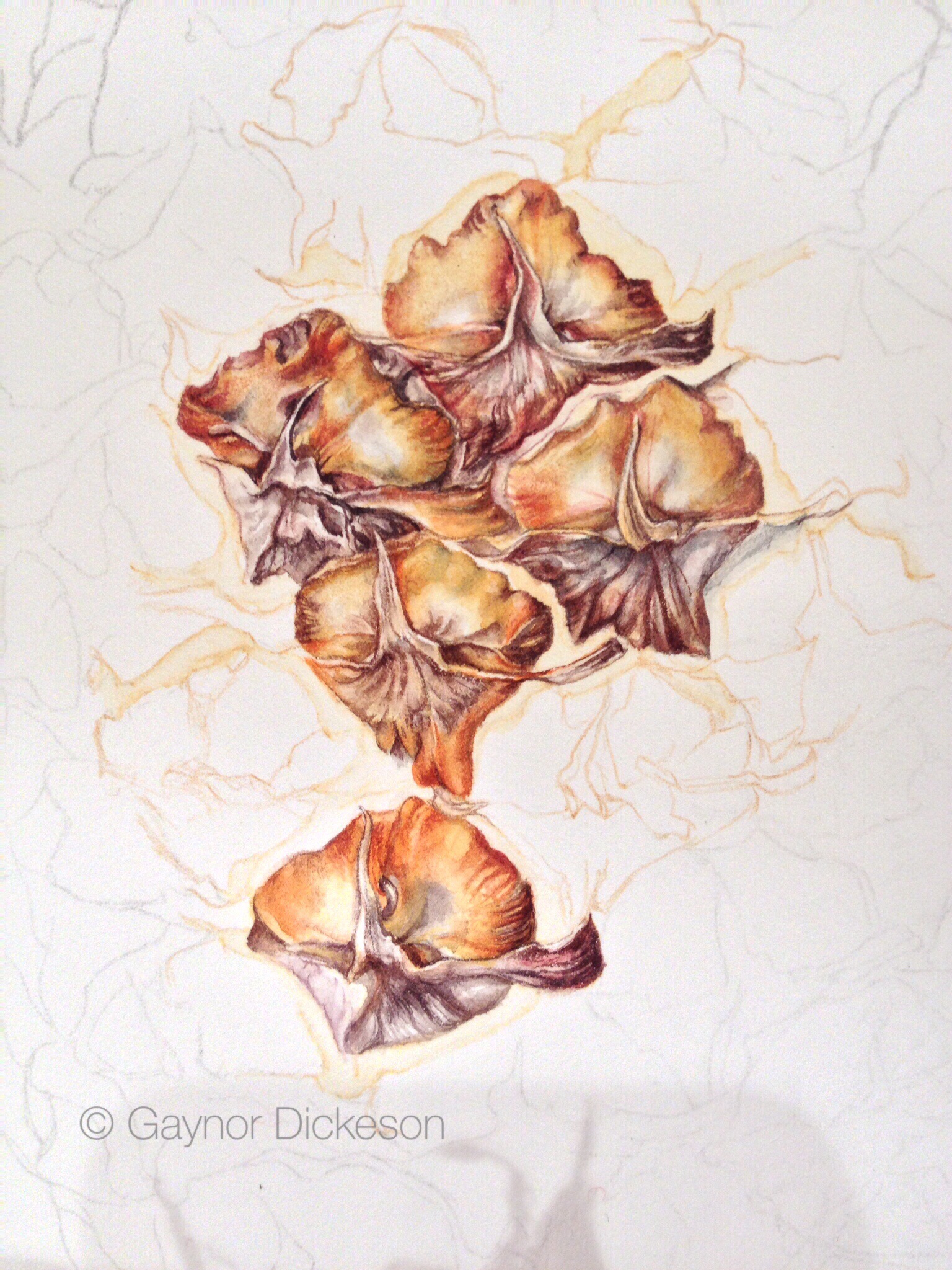
More pineapple segments

I have a feeling that posting the progression of this pineapple might be just a little boring for some. But on the other hand it also portrays the amount of work necessary and how I have to continually adjust the colours and the segments in relation to each other.

Knowing how I paint each segment in a rapidly changing pineapple is interesting in itself. Obviously I paint what I see, but I have to bear in mind that once all the segments are done, they need to be moulded into a complete shape. I can envisage that being the tricky part.

For this past week I have been painting every spare moment. My pineapple is somewhat further advanced than I am showing you here, but as this is a commission, I don’t feel it is right to show the completed work until the client has received the picture. The picture is far from being complete, although to date we have eaten four pineapples that were rather the worse for wear. They still tasted good though!

I mentioned that I take pains to draw the pineapple and arrange the segments appropriately. Once that is done I transfer this to my watercolour paper. But what happens then, particularly when I have to change pineapples? This is why I draw the segments in so they can easily be adjusted. I paint from life, therefore when I begin a new pineapple, I place it in such a position as to be able to find segments facing the same direction as on my original drawing.

Sometimes it can be quite difficult as every segment is different, and may not fit in too well. But so far it is going OK.

I have just had a thought. The Norwegian Botanical Art holiday workshop is over a longish period where one can work continuously and with guidance. A pineapple (although not of Norwegian origin) would be something one could work on. Do you fancy having a go? Look at http://www.gaynorsflora.com/page10.htm for details.

IMG_0062

IMG_0063

IMG_0064

IMG_0061