Another successful botanical art pen & ink workshop in Bosham

The last workshop was a week ago – pen and ink. I’m afraid I got carried away and forgot to get a few of the photo shots before people left. I now have all of them and can display them on the blog.

When you look at them, you must admit that they are good. All of the students were using this technique for the first time, therefore, not one of them was comfortable with it. It will be interesting to see if they enjoy the technique as much as I do, long term. I know I will be keeping my eyes open to what is produced in the future.

Do enjoy the photos.

By the way, I will be giving everyone who attends the summer workshop holiday in Norway, the option to learn the technique over a couple of days during that week. I will be taking the additional equipment necessary, with me. But just one more reason why you might decide to join the group for this holiday! Do sign up.

Of course the class working. They concentrated  hard on this workshop, but it was worth it.

image

A new botanical art video: How to draw a Poppy seedcase in graphite

In actual fact, I ought to make a correction to the above title straight away; its How I draw a poppy seedcase in graphite.

Since we came back from Italy, I have been chasing my tail as usual. But there is a result, so the time wasn’t wasted.

I’m in the process of writing a new, online botanical art course starting off with graphite, moving to pen & ink and then either watercolour or coloured pencil (one or the other – the choice being the student’s). I have put a lot of work into the sections I have done so far and knowing that different people learn in different ways, I have thought a lot about this quite a bit.

My husband has been a beautiful model in some sections so that I have been able to explain in words and show in photographs, different techniques. That is the reading and seeing bit. But then we have audio input too, and that is where videos come in.

Some of the videos I have done so far are very short and will not be available unless through the course, but today I have actually finished one that shows how I do a botanical graphite drawing from line drawing to finished piece.

This is the finished artwork – only small and as yet I haven’t really found a title for it other than Poppy seedcase. But if you have some imaginative titles, please give me a prod. At the moment I am a little brain dead!


Poppy seedcase in graphite
Here is the link to the YouTube video. Comments are welcome: How to draw a Poppy seedcase in graphite. By the way, does anyone know the name of the species? It is rather unusual in that it doesn’t have the typical pepper-pot top. Apparently, the seeds remain within the capsule and it is a species that is collected as a source for poppy seed in cooking. I was told its name, but I didn’t make a note of it.

Summer Open Studio – Botanical art

Its that time of year again. Children are on holiday and the waterways (as well as motorways) are bustling. The sun is shining and the bees are buzzing, making sure we get the produce from our kitchen gardens and seeds for next year.

From my shed (studio), I can hear happy sailors in the creek, as well as curlews as they land. There seem also to be a lot of children and teenagers learning the ropes out on the water. But I am happy painting away with the sun pouring in through the open door and the cats curled up asleep as company; oblivious to anything.

Do come and experience my little haven during the next couple of weekends. You will be most welcome.

2015 Summer Open Studios flyer

One of the pieces I will be working on is my latest challenge. Fuchsia microphylla. Microphylla means small leaves. Everyone knows more or less what a Fuchsia looks like as for some it seems to be a challenge to find as many different sorts as possibly – whether hardy in the UK climate, or not. This plant is hardy but intriguing. The flowers are tiny, as are the leaves, but the fruit is also quite small although seeming to get somewhat larger than the flower.

Fuchsia microphylla
Fuchsia microphylla
Fuchsia microphylla flowers

I have started to paint a picture in watercolour. The composition is the real challenge and how I am going to express this on paper, with dissections. Come and see how I intend to try and solve the problems. Comments and suggestions will be most welcome.

Fuchsia microphylla painting started

My husband commented today that he didn’t realise that the colours in the plant were so vibrant. I had done a tad more on the painting by the time he made this comment. But it is like all things botanical, once you get down to the detail – even in grasses – the colours are amazing.


Fuchsia microphylla setup in my shed (studio). Plant, magnifying glasses galore, easel, chair, paints, brushes and water.

Robin will be ably manning the gallery and I look forward to you joining me down in the shed.

Botanical art and the Stansted Park Garden Show

It is now the Thursday following the Stansted Park Garden Show. I can’t understand it, but everytime I write Stansted, it auto corrects to ‘stagnated’. That just is not what I want to say and definitely not what the show was like!

There was a lot of preparation for the show, in addition to everything else going on. Soon I am going to start having to say ‘no’. But it is difficult when you get asked; 1) Because others want you to take part and 2), because they like your work or your teaching.

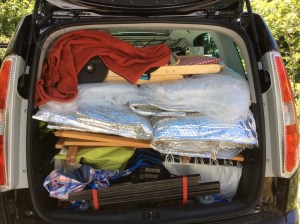
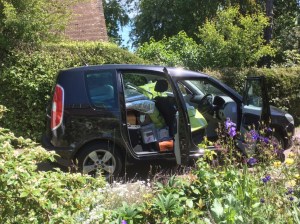
The weather forecast for the weekend was mixed. We expected thunderstorms and rain. In actual fact, it was sunny but windy for most of the time and the rain came at night or early in the morning. Anyway, the car got packed up – thanks to Robin. But he wasn’t happy with all that had to go into it.

© 5.Stansted 15

© 6.Stansted 15


Luckily we don’t live too far away from Stansted and a few hours later we made our way home leaving the stand covered in case of storms (but not floods).

© 3.Stansted 15

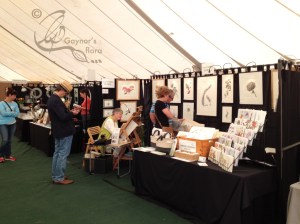
The rest of the pictures tell a tale of three lovely days spent at the show, meeting lots of new people visiting the show and, of course reuniting with the stand holders who returned from last year.

We got home fairly late in the evening of Sunday having packed everything up again. But, although we unpacked the car, the sorting waited until Monday.

Now I am catching up with London Art College assignments and the next important event on the Calendar – Norway.


© 1.Stansted 15 © 2.Stansted 15 © 4.Stansted 15

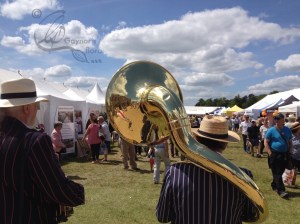
Notice the reflection in the Umpha - umpha!
Notice the reflection in the Umpha – umpha!

© 8.Stansted 15


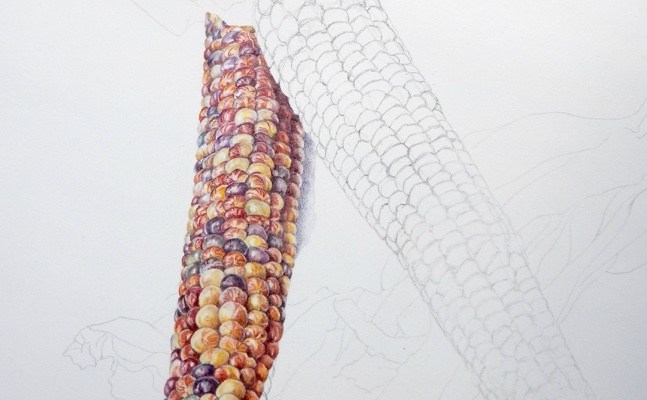
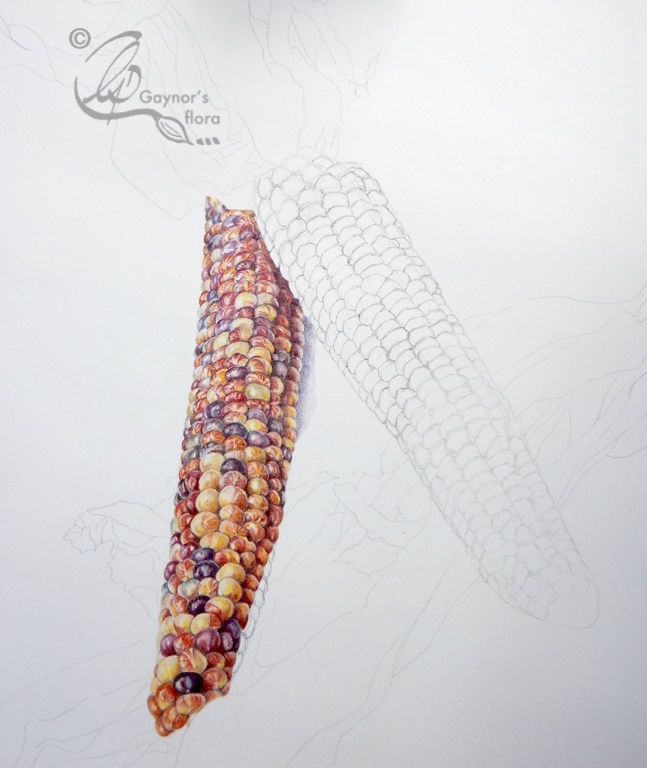
And the work during the Show? I have to be honest, I started the Indian Corn a long time ago and pick it up now and again. The corn doesn’t change you see, although I will need new leaves when I get that far.

The botanical art demonstration - Indian corn in coloured pencil
The botanical art demonstration – Indian corn in coloured pencil

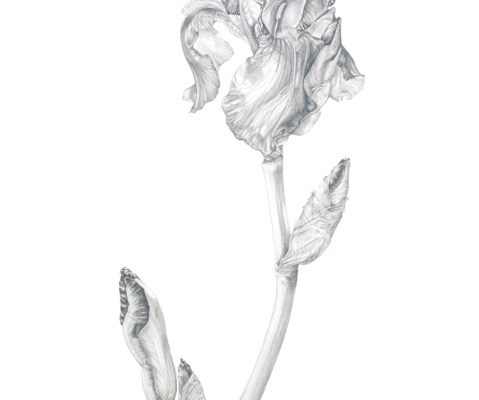
The Bearded Iris: 52 Shades of Grey.

A bearded Iris in Graphite on Bristol board

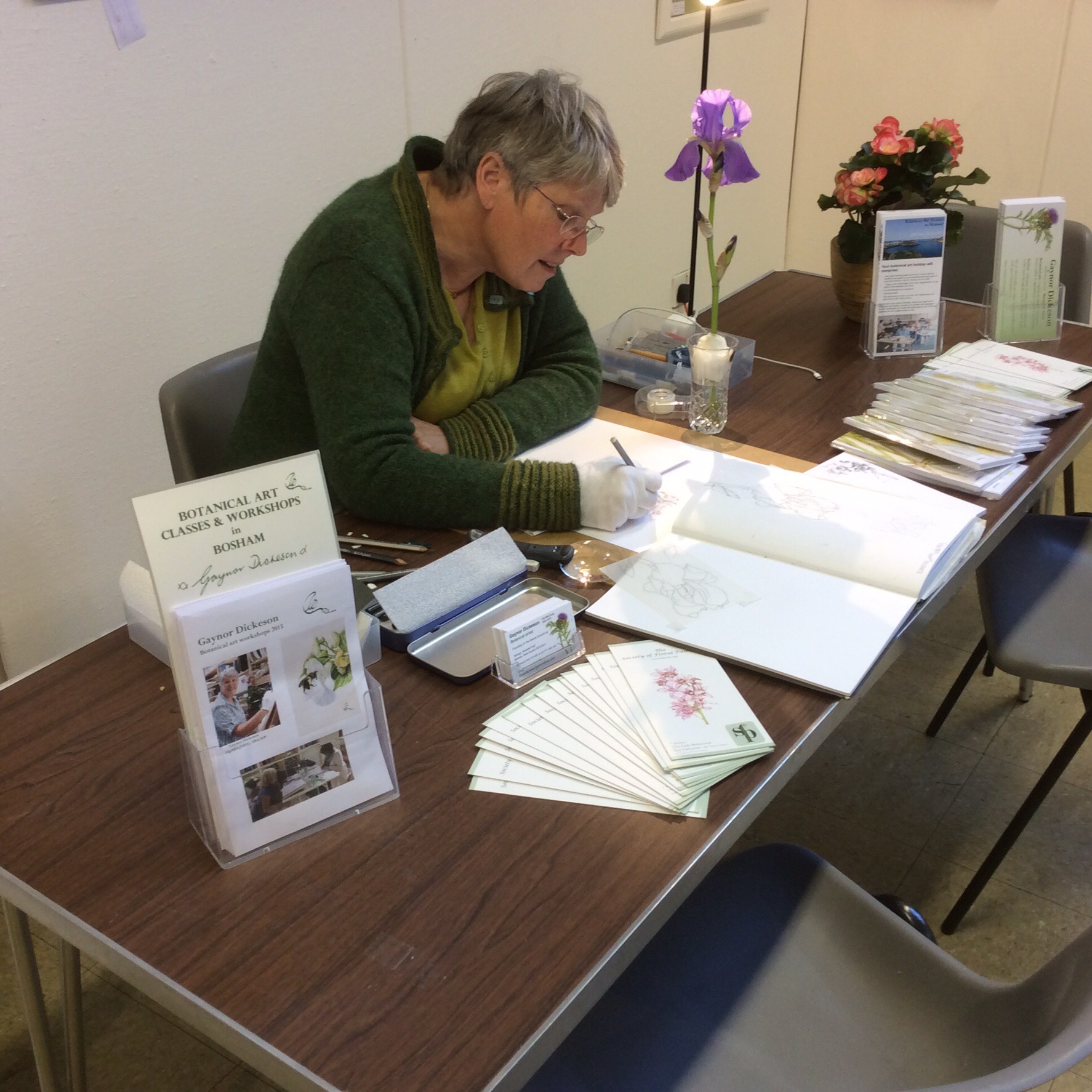
Today I have been licking my wounds and demonstrating coloured pencil in botanical art at the Society of Floral Painters Exhibition, the Oxmarket, Chichester. I had a lot of interested people looking at how ‘crayons’ can be used successfully. Hopefully we might get a few converts.

I have been working on a piece with Indian Corn as the subject. The painting has been going on and off for a long time, but hopefully with the little I did today and the work I will be doing on it at the Stansted Garden Show, I might get some more of it done. In time you might see it, as long as I don’t ruin that too. Understandably I am getting a little unsure about transporting work in progress after yesterday’s events!

After I came home today, I have been getting some more things ready for the show at the weekend. But I have also colour-matched and printed yesterday’s damaged original. Here it is.

The Bearded Iris: 52 shades of grey.

Stunning Irises workshop in Bosham

I haven’t been very good at keeping up with my blogging as there has been so much going on this month. We came back from our weekend away, back into the thick of things and preparation for the three-day workshop that has just happened.

A few weeks ago I held a workshop for Fieldbreaks at Goodnestone Park in Kent. That was a great success (according to the students) and it was time to do the same thing here in Bosham. Irises is really the thing at the moment. Unfortunately they are so short lived. Stately and elegant in their glorious drapery; some with beards, some without; some very slim and sylph-like, others plump and very ‘Reuben-ish’. If you remember, he liked to paint women with something to them – buxom and a bit more.

We had something of everything here. The simplest in appearance were the ones you get in the supermarkets – we had a lot of them! Others brought beautiful bearded Irises and some, very beautiful slim yellow irises or blue irises with highly patterned falls (the name of one of the petals). Common for all was the way God has assembled them for us.

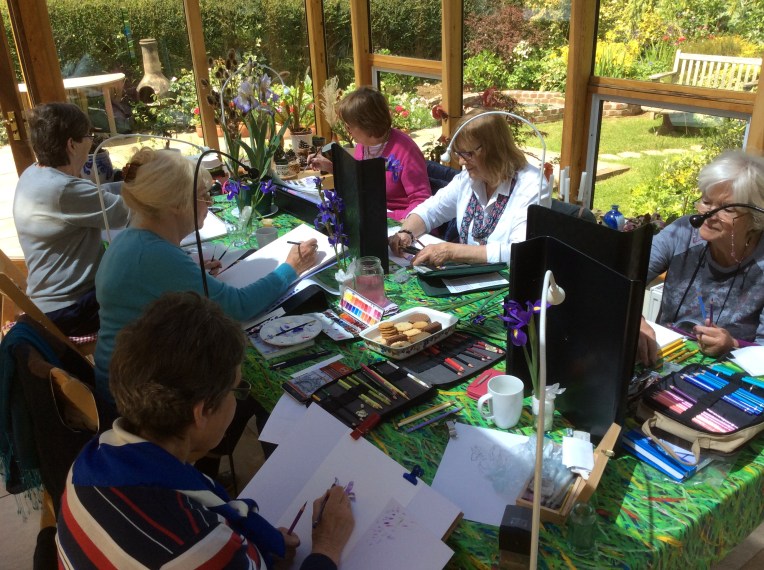
So that we would have a better idea of how an Iris really looks and how it is assembled, we actually took a few of them to pieces and there was a queue for the three microscopes. Initially, no-one on the workshop was interested in botanical illustration. After they had looked through the microscopes I actually saw some of them drawing what they had seen! It is exciting.

We were a little late in starting to paint the irises as a fair amount of time went into examining them and drawing them ready to paint. In fact unusually, no-one started painting until the next day. But it seems that the knowledge of what they were doing (i.e. careful observation of the plant), actually seemed to help them both in the drawing of their subjects and painting them.

The sun actually shone on the second day – but it did cast some strong shadows for some of these photos.
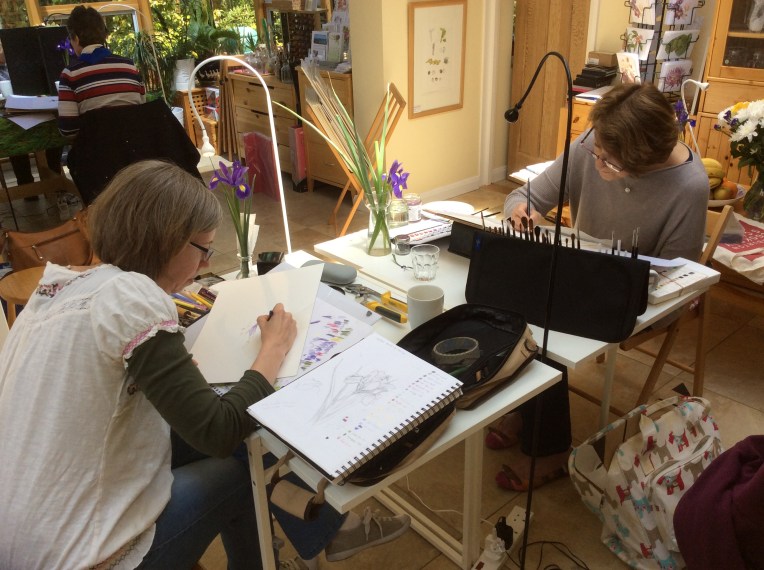
IMG_0916 IMG_0915


Work in Watercolour and Coloured pencil on the second day.

This slideshow requires JavaScript.

And the paintings at the end of the three days. All took Irises home with them to complete their work.

This slideshow requires JavaScript.

So what now? Tomorrow, all day,  I will be demonstrating Coloured pencil in botanical art at the Society of Floral Painters Exhibition at the Oxmarket in Chichester.  The exhibition is open until Sunday midday, when it will be taken down. Do try and take the opportunity to go there to have a look.

I will be having my penultimate botanical weekly art class for this school year, on Wednesday, and Thursday we will be setting up for the Stansted Garden Show due to happen from Friday until Sunday. There will be a lot to see there and I will be continuing my demonstration in coloured pencil. I understand that the weather is to improve for the occasion. I hope to see you.

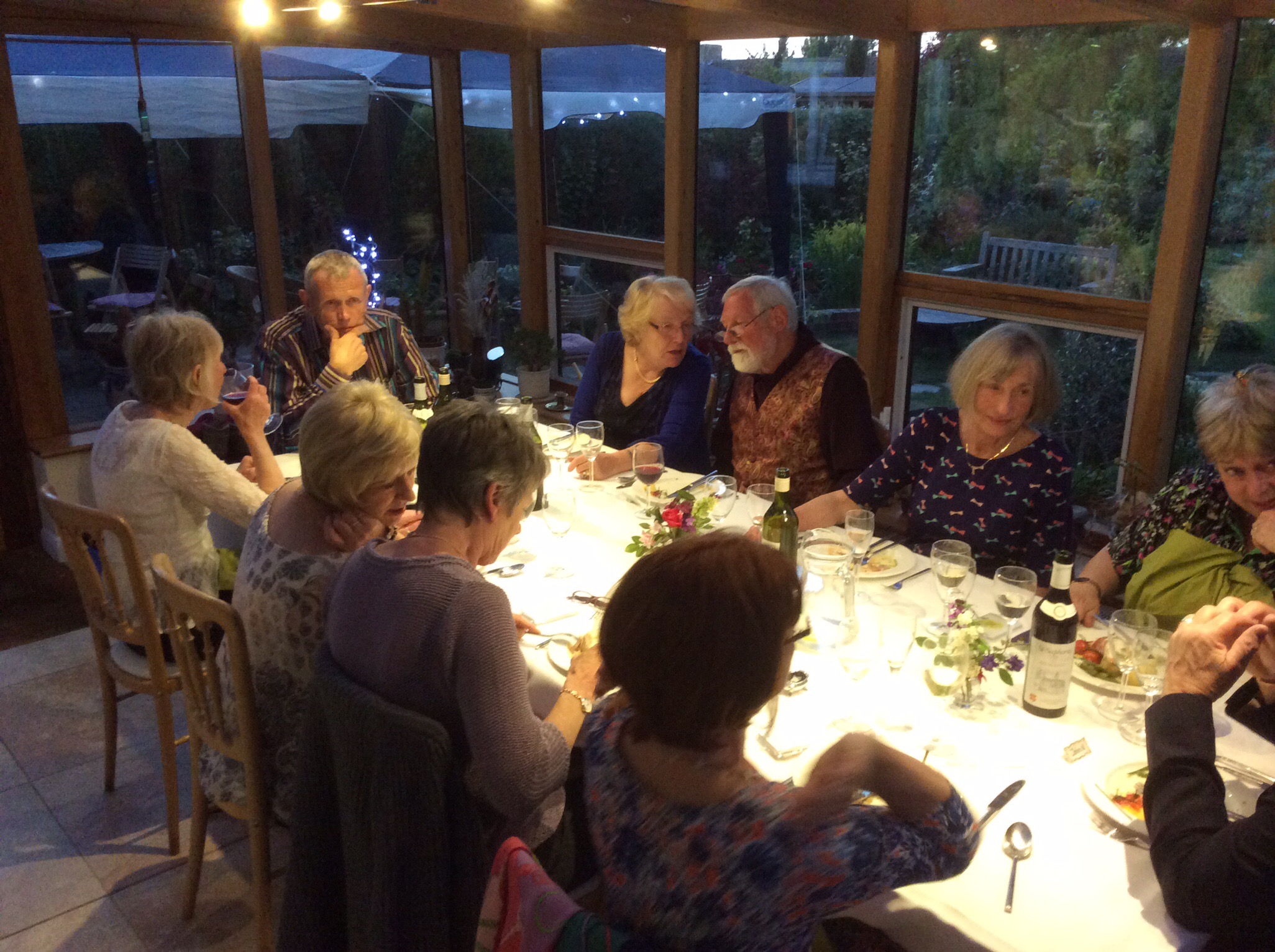
Botanical art and 50th Nurses reunion

I knew that May was going to be a jam packed month, but…….  I’m still trying to breath sensibly!
It started with Open Studios for two weekends, sandwiching my weekly botanical art shop and a workshop at Goodnestone Park in Kent. Once that was all cleared up, it was preparation for the nurses reunion. 

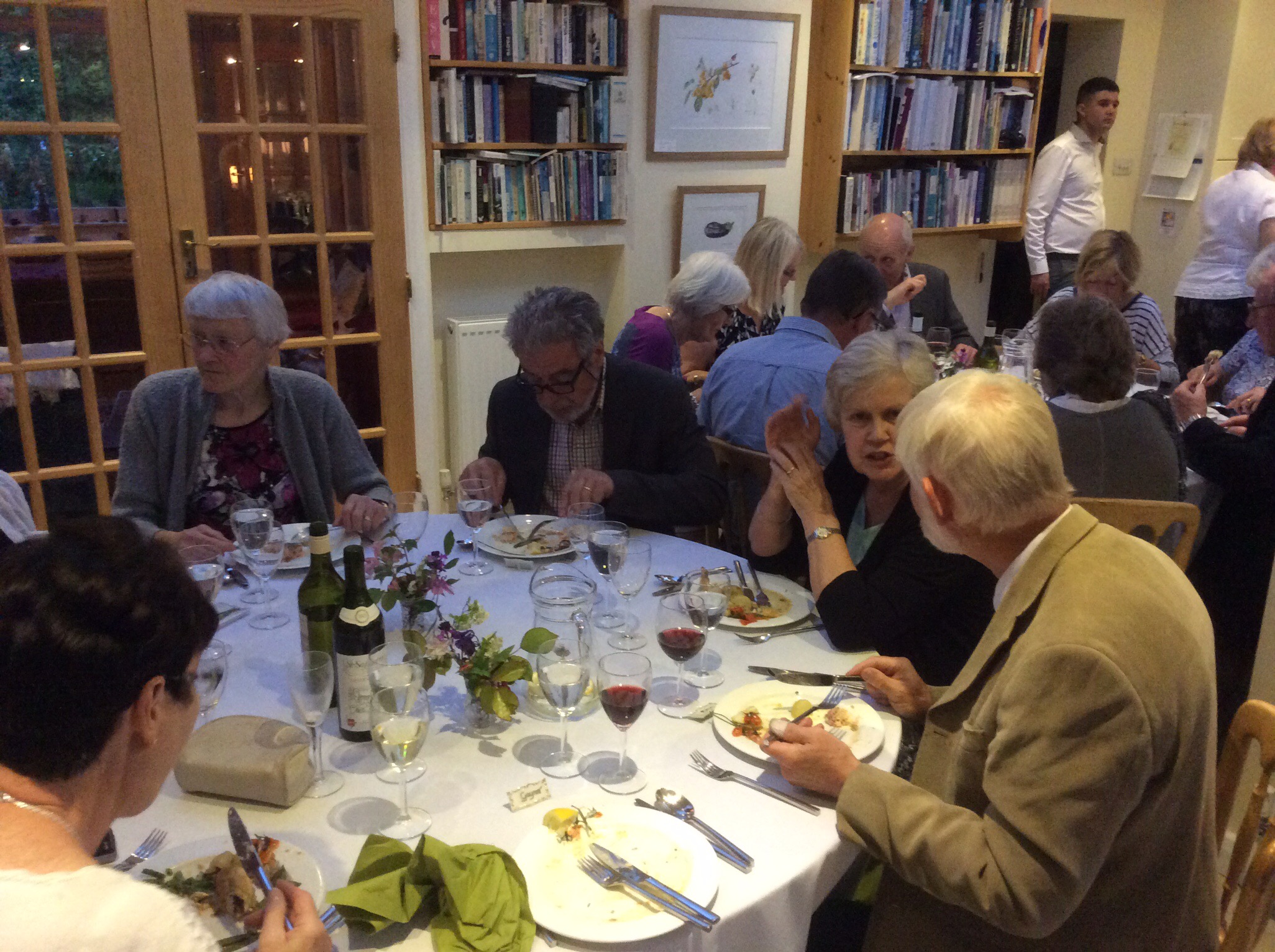
I never got as far as to finish an individual picture for all the girls meeting again (with some husbands – 26 of us), but I did manage eight, so gave a copy of each of them to the 17 girls( yes we are). The flowers included, Hellebore, Snowflake, Gorse, Primrose, Canary Bird Rose, Bluebell, Periwinkle and Aqualegia. 
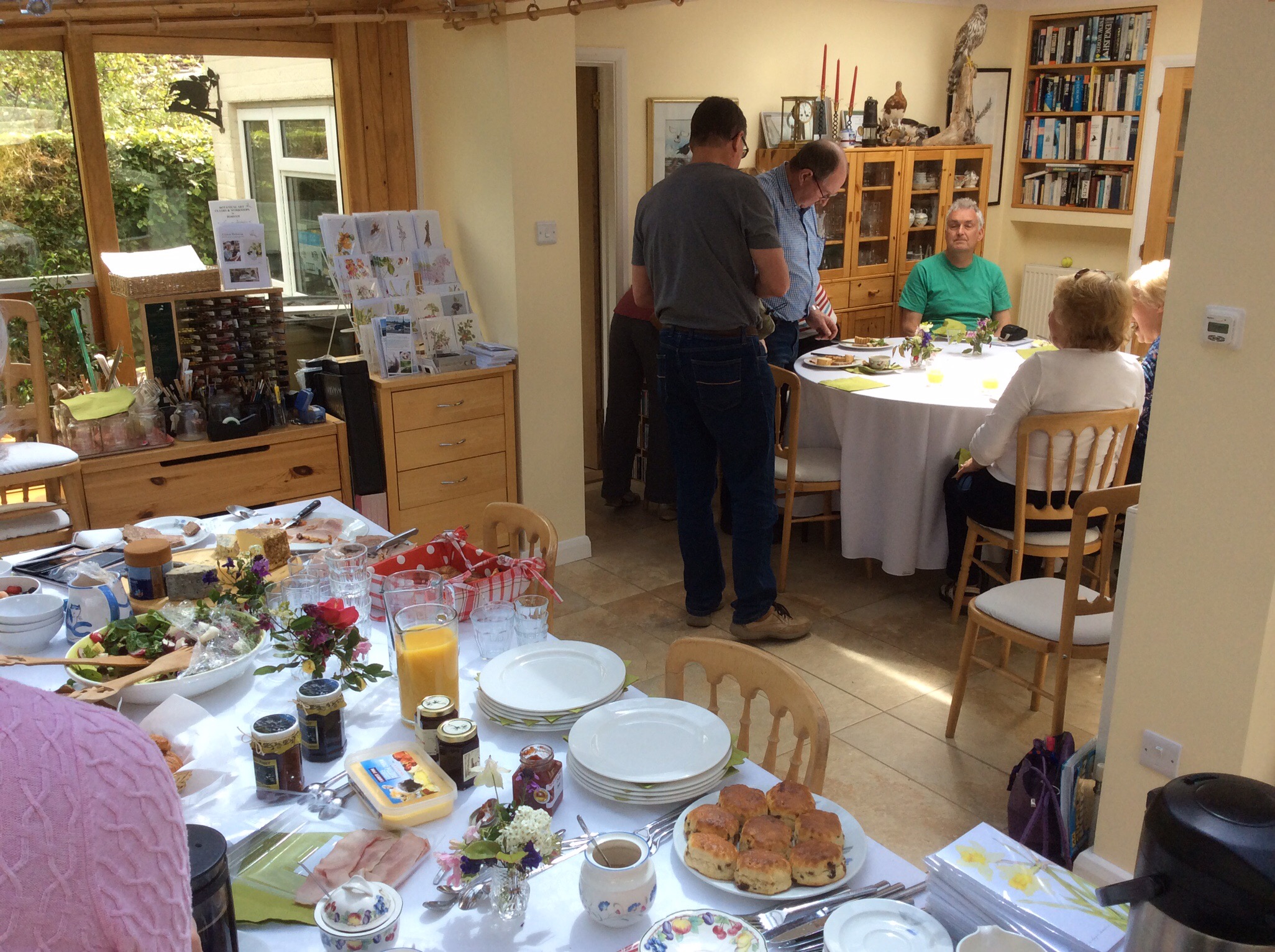
People started arriving on Thursday, we met for supper on Friday, then from Saturday afternoon we hosted everything from home!!!. Afternoon tea, a super dinner provided by local caterers ( I couldn’t do it), and then Sunday brunch as people waved goodbye until the next reunion. I gave the caterers earplugs (which I don’t think they used), although I really felt sorry for the people downstairs in the pub where we had our Friday meal. Our neighbours sensibly went out for the evening on Saturday.


Monday morning, 09:30 sharp, we were at the Oxmarket in Chichester. It was the Society of Floral Painters (SFP) hanging in day. Robin was a runner and I was on the selection panel. I have to say that we have some really lovely work in this year. We spent all Monday and Tuesday selecting and hanging the artwork. You can come and see it until 6 June, except for Mindays, although it will be open this bank holiday Monday.

This isn’t meant to be a diary, but there is a lot going on at the moment.

Yesterday I had my normal class in the morning and then we went into London to bust Chelsea, with a small stop on the way at the Chelsea Physic garden. I have to say that was the best bit. It’s so peaceful there.  We go home late last night, up early again today and the day was spent demonstrating for me at the Oxmarket and Robin was stewarding.

  
Once we got home this evening I marked a couple of London Art College assignments and tomorrow we are off to Devon. Robin is going on a cookery course and I’m going to sleep!  

Spotting the near miss with a Dipladenia leaf

The sun has just come round and is shining in the shed door. It is the only period during the day that I risk the sun coming directly into the shed and shining onto my work. I had just done loads of detail on a leaf and was doing a gentle wash on top. The sun suddenly appeared and I made a mistake. Hopefully it is recoverable.

I therefore took a couple of deep breaths, went out into the vegetable garden directly outside – picked a runner bean and chewed on it to gather my wits. Whilst the work is drying I have decided to do this blog.

Did you see the detail that I showed you yesterday, which was a near miss? In actual fact I did make the mistake and it wasn’t until I was checking over the days work that I saw it.

In the top left hand corner of the second picture I showed you yesterday, there is a leaf going off the page. To the right of it is a tendril of new growth. It was meant to appear from under the leaf. Guess what I did. Without thinking I had painted the petiole of the leaf (rather than curling it round behind and out of sight) and I connected the tendril and the leaf petiole!!!! How stupid can you get? My picture therefore had the a leaf with a petiole and the tendril as a continuation of the petiole! i.e a tendril with the tip completing one end and a leaf completing the other!

I don’t know how many times I say to students, paint what you see and not what you think you see. That also applies if composing a picture from various parts of a plant to make a cohesive whole. The details in the picture have to be completely botanically correct even though taking elements from different parts of the plant.

To correct the whole, I had to lift the edge of the leaf, petiole and end of the tendril – luckily it doesn’t show. I re-painted the tendril to disappear a little lower down the leaf, and then added a stem coming in from above the leaf. That meant I also had to slightly change the direction of the stem coming out from below the leaf. All very complicated and of course that mistake has knock-on effects with the composition in other areas. Hopefully I have managed it reasonably well.

I know that some people will find the above explanation and detail unnecessary in a blog such as this. But I am already being very honest about this picture, so why not go into the detail. It might even help someone else avoid similar stupid mistakes.

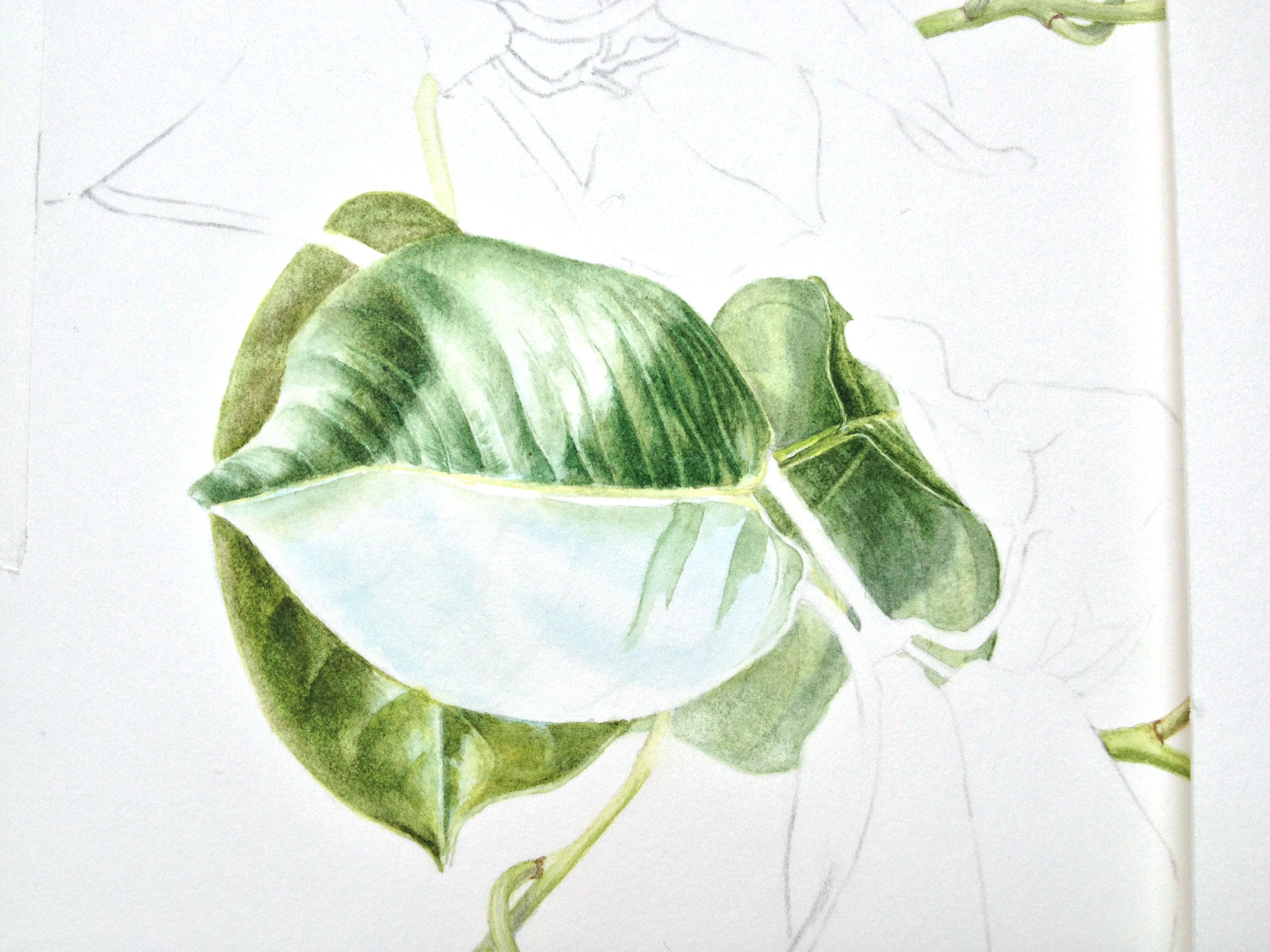
Anyway, the first of today’s pictures is the corrected view. The second picture is more leaves that I have done. These include views of the underside of Dipladenia leaves, foreshortened views and a full frontal view(!). The last is not finished yet.

By the way, I have found that for these leaves I have needed to use smaller brushes than I normally use and a dryer mixture.

Finished leaf and tendril.
More leaves
More leaves
Last adult Dipladenia leaf


The Dipladenia leaf start. Help!

Well, now the start of the leaves. I am on tender-hooks all the way. I am hoping that as I am extra careful at each stage, that I will overcome this fear – whatever the fear or blockage is.

The first whole leaf actually took a whole day and I will let you be the judge as to its success or not. The result is still not as I am wanting it and I can’t even define what it is I want. I am very much a detail person, and it may be that I am concentrating too much on this without thinking enough of the overall result.

This is a picture of the start of the leaf.

A leaf or two in progress.

My fingers, toes and everything else are crossed.

The start of a leaf and part of a tendril

Spot the mistake leading to a near miss!