Botanical art workshop at Goodnestone Park Gardens, Kent

On Monday and Tuesday this week I lead a workshop at Goodnestone Park Gardens in Kent. I have a couple of workshops there per year for Fieldbreaks.

The subject was Hedgerow produce and most of the students were using coloured pencil. One of them had neither used coloured pencil nor watercolour previously, so this was an experience. She did very well, although it felt a bit scary for her.

They are very good at Goodnestone and allow us to pick what we want from the gardens to use as botanical subjects. Some of the subjects we can find there can be quite exciting. But funnily enough, at a workshop I often find that other than new students who have not yet grasped that the ‘prettiest’ is not always the easiest to do, people generally choose very simple subjects. I think that this is because they are more intent on improving technique or learning something new to add to their repertoire of techniques.

Here are the results. I am very pleased with them and I am sure you will think them very good too.
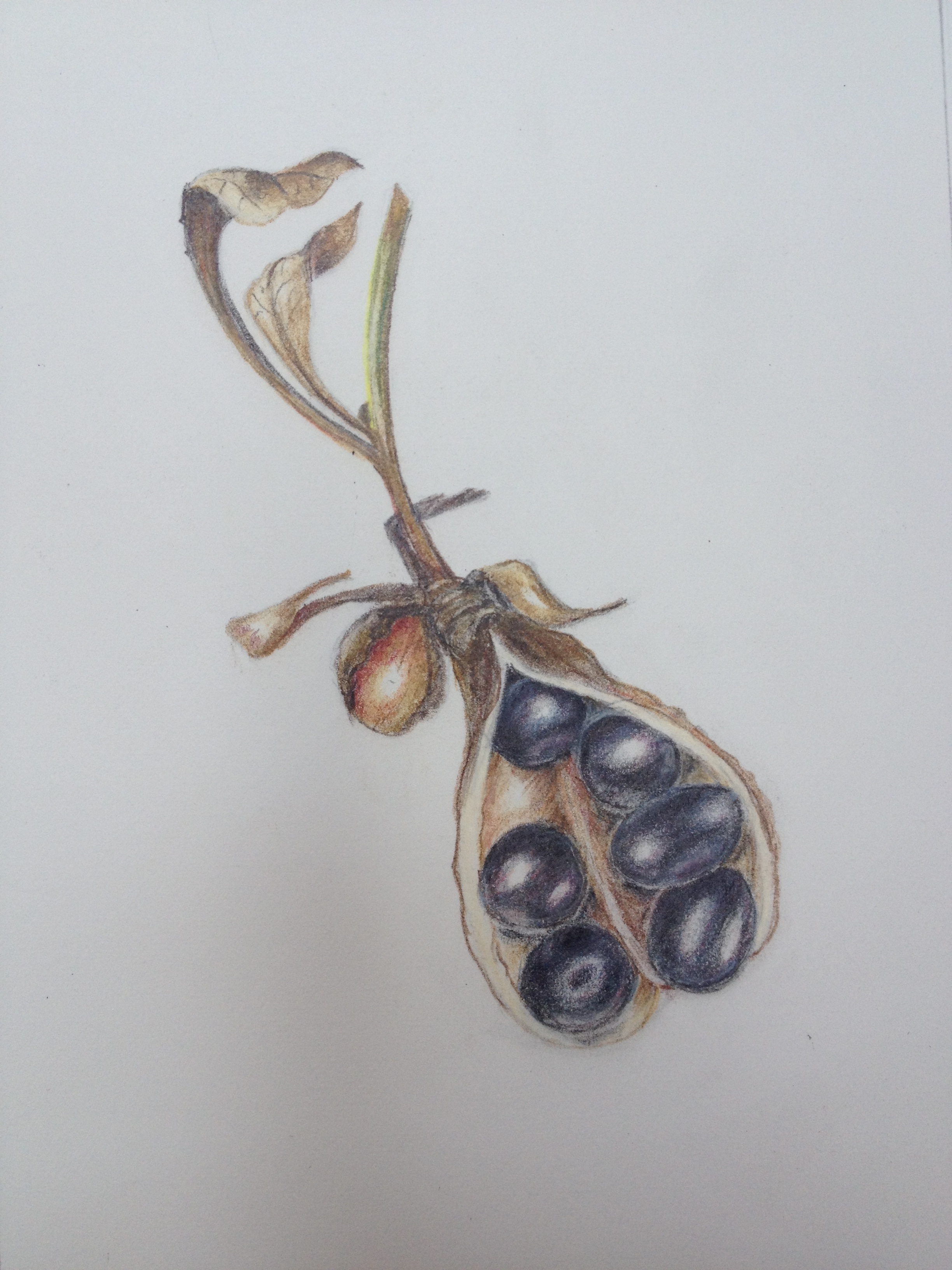
Tree Peoni seed capsule. Coloured pencil.
Tree Peoni seed capsule pair. Coloured pencil.
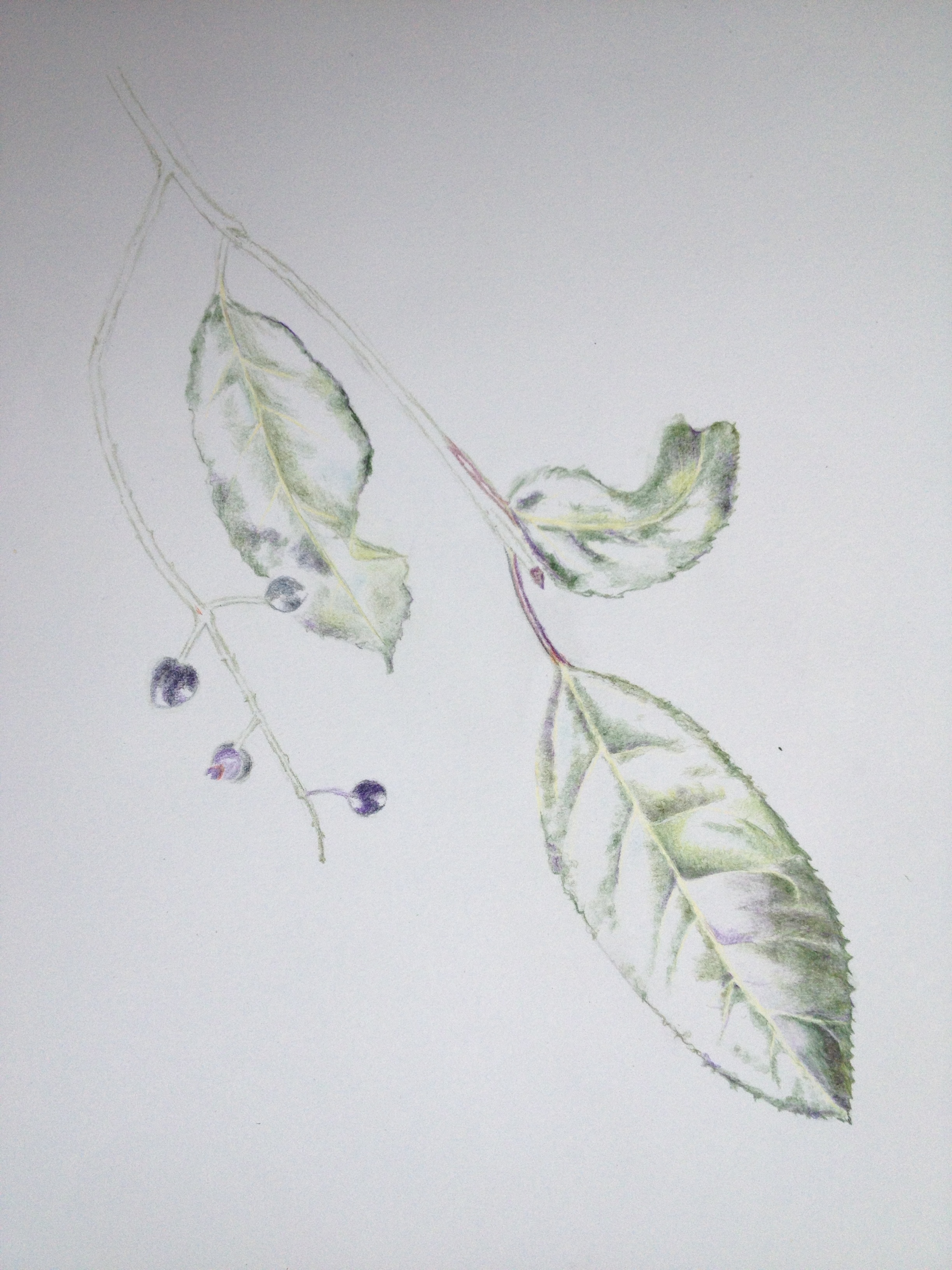
Portugese Laurel berries. Coloured pencil
Portugese Laurel berries.
Coloured pencil
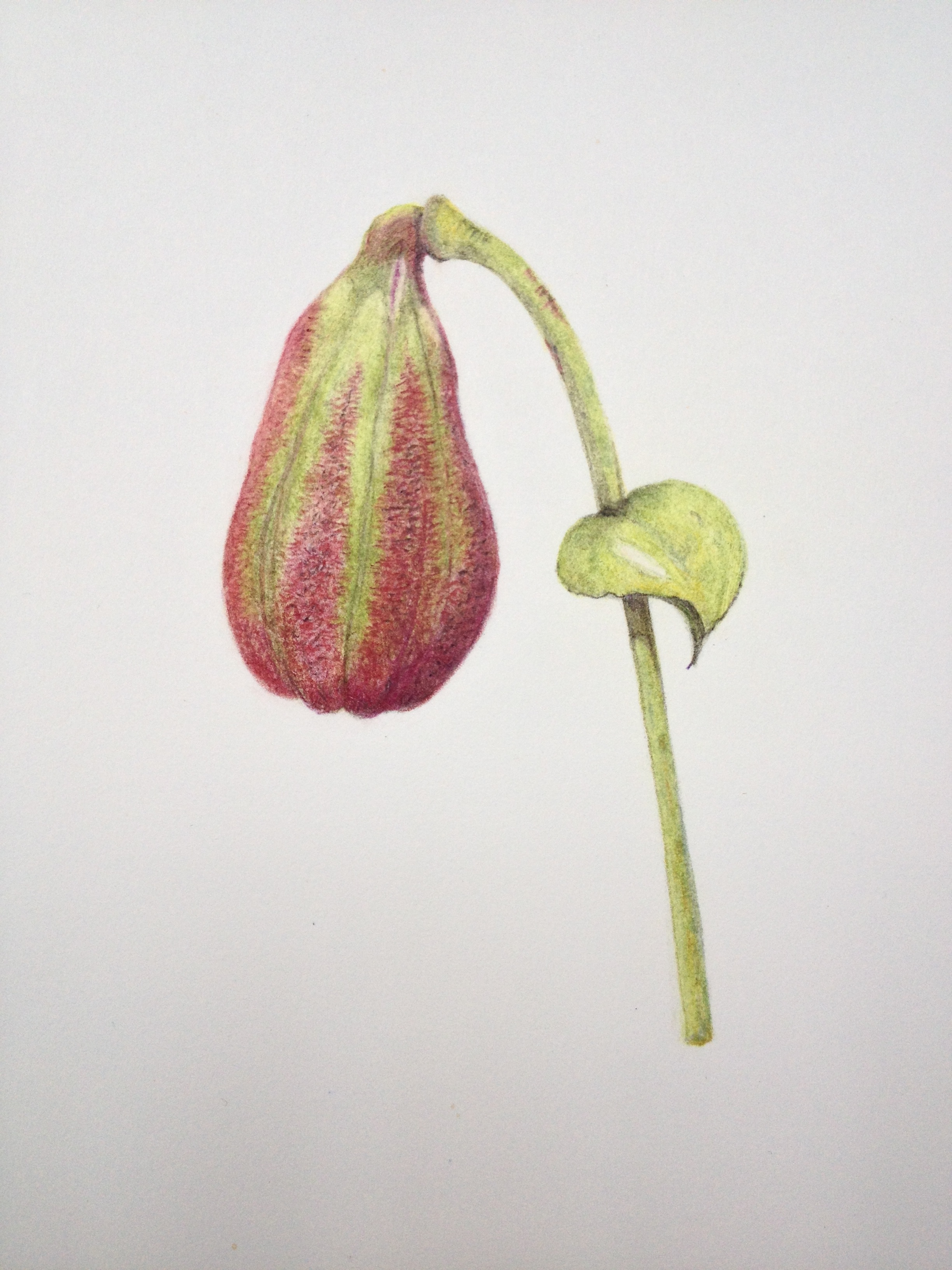
Lily seed capsule - Coloured pencil
Lily seed capsule – Coloured pencil
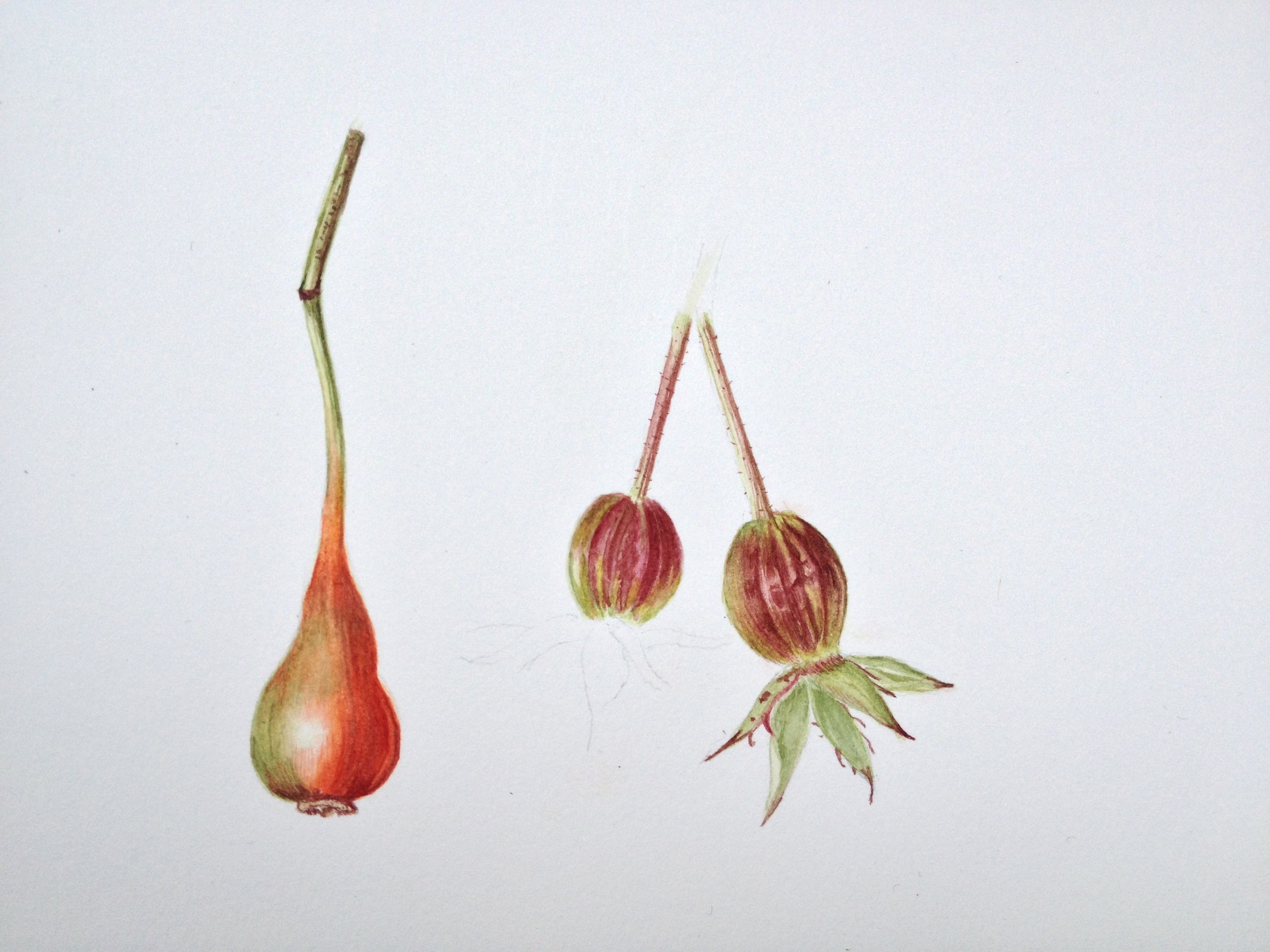
Rose hips - Watercolour
Rose hips – Watercolour
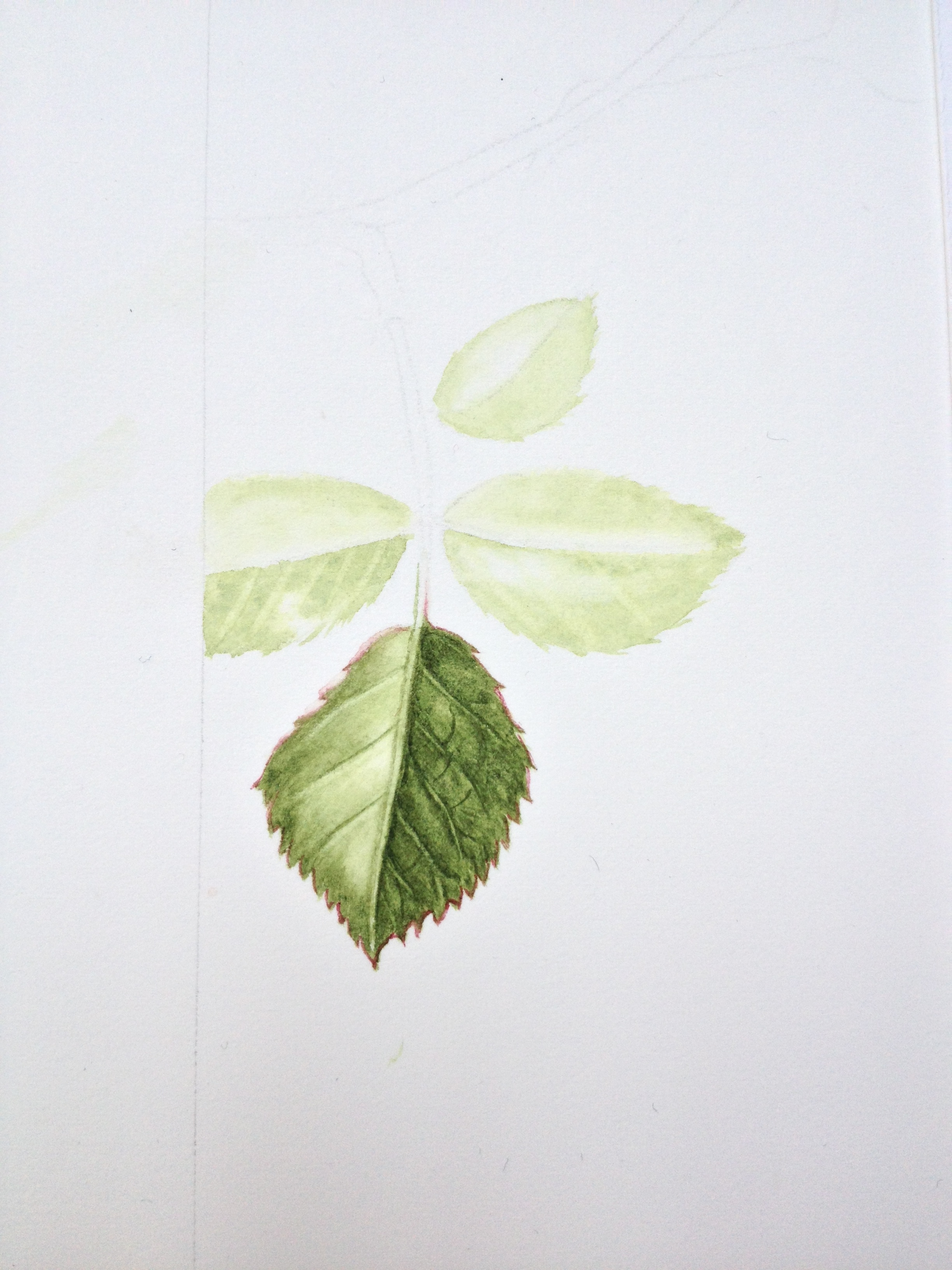
Rose leaf - watercolour
Rose leaf – watercolour

This morning I had an ordinary weekly class and since then I have been working on the pen & ink Bears Britches.
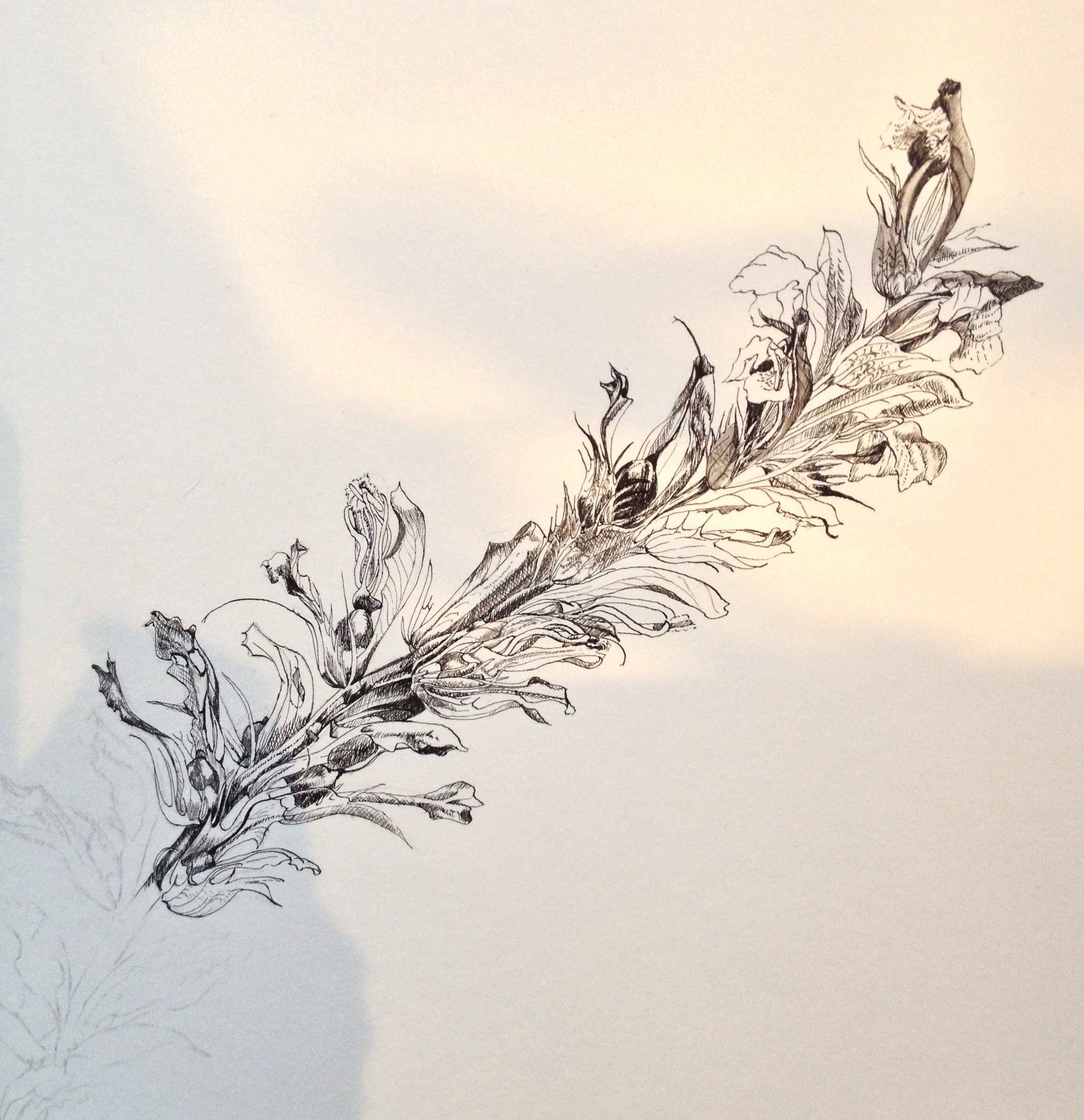
Bear britches in pen& ink

I have only done a small portion of it so far and this is only establishing the flowers and fruits. Once I have established all the elements in the picture I will create tone and then…….. But you will have to wait for that.
Botany and botanical art is very exciting!

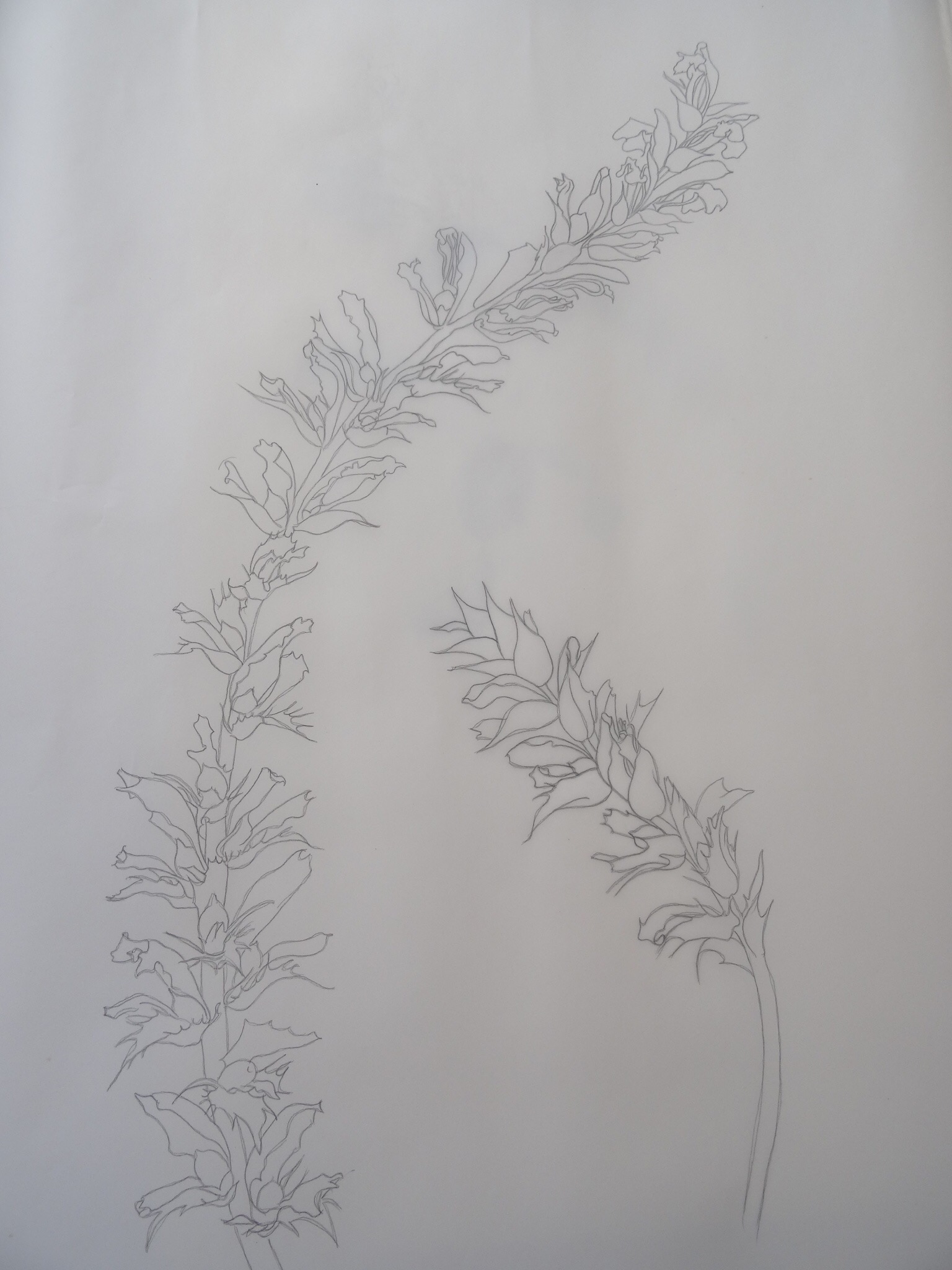
On Friday and again on Sunday afternoon after church I was able to continue with my Acanthus ( in case you wondered what my new picture was all about). I finished the sketch and transferred it to the paper I am using for the final work. A warning, the following picture is not the whole composition as it will contain a third element – hopefully. It is a large project, but hopefully it will go well.

IMG_8913.JPG

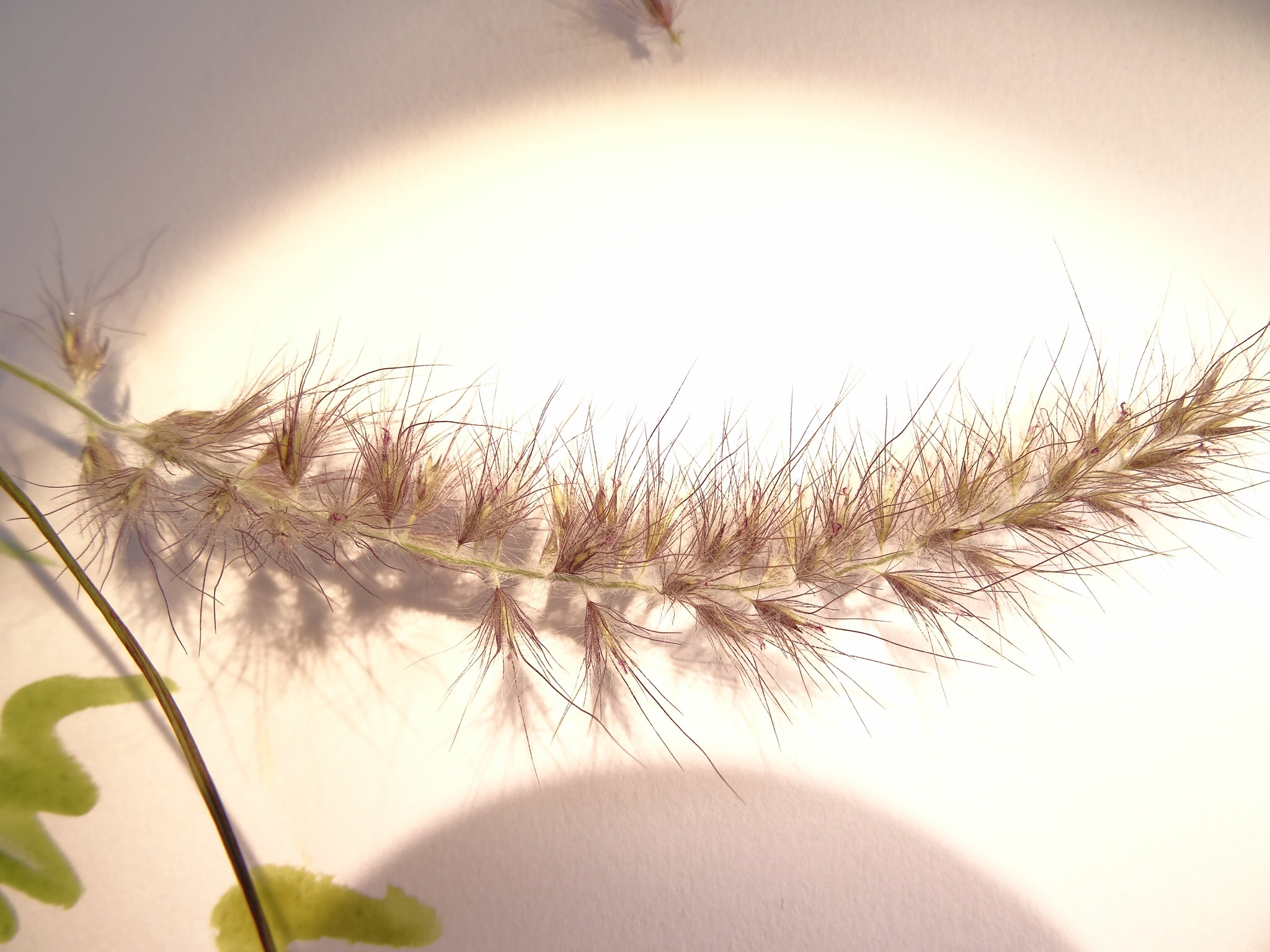
On Saturday my husband and I drove up to Leicester, visiting briefly the University botanical Gardens. But we also went to an IAPI meeting on Grasses. Now many of you might wonder what was so special about grasses – and I did too. But, with just one lecture and some amazing views through the microscope, I am converted.

There were so many different types for different types of habitat and temperature zone. They may look very ordinary, but up close they are absolutely beautiful.

Think of a colour wheel and pointillism. If you mix the three primaries, you get a grey shade, depending upon the mix. Optical mixing of colours means that you don’t mix the colours on your palette, but by placing colours side by side, your brain mixes the colours together creating a third colour.

Now back to the grasses. When a grass is waving in the wind, depending upon the type, all you might see is a greyish or beige-ish colour in the frond. Well, at the height of the season, those ‘fronds’ are the ‘flowers’ (inflorescence) of the plant and contains the male and female parts.

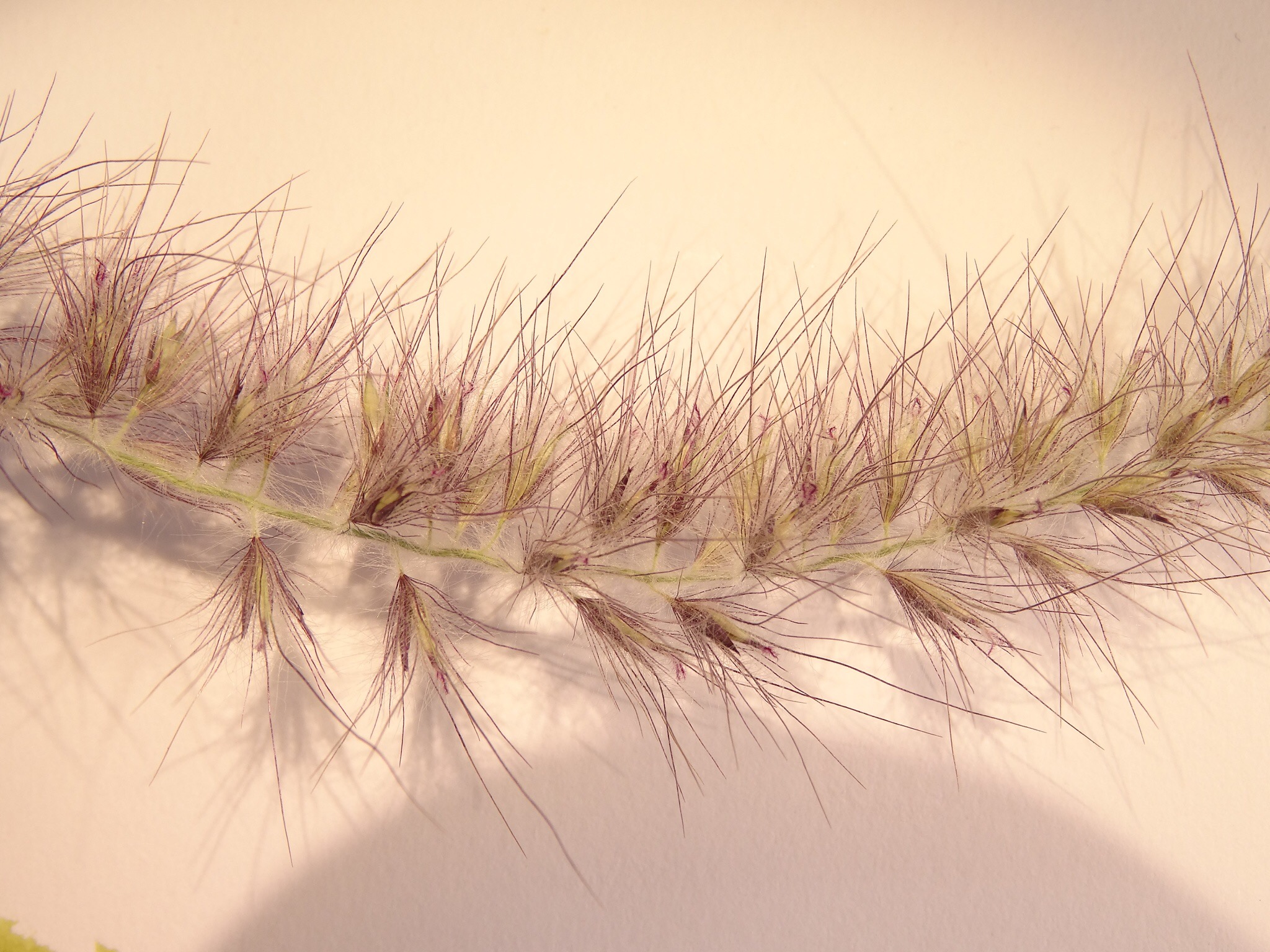
I looked at these under the microscope and saw some tiny, really beautiful flowers. Most of all, the colours were amazing ( I know I’ve used the word again, but have to). The one I was looking at had wonderful reddish purple and green parts with the tiny style and stigma in purple sticking out of the tip. The colours glowed.

Unfortunately the pictures I have taken do not reflect the beauty that I saw under the microscope, but hopefully they will give an indication.

Back to optical mixing of colours. Bearing in mind the smallness of the inflorescence, even though the colours were individually very beautiful, they were small surfaces to the naked eye and therefore had the same effect as pointillism – the colours became optically mixed to a dull grey! Could this be natures way of protection?

IMG_8910.JPG

IMG_8912.JPG

IMG_8909.JPG

What do you think? I know the photo does not do the plant justice, but hopefully you can see the promise of the intricate and beautiful design.

A new botanical art project started.

On Saturday I will be travelling up to Leicester for the day to go to an Institute for Analytical Plant Illustration (IAPI) meeting, Grasses masterclass, at the University botanical gardens. I am looking forward to this as I have only just joined the group and this is my first meeting with them.

Monday will again be a very early start to arrive at Goodnestone Park Gardens in Kent for 09:30 in the morning. I am teaching at one of the Botanical art workshops arranged by Field Breaks and hugely looking forward to it. Goodnestone Park is a lovely place to do botanical art and the gardens contain a lot of subjects! Already I know some of the students and some use watercolour and others coloured pencil. I enjoy this mix.

But I have started another picture. I am still doing the initial sketch! But the final picture will be in pen & ink. I have another two-day workshop 1-2 October which will be pen & ink. How far I will get with this picture by the start of that workshop, I don’t know – but it will be useful having something on the go.

So far I have only started sketching it. Guess what it is!

IMG_8902.JPG

IMG_8901.JPG

2nd day at Stansted Park Garden Show

And the heavens opened!

We knew that today(well yesterday now), the weather had been forecast as very bad – although the forecast was changeable. We knew that during the night there might be downpours and several times during the day.

We woke up to a wet nose wanting food ( one of the cats). We noticed it was wet outside, but nothing undue. We were about to leave the house to get to Stansted House when the heavens opened and it poured.

Keep calm and collected as there is nothing that can be done about nature other than dress for the occasion. I donned a sweater, long raincoat and long wellies – as well as my jeans of course. We got to Stansted just as the rain was stopping ( about 1/2 hr after we left.home). We were greeted by a man singing wishful and happy, sunny songs.

By 11:00 the sun was breaking through and the sky rapidly became blue with the odd puffy white cloud. That was the weather state for the rest of the day. Beautiful!

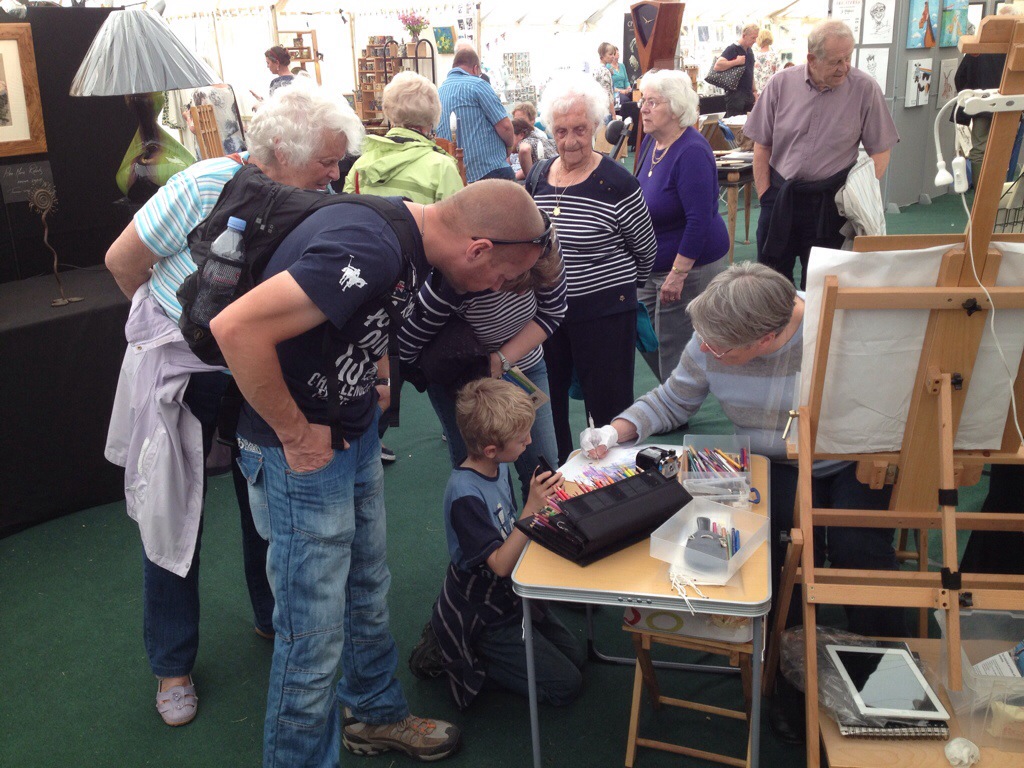
We had a lot of very interested visitors to the stand and discussions ranged from the type of coloured pencil I was using, to the potential for taking part in a new project. Some exciting conversations!

A picture taken during today:

20140608-010546-3946634.jpg

One more day to go. Do come and enjoy the atmosphere.

Society of Botanical Artists (SBA) at Westminster

First the RHS exhibition, then Chichester Open Studios – which is on again this coming weekend, and the SBA exhibition at Westminster Central Hall. Next week I will be talking about the Society of Floral Painters (SFP) annual exhibition being held in Chichester.

Normally the SBA exhibition is in April and it is a little easier for a Botanical artists to plan things. But this year, the SBA were only able to book their normal annual exhibition space in Westminster from tomorrow onwards. The private preview and opening of the exhibition is to be tomorrow between 11:00 and 19:00.

The official opening and prize-giving will be by Dr Nigel Dunnett, Professor of Planting Design at the University of Sheffield at 15:30. Although this is a little late, if you would like a formal digital invitation, please contact me  this evening through this blog and I will send one immediately.

The annual exhibition in Westminster is an open exhibition and is also to encourage those who paint botanical art to take part with a view to becoming members. Membership is dependent upon having a full quota of pictures being accepted for the exhibition, three years running. But, far from being a mountain to climb, seeing the pictures at the exhibition motivates many artists and helps to concentrate their minds on this particular challenge.

The exhibition usually has a lot of very beautiful botanical art. I remember the first time I went to the exhibition, I was enthralled! I don’t know how better to express what I felt. It is worth a visit if you are in London or want to take a trip up to the capital. I am going to the opening tomorrow.

I have four pictures that will be exhibited this year. Two are in pen ink and two in coloured pencil. I will be interested to see how the pen & ink pictures will be accepted as I have not exhibited anything similar previously. Additionally I will be demonstrating coloured pencil all day on Tuesday 13th May next week. Do come and see and hopefully get a feel for how I use the medium. Maybe I can tempt you to want to try using coloured pencil in your botanical art.


The SBA Annual Open Exhibition

Back to the Easel

For a short time yesterday and a lot of today I was able to get back to my easel.

Because of all the preparation to the RHS, I haven’t done anything since the middle of March. It feels such a long time. But I returned to a picture I had already started.

I will show you a snapshot of it at the end of this blog. It is a picture in pen & ink. Initially it looks complicated, but as it’s in monochrome this simplifies. Additionally, I feel that when I am using this style of pen & ink work I can relax a little more than I normally do when painting. Although I stay true to what I have in front of me, I feel I work a little less tightly. The difference between botanical art and botanical illustration.

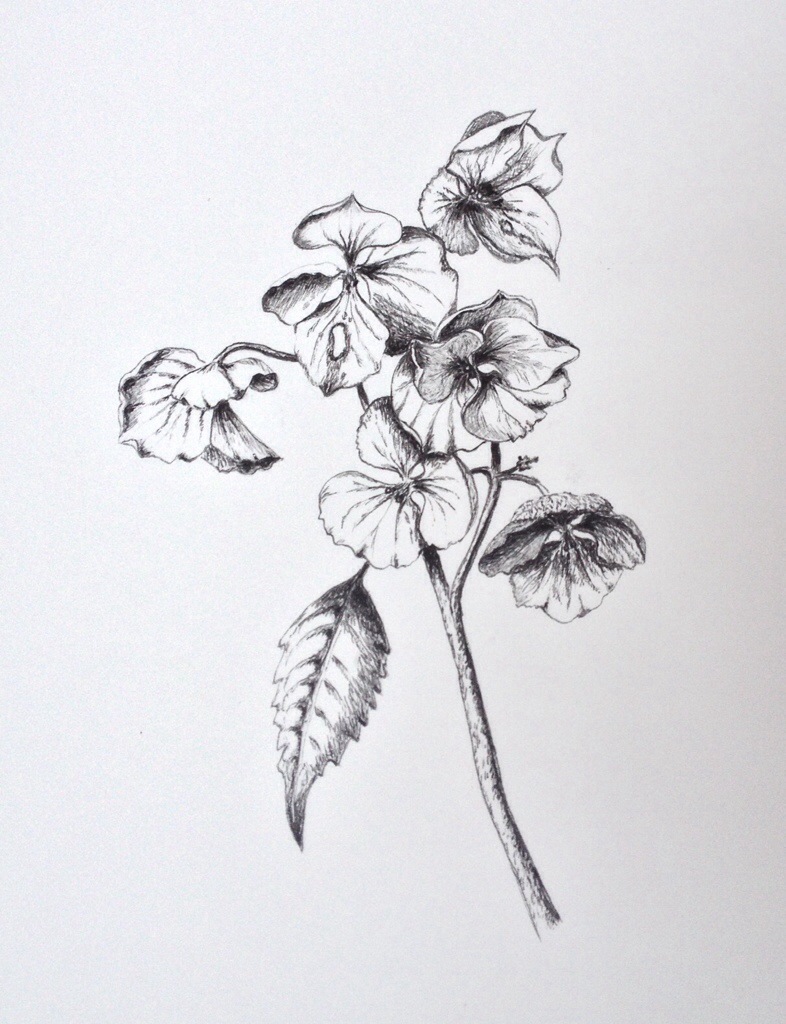
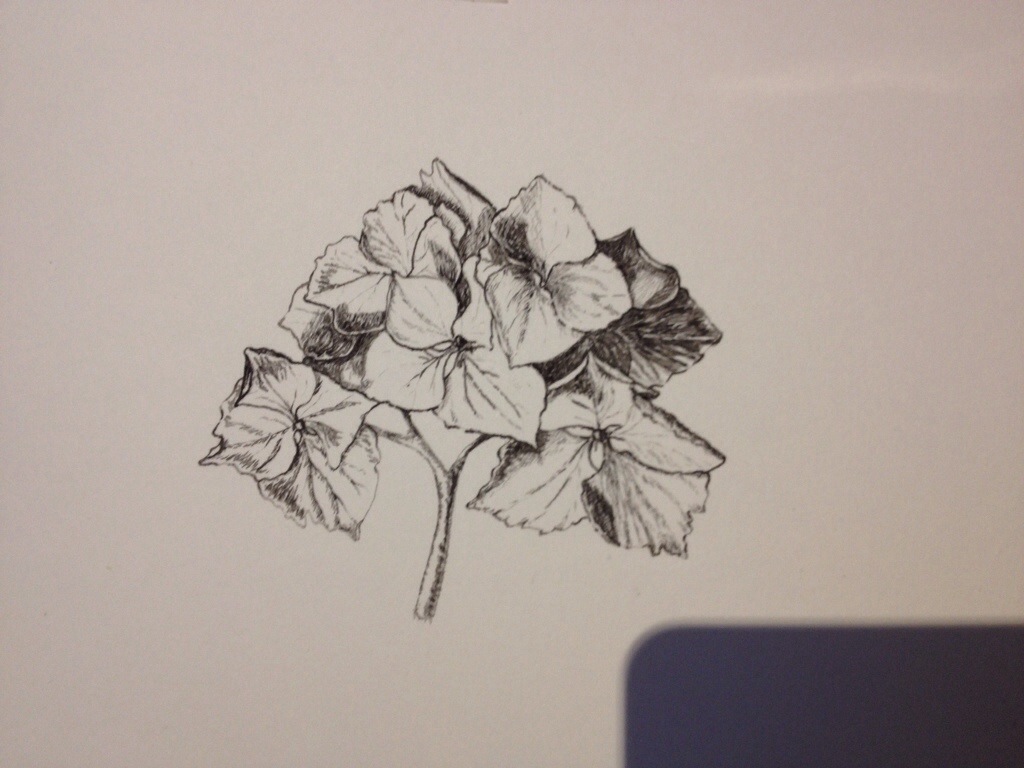
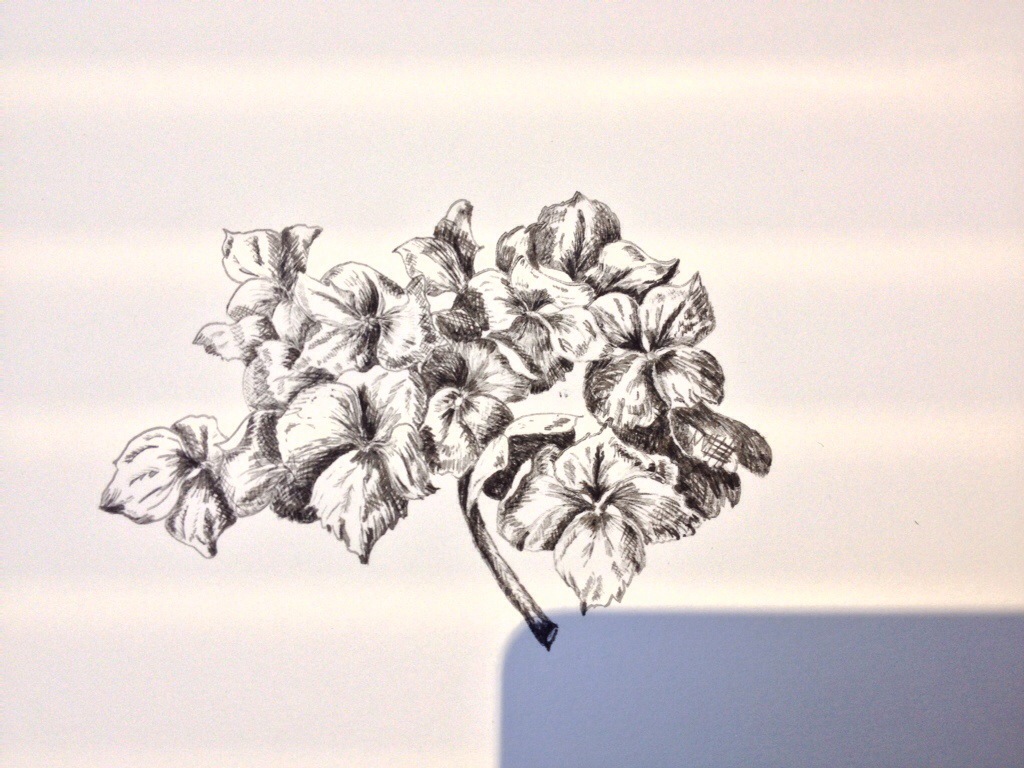
The flower is a Hydrangea with quite large bracts. My husband bought it for me a few months ago and it dried beautifully on the stem. I felt that it would be lovely in ink and a suitable challenge at the same time. You will be able to determine if I have been successful or not.

After the problems that I had with my website following the RHS, my daughter in Norway decided that enough was enough. She is in the process of designing me a new one, which she feels will be easier for me to maintain. It will obviously take a while before this is up and running as she is fitting it in between other projects. I just hope that she doesn’t mind me mentioning it at this early stage.

On Monday I am off to Kent to teach a workshop for two days. It is a lovely place to go. Goodnestone Gardens not far from Canterbury, is a peaceful place. There is a walled garden and we are allowed to pick whatever flowers we want – including a lot of lovely Auriculas. They always tempt me, but whether I will even have time to start one is another matter.

This year I have three different workshops at Goodnestone. If you want to join us, get in touch with Field Breaks who arrange these botanical art workshops.

My next workshop in Bosham on the south coast near Chichester, is 29 – 31 May. If you are interested in that one contact me via my website which is working at the moment, or by responding to this blog.

My Hydrangea in Black and white.

20140426-003700.jpg

Pen and Ink student update

Yesterday I had my last botanical art class before Christmas. Two of my students had continued with the pictures they had started on the Pen and Ink workshop and they proudly finished them yesterday.

I too am proud to show the pictures here. Both chose to do hydrangeas, although initially they had thought it would be too difficult. I think you will agree with me that they have produced lovely and entirely different pictures.

20131221-000903.jpg

20131221-000922.jpg

How did the Pen & Ink workshop go?

‘Thanks so much for a brilliant 2 days. I thoroughly enjoyed it all!’

I got this email as soon as the student had returned home after the Pen & ink workshop. Is it any wonder that I enjoy teaching when I get a response like this?

I had a full workshop and you have already seen the step by step series I had prepared. If you want to know what each of the steps entails, you will need to sign up for one of the workshops next year.

Each of those taking part worked really hard, expressed their pleasure in having done the workshop and several want to practice the technique more. Most of the students hadn’t intended drawing a Hydrangea as they thought it too difficult. But, after showing them the technique all but one attempted it. These are some of the results:

20131201-223000.jpg

20131201-223016.jpg

20131201-223317.jpg

20131201-223728.jpg

20131201-224350.jpg

20131201-224410.jpg

20131201-224425.jpg

They are good aren’t they?

Pen & Ink workshop starting on Thursday

On Thursday this week I will be having a workshop using Pen & ink.

Following the Sarah Simblet workshop in July, my students asked me to show them her technique. Obviously, although I studied Sarah’s technique, I use it in my way.

Going on a workshop doesn’t mean that you have to incorporate the teacher’s technique 100% when you finish the course, but that you use what you have learnt and incorporate some of it into your own way of working. That is why no botanical art teacher is absolutely right or absolutely wrong. We are all different and emphasise different aspects in our work.

I advise students who come to me, to also learn what they can from other teachers too, so that they can develop their own style, using elements from all they learn.

Anyway, on Thursday and Friday I will be having several students who want to learn a pen & ink technique that is not dots.

During the last few weeks I have done a series of step-by-step pictures and these should give a better idea of what is needed at each stage of the picture. I realise that without further instruction these pictures will not make full sense. But, the last picture is the completed one.

20131126-235720.jpg

20131126-235238.jpg

20131126-235318.jpg

A drying Hydrangea.