Hellebore Botanical art workshop in Bosham

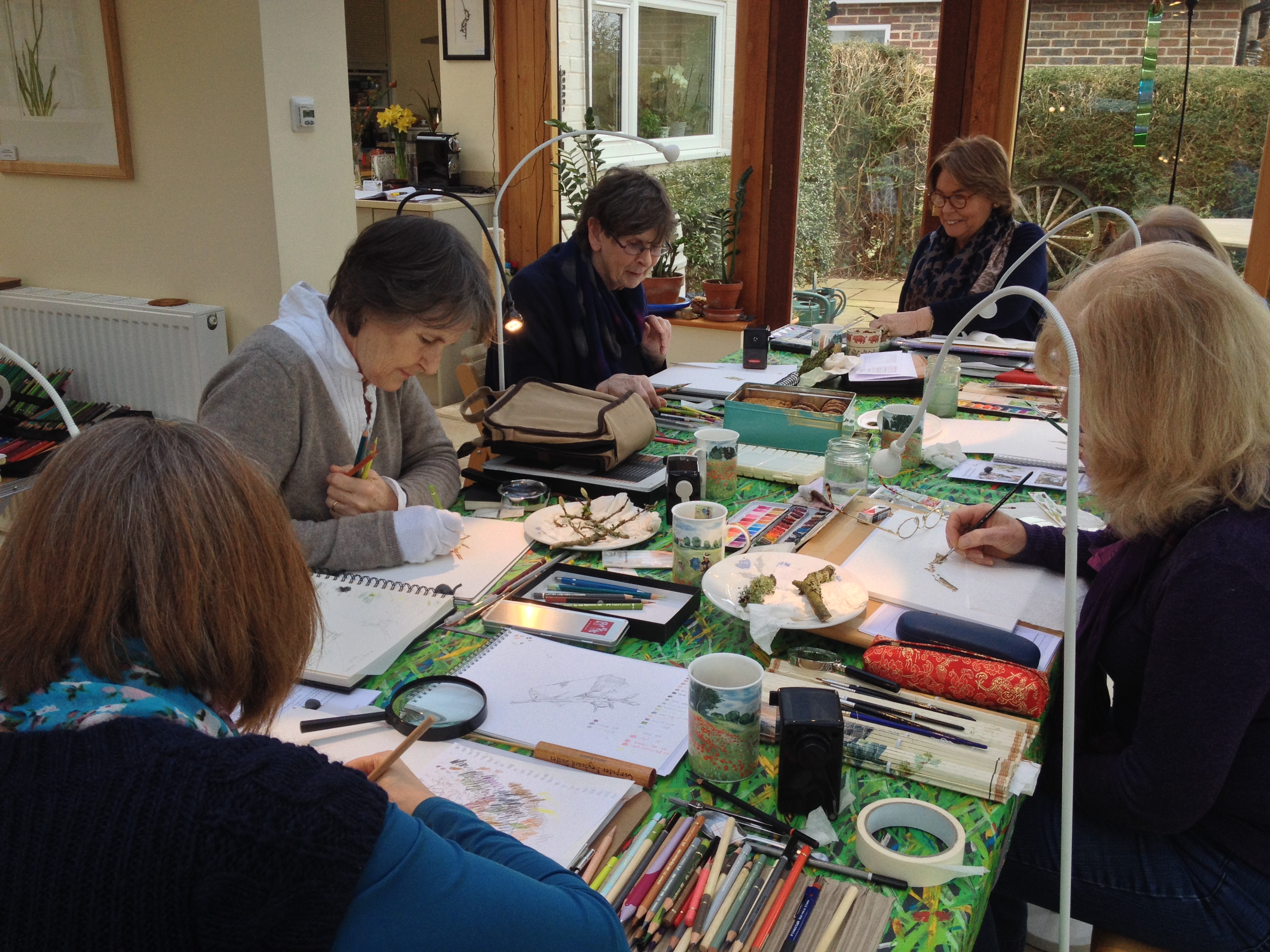
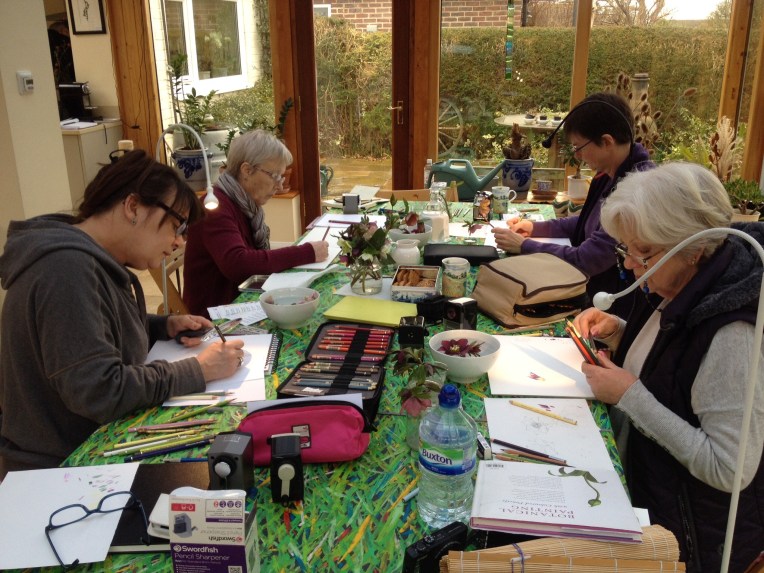
I started a three- day workshop in Bosham yesterday and was surprised to see that all those attending chose to use coloured pencil. Those artists who have already been to me before, know that I teach both coloured pencil and watercolour. I think it has only happened once before that the medium of choice for everyone was coloured pencil

Some people had brought Hellebores from their own gardens to paint, but in the end they all chose from our garden. You might already know that Hellebores are rather promiscuous and therefore breed more than rabbits do and aren’t too choosey about which variety they choose to mate with either! We have Niger ones, slate ones, pale ones, dark ones, spotty ones and a really lovely one we noticed today that was pink and green, with tips of lime green. Amazing.

People have been working hard and concentrating on what they were doing, except each time the pheasant appeared in the garden. He is quite beautiful with a white head and with wattles. I’m not exactly sure what type he is, but if anyone knows, please tell me.

Yesterday a lot of time went into planning the Hellebore picture. Although they probably wouldn’t finish the whole thing over the weekend, I felt it important to focus a little on composition so that when they added to the picture later,  the composition had been planned properly.

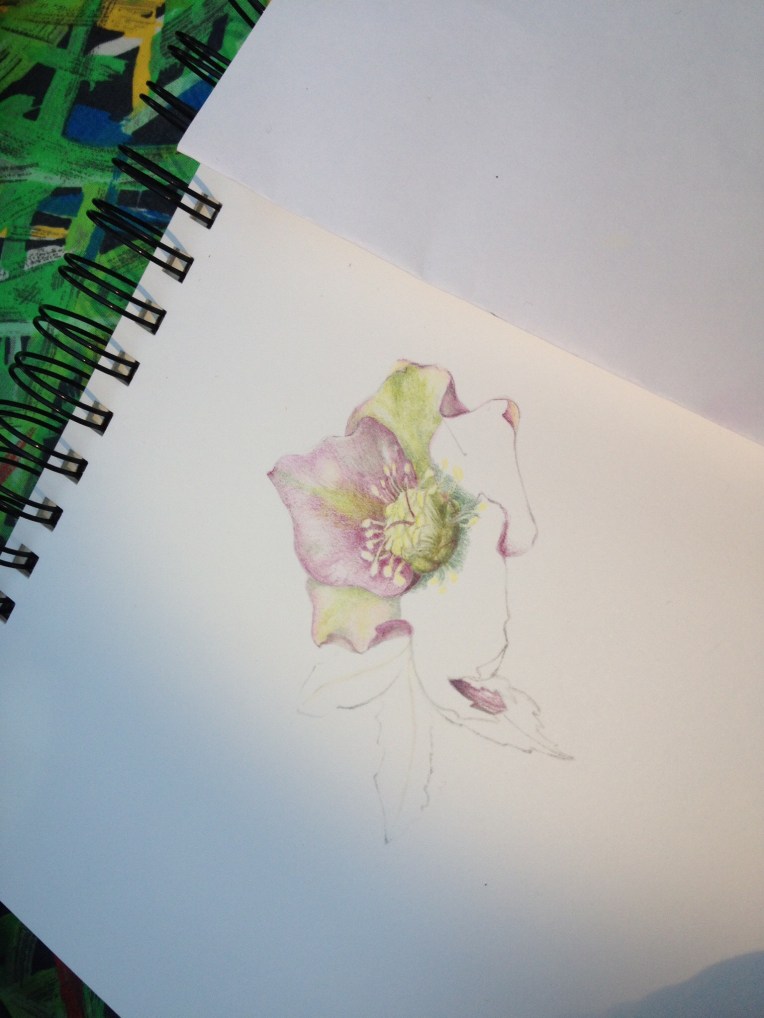
The colour was started yesterday, mostly around the stamens. Today they have been forging ahead and these were the results by about lunchtime today. Hopefully I will be able to show some finished results by end of play tomorrow.


Another piece of student work

I have a student who started using coloured pencils and botanical art, last summer. As far as I am aware she hasn’t done anything like this before.
Su became enthralled with botanical art and will do it at any time she has a spare minute – even if it’s only five minutes before going to work. Su’s botanical art work has improved so much over such a short time.

What do you think? By the way, it is incomplete, but already very impressive.

IMG_0741

Botanical art workshop report from Twigs and things.

We have just finished the botanical art workshop and I thought I would get the pictures resulting from it, onto the blog before I started marking London Art College assignments.

From my perspective we had a very enjoyable workshop. But then I would say that wouldn’t I? Hopefully someone will confirm or deny this when they read the blog!

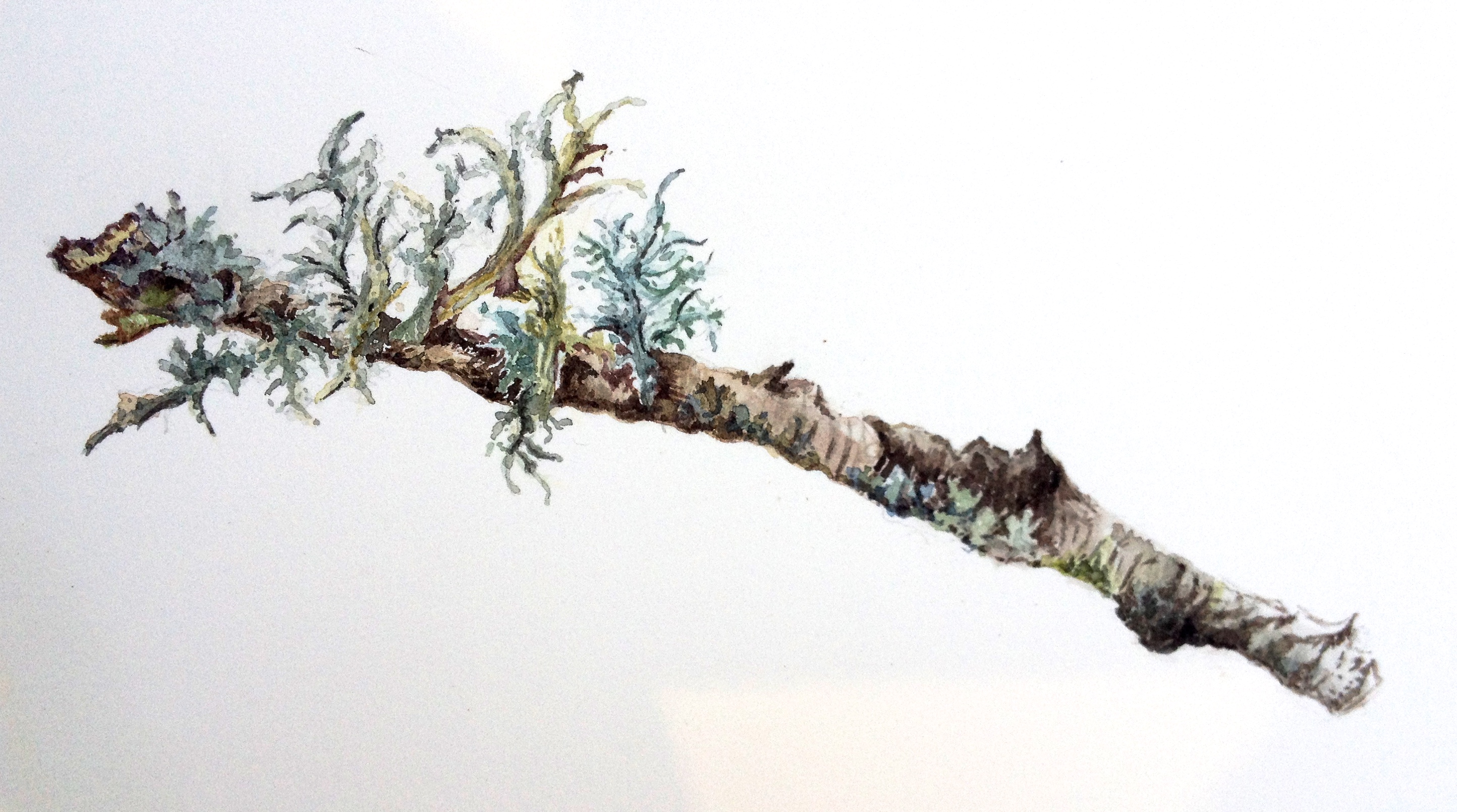
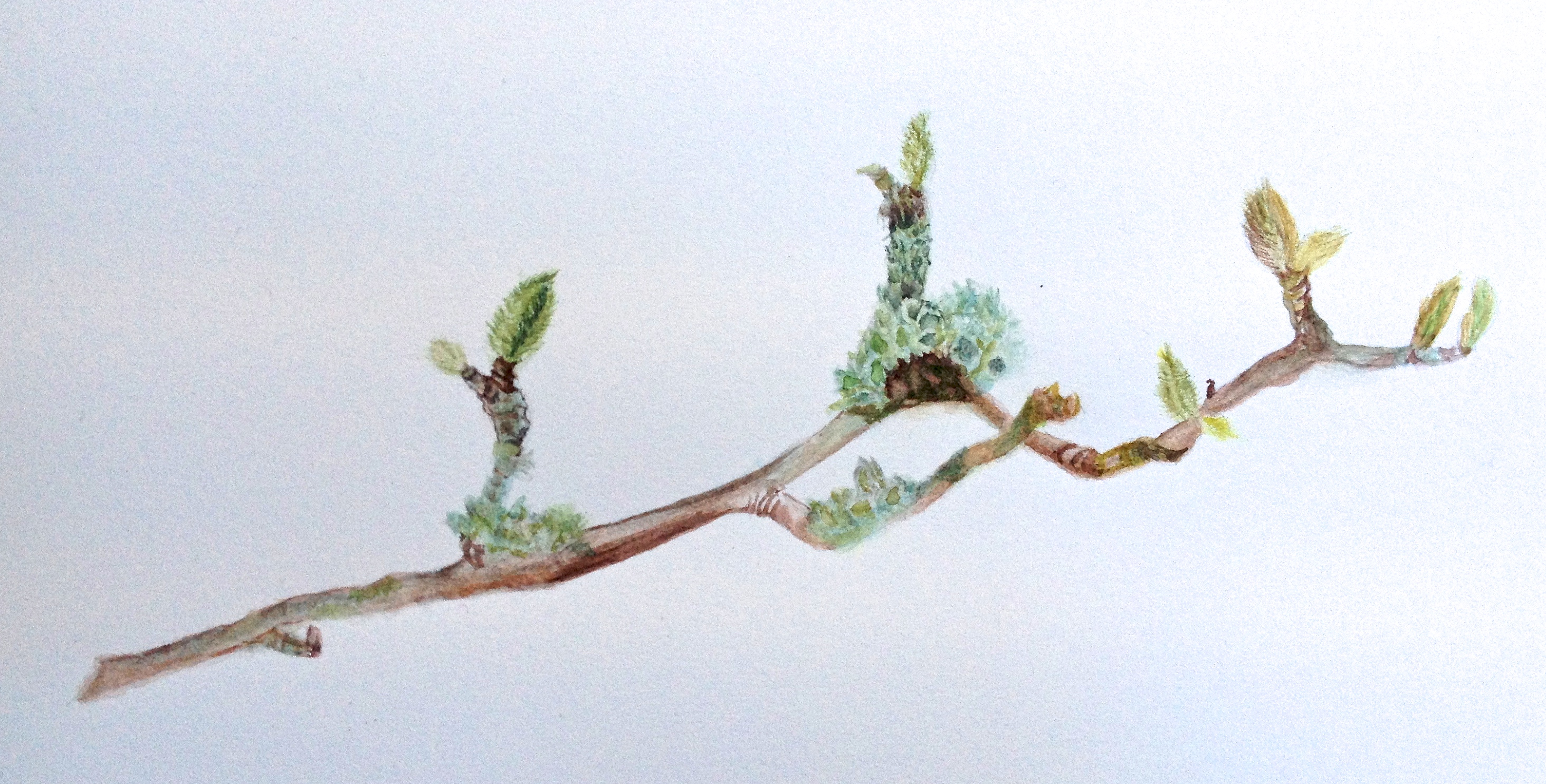
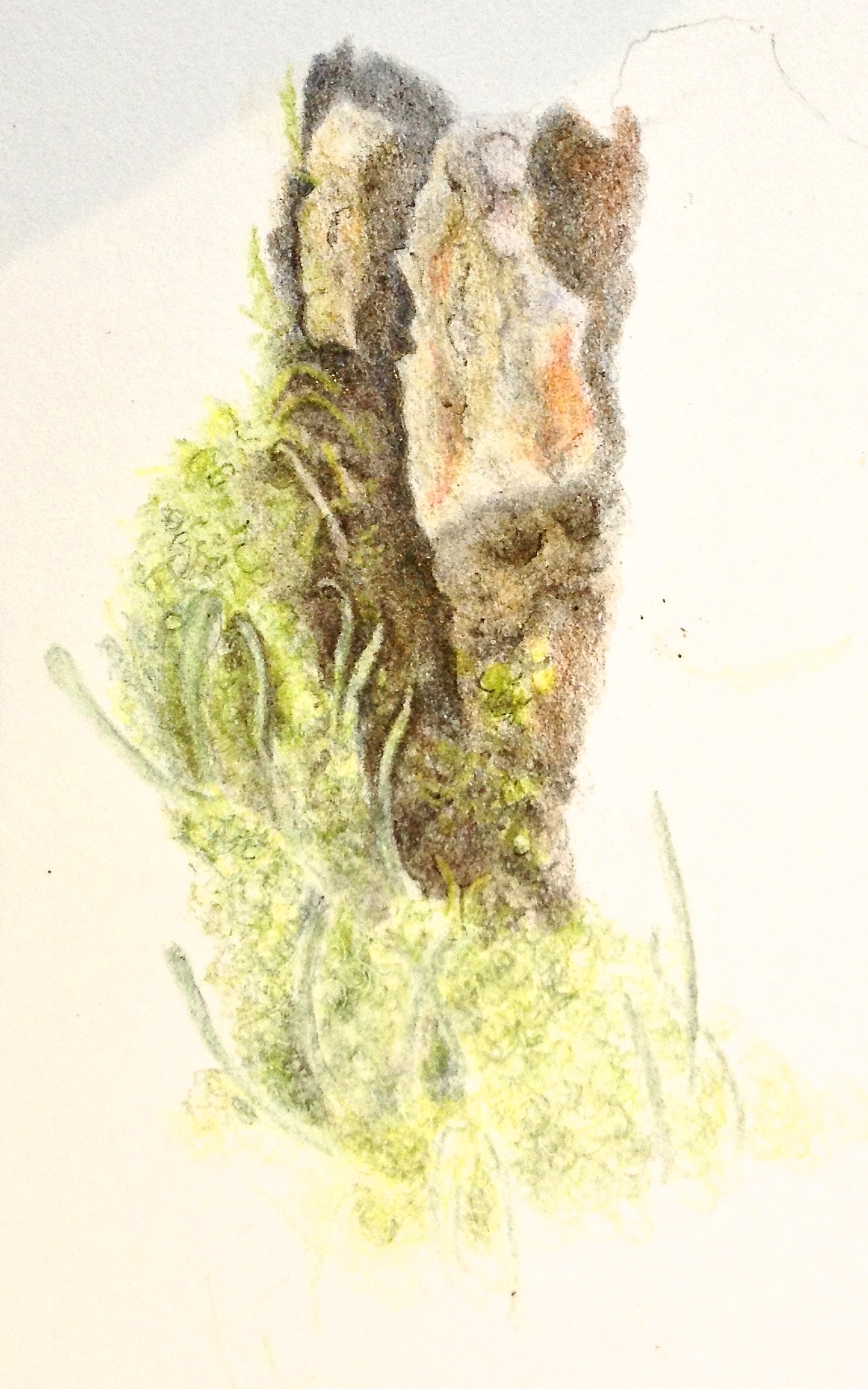
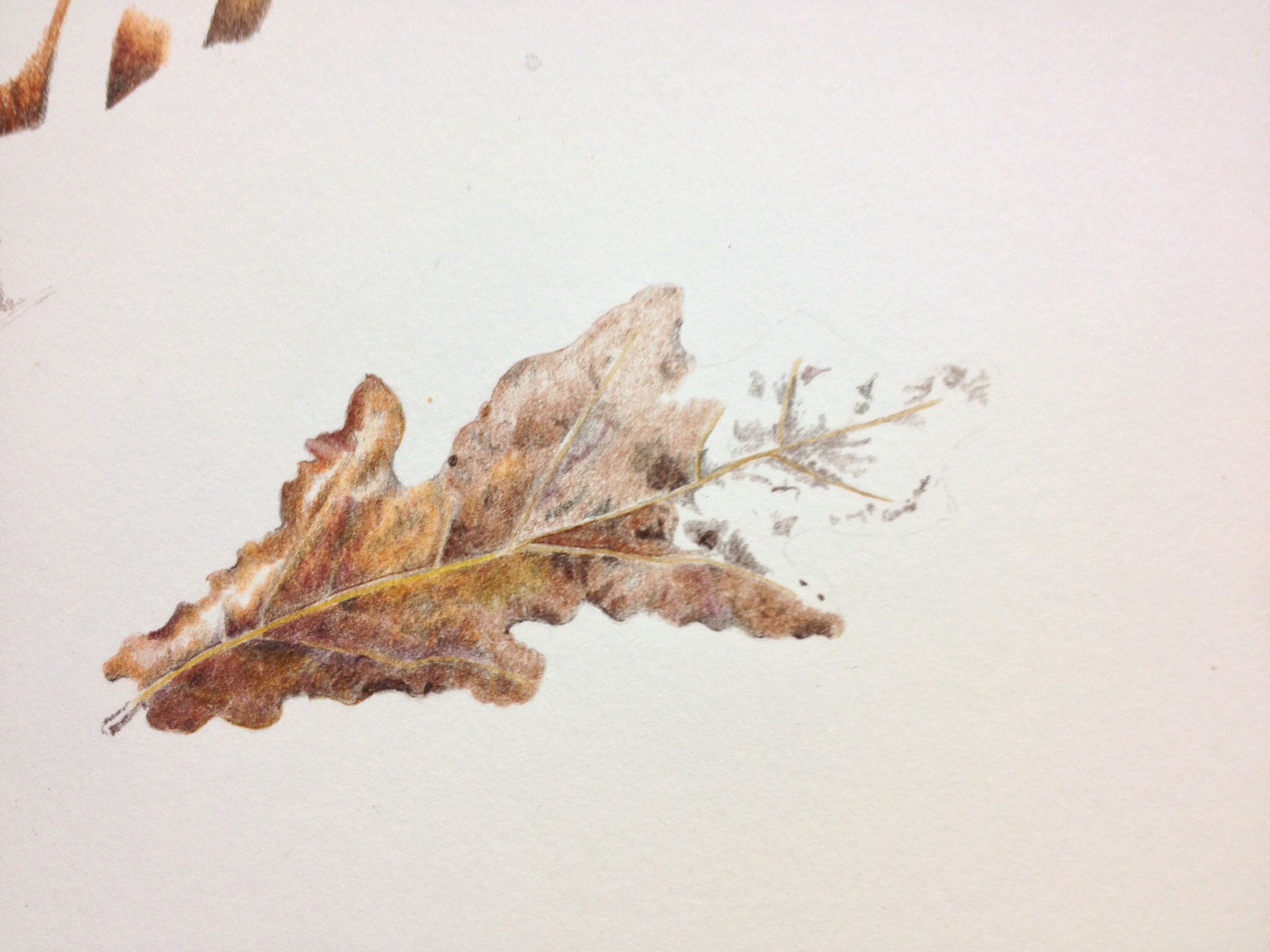
When painting a serious botanical subject that has gnarled branches with lichen or moss growing on it, I feel that I can play with the painting of it – as long as I stay true to the form, growth habit and type of lichen etc. I wanted to convey this to the group as well as get them to see the multitude of colours within such a specimen. I had two days to do this. Half of the group worked with watercolour and half with coloured pencil. Therefore it was exciting demonstrating the same topic in each of the media.

On one occasion I showed the group how to paint the furry terminal bud of a Magnolia soulangeana, first in watercolour and then in coloured pencil. It was quite amusing to hear the comments and the competition in assessing which bud looked best and which medium best suited that topic.

I was very glad to see that there were quite a few different types of lovely specimens which excited the group in different ways. There were some lovely colours observed, hidden in nooks and crannies. Red, pink, blues, oranges etc. A touch of some of these fresh colours, lifted a picture without dominating it. Anyway, I hope that you enjoy the following pictures.

The next botanical art workshop is Floating Hellebores (exposed faces), 27 February to 1 March. We already have a lot of Hellebores flowering in the garden, from very pale to very dark. There are available places, so do get in touch and book.

The brave class
The brave class
A piece of bark with several lichen types growing on it. The main one is identified as Cladonia cornuta.
IMG_2089
At work
Gnarled birch branch with a variety of lichen forms. Watercolour.
A branch of Magnolia stellata in watercolour.
A variety of types of licjhen and moss on another branch from a Magnolia stellata tree. Coloured pencil.
Start of a very complicated piece of work in Coloured pencil. The difficulty of portraying Cladonia cornuta amongst the other lichen growing on the bark piece. Quite a challenge.
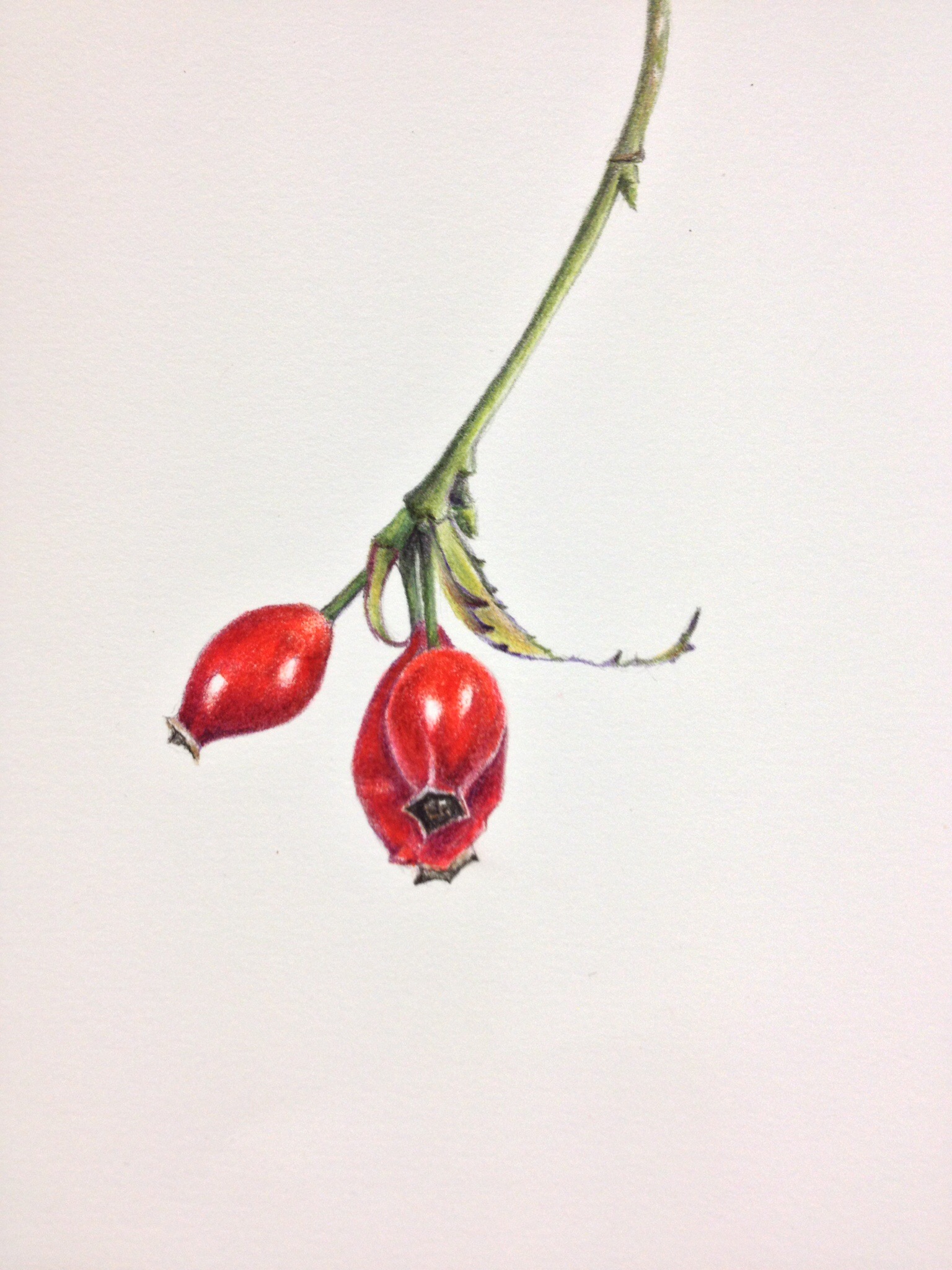
Rosehips in Watercolour
Both Birch twig and bark from a tree, with small amounts of lichen growing on it. Coloured pencil
Branch with lichen very happily in situ. Watercolour

Palmengarten botanical art exhibition – Wednesday last week

A good class this morning and progression with the brochure for the Norwegian botanical art holiday.

I have heard from Sue Henon that we have two further red dots on pictures. I am so glad that botanical art is being so warmly appreciated in Frankfurt. It would be lovely if we could awaken a similar interest in Norway.

Some more pictures. This time they are three pictures by Norma Gregory. I first met Norma when I first exhibited with the RHS. She won another Gold Medal with her fantastic paintings of roots. Amongst others was a Rhubarb plant which I will never forget. The RHS added that picture to their Lindley collection.

Solanum tuberosum 'Potato'. Watercolour by © Norma Gregory
Solanum tuberosum ‘Potato’. Watercolour by © Norma Gregory
Cynara scolymus 'Globe artichoke'. watercolour by © Norma Gregory
Cynara scolymus ‘Globe artichoke’. watercolour by © Norma Gregory
Rosa gallica 'Versicolor' Rosa Mundi. Watercolour by © Norma Gregory
Rosa gallica ‘Versicolor’ Rosa Mundi. Watercolour by © Norma Gregory

But now you are possibly ready for a couple of pictures in a different style coloured pencil than those shown yesterday. These two pictures are by Sue Henon and are on coloured paper.

Hyacinthus orientalis , 'Hyacinth I'. Coloured pencil by © Sue Henon
Hyacinthus orientalis , ‘Hyacinth I’. Coloured pencil by © Sue Henon
Hyacinthus orientalis , 'Hyacinth II'. Coloured pencil by © Sue Henon
Hyacinthus orientalis , ‘Hyacinth II’. Coloured pencil by © Sue Henon


Palmengarten exhibition – Last Tuesday

In trying to catch up my own paperwork today (not that I have succeeded), I have at least put in the forms for the Chichester Open Studio event starting the weekend of the May Bank holiday in 2015. One box ticked off.

Since then I have been putting together my brochure for the Botanical Art Holiday in Norway 28th June to 5th July at Åsgårdstrand, near Tønsberg in south eastern Norway. A beautiful area, with lovely light and very peaceful. The brochure still isn’t finished.

People who might have their pictures returned from Palmengarten after the exhibition are arranging dates with me for collection. That is good as I will want to put my family up for Christmas!

I have my weekday class tomorrow morning and then its back to the grindstone in the shed.

Many of the artworks at Palmengarten have made quite an impression on me and some the artists have helped me considerably on my journey. The pictures that I will show for the rest of the week are a mix of these.

I love working with coloured pencil and although all of these pictures are not CP, the ones I am showing you today are by the artist who first taught me to use this medium – Susan Christopher Coulson.

The fourth picture by Maggie Fitzpatrick is just a picture that stood out for me. It isn’t big and flamboyant, but beautifully delicate. Please enjoy them as much as I have. Sorry they are wonky!


The Dose Makes the Poison - Coloured pencil. Susan Christopher Coulson
The Dose Makes the Poison – Coloured pencil. Susan Christopher Coulson
Medieval Medicinals from an Apothecary’s Garden. Coloured Pencil by Susan Christopher Coulson
Cures from the Potager Garden. Coloured pencil by Susan Christopher Coulson
 Ivy &White Bryony on Horse Chestnut branch. Watercolour by Maggie Fitzpatrick
Ivy &White Bryony on Horse Chestnut branch. Watercolour by Maggie Fitzpatrick

Autumn colour workshop Sunday – and Palmengarten

Potentially interesting - but what's going on?
Potentially interesting – but what’s going on?

This was a good workshop. I needed to do only a few demonstrations, and none of them were in relation to laying on the colour. However, we did talk a lot about ‘form’ and how to achieve this and what needed to be in a botanical art picture.

I also have several dried Teasels in the studio, so the next obvious question was, how to draw these ready to paint. A lesson on Fibonacci ensued.

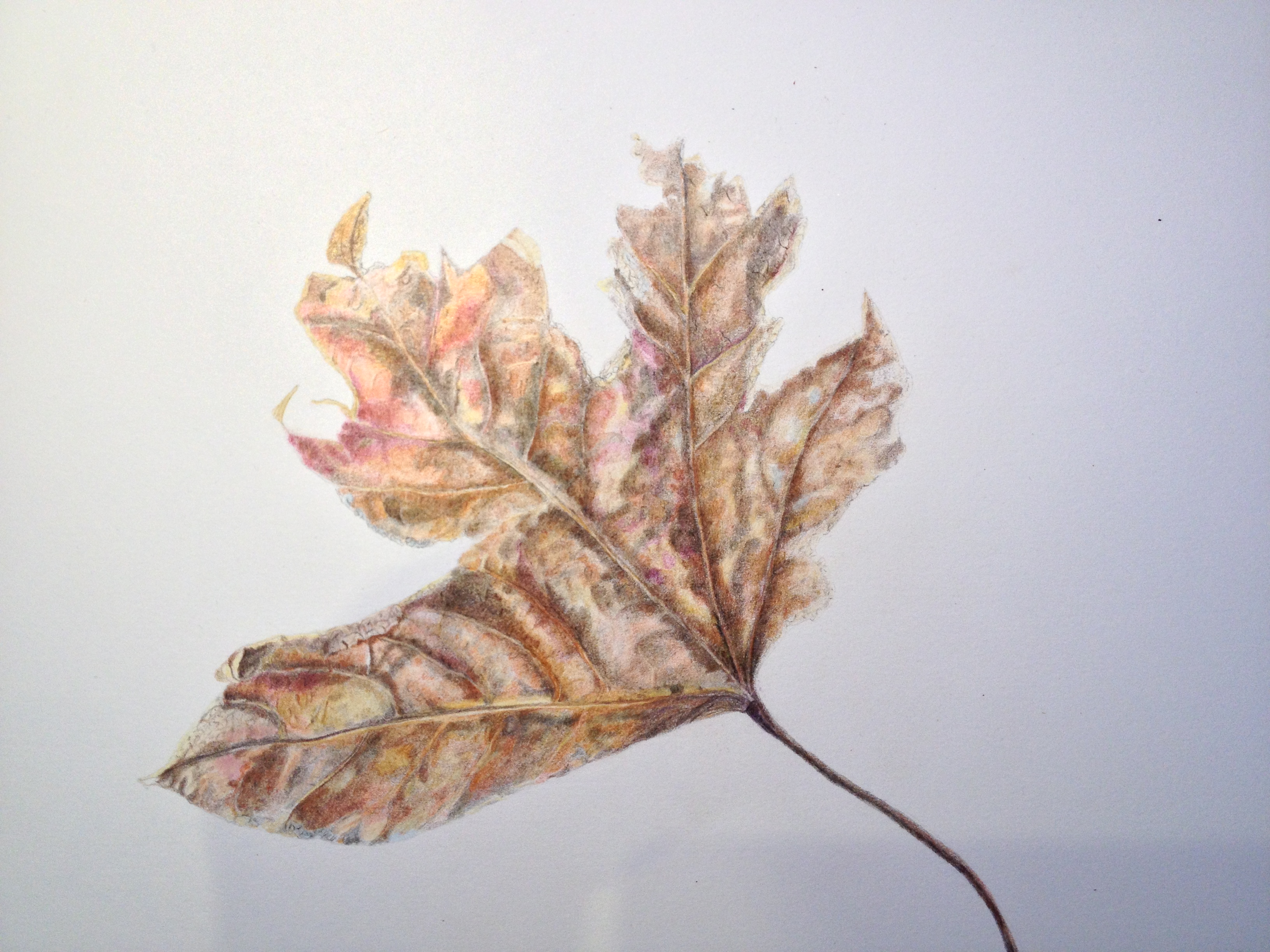
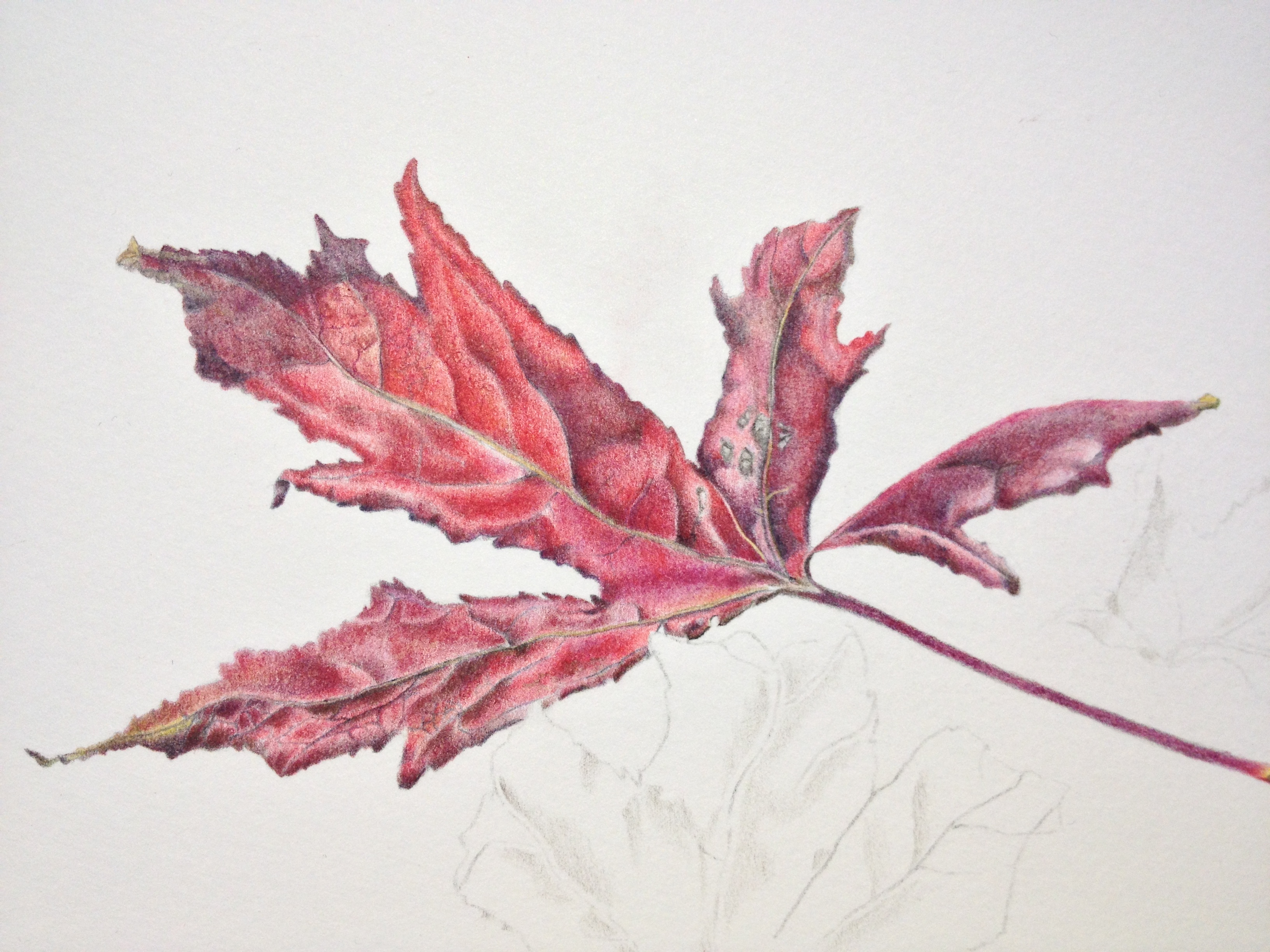
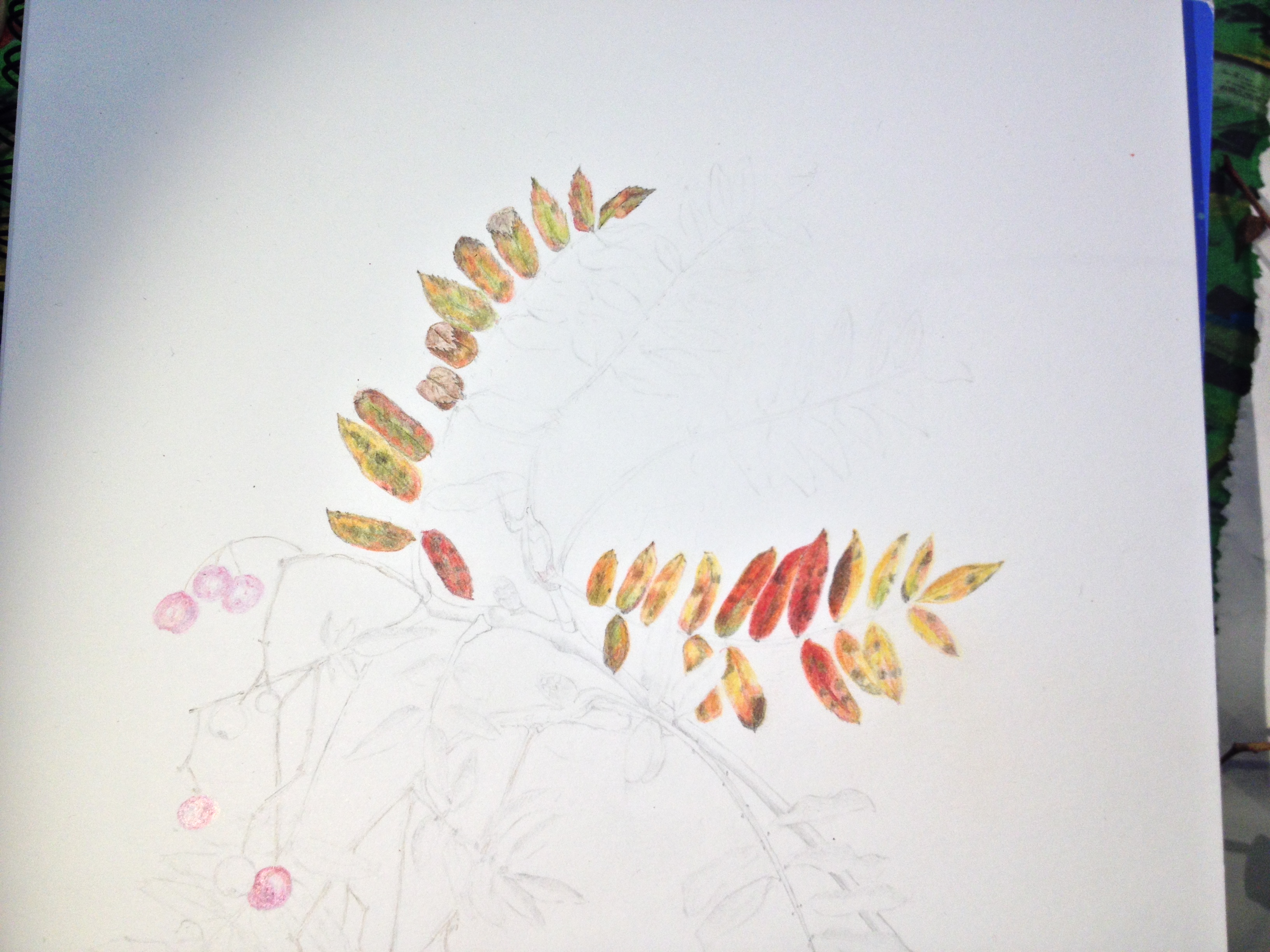
Enjoy the following pictures from this workshop. The two pictures started last Monday on the SFP workshop will probably require no more than simple adjustments if necessary. There are two pictures with Liquid amber leaves – but the styles are hugely different and work. The Sorbus picture will take a while to come to completion with all the tiny leaves and detail. The honeysuckle has needed a lot of planning and thinking ahead, more of the basis work is in place and now she can just carry on painting the rest of the picture.

Horse chestnut leaf
Horse chestnut leaf
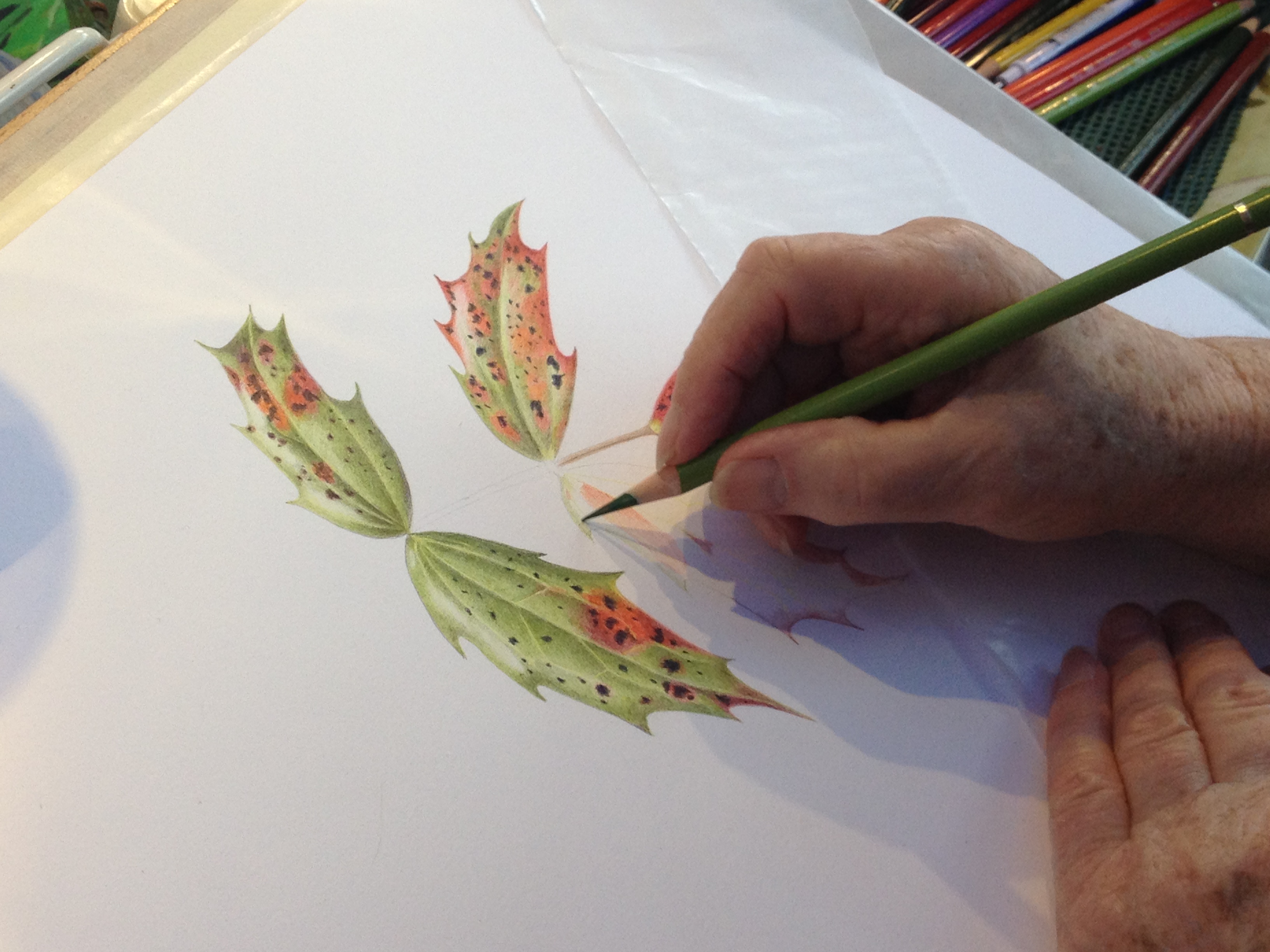
Mahonia
Mahonia
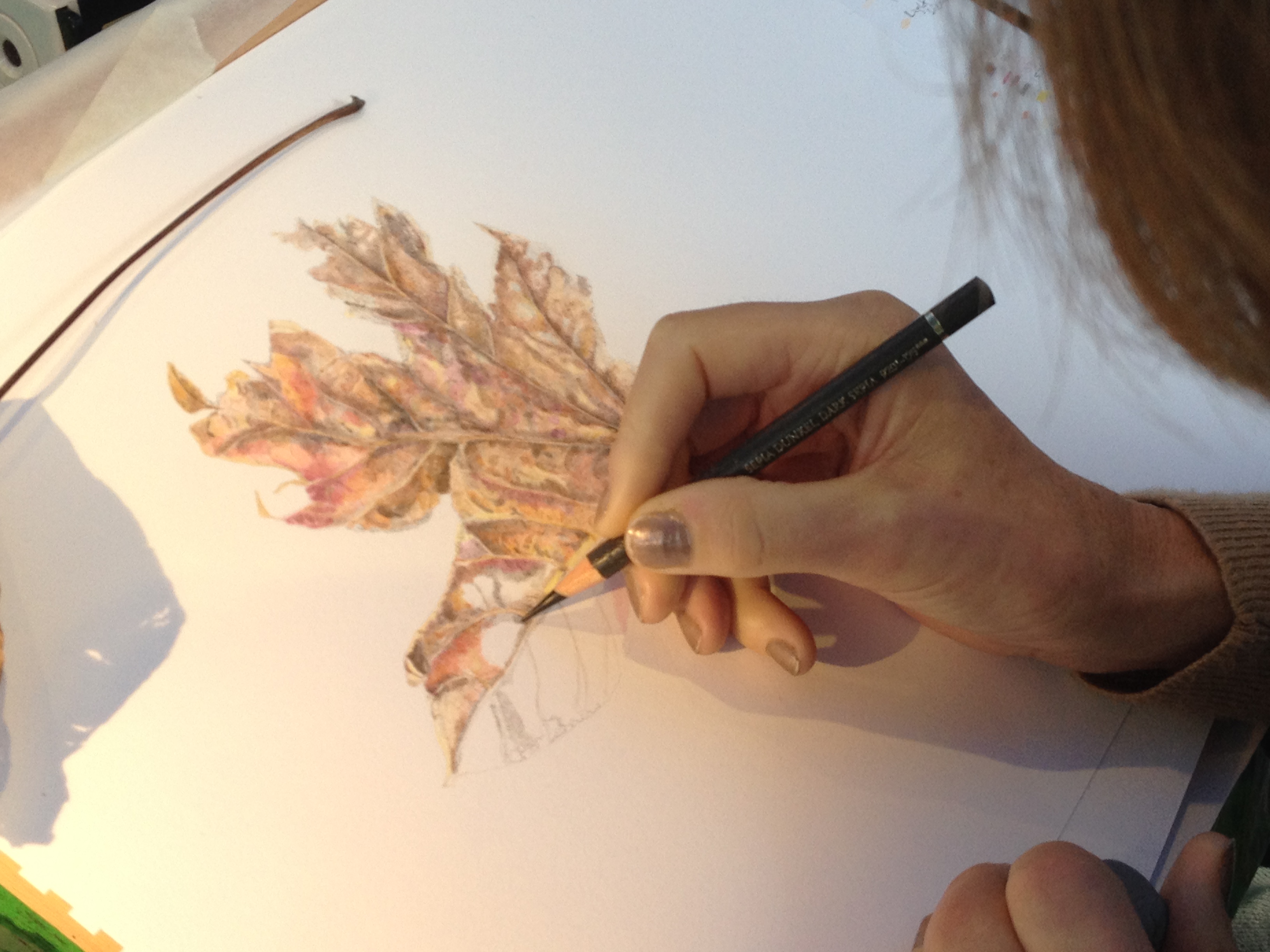
Liquid amber
Liquid amber
Rowan
Rowan
Liquid amber
Liquid amber
Honey suckle - all in the planning
Honey suckle – all in the planning

And Palmengarten pictures.


Artwork by Alister Matthews


Artwork by Alister Matthews
Artwork by Joanna Craig-McFeely, Roger Reynolds and Rosemary Lindsay
Artwork by Sue Dalton and Janet Pope


Autumn colour workshop Saturday – and Palmengarten

I have had a very good day in teaching this workshop. I mentioned yesterday that I had the feeling that there would be some lovely results from the workshop; that feeling persists.

Even so, their accomplishments continue to amaze me and therefore I also need to be on my toes and give enough advice for continued development. I was glad to see that they took a couple of active breaks whilst drinking their tea or coffee, so that they could go back to the drawing board with fresh eyes. But, even though taking a break they continued to discuss their progress.

IMG_1690 IMG_1692


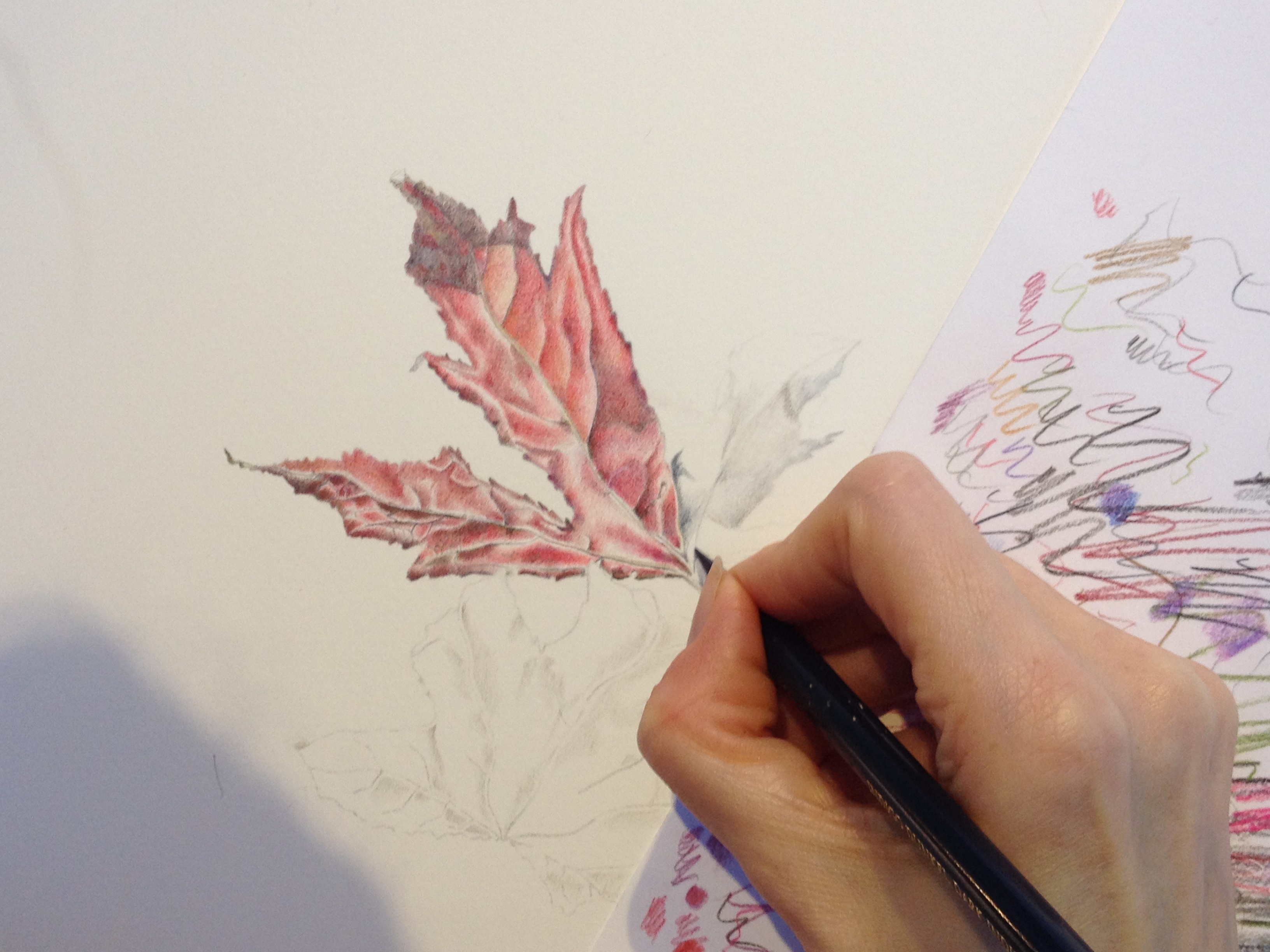
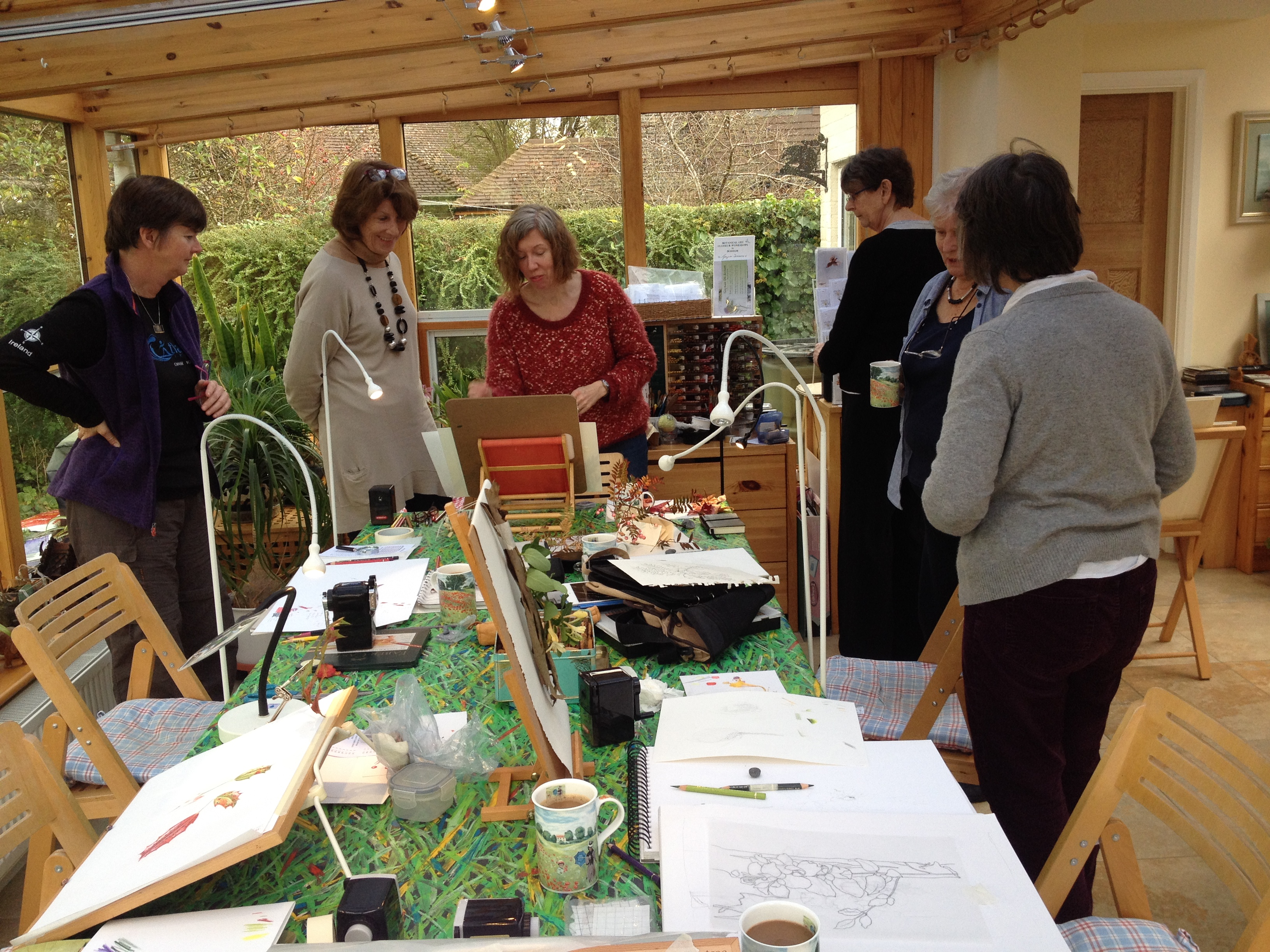
Some of the work as it is developing. There is a huge difference in each of their styles of working and every student has a struggle with a certain aspect of their picture. Two of the pictures were started on Monday at the SFP workshop, but you can see how their pictures are developing. Some have chosen very complicated pieces to draw and in fact only started using coloured pencil this morning. Not all of the pictures are shown here.

Liquid amber
Liquid amber
Liquid amber
Liquid amber
Mahonia
Mahonia
Horse Chestnut leaf
Horse Chestnut leaf

The last one shown below is the Honeysuckle. I think you might be able to understand the quandary the artist has when painting this picture. We are now in mid November, she has found this Honeysuckle still flowering, but knows that its days are numbered. In addition to the limited supply, she also wants to get done that part of the plant that is likely to die first – the flowers. This is typical of all botanical art painted from a live subject – what do you paint first and what is likely to change most?

In addition to this, if choosing to paint the flowers first, how much shading does one put into the flowers? If the dark leaves are done first, then the ‘hole’ left in the picture for the flowers is likely to need much less shading than if done without a dark background.

Painting white or very pale flowers on white is quite daunting. It is possible, but one has to make sure that the shading to create form, is not overdone. The problem is minimised if the pale flowers are against a dark background, or background of leaves. The hole you leave in the painting for the flower is a shape and therefore the problems of creating the appearance of three-dimensional form are reduced.

The form of a subject is created by light hitting the surface of the subject. Some areas will be exposed to light and some areas less exposed to light or very little light. Thus the combination of the flat shape of the object, and the tonal differences created by light exposure, give you form; and a means of identifying the object. Colour is another issue altogether.

In the case of this Honeysuckle, it was decided that a grey underpainting on the leaves would be done first so that the flowers would stand out as white shapes. Before the leaves are completed fully, the flowers will be completed delicately and the leaves finished afterwards. The bark will be finished last of all but I doubt that you will get to see that part of the picture.

Honeysuckle attached to Eucalyptus bark.

So, some more pictures from the Botanical art exhibition held in Palmengarten the botanical gardens, Frankfurt, Germany.


Artwork by Linda Pitt, Roberta Mattioli and Hazel Rush
Artwork by Nicki Tullett, Charlotte Linder, Rosemary Lindsay & Anne Lawton
Artwork by Barbara Munro, Charlotte Linder
Artwork by Sue J. Williams and Janet Pope

Society of Floral Painters (SFP) workshop day & Palmengarten

For a change I will tell you a little of what I have been up to today.

I mentioned a couple of days ago that I would be doing a fair amount of teaching this week. Today I did a workshop for the SFP. A couple of times a year they arrange workshops for members at a place called Bursledon just outside Southampton.

Bursledon is by the River Hamble and its Elephant Boatyard is on the site of the old ship building yards where Henry VIII’s fleet was built. But I didn’t get to do any sightseeing unfortunately.

The village hall where the workshops are held is very light and airy, but the light comes in all directions giving all round light. Difficult when you want to emphasise contrast and shadows creating form.

The topic of the workshop was Autumn Colours and the medium was coloured pencil. Some of the students were well into using coloured pencil in botanical art, some had played a bit with CP and some had collected the odd pencil and wanted to learn how to use them. We had only one day.

Because of time limitation (1 day), and unlike my usual workshops, I had to stay focused only on CP techniques, rather than the whole picture – initial drawing and composition. This meant that people had to have taken decisions about subject and composition before today, to be in readiness for laying CP.

I demonstrated the technique, answered questions and then let people put into practice what they had picked up from the demo and instruction. After that it was a question of going round and continuously checking progress, giving advice and solving individual issues.

I’m afraid that I only took a few pictures as I waited a little too late before remembering to take them. But there are two people from further west who are absolute gluttons for punishment, they got off on time, but are coming back for my three- day workshop at the weekend. I will definitely take photos of their results then.

Here are four of the results from today.

IMG_9617.JPG

IMG_9619.JPG

IMG_9621.JPG

IMG_9616.JPG

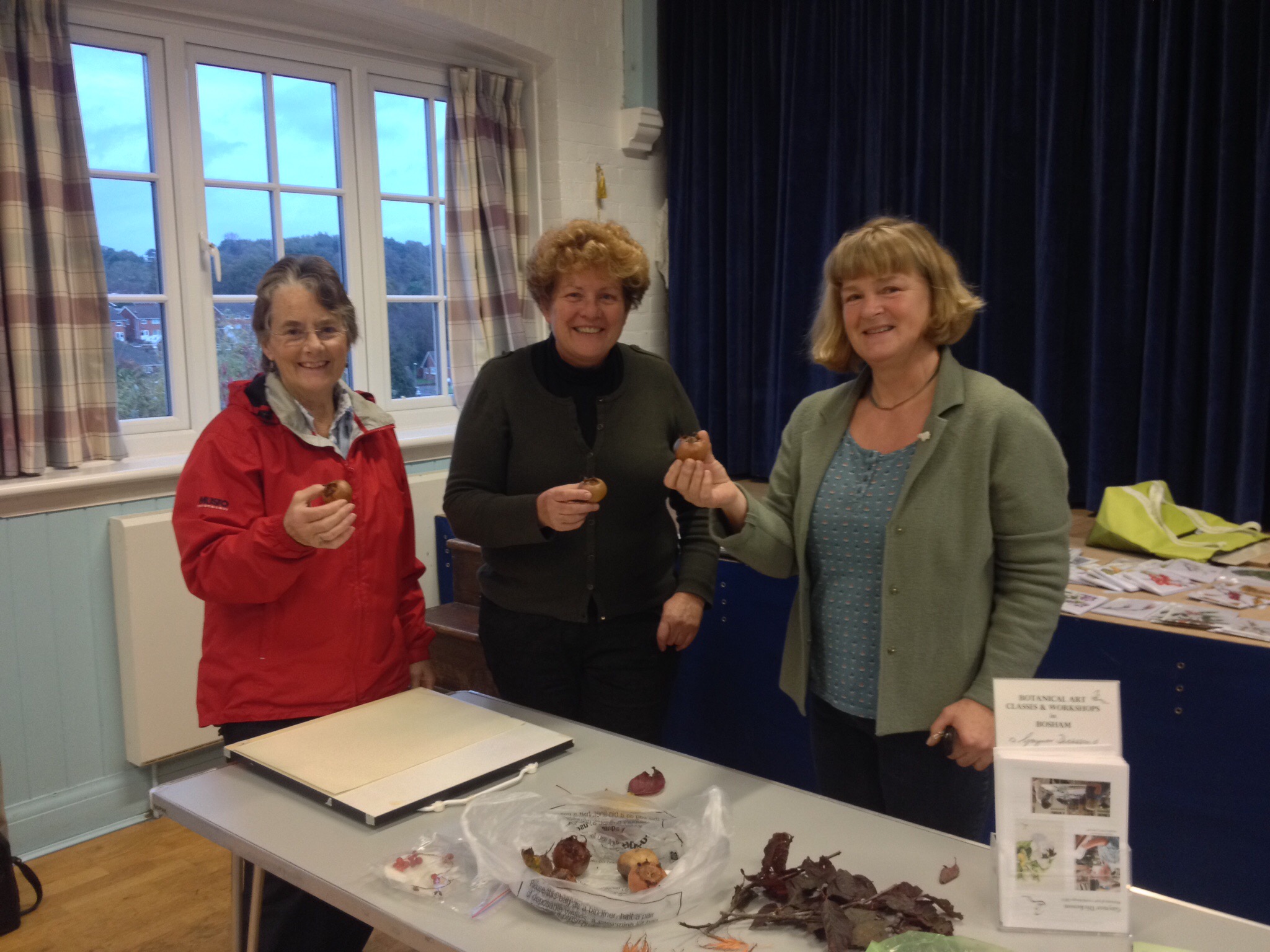
Don’t you think they are stunning? Three of the happy ladies (Maggie Roberts, Barbara Sampson and Ruth Roberts) considering if they are going to paint Medlar or not. I think that they were amazed that when painting subjects such as dead and dyeing leaves, you can really play with colours. They were so surprised to find out that dull brown also contains pale pinks, exhilarating magentas, delicate blues and of course vibrant reds and yellows.

IMG_9625.JPG

To finish off this blog a few more of the exhibition pictures at Palmengarten.

IMG_0946.JPG
Artwork by Sandra Armitage & Vickie Braithwaite.

IMG_0945.JPG
Artwork by Cheryl Wilbraham & Yuriko Kojima

IMG_0949.JPG
Artwork by Shevaun Doherty & Elisabeth Sherras Clark

The first Monday of the Palmengarten exhibition

The van was returned to Portsmouth, but this time trains didn’t connect, so I followed Robin in the car. Our drive now only contains our car. The bedrooms are reclaimed, the mess has yet to be cleared up – until we get unsold pics back in a months time.

Up until close of play yesterday, 17 deposits have been made on botanical art pictures painted by SBA members and associate members. Although not necessarily photos of the pictures mentioned above, I am attaching some photos of pictures from the exhibition as they hang in the Palm House at Palmengarten.

Please enjoy.

Digitalis purpurea - watercolour - Gael Sellwood SBA
Digitalis purpurea – watercolour – Gael Sellwood SBA
Colchicum autumn ale - watercolour - Charlotte Linder SBA
Colchicum autumnale – watercolour – Charlotte Linder SBA
Lonicera periclymenum - pen & ink and coloured pencil - Rachel Munn SBA
Lonicera periclymenum – pen & ink and coloured pencil – Rachel Munn SBA
Fragaria x ananassa - watercolour- Yvonne Glennister Hammond SBA CPGFS
Fragaria x ananassa – watercolour- Yvonne Glennister Hammond SBA