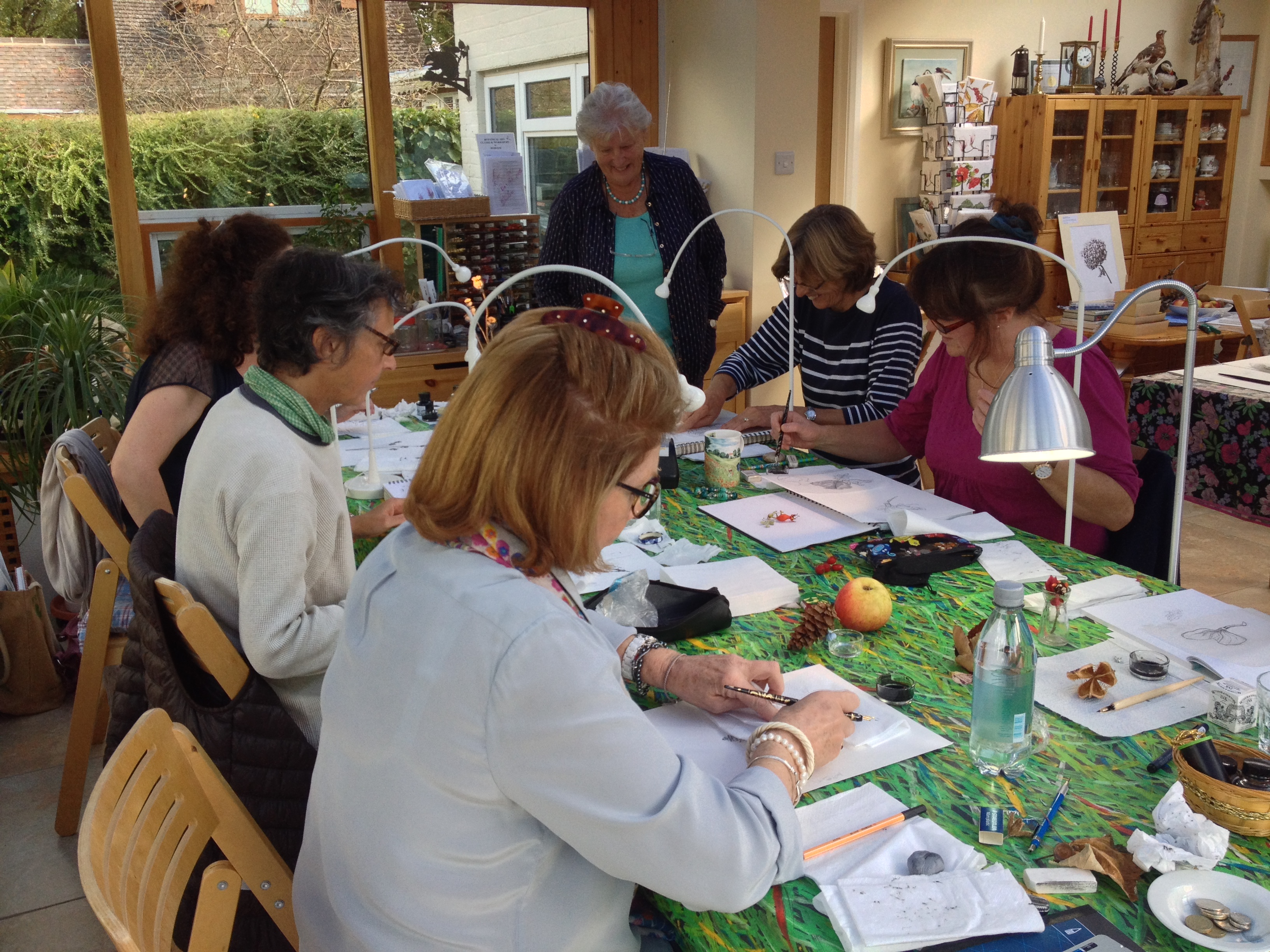
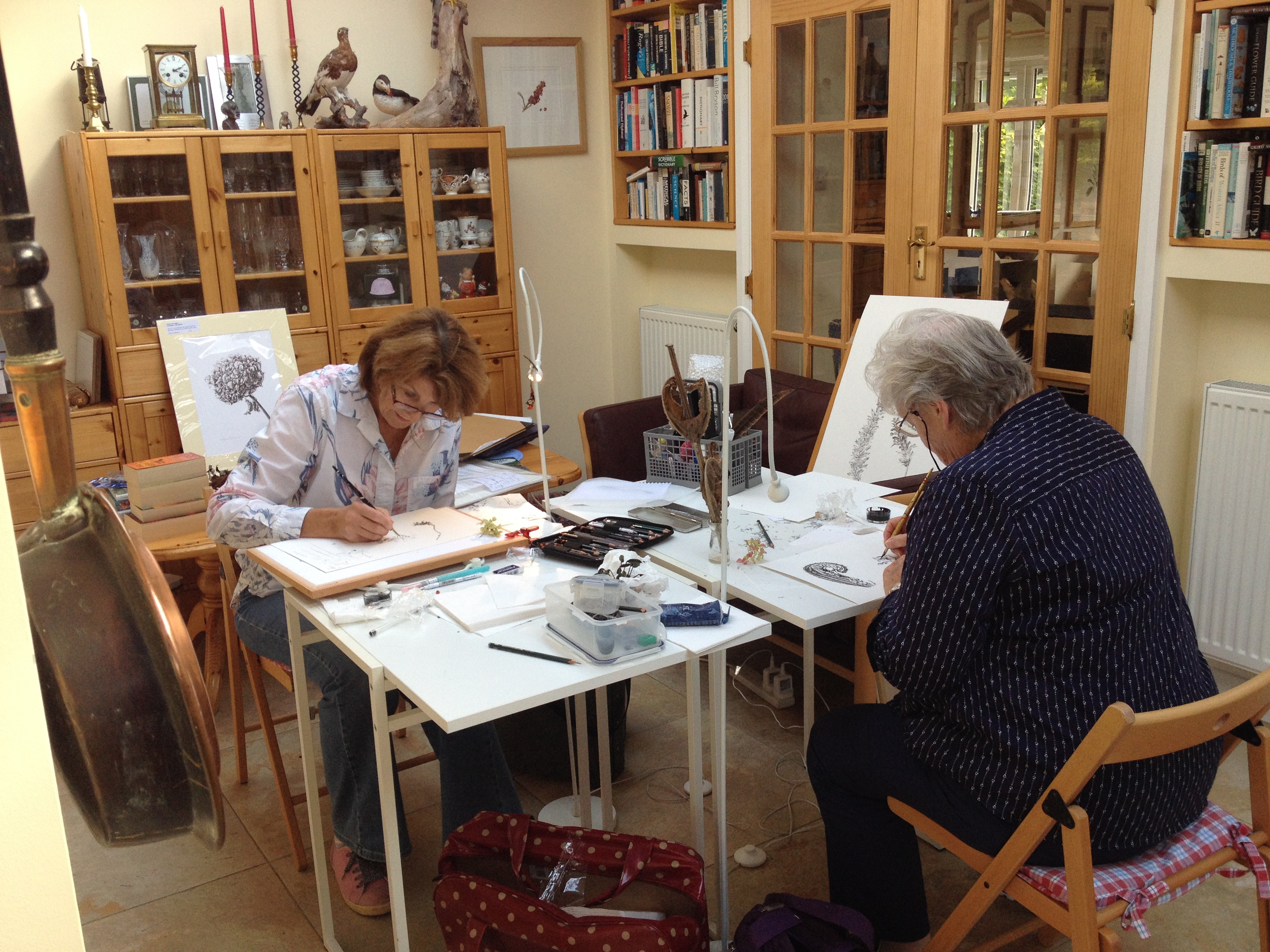
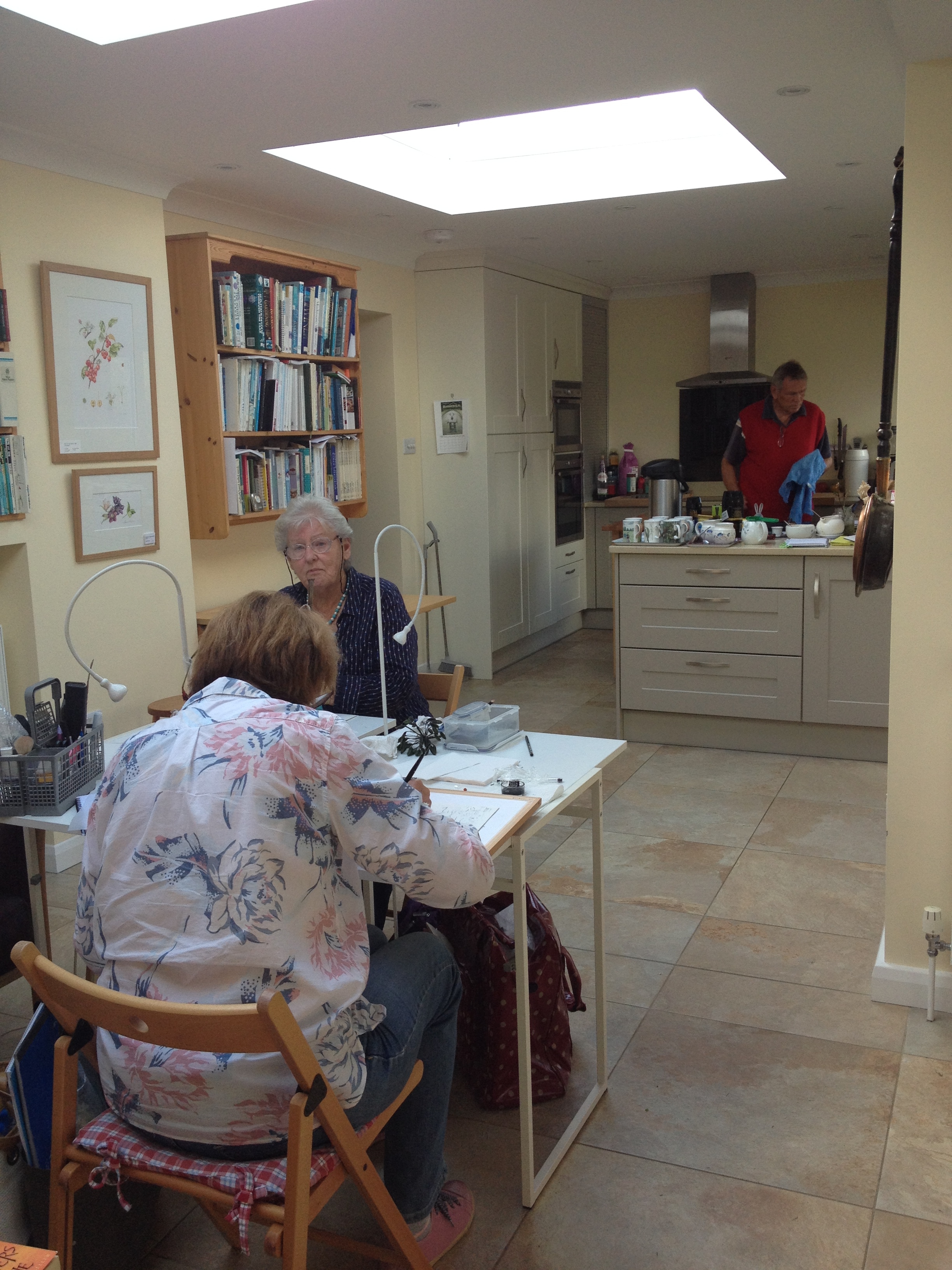
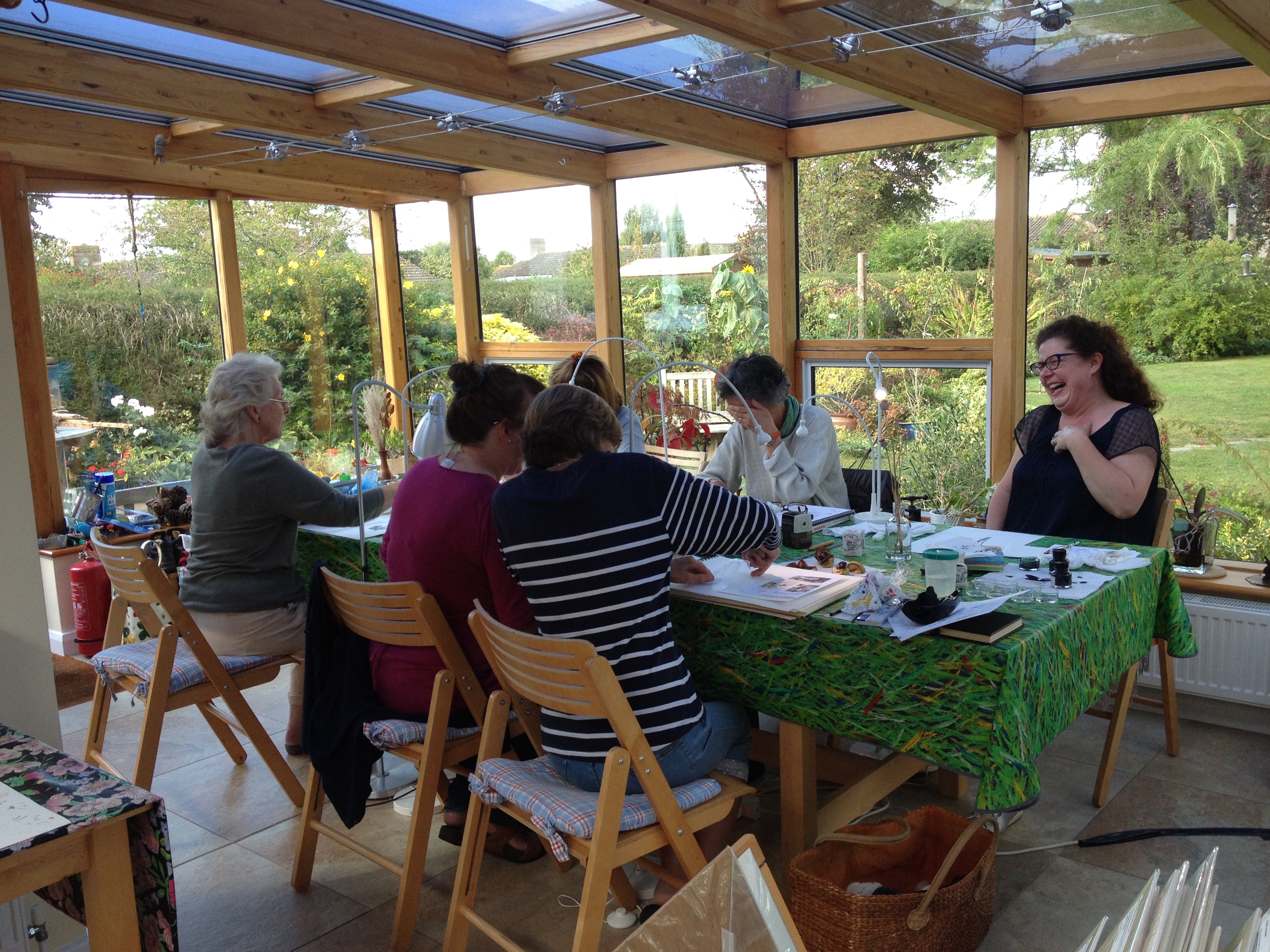
Fruit & Vegetable workshop + gluttons for botanical art workshop (punishment).

Yes, gluttons for punishment! On Tuesday and Wednesday I was teaching the Gloucestershire society of Botanical illustration. Two from that group took the long trip to Bosham for the Fruit & Veg botanical art workshop, when they had already been on the pen & ink one at the beginning of the week. They assured me that it was really Robin’s cooking they came for. I have to say, his lunches are getting really good.

Anyway, once again I am told that the students who attended the workshop over the last couple of days, had a good time and learnt a lot. The group included a couple who hadn’t done any botanical art before and a couple who wanted to learn to use either coloured pencil or watercolour, when they had used the opposite very successfully for many years. They did well, although I know from experience it can be a struggle converting one to the other. It will be interesting to see if they try the new medium again. I hope so, as it is useful to be able to ‘master’ more than just the one medium. Although, I don’t think anyone can claim to ‘master’ any of them. It would be useful to hear if anyone thinks this possible?

We had incredible weather over the two days, so there were some frequent trips to the kitchen garden.

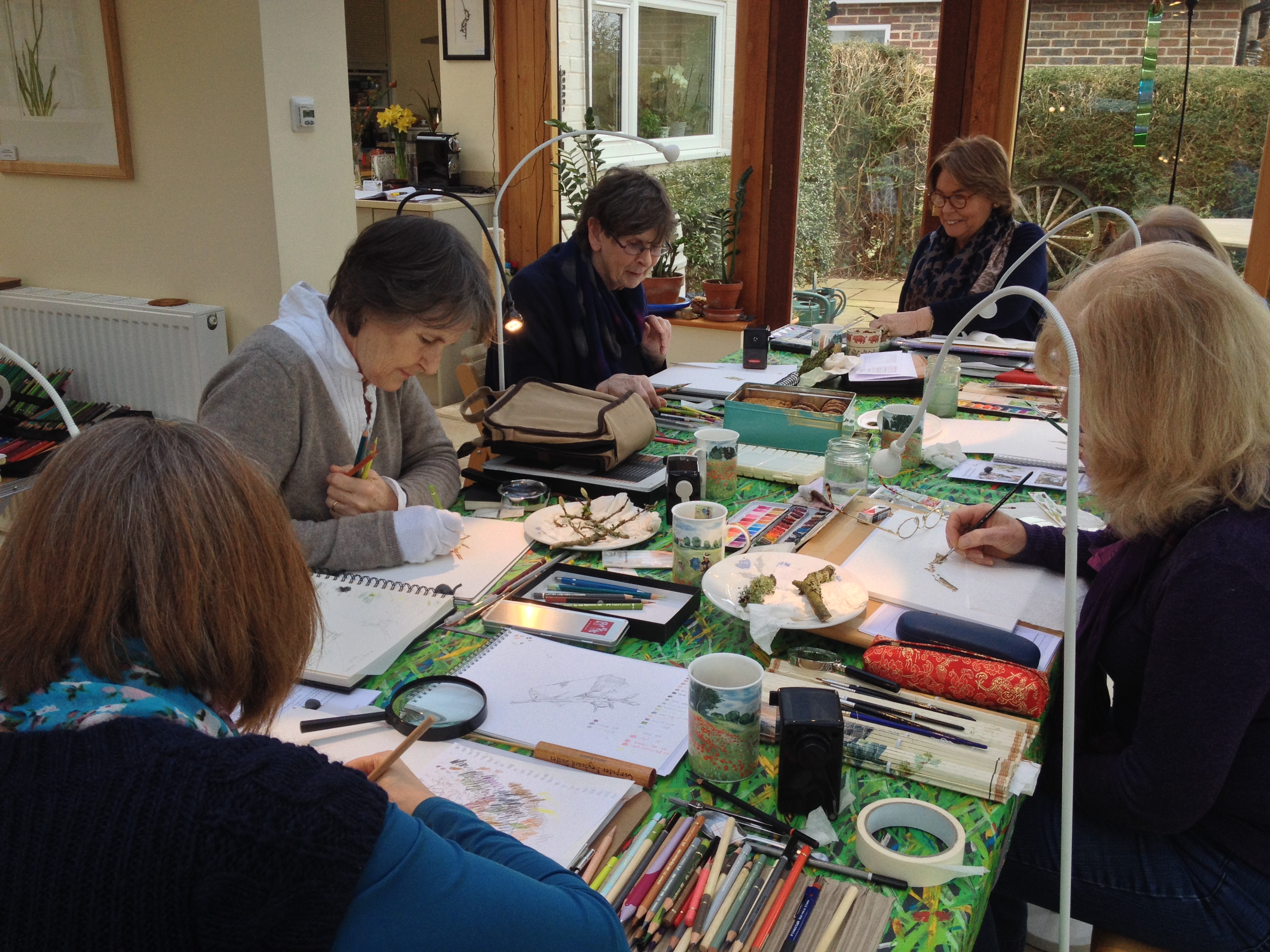
The first picture only includes a few of the students. I’m afraid I forgot to take these until the other tables had already packed up.
image

Now the gallery of pictures. Make sure that you have a reasonably good Internet connection. Unfortunately, it seems that when out and about, some of the connections limit what you can pick up and sometimes one is unable to see the pictures until you have a full broadband.

This slideshow requires JavaScript.

Summer Open Studio – Botanical art

Its that time of year again. Children are on holiday and the waterways (as well as motorways) are bustling. The sun is shining and the bees are buzzing, making sure we get the produce from our kitchen gardens and seeds for next year.

From my shed (studio), I can hear happy sailors in the creek, as well as curlews as they land. There seem also to be a lot of children and teenagers learning the ropes out on the water. But I am happy painting away with the sun pouring in through the open door and the cats curled up asleep as company; oblivious to anything.
Do come and experience my little haven during the next couple of weekends. You will be most welcome.

2015 Summer Open Studios flyer

One of the pieces I will be working on is my latest challenge. Fuchsia microphylla. Microphylla means small leaves. Everyone knows more or less what a Fuchsia looks like as for some it seems to be a challenge to find as many different sorts as possibly – whether hardy in the UK climate, or not. This plant is hardy but intriguing. The flowers are tiny, as are the leaves, but the fruit is also quite small although seeming to get somewhat larger than the flower.

Fuchsia microphylla
Fuchsia microphylla
Fuchsia microphylla flowers

I have started to paint a picture in watercolour. The composition is the real challenge and how I am going to express this on paper, with dissections. Come and see how I intend to try and solve the problems. Comments and suggestions will be most welcome.

Fuchsia microphylla painting started

My husband commented today that he didn’t realise that the colours in the plant were so vibrant. I had done a tad more on the painting by the time he made this comment. But it is like all things botanical, once you get down to the detail – even in grasses – the colours are amazing.


Fuchsia microphylla setup in my shed (studio). Plant, magnifying glasses galore, easel, chair, paints, brushes and water.

Robin will be ably manning the gallery and I look forward to you joining me down in the shed.

The Roses Botanical art workshop

Wasn’t the weather horrid on Friday and Sunday – non-stop rain. But we still had a very good workshop; or at least that is what it have been told by those taking part.

Roses are scary subjects. Or at least people think they are. Normally we have loads of roses in the garden even though June is normally the main time for them. But following that very warm and dry spell whilst we were away in Norway, it seems that this year it really took its toll. Still we did have some simple roses and some a little more complicated. One that really caused a headache was a stunningly beautiful one ‘Deep Secret’. It’s perfume is very heady and it is a luscious deep, deep red. Although it was a full rose, it was the difficulty in matching the colour.

Reds can be difficult at the best of times, but as this rose unfolded, the different hues that emerged was incredible. One minute you think you have got it and the next it’s changed! But that is botanical art for you. I think at some point I will have to try it myself, rather than rely on students to struggle with the colour. But my projects are another matter.

Interestingly enough, one of the students arrived having never painted before and wanted to have a go. She started with watercolour, but as there was a mixture of watercolour and coloured pencil artists there, she got to see the effects of Both. On the second day, the student wanted to try CP and eventually got hooked by that medium.

But I expect it’s the pictures you want to see.

The Roses botanical art workshop

This slideshow requires JavaScript.

The next workshop is 21-22 August, Fruit & Veg: Strawberries & Cream workshop. We paint the fruit and veg and eat the strawberries and cream! There are a couple of places left, so obviously first come; first served. Get in touch.

Promised Hellebore workshop pictures

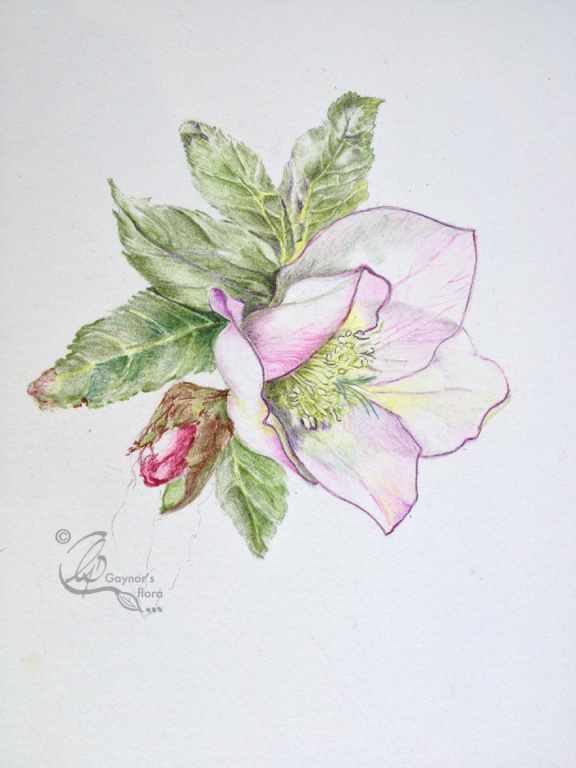
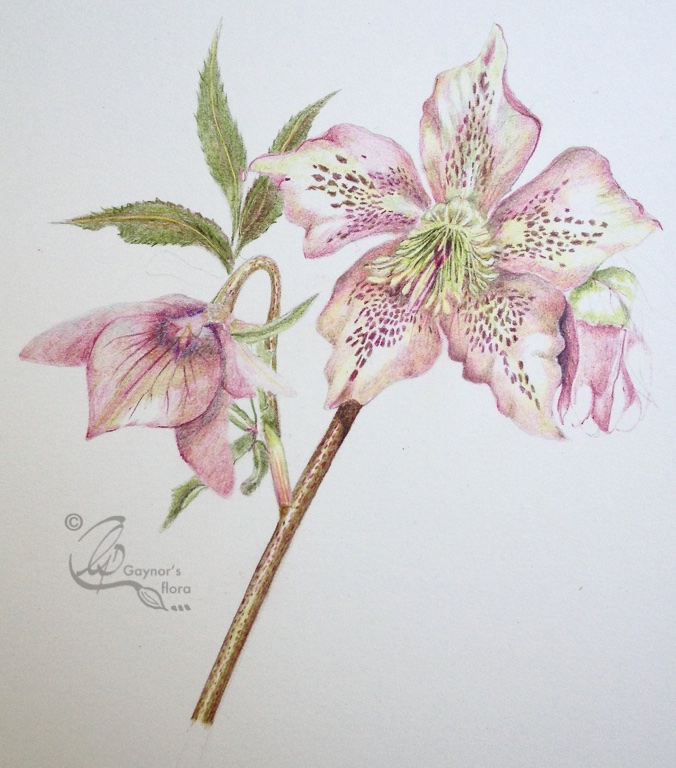
I promised to show the Hellebores following the botanical art workshop at the weekend.  Unfortunately I couldn’t do it before now as one student came back during the week for a class – taking advantage of being on holiday in the area; one went back to Norway; and one wanted to do some more at home after the workshop. However, here they are. I am really pleased with the pictures so far.  All the students decided to use coloured pencil, but painting Hellebores face exposed is not easy, whether using watercolour or coloured pencil. There is a lot of detailed work.
For those of you who do know a bit about coloured pencil and botanical art, no embossing tool was even near any of the pictures. They all decided to try doing it the hard way via controlling their pencil and carefully laying layers of colour. The results of this were really good.  Personally I feel that if you can avoid the embossing tool as much as possible, the result is more realistic and of course you don’t damage the paper. I think that In the end the students found the spots on the petals the most difficult.
It was the spot pattern on some of the Hellebores that had attracted several of them to choose these particular flowers, but they didn’t find it as easy as they had thought. The reason for this was that the spots guide the insects to the nectaries and this creates a specific pattern, but at the same time they accentuate the shape and fall of the petals – almost in the same way as the veins do. Not easy.

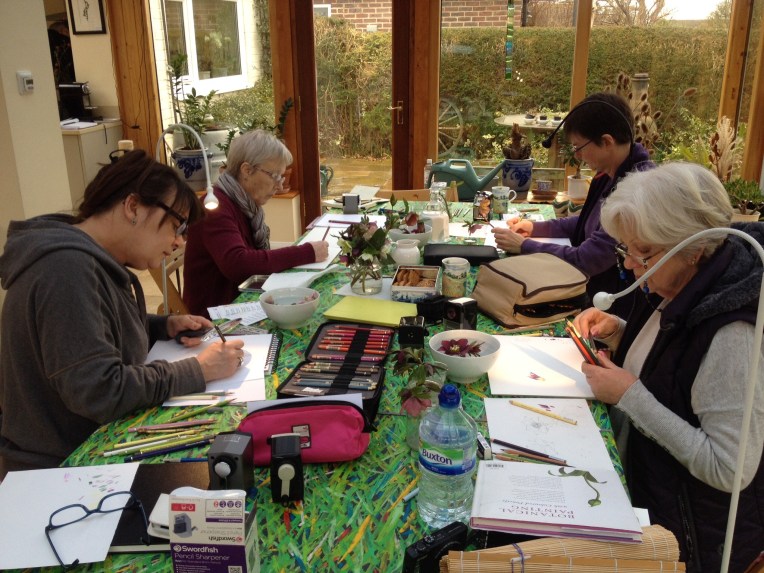
It was interesting listening to the conversation round the table about their individual choices of flowers. One felt she wasn’t able to get things really dark with CP, so chose the dark flower.  She found that spending time on choosing the right colours and deciding the order in which they were used, helps a lot – as does being conscious of contrast. Another person chose a pale flower as they had difficulty doing pale. One person didn’t really like Hellebores but wanted to learn how to do them.

As each of them benefitted from looking at each others work, it was quite rewarding. I think that all were surprised and pleased with their results.

Please enjoy.

1.IMG_2231 2.IMG_2259 3.IMG_2297 - Version 2 4.IMG_2280 - Version 2

Hellebore Botanical art workshop in Bosham

I started a three- day workshop in Bosham yesterday and was surprised to see that all those attending chose to use coloured pencil. Those artists who have already been to me before, know that I teach both coloured pencil and watercolour. I think it has only happened once before that the medium of choice for everyone was coloured pencil

Some people had brought Hellebores from their own gardens to paint, but in the end they all chose from our garden. You might already know that Hellebores are rather promiscuous and therefore breed more than rabbits do and aren’t too choosey about which variety they choose to mate with either! We have Niger ones, slate ones, pale ones, dark ones, spotty ones and a really lovely one we noticed today that was pink and green, with tips of lime green. Amazing.

People have been working hard and concentrating on what they were doing, except each time the pheasant appeared in the garden. He is quite beautiful with a white head and with wattles. I’m not exactly sure what type he is, but if anyone knows, please tell me.

Yesterday a lot of time went into planning the Hellebore picture. Although they probably wouldn’t finish the whole thing over the weekend, I felt it important to focus a little on composition so that when they added to the picture later,  the composition had been planned properly.

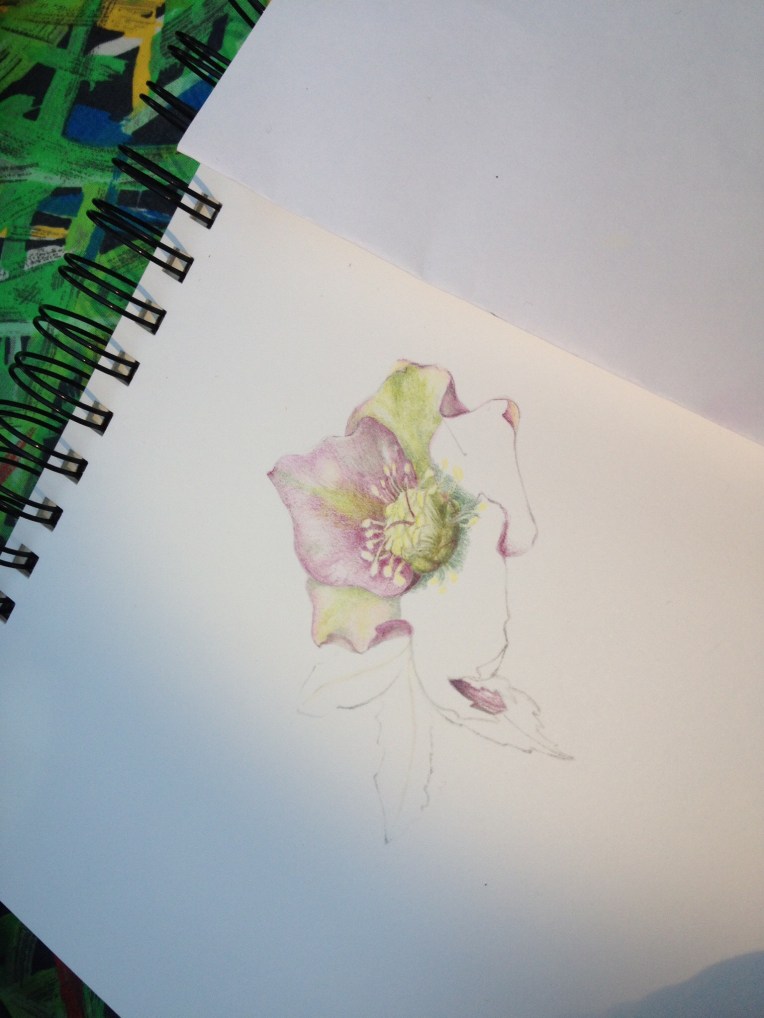
The colour was started yesterday, mostly around the stamens. Today they have been forging ahead and these were the results by about lunchtime today. Hopefully I will be able to show some finished results by end of play tomorrow.


Botanical art workshop report from Twigs and things.

We have just finished the botanical art workshop and I thought I would get the pictures resulting from it, onto the blog before I started marking London Art College assignments.

From my perspective we had a very enjoyable workshop. But then I would say that wouldn’t I? Hopefully someone will confirm or deny this when they read the blog!

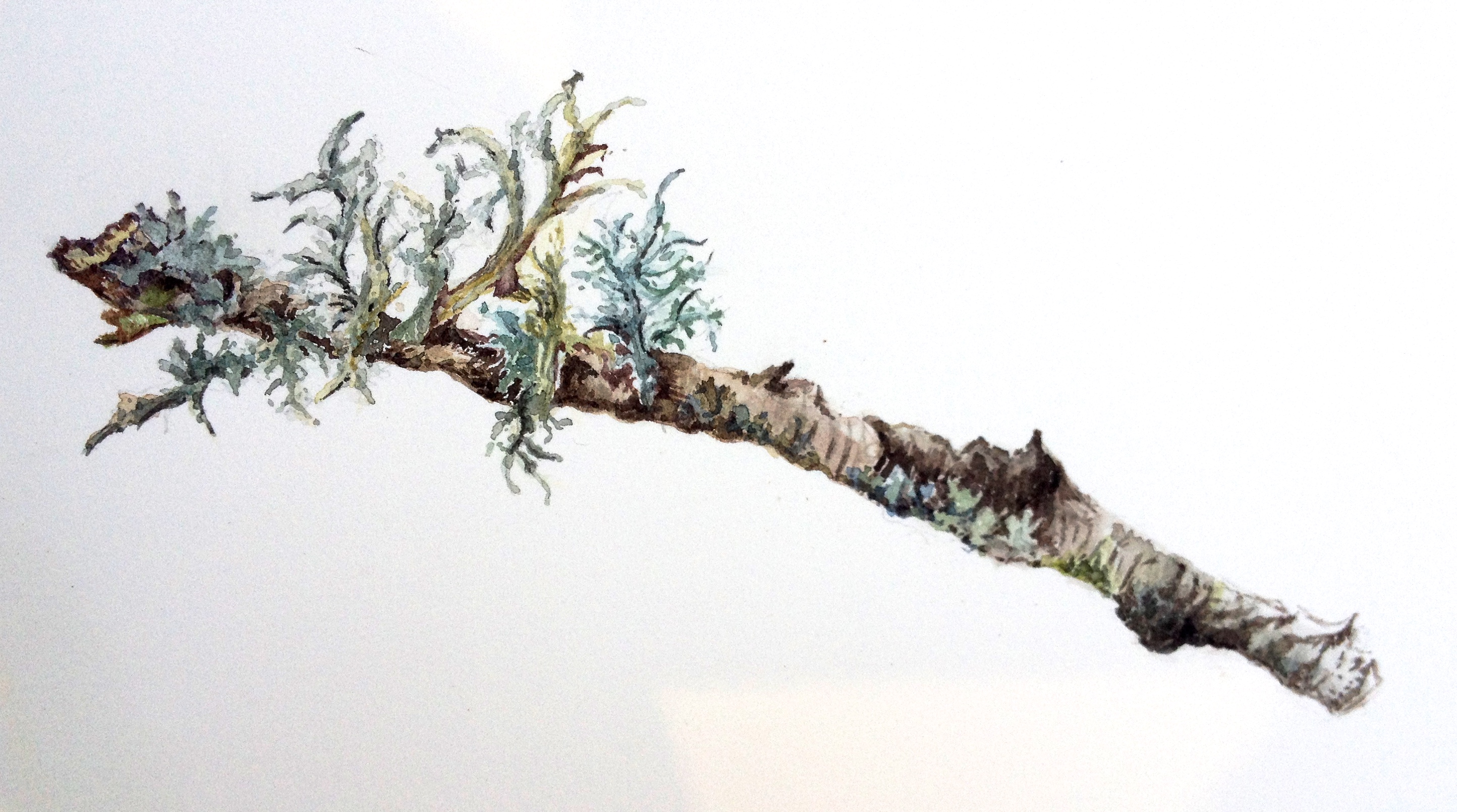
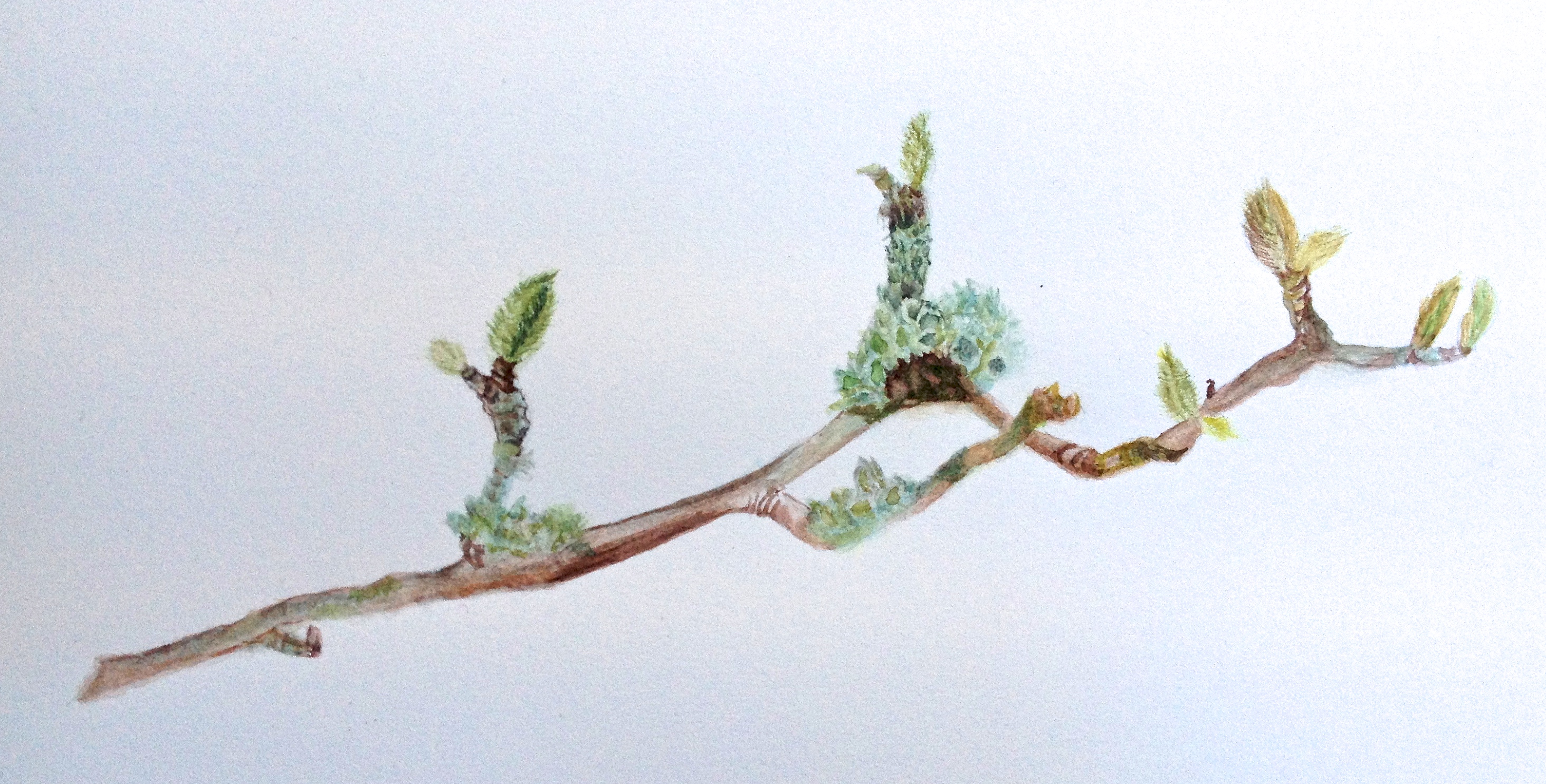
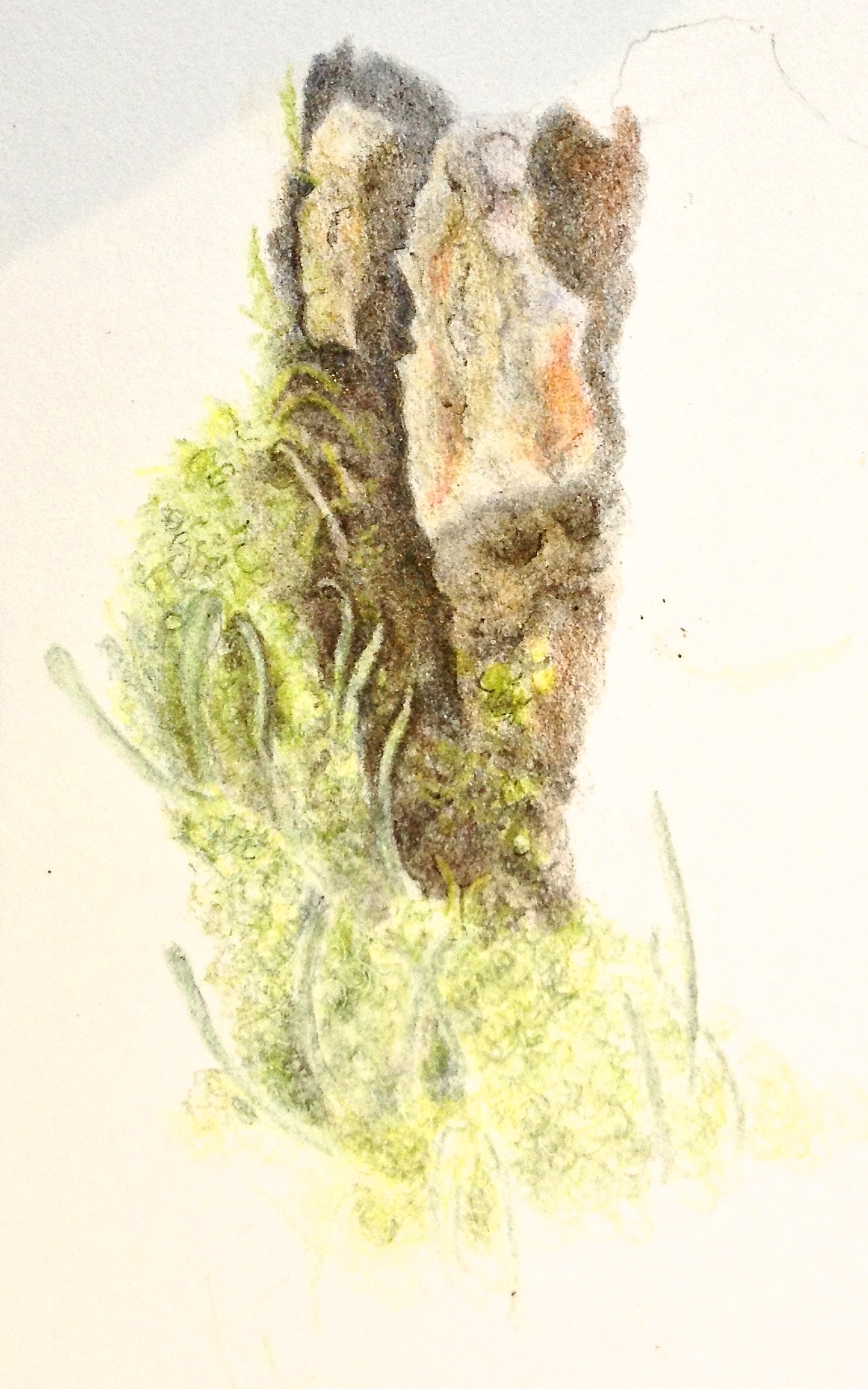
When painting a serious botanical subject that has gnarled branches with lichen or moss growing on it, I feel that I can play with the painting of it – as long as I stay true to the form, growth habit and type of lichen etc. I wanted to convey this to the group as well as get them to see the multitude of colours within such a specimen. I had two days to do this. Half of the group worked with watercolour and half with coloured pencil. Therefore it was exciting demonstrating the same topic in each of the media.

On one occasion I showed the group how to paint the furry terminal bud of a Magnolia soulangeana, first in watercolour and then in coloured pencil. It was quite amusing to hear the comments and the competition in assessing which bud looked best and which medium best suited that topic.

I was very glad to see that there were quite a few different types of lovely specimens which excited the group in different ways. There were some lovely colours observed, hidden in nooks and crannies. Red, pink, blues, oranges etc. A touch of some of these fresh colours, lifted a picture without dominating it. Anyway, I hope that you enjoy the following pictures.

The next botanical art workshop is Floating Hellebores (exposed faces), 27 February to 1 March. We already have a lot of Hellebores flowering in the garden, from very pale to very dark. There are available places, so do get in touch and book.

The brave class
The brave class
A piece of bark with several lichen types growing on it. The main one is identified as Cladonia cornuta.
IMG_2089
At work
Gnarled birch branch with a variety of lichen forms. Watercolour.
A branch of Magnolia stellata in watercolour.
A variety of types of licjhen and moss on another branch from a Magnolia stellata tree. Coloured pencil.
Start of a very complicated piece of work in Coloured pencil. The difficulty of portraying Cladonia cornuta amongst the other lichen growing on the bark piece. Quite a challenge.
Rosehips in Watercolour
Both Birch twig and bark from a tree, with small amounts of lichen growing on it. Coloured pencil
Branch with lichen very happily in situ. Watercolour

A Peaceful Christmas to all

I am at last beginning to calm down a little and prepare myself for relaxing at Christmas with the family.

I haven’t done any more of my Acanthus, but it is still in the house in case I get five minutes. But I haven’t!

But I have been busy cleaning and making the place sparkle. My husband has done all the the heavy stuff, cleaned ceilings etc., whilst I have been busy with the nooks and crannies, cupboards and drawers. How much dust and muck can enter a house when you are receiving botanical art pictures for an exhibition, and then delivering them back to the owners afterwards? Palmengarten is now washed out of the house and my hair. Thank goodness!

The day after tomorrow our Christmas visitors arrive. It will be lovely to see both the adults and grandchildren. I am hoping that they will want to decorate the tree.

But now, whilst I do have five minutes I would like to wish you all a very peaceful Christmas.

My Christmas Greeting is unusual this year, but as it is cold and damp outside (we are in the UK), I thought that this might remind you and me of what is to come. The picture is watercolour on Vellum (Goat’s skin) and called ‘Bean here before’. You might have seen it before as I was painting it.

I think that Bees buzzing amongst the Runner beans is a very peaceful sound and by wishing for peace at Christmas, it is a good start to the New Year. I hope you think so too.

Gaynor Xmas card 2014

Another Pen & Ink workshop

I thought that last Saturday was likely to be our last day of summer, so used the opportunity to go out with the kayaks in Chichester Harbour – the Bosham inlet. It was fantastic. But low and behold we got several more opportunities to go out in them. We would have gone again on Tuesday at high tide, but a lot of preparation needed to be done for the Pen & Ink workshop starting the next day. However, I did get what I think might be my last trip (without wet suits) in the kayak this year, on Wednesday evening after the workshop. It was lovely and warm and relaxing – 1st October.

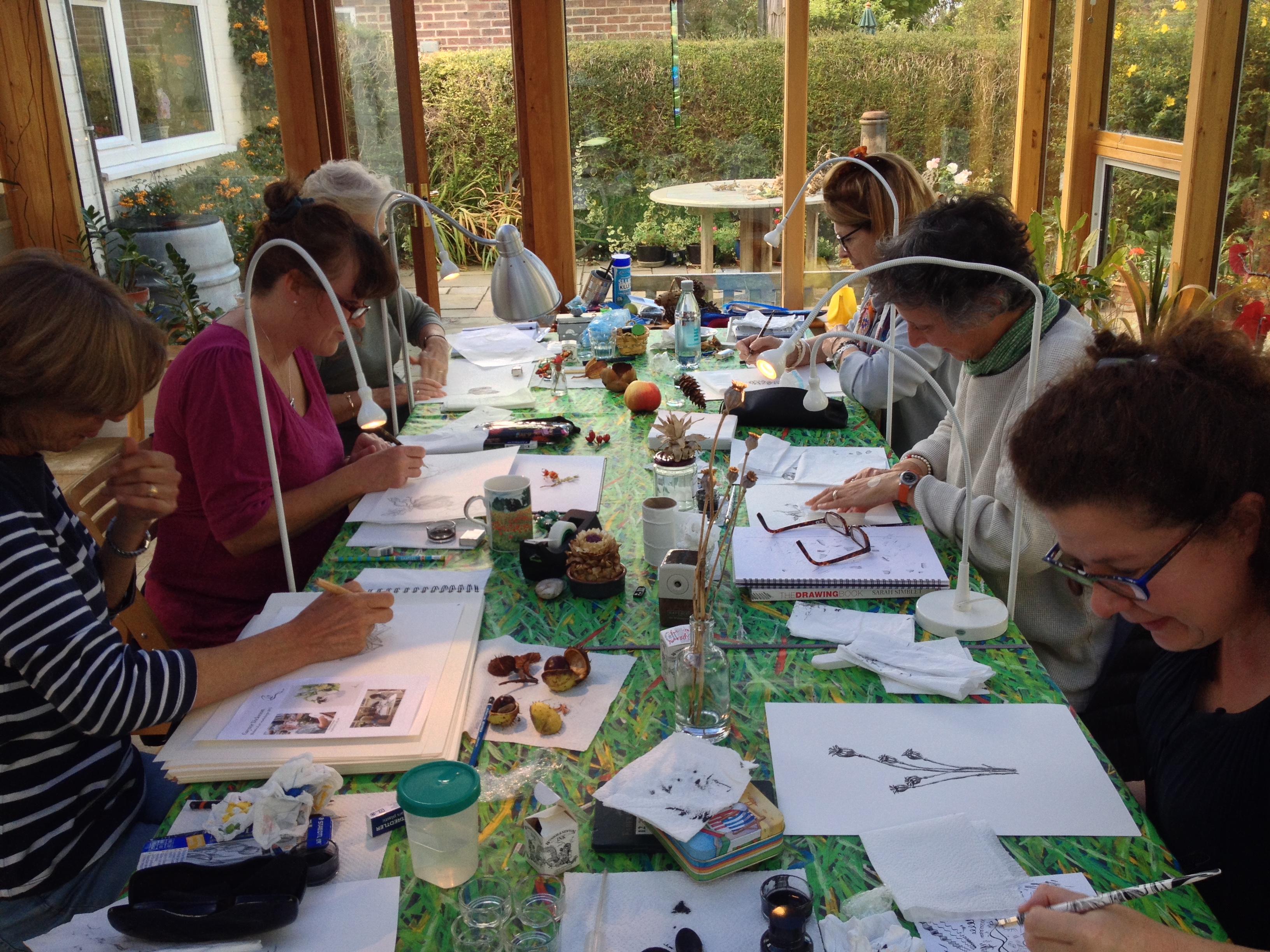
So why did I need something warm and relaxing? The Pen and Ink workshop was only Wednesday and Thursday, therefore I had my work cut out to teach a new technique to a full house. As normal I encouraged people to choose more realistic challenges for themselves as they needed to draw their subject before branching out into the ink technique. It was a lovely group of people and luckily they took my advice – although I think some of them might have chosen something more difficult given the opportunity. But when doing a new technique, it is always much better to choose something simple, get a feeling for the technique and thus a good result.

At the end of the first day everyone had their first layer of ink on and was ready to take a break. By the time they came back on Thursday, nearly all were enthusiastic and they stormed ahead getting the results you see. I am glad to say that most were really encouraged by their results and are very determined to do some more pen and ink work in this style.

Serious work on the big table.
Serious work on the two small tables
Chief cook and bottle washer in the background
This is meant to be a serious matter!
Back to the serious work

And so the results:

It was a seed head of some description, but we are not sure from what.
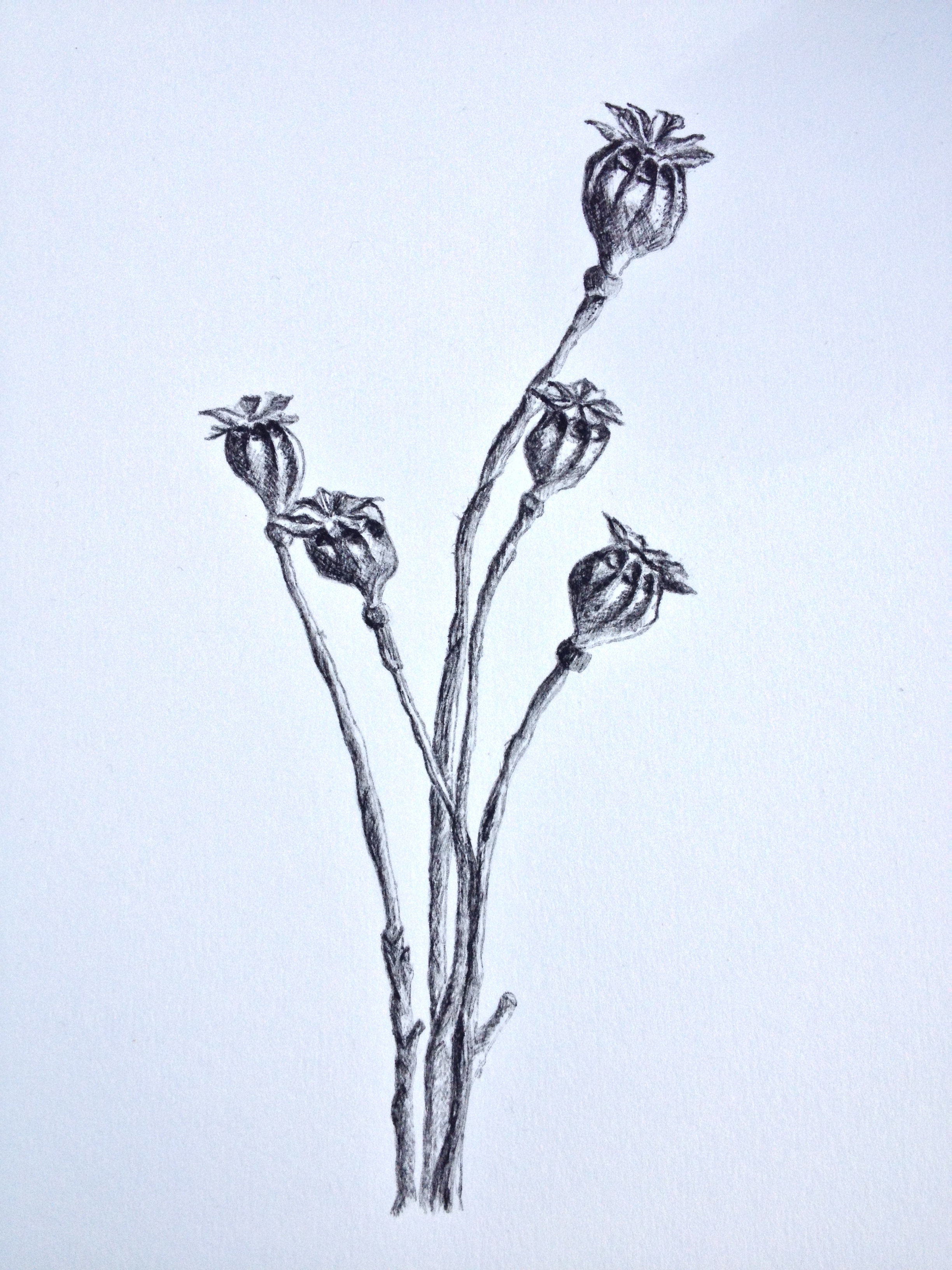
Dried Poppy seed heads
A Magnolia fruit case
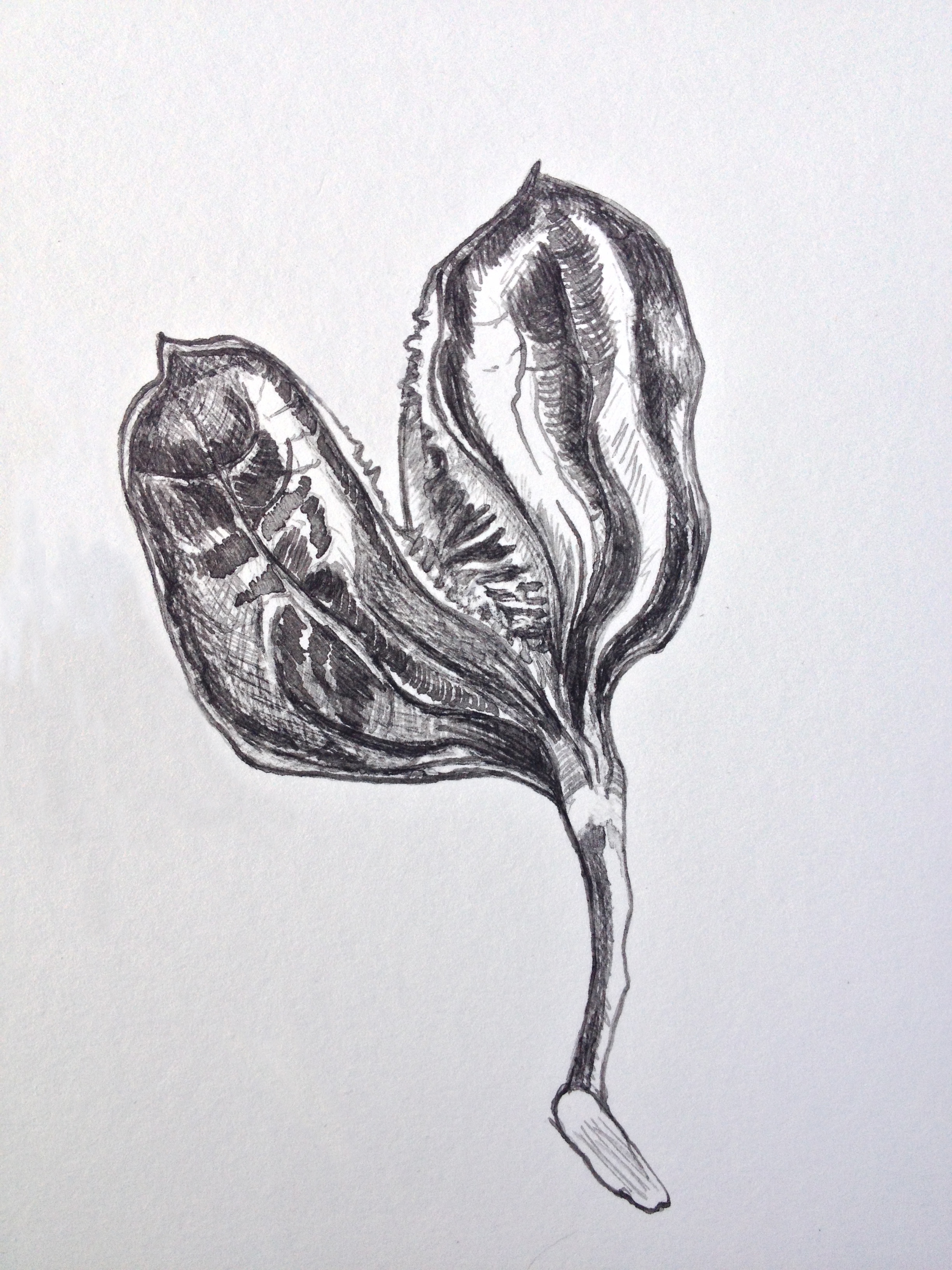
Himalayan Lily seed case
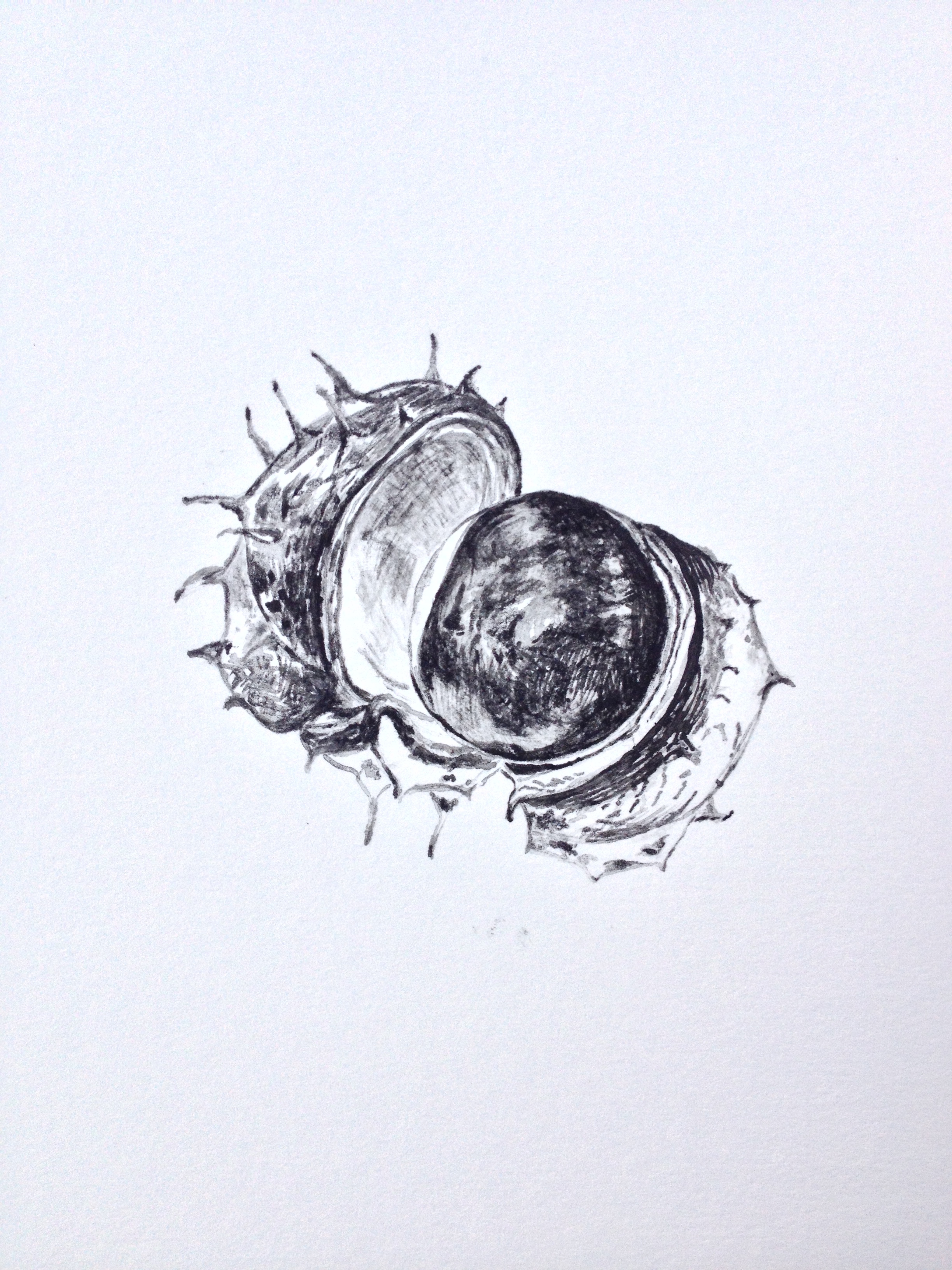
Horse Chestnut - or conker before getting bashed!
Horse Chestnut – or conker before getting bashed!
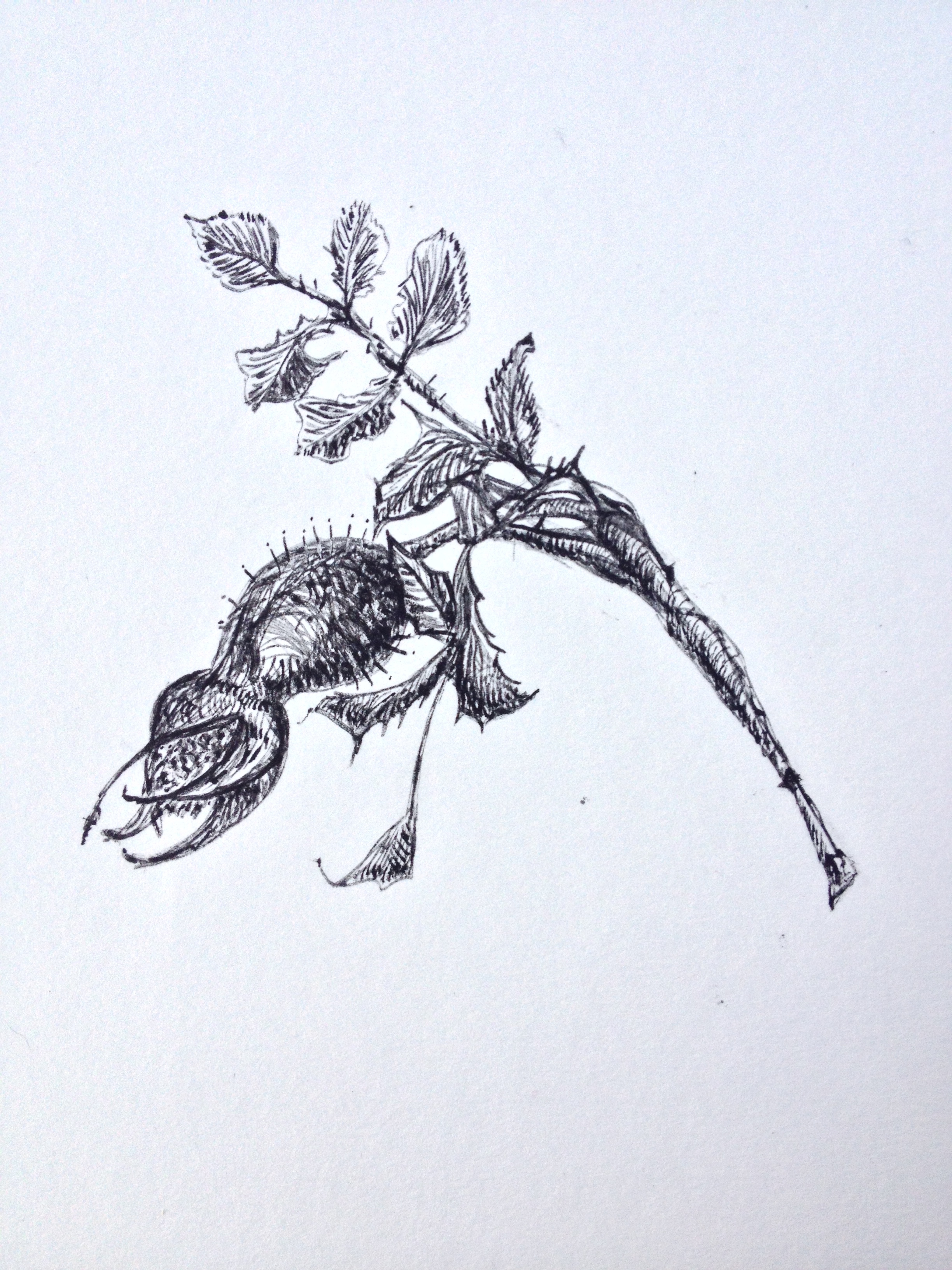
Rose hip quicky
Rose hip quicky
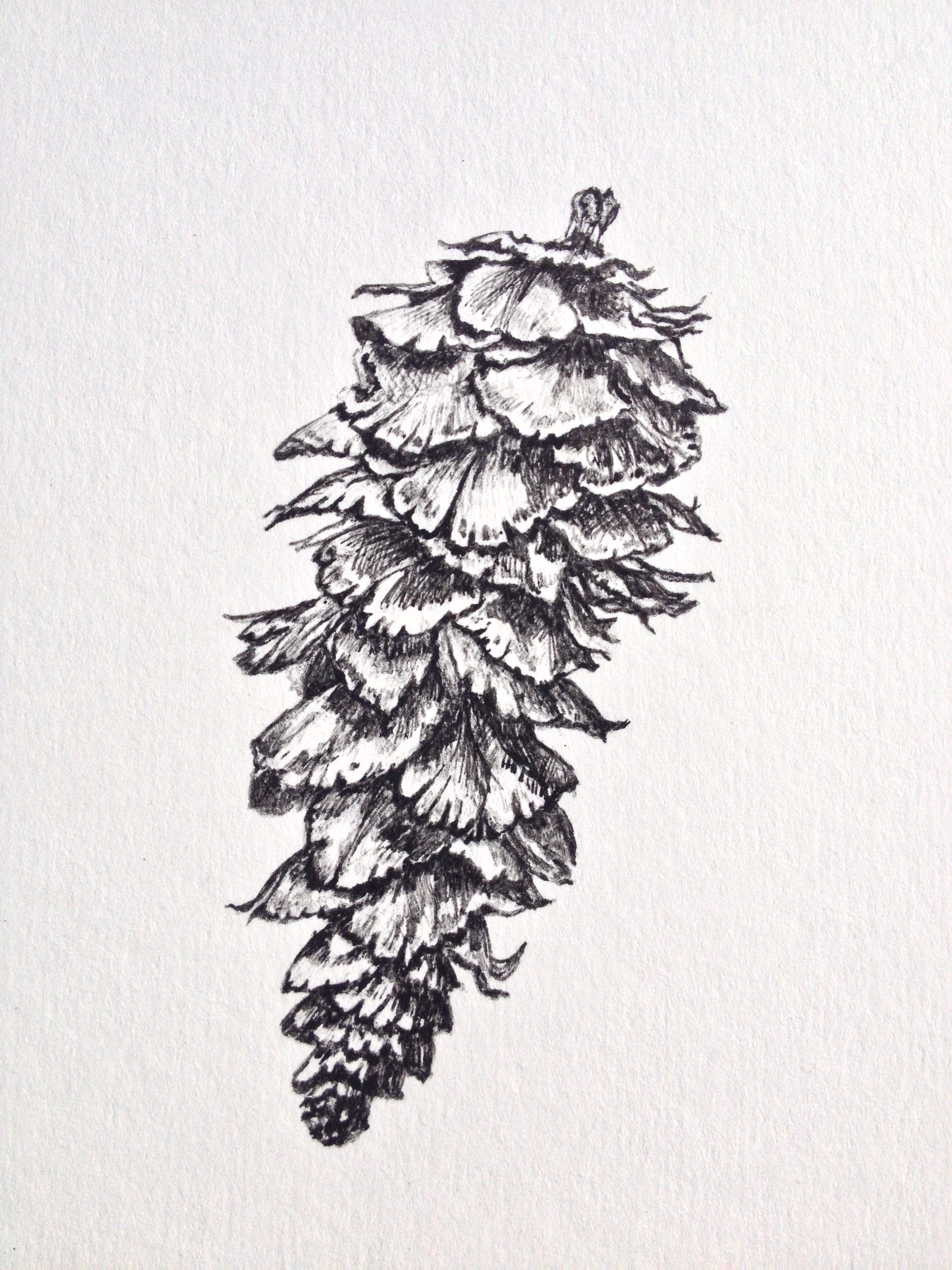
Pine cone. How would we manage without Fibonacci?
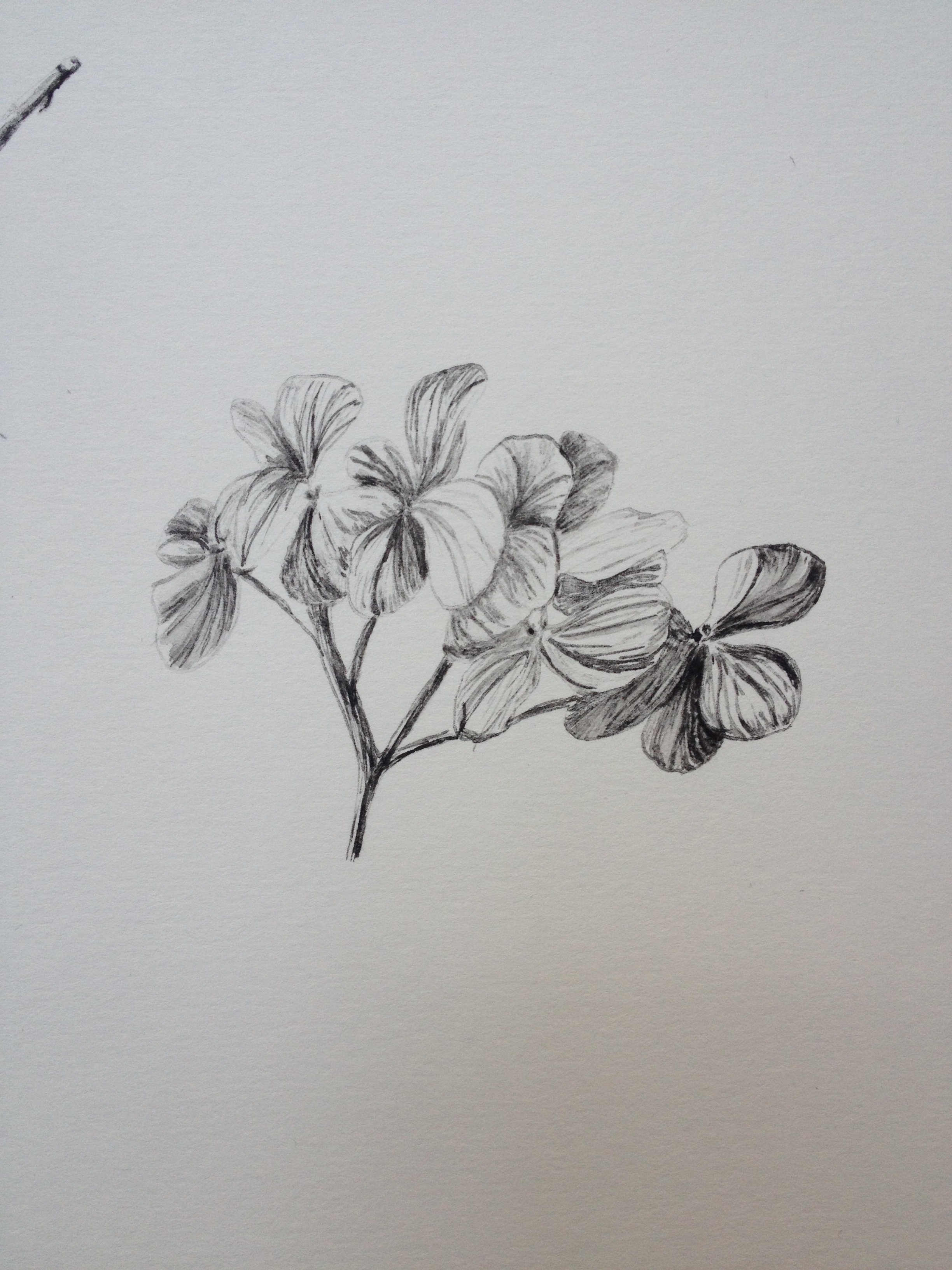
Hydragea quickey
Hydragea quickey
Dried Teasle
Dried Teasle
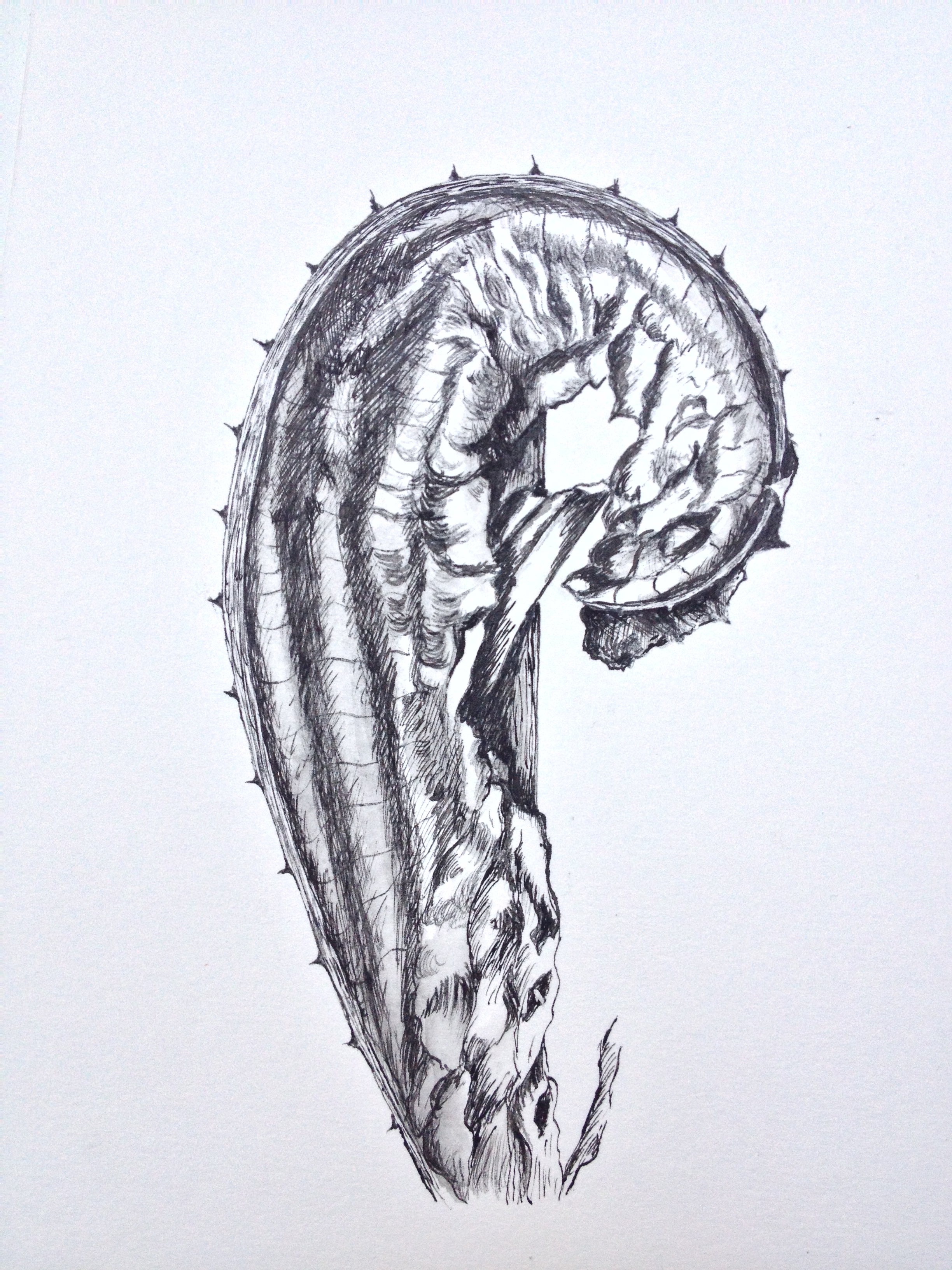
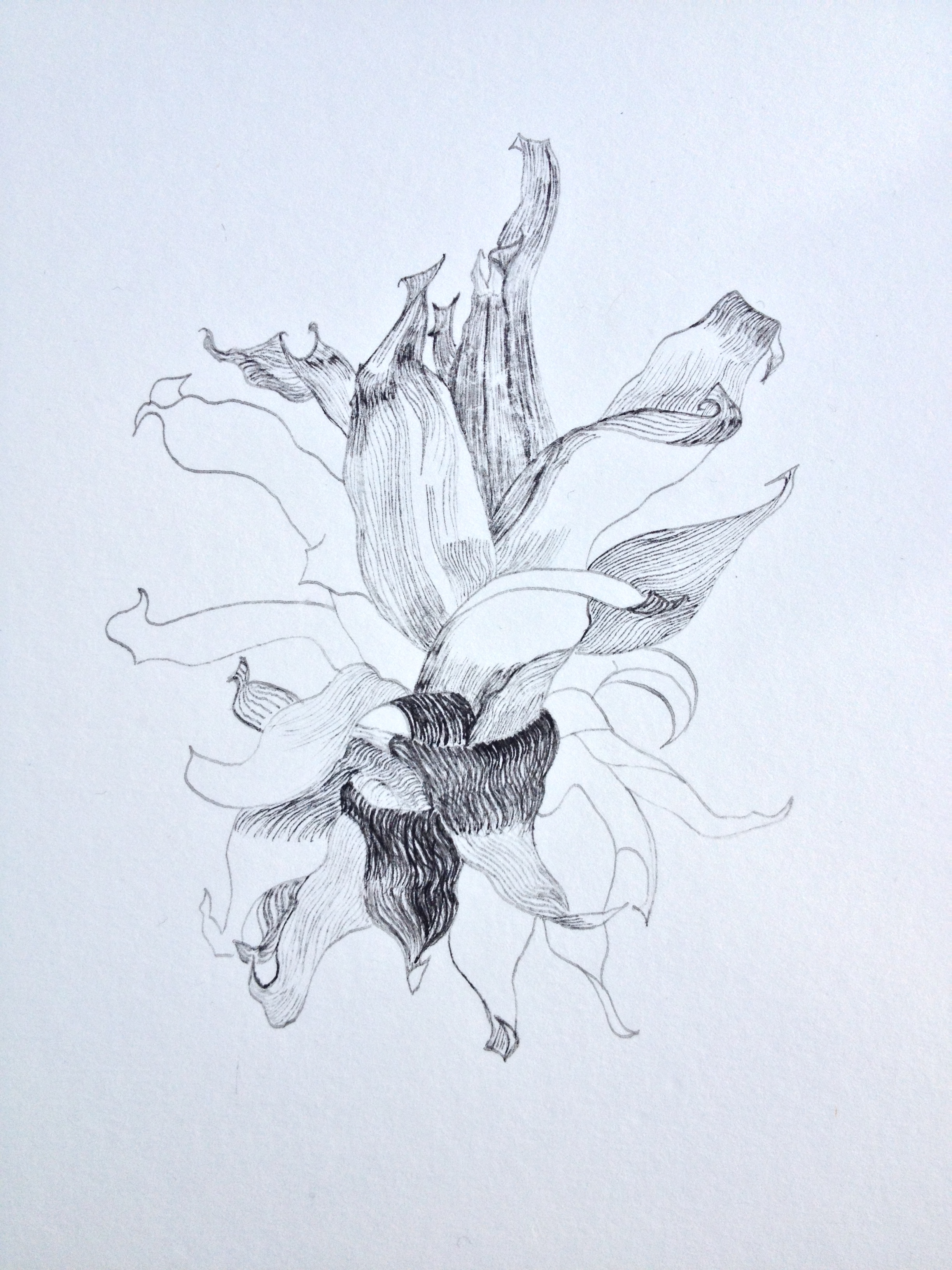
Dried up Pineapple top. Notice the intriguing technique used here. I would like to see more of this.

Summer botanical art show and open studio in Bosham

It’s raining,
It’s pouring,
The old man is snoring.
He went to bed,
And banged his head, and couldn’t get up in the morning!

Yesterday was beautiful and we had quite a few visitors. This exhibition and open studio is the one I normally have once a year for two weekends during Bosham’s Junior Week. Bosham is a sailing community and all events associated with sailing are very important.

For me, my open studio yesterday was successful in many ways as we had a lot of interested visitors. There is also evidence of a returning economy. But for the young sailors this week, the weather is awful. They want wind to sail – but not dangerous gusts as we are having now. Rain isn’t too off-putting as they get wet anyway. But sun is much better and the norm at this time of year.

How the remnants of Hurricane Bertha will affect the Open studio today I don’t know. It might mean that I paint undisturbed! But time will tell.

I will not show you pictures of my ongoing painting at the moment. I have shown you a little of it previously, but I think the photos were from my first attempt. I am now on my fifth and I have a severe blockage.

The picture is a Dipladenia. The flower is elegant and beautiful and the leaves soft and shiny. Think of Camellia leaves that for a change are very soft and shiny and with clear side veins. I know what I want to do and how I want to do it (watercolour), but the result is not how I feel it should be and I have now thrown aside four pictures. Had I put them all together the picture would have been finished.

People looking at the pictures cannot see what is wrong with them, but I can and that is what is important. But I’m now dreaming about it all. And I have a deadline. It is a picture that will go to Palmengarten this Autumn. I cannot be the one organising everything from the UK and unable to paint a picture!

Any suggestions?

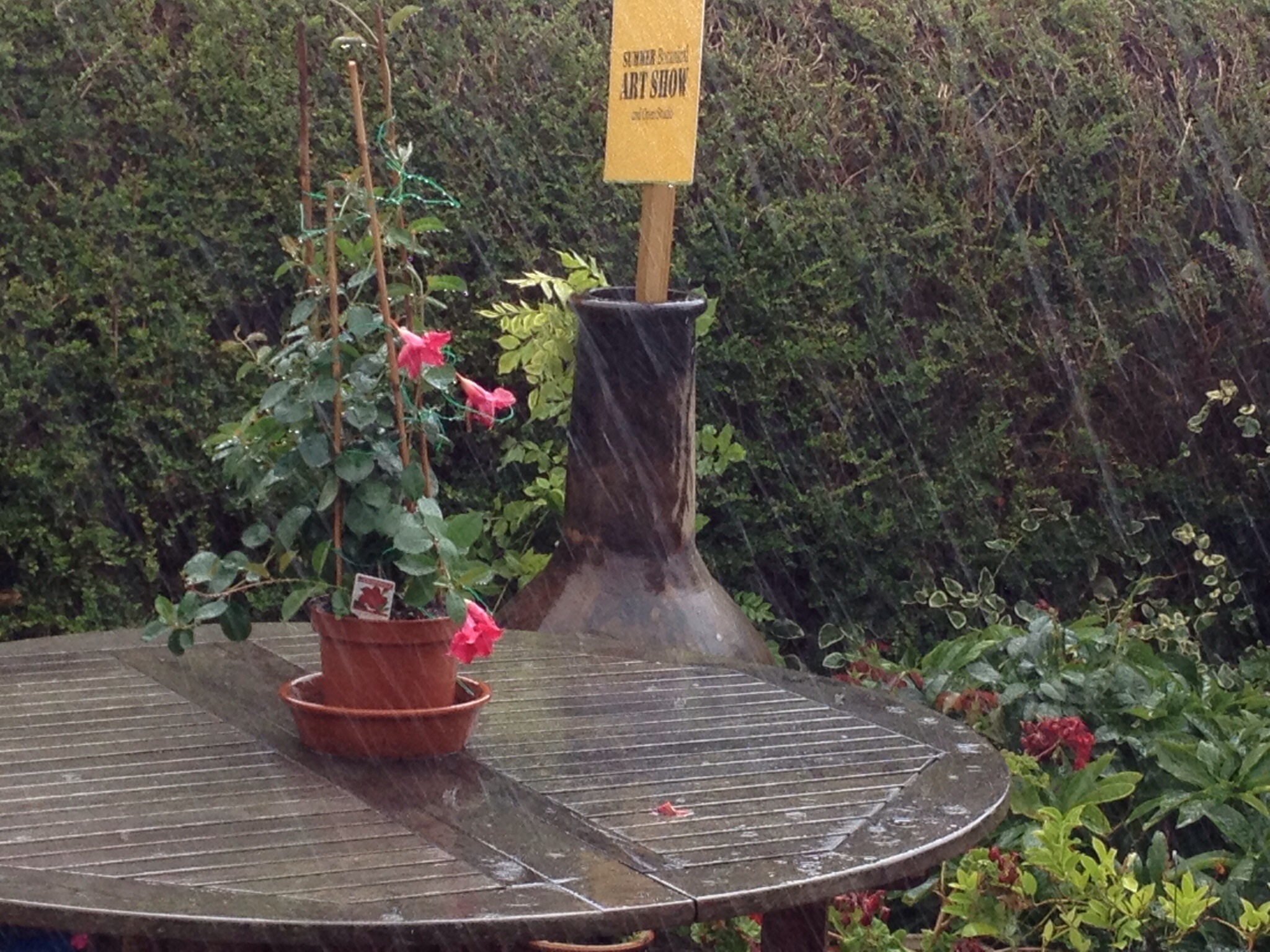
Maybe I should stand outside in this very windy and very wet weather and have everything washed and blown away. I hope you can see what I mean from these photos outside the conservatory.

IMG_0718.JPG
a>

IMG_8684.JPG

IMG_8685.JPG