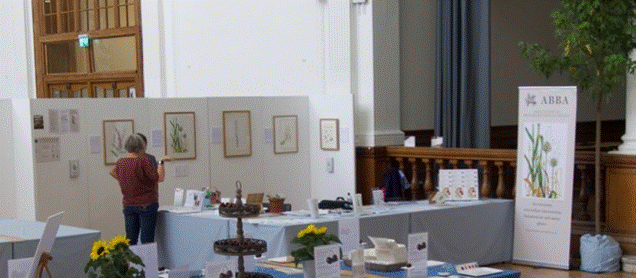
In May this year ABBA organised the British contribution to the first ever Worldwide Day of Botanical Art, joining 25 other countries in this amazing event. ABBA’s main exhibition in Lancaster, ’In Ruskins Footsteps’ was a great success as were our partner events in London, at the Shirley Sherwood gallery, Royal Botanic gardens Kew, Chelsea Physic garden and the RHS Lindley Library.
The Association of British Botanical Artists is now entering it’s next exciting phase. At the RHS Botanical art exhibition 10-12 July we announced the start of the formal establishment of the association.
There was a great deal of interest shown by people visiting the show including established artists, people new to botanical art and people passionate about our native flora. Their enthusiasm, combined with our successful online application process highlights the great interest in our native flora.
You might very well wonder what the connection is particularly if you didn’t read my last blog a month ago! ABBA stands for Association of British Botanical Artists. For some of us working with ABBA during the last year, at times we have been so busy that we felt as though we could buzzzzzzzzz away to something more relaxing. But we stuck with it and had a lovely exhibition at the Peter Scott Gallery, Lancaster University.
That was the start of ABBA, formed to take part in the Botanical Art Worldwide Exhibition where we were one of 25 countries taking part. For my part, I co-ordinated the UK offering.
But, whilst doing this it became very clear that there was a wish for ABBA to develop into an organisation that catered for everyone interested in botanical art. We are now putting things together to develop ABBA. Do come to the RHS Art & Plant Fair at the RHS Lindley & Lawrence Halls in London 11-12th July where we have a stand. You will be able to talk with me and my colleagues about our plans for ABBA’s future. Hopefully we can encourage you to join.
If I get time, I will be having some work there to demonstrate on, but I haven’t decided in which medium. That can be a surprise!
So what has been going on with me since my last blog?
I had a very interesting workshop at the end of May, where we concentrated on colour mixing. This is the sort of workshop that everyone says they want to do, but when it actually happens, life has taken over. But some people did sign up with an attendee from a loooooooong way away.
Although there was the opportunity to work in watercolour, people chose colour pencil. The results were amazing and there were pencils everywhere! In fact, it became so thoroughly interesting that I continued with my weekly class on one colour found to be a real challenge.
See if you can find a solution. I have to say it was slightly easier in watercolour than colour pencil. But a lot of layers are necessary no matter what medium you choose.
Following on from that was the event at the Stansted Park Garden show. We again had a really super show and met a lot of lovely people and the weather was perfect.
I notice that I am listing up events, which is not what my blog has normally been about. I want to show you work that I have been doing, but everything has been done in small bites as we race around the country setting up, taking down and planning.
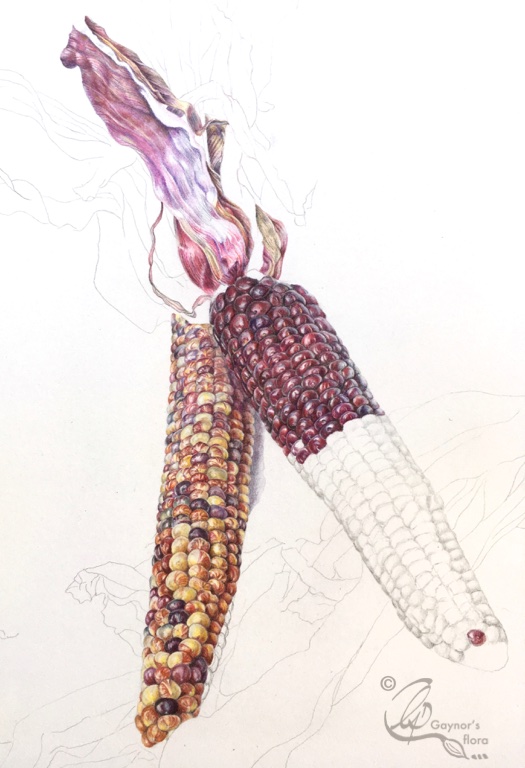
But I did work some more on my Indian Corn in colour pencil. Luckily the fruit part of the corn doesn’t change too much over time as long as you look after it and keep it away from the light and gnawing bugs. But it is different with the leaves. I do need fresh supplies of those if the colour is to remain vibrant.
I hope to see you at the RHS in a couple of weeks time. Do let me know if you have read my blog!
General Data Protection (GDPR
If you want to only follow my blog then please do sign up for it on this page. However, if you would like to get the occasional email from me about workshop availability or general information abut my botanical art news, then you will need to sign up for this separately.
Below is a link for you to subscribe to either or both email lists.
This is a plant found amongst other places, in the mountains in Norway. It is one of the reasons For my next RHS exhibit – probably in 2019, I decided to paint Norwegian mountain plants that provide food for us mere mortals. Its scientific name is Rubys chamaemorus, but the common name in Norwegiansis ‘Multe’, and in English, ‘Cloudberrry’.
Unripe Cloudberry
Why is it called ‘mountain gold’? Apart from its very special taste, it is not always easy to find. It likes boggy areas and generally you will find that Norwegians will not tell anyone else where ‘their’ patch can be found. I know one or two places because I used to live in the mountains in Norway. I also found some whilst staying in a friend’s cottage this summer (Tusen takk Eva og Jon for låne av din nydelig hytte Thank you Eva and Jon for lending us your beautiful cottage). I was in the mountains specifically to sketch these and other plants I had decided to include in my exhibit.
If you travel to Norway and ask someone where cloudberries can be found, unless you know your host well, it is unlikely that you will be told.
The picture on the right is an unripe Cloudberry. There are very strict laws governing this plant, therefore it is illegal to pick them before they are fully ripe. At that stage they are a beautiful golden orange colour. Unfortunately I have no pictures of a ripe fruit as this happens in the autumn, that is why I need to travel back again next year to sketch the ripe fruit.
Over the years I have picked a lot of Cloudberries and thought I knew them! I also found that Norwegians are as un-knowledgeable as I am. Because I am now studying the plants to paint I decided to delve deeper. But I also needed to find the flowers and the unripe fruit to draw. This year, there were few fruit ripening, but an awful lot of flowers. On closer examination and with the help of a very good series of old botanical books borrowed from the Eggedal Library (Tusen takk Jorunn. Thank you Jorunn), I discovered that Cloudberries are dioecious, either male or female plants. Each plant has a huge underground root system travelling for some distance and that is why I found difficulty when looking for the unripe fruit.
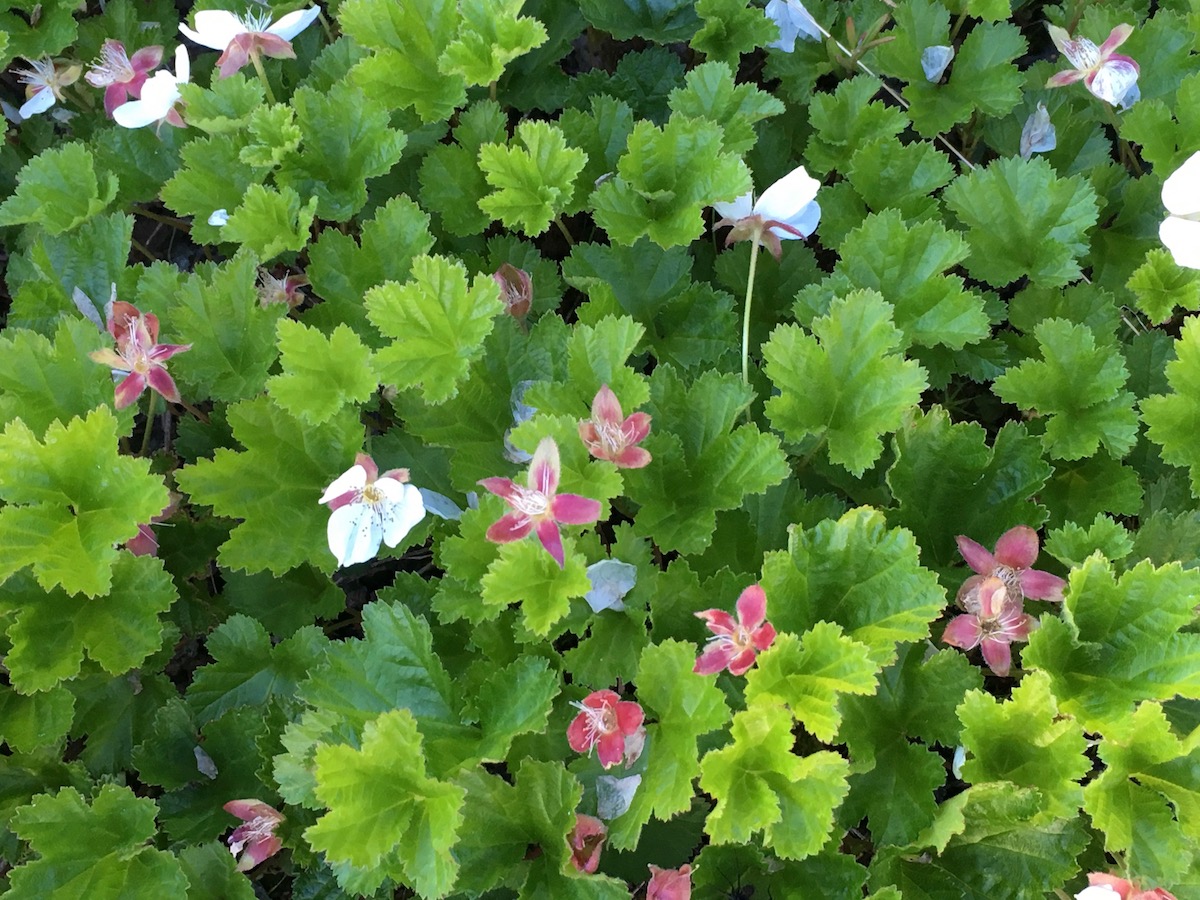
Patch of male cloudberries.Patch of female cloudberries.
The large patches of flowers were mostly all male, but we were soon able to distinguish these patches at a distance. They had a lot of beautiful white flowers, but also many red sepals where the petals had fallen off.
The female plants seemed to be few and far between – less than last year. The flowers were fewer and smaller, but with several immature fruits at different stages of development.
Like so many of the plants I have painted, I study them first then become completely intrigued by them. This of course helps me portray them as best I can.
Before I show you the sketches, this is a picture of a small female cloudberry patch in quite a boggy/Sphagnum moss area, together with nearly all of the plants I had chosen to do and which I will talk about in other blogs.The picture also includes Robin’s boots, Vaccinium oxycoccus(which I didn’t think I would find as its so tiny),Vaccinium myrtillus (small blueberry),Empetrum nigrum (crowberry),Vaccinium uliginosum (bog blueberry) and Andromeda pilifolia (a heather I won’t be including in the series).
Robin’s foot and a mix of plants.
So what is the difference between male and female flowers? It should be obvious, but I’m afraid I never looked and saw previously. I just took things for granted.
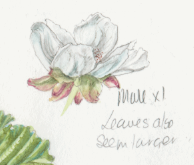
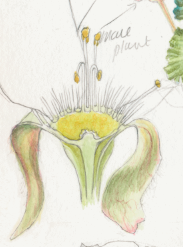
Male Cloudberry flower – larger than female.Longitudinal section of Male Cloudberry flower.
The male flower contains stamens in a ring round the inside of the outer whorl.
Smaller female cloudberry flower.Longitudinal section of female cloudberry flower.
The female flower is slightly smaller than the male flower, has several styles and stigma in the centre – one to each ovary, but round the edge is a ring of white, sterile stamens.
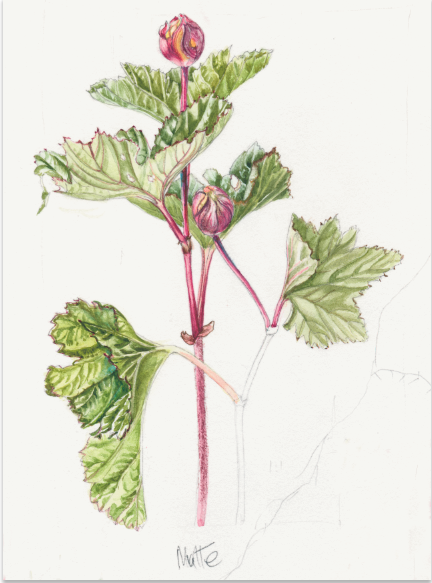
Cloudberry plant with developing fruit.Sketch page of Cloudberries.
I don’t usually work with photographs but I haven’t the time to paint all this! I just wanted to share the glorious summer colours of Some of my garden with you.
The Glory of the Garden : Rudyard Kipling
OUR England is a garden that is full of stately views,
Of borders, beds and shrubberies and lawns and avenues,
With statues on the terraces and peacocks strutting by;
But the Glory of the Garden lies in more than meets the eye.For where the old thick laurels grow, along the thin red wall,
You’ll find the tool- and potting-sheds which are the heart of all
The cold-frames and the hot-houses, the dung-pits and the tanks,
The rollers, carts, and drain-pipes, with the barrows and the planks
And there you’ll see the gardeners, the men and ‘prentice boys
Told off to do as they are bid and do it without noise ;
At the weekend I had a two-day workshop with the title of ‘Daffodils – Herald of Spring’.
Looking into most gardens on the south coast of England, the daffodils were long gone, so how did I decide to teach this subject at this time of the year.
When planning my botanical art workshops, I look back at the photos I have taken of daffodils over the years and note the dates. Before my introduction into the digital age, I remembered that for my 49th birthday (21 years ago), we had snow (in the UK) and the daffodils were just coming out.
Working from then until last year, I expected that there would still be some in the garden. If you remember last year the daffodils were extremely early and we thought that was that. But then we had a new flowering and rather than just a few odd ones, there was an almighty crop. Not so this year!
Robin and I went trailing around Chichester and surrounding areas buying up what we could find. It was an interesting exercise.
As you can see, in the end we found the remains of some tiny ‘Tête á Tête” bulbs still flowering, but also some Narcissi. Therefore the workshop was saved.
As a note here, all my workshop titles where specific plants are mentioned, are just suggestions for subjects to paint. My workshops are not based on a step-by-step approach, but on individual support to improve your own technique.
Here are several pictures from the workshop including a preparation page, a very rough sketch and a ‘before and after’ picture showing the importance of cleaning up around the image as a last task.
I will let the pictures speak for themselves, but once again I met with some lovely, hard working botanical artists and I believe a good time was had by all.
Now to prepare for the next two weekends, which is the Chichester Open Studio art trail. In addition to my usual exhibition space where my workshops are held, I will be doing some work towards pictures I will need to have finished before the end of the year. Robin will be looking after the exhibition and you will find me tucked away in the shed at the bottom of the garden. Do come and visit me at Venue 35 in Bosham. For more details visit page: https://gaynorsflora.com/exhibitions/.
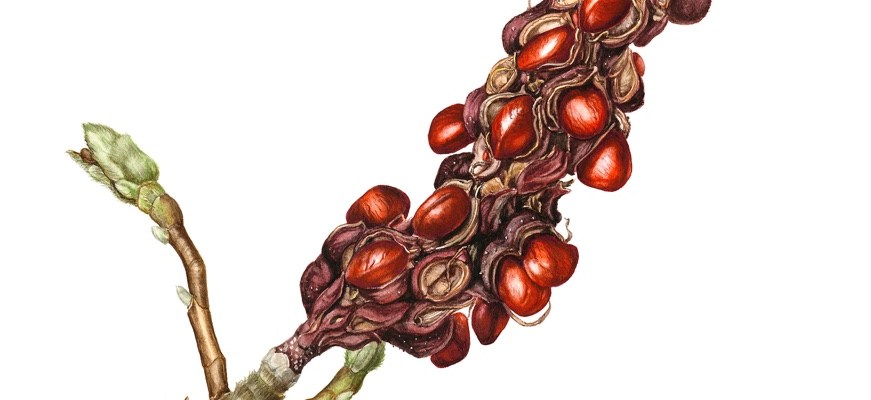
In 2011 I had finished three years work on a series of paintings showing a year in the life of the Magnolia x soulangeana. The series was exhibited at the RHS that year and I won a Silver medal – my first RHS medal. One of the paintings was chosen by the Hunt Institute for Botanical documentation in Pittsburgh, USA and it was first exhibited there in 2013. Since then it has had a three-year tour around the USA with the rest of that exhibition, but is now back in their archives in Pittsburgh.
I was super lucky to have some huge fruit on the tree the years I was doing the paintings and they were featured. But since then tree from which all the paintings were done, has not produced much fruit at all; in fact nothing until last year when it had a couple of small ones. I think the tree knew that I was painting it’s portrait and wanted to show itself at its most beautiful.
I am hoping that the tree is building itself up to another magnificent display later on this month. At the moment there are masses of terminal buds in which the blooms develop and you can almost see them growing a little more for each day.
It is obvious that the Magnolia tree means quite a lot to me after having studied it so closely for those three years. I learnt such a lot about it, how it is fertilised and why it is a particular type of bug that is responsible.
If you want to know more about Magnolia x soulangeana, and you are interested in botanical art as an artist, do book to come to my workshop Friday to Sunday 31 March to 2 April. I still have a few places available.
This is the first time that I have had a workshop on this subject – and you can probably guess why. But now I would love to help others who would like to paint the blooms in watercolour or coloured pencil (dry), or even draw them in graphite.
Get in touch with me as soon as you can so that you don’t lose this opportunity.
We are in the last stages of preparation for Christmas and now sit down to try and relax before going to bed.
We will be having a Christmas with a difference as we don’t have children or grandchildren with us this year. It is the first time in fact that we will be celebrating by ourselves. We realise how really lucky we are with our family, and will miss their company this year. But even so we will definitely make the most of it by doing our own thing.
Tomorrow, Christmas Eve, we are going for a long hike round a nature reserve called Pagham Harbour, before taking it easy with a nice pub meal. I don’t think I have ever done anything similar before so close to Christmas, so we are really looking forward to it.
What are the rest of our family doing? Two of the ‘children’ are in Norway where Christmas is celebrated on Christmas Eve. Nearer home, one ‘child’ and family moved into their new home at the beginning of this week and they are busy stripping wallpaper. The remaining ‘children’ are missionaries in Ghana and enjoying the warmth.
I have been painting on vellum the last few days, but more about botanical art next time.
In the meantime we wish you a wonderful Christmas and a relaxing New Year.
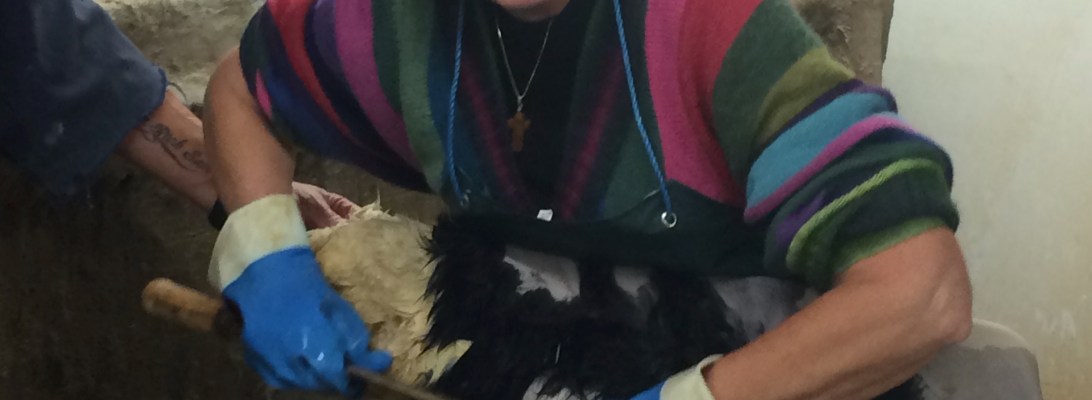
For those who don’t know, William Cowley’s is the last remaining vellum maker in the UK and the only one in the world to hand-finish the skins. They make use of the skins left over from our meat consumption, so that almost none of the animal is wasted. That is an important fact; no animal is slaughtered for the production of vellum. It is a waste product that would otherwise go to land-fill.
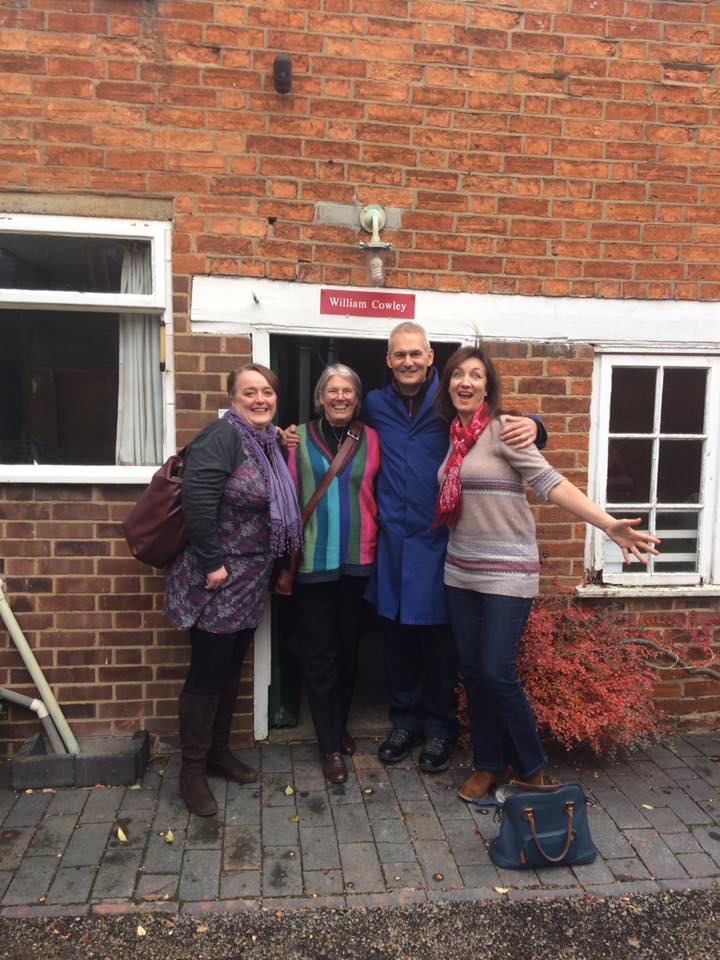
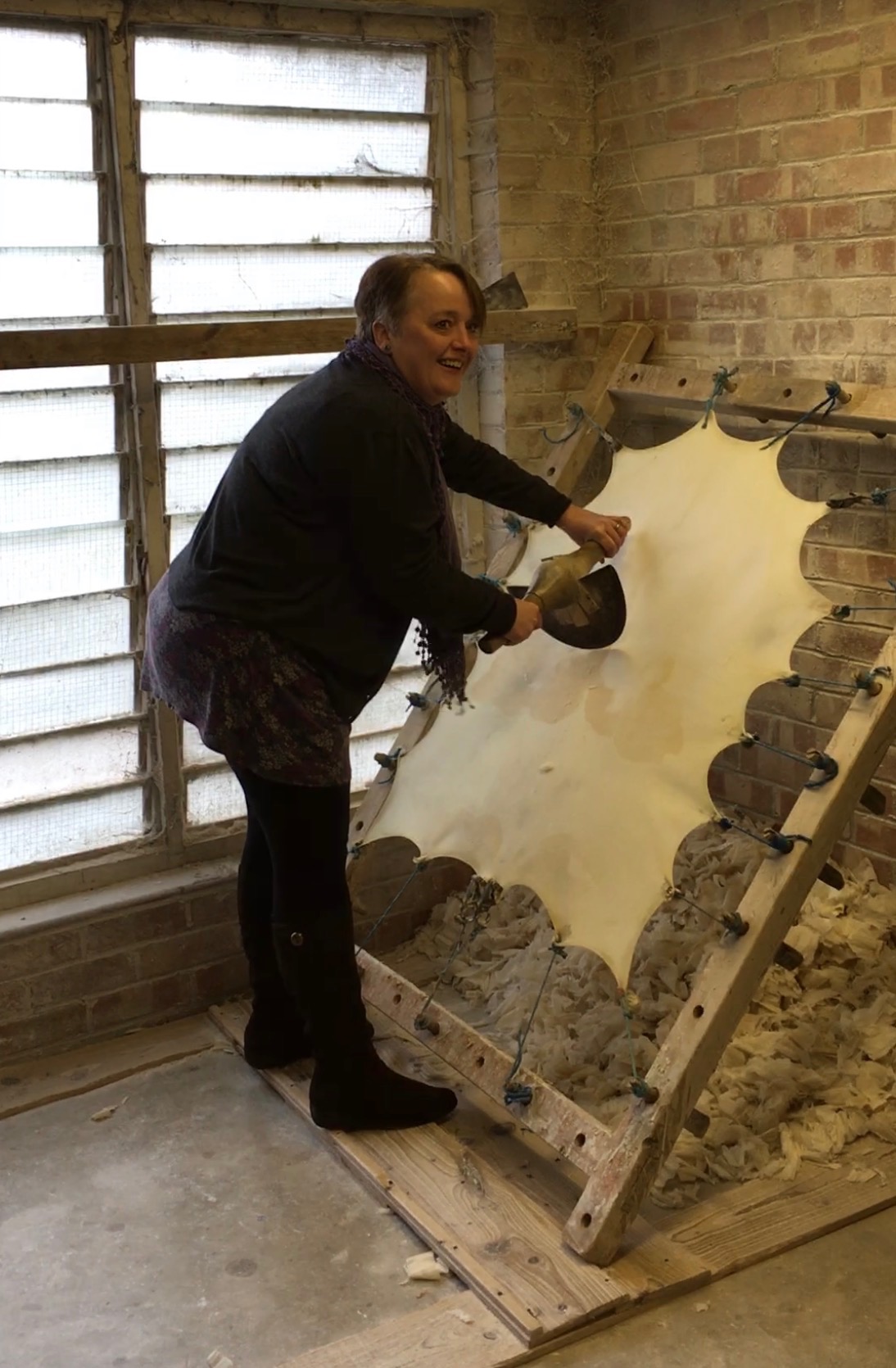
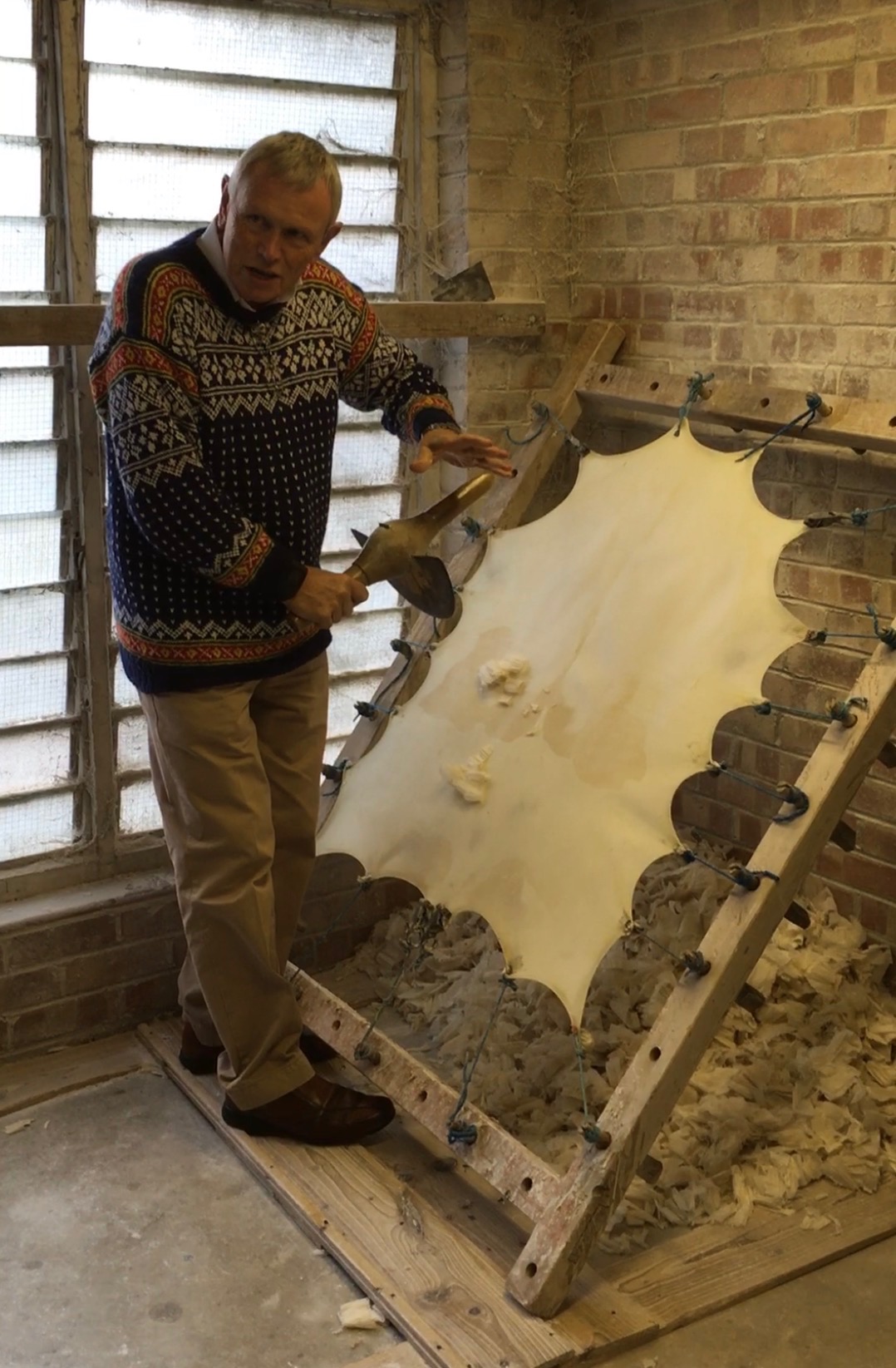
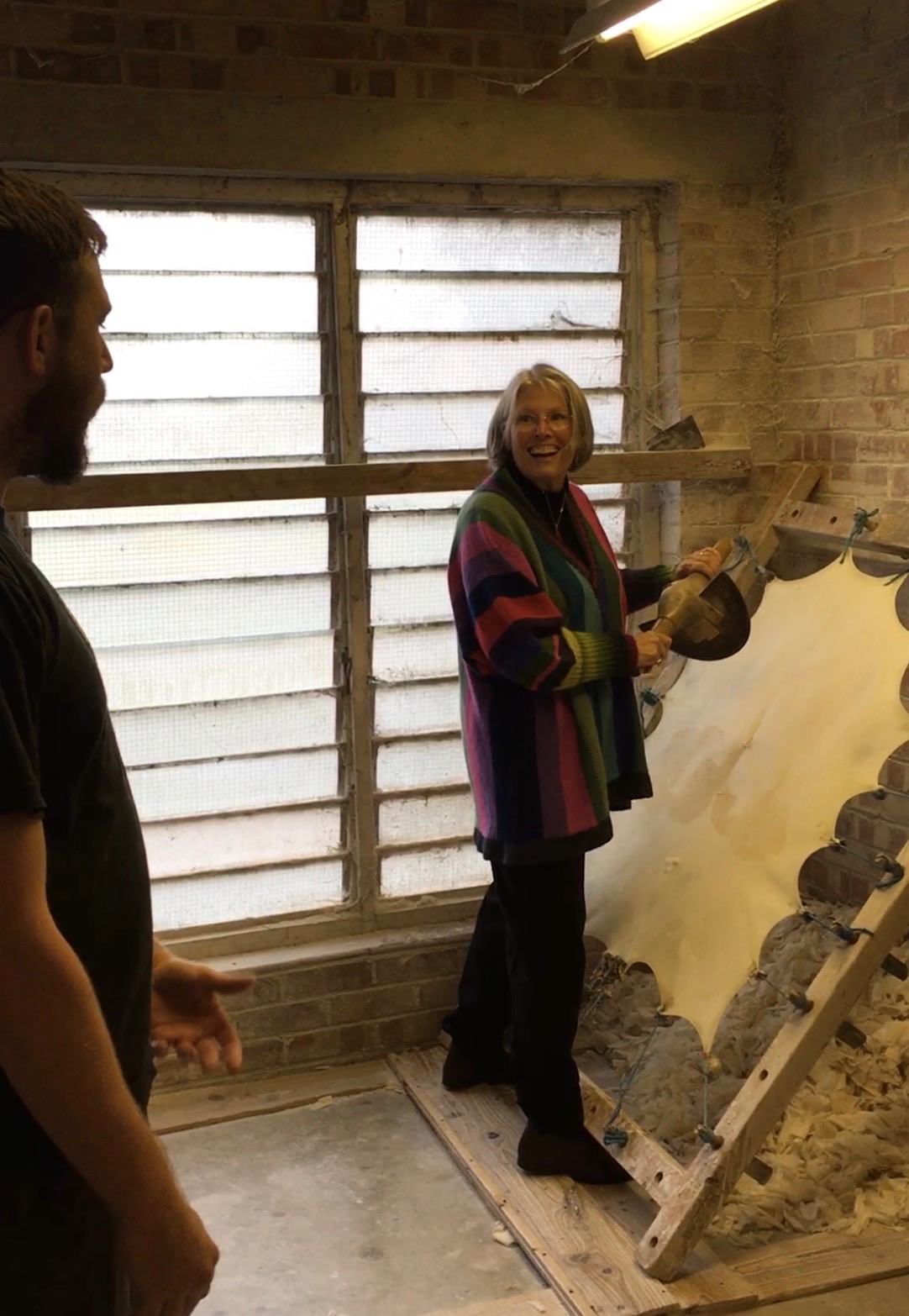
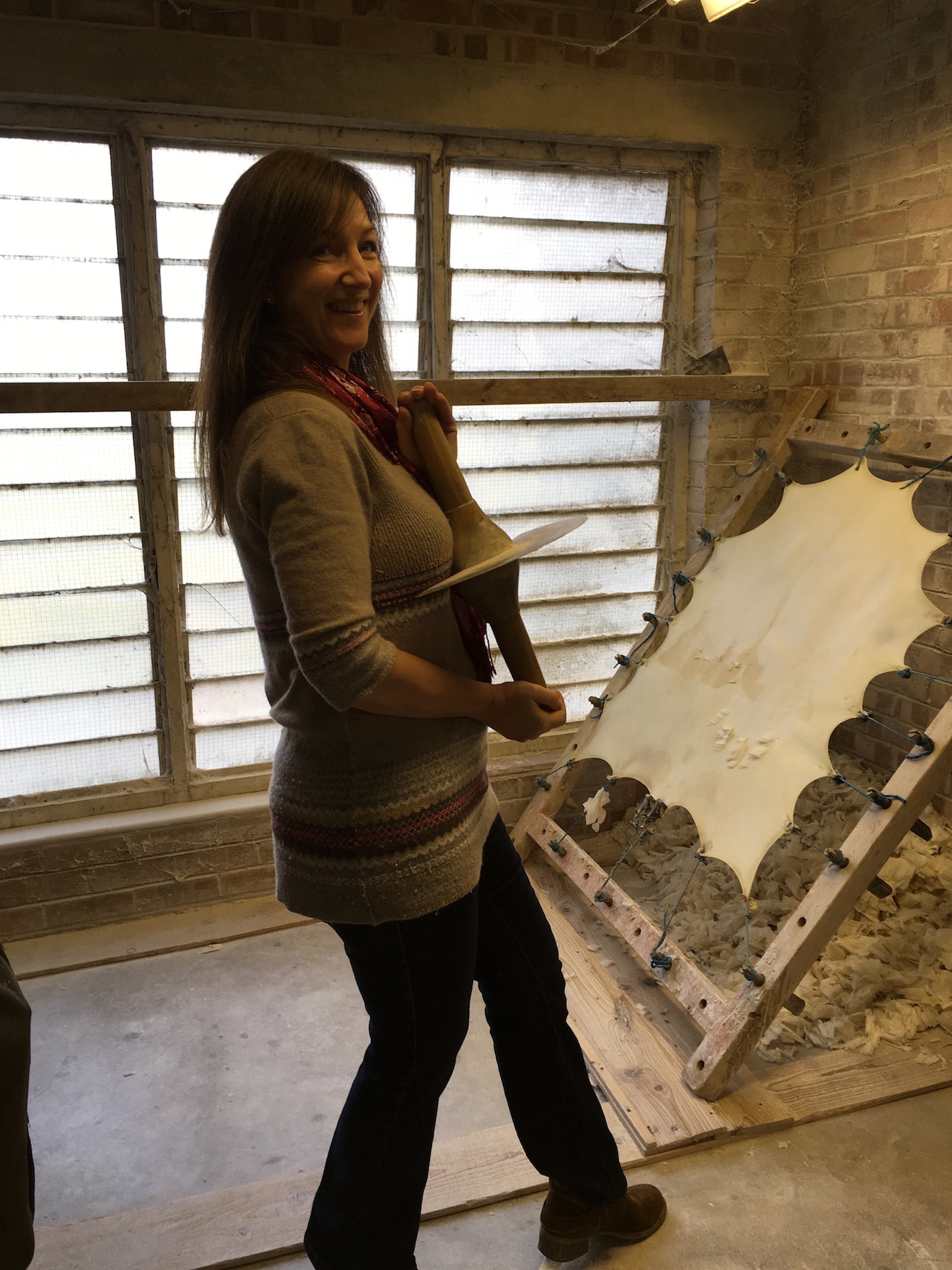
Today, four botanical artists and a self-proclaimed bag-man visited Cowley’s. We were looked after royally. I think in fact that they will need a day to recover from our visit!
Welcome at Cowley’sGaynor, starting the preparation.Dianne Sutherland shaving her own vellumSarah Morrish thinking about her bugs and beasties for her vellum.Robin, no longer bag-man, but preparer of vellum.What happens if this goes through the skin?Shevaun Doherty found this Ooooh worthy!Paul, catering to all our needs!Four very happy botanical artists.
We have been welcomed to the USA with open arms – except for the people at border control who were extremely serious about their roles!
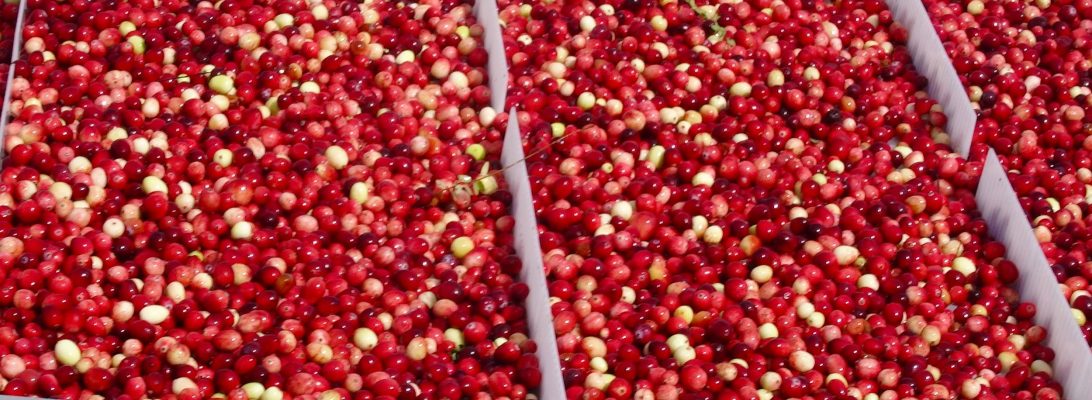
Our first few days were with some marvellous friends of ours who live just south of Boston. Apart from being taken to beautiful beaches, the oldest Tavern in the US at Newport, Rhode Island, a children’s party right on the water’s edge at Buzzards Bay, and an end of season evening at a local tennis club, we also went to see Cranberry Harvesting.
Did you know that Ocean Spray, the company whose name we might be aware of if we drink Cranberry juice, harvest their cranberries in at least two different ways.
Mass production of the large cranberries used for their drinks means that they are grown in ‘fields’ of bogs. I have normally seen them grow relatively sparsely in the wild in the mountains of Norway, but here the bogs are just carpets of the plants. They are lovingly tended all year round and at harvest time the bogs are flooded, a machine gently disturbs the growth of submerged plants and the fruit floats to the surface. The fruit is then manually lensed towards a suction pump which draws the fruit up into a washing facility and then transferred to a waiting truck. The trailer was about 60 feet long!
The process certainly made me think and we only saw a minute section of this vast production.
Although we didn’t see it, apparently fruit that is sold as fresh, frozen or dried fruit is picked dry by hand. In this instance the fruit appears riper than that seen in the pictures below.
I was told that there are quite a few varieties used for in their production and the ones in the wet bog are called Early Blacks.
This slideshow requires JavaScript.
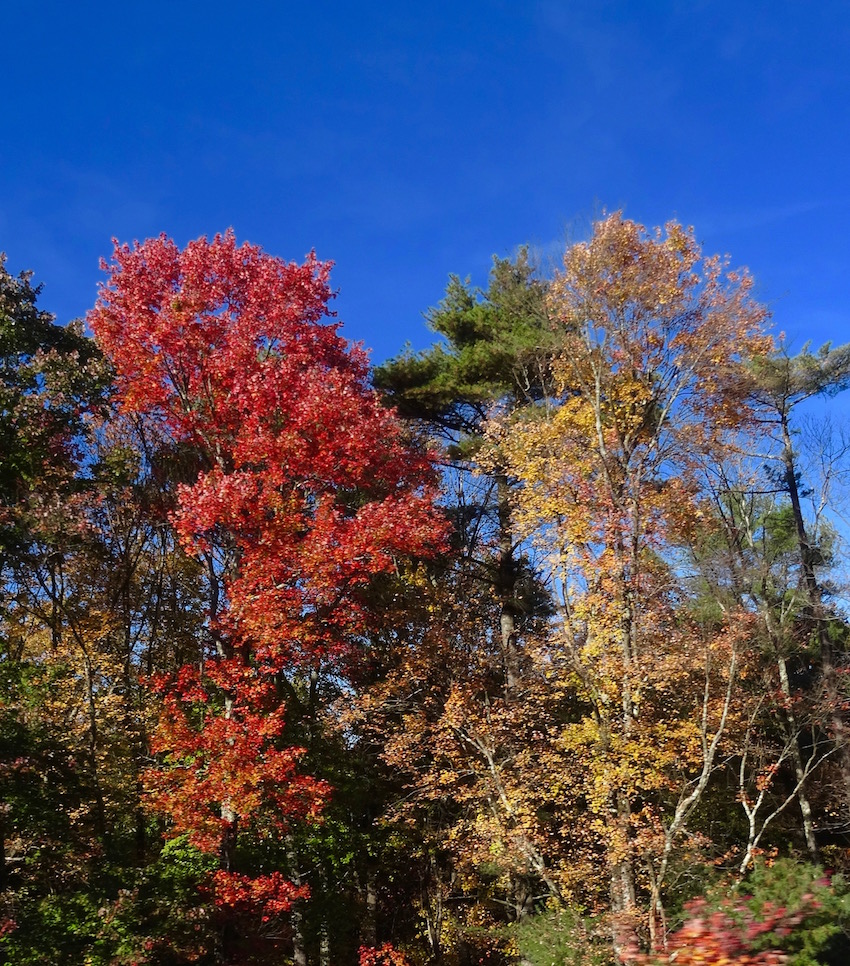
Today we have had a really long day. We started driving at 10:00 and arrived at our overnight destination of State College, at 19:30. But we had some amazing views of the changing colour of the leaves. We are due to arrive in Pittsburgh tomorrow afternoon, but this time it is a very few hours travelling in comparison to today.


















 GAYNOR'S FLORA