Botanical art workshop holiday in Norway

We are here!

I had hoped to keep the blog updated in relation to the botanical art workshop holiday in Norway,  but life got in the way.

Before our departure from the UK last week and our perilous journey up into the wilds of Scandinavia, our family arrived from Ghana for the start of their furlough, holiday and part house sitting exercise ( someone to water the cats and feed the plants). You can now take a breath. We had a little lovely journey over the channel and north (getting up at 03:00 to beat the queues instigated by our channel friends across the river). No-one to contact, no-one who could contact us, no undone jobs to be done – I could relax and sleep. Poor Robin drove most of the way. But I did knit a bit in periods.

We arrived in Norway two days later and got a lovely welcome. First job on the agenda was to meet a lovely lady from the Norwegian Botany Society who had collected some plants for us from the mountains in southern Norway. Then, we stocked up on plants from a local garden centre. Student tastes vary, so we were now prepared with Cloudberries, Blueberries, lignognberry, lace cap hydrangea, House leeks, Siberian Iris. But we didn’t have dog roses, wild strawberries, white campion, clover, Scabious, Vetch, these were brought in later by one of the students. The last species to be added to our plant table were some lovely Peonies, thanks to a grass-cutting-husband!
image

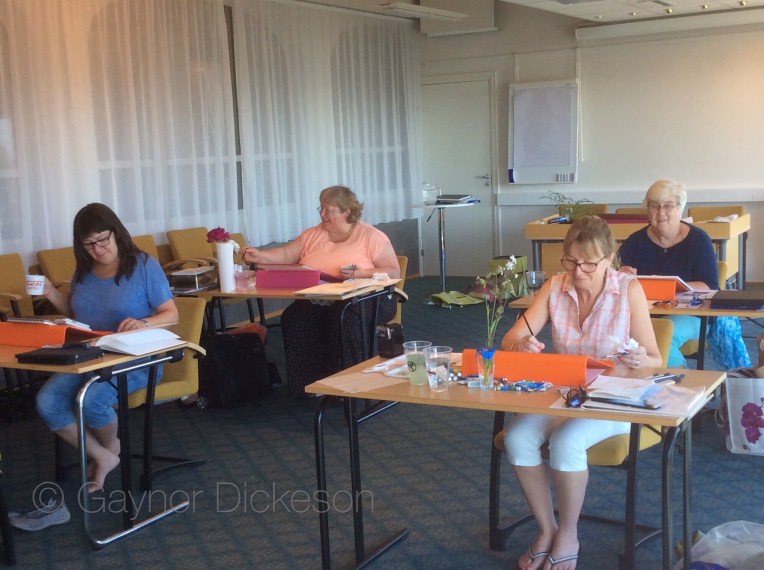
The workshop holiday started with a lovely meal at the Åsgårdstrand Hotel on the Southeast coast Of Norway, looking out across the beautiful views of the Oslo Fjord. This was Sunday evening with the course itself starting on the Monday morning. Everyone started out bright eyed and bushy tailed early on Monday morning, and as usual we started off with the most important aspects of the botanical painting, choice of subject, studying it, designing a composition and making the initial drawing, A painting is never better than its original drawing, therefore one needs to spend time on this phase.

The third day has been completed and it seems to me that the enthusiasm hasn’t wained. But a break was needed.

image

image

image

image

image

image

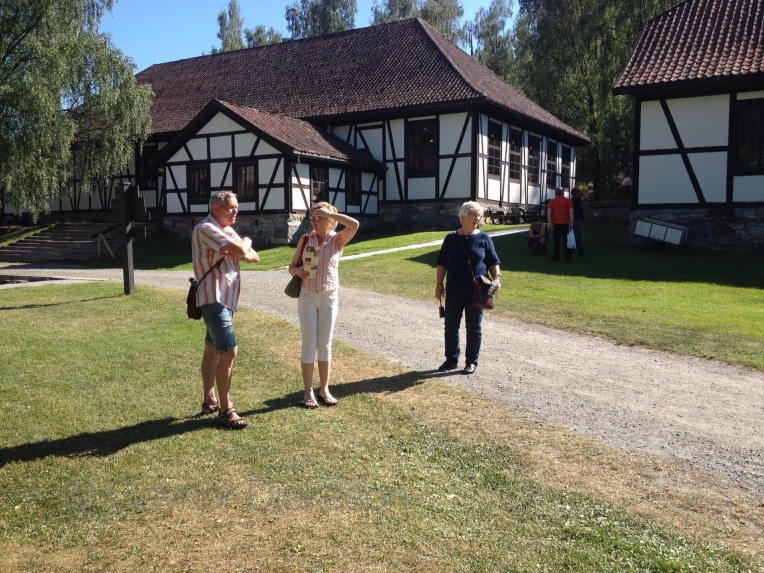
This afternoon a trip was planned and some of the students chose to come with us. We travelled a little way up into the mountains to a Cobalt Mine – once the largest in the world, called Blaafargeværket. The literal translation is Blue Colour Works. We had a lovely wander round the old buildings, but felt that to spend time in the actual mines, was rather a waste of a beautiful day. But we did learn a whole load about the mines’ and area history.
image

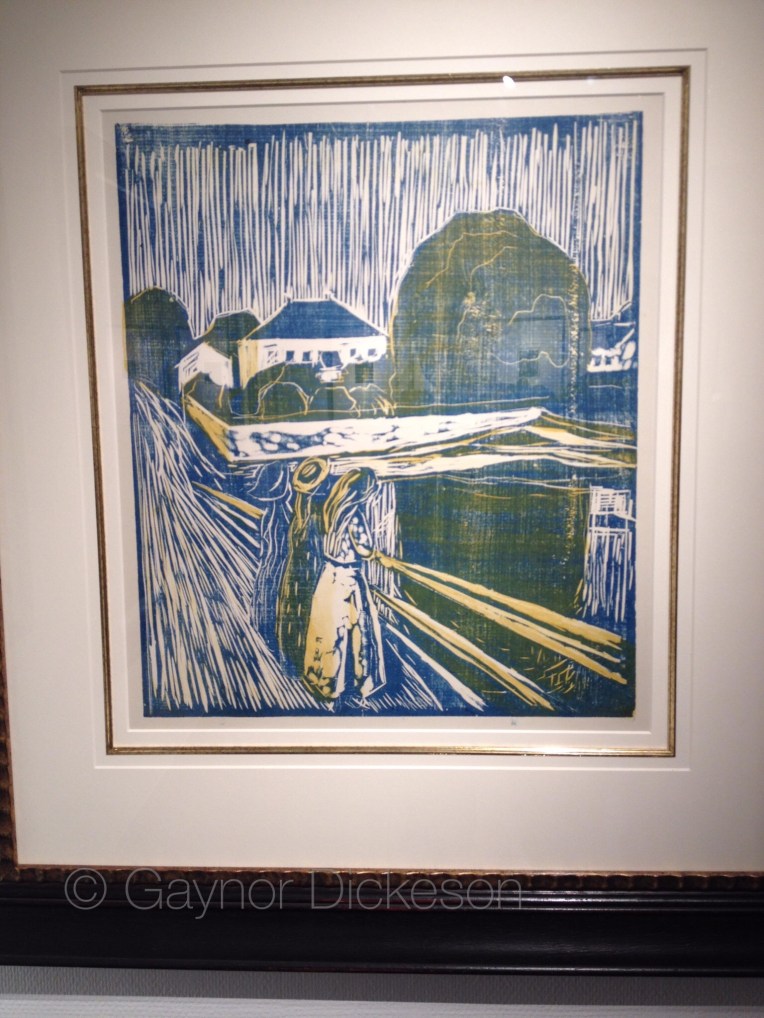
Edward Munch's 'Three girls on a bridge', painted actually in Åsgårdstrand.
Edward Munch’s ‘Three girls on a bridge’, painted actually in Åsgårdstrand.

Apart from seeing old, restored buildings and fantastic scenery, we also learnt a bit about local history and saw two art exhibitions – all as the temperature was steadily climbing to 30 degrees. Eventually, it was almost a relief to head back to slightly cooler climbs along the coast. We felt our tasty supper this evening was very much well deserved.

Step by step Pineapple pictures and a graphite Daffodil!

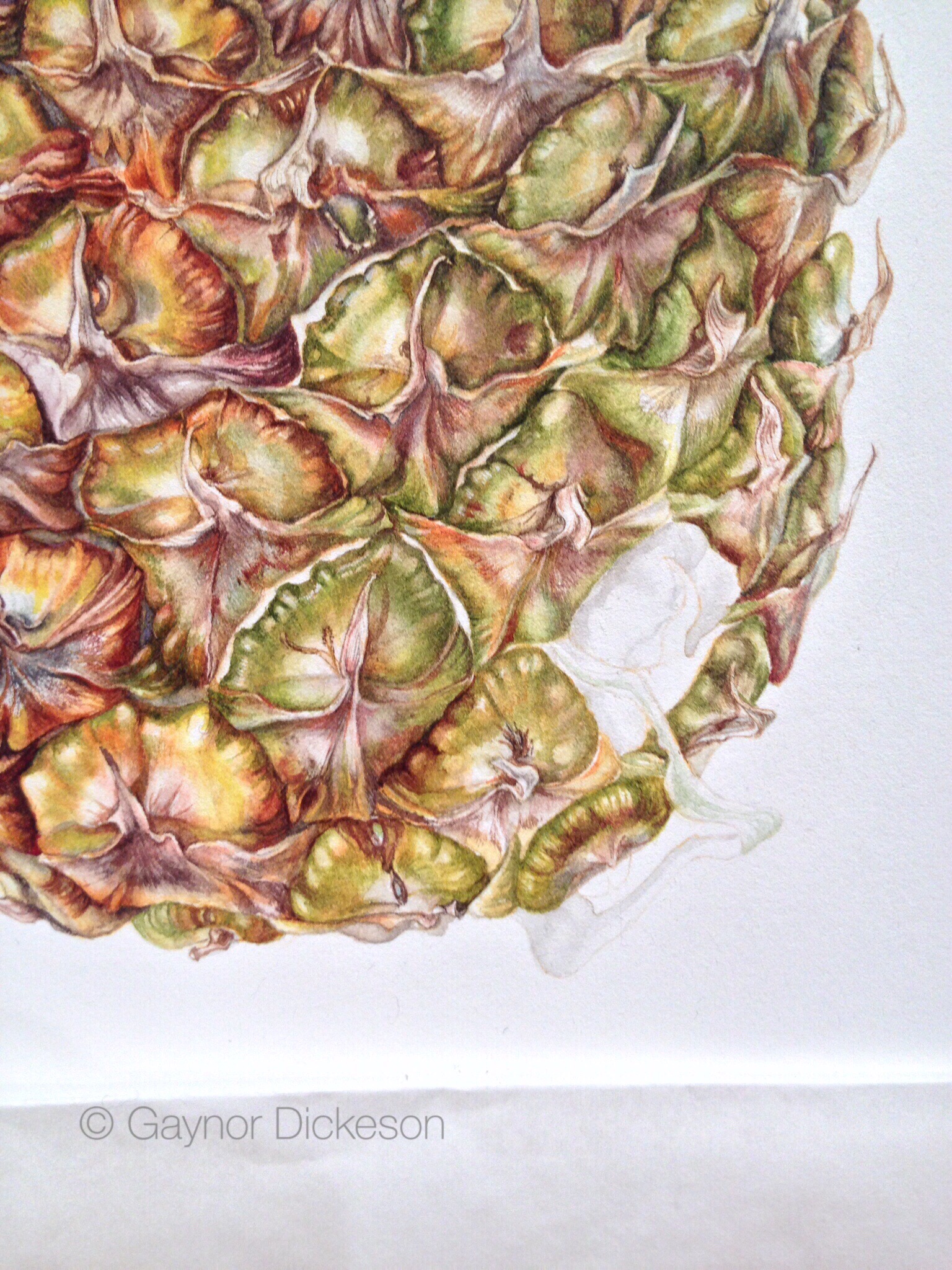
So what does a series of Pineapple step by step pictures have to do with a graphite daffodil picture? Nothing, except that they were done by me.

I have at last got my act together and done a separate page where all of the photos that I took during the 160.5 hour marathon for the Pineapple picture, are in one place. Just click on the heading above and you will find them all. Additionally, if you haven’t seen the YouTube video I did whilst painting one of the segments, you will find that in a link on the Tutorial page above.

I discovered whilst painting and posting updates about the picture that many botanical artists are challenged into painting a pineapple. It isn’t simple to do although it is all in the planning – as with most things – but it isn’t that difficult either.  I noticed that several people had previously painted a pineapple, as I had done, or were in the process. Some started about the same time as me, but were finished long before me, and others started well afterwards. Pictures were done in watercolour, coloured pencil and I saw one really beautiful one in graphite. Most were done actual size and one or two over-size. They were very impressive, particularly if more detail had been included.

The differences in the results were as amazing as in the techniques. Even with watercolour, there was a clear distinction between those done mostly wet-in-wet, to the other end of the scale where more dry brush techniques were used.

I mentioned that I did a pineapple once before, about eight years ago. I was given to understand on several occasions that it wasn’t bad – although I felt it could have been improved upon no end. Putting the two side by side was quite an experience for me. One could clearly see that I had developed in that time. I just hope that I continue to develop positively. I just wish that I could work faster, not slower!

So the graphite daffodil. I had no additional pictures to show you with the pineapple, so I thought I would post my latest work. A couple of weeks ago I held a graphite workshop and just continued with my demonstration piece. I thoroughly enjoyed it and I hope you like it too.

©06.Graphite daffodil 8bit+sig

My first home-made video – the Pineapple of course

This is going to be a very short blog as my eyes are popping out of my head.

I finished off a long series of London Art College assignments this morning, intending to go back to the easel afterwards.  I was then asked to write a short article to go on the website for the Chichester Open Studios event in May. Naturally I decided to do something about the Pineapple, put it forward as a suggestion including the use of my first video tutorial.

I know that there is already a series of videos that you can find via the Tutorial page on this website, but those are professionally done. Back to this one video so far: I started filming and doing a series of ‘time-lapse’ pictures at the beginning of the pineapple painting.  This video comprises both elements covering the initial period and lasts about three minutes. I continued to film throughout the whole painting, so in due course I hope to release something that will show the whole pineapple develop before your eyes. But that is still in the cooking pot.

Following the query earlier today, I therefore logged onto Youtube and created a channel called Gaynor Dickeson. It contains just one video: ‘How to paint Pineapple segments with Gaynor Dickeson’ . Do enjoy and let me know what you think. This is the link: http://youtu.be/htu3A2mpFCo

IMG_0074

The Pineapple has gone for framing!

I believe that several people have wanted to see the finished pineapple. Today I took it for framing and very soon it will be out of my hands!

But, apart from teaching botanical art classes and workshops, I have started the small pictures that I will be giving to my nursing reunion friends in May. I don’t think that any of them follow this blog so I don’t have to worry that they will see the pictures in advance. They might not be particularly interested in botanical art, but hopefully I will be able to change their minds with the pictures. I’m just hoping that I haven’t bit off more than I can chew.  It is going slower than I wanted, but I still want the pictures to be done properly.

Whilst painting the pineapple, I had my camera on and hopefully in due course I will be able to post a video or two showing my technique. But that will definitely not be just yet.

In the meantime – the pineapple. I hope you approve.

1.Pineapple 2015 +sig crop

Last two ‘pineapple in progress’ pictures.

This is a very quick blog  – I hope.

The customer has seen the finished pineapple picture and is pleased with the results. Whew! It still has to be framed, but the recipient will not be getting it for a few more months. However, I have been given permission to release it.

Today I will just show the two remaing ‘in progress’ pictures and in the next few days I will post the final picture. I’m not sure which day as I have set aside the next two for concentrated painting – hopefully.

I and my set of 231 from the Queen Elisabeth School of Nursing, Birmingham, will be celebrating our 50th reunion in Bosham in May. As I am organising it, I thought I might do a series of small originals as presents for those coming.  By actually saying this, I suppose it will be documenting my intention. So watch this space and keep your fingers crossed that I can do 30 in that time. I am a terrible perfectionist and take a long time over each picture, so I will have to make a schedule, keep the pictures very small and keep to both intentions.


Promised Hellebore workshop pictures

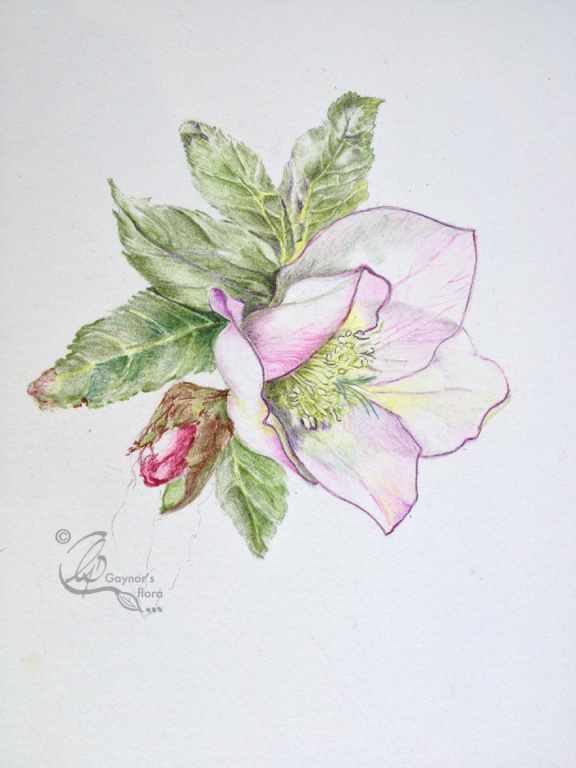
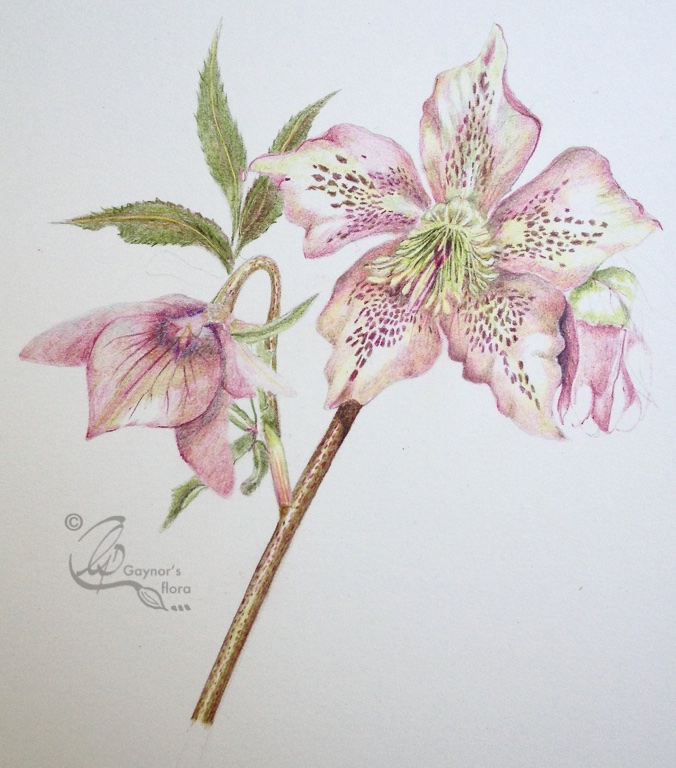
I promised to show the Hellebores following the botanical art workshop at the weekend.  Unfortunately I couldn’t do it before now as one student came back during the week for a class – taking advantage of being on holiday in the area; one went back to Norway; and one wanted to do some more at home after the workshop. However, here they are. I am really pleased with the pictures so far.  All the students decided to use coloured pencil, but painting Hellebores face exposed is not easy, whether using watercolour or coloured pencil. There is a lot of detailed work.

For those of you who do know a bit about coloured pencil and botanical art, no embossing tool was even near any of the pictures. They all decided to try doing it the hard way via controlling their pencil and carefully laying layers of colour. The results of this were really good.  Personally I feel that if you can avoid the embossing tool as much as possible, the result is more realistic and of course you don’t damage the paper. I think that In the end the students found the spots on the petals the most difficult.

It was the spot pattern on some of the Hellebores that had attracted several of them to choose these particular flowers, but they didn’t find it as easy as they had thought. The reason for this was that the spots guide the insects to the nectaries and this creates a specific pattern, but at the same time they accentuate the shape and fall of the petals – almost in the same way as the veins do. Not easy.

It was interesting listening to the conversation round the table about their individual choices of flowers. One felt she wasn’t able to get things really dark with CP, so chose the dark flower.  She found that spending time on choosing the right colours and deciding the order in which they were used, helps a lot – as does being conscious of contrast. Another person chose a pale flower as they had difficulty doing pale. One person didn’t really like Hellebores but wanted to learn how to do them.

As each of them benefitted from looking at each others work, it was quite rewarding. I think that all were surprised and pleased with their results.

Please enjoy.

1.IMG_2231 2.IMG_2259 3.IMG_2297 - Version 2 4.IMG_2280 - Version 2

Hellebore Botanical art workshop in Bosham

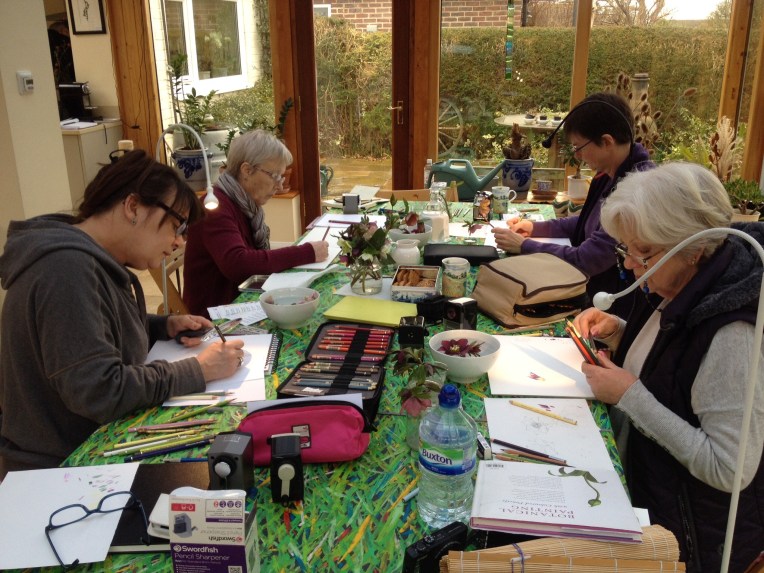
I started a three- day workshop in Bosham yesterday and was surprised to see that all those attending chose to use coloured pencil. Those artists who have already been to me before, know that I teach both coloured pencil and watercolour. I think it has only happened once before that the medium of choice for everyone was coloured pencil

Some people had brought Hellebores from their own gardens to paint, but in the end they all chose from our garden. You might already know that Hellebores are rather promiscuous and therefore breed more than rabbits do and aren’t too choosey about which variety they choose to mate with either! We have Niger ones, slate ones, pale ones, dark ones, spotty ones and a really lovely one we noticed today that was pink and green, with tips of lime green. Amazing.

People have been working hard and concentrating on what they were doing, except each time the pheasant appeared in the garden. He is quite beautiful with a white head and with wattles. I’m not exactly sure what type he is, but if anyone knows, please tell me.

Yesterday a lot of time went into planning the Hellebore picture. Although they probably wouldn’t finish the whole thing over the weekend, I felt it important to focus a little on composition so that when they added to the picture later,  the composition had been planned properly.

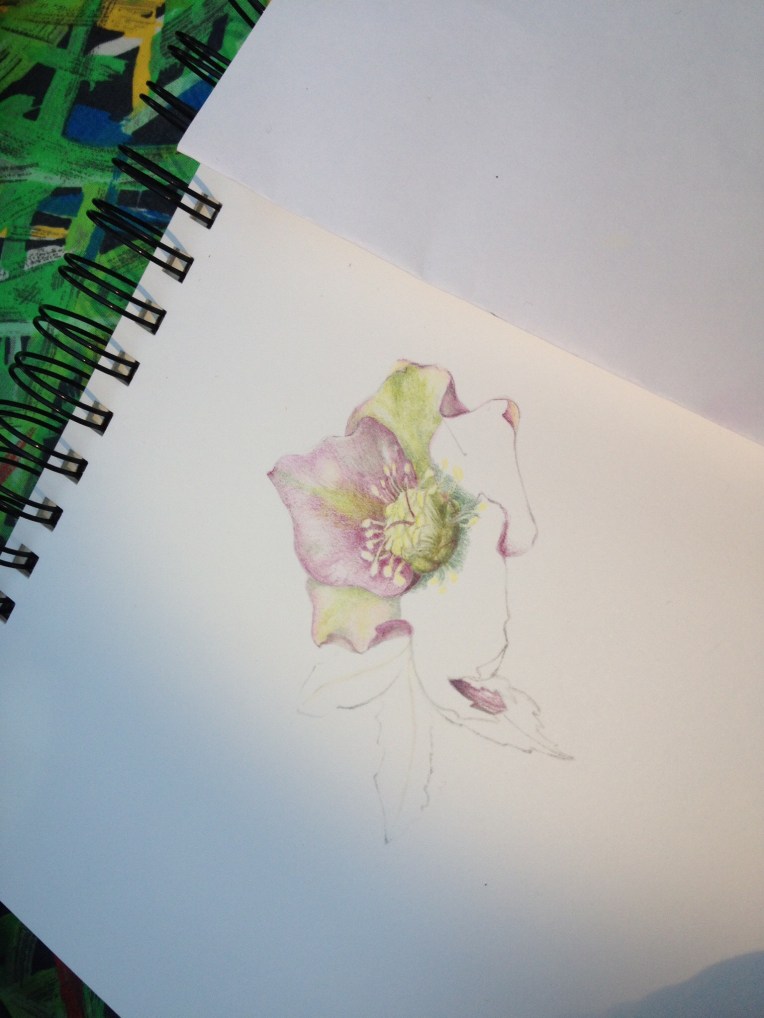
The colour was started yesterday, mostly around the stamens. Today they have been forging ahead and these were the results by about lunchtime today. Hopefully I will be able to show some finished results by end of play tomorrow.


The pineapple and arrival of Rory McEwen vellum

This week has been and will continue to be quite eventful. On Sunday, we drove up to London to deliver pictures for the SBA exhibition in April at Westminster. Several assignments have arrived from London Art College to mark and I have started these. This morning I had my usual weekly class and this afternoon a friend arrived from Norway ready to take part in the workshop I am holding this weekend – Friday to Sunday.

Tomorrow we plan to go to Kew and of course the highlight will be to visit the Shirley Sherwood Gallery of botanical art. Hopefully I will be able to write a bit about it in the evening.

But today there was a big knock on the door. I could see the sun flooding in through the glass in the door and the shadow of a person standing outside. I opened the door and there stood our very smiley ( and helpful) postman with a parcel in his hand. I saw straight away that it came from the Hunt Institute, Pittsburgh. It was the vellum! I was so excited and the poor man got dragged inside to be told the story behind it all.

I understand that not everyone is entirely sure what vellum is. It is animal skin – often goat or lamb, which has been collected from abattoirs and prepared by specialists for painting or writing on. It is parchment, the same material that old documents were written on. In fact all acts of Parliament are still written on parchment.

Why use vellum/parchment rather than paper? Well, the archival properties of parchment are far greater than that of paper. For important documents this is an important consideration. For artwork this too is very important, but there are additional benefits ( and difficulties). Watercolour is applied with a dry brush technique as unlike paper, the pigment lies on the surface of the skin. In doing so, the pigment reflects its colour well as it is not absorbed into the skin and dulled in any way. Rory McEwen’s pictures really do show this fact very well.

But as I haven’t yet decided what to paint on the vellum, it is likely to be a few months before I get started with it.

Last of all, how is the pineapple doing? In showing these pictures, I am being careful not to show how I have pulled the painting together as a whole. I think it important that the person who is to receive it, should see it first as a complete picture. Once that happens, I will then post it on my blog.

More pictures!

IMG_0073

IMG_0074

IMG_0075

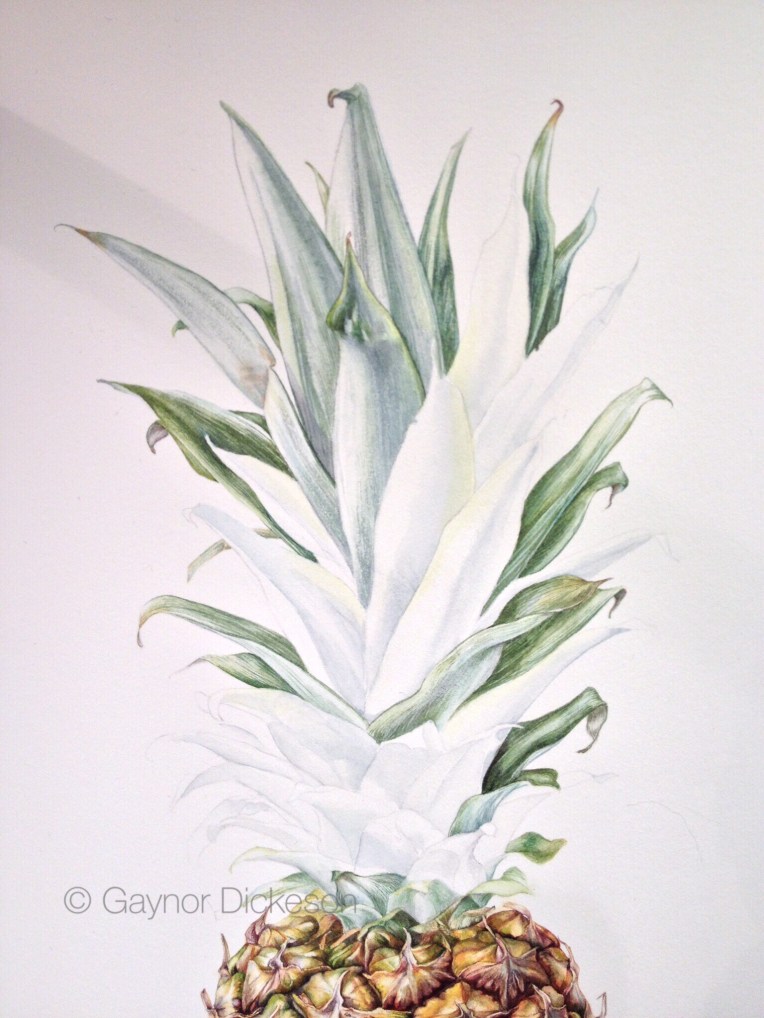
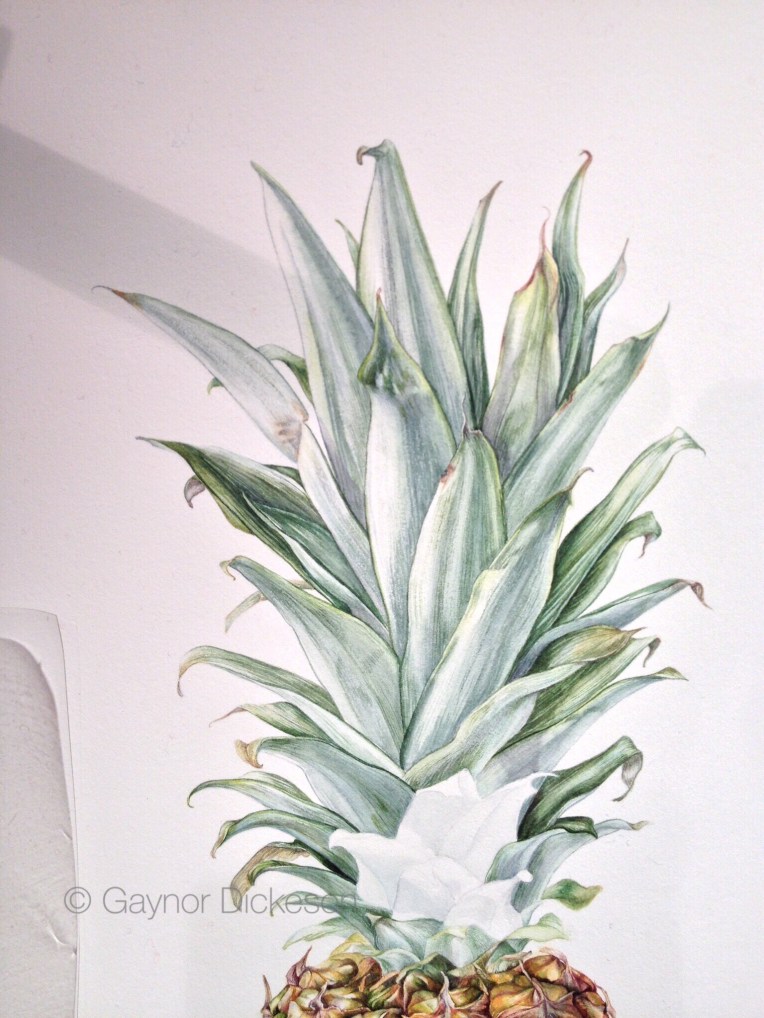
From the fruit to the leaves. I read somewhere the other day about someone needing to get into the ‘zone’, when painting a picture. That really struck me with this pineapple, because it was so different from the last piece of work I did. It had to feel right before I actually started putting paint on the paper. I had to feel confident that the colours I was going to use were the right ones, and that the sequence of colours and the way I laid them, were right for this picture too.

I now had this feeling all over again. I was going to use exactly the same colours as I used for the fruit, but in different mixes. The textural effect I wanted would be completely different. It felt like starting from the beginning and needing to get in the ‘zone’ – but more importantly I couldn’t afford to make any mistakes at this stage. I had to be confident of what I was doing, before I did it.

I started off with painting the shadows in a neutral mix. This was to establish where the light came from, and therefore how the shadows would have an effect on the shape of the leaves. I couldn’t do this in the same way with the fruit part of the picture, because I knew I would be using a series of pineapples and painting each segment from the ‘fresh pineapple of the moment’. By the way, I used four pineapples for the fruit.

Have you noticed how the pineapple fibre really gets caught between your teeth?

Back to painting the leaves. Once I had established where the shadows would be, I started painting the leaves where I could see the upper surface, which was a darker green and quite shiny. I needed to make sure I had some good tonal contrasts in these areas. Am I succeeding?

IMG_0076

Painting a Pineapple – a labour of love!

I love painting, be it with watercolour, coloured pencil ink or just graphite. Many consider using some of these materials is ‘mark making’, rather than painting, but…….

Today I haven’t been painting at all. I have been getting things ready to take some work up to London tomorrow; hand-in for the annual SBA botanical art exhibition at Westminster central hall in April. I hate this aspect of painting, getting work ready for exhibitions! But tomorrow I get to meet old friends and other members of the SBA when they also hand in their work.

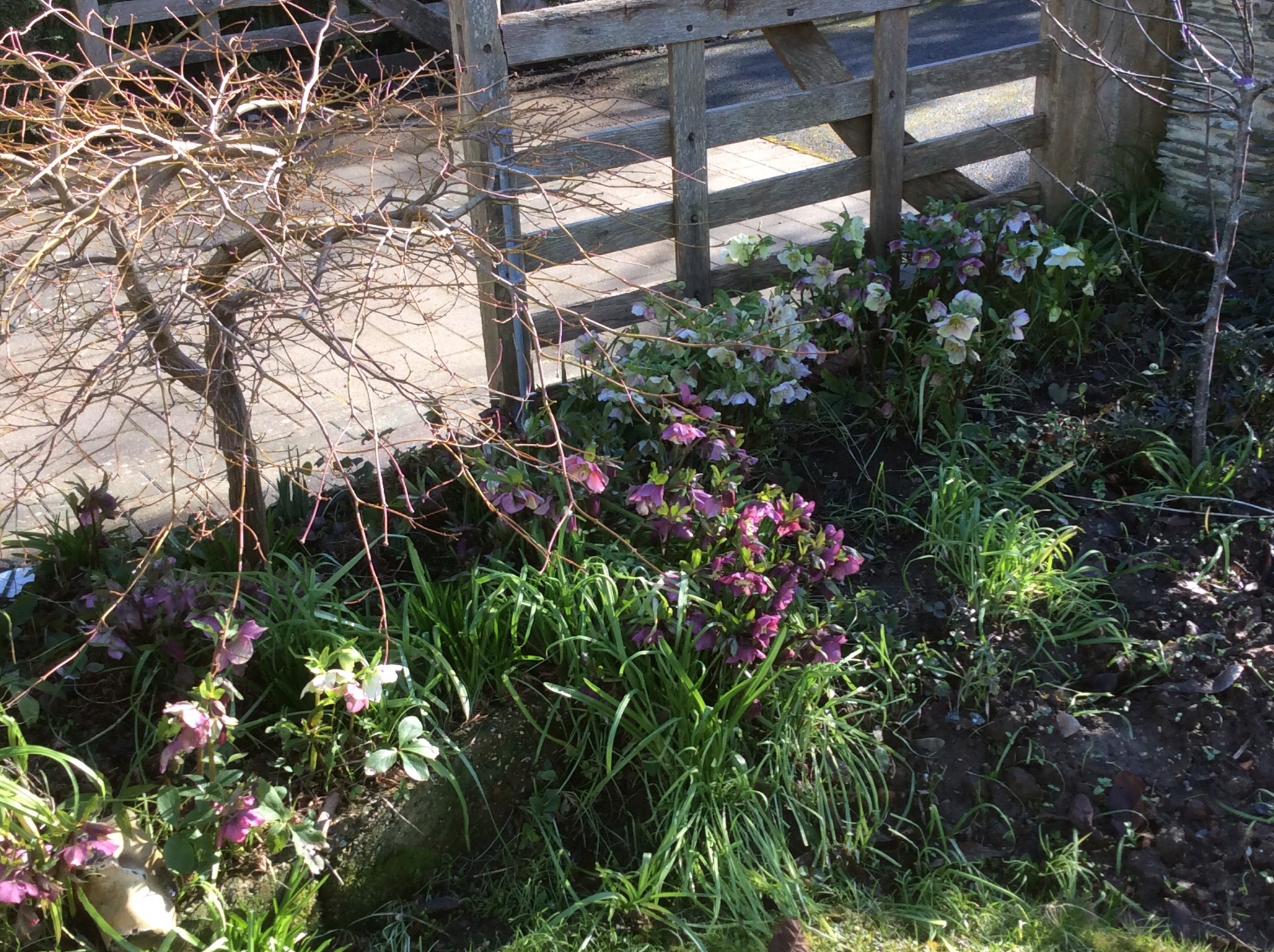
Then back to painting. But before I show a couple more pictures of the pineapple, a touch of Spring!

IMG_0536

IMG_0565

IMG_0542

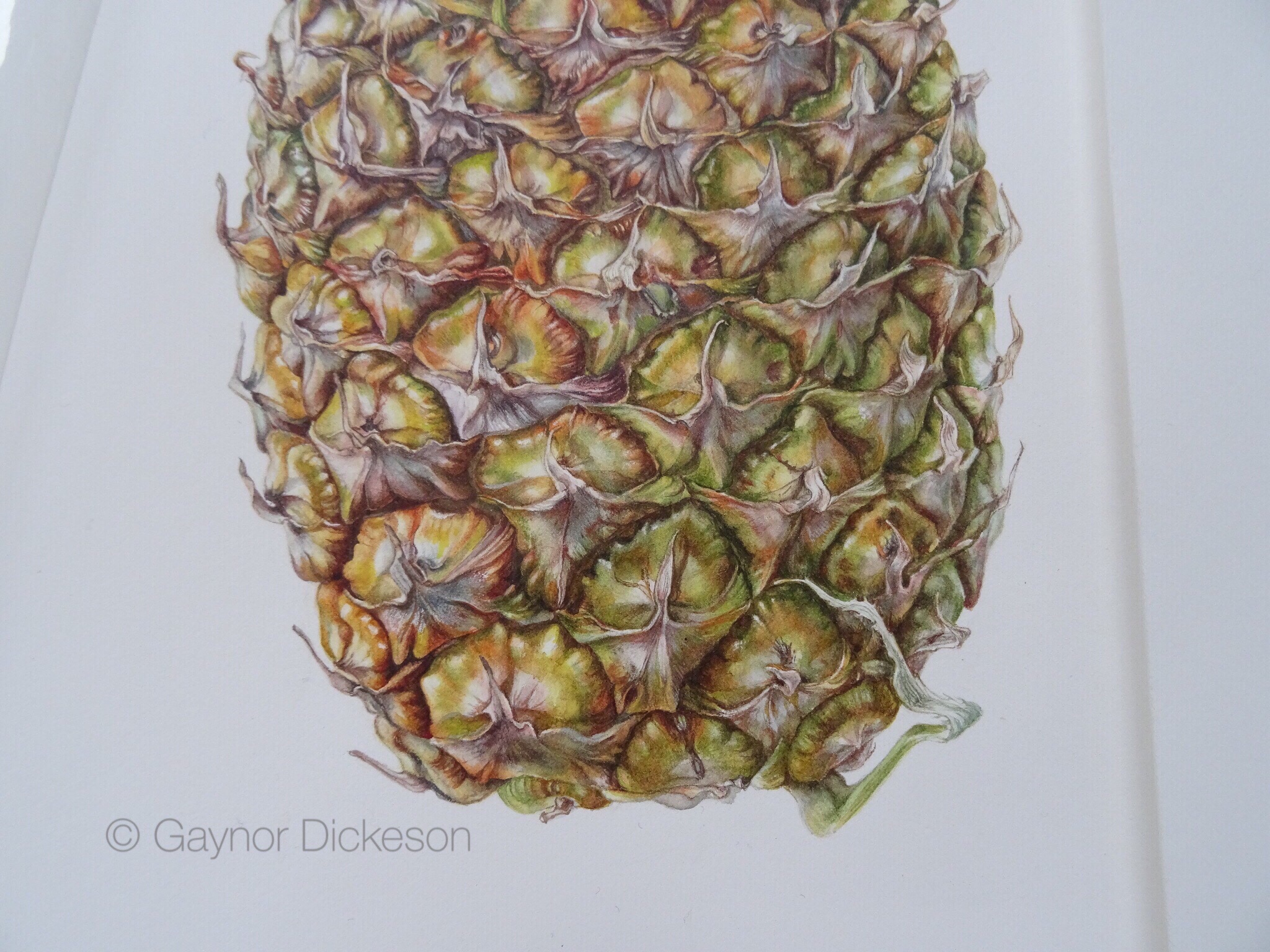
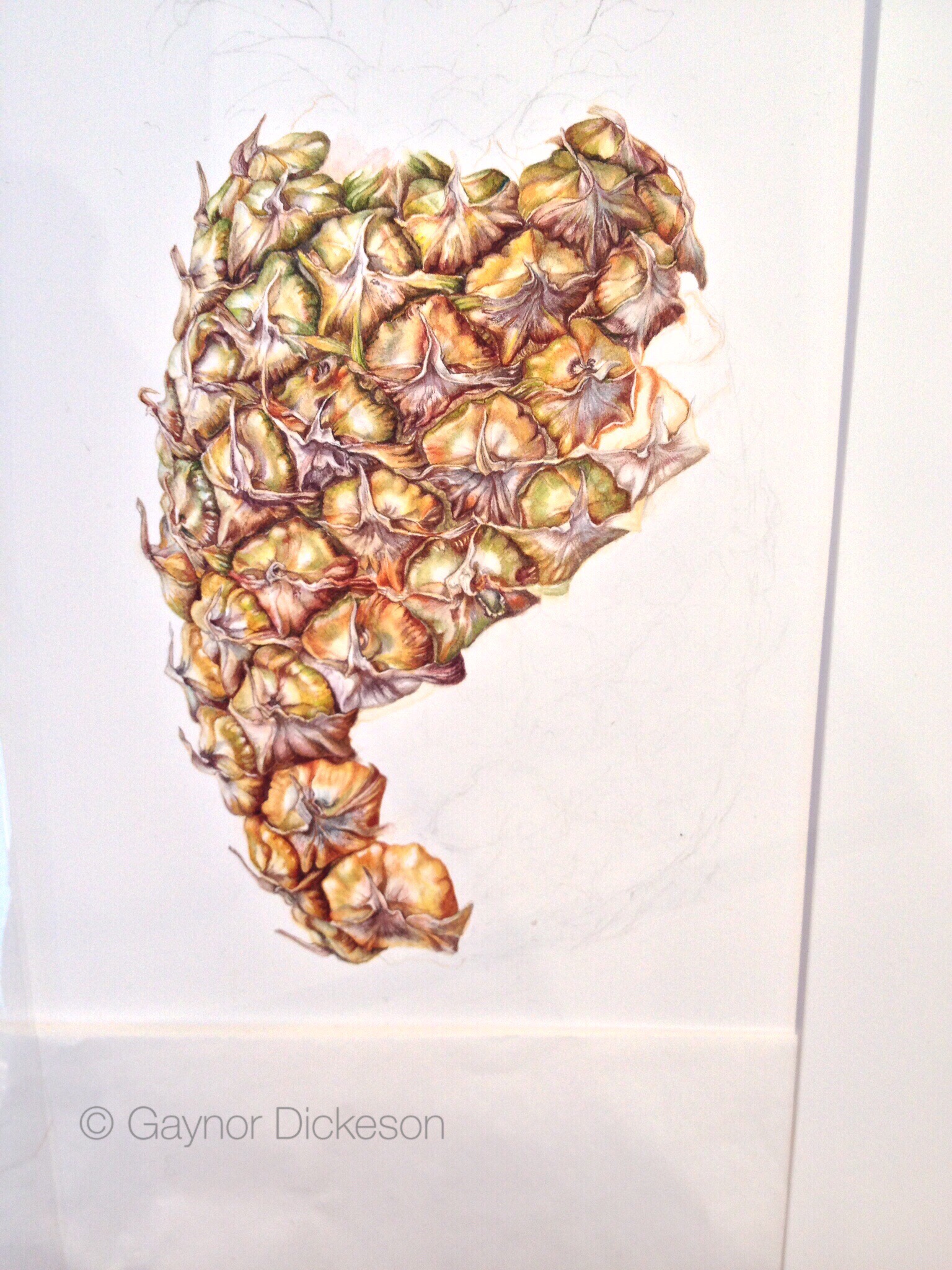
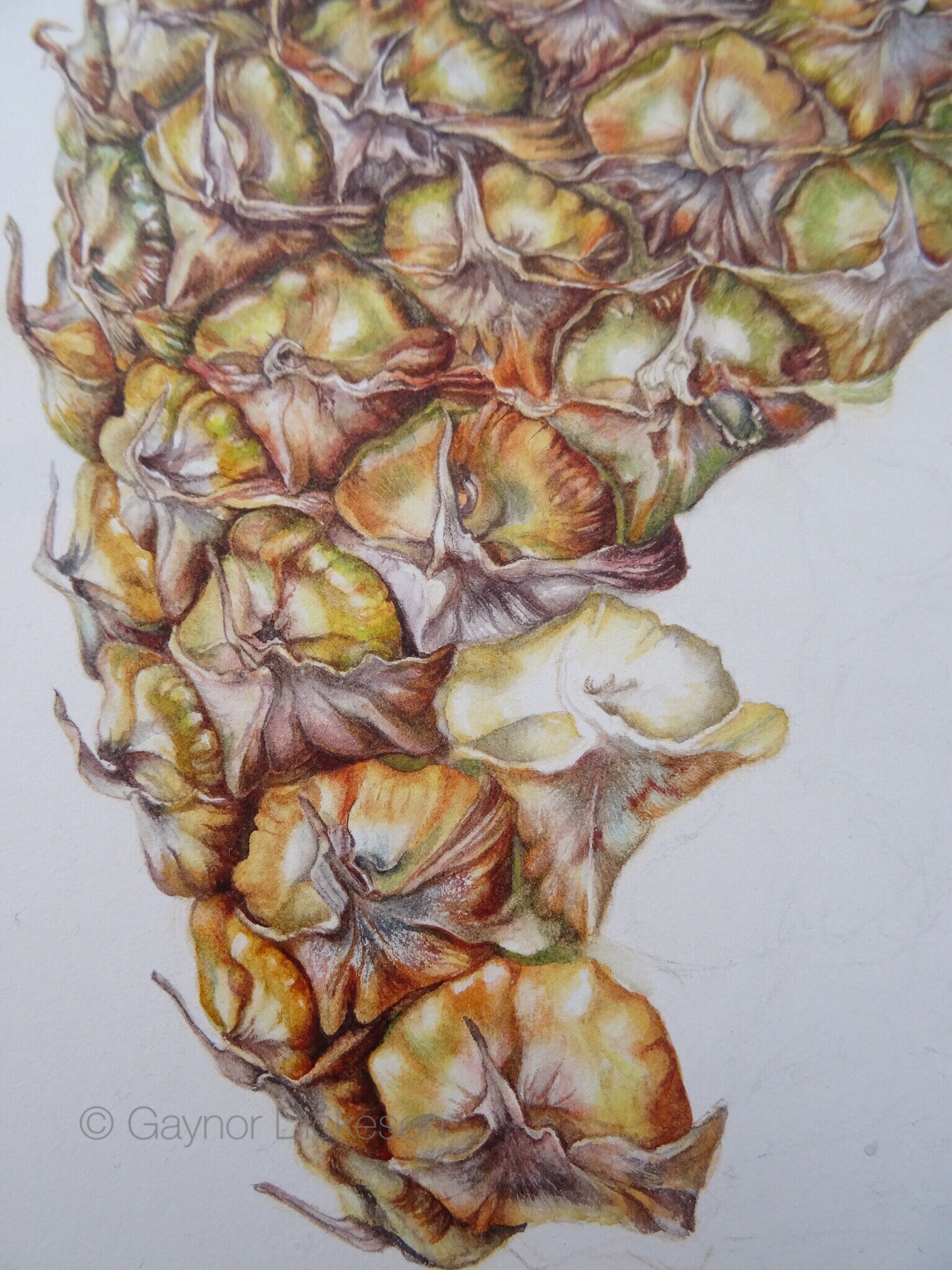
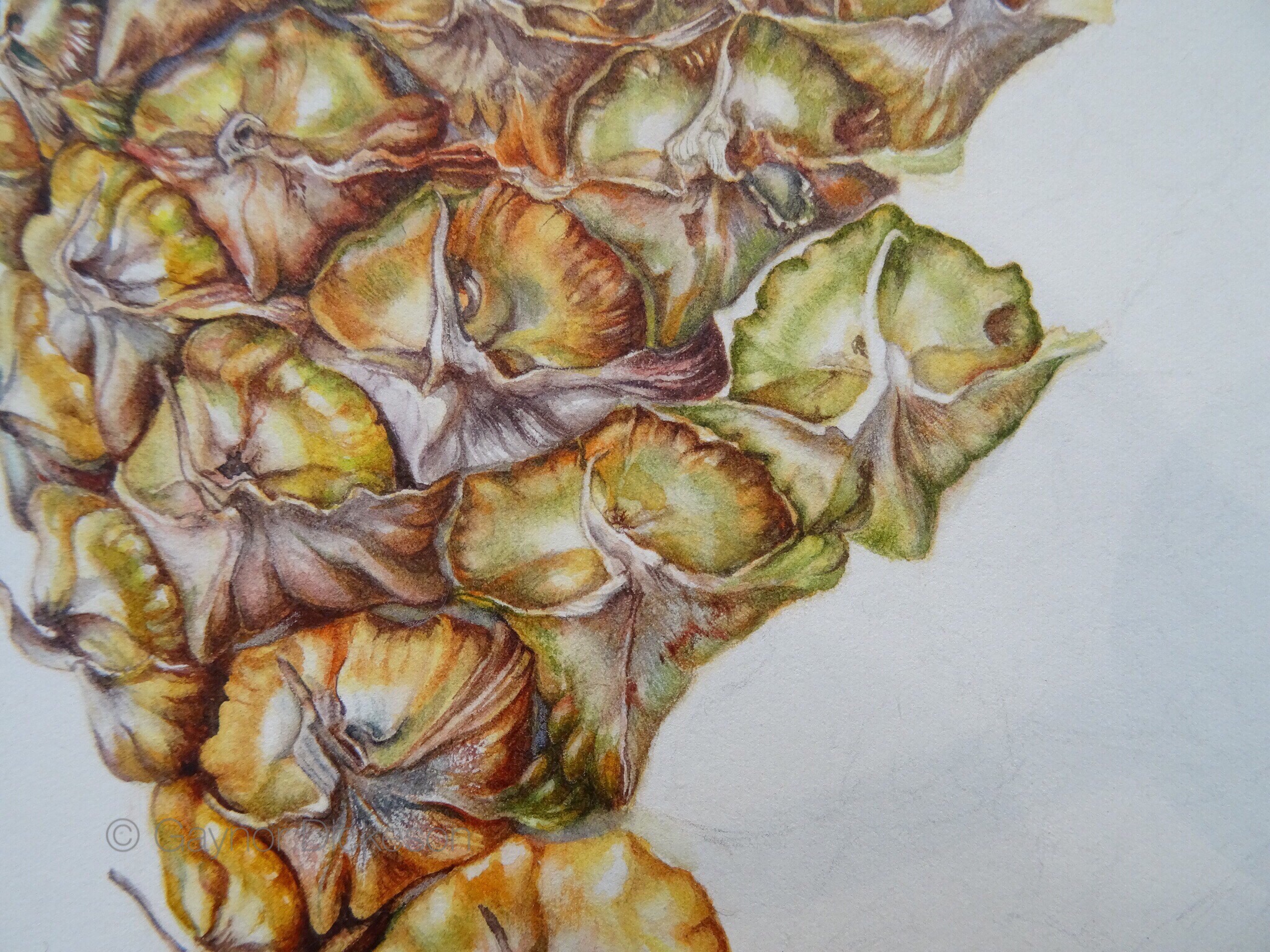
Some more pictures of the pineapple progression. I don’t know whether you notice this or not, but once I have had the first wash on an area, I use a lot of fairly dry brush work to do the detail for each segment. As I mentioned above, starting to paint a pineapple is a labour of love. But every single segment is so different and of course each one faces in a different direction.

IMG_0069

IMG_0070

IMG_0071

IMG_0072