FORAGING PLANTS IN THE NORWEGIAN MOUNTAINS: FROM BOG TO SAND.

The title of my exhibit at the “RHS Botanical Art & Photography Show” is as above:

Foraging Plants in the Norwegian Mountains – From Bog to Sand.

Six of my watercolour and graphite paintings are exhibited by order of habitat starting with those growing in the wettest environment to those in the dryest. Seven paintings were completed not just the six, therefore it was a difficult choice to remove one of them. The second one shown below, the small cranberry, is not in the exhibition.

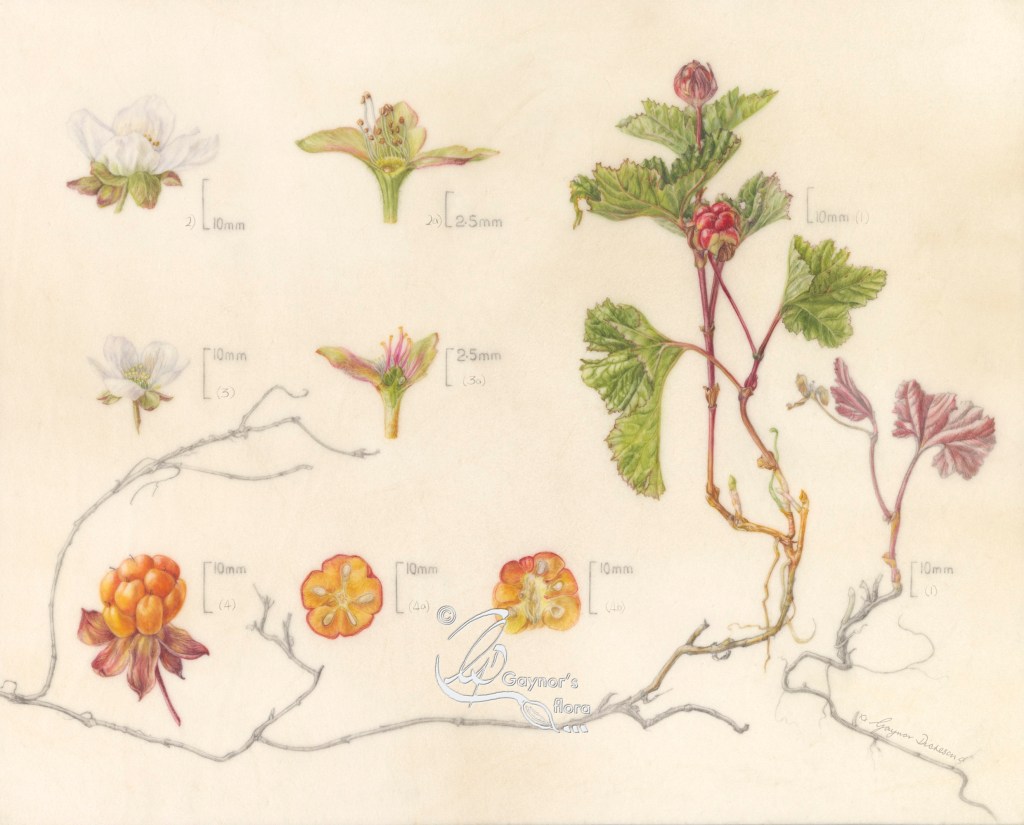
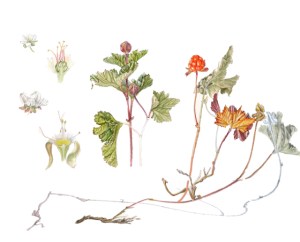
1. Rubus chamaemorus – Cloudberry – Multe
Watercolour & graphite on vellum.
August 2022

1) Habit
2) Male flower – 2a) LS Male flower
3) Female flower – 3a) LS Female flower
4) Fruit
4a) TS fruit
4b) LS fruit

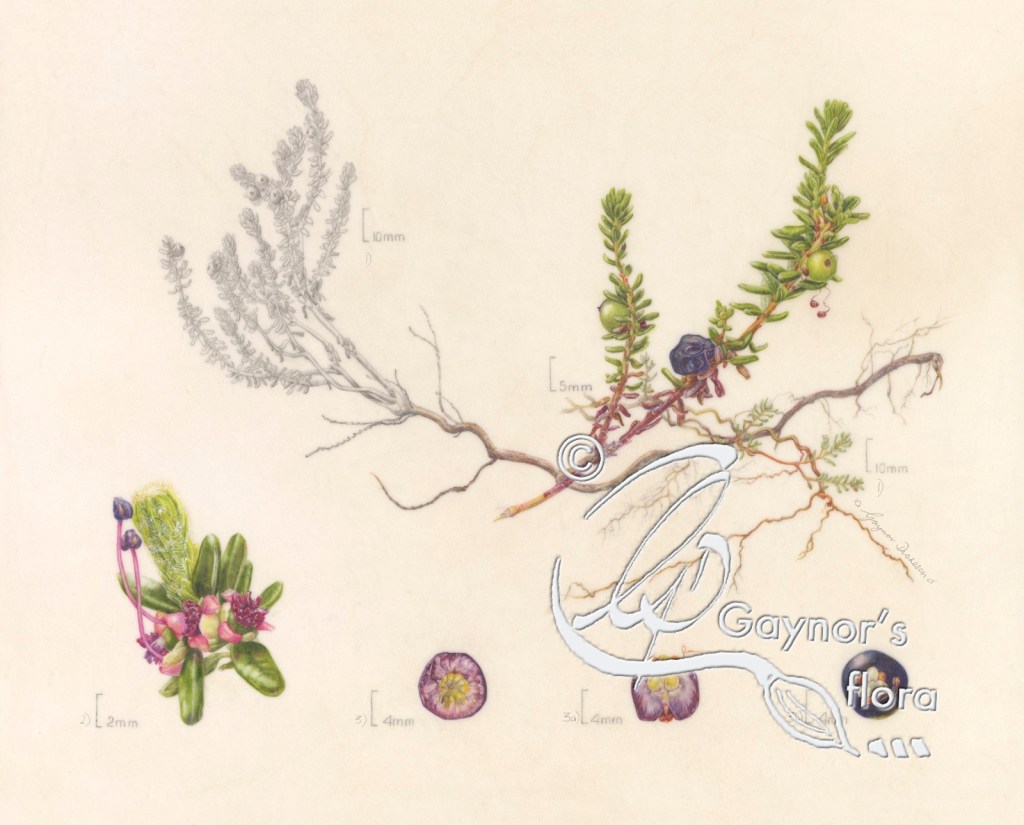
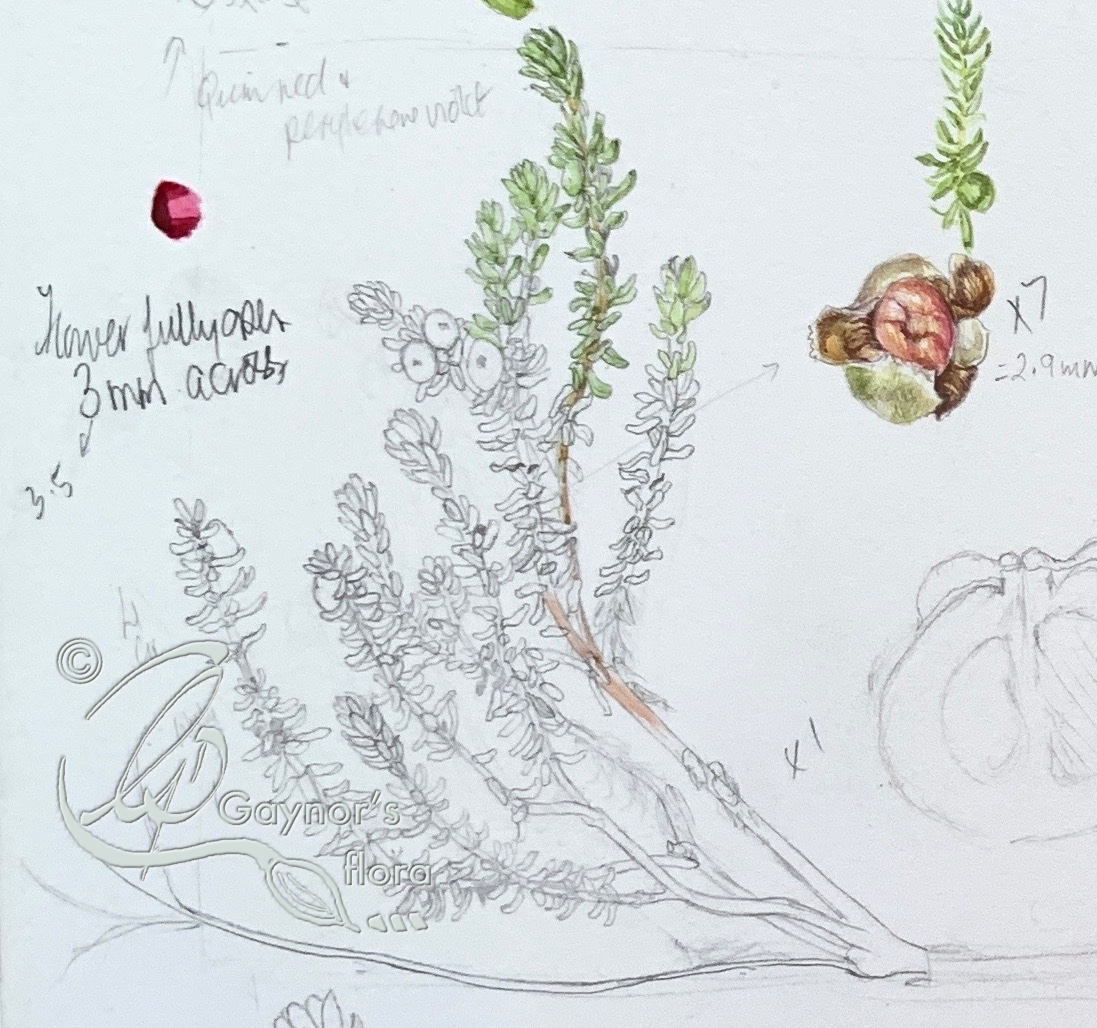
2. Vaccinium oxycoccus subsp. microcarpum – Small cranberry – Små tranebær
Watercolour & graphite on vellum.
January 2022

1). Habit
2). Flower
3). TS fruit
3a) LS Fruit
3b) Fruit

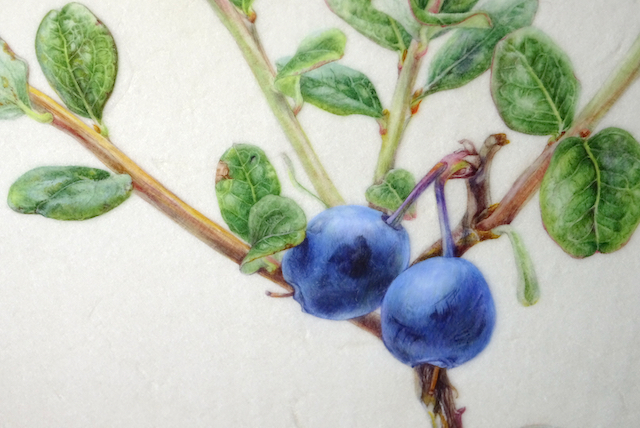
3. Vaccinium uliginosum – Bog bilberry – Skinntryte
Watercolour & graphite on vellum.
December 2021

1) Habit
2) Flower pair
3) Fruit
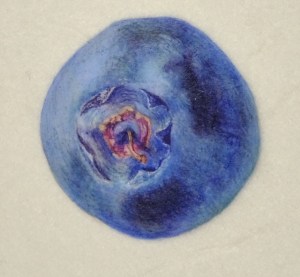
3a) TS fruit
3b) LS fruit

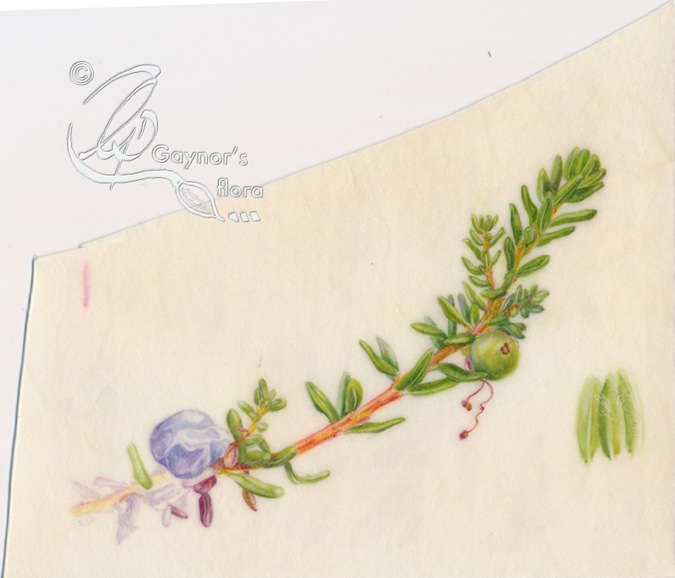
4. Empetrum nigrum subsp. hermaphroditum Mountain Crowberry – Krekling
Watercolour & graphite on vellum.
January 2022

1). Habit
2). Flower
3). TS fruit
3a) LS Fruit
3b) Fruit

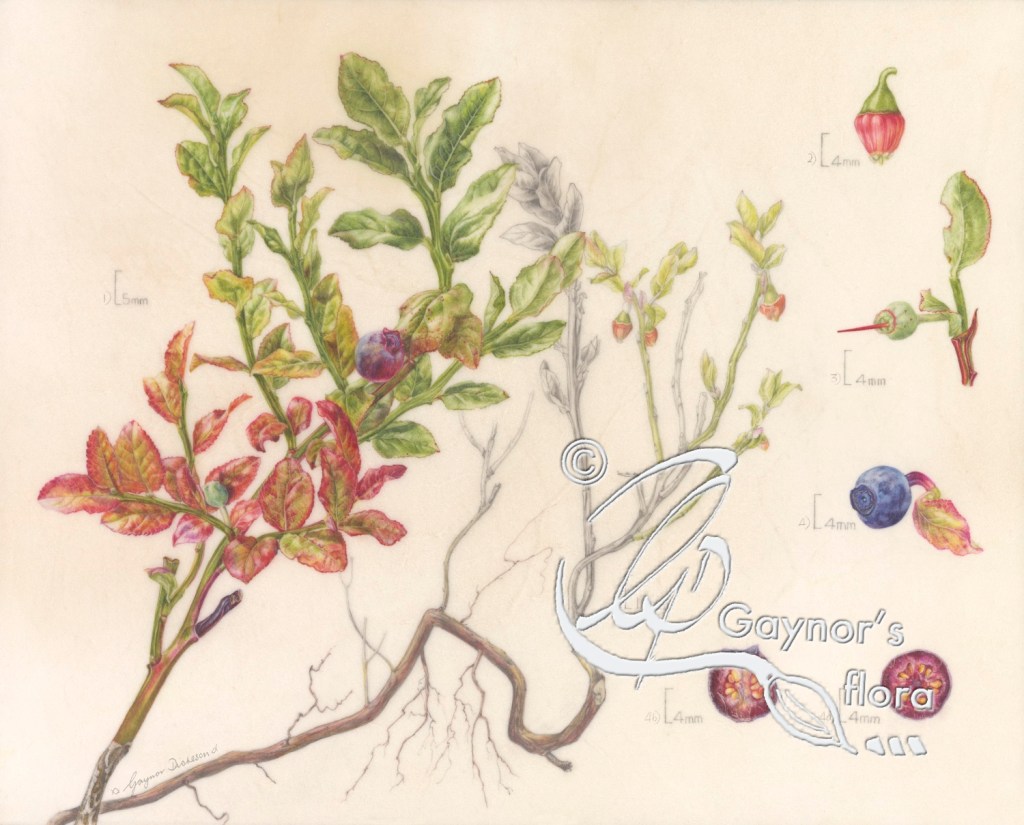
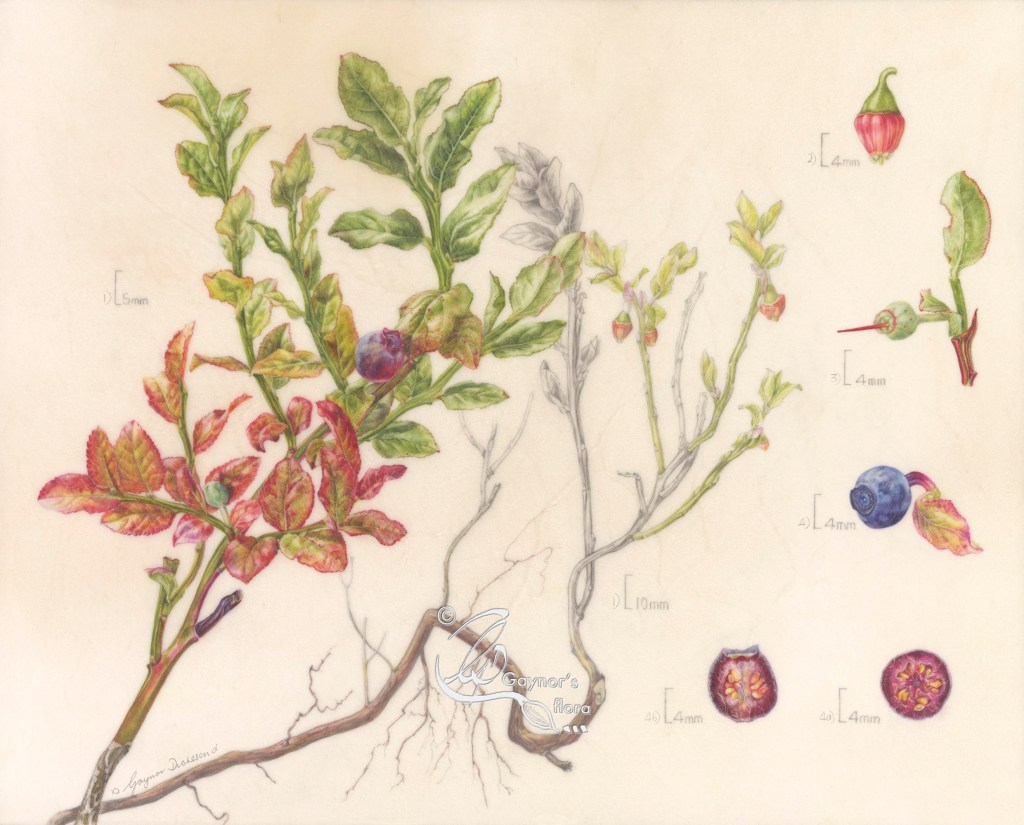
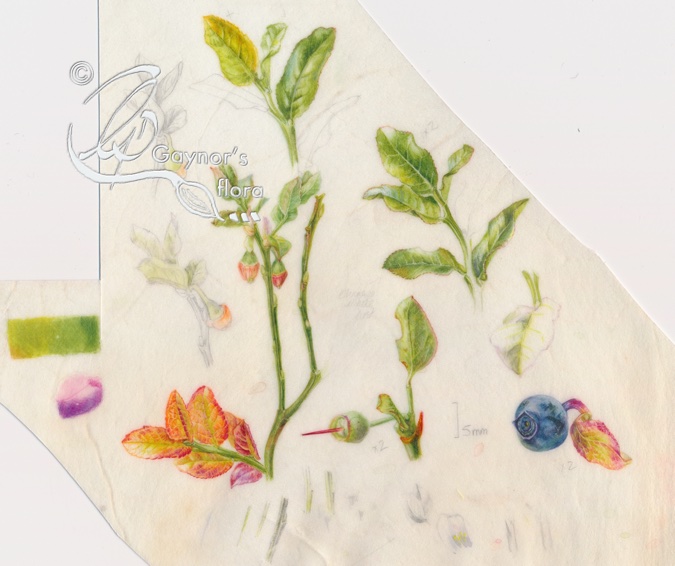
5. Vaccinium myrtillus – Bilberry – Blåbær Watercolour & graphite on vellum.
March 2022

1) Habit
2) Flower
3) Immature fruit
4) Fruit
4a) TS fruit
4b) LS fruit

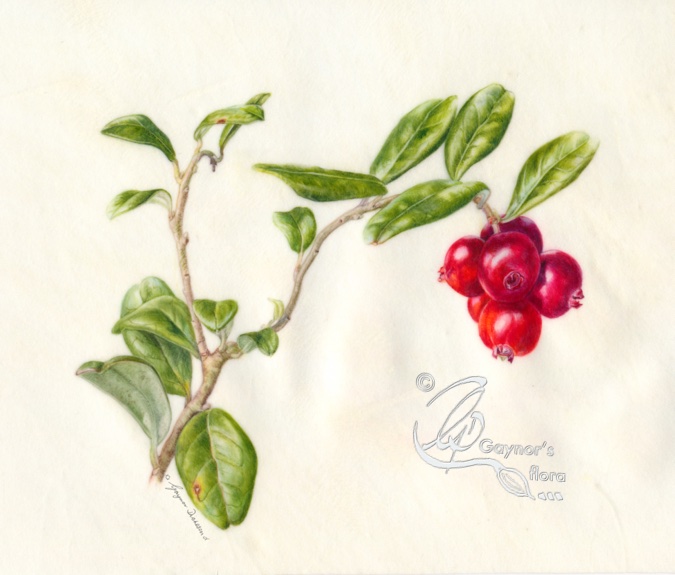
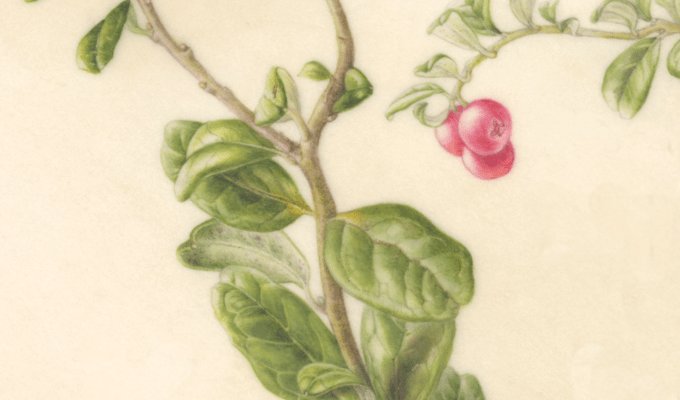
6. Vaccinium vitis-idaea  – Cowberry/Lingonberry -Tyttebær
Watercolour & graphite on vellum.
November 2022

1) Habit
2) Flower cluster
3) Fruit
3a) TS fruit
3b) LS fruit

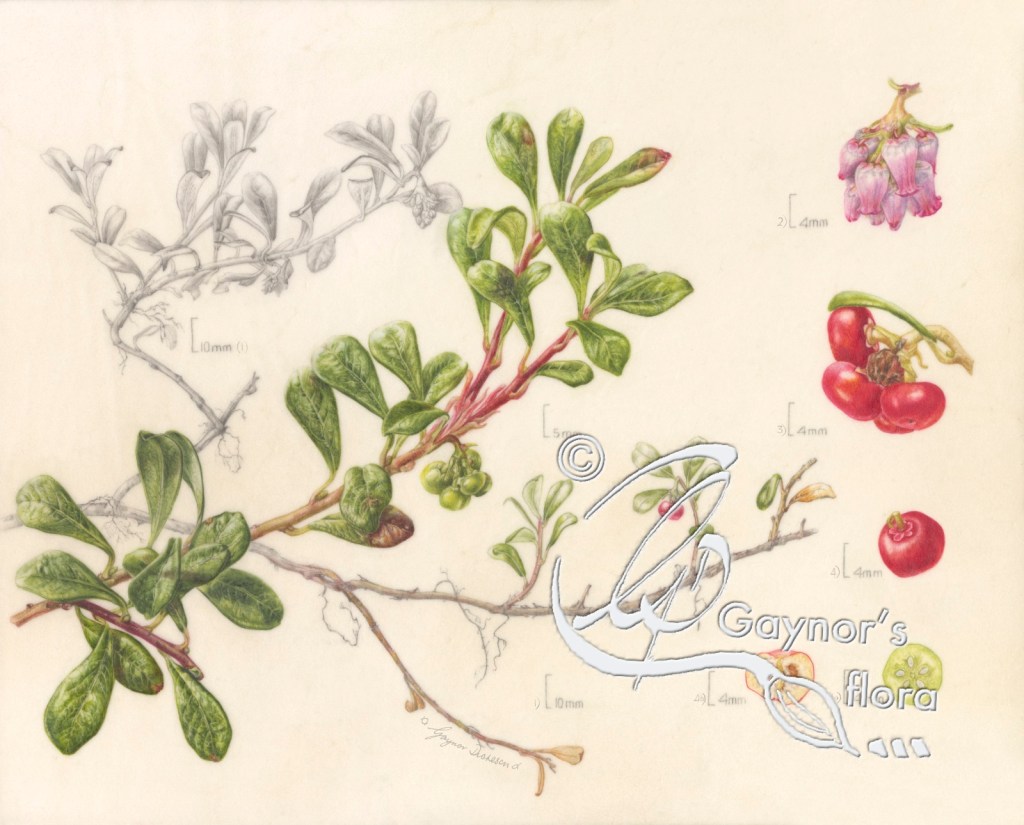
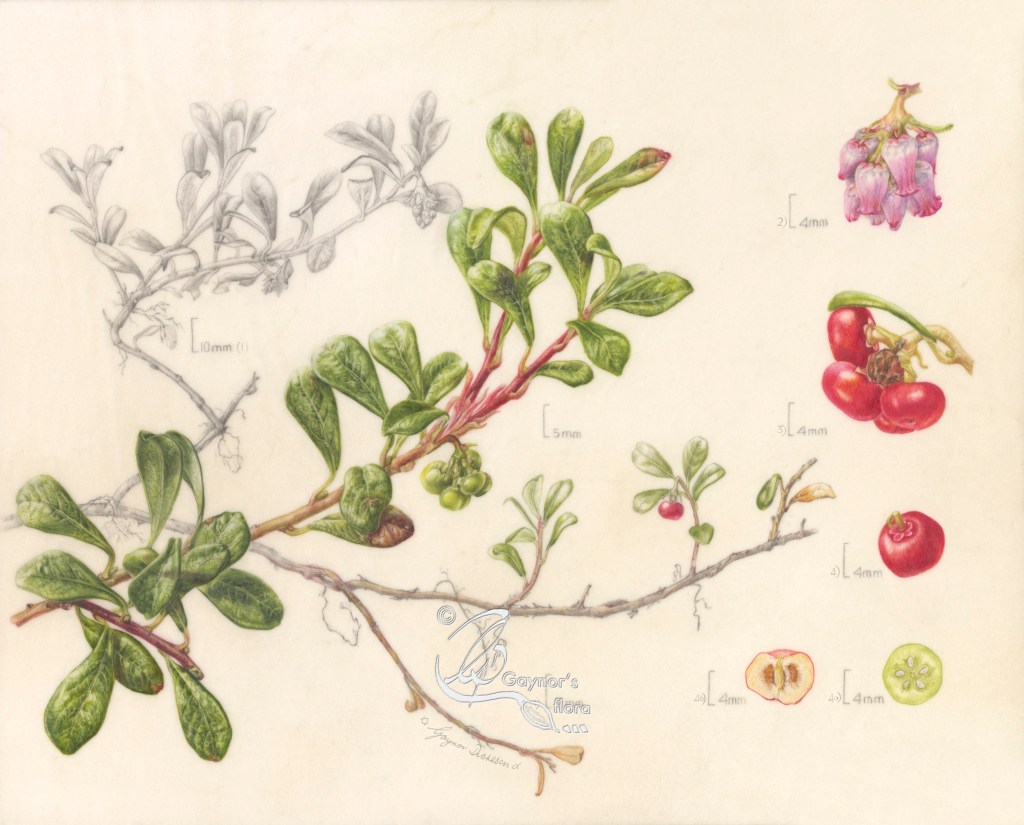
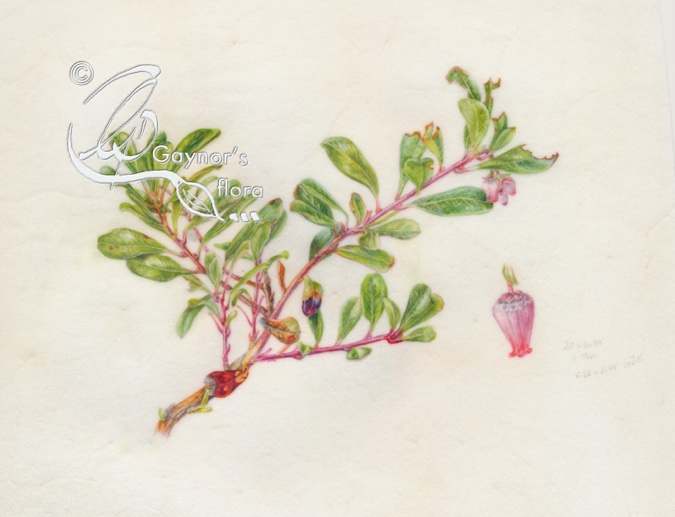
7. Arctostaphylos uva-ursi  – Bearberry – Melbær
Watercolour & graphite on vellum.
October 2022

1) Habit
2) Flower cluster
3) Fruit cluster
4) Single fruit
4a) TS immature fruit
4b) LS ripe fruit

If you have read the blog series you will understand that the Cloudberry and Small cranberry enjoy the wettest environment – bogs and marshes, whilst the Bearberry is often found on a sandy forest floor. The other species are found in various types of environment from damp woods to harsh mountain tops. Some, like the Bog bilberry will grow very well just about anywhere as long as it has water and plenty of sun.

All of the plants in this series live in the Subarctic part of the world and have always provided a lot of nourishment for those living in the far north, the rest of us a little further south and of course animals that roam the area.

Some of the plants typically don’t grow in certain areas as witnessed by the difficulty I had finding the Bearberry. In very hot and dry years some plants produce next to nothing; Cloudberry and Small Cranberry are good examples. Can you imagine the risk that Global warming brings to these plants as well as to us. The warmer the planet gets, the more further north these plants are likely to move making it even harder for us and the animals they support, to find them. As it is, plants that can normally be found further south in Europe, are now beginning to appear in Norway; their pollinators moving with them and having a negative effect on the species that belong.

When choosing to study and paint these plants I didn’t realise how much I would learn about them. I loved the plants (and their fruit) before this, but now have so much respect for them and the environment in which they grow. I hope that I have been able to pass on at least a smidgen of this.

Thank you for following this series.

Latest news: I am really pleased to say that following the judging process yesterday, 14 June 2023, the judges decided to honour me with a Silver Gilt medal. The award ceremony will be held this evening at the Saatchi Gallery during the preview to the exhibition opening tomorrow.

I look forward to getting detailed feedback about my exhibit from the judges this afternoon.
Foraging plants in the norwegian mountains – 18. Bog bilberry Pt.2

The lake about 100metres above the rented cottage.

I just can’t resist showing you how beautiful Norway is, with loads of clean water and little pollution. I hope that this will always be the case even though we feel global warming making its presence known here.

Planning The Vaccinium uliginosum artwork

The overall blue-ey nature of many bog bilberry plants

Obviously my knowledge of the Bog bilberry was one good reason to include it in this series of paintings on vellum, but its similarity to another plant in the series was another good reason. 
In the previous blog of the series, no. 17, I showed a picture of this species in a typical habitat with Bilberry, Mountain Crowberry and Cloudberry, one can see how different the Bilberry and Bog Bilberry is – at least in the autumn.

The picture here taken in August shows the overall blue-ey nature of the species when a lot of plants are together. By this time the red edge to the leaves has all but disappeared except for on new growth.

I started the sketch page in July 2017 although I had done the odd sketch before this. As with my other species I collected as much information as I could.

Researching the plant before actually drawing is important. I was able to get hold of a series of books called Norges Flora by Knut Fægri. The books are quite old but the description of habitat, scientific information and names still holds true. In fact these books gave me more information than I found anywhere else – unless I went into scholarly works!

The information in these books also told me what to look for – so much so that I really had to concentrate on the aim of the series rather than delving deeper. I have a tendency to want to do this and I am frequently at risk of doing too much: My vellum blocks would definitely not have been large enough. I just wish I had been able to own the books, but they were a loan from the library in Eggedal, a village on the way up to the cottage.

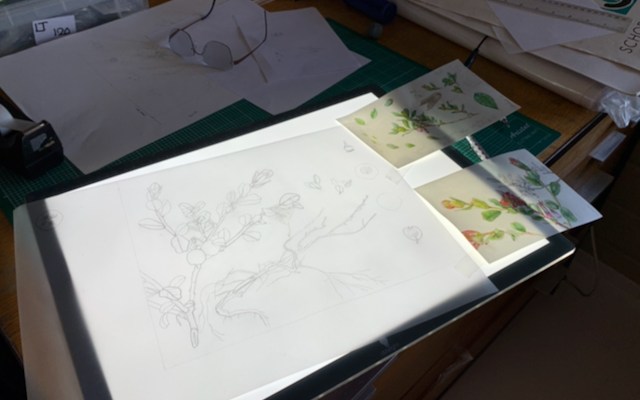
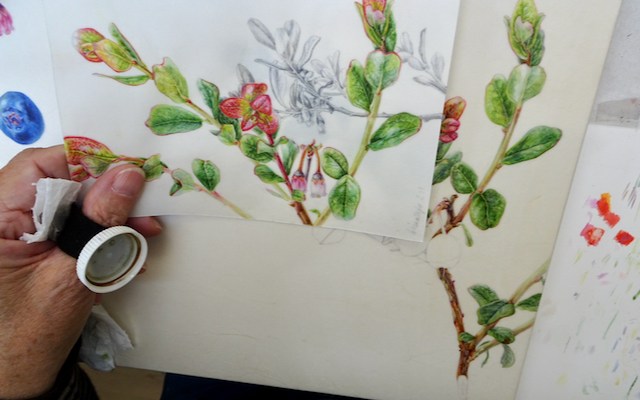
Once I felt I had enough sketches to work from I arranged the most important ones into a composition I was happy with. To the left is the Bog blueberry tracing on the Lightbox with the samples I had already done.

By the time I got to the artwork on vellum, I needed branches and fruit to paint from. Luckily enough we found an area about an hour from where we now live, therefore it wasn’t too bad to get there and back if I needed anything. But best of all, it was also a very good area for finding plenty of Lingonberries; Christmas dinner was now sorted!

The final painting on vellum was started  in September 2021 and except for the scalebars, was finished in December 2021.

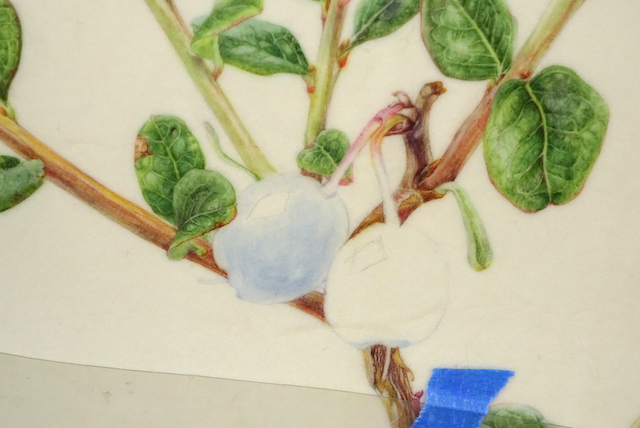
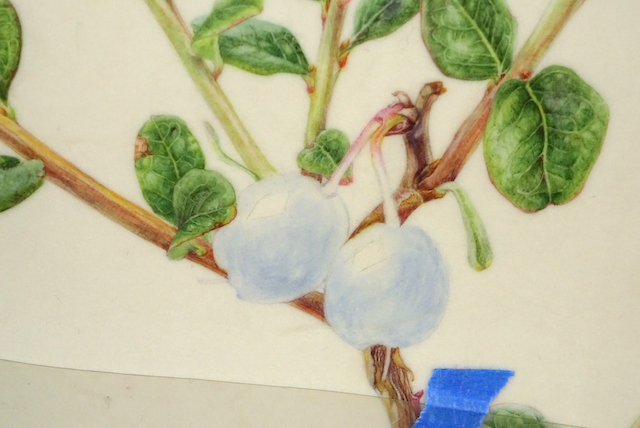
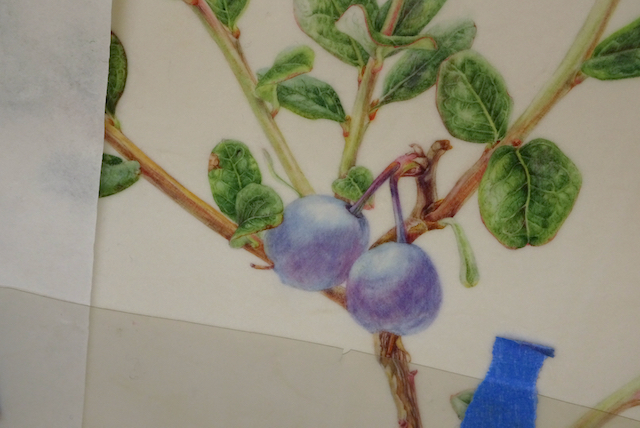
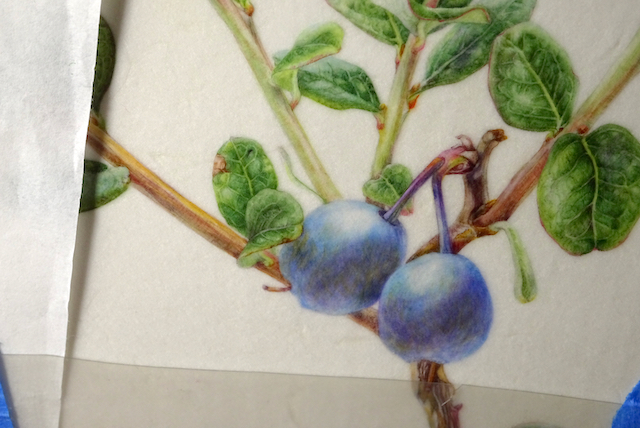
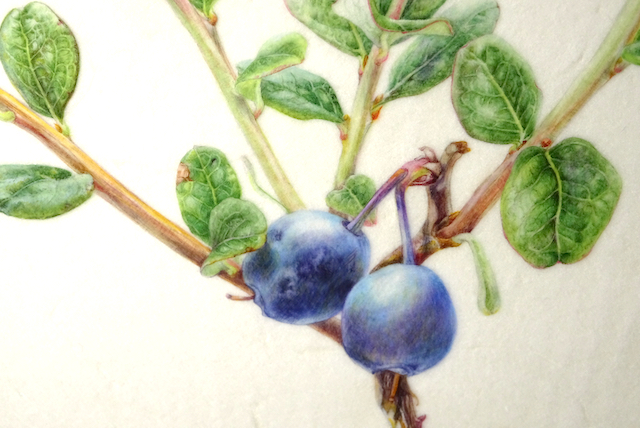
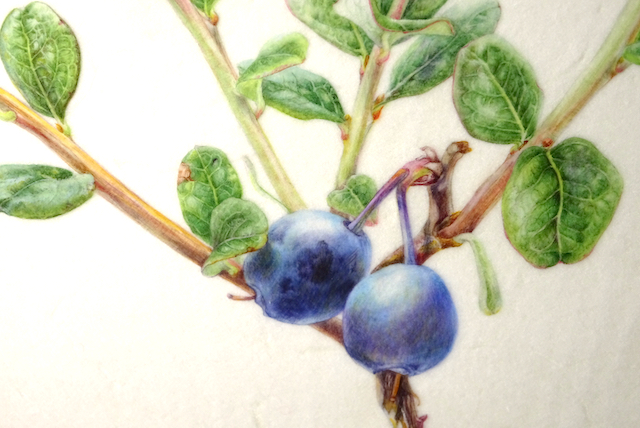
Although I am attaching a slideshow of the final work process, I know that many have issues with the bloom on fruit. So here a few photos so that you can have time to study my process if you want to.

The native range of this species is Subarctic & Temp. Northern Hemisphere including both Great Britain and Norway. It is a subshrub or shrub and grows primarily in the subalpine or subarctic biome. 

Kew – Plants of the World Online o

Bog bilberry muffins Recipe

Makes 12

2 medium eggs
150 ml sugar
250 ml plain flour
1 tsp baking powder
2 tsp vanilla sugar
1 tsp cardamom seeds (from about 20 pods), ground
150 ml sour cream or plain yogurt
50 grams butter, melted & cooled
200-300 ml bog bilberries (or bilberries or blueberries)

Whisk eggs with sugar until pale and frothy.
Mix the dry ingredients. Add to the egg mixture together with sour cream and melted butter. Fold in the Bilberries.
Fill 12 hole muffin tray and bake at 225 C for 13-15 minutes, until muffins have risen and turned golden brown.

The next blog post about the Mountain crowberry will be published on 21st May 2023.

Foraging plants in the norwegian mountains – 17. Bog bilberry Pt.1

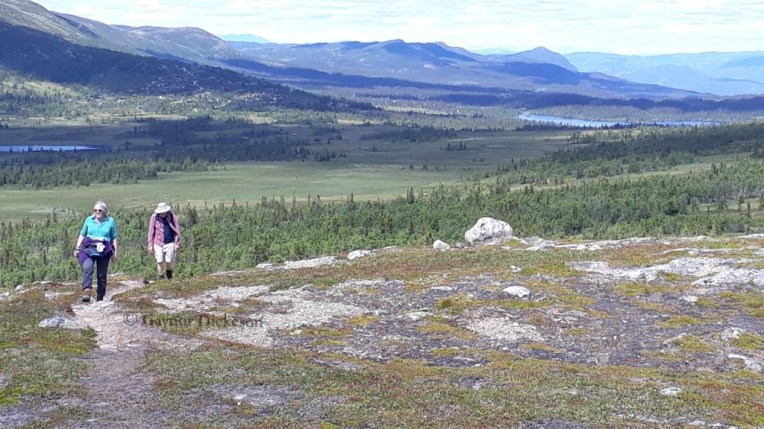
Walking over a mountain top on the other side of the valley from our rented cottage.

The English common name for Vaccinium uliginosum is bog bilberry and one of the Norwegian names is skinntryte.

All the Vacciniums are heathers and in fact all in the series except for the Cloudberry, are in the Ericaceae family

I feel that both the Bog Bilberry and the Bilberry are plants I have always known, although I didn’t meet them until I was 20 years old on my first visit to Norway. Norwegians refer to Bilberries as Blueberries (direct translation is blue berry); Very confusing when these days it is very common to be able to buy Blueberries in the shops; which they actually call blueberries. But they are yet another Vaccinium species!!

Are you still with me!

The scrub on the edge of the marsh containing a mix of some of the species chosen for the series.

The Bilberry and Bog Bilberry cross over onto each others preferred growing patches, and the berries look similar at first glance, although it is fairly easy to pick over a full bucket from a foraging session if needed.

The Bog bilberry seems to grow better amongst the scrubby flora seen across a marshy landscape, but smaller examples also seem to survive on rocky mountain tops where there is a sparsity of nourishment; I’m not sure that they produce much fruit though.

It is easy to see the difference in the growing habit between a Bog bilberry and a Bilberry. For the former, the stem is woody whereas it is green and angular for the Bilberry.

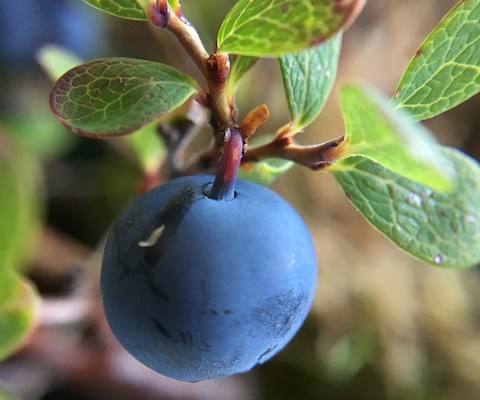
The Bog bilberry fruit at 8-12mm is larger than the Bilberry and does not have the strong ‘good for you’ Anthocyanin content that Bilberries have. The flesh of the fruit is pale and the skin is blue with a bloom.

Size of a bog bilberry.

But don’t worry if you have the opportunity to pick both fruits where you are, both are just as edible.

I will be publishing the blog about the Bilberry on 25th May, so be sure to compare the fruit in these blogs and the full painting at the end of the series.

As well as the fruit appearing bluer than Bilberries, the leaves of the Bog bilberry have a slightly different shape and colour. Look at the picture above where you can see both bog bilberry and bilberry leaves side by side and further down where you also see a mix of different species.

Bog bilberry leaves are seen as blue-green, the shape is long and oval, they are slightly thicker than the bilberry with a very visible network of veins . New leaves tend to have a red edge which gradually changes to an overall bluey-green as the season progresses. But constant sun can keep the leaves fairly red towards the tip.

Autumn bog blueberry plants with fruit together with the changing colours of the dwarf birch.
The twin flowers at the end of a shoot.

The flower is typical for the heather family and can be recognised as such almost immediately. But whereas the Bilberry flower is solitary in its leaf axile, the Bog bilberry flowers appear in pairs. I have seen it described on several occasions as looking like a set of testicles!

Getting on to painting this species, I spent a while on researching and drawing sketches of this plant – which I will talk about in my next blog.

But I did at least a couple of trial pieces on vellum where the first one felt very much like a botch job – but I learnt from it. The second one was very useful and helped me to decide what to do – and of course what not to do.

I used this original set-up to to paint the final picture, but as I have described earlier, I can use a sketch and paint from different leaves and branches in front of me. This is exactly what I did for this section of the painting. The final painting is a little different with a focus on the berries rather than the flowers.

The continuing blog on the Bog bilberry is planned for 18th May – the day after the Norwegian national day!

Foraging plants in the norwegian mountains – 11. My working practice

Using a lightbox to make an overall transfer for the bog bilberry picture.

Transfer process

For this series my transfer process hasn’t been very straightforward. Once I knew which sketches I wanted to repeat in the final artwork, I made line drawings of each, scanned them and arranged them on my computer, constantly comparing and assessing. Once I was happy with each composition, I traced each sketch into its place on a sheet of tracing paper (see picture at the top), then transferred the composition to a vellum mounted block. In some instances, I continued to make further adjustments underway.

I also made separate tracings of each element in the design and used these once the overall placement was sorted.

To make a transfer I trace the line drawing onto the right side of tracing paper, and then repeat the process carefully and with a sharp pencil on the backside of the tracing. This allows me to use the tracing several times should it be necessary and leaves only a light line of graphite on my artwork. 

This way of transferring reduces the amount of excess graphite that tends to float around. The pictures to the left demonstrate the transfer process. 

See links to videos and blogs giving more detail on my ‘Online Tutorials’ page. https://gaynorsflora.com/tuition-2/my-tutorials/. ‘How to trace an image to art paper’ contains links to two blogs and a video.

Painting process

Before I start to paint, I arrange some form of cover so that only the section I’m painting is available to me. I might use a sheet of tracing paper, layout pad or clear acrylic sheet – or even a combination. Its easy for accidents to happen, the slip of a brush  or even dropping a laden brush onto the artwork. Accepting this and preparing against there being too much damage is essential for a good result. I have spent time scrubbing out mishaps and I’m sure many others have too.

Bog bilberry covering to protect rest of artwork from splashes and dropped brushes!

Here is my covering for the Bog bilberry picture. I have used a combination of acrylic sheeting and layout paper whilst trying to avoid too much taping directly to the vellum.

Painting on vellum

Painting on vellum is very different to painting on watercolour paper as the pigment lies on the surface rather than absorbing into the paper. Therefore except for the very first layer it is important to paint as dry as possible, otherwise any other layers will lift the preceding layers.

Arctic Tern fired on Ceramic. From an island reserve in the Stavanger fjord in 1989

In some respects, it is a little like painting several layers on porcelain – as I did in the 80’s. Porcelain is very smooth and carefully layering colour on top of an un-fired layer is paramount, or the lower layers are whisked away.

For painting on vellum I use a variety of brushes depending on the level of detail. My first ‘go-to’ brush is a Rafael Kolinski sable brush with a beautiful point; series 8408. The other makes of brushes I use are DaVinci 1505 and Rosemary brushes series 8 and 66. They are all kolinski sable. To lift out I use various synthetic brushes. 

Importantly for all these brushes is a curl free and sharp tip. Brushes wear quickly and the long tip disappears gradually – but the brush still has many useful functions, so they almost never get thrown away.

The watercolours I use are all artist quality but from different suppliers. Most are single pigment and transparent. I have occasionally used Chinese white as an underlay in areas where I need to control ‘lifting out’ as in the Cloudberry flowers.  When lifting off it might leave  a very slight sheen. If I don’t lift the Chinese white off, it mixes with the other colours and dulls them, therefore I have to lift off very carefully to create highlights.

In my next blog I talk a little about the opportunities I had to learn about applying graphite to vellum – That is planned for 27 April 2023.

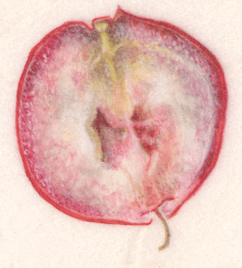
This is a very short YouTube slideshow from a demonstration I made to some of my students when they were learning to paint on vellum. I painted the tiniest of crab apples on a vellum remnant.

Foraging plants in the norwegian mountains – 10. My working practice

Composition

Do these three pictures have good compositions? It is not easy for you to judge from these as composition is the area within the mount edge – the image and background.

  • Benton Iris ‘Farewell’ is Watercolour and graphite. The painting is part of the Cedric Morris Florilegium.
  • Dying Rosa rugosa is in Watercolour. It was one of the first paintings I did after returning to Norway. The sprig was sticking up above the snow, so it shrivelled quite fast.
  • Rhododendron impeditum is also watercolour and graphite. This picture is part of the Chelsea Physic Garden Florilegium.

Composition in botanical art is not necessarily very straightforward. As botanical art is ‘art’ it should have a main focal point that draws you into the picture. Once your eye is drawn into the picture, something needs to lead it around within that picture and prevent it from being lead off elsewhere.

On top of this, botanical art must be botanically correct. 

The first digital arrangement of my cloudberry sketches

Combining the art and botany for each picture is hugely difficult particularly when you have different sections telling a story about a plant. Having a series of plants in separate pictures that elaborate the story compounds the problem. 

To try and reduce the problem a little I started to arrange the pictures digitally. I scanned some of my sketches and moved them around within a 31 x 25cm area. It gave me something to think about when deciding what to include in each picture and how many more sketches I would need to get all the information I needed.

Scanning and arranging digitally gave me the opportunity to do something similar with my other species and the ability to compare them against each other. This composition looks nothing like the final one, but I kept rearranging until I was satisfied.

I worked hard to compose my set of pictures so that they looked a series. This can be quite difficult when some are from different families 

  1. Rubus chamaemorus – Rosaceae
  2. Vaccinium oxycoccus Subsp. microcarpum – Ericaceae
  3. Vaccinium uliginosum – Ericaceae
  4. Empetrum nigrum subsp. hermaphroditum- Ericaceae
  5. Vaccinium myrtillus – Ericaceae
  6. Vaccinium vitis-idaea – Ericaceae
  7. Arctostaphylos uva-ursi – Ericaceae

The first word in each species is the Genus name from which the plant is derived. Four are Vacciniums from the same Genus.  Six of the plants are from the Ericaceae (heather) Family and you can see this by the similarity of the flowers. One is from the Rosaceae(rose) family, and the stipules on the leaves (tags at the base of the leaves) is a clear indication of this.

Deciding the enlargement was relatively easy with the plants from the Ericaceae Family where the fruit is comparable. But as everything was larger on the Cloudberry picture, only the scale bars can give the size.

My aim with all the pictures was to let people see and understand the incredible flora and edible fruit available in the mountains. Many look at plants and think them pretty, or know where to pick certain fruits, but not so many study the plant and understand how intriguing it really is. This is an opportunity.

What to include in each composition.

I went through my sketchbook and made sure that I had enough information about each plant to fit on my vellum, mounted on blocks by William Cowley’s. I didn’t want to overcrowd each picture. 

The focus was the plant and its fruit, but one can’t do this without highlighting its flowers. I decided to introduce a picture of the flowers and fruit but restrict dissections to the fruit only. That is until I got to the cloudberry which was going to be the most difficult to integrate into the series. But it isn’t called ‘Mountain Gold’ for nothing.

In the end, all but the cloudberry picture included a branch enlarged and branches actual size to indicate habit. Each had an enlarged flower, plus fruit with both longitudinal (LS) and transverse sections (TS). These are the finished longitudinal sections from each fruit; the largest being the Cloudberry.

In the next blog I will be talking about my transfer process. This comes 23 April 2023.

Only Eight weeks until the RHS Exhibition at the Saatchi Gallery in London;

https://www.saatchigallery.com/exhibition/rhs_botanical_art___photography_show_2023

Foraging plants in the norwegian mountains – 7. History of the project

Above are the seven plants I chose with trial pieces on vellum offcuts.

The species I chose, with common names also in English and Norwegian

  1. Rubus chamaemorus – cloudberry -multe
  2. Vaccinium oxycoccus subsp. microcarpum – small cranberry – tranebær
  3. Vaccinium uliginosum – bog bilberry – skinntryte
  4. Empetrum nigrum subsp. hermaphroditum– Mountain crowberry – krekling
  5. Vaccinium myrtillus – bilberry – blåbær
  6. Vaccinium vitis-idaea – cowberry/lingonberry – tyttebær
  7. Arctostaphylos uva-ursi – bearberry – melbær

I have listed the plants in the order according to the type of ground in which they grow – from boggy to sandy:

  • The cloudberry and small cranberry often found intertwined together in the boggy moss of a swampy lake edge. 
  • The bog bilberry is more of a bush and guards the very marshy plants perching on rocks in the marsh. 
  • The Mountain crowberry grows in various areas from rocky outcrops at the edge of a swamp, to tiny examples without much soil, clinging to the rock on mountain tops.
  • The bilberry and cowberry are generally in a similar habitat in damp woods and forests; the cowberry can be the main plant on an old wood ant heap often with bilberry and mountain crowberry.
  • Bearberry grows in sandy areas on the edge of forests or creeping down over smooth rock.

The next stage of this blog goes into my working practice for this series. After which I will talk a little about each of the species and how I painted the final pictures. I will use the above order of plants as I would love others to learn more about them, where to find them and their uses. 

The next blog will be on 13 April 2023.

Foraging plants in the norwegian mountains – 5. History of the project

Since moving back to Norway there have been two bumper years for Cloudberry fruit and this is why we have so much in the freezer now.

But back to my sketches that were incomplete right up until last summer (2022). This plant in particular is not easy to find if you don’t know exactly where to look, and even then you might miss the right period of time.

We took a couple of long day trips into the mountains to look, and we eventually found what was missing. As well as a lot of driving, I extended the workday when I got back home. The flowers don’t last long and whilst I had them, I needed to dissect and sketch with measurements before going to bed. 

Robin birdwatching

The typical demands to a botanical artist. But luckily during the summer months we have a lot of daylight hours in southern Norway – in fact around mid-summer the sky doesn’t really go dark. Birdwatching at midnight is different to say the least! The picture to the left is Robin birdwatching at 5 mins past midnight on the 12 June – still over a week to mid-summer!

The lesson learned? Make sure when sketching that you have the where-with-all to measure various aspects of your plant and to make accurate colour swatches.

Equipment for sketching outside

As you will see from the pictures at the top, sketching on location can have various problems, from ants still defending their old anthill, a very hard bottom rest and a helpful cat.

The anthills in the Norwegian forests can be huge, but so too can the ants. They have a large territory to look after and a lot of old wood to turn into something future generations of trees and ants can live off. But they do have a painful bite! One often finds several of the plant species I was considering, growing on them. One often finds lingonberry, bilberry and mountain crowberry, well established on them. It also suggests what some of the ants transport to their home.

When I am out sketching in nature I minimise the amount of equipment I have with me. I try to keep everything in the same sketchbook and for watercolour use a Stillman & Birn, Zeta series. It has stood up well to the battering it has had and takes the watercolour washes well. 

Normally I use a bum-bag when walking not too far and it will contain this kit:

Of course I go nowhere in the mountains without my mobile phone, but these days they are much more than a phone or safety net. The Victsing 3-in-1 mobile phone camera lens was introduced to me many years ago by Sarah Morrish and I use this to get the details not normally seen very well. In particular it enabled me to get a picture and draw the growing tip with flowers of the Empetrum nigrum subsp. hermaphroditum (mountain crowberry) . I keep a small piece of mm paper with it to measure within the photos.

My palette is an old one with the original student colours removed and replaced with artist quality colours. I use transparent single pigment colours and normally have a couple of yellows and Quin Gold, Permanent Rose, Perylene Violet, Purple, A cold and warm blue and this time a single pigment green.

The pencils preferred are a 3B and HB as they are easy to lift if necessary, plus a single black fine liner pen. I only need to sharpen one of the pencils so have a sharpener to fit that. Otherwise travel brushes, ruler and erasers, magnifying glass, small water holder and kitchen towel. 

Sketching in the New Forest in the UK. I got a tick bite this time, but it wasn’t infected.
A dire warning; this is what happens when an infected tick bites. This is Robin’s leg last year.

If I take specimens with me, then I have a small plastic bag ready and can add some of my painting water. Sketching back in the cottage or at home means that I have all my equipment available.

I nearly forgot an important addition to the list above; Insect repellant because of the ticks, and sun screen, particularly here in Norway where the air is so clear.

The picture to the left is Robin’s leg last summer after a tick bite! We have a lot of dear and ticks, but doctors are very aware of the dangers and are quick to prescribe treatment.

A serious start on the series in 2017

My friend’s cottage at 800m over sea level.

By 2017 I still hadn’t decided which plants I was going to paint and this first year we borrowed a cottage from one of my oldest friends in Norway. The cottage was at about 850m over sea level. 

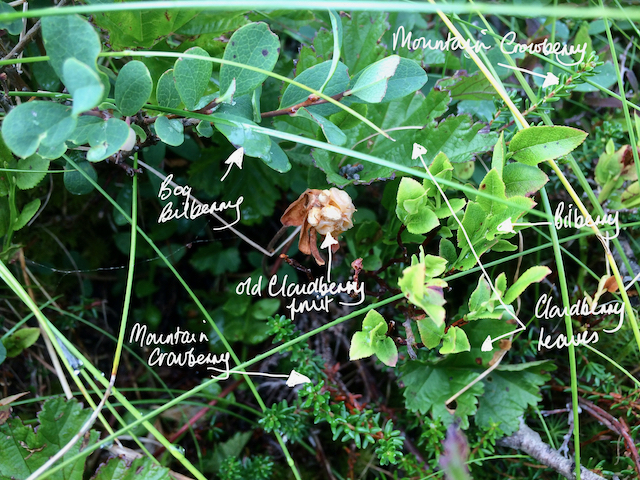
Around the cottage we found Rubus chamaemorus (cloudberry), bilberry (Vaccinium myrtillus), cowberry (Vaccinium vitis-idaea), bog bilberry (Vaccinium uliginosum)and mountain crowberry (Empetrum nigrum subsp. hermaphroditum). This was a pretty good start. 

Notice that three of them were Vacciniums – from the heather family. In fact the Blueberries you buy in the shops are yet another species (Vaccinium corymbosum) but they are farmed and not included in my choice.

Importantly I hadn’t found a bearberry (Arcostaphylos uva-ursi) which was partly the reason for choosing to do this series.

But there were loads of other lovely flowers such as Heath spotted orchids, geraniums and various insectivorous plants such as the Common butterwort. There was also plenty of Andromeda polifolia (bog rosemary) in the moss and amongst the new Cloudberry leaves. When seeing it growing at the Chelsea Physic Garden in London, I realised it was an opportunity to paint the species and the resulting picture resides in the Chelsea Physic Garden Florilegium collection.

Andromeda polifolia – Bog Rosemary

This continues on 6 April 2023

When I wasn’t walking in Norway …

…..I was either hunting for plants or painting.

I had a list of plant detail that I had worked out I needed to complete the composition planning for my series of pictures. My vellum size for each piece is 25 x 31 cm – which I suppose relatively speaking is quite small. But all but one of my plants is very small with leaves varying from 2-6mm long on the Vaccinium microcarpum, to the Rubus chamaemorus where the leaves vary hugely in size.

Vaccinium microcarpum – Small Cranberry – Leaves 2-6mm long.

Impetrum niger ssp. Hermaphroditum – Crowberry – Leaves 3-6 mm long

Rubus chaaemorus – Cloudberry (image is 13cm high)

I decided that rather than work on all seven pictures at once as I have done so far, I would work on half this year and the rest next year. For all of them I needed to do some colour matching on vellum as this will be different to the colours I have used on paper. You have already seen the small piece I did on the Cranberry a couple of blogs ago. You may also have noticed the difference to the actual flower size (tiny) and the painting  which I did at twice the size.

Luckily enough although there is a slight difference in the terrain from which each of the plants come from, we have found each species within walking distance of the cottage in which we have been staying. The Cloudberry and the Cranberry can be found intertwined with each other in the soggy sphagnum moss – but not always. The Bog Blueberry (Vaccinium uliginosum) comes from a similar area, but I have seen it reaching up the side of rugged outcrops. The Crowberry can be found all over the mountains although the Ssp Hermaphroditum can only be found at higher altitudes. The Bilberry can also be found pretty well most places, but doesn’t seem to be above the tree-line and doesn’t seem to like really boggy areas. The Cowberry – Lignonberry (Vaccinium vitas-idaea) is spread on ant mounds and rocky outcrops.  Common Bearberry (Arctostaphylos uva-ursi) likes much drier conditions and is often found in pine woods. But we did find an example not far from the cottage. Last year Robin drove about 150km to find a spot that I knew about!

Below is the colour sample of the Bog blueberry done this year. The very new new leaves start out quite red and as they get older they become bluer and stiffer. Sorry the photo is a little dark.

Vaccinium uliginosum – Bog blueberry – Watercolour on vellum 5×7″, painted twice natural size.

Go back

Your message has been sent

Warning
Warning
Warning
Warning

Warning.