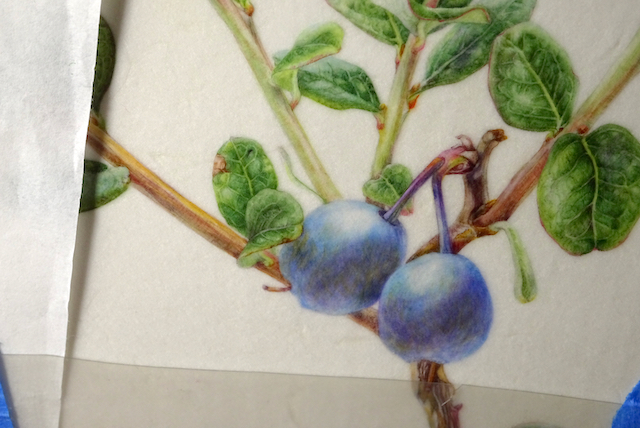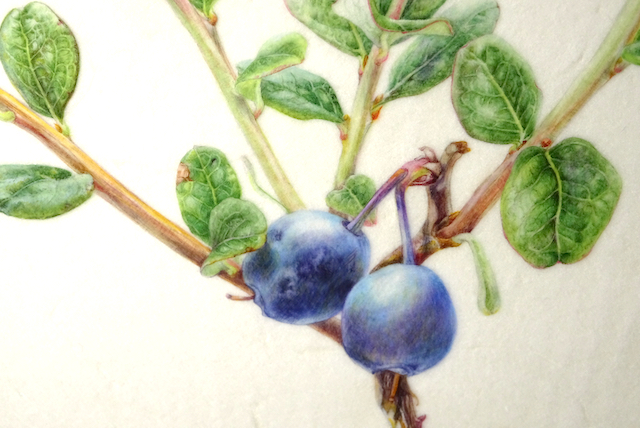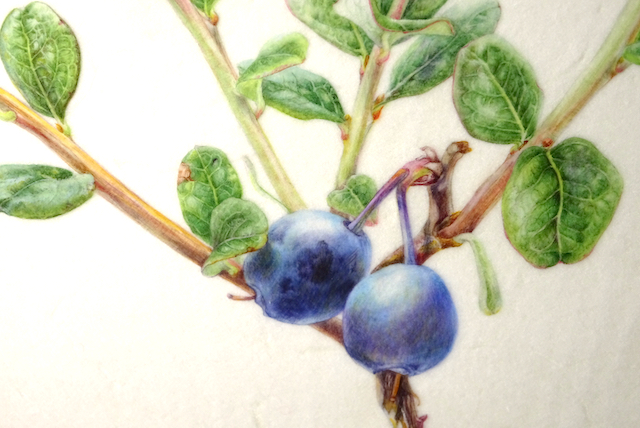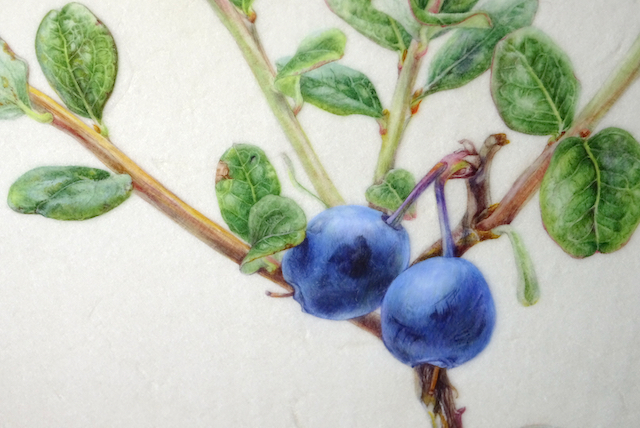
Foraging plants in the norwegian mountains – 26. Bearberry Pt. 2

Depending upon where one lives and picks fruit in Norway, some people are not aware of the bearberry and its identification problems. In fact, initially I had real problems finding an example of the bearberry to draw from.

The first find of the Bearberry plant in 2017

Many years ago I had experienced the misfortune of mixing up the two berries and knew that they could grow in similar locations. But to begin with I didn’t find any near the cottage we had rented. We therefore went on a field trip in the car and drove to an area where I knew they had grown 50 years before. Unfortunately, things had changed, and we found houses instead!

Eventually, in the next valley, we found both bearberry and lingonberry growing together on a sandy forest floor.

The following year in 2018 my poor husband enjoyed a solo 200km return journey to get a sample for me! Fortunately I was using GPS to record the position of every specimen found and he used this to find the forest area.

It was with relief that in 2019 we eventually found some growing very well, close to the main road below our rented cottage up in the mountains. Now I could truly say that all of the plants were from the same area!

Bearberry sketch from my ‘perpetual diary’

I did quite a few different sketches of this plant and like so many of the  plants in this series, found that it often starts setting its buds in the autumn in preparation for the following season.

I therefore decided to wait until the following year to try and get an immature fruit. As it happens, I had to wait four years until I could get a sample at the right level of maturity. But at least I managed it and got some good detail.

Bearberry sketchbook page. As usual a lot of research found space along the bottom of the page.

But I think one of the biggest headaches when collecting information was doing a transverse section (TS) of the fruit. The fruit contains relatively large hard seeds, as it is a stone fruit. Carrying out a LS on a ripe fruit was simple as I had no need to cut through any seeds.

But the TS was another kettle of fish! Each seed was about 2.3 mm long and very hard. There was no way I could cut through this without crushing the whole fruit and destroying the chance to draw this section as I had for every other picture. 

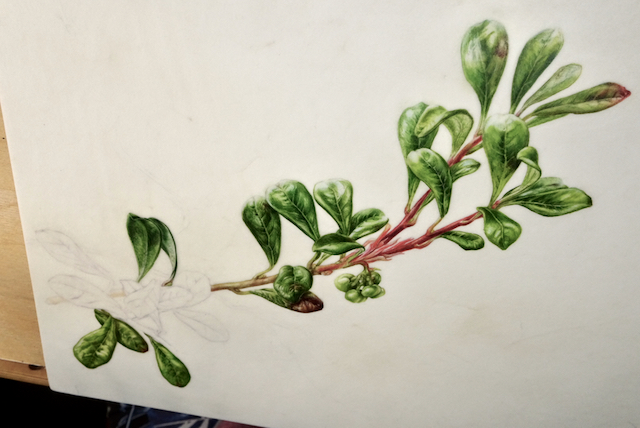
My trial piece on vellum helped me with my colour decisions for the final artwork. I started the sketches in 2017 and in June 2022 I started the final piece, finishing it in October 2022. 
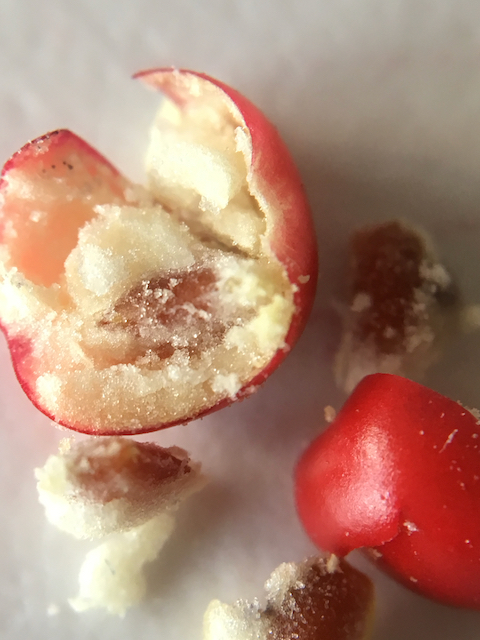
A squashed TS!
Bearberry trial piece on vellum

The native range of this species is Subarctic to N., W. & Central U.S.A. including the UK and Norway.  It is a subshrub and grows primarily in the temperate biome.

Source: Kew – Plants of the World Online

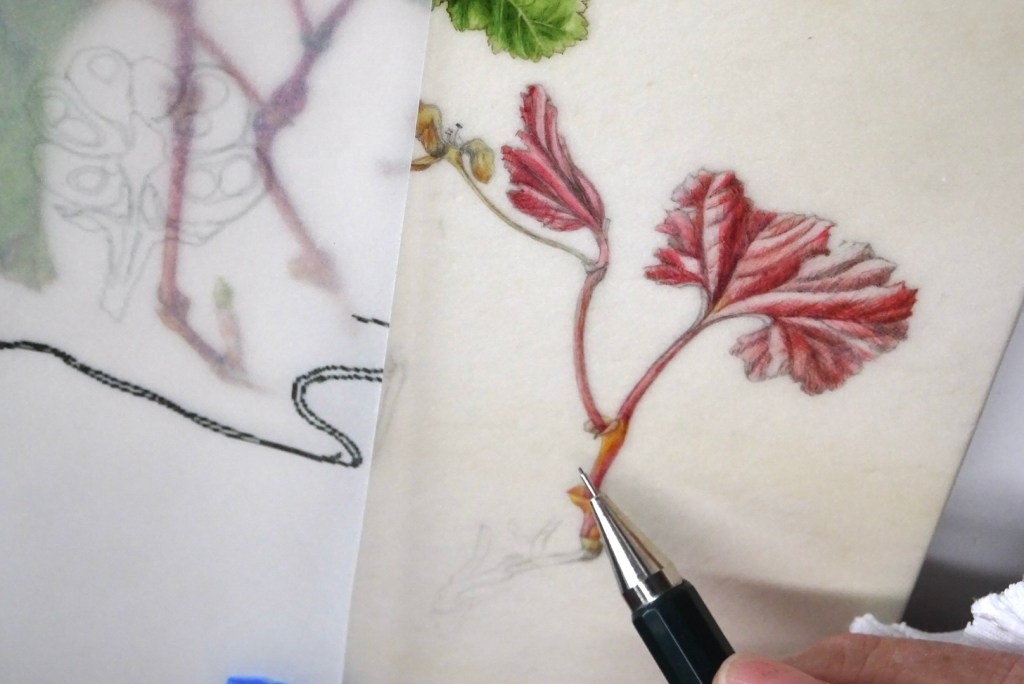
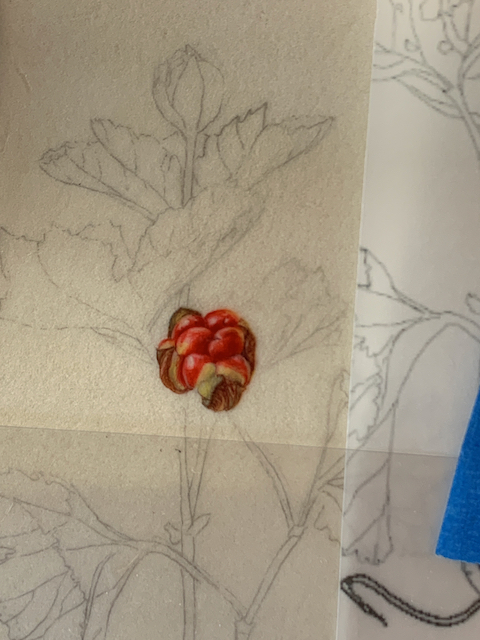
The photos above are a quick reminder of my process for this series. The various elements are traced to the vellum block and sometimes I go over these with a non-permanent watercolour outline. The main branch has generally been completed at twice the natural size and the sections in graphite or graphite and watercolour wash are normally natural size to show habit. Graphite is used to allow these sections to fall into the background making the overall picture less heavy.

Bearberry leaf tea infusion

Pour 150ml of boiling water over 2.5g of finely chopped or coarsely powdered, fresh or dried bearberry leaves and strain after 10 to 15 minutes. If you want to keep the content of tannins as low as possible, prepare a cold-water maceration. To do this leave the leaves in the cold water for 6 to 12 hours, then strain and heat the tea.

Uses

Inflammatory diseases of the urinary tract – NOT KIDNEY problems – “if treatment with antibiotics is not necessary.” Bearberry leaf infusion is classified as traditional herbal medicinal. Based on many years of experience, bearberry leaves can be used to treat symptoms of recurrent cystitis (e.g. burning sensation during urination and/or frequent urination in women), if there are more serious causes or symptoms remain, seek medical attention.

Tea infusion: drink a warm cup of bearberry leaf tea up to 4 times a day;

See https://arzneipflanzenlexikon.info/en/bearberry.php for more information.

Bearberry preserve

Ingredients:

  • 2 quarts bearberries, rinsed and without stems
  • Sugar (see instructions for amount of sugar)
  • 1 teaspoon lemon juice
  • 1 package pectin (about 3 ounces)

Instructions:

Put the berries in a pot and cook over medium heat until soft; about 5-10 minutes. Crush the berries, then run them through a sieve or cheesecloth to remove the seeds. Retain as much of the pulp as possible.

Return the juice and pulp to the pot, adding one cup of sugar for every cup of juice and pulp. Add the lemon juice, mix thoroughly, and heat to a boil.

Boil for a minute or two, then stir in the pectin. Allow the preserves to cool and set.

www.virily.com

My last blog about this series of pictures is scheduled for 15 June 2023. It is the day we get the results of the RHS judging, so I hope to include my result. I will show the final pictures which I have been keen to conceal until the judging process is complete.
Foraging plants in the norwegian mountains – 18. Bog bilberry Pt.2

The lake about 100metres above the rented cottage.

I just can’t resist showing you how beautiful Norway is, with loads of clean water and little pollution. I hope that this will always be the case even though we feel global warming making its presence known here.

Planning The Vaccinium uliginosum artwork

The overall blue-ey nature of many bog bilberry plants

Obviously my knowledge of the Bog bilberry was one good reason to include it in this series of paintings on vellum, but its similarity to another plant in the series was another good reason. 

In the previous blog of the series, no. 17, I showed a picture of this species in a typical habitat with Bilberry, Mountain Crowberry and Cloudberry, one can see how different the Bilberry and Bog Bilberry is – at least in the autumn.

The picture here taken in August shows the overall blue-ey nature of the species when a lot of plants are together. By this time the red edge to the leaves has all but disappeared except for on new growth.

I started the sketch page in July 2017 although I had done the odd sketch before this. As with my other species I collected as much information as I could.

Researching the plant before actually drawing is important. I was able to get hold of a series of books called Norges Flora by Knut Fægri. The books are quite old but the description of habitat, scientific information and names still holds true. In fact these books gave me more information than I found anywhere else – unless I went into scholarly works!

The information in these books also told me what to look for – so much so that I really had to concentrate on the aim of the series rather than delving deeper. I have a tendency to want to do this and I am frequently at risk of doing too much: My vellum blocks would definitely not have been large enough. I just wish I had been able to own the books, but they were a loan from the library in Eggedal, a village on the way up to the cottage.

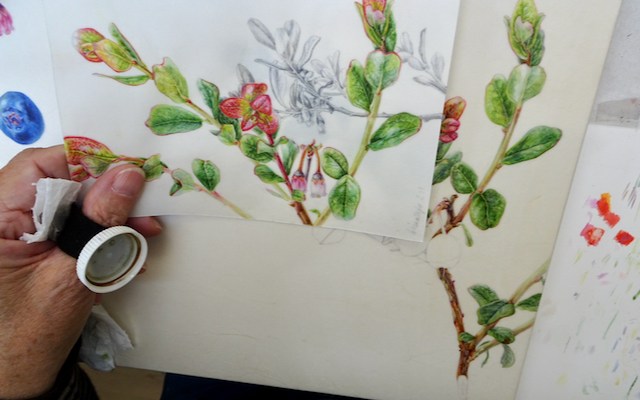
Once I felt I had enough sketches to work from I arranged the most important ones into a composition I was happy with. To the left is the Bog blueberry tracing on the Lightbox with the samples I had already done.

By the time I got to the artwork on vellum, I needed branches and fruit to paint from. Luckily enough we found an area about an hour from where we now live, therefore it wasn’t too bad to get there and back if I needed anything. But best of all, it was also a very good area for finding plenty of Lingonberries; Christmas dinner was now sorted!

The final painting on vellum was started  in September 2021 and except for the scalebars, was finished in December 2021.

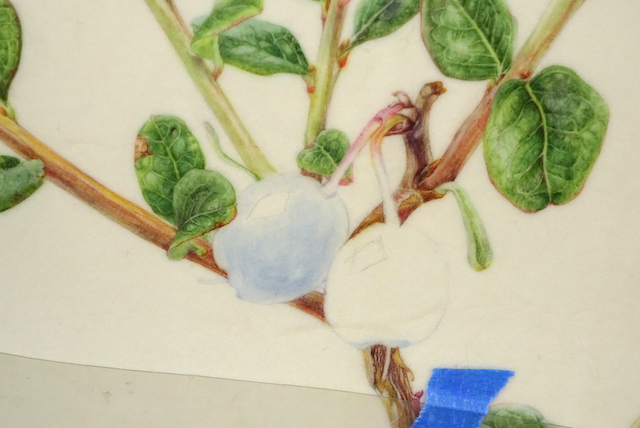
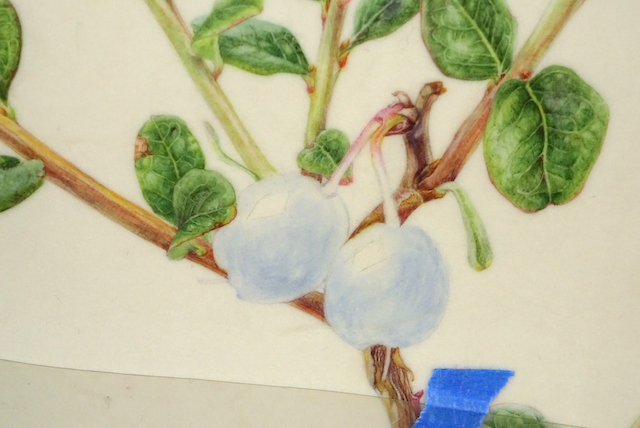
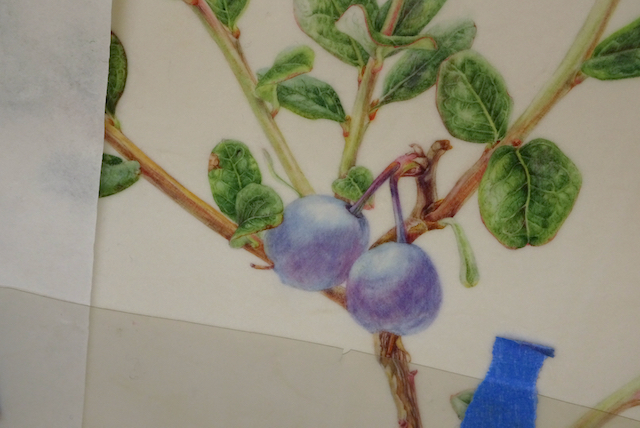
Although I am attaching a slideshow of the final work process, I know that many have issues with the bloom on fruit. So here a few photos so that you can have time to study my process if you want to.

The native range of this species is Subarctic & Temp. Northern Hemisphere including both Great Britain and Norway. It is a subshrub or shrub and grows primarily in the subalpine or subarctic biome. 

Kew – Plants of the World Online o

Bog bilberry muffins Recipe

Makes 12

2 medium eggs
150 ml sugar
250 ml plain flour
1 tsp baking powder
2 tsp vanilla sugar
1 tsp cardamom seeds (from about 20 pods), ground
150 ml sour cream or plain yogurt
50 grams butter, melted & cooled
200-300 ml bog bilberries (or bilberries or blueberries)

Whisk eggs with sugar until pale and frothy.
Mix the dry ingredients. Add to the egg mixture together with sour cream and melted butter. Fold in the Bilberries.
Fill 12 hole muffin tray and bake at 225 C for 13-15 minutes, until muffins have risen and turned golden brown.

The next blog post about the Mountain crowberry will be published on 21st May 2023.

Foraging plants in the norwegian mountains – 14. Cloudberry part 2

Rubus chamaemorus – Cloudberry -Multe

Planning the artwork.

The piece of mounted vellum I had ready was 25 x 31 cm and I had seven mounted blocks all the same size. Finished, they needed to look like one series of pictures, but the Cloudberry was a plant so unlike the other ones. The element that linked was the habitat. As an example, I only found the Vaccinium microcarpum when following the rhizomes of the Cloudberry because the roots were completely intertwined.

Once I felt I had all the information I needed for each subject, I scanned the sections and manipulated them with editing software on my computer. I then compared them so that I knew each picture had similar information. The Cloudberry was the only one that was Dioecious. The series was about the fruit, so it was these that were prioritised, although I did include pictures of the flowers. 

Because each cloudberry plant was either male or female and had male or female flowers, I needed to show the differences. The male flower is generally slightly larger than the female and the centre of the flower is completely different. 

The male flower. Stamens in a ring at the base of the sepals. the centre is concave.
The female flower. A ring of false, white stamens around the centre with several pistils arising from the centre.

Both male and female flowers have the same number of sepals and petals, but the male flower has a ring of stamens round the base of the petals, with the very centre dipped and smooth. The female flower displays the gynoecium (female reproductive organs) with a ring of white, false stamens round the base of the petals. 

From a distance and once you know what to look for, it is easy to tell the difference between a lot of male or female plants.

This sketch page shows more cloudberry sketches (with additional ones from the small cranberry). You will find both the deep red male plant and the sketches of the small cranberry in their respective final pieces of artwork.

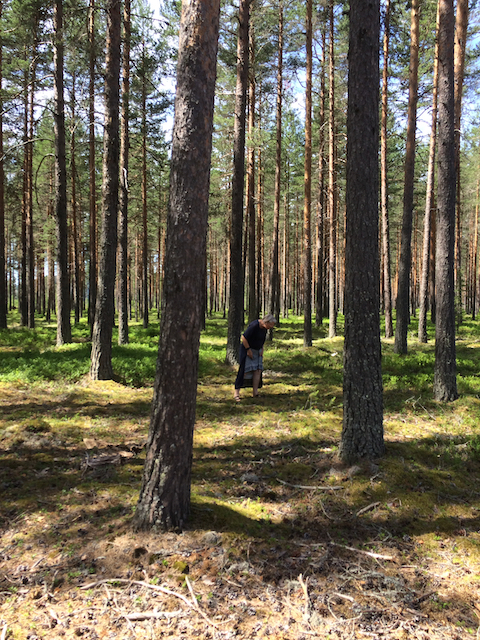
In 2018 when these sketches were done, the summer had been hot and tough for the plants. The Cloudberries ripened very early and by the time we arrived they were long gone. All that remained were some dry leaves and soggy berry remnants. But the sun had really worked well on leaves in the open, changing them from lush green to orange and fiery reds.

More sketches including the two berries we were given in 2018.

Once I had decided which elements were important for the picture, I did line drawings and moved them around digitally until I felt reasonably satisfied with the arrangement. Of course, in some instances adjustments were necessary and easily done on the computer. The line drawing composition above was almost the last one I made whilst well into the artwork.

In my final artwork I used several sketches as a basis. The sketches are used as a template whilst painting from an actual plant. Having the plant in front of me for the final artwork, enables me to paint its portrait as I see it, getting its botanical detail right at the same time as conveying texture and three-dimensionality. These are all things not easy to do from a photo.

I traced the whole composition to get the placing correct on my mounted vellum block, then each element was traced onto separate pieces of paper.

The vellum needed protection as I worked, and I used one of the old tracings that I had no use for, plus a clear acrylic sheet. All surfaces against the vellum are completely clean.  

Once the image is traced over to the vellum I lifted off much of the loose graphite from the transfer process. I generally start with a pale wash, allowing this to dry completely, then remove the remaining graphite. I continue painting with a dry technique being sure to lay this very lightly.  

Sketching was started in June 2014, the final artwork on vellum started July 2022 and finished in August 2022 except for the scalebars. 

Cloudberries are a circumpolar boreal plant, occurring naturally throughout the Northern Hemisphere including the UK and Norway, although there is little fruit produced in the UK.

Source: Kew – Plants of the World online

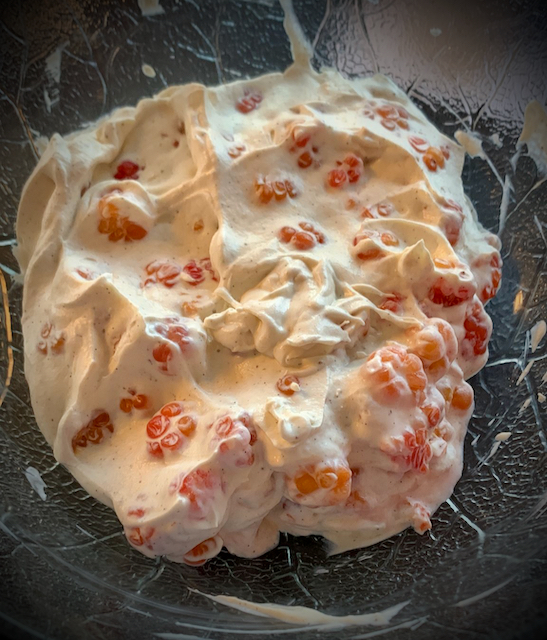
Cloudberry cream recipe

This recipe for ‘Mountain Gold’ is served on very special occasions including Christmas. It is served with cakes/biscuits often made in the period leading up to Christmas. Many of the recipes include almonds .

500ml whipping cream 
2 ss sugar
2 ts vanilla sugar (see recipe at end)
300ml Cloudberries

  1. Whip the cream together with the sugar until light and fluffy. 
  2. Stir in Cloudberries and sprinkle with vanilla sugar to taste.
  3. Place in the fridge until serving.

Serving:
Extra Cloudberries, Shortcake Biscuits

(from https://www.detsoteliv.no)

Vanilla sugar (vanilje sukker)

2 Vanilla beans

300gm sugar

  1. Split the vanilla beans in half lengthwise and scrape out the seeds. 
  2. Put the seeds into a blender with the sugar. 
  3. Blend with the blades until the sugar has become completely fine-grained and well mixed. 
  4. Put it into a glass with a lid and add to recipes as needed. 

The next blog post about the Small cranberry will be on the 7th May 2023.