Foraging plants in the norwegian mountains – 8. My working practice

A year in the life of a Magnolia x soulangeana tree. In watercolour and graphite.

In 2011 I did my first RHS exhibit – ‘A year in the life of a Magnolia x soulangeana tree’. The tree was in my front garden, so I had a good source for the material I would need. But to get my eight pictures completed in time, I needed to paint throughout the year. The main picture from which all the others derived contained all the phases the tree went through during the year. It was whilst I was doing this series that I became interested in the inner workings of plants and started using a microscope. Of course, to do this I also needed a sketchbook. 

Sketchbook work

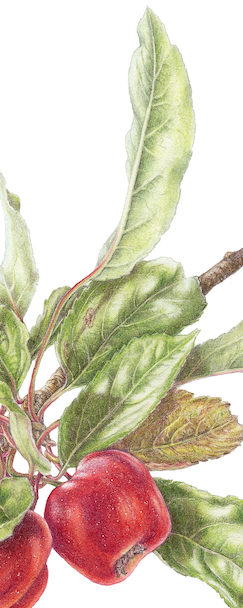
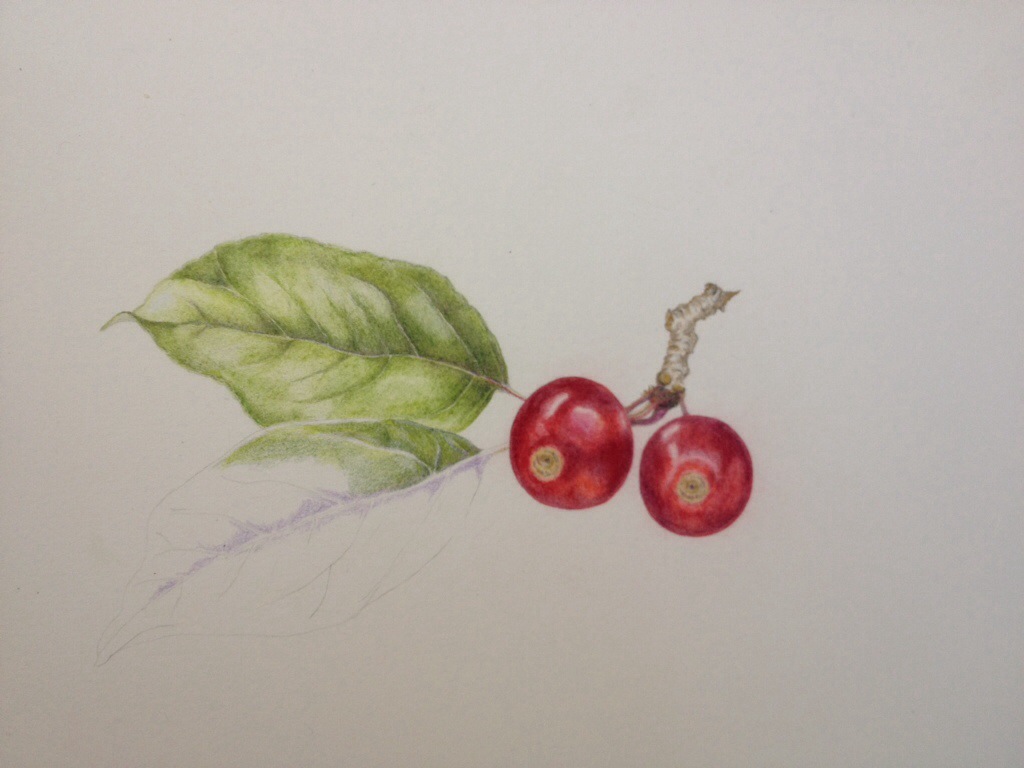
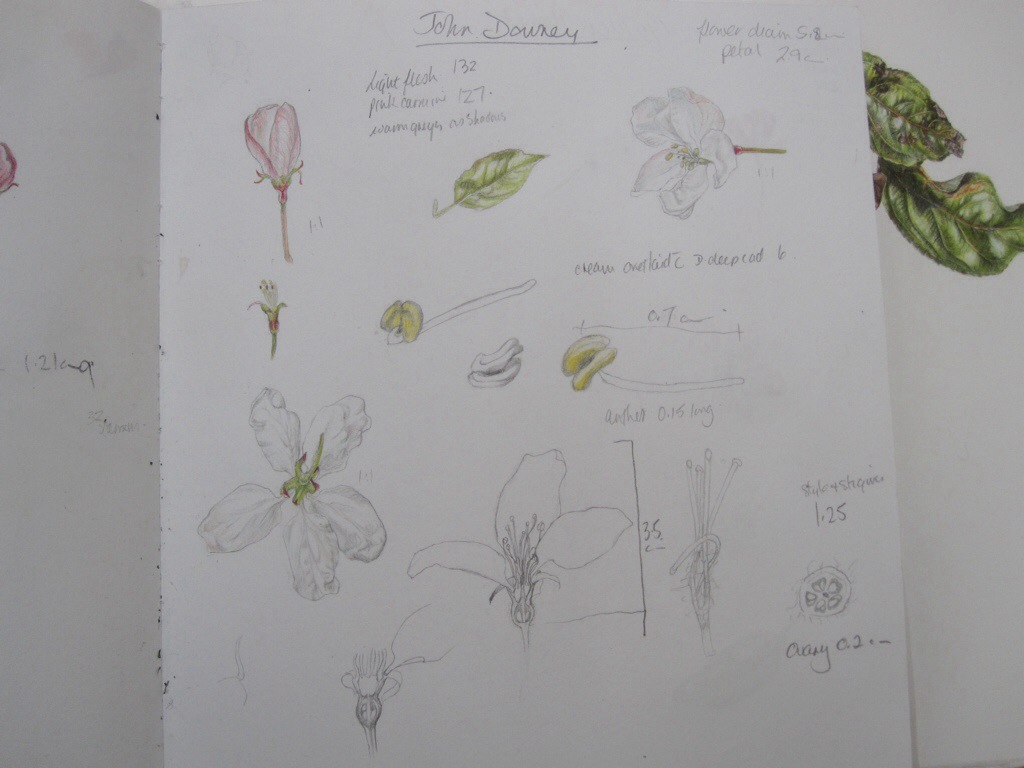
Malus x scheideckeri “Red Jade” in Colour pencil

Being a very impatient person I always wish I could get the perfect result first time around. When I started out painting plants, although I had drawn and painted most of my life, I was not very good at using sketch books. But I quickly understood that most of those who did botanical art also did a lot of work in sketch books. 

Sketches from my Crabapple pages.

Encompassing sketchbook work I felt was difficult as I paint directly from the plant in front of me. Why would I want to sketch it several times before painting the final piece? Surely the plant, or flower or leaf would at least have changed or even died before I got to the final painting!

For my second exhibit in 2014, ‘Small is beautiful; Crab apples explored’ I did six pictures from six different crab apple trees – also in my garden. As the title suggests I was doing an exploration of each crab apple  – again over the year. The final artwork displayed the fruit and flowers and dissections of both; I again needed my microscope and sketchbook to get together the necessary information about each of my plants. 

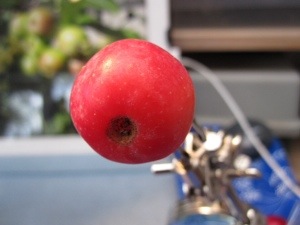
Malus x atrosanguinea ‘Gorgeous’ setup

But this time. I also worked out another way of using my sketches and my photographs. Yes, I take an awful lot of photographs which I use to confirm detail. I have painted three pictures using this photo; but each picture is completely different.

I used the same photo setup but picked different apples and leaves from the garden each time I painted a picture.

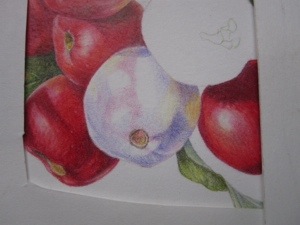
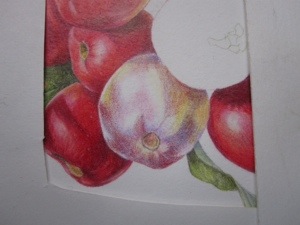
Below are sections from two of the paintings. Compare the difference.

But what has all this got to do with my work process towards my current RHS exhibit? 

I learnt a lot during the process of planning for my previous exhibitions and it has all come in very useful for planning this one.

My first exhibit was done in watercolour on paper and the second one was colour pencil on paper. This time it is watercolour and graphite on vellum. A completely different kettle of fish! 

Preparation and plenty of sketches is everything. 

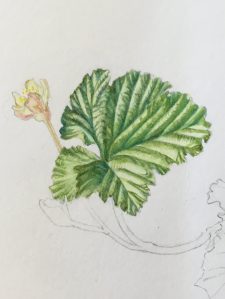
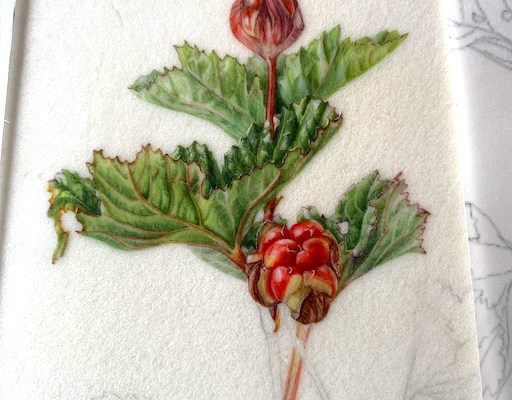
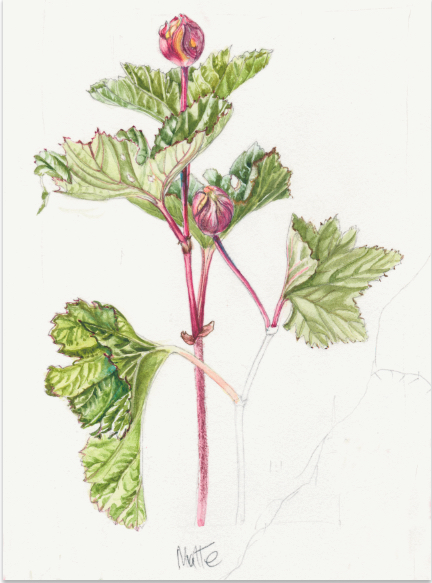
The main sketch that I used in the Cloudberry painting was the one below, drawn in 2017.  When working on my final artwork in 2022, I found appropriate plant pieces to paint from and the Work In Progress (WIP) is as you can see. The immature top fruit is rather different to the sketch, and the lower one has even started opening. This development is not on my original sketch, but I liked the layout of the sketch and wanted to incorporate it in my final piece. The final leaves were painted from several new ones, to include the ‘tatty’ nature of one of them from the sketch.

Rubus chamaemorusCloudberry WIP
Rubus chamaemorus – Cloudberry sketch.

Foraging plants in the Norwegian Mountains – 2. History of the project.

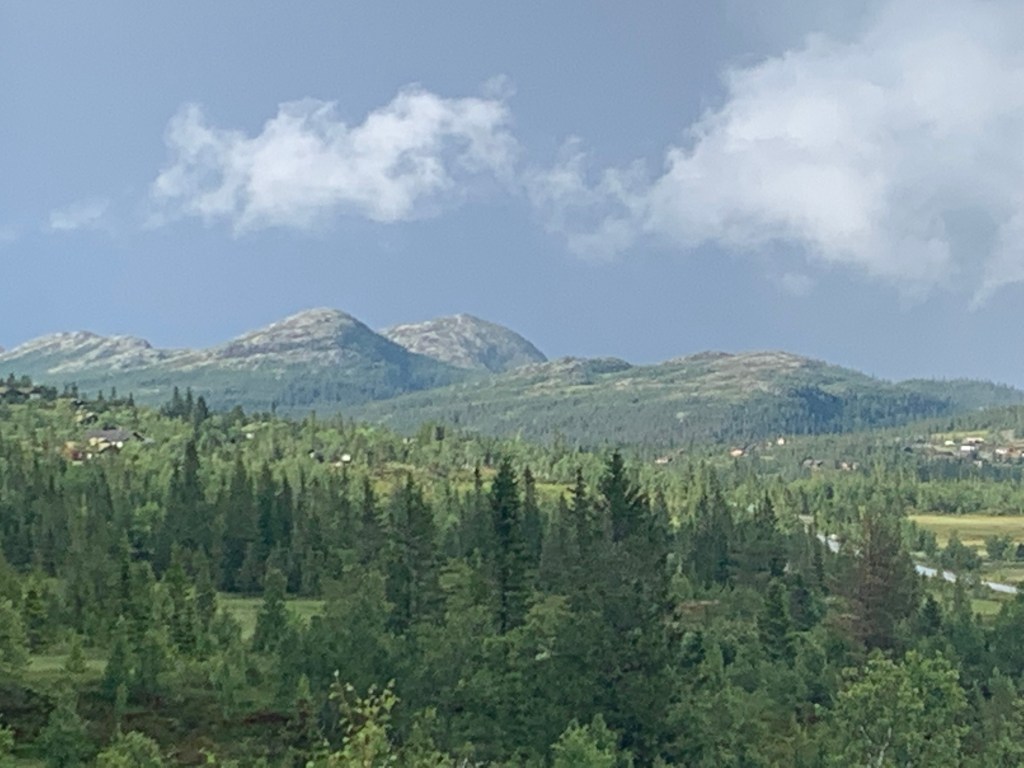
Preparing for rain – view from the cottage at Flatvollen near Haglebu.

As promised, this is the second part to the blog about my series of pictures – Foraging plants in the Norwegian Mountains. It will continue twice weekly until the RHS exhibition mid June 2023.

But what did make me choose this topic to study? It started at the workshop I had in Åsgårdstrand in 2014.

Cloudberry leaf and remnants of a male flowersketch 2014

There were students from Norway, the USA and the UK, and I wanted them to get a feel for and learn about some of the plants that mean a lot to Norwegians. Funnily enough, like me, Norwegians take a lot of their fruit for granted and don’t know too much about them. I asked a botanist friend to get some plants when she was at her cottage in the mountains; she arrived with several, including cloudberry (Rubus chamaemorus). This particular year she only found male flowers, but more about this later. At that point I didn’t know they were male flowers; I was just disappointed that none seemed to be fertilised and developing fruit.

As the students were mostly new to botanical art, it was unsurprising that no-one had any real interest in painting the cloudberry plant without the flowers in full bloom.

But all were thrilled by the range of wildflowers available and painted many they found whilst on walks in the neighbourhood. For my part, the cloudberry plant material was enough to kickstart my interest in studying it. Painting the sample available was the start of my obsession for Norwegian edible fruit; it continued until I finished the series of seven pictures in January 2023

Royal Horticultural Society (RHS) botanical exhibition planning

Magnolia x soulangeana flowers – 2011

Over the years the requirements for exhibiting with the RHS have changed. I had previously done two exhibits for the RHS botanical art shows and had medals from 2011 and 2014. In 2011, 8 pictures were required for each exhibit and in 2014 this was reduced to six although one could have more. When planning for my next exhibit I decided to do seven pictures as odd numbers are aesthetically more pleasing than even numbers.

I will be describing my progress with all seven pictures in my blog, although the exhibit requirements is now only six pictures. I felt Norwegian edible plants would be an ideal topic and had hoped to complete the series over the following three years, but ‘life’ got in the way. 

I was responsible for the UK representation during the Botanical Art Worldwide Exhibition in 2018. Scotland had their own exhibit.

My involvement in the worldwide exhibition happened quite suddenly when I realised that the UK would not be represented. I felt this was wrong as we had so many brilliant botanical artists. So I was determined to make it happen; Robin, my husband, suggested that if we got enough people interested, we should call ourselves the Association of British Botanical Artists (ABBA). Luckily, I was able to convince others and ABBA organised several successful events across the country representing UK botanical artists. 

During the build -up to the Botanical Art Worldwide exhibition, it became clear that there was a need for an organisation to welcome ‘Anyone, anywhere’ interested in botanical art. Up until then it could be quite expensive to learn about botanical art and membership of existing organisations was based on an individual’s level of expertise. Dr Shirley Sherwood OBE was also of a similar opinion and supported the idea – something that really meant a lot to me and my motivation for continuing my work to establish an organisation. 

The Association of Botanical Artists (ABA), now an international organisation, is still going strong. 

Malus ‘Gorgeous’ – 2014

Eventually, as I got back to planning my next RHS exhibit I recognised that there were some logistic problems. I lived in the UK and hadn’t planned to move back to Norway. Although some of the plants grew in high mountain areas in the UK, there were still some difficulties obtaining what I needed. For example, there were very few female cloudberry plants and therefore only a slim chance of getting material for either the female flowers or fruit. I therefore needed to get to Norway on a regular basis and knew that I could only do this once a year. 

I already had another workshop planned in Norway for 2015, so 2016 became the target for starting seriously with preparation sketches

Botanical art workshop at Åsgårdstrand

I realised that I wouldn’t be able to decide which part of the plants to focus on until I had done as many sketches as possible at different stages of development.

I would need to make careful notes about colour and size of specimens to aid my decision making. 

I will continue this story with a new blog on 26 March 2023.

Botanical art workshop – Autumn colours – in Bosham

Well, I mentioned that I was due to have a botanical art workshop from Friday until today. Are interested in how it went?

I have been allowed to take the following pictures and you can judge from these how it went. I and the people who came, would obviously be very interested in your feedback, so please comment.

20131103-225647.jpg

20131103-225707.jpg

20131103-225738.jpg

20131103-225752.jpg

Some of the subjects.
As usual, we took a photo once the position of the subjects had been arrived at. As I have suggested previously, it is worth doing this as we are painting from living things and they change over time. If something wilts, we can replace that element and if we knock something out of position, we can re-arrange. We still paint from living subjects.

20131103-230349.jpg

Enjoying the company and the opportunity to paint.

20131103-232501.jpg
Glory tree – Coloured pencil

20131103-232604.jpg
Malus Gorgeous – coloured pencil

20131103-232705.jpg
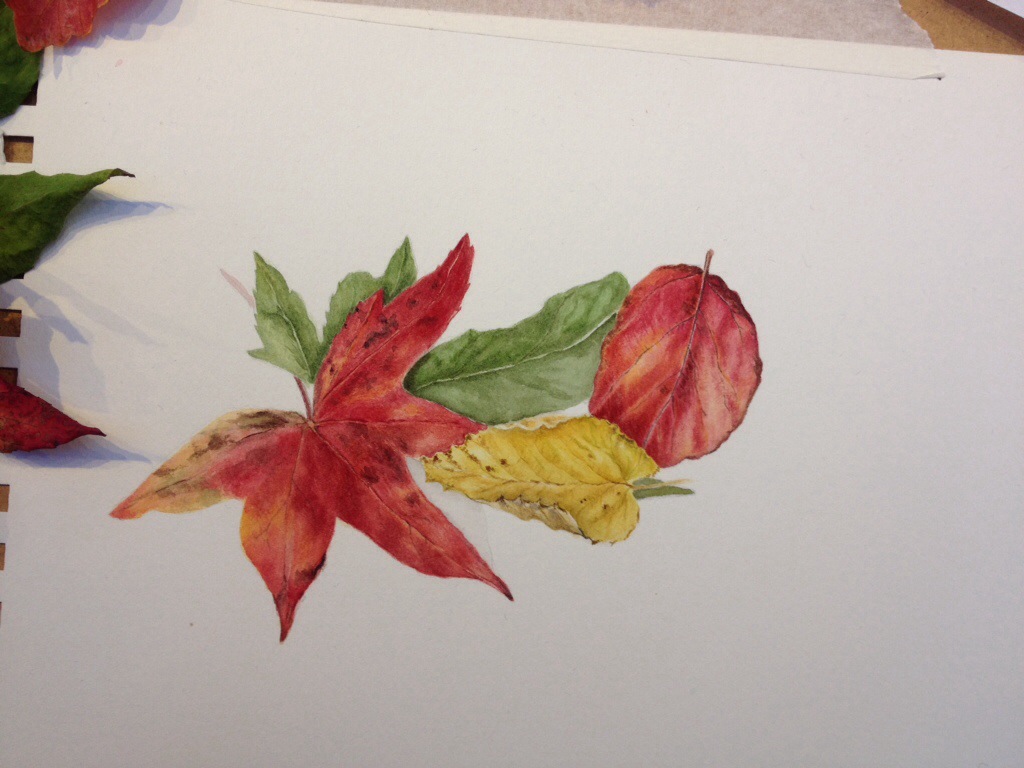
Fallen leaves – Watercolour

20131103-232756.jpg
A pear plus Malus Gorgeous and Golden Hornet crab apples – Coloured pencils.

I think that you will agree that these are lovely pictures that are well on their way to completion. But, what is even more amazing is that some of the students had not done much in the way of their chosen medium previously and they accomplished so much in this one workshop. It was exciting to watch them develop. No wonder I enjoy teaching!

Do you use photographs in botanical art?!!!!

Yes. Sort of.

Some of my paintings take around two years to complete especially if I am doing a series of paintings and they include; A year in the life of………

How do you complete a series of paintings if the series is from the same genus and they bloom and fruit at similar times?

This is how I do some of it. As an example I will use the picture that I have been working on this week. Malus Gorgeous.

In the spring last year I did some sketches, colour detail and size of the blossom. I had to do five other crab apple trees at the same time and, during a ten-day period. This year I did dissections of blooms from the same trees and preparation sketches of the dissections to include in the pictures.

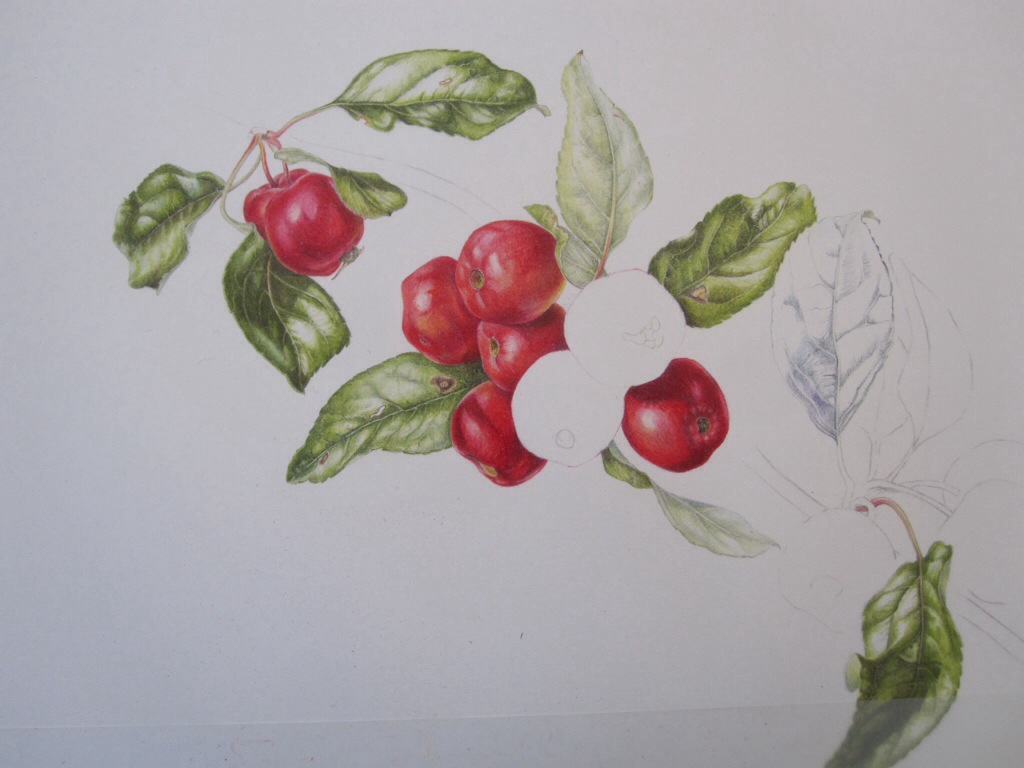
Going back to the Malus Gorgeous specifically, this summer I planned the composition and sketched this out on my final paper. I used elements from various pictures I had taken of the small tree. Bearing in mind that the apples were not full size and far from ripe and the finished painting was to include ripe fruit. The photographs were and are only a rough guide. This is the photograph I used for the main bunch of fruit.

20131018-202924.jpg

I had to enlarge the fruit slightly to the size they were likely to be when ripe, allowing for the fact that even this allowance might be slightly out. I had measured the ripe fruit the previous year so had a good idea of the size. I then started painting the leaves.

I picked the leaves I intended to paint, one at a time. None of them the ones in the photo. Some were more interesting than others, but I had to make sure that the leaves I picked were the ones arising from the fruit spur. These were the type I had included in my picture, and not those born on new shoots, as these are more leathery and differ quite a bit.

20131018-205331.jpg

I positioned each leaf as I had sketched it in my composition and painted it into the picture until most of the leaves were in place.

I have been doing the same with the apples. These are this years ripe apples. They have started falling off the branches, therefore I had to get on and paint them whilst I could – particularly if I wanted the series finished to exhibit at the RHS next year. That is if I get exhibition space.

20131018-210219.jpg

Funnily enough and, luckily, the apples seem to last different lengths of time on the trees. But there isn’t much in it, so I have to plough on until all the apples are finished.

Some of the pictures of the apples being painted – with coloured pencil used dry in case anyone was wondering.

20131018-211337.jpg

20131018-211407.jpg

20131018-211426.jpg

20131018-211727.jpg

Today I managed to do all the apples. I have a couple more leaves to do and then have the dissections and branches to put in the picture. But that won’t happen yet as I have to catch up on all six pictures. The sketches Of the dissections that I have in my sketchbook will give me enough information to do this at a later time. Don’t forget that once everything is in place it has to be tied together with shadows etc in the right places.

As you see I do use photographs in botanical art, but every element in my pictures are painted from life.

By the way, comments or queries are very welcome.

My sketchbook page.

20131018-213801.jpg

Back home to crab apples

So far this week I have been catching up – or trying to, after our time in the US.

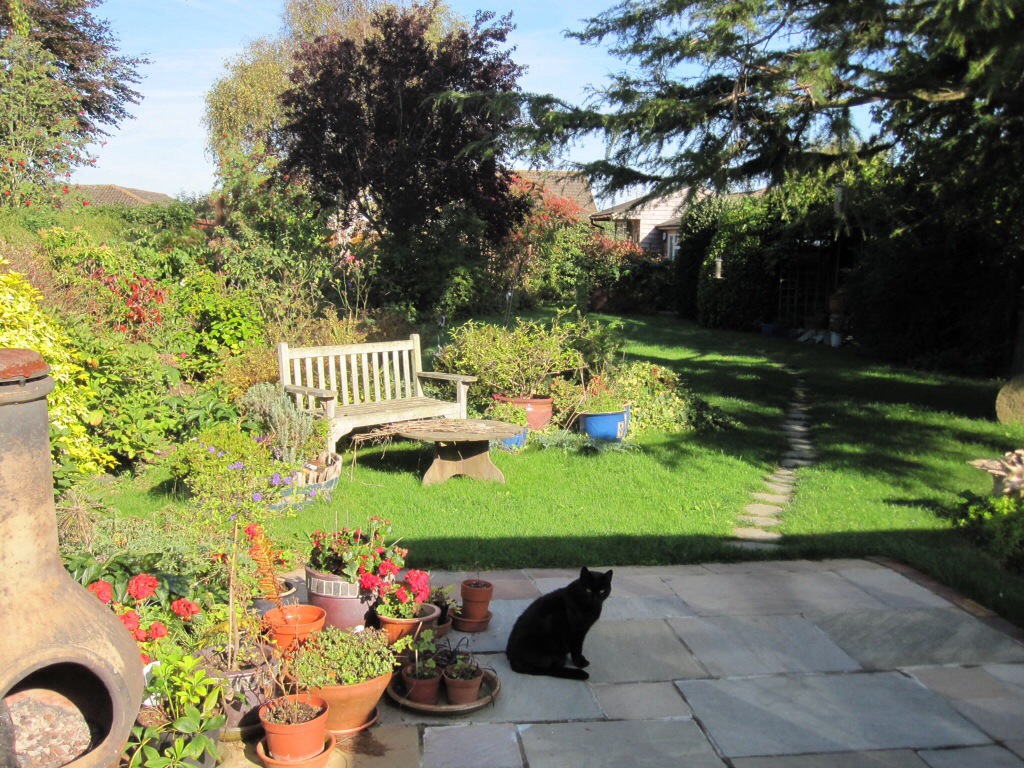
I mentioned that everything was green and therefore a shock after seeing the intense fall colours in America. This was the first sight of our back garden and one of our cats.

20131011-234947.jpg

It was still reasonably warm on our return, but I kept on my full length jeans.

Monday and Tuesday afternoon I did a lot of paperwork to catch up, but Tuesday and Wednesday morning I had my normal weekly botanical art classes. Everyone was very interested in the trip we had taken and most particularly in the catalogue from the Hunt Exhibition. Hopefully the catalogue will be motivational for some of the students.

At last on Wednesday I was able to get back to painting my crab apple series. Whilst we had been away, the Malus Golden Hornet crab apples had swelled up (luckily it has rained a little since we were away) and turned yellow. The apples are not fully ripe yet, but as this was the only painting where I had done no apples at all and very little preparatory sketches, it was the one picture I was most concerned about.

I had in fact actually started the painting before we went away. I had done a composition and finished most of the leaves, placing the apples roughly in accordance with measurements taken two years ago when starting the series. However, this year there has been little rain during the summer months and the fruit were not as big as originally allowed for. That aspect of the painting had to be sketched anew. A photo from the Malus Golden Hornet.

20131012-000945.jpg

On Thursday morning it started getting really cold here (relatively speaking) and a wind was building up. The Malus Gorgeous, a lovely little tree near our front door, has quite big deep red crab apples. They were beginning to fall off the tree. Although I have painted a composition with this apple several times, I had started a different composition. I again have done most of the leaves, but need to paint the apples. The Malus Gorgeous.

20131012-001630.jpg

I felt it was now important to do a list of the pictures, detailing what was missing on each one and the urgency of each element. I don’t want to miss an important phase in the development of each apple because I was concentrating too much on one of the..

My Malus John Downey tree now has only three apples left on it. It didn’t do too well this year. I still had five apples to paint in the picture! I decided this was a priority. I can wax lyrical about the beauty of this tree, but I will save this for another time.

So, now I have been rescuing crab apples to paint their portraits in the relevant picture and yesterday managed nine hours on John Downey. My husband went out in the evening, so I could do what I enjoyed best – paint.

I haven’t got new pictures of this painting, but here you can see the notes from my flower dissections in my sketch book. Peeking out from under the sketchbook you can just see some completed leaves on a branch contain gripe crab apples.

20131012-002840.jpg

Today, Friday, I have only had a couple of hours painting as we had to travel to Bristol for a meeting with other tutors from London Art College (LAC). I am the Botanical Art Tutor for LAC which is a distant learning course. If you are interested in this, have a look at their website. It is a good course.

Busy, busy two.

We have just had two very successful weekends with the Summer exhibition and open studio.

As this is not part of an overall open studio event, just something we have decided to do for the last four years during the summer break(!), we don’t expect loads of visitors – only those particularly interested in botanical art. Our expectations were met on that score, but exceeded in other ways.

I like everyone else has had to keep a tight reign on finances during the downturn and many times I wondered if if I was silly either having an exhibition or keeping one or two classes going. However, people have been faithful, students have continued and customers have kept on coming. I noticed during the last two weekends that things are definitely picking up. We were told so on the news and this was enforced through my customers.

Thank you to all those who came and showed such Interest.

I am now working my socks off to prepare for a fair this coming weekend. It will be at Folkington Manor, on the A27 between Lewes and Eastbourne. Just follow this link to get information about what it is and where: Folkington Manor Antiques & Fine art Fair. There seems a lot of interesting things going on there, so that it should be a fun family day out. I hope to see you there. Please make yourself known to me when passing. I am in the Flint barns where the Auctioneer Michael Hogben will be giving free evaluations.

Next week we are taking some pictures up to Patchings for the UK Coloured Pencil Society annual exhibition. If you are interested in coloured pencils, then go and have a look at the exhibition between 1 September and 6 October. I hope you are interested as I have done a lot of things on this blog in relation to coloured pencil.

3 September I will be doing a demonstration in using coloured pencil with botanical art, for the Midhurst Art Society. It would be fantastic to get more people interested in both using coloured pencil as an art medium and botanical art and illustration in particular.

I love what I do and I feel so blessed that I have been given this gift and that I can practice it and have the ability to teach and enthuse others (or so it seems).

However, where is the painting?

I am also writing some tutorials (again coloured pencil in botanical art), for the London Art College where I am a tutor. Up until now they have only used watercolour for botanical art, but once I have got the tutorials finished this opens up the opportunity for those who want to use CP. Yes, I also have assignments to mark and I find this fascinating. People put such a lot of effort into improving their skills. it’s amazing being part of it.

So where is the painting?

Not long until I go to the US for the opening of the 14th international exhibition of Botanical art and illustration at the Hunt Institute of botanical documentation, Pittsburgh. My picture Magnolia x soulangeana: Maturing Blooms is part of the exhibition until December, when it will go on a three-year tour of the US until the next International exhibition.

Whilst in America, the American SBA has their conference at the same time, so I will be taking part in that too. The Hunt and the ASBA paper toy work together on coinciding this event so that participants in either the exhibition or the conference benefit from both. During this, I will be on a panel discussing botanical art and how I do it!

So the painting. Burning the candle at all of its ends, I am now working on the Malus ‘Gorgeous’ for about the fourth time! But, I am doing an entirely new composition. I have decided that the ‘Gorgeous’ ones I had already done, didn’t go with the other ones as a series. Hopefully I will get the series finished so that I can exhibit with the RHS next year.

I think this is enough for now. I’m sorry that there is so much reading and no pretty pictures this time. I’m afraid I had too much to say.