___ And 14 years later!

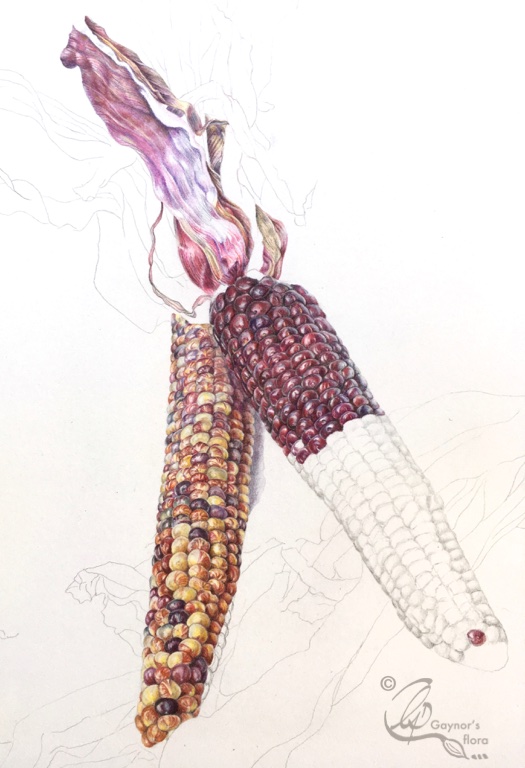
In October 2011 I started a project that I intended to work on at exhibitions, and whilst teaching colour pencil or at demonstrations. I was living in the UK and had found some really beautiful Corn on the Cobs, sold as Halloween decorations. I felt that they would be ideal for what I wanted.

This was something that I could pick up and put down at will – also whilst exhibiting. I didn’t have to worry about being disturbed and viewers could ask all the questions they wanted to. People loved watching the picture as it developed and began to be enthralled with what colour pencil can produce.

This blog is not a step-by-step. I am only talking about what I did and how I overcame some of the problems created because I took such a long time on one piece of work.
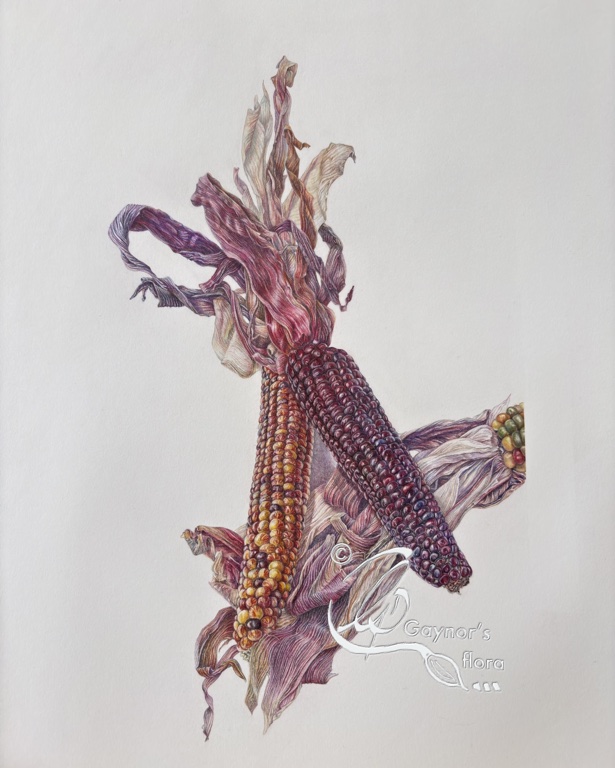
Above is a photo of the finished art piece. It hasn’t been scanned properly so far.
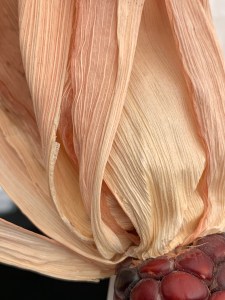
Dried out bracts.

When I bought the corn the colours of both cobs and bracts (or outer sheaths) were all fairly fresh. Thankfully the cobs haven’t changed colour and have dried quite well enabling me to add to the picture sporadically. Unfortunately the bracts changed colour considerably and needed to be replaced periodically allowing me to paint from them.

I began with the cobs as I thought the kernels might become boring over time. I put in an underlying shadow to create form. This was accentuated as I progressed with the picture.

I took quite a few photos of my subject so that I could reproduce the layout and had an idea of the original colouration. The photos were extremely useful but I always painted from real life.

I started at the top of the cobs near to the bracts and moved downwards using bits of tape to show where I had got too. It could be confusing at times!

I taught colour pencil at the American Society of Botanical Art (ASBA) annual conferences in the USA. The conferences were in the autumn and at that time decoration for Halloween was available just about everywhere. I refreshed my cobs – or more particularly the Bracts, on several occasions. Additionally I used some of the kernels from my original cob and grew some plants in my back garden.

Such amazing colour!!

I moved back to Norway under the pandemic in 2020, but this winter I felt that I really needed to finish my painting. Funnily enough the corn that I grew myself had retained the colour of the bracts pretty well and I was able to use them to finish off the outer sheaths in the painting.

I still had the original cobs and although the colours of the bracts were pretty dried out, they had maintained the shape and structure. I used the colouring of my home-grown cobs to finish off the picture.

The next picture is cropped from the final result so that you can see the gradual transition of this section.

I am glad I was able to take my mind off things today as the last of our old cats we brought with us from England has died. He had been very faithful for 17 years. ‘Allsorts’ was the black and white one. His brother ‘Fudge’ died a couple of years ago.

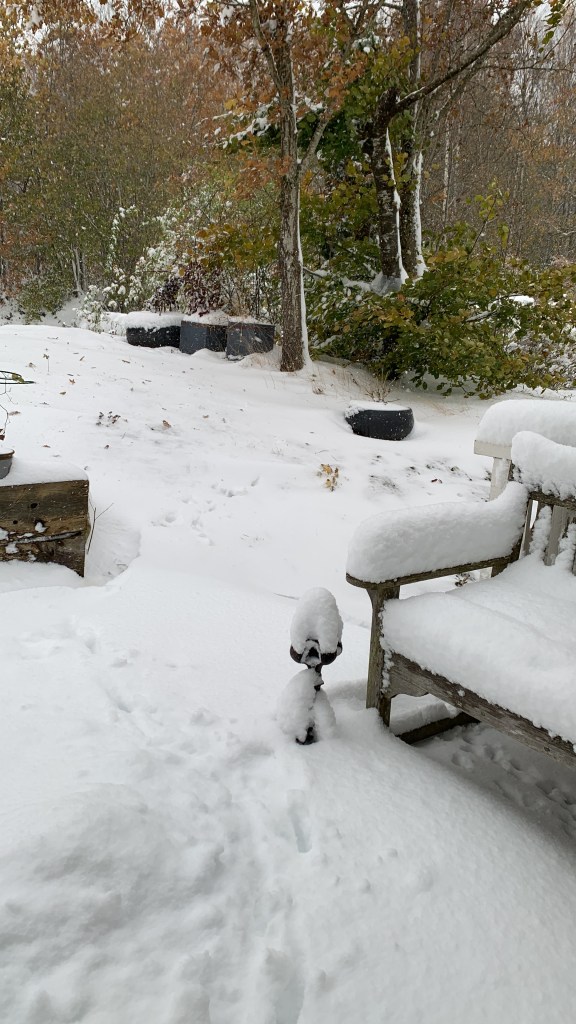
..And it snowed and snowed in October!

The picture above is taken the day after my previous blog, at 08:00. By that time it had been snowing heavily since 21:00 the night before and my husband had to clear a track for the car to drive out onto the uncleared road as well as brush the snow off the car. The snow continued to cover the ground as he was clearing it!

50 years ago I saw snow at the beginning of October which lasted until April the following year; but then I was living in the mountains. That was extremely early, but although it is the end of October this is early too. By the way it came down heavily with a north wind behind it for nearly 24 hours. This blog is mostly pictures showing very unusual conditions; we live about 4 km from the sea!
But when there is a lot of snow, there are also a lot of birds feeding in the back garden. Notice the lovely autumn colour leaves still on the trees. These two pictures were taken about lunch time yesterday and it was still snowing.

I spent yesterday trying out my last colour pencil drawing on black paper. I’m not 100% sure that I like it, but it was fairly quick – it only took about 8 hours. It would have taken me several days on white paper as I have to make sure that the pigment fills the texture in the paper. In this case I allowed the black paper to create the shadows. Comments are welcome😊. It is another November cactus.

Before I show you today’s photos of the snow, I’ll tell you about an experience I had earlier today.

In my previous life in Norway I was a nurse and always felt I was looked after in my working environment and that patients were generally treated very well. Robin had an experience a few years ago when we were on holiday here; it convinced him that my ‘boasting’ rang true.

This morning I had an appointment at our county hospital. Just before going in I got a text message with a link to use once I arrived; I duly followed the instructions for registering my arrival. I was a little early, but went up to the floor where my appointment was, to be met by a young lady who showed me a screen telling me that I was registered. This was done with an allotted number so my name was not displayed. I was then able to go to the restaurent for a cup of coffee and fresh waffle (Hope Robin doesn’t see this as he loves waffles)and I understood a text message would tell me both when I needed to return to the waiting area and then in which room I would be seen when they were ready for me – there were no delays! I was extremely impressed.

I expect somebody will now tell me this is common practice everywhere!!

Travelling into Tønsberg where the hospital is was a a really lovely drive. Unusually the beautiful autumn leaves are still on the trees and the colours against the snow were fantastic. Additionally, as I was travelling southwards the tree trunks were caked in snow facing north, so the contrasts were amazing. Of course all this made me think of who I could tell about all that I was seeing – of course a blog!

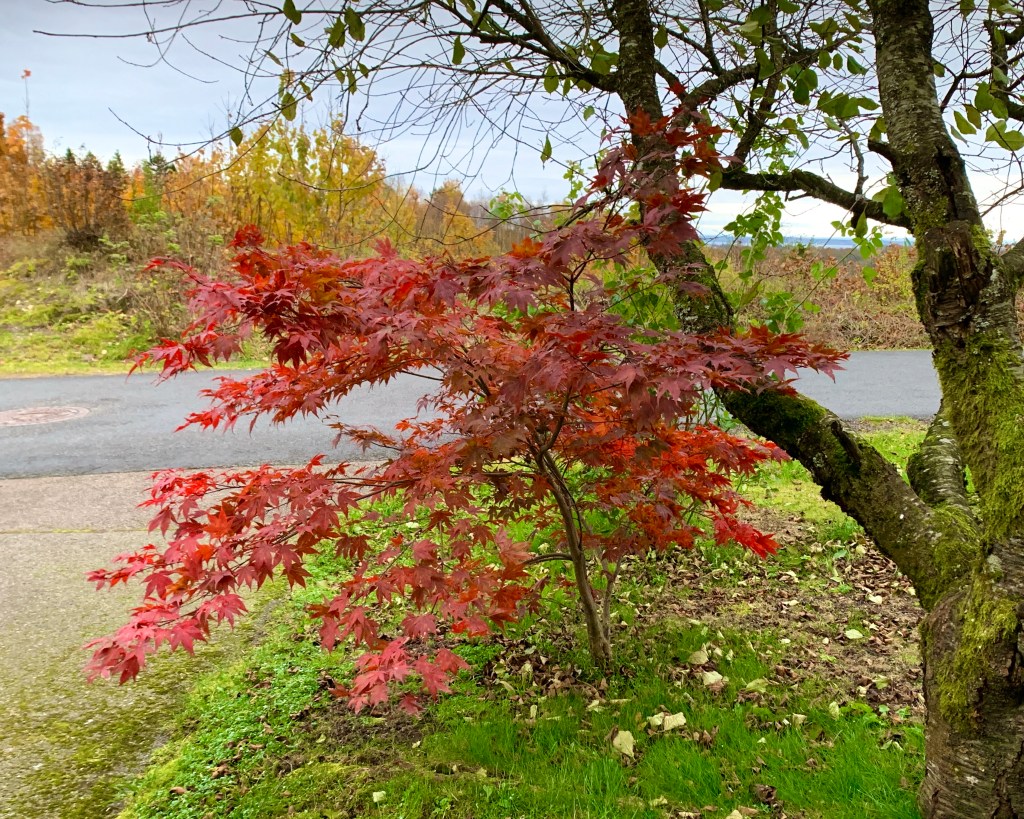
Another view from outside the front of our home. The trees are a Cherry still boasting a few leaves, the Acer and Rose complete with leaves. They ploughed the road yesterday evening, but it’s still not gritted. Salt is rarely used on the side roads.

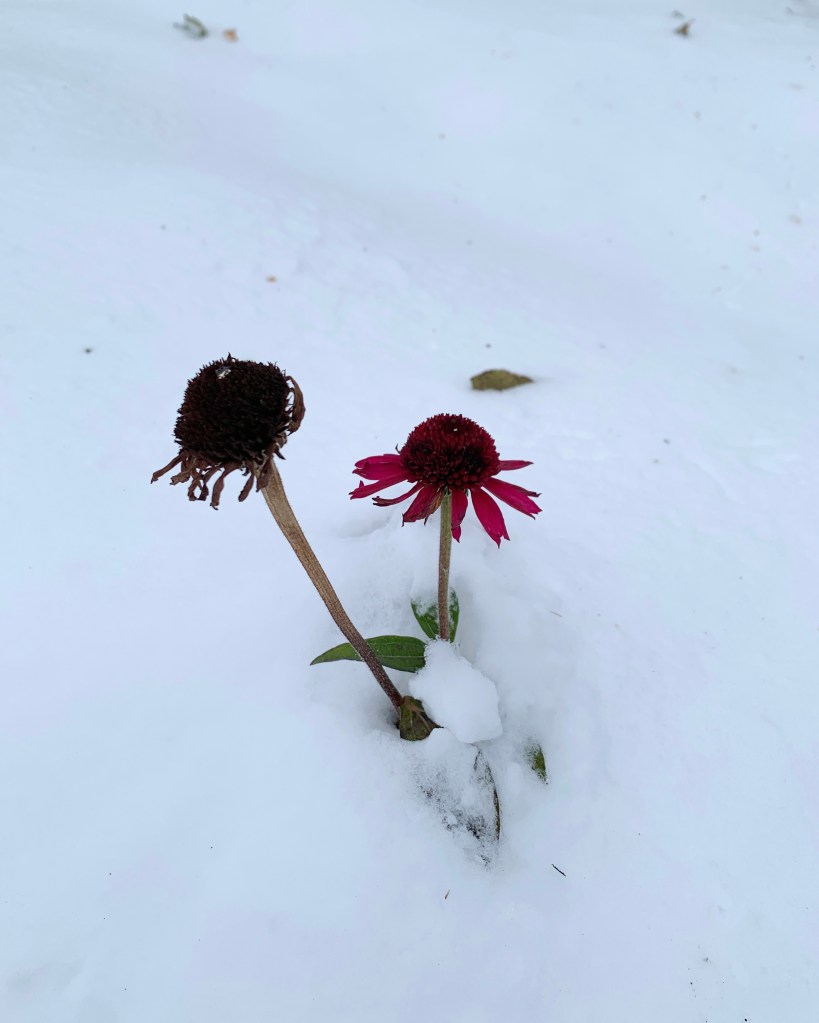
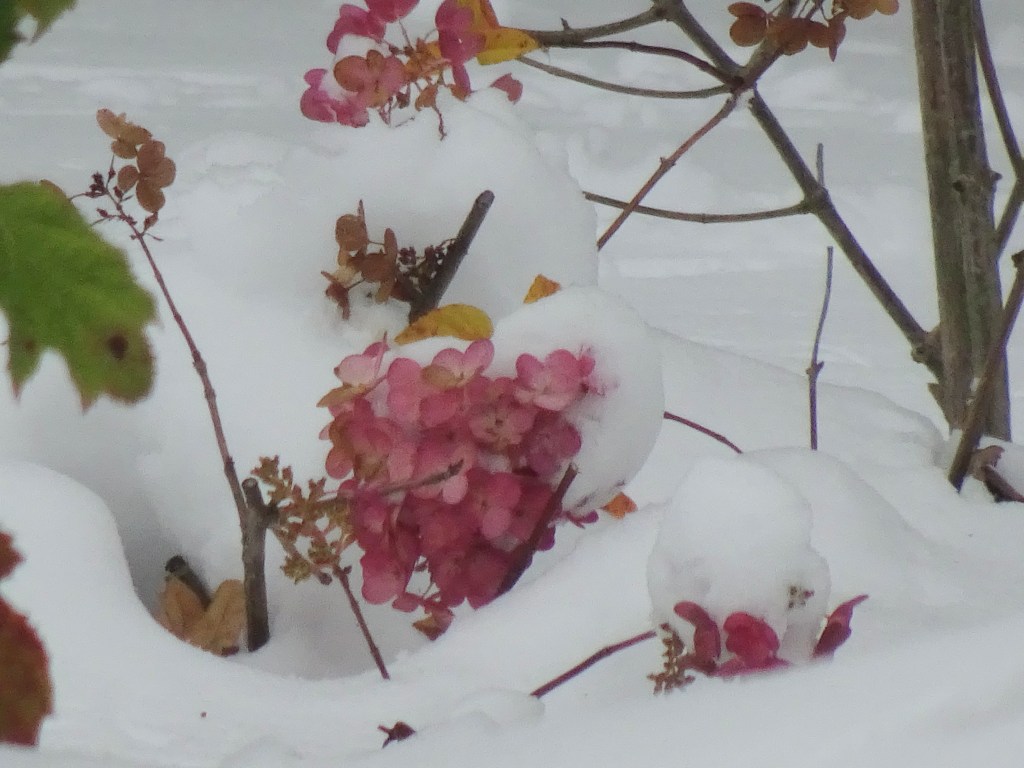
Below are plants in the garden still flowering. The lettuce is completely buried.

Echinaceae ‘ Sunseekers Magenta’

First Exhibition in Norway since 1991

View from my front door today

I have done ‘leaf-peeping’ in the Adirondack’s a couple of times – and it is fantastic. But this year, I only have to go outside my front door to see some absolutely amazing colours and scenery.

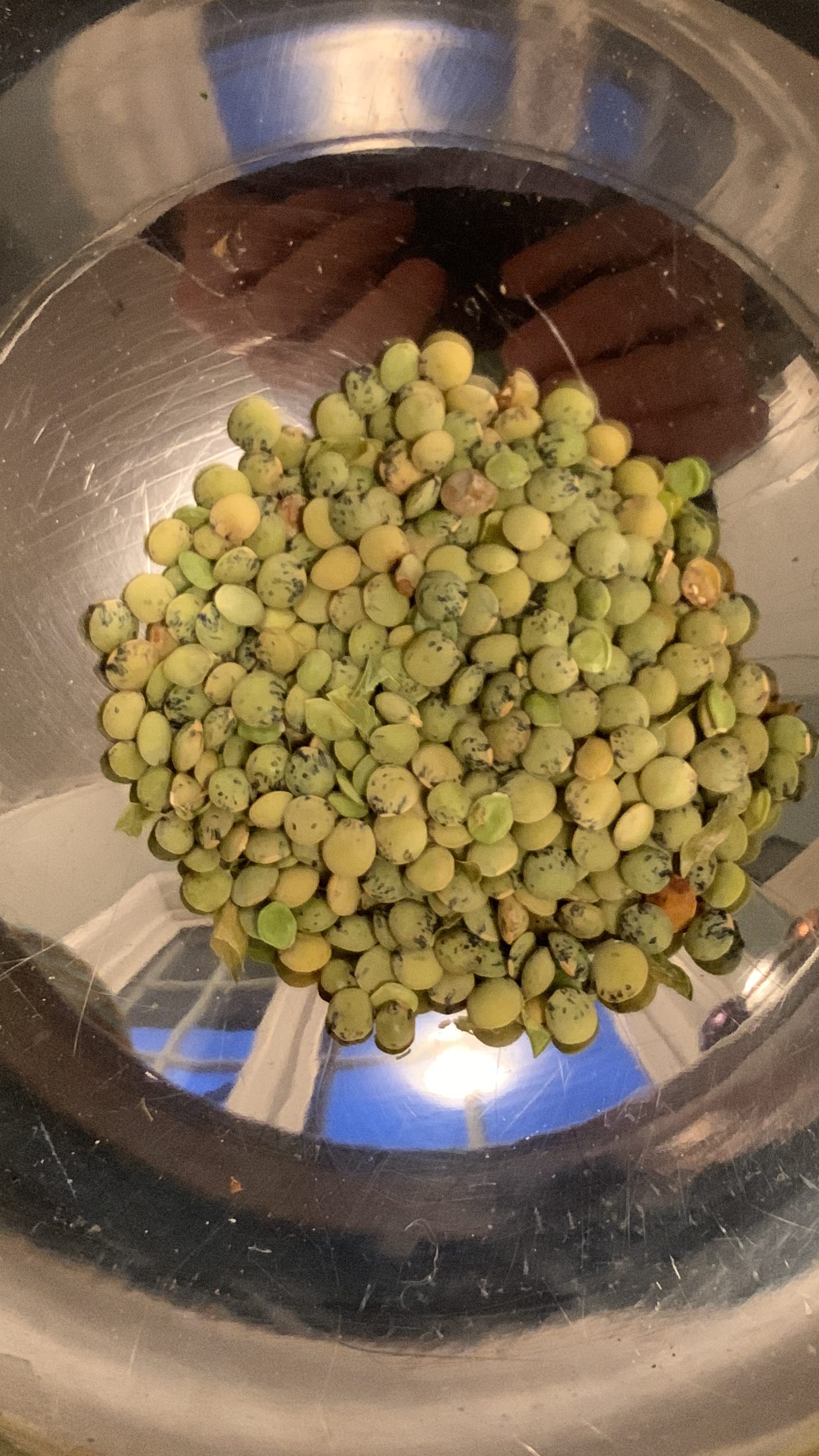
Puy lentils

I understand that it is a combination of rain, sun and temperature that helps to make the collars glowing. The rest of Europe has seen terribly high temperatures, fire and drought, but here in Norway the summer has been as I remember them from long ago – comfortable temperatures with just the right amount of rain (at night) and of course sun. This I believe gives us the colours we are seeing now.

I don’t think the beautiful coloured leaves will last too long though. I have done all I need to do to prepare for winter in the garden, protected some of the plants from foraging deer, weeded there it is beneficial to do so and filled the freezer with berries to last the long winter months. I even grew some puy lentils and shelled them ready to go into our Christmas meal. There aren’t too many, but it was fun to do.

Today we had snow flurries, not the first as there was also some earlier in the week; tomorrow’s forecast is for quite a bit of snow but I think the ground is just a little too warm for it to remain. The tyres are changed on the car ready to welcome the cold and ice. Inside we are warm and cosy with our heat pump and log fires in the evening.

November/ Christmas cactus – Schlumbergera Eva

As far as painting is concerned I have been trying out different papers to use with colour pencil. Normally I use my old stock of Fabriano 5 or Fabriano artistico, but I fancied trying it on colour paper. Unfortunately there does not seem to be the same choices here as I am used to, so I will make do with the few I have for the moment. I will just see if it is worth pursuing.

The last time I exhibited in Norway was 1990 in Stavanger when I exhibited on my own. At that time I was just painting birds and borrowed ‘skins’ from the Stavanger museum collection. It wasn’t until after I moved to the UK in 1996 that I started painting plants – and then not until about 2004. The garden was obviously the trigger.

Botanical art is not a big draw in Norway – I don’t know why! There are so many fantastic plants, even up at the North Cape in between the slate. Some of these plants may be very tiny, but they survive and are colourful – if you have eyes to see.

The series of plants I painted for my last RHS exhibit were all found in the Norwegian mountains and Norwegians love these species. Perhaps with time people might be interested in what I do and want to draw or paint themselves. Hopefully I will be able to help in that process.

The exhibition I have been asked to participate in is at the local Horten Art Society. Apparently several local artists will be taking part, therefore I am glad that I was asked to be one of them. I have no idea which pictures I will be exhibiting, so watch this space. I don’t know whether to just have plant portraits, or whether to include work typical of me with details and dissections. I think I will just have to feel my way around this.

By the way, for anyone living in the vicinity of Horten, Norway, the exhibition is at the Kihlegalleriet, Falkensteinsveien. 29, 3189 Horten. It starts Saturday 11 November, running until 3 December. but only open at the weekends.

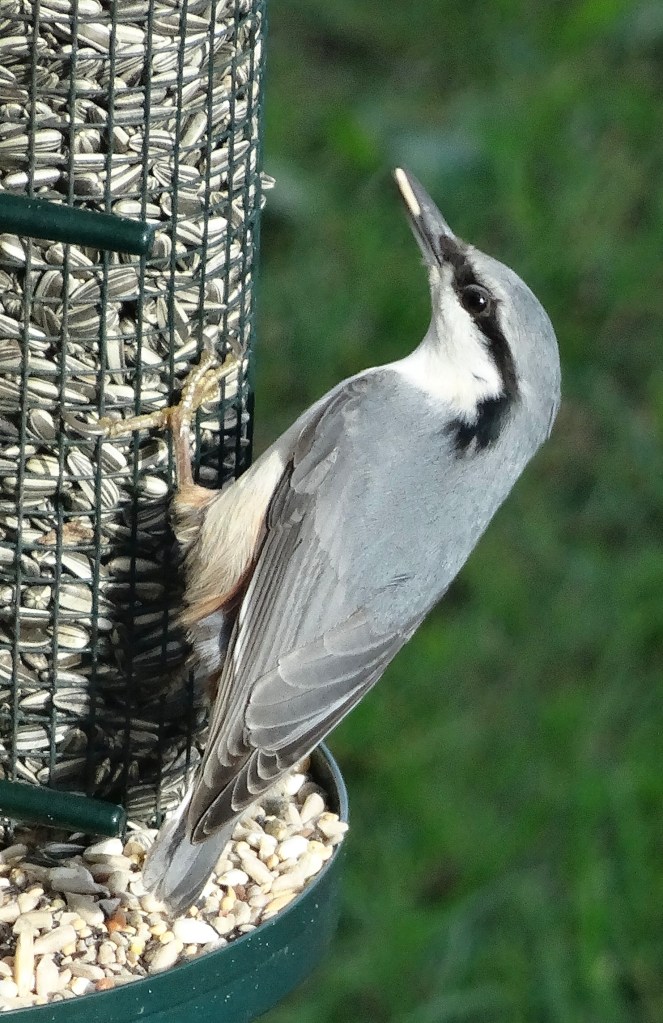
In the meantime we have a huge number of birds using our feeders, including Hawfinches, Woodpeckers and Bramblings. They are a wonderful and varied sight.

Nuthatch.

Foraging plants in the norwegian mountains – 8. My working practice

A year in the life of a Magnolia x soulangeana tree. In watercolour and graphite.

In 2011 I did my first RHS exhibit – ‘A year in the life of a Magnolia x soulangeana tree’. The tree was in my front garden, so I had a good source for the material I would need. But to get my eight pictures completed in time, I needed to paint throughout the year. The main picture from which all the others derived contained all the phases the tree went through during the year. It was whilst I was doing this series that I became interested in the inner workings of plants and started using a microscope. Of course, to do this I also needed a sketchbook. 

Sketchbook work

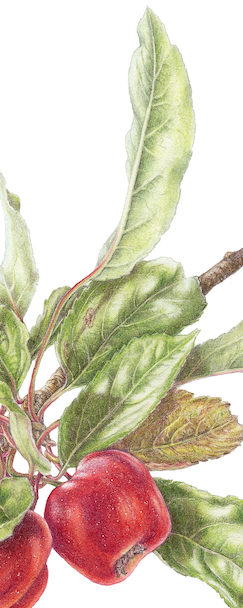
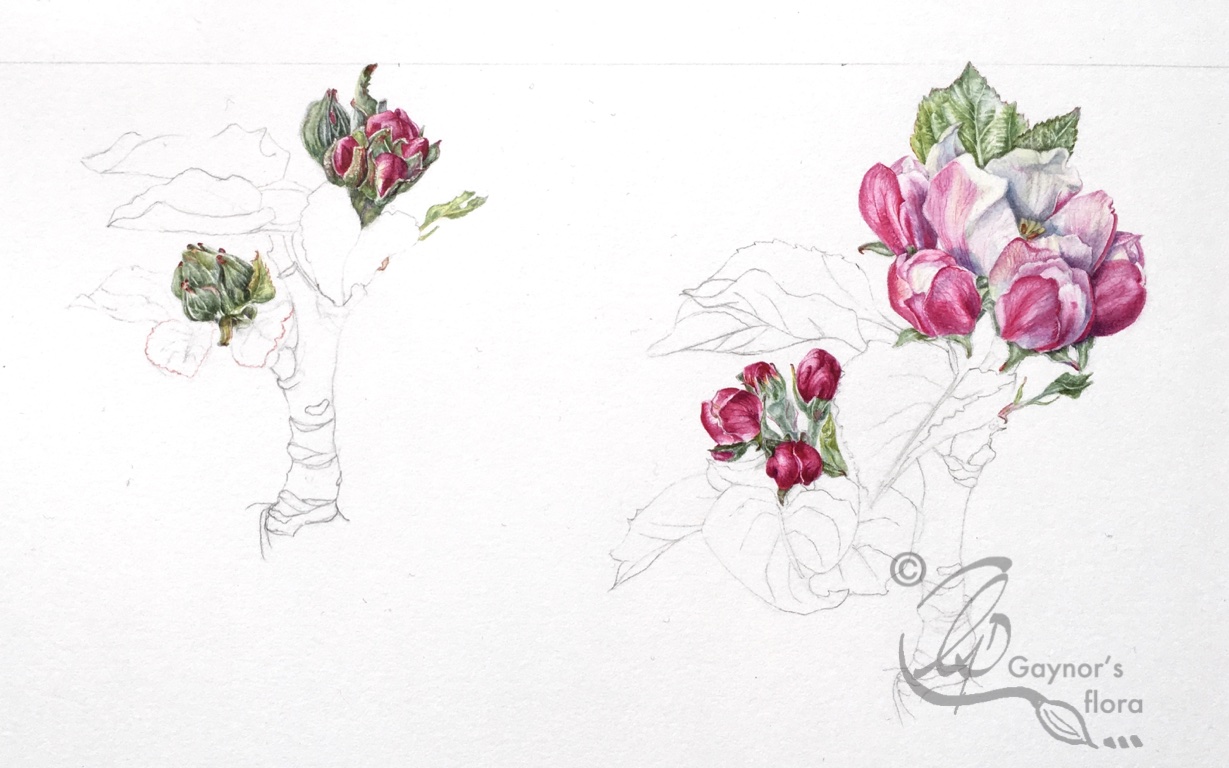
Malus x scheideckeri “Red Jade” in Colour pencil

Being a very impatient person I always wish I could get the perfect result first time around. When I started out painting plants, although I had drawn and painted most of my life, I was not very good at using sketch books. But I quickly understood that most of those who did botanical art also did a lot of work in sketch books. 

Sketches from my Crabapple pages.

Encompassing sketchbook work I felt was difficult as I paint directly from the plant in front of me. Why would I want to sketch it several times before painting the final piece? Surely the plant, or flower or leaf would at least have changed or even died before I got to the final painting!

For my second exhibit in 2014, ‘Small is beautiful; Crab apples explored’ I did six pictures from six different crab apple trees – also in my garden. As the title suggests I was doing an exploration of each crab apple  – again over the year. The final artwork displayed the fruit and flowers and dissections of both; I again needed my microscope and sketchbook to get together the necessary information about each of my plants. 

Malus x atrosanguinea ‘Gorgeous’ setup

But this time. I also worked out another way of using my sketches and my photographs. Yes, I take an awful lot of photographs which I use to confirm detail. I have painted three pictures using this photo; but each picture is completely different.

I used the same photo setup but picked different apples and leaves from the garden each time I painted a picture.

Below are sections from two of the paintings. Compare the difference.

But what has all this got to do with my work process towards my current RHS exhibit? 

I learnt a lot during the process of planning for my previous exhibitions and it has all come in very useful for planning this one.

My first exhibit was done in watercolour on paper and the second one was colour pencil on paper. This time it is watercolour and graphite on vellum. A completely different kettle of fish! 

Preparation and plenty of sketches is everything. 

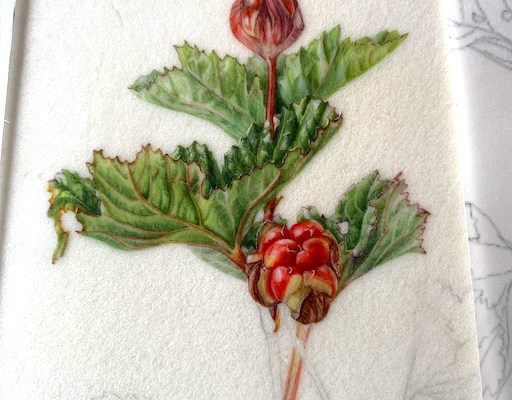
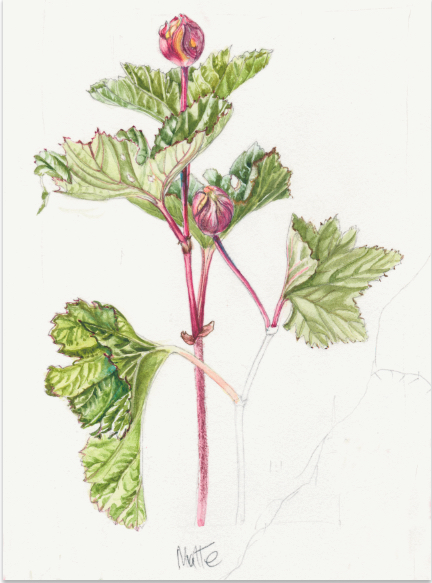
The main sketch that I used in the Cloudberry painting was the one below, drawn in 2017.  When working on my final artwork in 2022, I found appropriate plant pieces to paint from and the Work In Progress (WIP) is as you can see. The immature top fruit is rather different to the sketch, and the lower one has even started opening. This development is not on my original sketch, but I liked the layout of the sketch and wanted to incorporate it in my final piece. The final leaves were painted from several new ones, to include the ‘tatty’ nature of one of them from the sketch.

Rubus chamaemorusCloudberry WIP
Rubus chamaemorus – Cloudberry sketch.

ABBA and busy bees!

Follow this Banner!

You might very well wonder what the connection is particularly if you didn’t read my last blog a month ago! ABBA stands for Association of British Botanical Artists. For some of us working with ABBA during the last year, at times we have been so busy that we felt as though we could buzzzzzzzzz away to something more relaxing. But we stuck with it and had a lovely exhibition at the Peter Scott Gallery, Lancaster University.

That was the start of ABBA, formed to take part in the Botanical Art Worldwide Exhibition where we were one of 25 countries taking part. For my part, I co-ordinated the UK offering.

But, whilst doing this it became very clear that there was a wish for ABBA to develop into an organisation that catered for everyone interested in botanical art. We are now putting things together to develop ABBA. Do come to the RHS Art & Plant Fair at the RHS Lindley & Lawrence Halls in London 11-12th July where we have a stand. You will be able to talk with me and my colleagues about our plans for ABBA’s future. Hopefully we can encourage you to join.

If I get time, I will be having some work there to demonstrate on, but I haven’t decided in which medium. That can be a surprise!

So what has been going on with me since my last blog?

I had a very interesting workshop at the end of May, where we concentrated on colour mixing. This is the sort of workshop that everyone says they want to do, but when it actually happens, life has taken over. But some people did sign up with an attendee from a loooooooong way away.

Although there was the opportunity to work in watercolour, people chose colour pencil. The results were amazing and there were pencils everywhere! In fact, it became so thoroughly interesting that I continued with my weekly class on one colour found to be a real challenge.

See if you can find a solution. I have to say it was slightly easier in watercolour than colour pencil. But a lot of layers are necessary no matter what medium you choose.

Following on from that was the event at the Stansted Park Garden show. We again had a really super show and met a lot of lovely people and the weather was perfect.

I notice that I am listing up events, which is not what my blog has normally been about. I want to show you work that I have been doing, but everything has been done in small bites as we race around the country setting up, taking down and planning.

But I did work some more on my Indian Corn in colour pencil. Luckily the fruit part of the corn doesn’t change too much over time as long as you look after it and keep it away from the light and gnawing bugs. But it is different with the leaves. I do need fresh supplies of those if the colour is to remain vibrant. 

I hope to see you at the RHS in a couple of weeks time. Do let me know if you have read my blog!

General Data Protection (GDPR

If you want to only follow my blog then please do sign up for it on this page. However, if you would like to get the occasional email from me about workshop availability or general information abut my botanical art news, then you will need to sign up for this separately.

Below is a link for you to subscribe to either or both email lists.

You can easily unsubscribe at any time.

Subscribe to emails

Thank you.

A Gaynor’s Flora Update!

The last time I wrote a blog was at the beginning of April. That is a long time ago for a blog, but the time has been filled to the limit.

I won’t go into the intricate details, just enough to let you know what I have been doing.

The RHS Launch February 2017

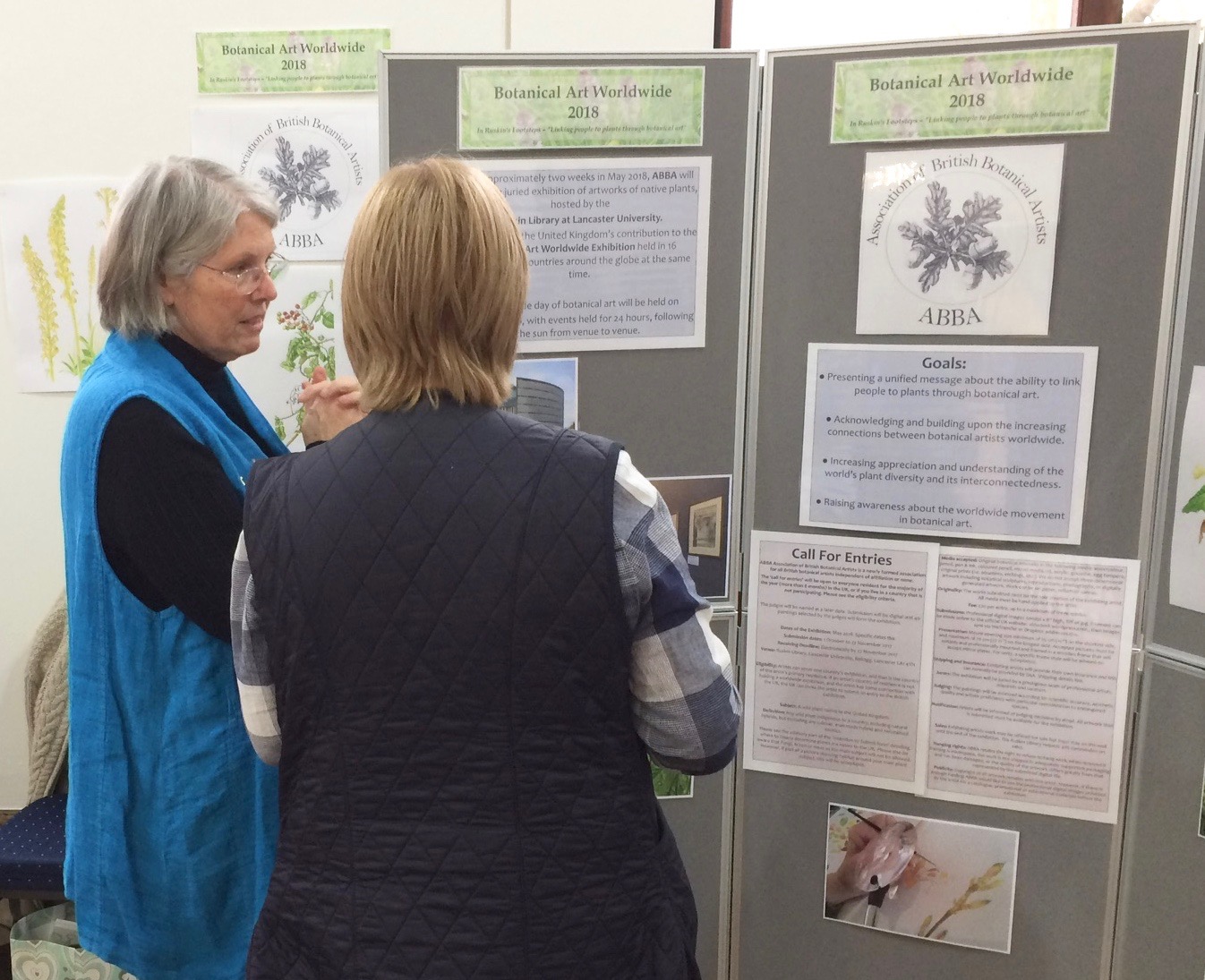
I don’t think I have mentioned in any great detail the formation of the Association of British Botanical Artists (ABBA), initially just to allow the UK (England and Wales) to participate in the Botanical Art Worldwide Exhibition.  At the American SBA conference in Pittsburgh in 2016 we were faced with the possibility that the UK would not participate because we were all too busy! I couldn’t let that happen. In the end 25 countries took part.

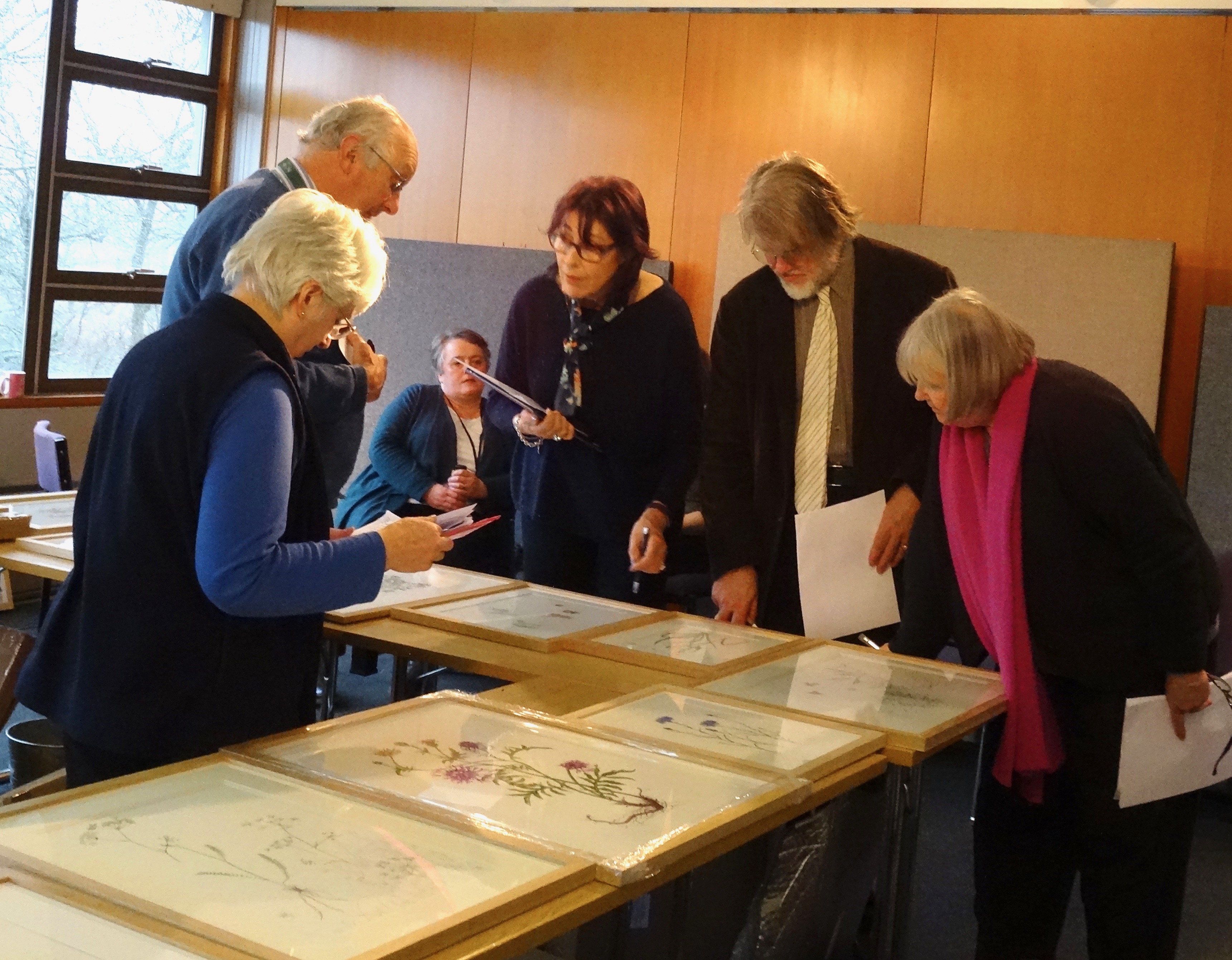
Our esteemed judges: Martyn Rix, Christabel King, Helen Allen, Ann Swan & Brent Elliott

At a meeting back home in November, three of us met and agreed to form a steering group with me as main co-ordinator; we launched ABBA at the Royal Horticultural Society’s (RHS) Botanical art show in February 2017 and the process for participating in the Worldwide Botanical Art Exhibition began to take shape. A few more botanical artists joined the steering group and we were away.

We decided we wanted to hold the exhibition ‘up north’ as everything happens ‘down south’, doesn’t it? We found an exhibition space in Lancaster and ‘In Ruskin’s Footsteps’ (the name of the UK exhibition) started to develop. An RHS Dawn Jolliffe bursary was applied for and granted, so now we had something with which to pay for some of the things we had to pay for!

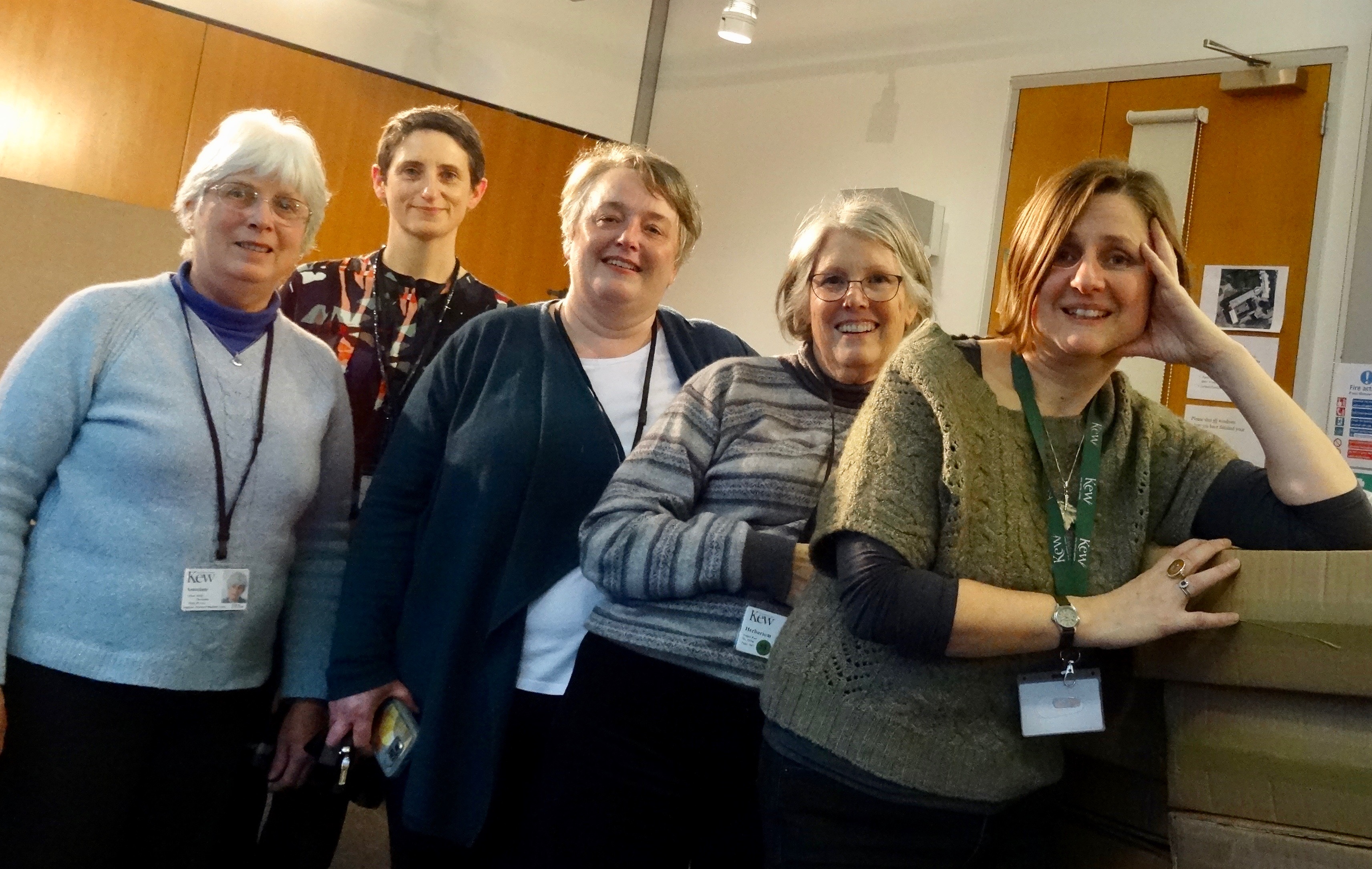
Packing after the judging: Christabel King, Deborah Lambkin, Sarah Morrish, me, Lucy Smith.

In November submissions of botanical art pictures arrived from all over the country and our amazing judges took care of that- initially digitally (with signatures removed) and the last phase ready framed at Kew in January. 40 beautiful pictures were chosen for the exhibition to be held 18th May to 9th June.

Several other institutions in London decided they wanted to work with us for the Worldwide Day of Botanical Art 2018, which was on 18 May. Therefore, together there was a lot going on behind the scenes on these events too.

After some wobbles and lots of hard work, the time to set up the exhibition arrived, now to be held at the Peter Scott Gallery, Lancaster University. It is a fantastic exhibition space and people working there plus the previous curator at the Ruskin Library, were very helpful and supportive.

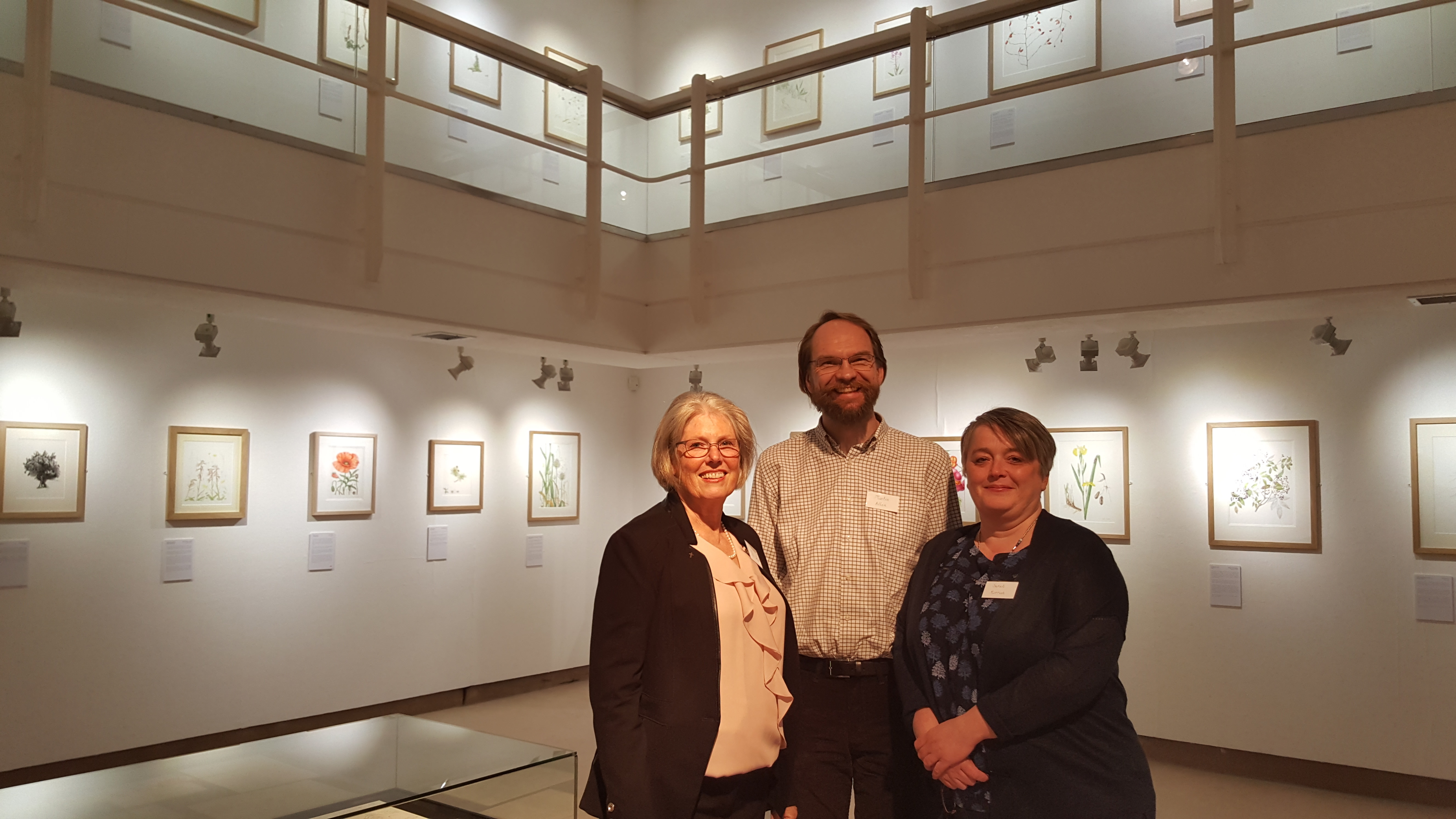
Martin Allen, Sarah Morrish & me just before the preview 17th May 2018

Worldwide Botanical Art Day in the Peter Scott Gallery at Lancaster University.

We had the pre-view on the evening of the 17th May, with speeches by the curator Richard Smith, myself and the opening of the exhibition by Professor Stephen Wildman. That in itself was a lovely event (I think!) and many of the exhibiting artists came along.

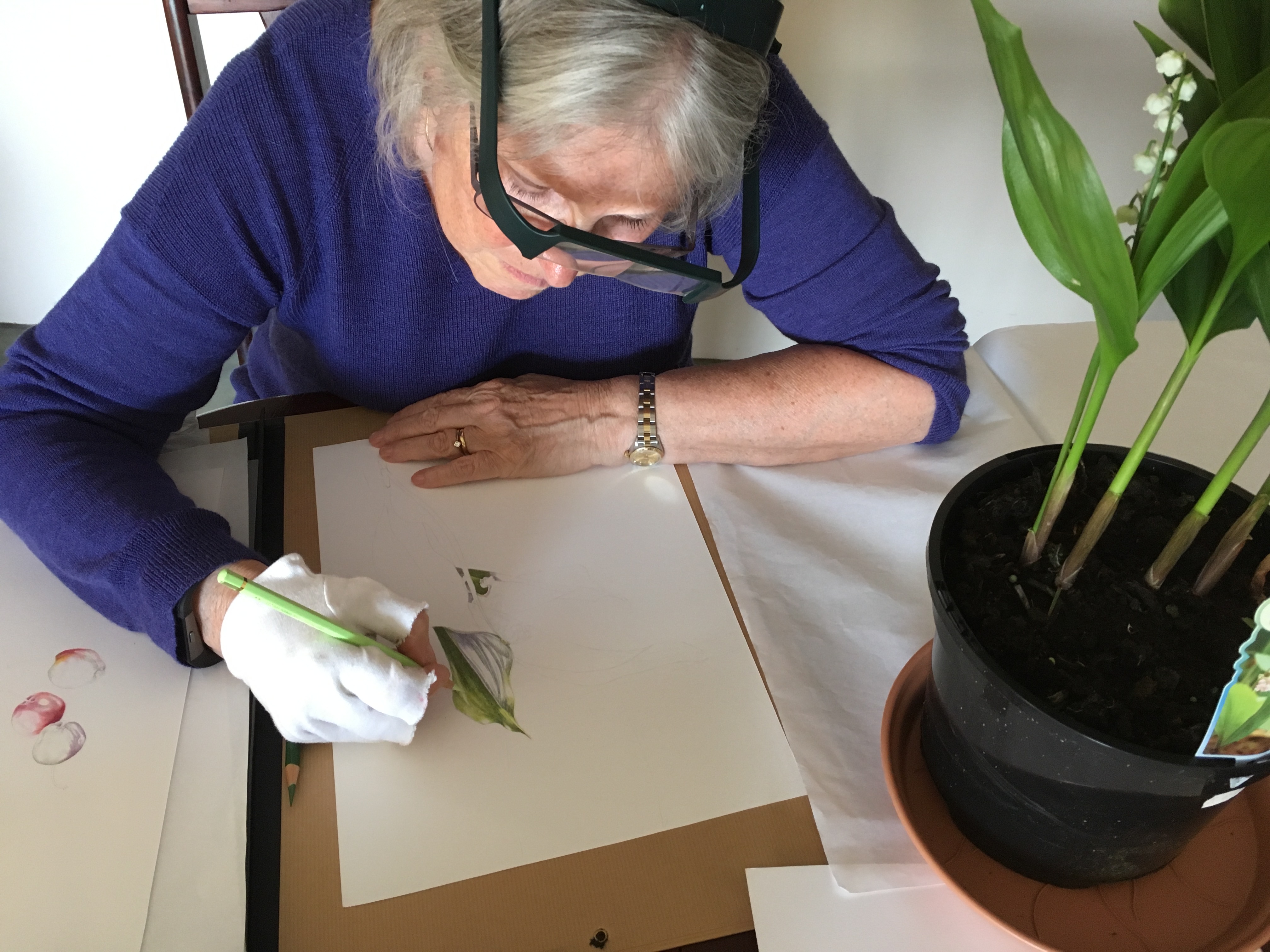
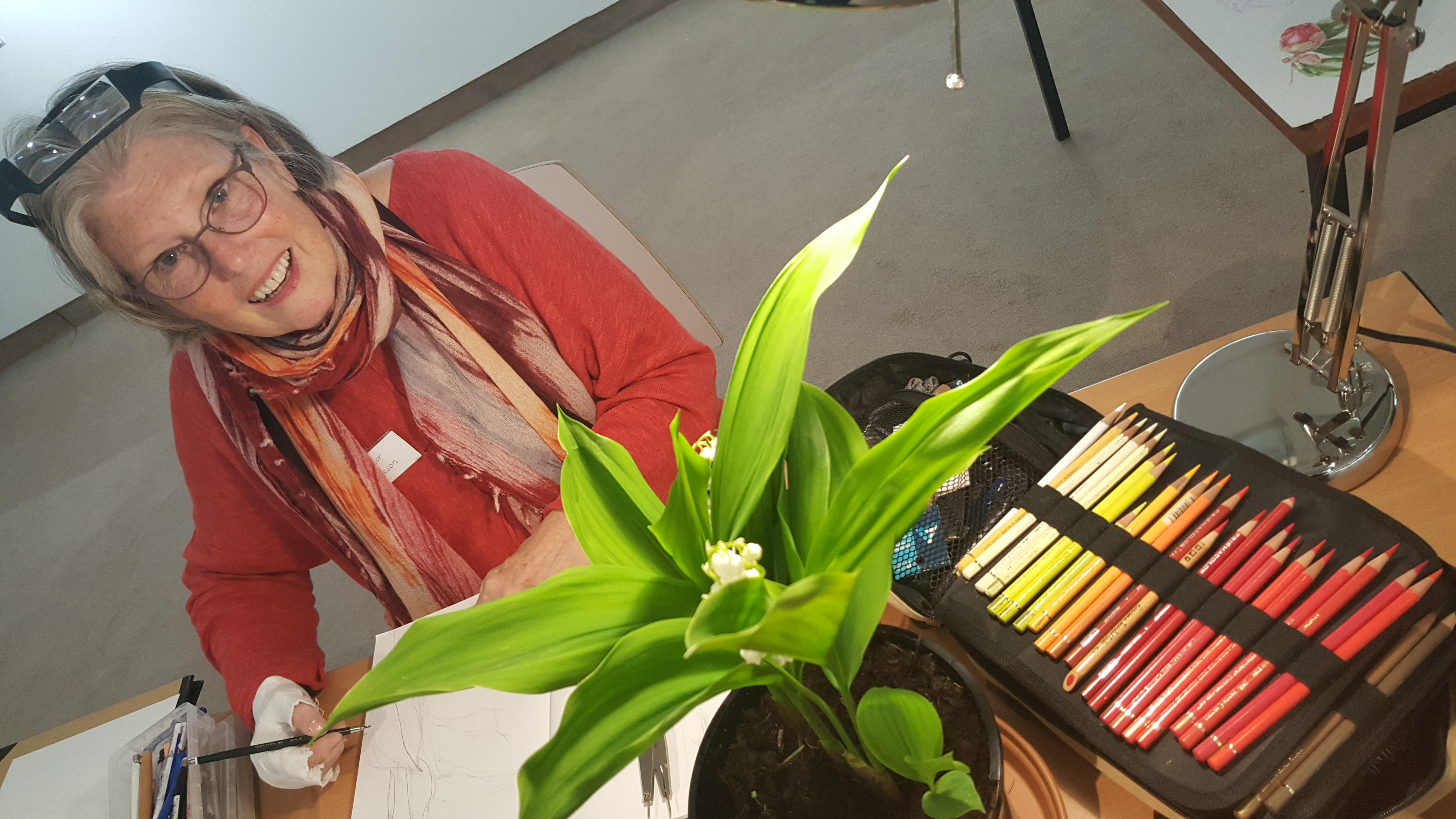
Starting a Colour pencil demonstration of Lily of the Valley. Worldwide Day of Botanical Art 18 May 2018

A little further along with the demo on Monday 21 May

For more information about the Botanical Art Worldwide Exhibition; In Ruskin’s Footsteps, go to

www.britishbotanicalartists.com.The exhibition is on until 9th June 2018. Generally botanical artists are there demonstrating and on the last day there will be a tour of the pictures and a talk.

In between all of this I have managed to squeeze in the Chichester Open Studios weekends and I had quite a few interested visitors. Each evening though it was back to working until the early hours of the morning, on ‘In Ruskin’s Footsteps’.

At Chichester Open Studios art trail, starting off the final work for a commission. A Bramley Apple in watercolour.

To show you a little of my own demos whilst in Lancaster I am including the unfinished picture I worked on in coloured pencil. I chose a Lily of Valley as so many people worry about white flowers. I wanted to show how best to do it. I used a lamp to highlight from the left and some of the leaves became backlit creating a beautiful architectural plant. The picture will remain unfinished as the flowers are now long gone, but it will be useful to demo on.

General Data Protection Regulation (GDPR)

Sorry to have to bore you with this! WordPress already has a system in place that protects you if you have signed up to follow my blog. But if you would like emails directly from me about workshops and tuition, or information about my botanical art news in advance of exhibitions etc. then to hold your name on my mailing list I need your permission.

My mailing lists are stored on my computer address system and on a MailChimp list. They are used solely by me and I do not give them to anyone else.

If you would like to have my botanical art news, please click on this link and follow it right through: http://eepurl.com/dqv4ML

If you want to hear from me about workshops and tuition, please click on the link and follow it right through: http://eepurl.com/dqwEtb

Each link enrols you onto a different list, so if you want to hear directly from me about both my news and tuition opportunities , follow through with both of them.

You can easily unsubscribe at any time. Thank you for reading this.

Where to find daffodils and global warming!

At the weekend I had a two-day workshop with the title of ‘Daffodils – Herald of Spring’.

Looking into most gardens on the south coast of England, the daffodils were long gone, so how did I decide to teach this subject at this time of the year.

When planning my botanical art workshops, I look back at the photos I have taken of daffodils over the years and note the dates. Before my introduction into the digital age, I remembered that for my 49th birthday (21 years ago), we had snow (in the UK) and the daffodils were just coming out.

Working from then until last year, I expected that there would still be some in the garden. If you remember last year the daffodils were extremely early and we thought that was that. But then we had a new flowering and rather than just a few odd ones, there was an almighty crop. Not so this year!

Robin and I went trailing around Chichester and surrounding areas buying up what we could find. It was an interesting exercise.

As you can see, in the end we found the remains of some tiny ‘Tête á Tête” bulbs still flowering, but also some Narcissi. Therefore the workshop was saved.

As a note here, all my workshop titles where specific plants are mentioned, are just suggestions for subjects to paint. My workshops are not based on a step-by-step approach, but on individual support to improve your own technique.

Here are several pictures from the workshop including a preparation page, a very rough sketch and a ‘before and after’ picture showing the importance of cleaning up around the image as a last task.

I will let the pictures speak for themselves, but once again I met with some lovely, hard working botanical artists and I believe a good time was had by all.

Now to prepare for the next two weekends, which is the Chichester Open  Studio art trail. In addition to my usual exhibition space where my workshops are held, I will be doing some  work towards pictures I will need to have finished before the end of the year. Robin will be looking after the exhibition and you will find me tucked away in the shed at the bottom of the garden. Do come and visit me at Venue 35 in Bosham. For more details visit page: https://gaynorsflora.com/exhibitions/.

This slideshow requires JavaScript.


Magnolia x soulangeana soon in bloom

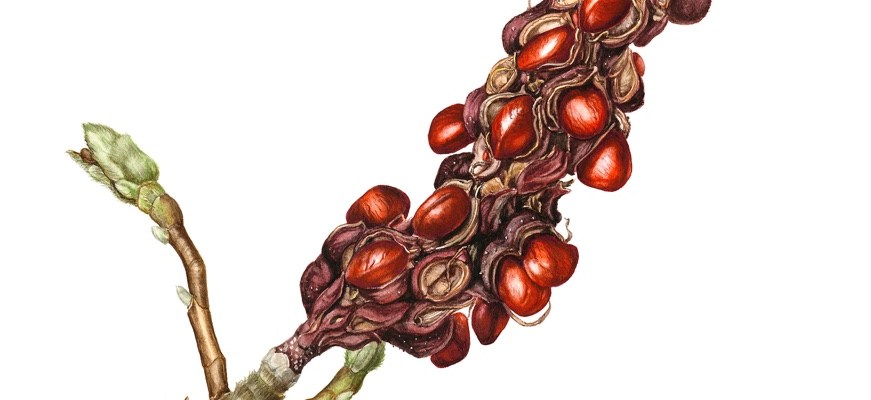
Magnolia x soulangeana: Ripe fruit and seeds. Watercolour on hot pressed paper.

In 2011 I had finished three years work on a series of paintings showing a year in the life of the Magnolia x soulangeana. The series was exhibited at the RHS that year and I won a Silver medal – my first RHS medal. One of the paintings was chosen by the Hunt Institute for Botanical documentation in Pittsburgh, USA and it was first exhibited there in 2013. Since then it has had a three-year tour around the USA with the rest of that exhibition, but is now back in their archives in Pittsburgh.

© Magnolia x soulangeana: Maturing Blooms

I was super lucky to have some huge fruit on the tree the years I was doing the paintings and they were featured. But since then tree from which all the paintings were done, has not produced much fruit at all; in fact nothing until last year when it had a couple of small ones. I think the tree knew that I was painting it’s portrait and wanted to show itself at its most beautiful.

© Magnolia x soulangeana: Ripe fruit and seeds

I am hoping that the tree is building itself up to another magnificent display later on this month. At the moment there are masses of terminal buds in which the blooms develop and you can almost see them growing a little more for each day.

It is obvious that the Magnolia tree means quite a lot to me after having studied it so closely for those three years. I learnt such a lot about it, how it is fertilised and why it is a particular type of bug that  is responsible.

If you want to know more about Magnolia x soulangeana, and you are interested in botanical art as an artist, do book to come to my workshop Friday to Sunday 31 March to 2 April. I still have a few places available.

This is the first time that I have had a workshop on this subject – and you can probably guess why. But now I would love to help others who would like to paint the blooms in watercolour or coloured pencil (dry), or even draw them in graphite.

Get in touch with me as soon as you can so that you don’t lose this opportunity.


Go back

Your message has been sent

Warning
Warning
Warning
Warning

Warning.

A very good three-day botanical art workshop.

What a week it has been!

Following loads of preparation, ABBA (the new Association of British Botanical Artists) launched its new website on Wednesday and I had one of my workshops on Thursday, Friday and Saturday.

The steering group for the new organisation put in a lot of work up until the launch of information about the Worldwide Botanical Art day in May 2018. For more information look at the website: Www.abba2018.wordpress.com. We have had a lot of very positive feedback and quite a few botanical artists have already started thinking about a species of plant they want to paint.

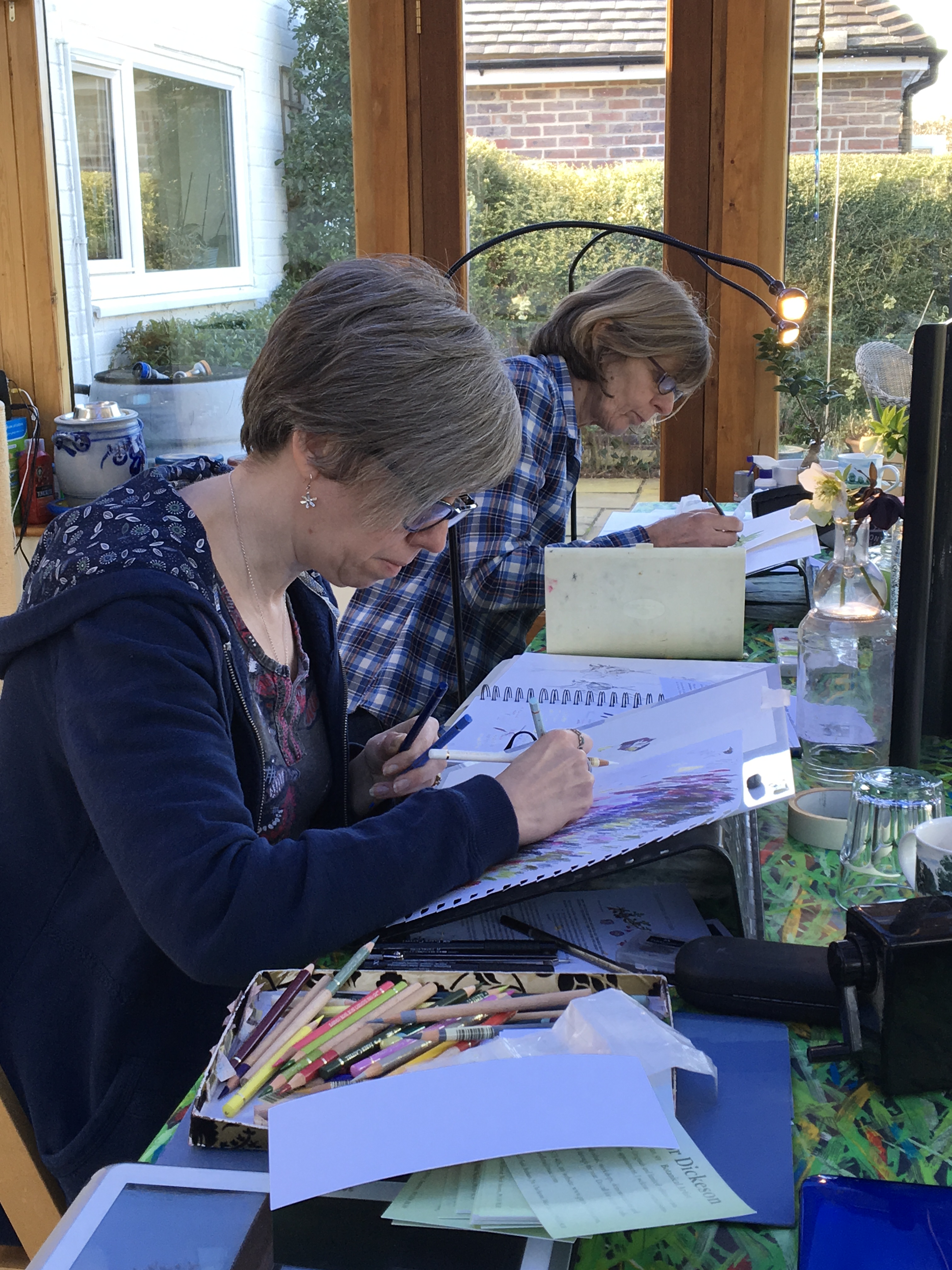
The botanical art workshop concentrated on painting pale flowers on white paper. My students were extremely brave and worked on the sort of thing a lot of people fear doing – painting white flowers on white paper. They actually chose to do this, although I suggested they could work with any pale flower.

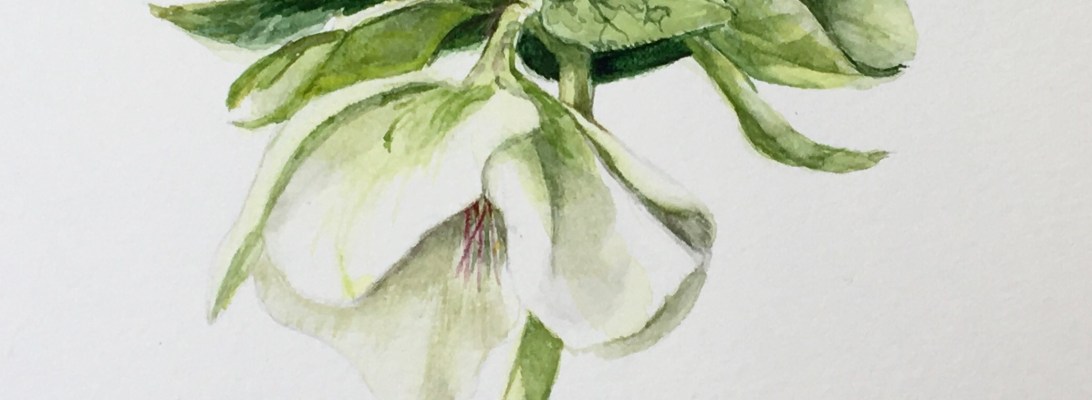
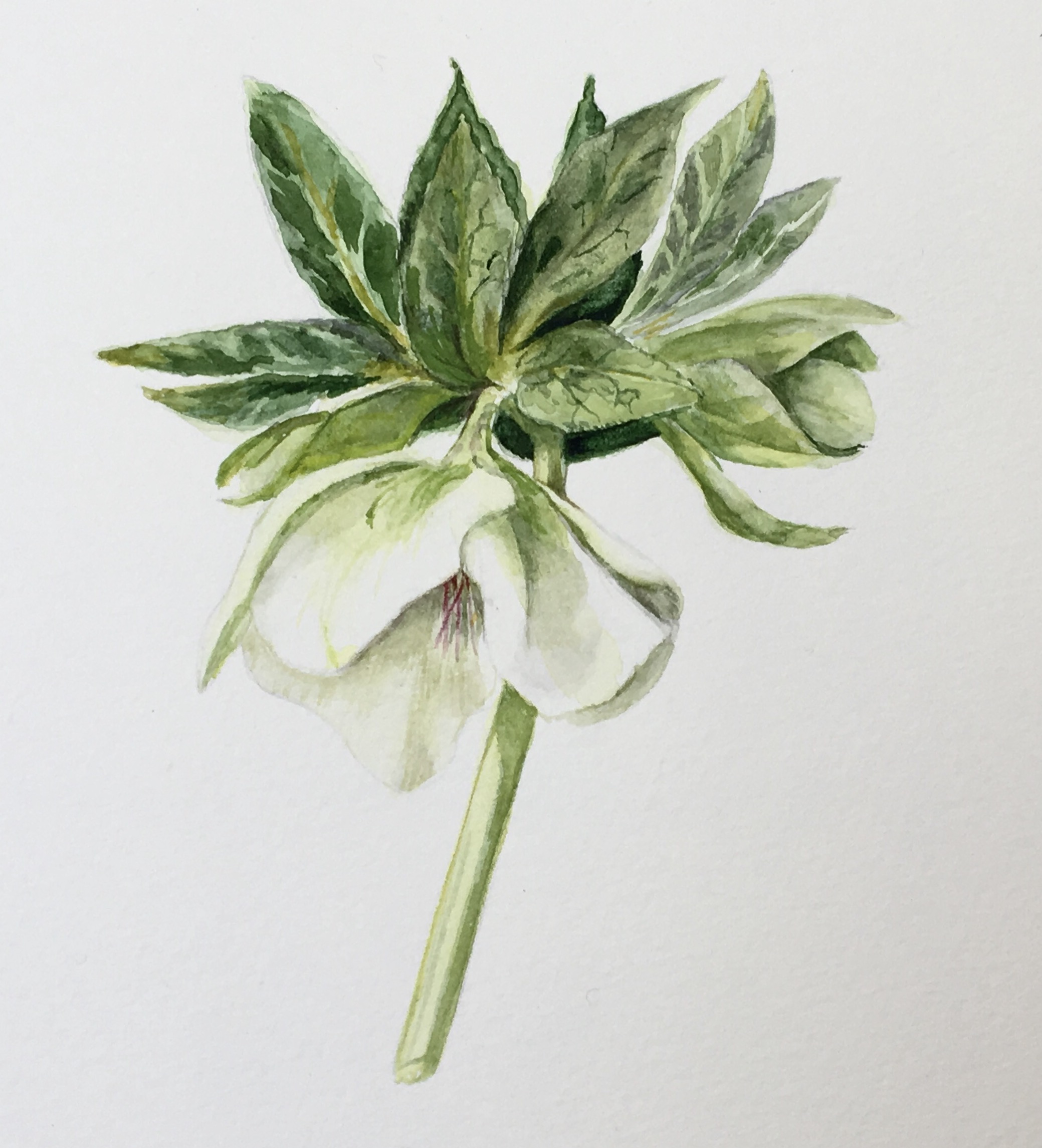
Here are a couple of the results. One in watercolour and one in coloured pencil.img_0214

Hellebore in watercolour

Hellebore in coloured pencil


The trick is to try and paint your pale flower with a background of darker colour – leaves or a dark flower.

I was extremely pleased with the results, as were they.

Tomorrow we are going for our long walk to build up for long days at the end of the week when we will be at the RHS exhibition in London.

Sarah Morrish and I will be there for both Friday and Saturday, demonstrating and giving out information about the Worldwide botanical art day. Lucy Smith will be joining us for one of the days and the intention is for us to use different methods of drawing or painting native plants.

Hope to see you then