First of all I hope that everyone able to follow my blog had a very peaceful Christmas. Thank you for your interest in my work over recent months. I hope that it has encouraged your own botanical art involvement.
I have been quiet for a while as I have been so completely engaged in the UK preparations of the Botanical Art Worldwide Exhibition opening 18 May 2018. But during relatively quiet moments I have been working on my next painting for the Benton Irises Florilegium.
Today, has been one such day. Although we have family visiting over Christmas and more due over the New Year Period, I managed to work a little on the composition of the Benton Iris Farewell.
This is an absolutely stunning Iris which at first glance is white with reddy-brown falls. But when taking a second look, white does not describe it. The Iris seems to pick up all the colours of the rainbow!
I now have several plants in my garden and in the spring made full use of all the days I could sit out in the sun and sketch it. These are some of my preparatory sketches.
This slideshow requires JavaScript.
Today I worked on the composition and it is completely different to that which I had anticipated. I had already scanned my sketches and moved the different parts around on my computer screen after having worked out where my Golden section and area of focus was likely to be. From this exercise I thought I had a rough idea of what I wanted to do, so started sketching it.
This is my rough layout. Where do you think the area of focus is? Is it in a Golden section? Is the eye lead around the composition?
Colours will also influence the final composition as will weight of the various elements.
I hope to keep you up to date with how the painting develops, but that is dependent upon the amount of work with the Worldwide exhibition. Do look at www.britishbotanicalartists.com.
The last time I posted a blog about my Thyme painting was 30 May, when I was doing sketches of it. I had also started my final painting. For those interested you can go back to that blog to see my thoughts (written down) and preparations. Since I started I have been doing a lot of sketches for other plants too, which hopefully I will talk about in due course. You have seen the preparation I did for one of the Norwegian plants.
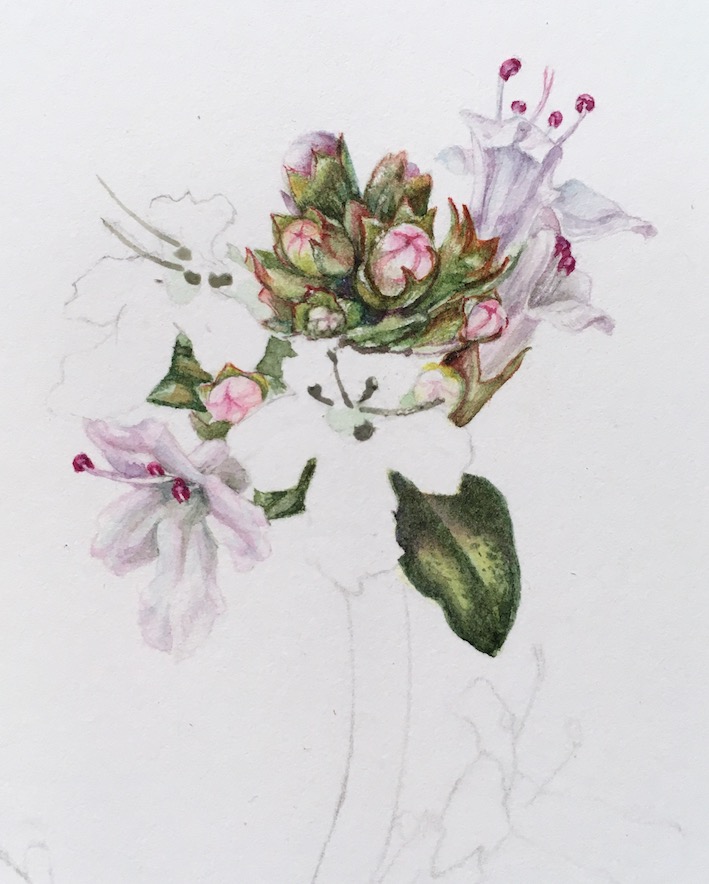
I eventually returned to the Thymus vulgaris painting, but for some reason I was unhappy with it. This sometimes happens and I know that although I might not have a good reason for starting again, I know that were I to do so, my second attempt often goes without any hitches. On this occasion, I felt that one of the small flowers was a little too dark, so 1 August I started it again. I won’t mention how many hours I used on the first attempt, but the second one took 65 hours – with the sketches and prep in addition.
A few of the pictures I took on the way:
This slideshow requires JavaScript.
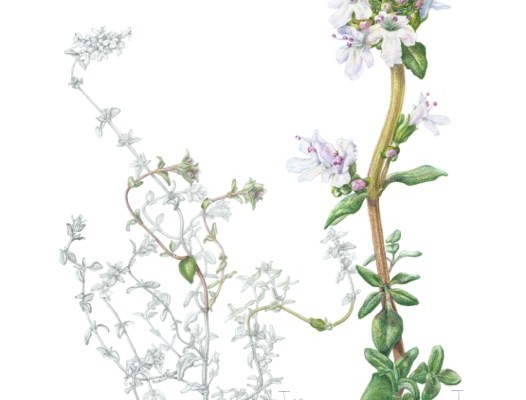
And so the final painting that will be delivered at the beginning of October.
Far from common time – Thymus vulgaris. Watercolour and graphite.
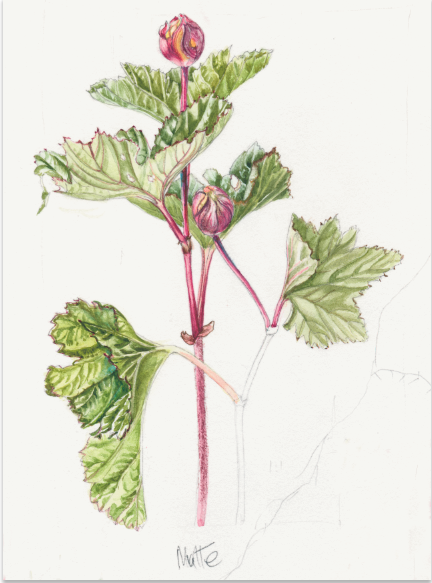
This is a plant found amongst other places, in the mountains in Norway. It is one of the reasons For my next RHS exhibit – probably in 2019, I decided to paint Norwegian mountain plants that provide food for us mere mortals. Its scientific name is Rubys chamaemorus, but the common name in Norwegiansis ‘Multe’, and in English, ‘Cloudberrry’.
Unripe Cloudberry
Why is it called ‘mountain gold’? Apart from its very special taste, it is not always easy to find. It likes boggy areas and generally you will find that Norwegians will not tell anyone else where ‘their’ patch can be found. I know one or two places because I used to live in the mountains in Norway. I also found some whilst staying in a friend’s cottage this summer (Tusen takk Eva og Jon for låne av din nydelig hytte Thank you Eva and Jon for lending us your beautiful cottage). I was in the mountains specifically to sketch these and other plants I had decided to include in my exhibit.
If you travel to Norway and ask someone where cloudberries can be found, unless you know your host well, it is unlikely that you will be told.
The picture on the right is an unripe Cloudberry. There are very strict laws governing this plant, therefore it is illegal to pick them before they are fully ripe. At that stage they are a beautiful golden orange colour. Unfortunately I have no pictures of a ripe fruit as this happens in the autumn, that is why I need to travel back again next year to sketch the ripe fruit.
Over the years I have picked a lot of Cloudberries and thought I knew them! I also found that Norwegians are as un-knowledgeable as I am. Because I am now studying the plants to paint I decided to delve deeper. But I also needed to find the flowers and the unripe fruit to draw. This year, there were few fruit ripening, but an awful lot of flowers. On closer examination and with the help of a very good series of old botanical books borrowed from the Eggedal Library (Tusen takk Jorunn. Thank you Jorunn), I discovered that Cloudberries are dioecious, either male or female plants. Each plant has a huge underground root system travelling for some distance and that is why I found difficulty when looking for the unripe fruit.
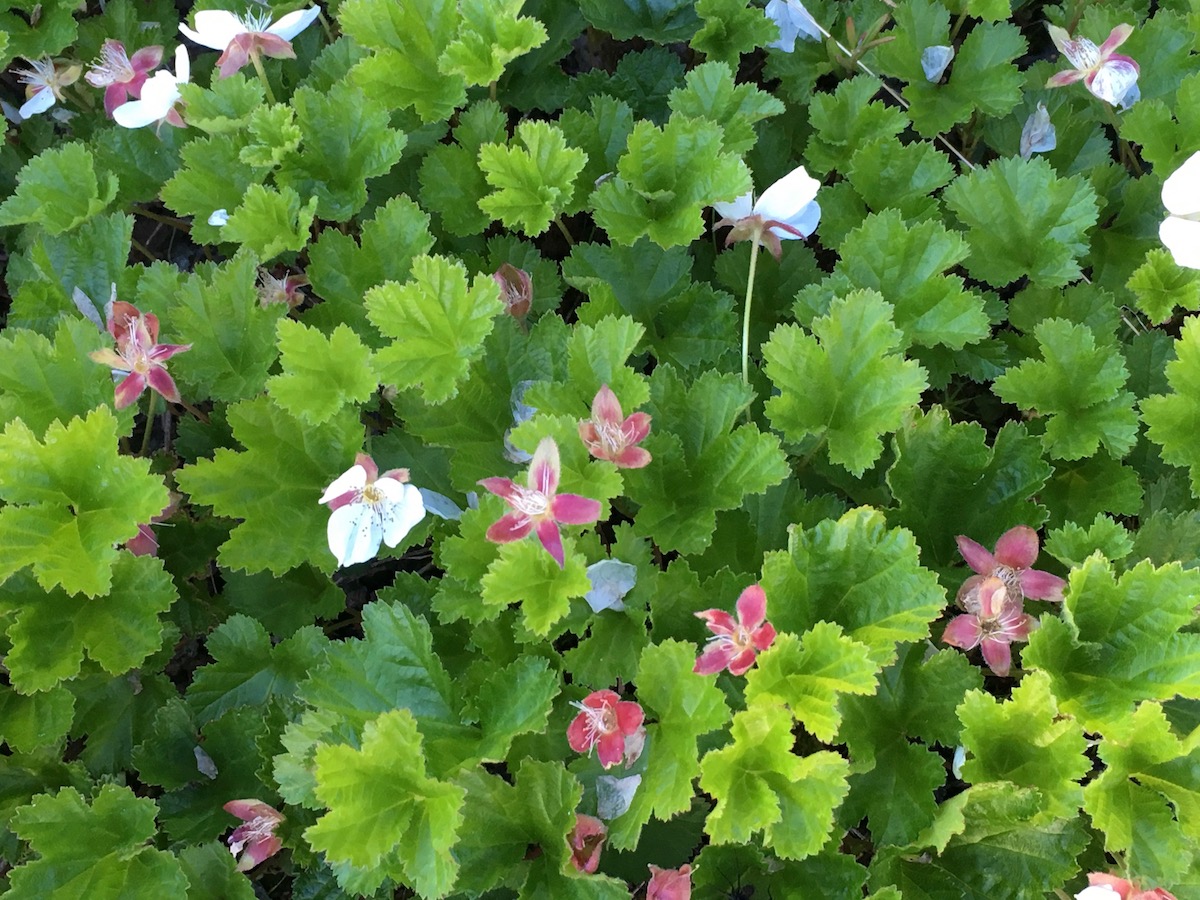
Patch of male cloudberries.Patch of female cloudberries.
The large patches of flowers were mostly all male, but we were soon able to distinguish these patches at a distance. They had a lot of beautiful white flowers, but also many red sepals where the petals had fallen off.
The female plants seemed to be few and far between – less than last year. The flowers were fewer and smaller, but with several immature fruits at different stages of development.
Like so many of the plants I have painted, I study them first then become completely intrigued by them. This of course helps me portray them as best I can.
Before I show you the sketches, this is a picture of a small female cloudberry patch in quite a boggy/Sphagnum moss area, together with nearly all of the plants I had chosen to do and which I will talk about in other blogs.The picture also includes Robin’s boots, Vaccinium oxycoccus(which I didn’t think I would find as its so tiny),Vaccinium myrtillus (small blueberry),Empetrum nigrum (crowberry),Vaccinium uliginosum (bog blueberry) and Andromeda pilifolia (a heather I won’t be including in the series).
Robin’s foot and a mix of plants.
So what is the difference between male and female flowers? It should be obvious, but I’m afraid I never looked and saw previously. I just took things for granted.
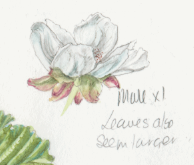
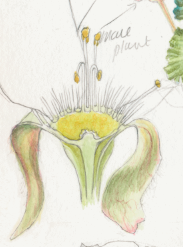
Male Cloudberry flower – larger than female.Longitudinal section of Male Cloudberry flower.
The male flower contains stamens in a ring round the inside of the outer whorl.
Smaller female cloudberry flower.Longitudinal section of female cloudberry flower.
The female flower is slightly smaller than the male flower, has several styles and stigma in the centre – one to each ovary, but round the edge is a ring of white, sterile stamens.
Cloudberry plant with developing fruit.Sketch page of Cloudberries.
Have you ever really looked at Thyme when you are using it in cooking? I bet you haven’t!
I have been asked to paint a botanical picture of Thymus vulgaris. Note the correct way of writing a binomial scientific name correctly; all in italics but with the capital letter at the beginning of the first word only.
My heart sank when I got the email asking me to do this particular plant. Imagine, all that ‘tiny-ness’! How on earth was I going to create a beautiful picture from this subject, one in which the viewer wanted to take a second look. The picture still isn’t painted yet, so the result will not magically appear at the end of this blog. However, I thought you might be interested in both my thought processes and my work progress.
I eventually got a plant that said it was Thymus vulgaris.
Thymus vulgaris
In actual fact, I got three – all of them different. I knew that the leaf had to have a furled edge; two of them had furled edges. When the flowers eventually started to appear I knew that the stamens would be protruding from the tube created by the four petals. One of them did not have protruding stamens as they remained just under the fused lip of the petals. The last one did all the things I expected it to do. Or did it?
When the last plant had flowered for a while, some of the flowers didn’t have visible stamens. After much research I discovered that in fact the same plant can have flowers with all the reproductive systems in place, but some flowers are sterile as they only have a style and stigma. Whew, what a relief. I now had a suitable subject. Do you like it? But where to start!
A quick look at the leaves
As you now realise I had to do quite a bit of investigating in relation to this plant. It helped me get to know it so that as I observed, researched and sketched, thoughts for my final composition began to be a little clearer. I also found that although it was a challenging subject (apparently I like challenges). I also really began to appreciate the plant and wanted to include things in my picture that would tell others about the plant. However, one of the challenges is that there were to be no dissections! That is often how I show others of what a plant is comprised.
Botanical art is an exciting subject and it really helps you to observe things around you. So we start off with the leaves. Have you noticed anything strange about them. Have a look at a real one, rather than my pictures.
Trichomes on the leaf
You will notice the appearance of little dents in the surface of the leaves. This is the same ones under a microscope. Do you see the little dents are in fact Trichomes, a special type of hair that produces aromatic oils. The oil is the part that smells so good when you crush the leaves before adding them to your cooking. But see if you can see where else the hairs are and the oil is:
Trichomes on the flower budTrichomes on the flower
Every part of the plant can be used in your cooking as every part produces the aromatic oils. Exciting isn’t it?
But what about the parts that need to be included in my picture? Although I found this particularly interesting and wished I could include this information in my picture, this depth of detail was not needed by the client.
However for me, Thymus vulgaris had moved up in my regard from being a plant with lots of tiny bits that smell nice, to being a complex and interesting plant. I hope I do it justice.
A Flower spike
I decided to do a whole lot of sketches in my sketch book. This helps hands to get to know the painting of the plant, the size at which I am showing it, the colours and hopefully an idea for the composition.
Me painting away with a magnifier on my head.
To see the plant I needed to use a magnifier, which lead me to enlarging the flower spike for everyone to marvel at the detail of the individual flowers.I did three spikes before deciding which one to use for my final composition. You can see by my clothes that the weather was a lot colder when I started this project!
<a
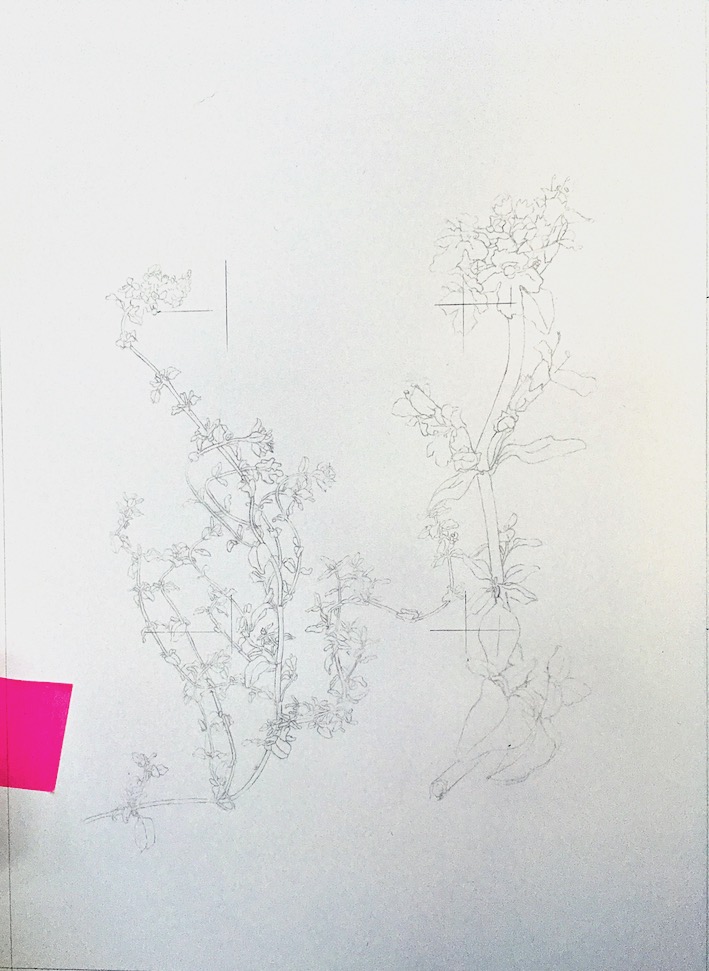
I now had a better idea of which sketches I wanted to include in my final picture. I wanted to show the flower spike enlarged so that the flowers with their magnificent coloured anthers were clear. I also knew that I needed to give a suggestion of the surface texture of the leaves, front and back as well as the growth habit of the plant.
A trial composition,Final compositionThe final painting started.
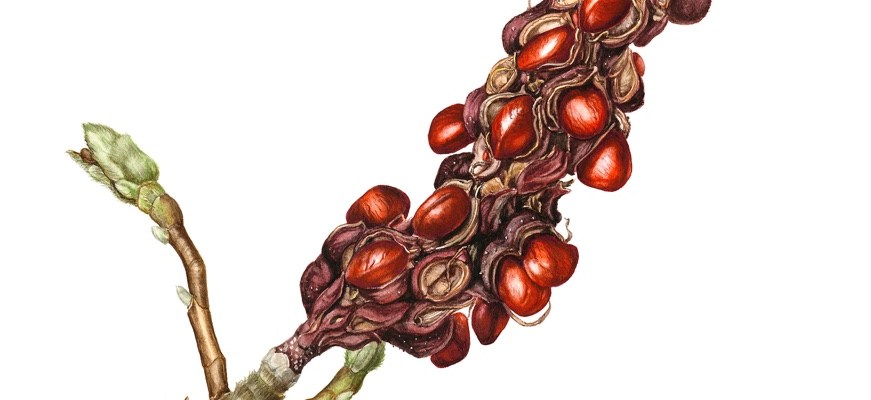
In 2011 I had finished three years work on a series of paintings showing a year in the life of the Magnolia x soulangeana. The series was exhibited at the RHS that year and I won a Silver medal – my first RHS medal. One of the paintings was chosen by the Hunt Institute for Botanical documentation in Pittsburgh, USA and it was first exhibited there in 2013. Since then it has had a three-year tour around the USA with the rest of that exhibition, but is now back in their archives in Pittsburgh.
I was super lucky to have some huge fruit on the tree the years I was doing the paintings and they were featured. But since then tree from which all the paintings were done, has not produced much fruit at all; in fact nothing until last year when it had a couple of small ones. I think the tree knew that I was painting it’s portrait and wanted to show itself at its most beautiful.
I am hoping that the tree is building itself up to another magnificent display later on this month. At the moment there are masses of terminal buds in which the blooms develop and you can almost see them growing a little more for each day.
It is obvious that the Magnolia tree means quite a lot to me after having studied it so closely for those three years. I learnt such a lot about it, how it is fertilised and why it is a particular type of bug that is responsible.
If you want to know more about Magnolia x soulangeana, and you are interested in botanical art as an artist, do book to come to my workshop Friday to Sunday 31 March to 2 April. I still have a few places available.
This is the first time that I have had a workshop on this subject – and you can probably guess why. But now I would love to help others who would like to paint the blooms in watercolour or coloured pencil (dry), or even draw them in graphite.
Get in touch with me as soon as you can so that you don’t lose this opportunity.
Tomorrow two of us are travelling up to London to set up the ABBA table in the RHS Lindley Hall, Vincent Square near Victoria Station. It will be the RHS botanical art show with the best of International botanical artists showing their work. Neither of us are exhibiting our own work this time, but we will be demonstrating different techniques.
The main reason for having the table at the exhibition is to talk about the plans for the Worldwide Botanical art day in May 2018 and to encourage British botanical artists to take part. A new Association of British Botanical Artists (ABBA) formed to do this has put an initial ‘call for entries’ on it
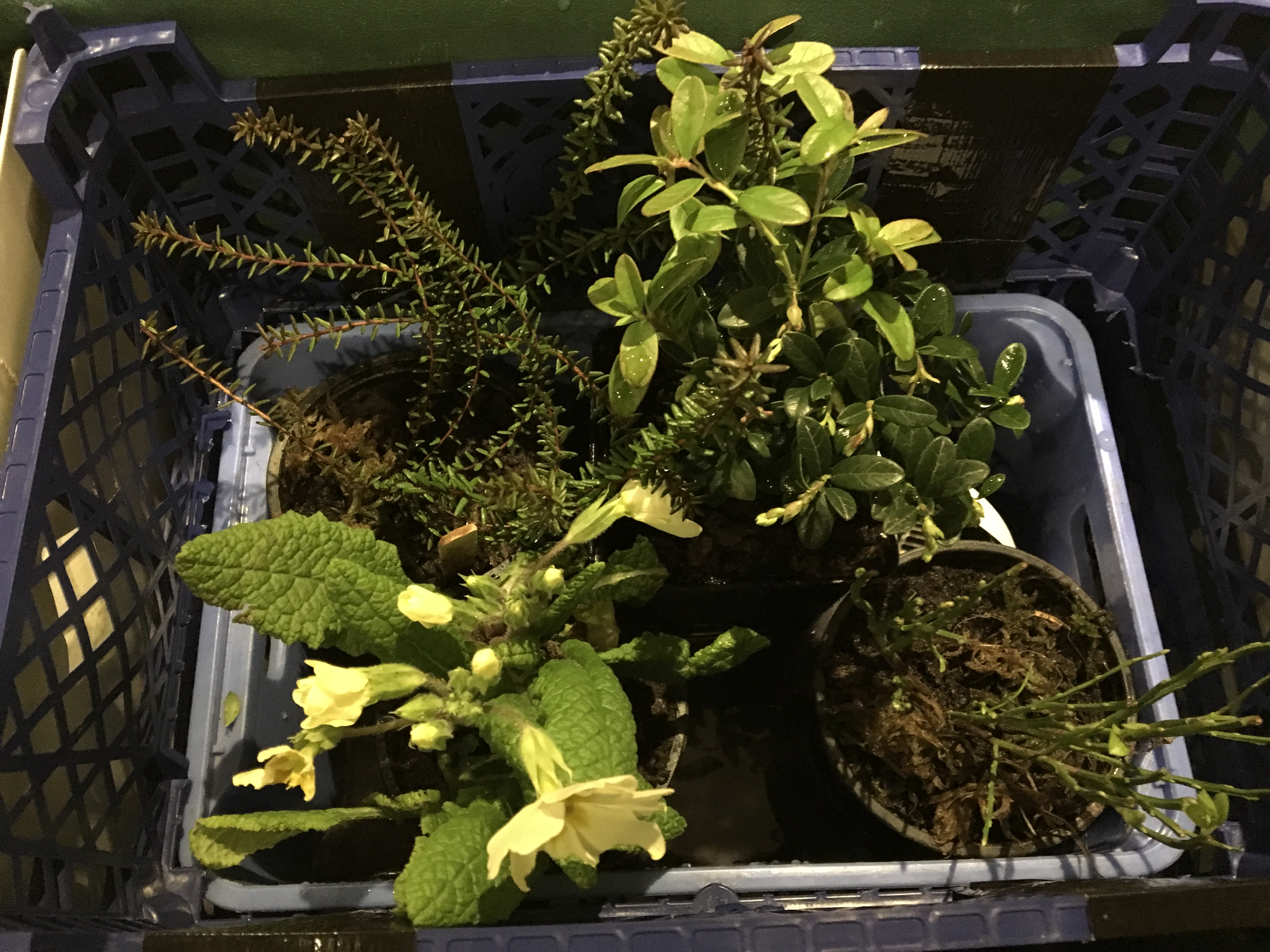
On Friday and Saturday this week, I have chosen to demonstrate a sketch book or study page in graphite and watercolour from one of the native plants I have packed to take with me. Come along and see how I do this.
Apart from the Primrose, do you know what these plants are called?
The one on the right, with hardly any leaves just yet, is a Bilberry. This is a small wild blue berry. It doesn’ look very interesting at the moment, but if you are going to paint the portrait of a plant, including something from various stages in its life cycle, makes the resulting picture more interesting.
The plant above the Bilberry with the small oval leaves is Cowberry and has small red berries. You might know it as Lignonberry and has smaller and sharper tasting berries than cranberries. This plant has the beginnings of tiny flower buds.
The one above the Primrose is a Crowberry and will eventually have small, almost black berries. Again the plant doesn’t seem so interesting in this stage of its life, but I think might offer some challenges whilst painting its portrait.
Common for for all three species ( not the Primrose) is that they all produce fruit that is edible.
I am lucky enough to be able to do some sketches now, while the plants are only just coming out of their winter state. This will be particularly useful for me and for future work I have planned.
Do come and see us at the RHS, Lindley Hall, Vincent Square, Friday and Saturday.
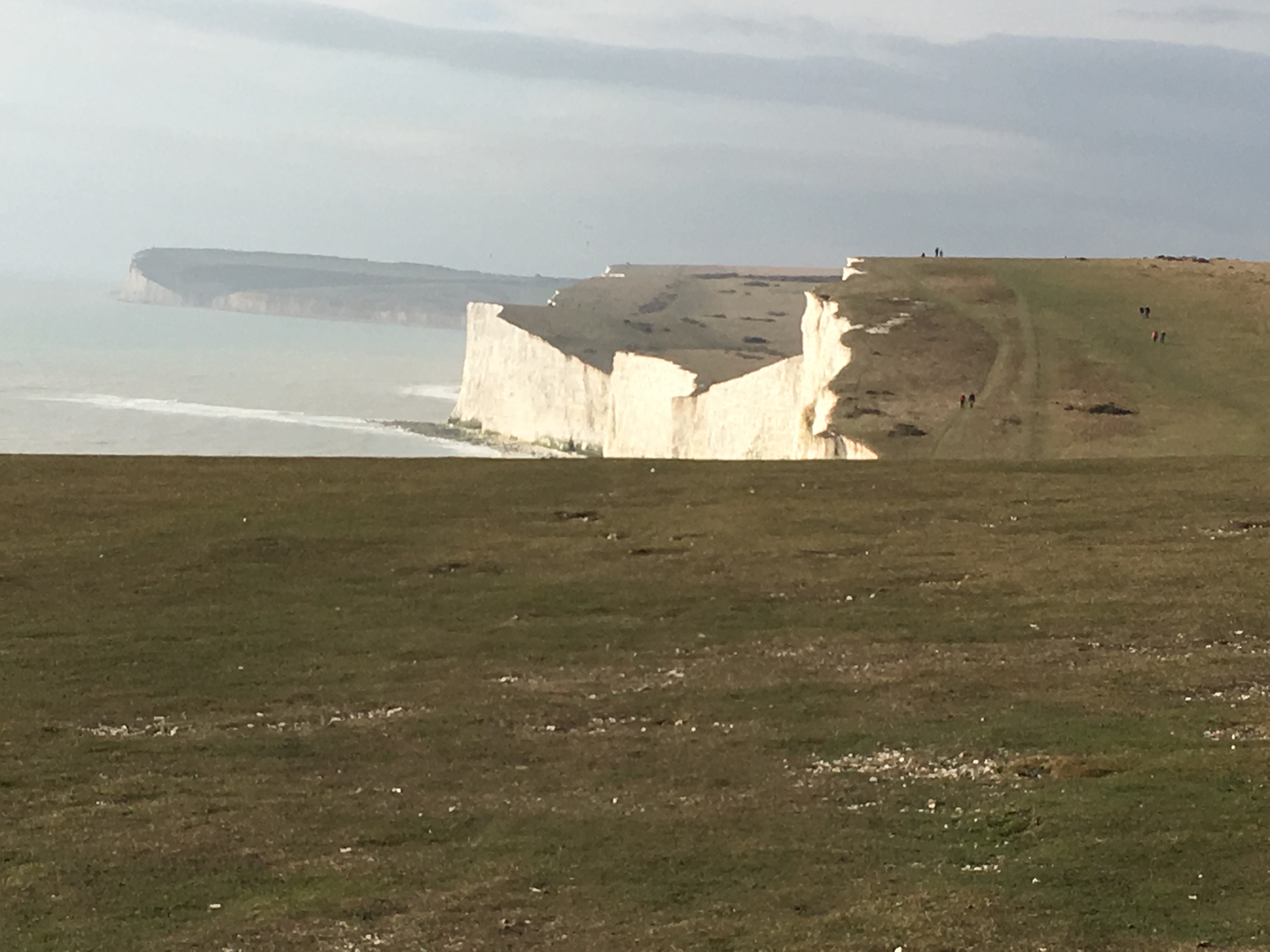
We have just got back from long, tiring hike, with a lot of steep hills. We started near Cuckmere Haven, went up through the Friston Forest and then down to the Birling Gap, going along the cliff path in the Seven Sisters Park back to Cuckmere.
I generally write about something pertaining to botanical art and this is no different. But if one is able to get around – and I recognise that not everyone can do so, getting out into nature to look at the subjects it provides for us is exciting. Unfortunately not everyone does have the ability to get around and hopefully my blog can bring some of what I experience to those people.
I have spoken a lot about native flora of late and of course that is because I am involved in the ABBA team that is putting the UK on the International Botanical Art map in May 2018.
I, like many other botanical artists have always painted or drawn the plants that do something for me, no matter where those plants have originated. The topic of the Worldwide exhibition is ‘Native plants’, therefore I have looked long and hard at the pictures I have painted before and those I want to paint in the future. There are so many plants that are considered native and often they are right outside our back doors. But they can also be quite stunning.
Click on this link to see a picture of Bee Orchids at the bottom of the page, painted by Claire Ward. I had to ask her if they really were native plants – and yes they are. http://www.abba2018.wordpress.com
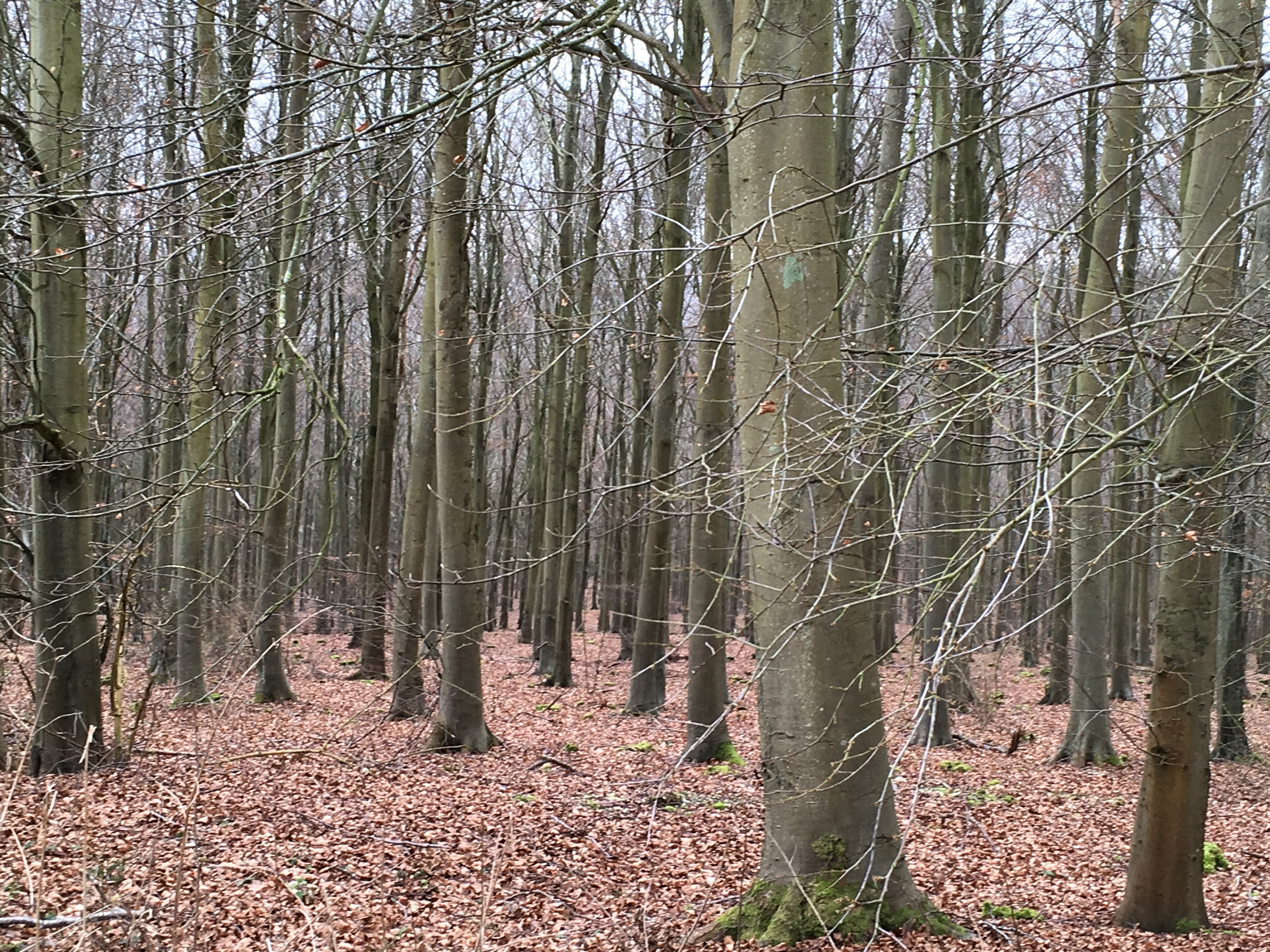
Back to the Seven Sisters and Friston woods where we saw this lovely forest of Beech trees.
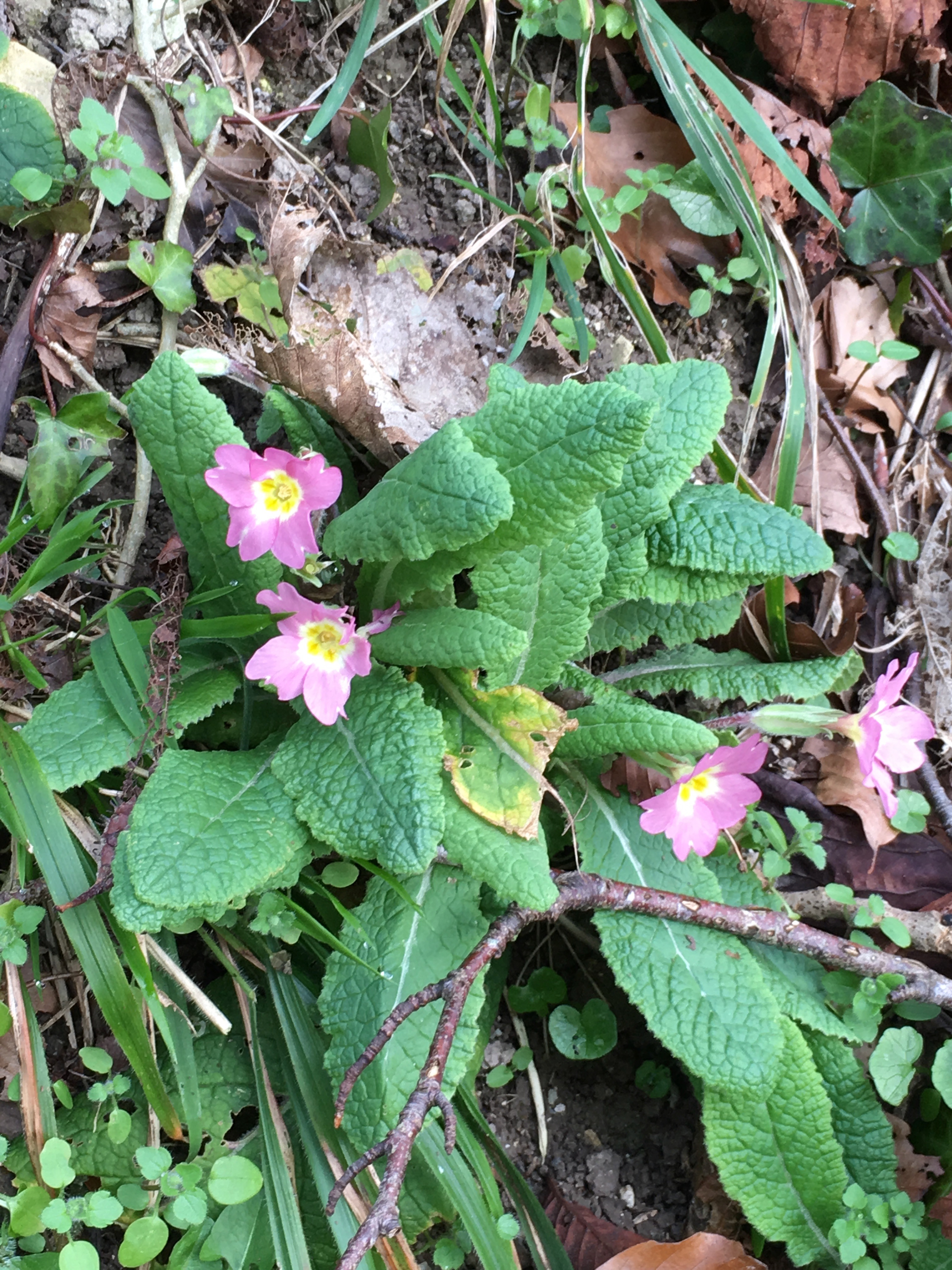
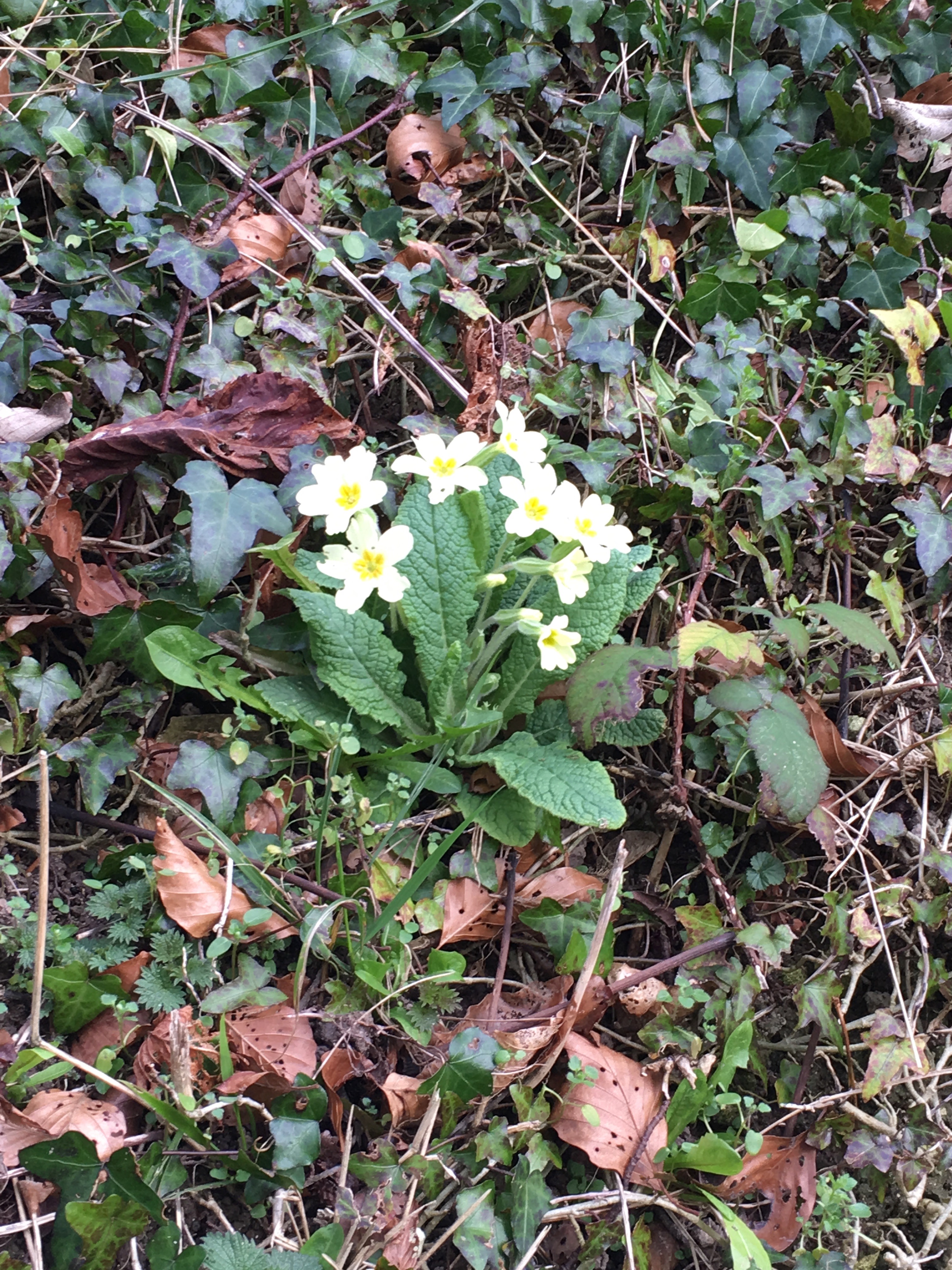
Apart from swathes of Snowdrops at the beginning of the walk, we also found clumps of Primroses –
–
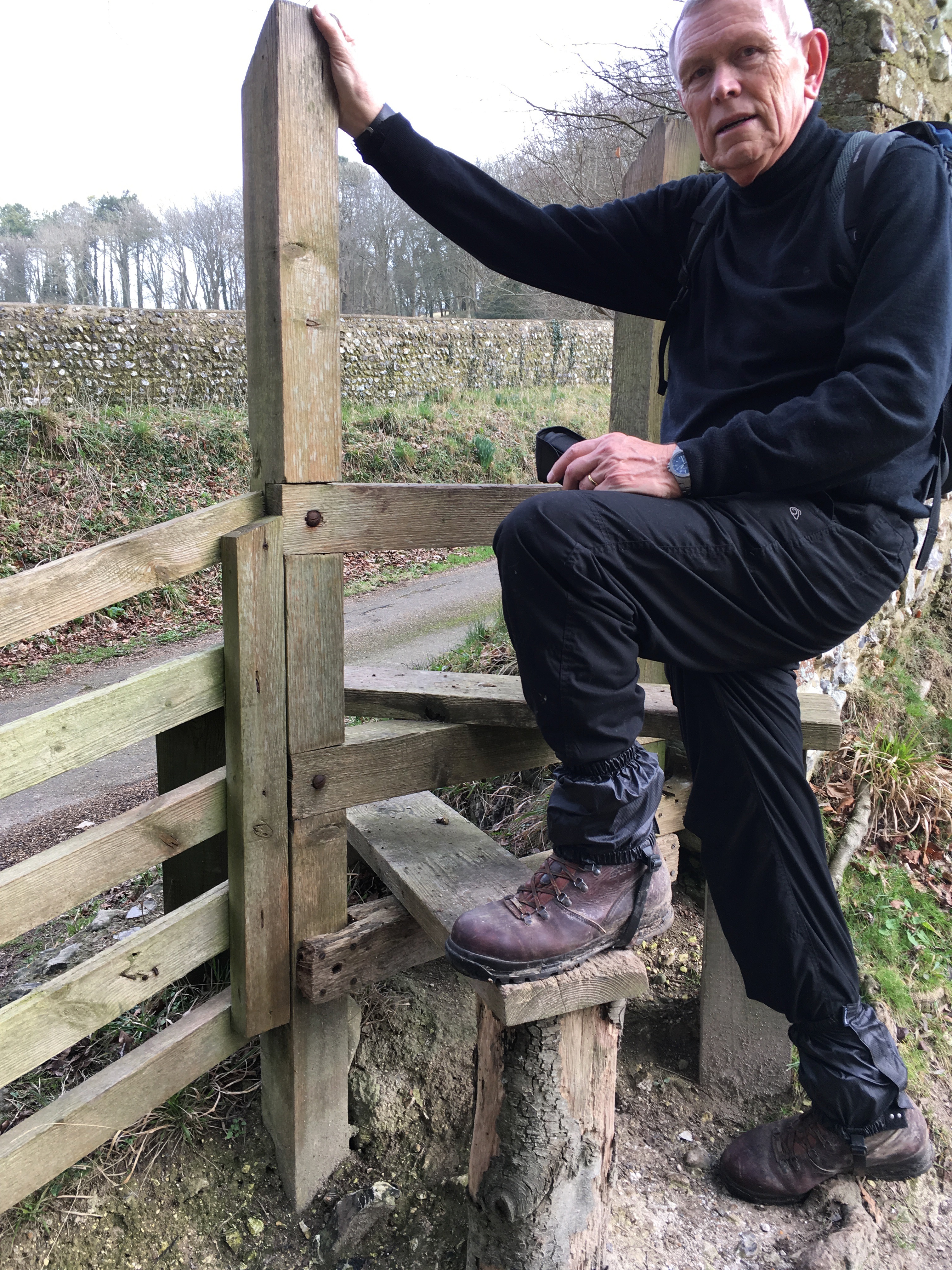
and some stiles! Not good for us old people. Bear in mind Robin is just older than me (although he hides it well), but it is me that struggles so much with these contraptions. I can walk for miles over rough terrain, up and down. But climbing a stile gets me. I think those stiles will get me before walking a long distance does. I am so glad when I see a gate that can be opened, and would happily hang over an edge to get round a post rather than over the stile that might be inbetween. Not to mention some of the stiles that are so rotten, that they are dangerous. None were today.
We had tea and cake, outside at the Birling Gap. I only mention that to show the difference in the weather over one week. Last week it was bitter cold, but today was quite pleasant if one kept walking.
The Seven Sisters is a series of chalk cliffs that rival Beachy Head (the White cliffs of Dover). Part of the South Downs Way runs along the cliff top, which goes up and down seven times. In fact, I thought I counted eight, but by the time I got to Cuckmere Haven, I was past caring. Along this stretch there was a lot of flowering gorse. Pictures do show a little of the beauty up there.
Following loads of preparation, ABBA (the new Association of British Botanical Artists) launched its new website on Wednesday and I had one of my workshops on Thursday, Friday and Saturday.
The steering group for the new organisation put in a lot of work up until the launch of information about the Worldwide Botanical Art day in May 2018. For more information look at the website: Www.abba2018.wordpress.com. We have had a lot of very positive feedback and quite a few botanical artists have already started thinking about a species of plant they want to paint.
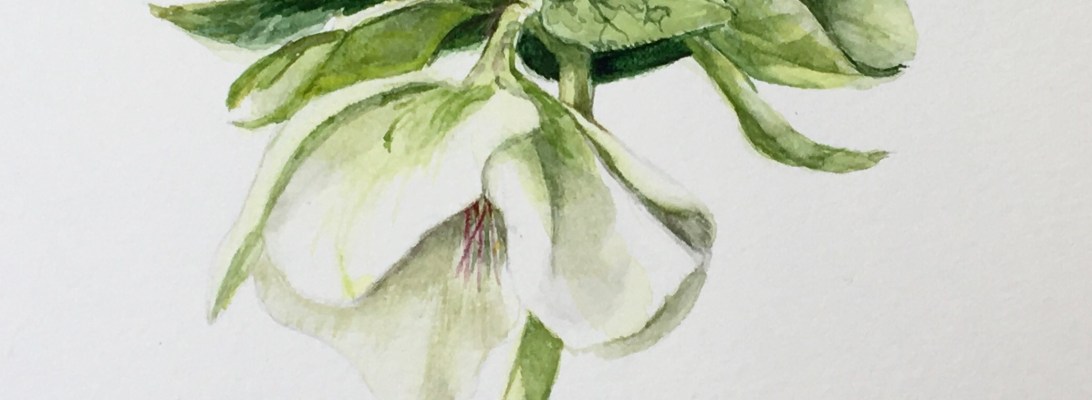
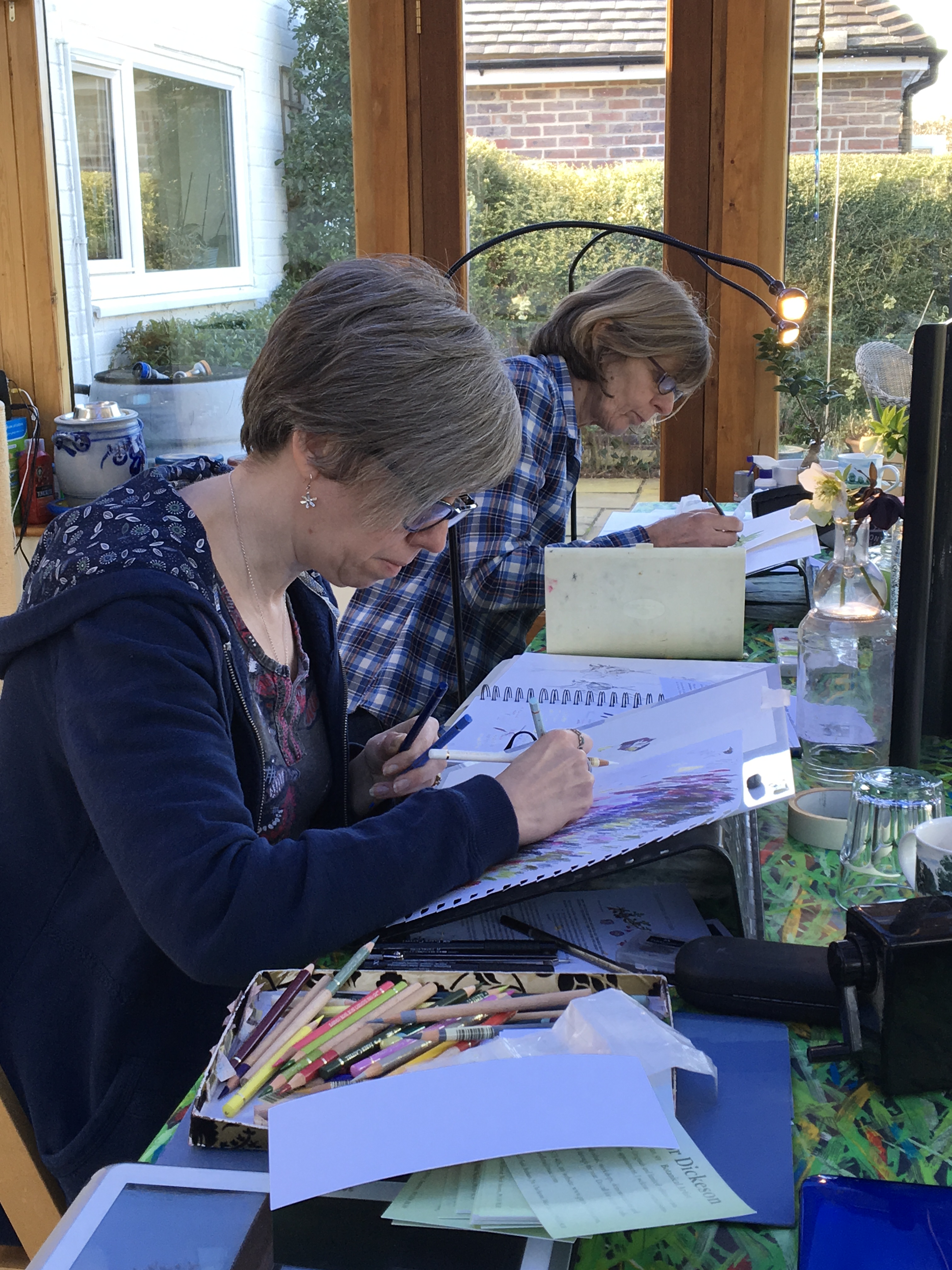
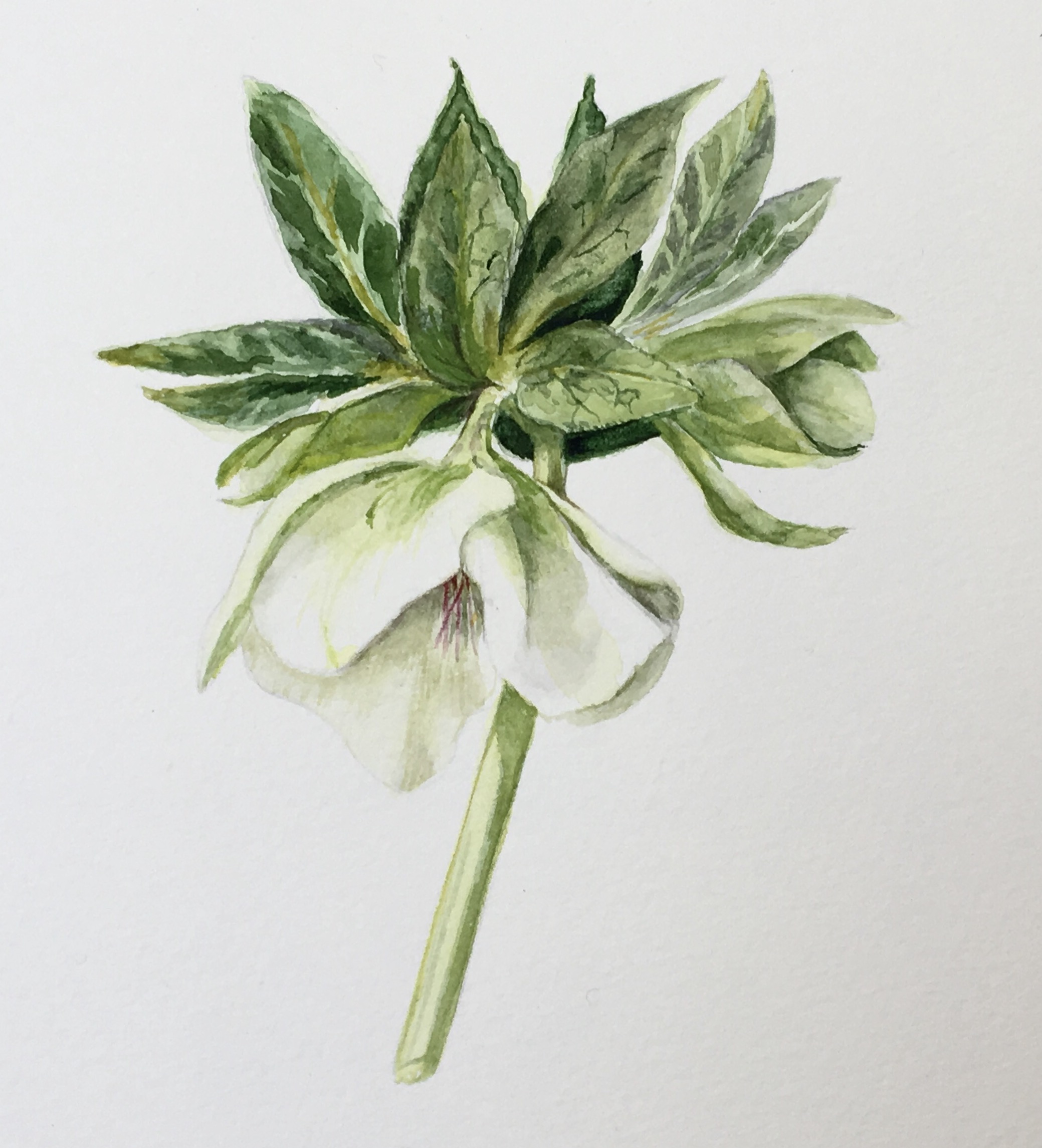
The botanical art workshop concentrated on painting pale flowers on white paper. My students were extremely brave and worked on the sort of thing a lot of people fear doing – painting white flowers on white paper. They actually chose to do this, although I suggested they could work with any pale flower.
Here are a couple of the results. One in watercolour and one in coloured pencil.
Hellebore in watercolourHellebore in coloured pencil
The trick is to try and paint your pale flower with a background of darker colour – leaves or a dark flower.
I was extremely pleased with the results, as were they.
Tomorrow we are going for our long walk to build up for long days at the end of the week when we will be at the RHS exhibition in London.
Sarah Morrish and I will be there for both Friday and Saturday, demonstrating and giving out information about the Worldwide botanical art day. Lucy Smith will be joining us for one of the days and the intention is for us to use different methods of drawing or painting native plants.
I hope you now have an idea as to why I have been focusing on native plants recently?
For those who are still not aware, we have formed a new organisation for all UK botanical artists whether they belong to an organisation or not. It is called ABBA, the Association of British Botanical Artists, although slightly a misnomer as this also includes Norther Ireland.
Why was this started? Well, the American Society of Botanical Artists (ASBA) initiated a worldwide botanical art day for May 2018, inviting all nations to to join them in organising a botanical art exhibition in each country. Some of us felt it particularly important that the UK was represented because we have some brilliant botanical artists here. Some of them remain independent and have no allegiance to any organisation. Therefore having an association inviting everyone, was the answer.
For more information about the exhibition, please look on the ABBA website:
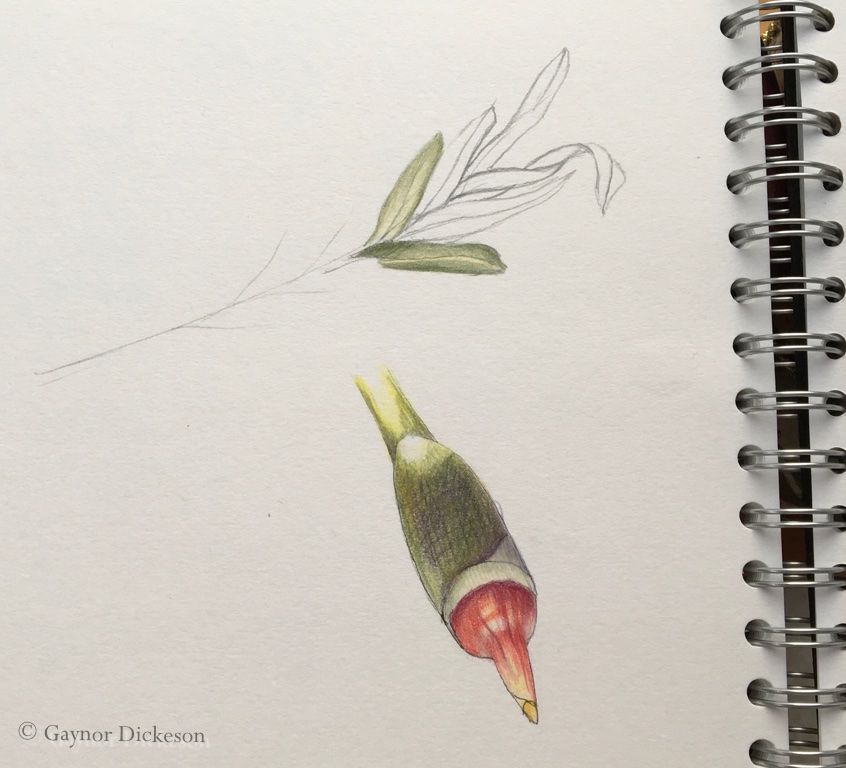
But, today during my latest workshop, I was looking through my sketchbook and found the following drawing. I know that I did it through a microscope at an Institute of Analytical Plant Illustrators (IAPI) meeting, about mosses and liverworts. The problem is I was stupid enough not to write what it was. Can anyone help me, and is it native to the UK?
? Bryophyte capsule
I have a strong suspicion that this is a Bryophyte capsule, but of course it doesn’t tell me which one and therefore I don’t know if it native.
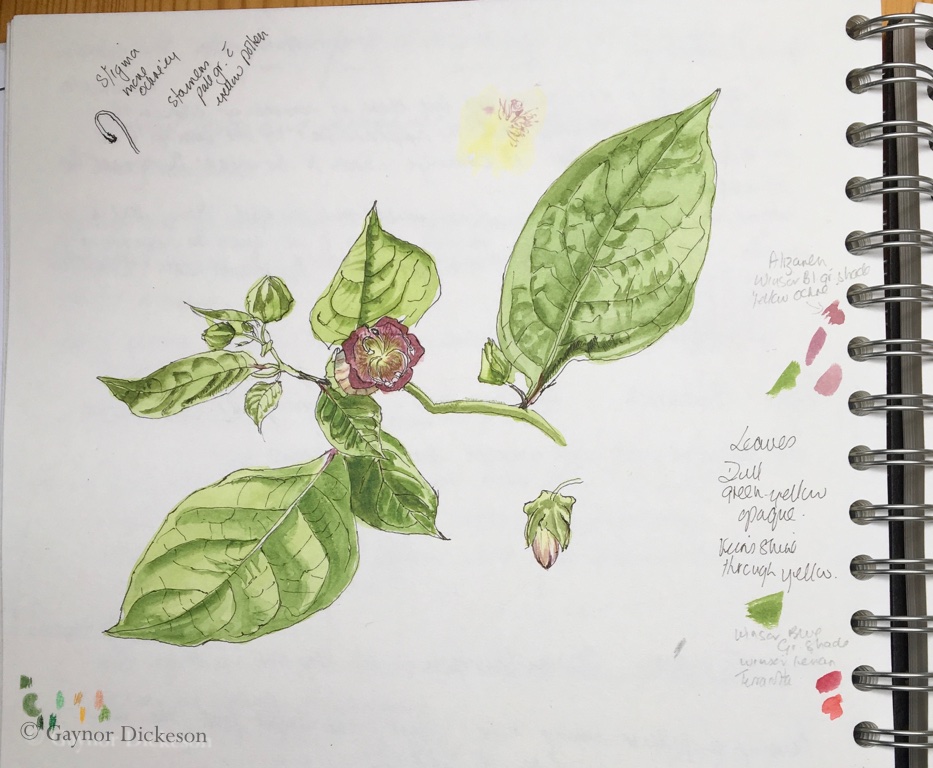
My next sketch is native and is Deadly Nightshade (Atropa belladonna). I think this is a really beautiful plant, although, if walking past it the colours of the flowers are rather dull. But of course the plant is often seen with flowers and large, shiny black berries at the same time. One day I hope to paint it, but I will have to be careful with it.
Atropa Belladonna – Deadly Nightshade.
Next week, 24 and 25 February, ABBA will have a table at the RHS botanical art exhibition in the Lindley Hall, Vincent Square, London. We are there to tell you about the exhibition in May 2018 and how you can take part. Additionally, over the two days, Sarah Morrish will be demonstrating on Vellum, Lucy Smith in pen and ink, and I will be doing a graphite and watercolour worksheet.

















 GAYNOR'S FLORA