FORAGING PLANTS IN THE NORWEGIAN MOUNTAINS: FROM BOG TO SAND.

The title of my exhibit at the “RHS Botanical Art & Photography Show” is as above:

Foraging Plants in the Norwegian Mountains – From Bog to Sand.

Six of my watercolour and graphite paintings are exhibited by order of habitat starting with those growing in the wettest environment to those in the dryest. Seven paintings were completed not just the six, therefore it was a difficult choice to remove one of them. The second one shown below, the small cranberry, is not in the exhibition.

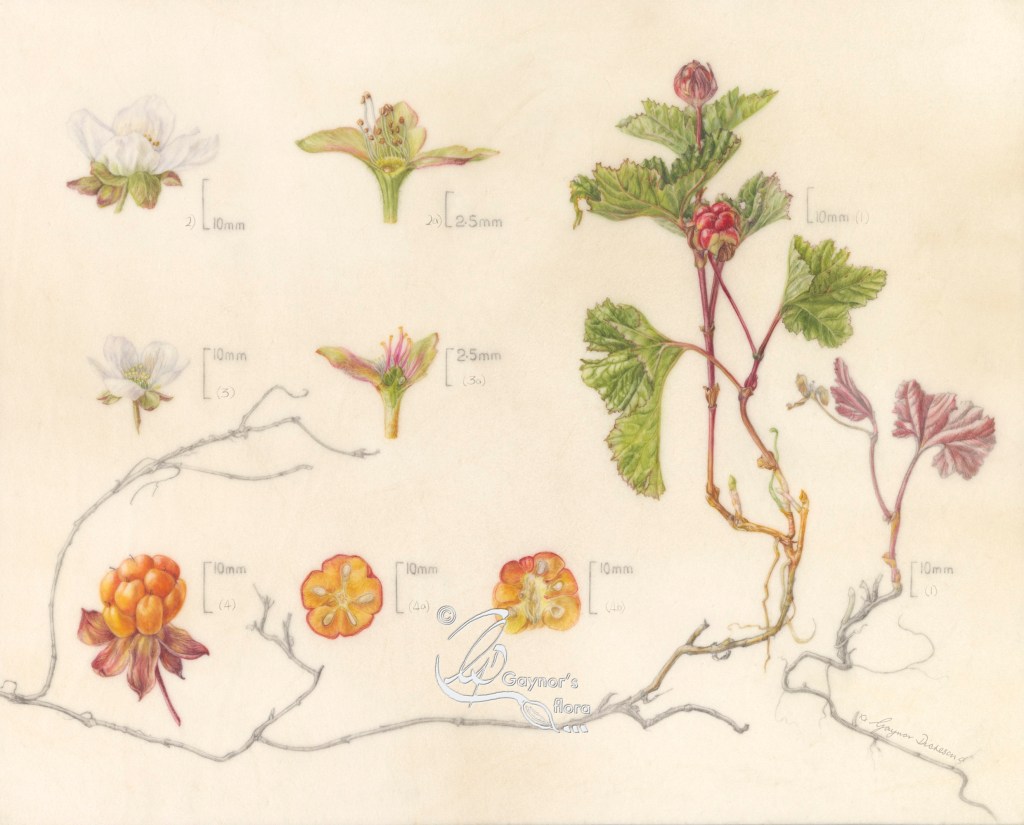
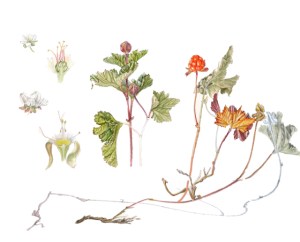
1. Rubus chamaemorus – Cloudberry – Multe
Watercolour & graphite on vellum.
August 2022

1) Habit
2) Male flower – 2a) LS Male flower
3) Female flower – 3a) LS Female flower
4) Fruit
4a) TS fruit
4b) LS fruit

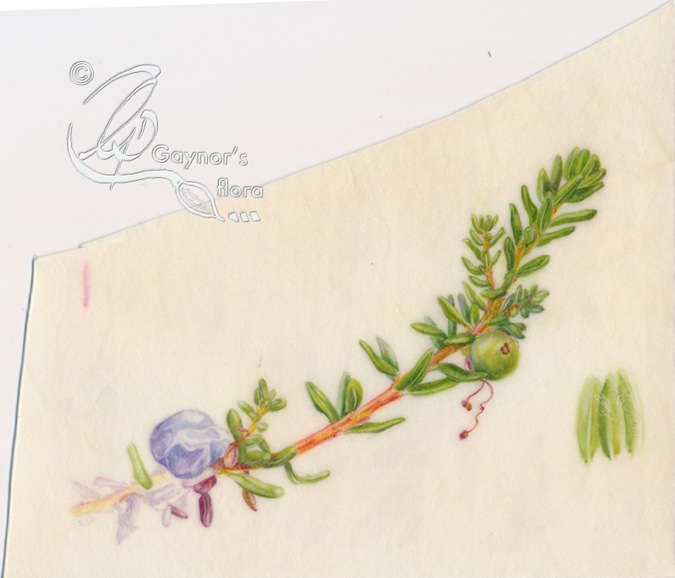
2. Vaccinium oxycoccus subsp. microcarpum – Small cranberry – Små tranebær
Watercolour & graphite on vellum.
January 2022

1). Habit
2). Flower
3). TS fruit
3a) LS Fruit
3b) Fruit

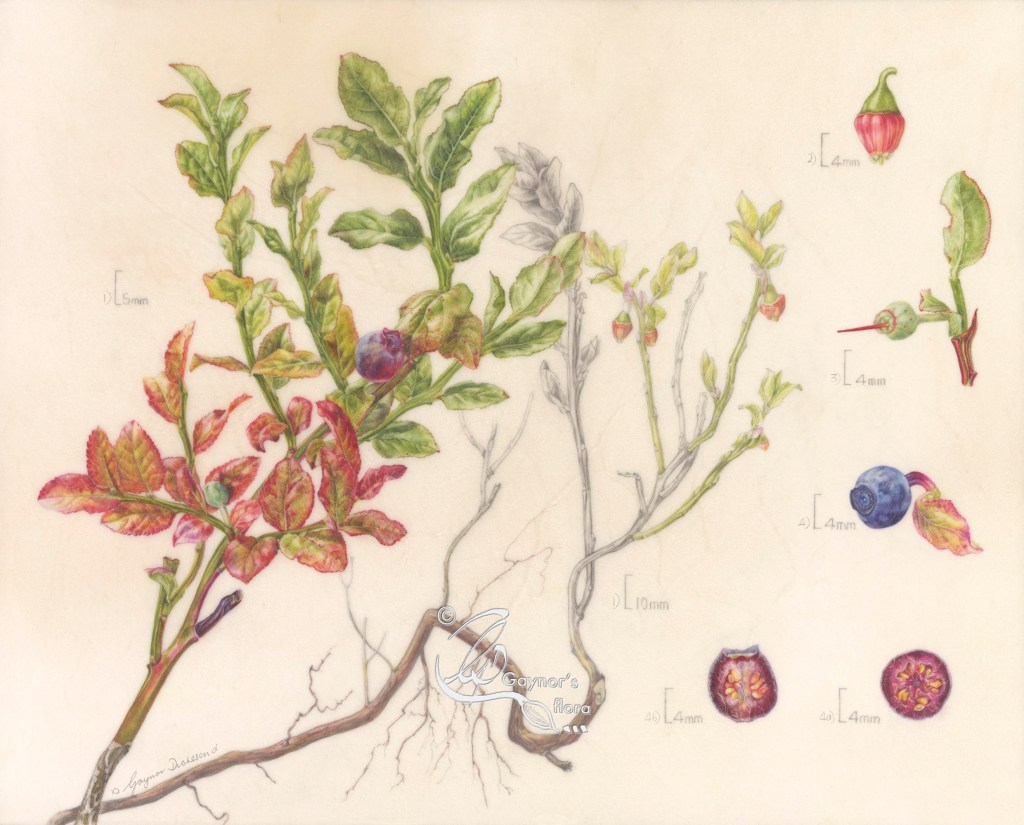
3. Vaccinium uliginosum – Bog bilberry – Skinntryte
Watercolour & graphite on vellum.
December 2021

1) Habit
2) Flower pair
3) Fruit
3a) TS fruit
3b) LS fruit

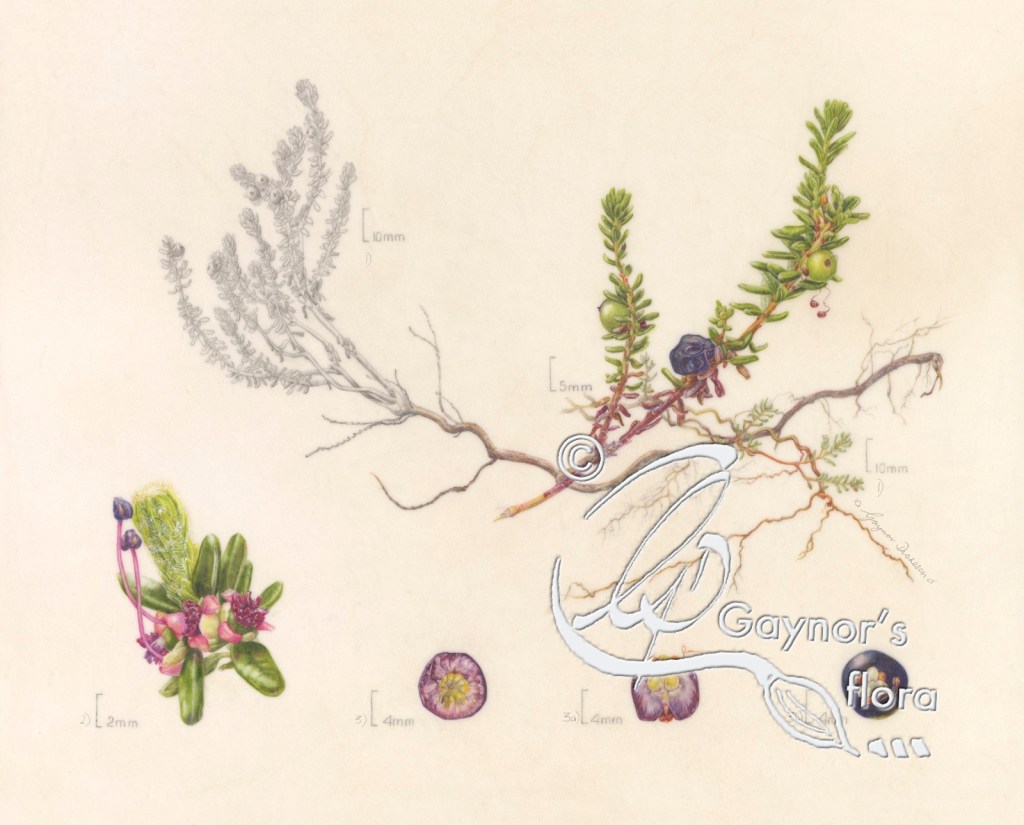
4. Empetrum nigrum subsp. hermaphroditum Mountain Crowberry – Krekling
Watercolour & graphite on vellum.
January 2022

1). Habit
2). Flower
3). TS fruit
3a) LS Fruit
3b) Fruit

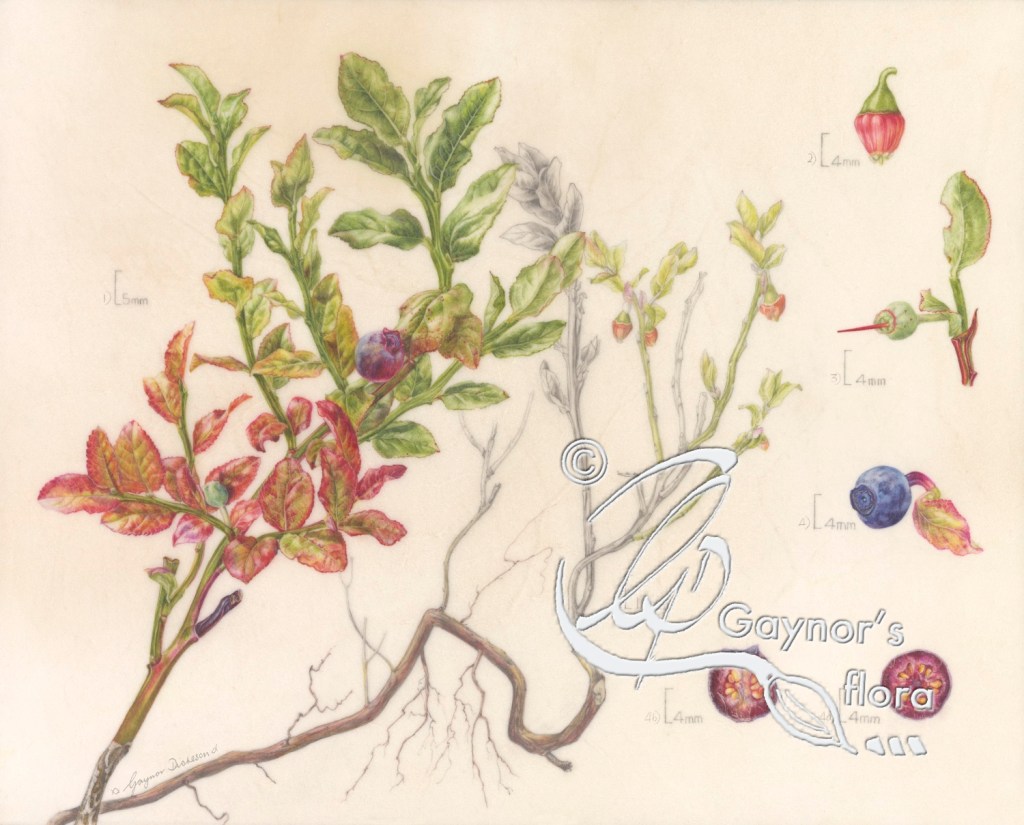
5. Vaccinium myrtillus – Bilberry – Blåbær Watercolour & graphite on vellum.
March 2022

1) Habit
2) Flower
3) Immature fruit
4) Fruit
4a) TS fruit
4b) LS fruit

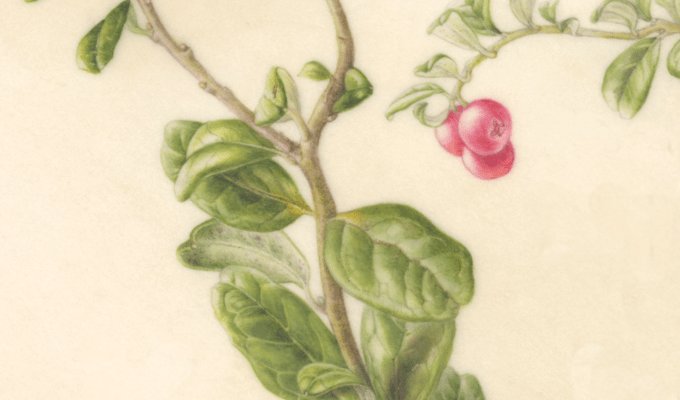
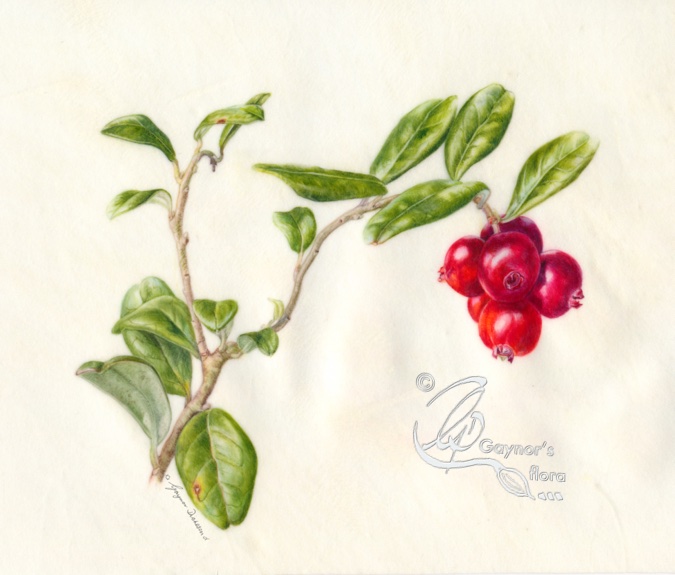
6. Vaccinium vitis-idaea  – Cowberry/Lingonberry -Tyttebær
Watercolour & graphite on vellum.
November 2022

1) Habit
2) Flower cluster
3) Fruit
3a) TS fruit
3b) LS fruit

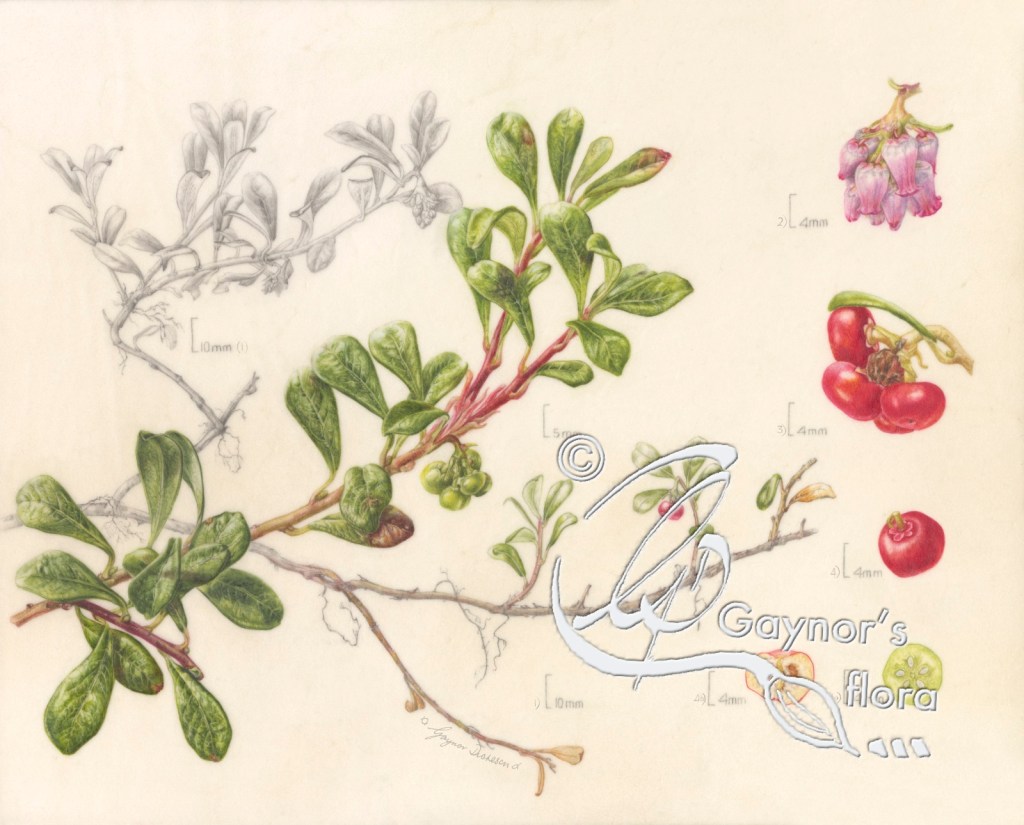
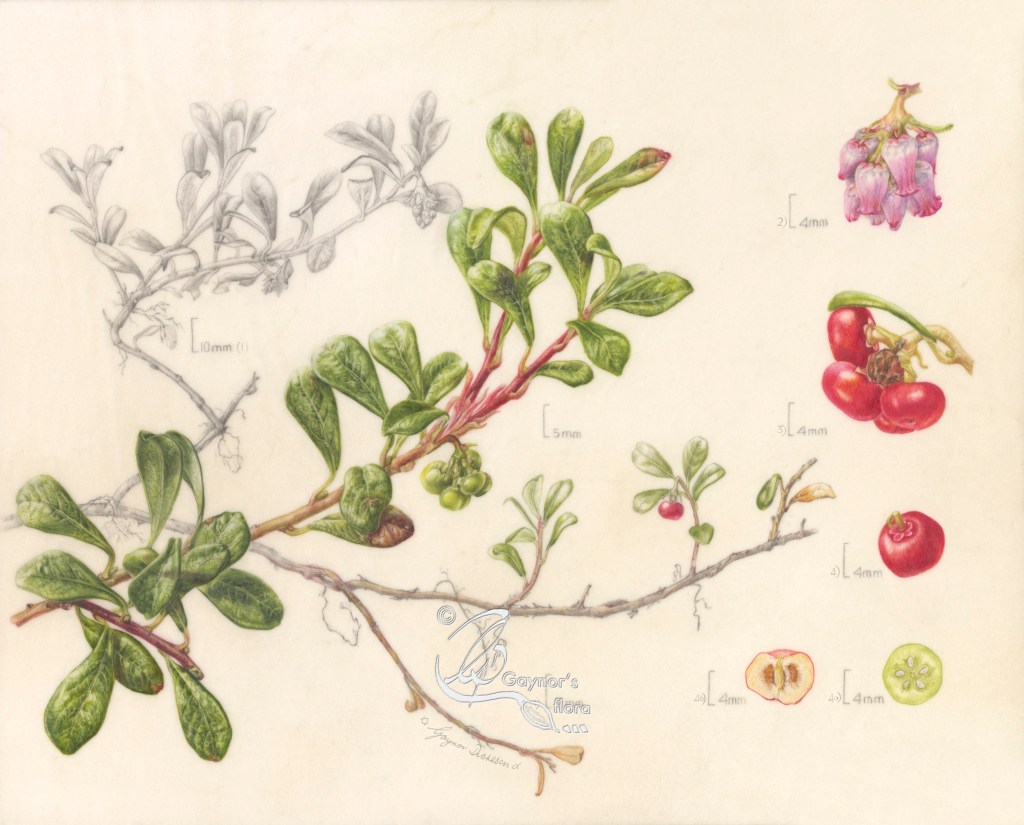
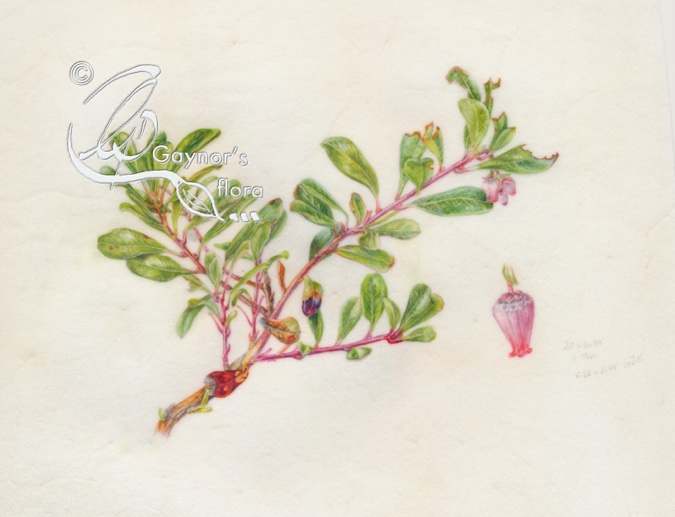
7. Arctostaphylos uva-ursi  – Bearberry – Melbær
Watercolour & graphite on vellum.
October 2022

1) Habit
2) Flower cluster
3) Fruit cluster
4) Single fruit
4a) TS immature fruit
4b) LS ripe fruit

If you have read the blog series you will understand that the Cloudberry and Small cranberry enjoy the wettest environment – bogs and marshes, whilst the Bearberry is often found on a sandy forest floor. The other species are found in various types of environment from damp woods to harsh mountain tops. Some, like the Bog bilberry will grow very well just about anywhere as long as it has water and plenty of sun.

All of the plants in this series live in the Subarctic part of the world and have always provided a lot of nourishment for those living in the far north, the rest of us a little further south and of course animals that roam the area.

Some of the plants typically don’t grow in certain areas as witnessed by the difficulty I had finding the Bearberry. In very hot and dry years some plants produce next to nothing; Cloudberry and Small Cranberry are good examples. Can you imagine the risk that Global warming brings to these plants as well as to us. The warmer the planet gets, the more further north these plants are likely to move making it even harder for us and the animals they support, to find them. As it is, plants that can normally be found further south in Europe, are now beginning to appear in Norway; their pollinators moving with them and having a negative effect on the species that belong.

When choosing to study and paint these plants I didn’t realise how much I would learn about them. I loved the plants (and their fruit) before this, but now have so much respect for them and the environment in which they grow. I hope that I have been able to pass on at least a smidgen of this.

Thank you for following this series.

Latest news: I am really pleased to say that following the judging process yesterday, 14 June 2023, the judges decided to honour me with a Silver Gilt medal. The award ceremony will be held this evening at the Saatchi Gallery during the preview to the exhibition opening tomorrow.

I look forward to getting detailed feedback about my exhibit from the judges this afternoon.

Foraging plants in the norwegian mountains – 22. Bilberry Pt. 2

My sketchbooks can be messy in comparison to many!

This is the main double page for my sketches done on the Bilberry plant. I try to keep as much information as possible together so that when I do my final work I don’t have to search too much in the sketchbook. I try to find a hole on the relevant page to add things, either more sketches or research I might have done. I often find that when I am researching on the internet, the gaps are usually left along the bottom edge of the page, so I frequently use this area to write any notes.

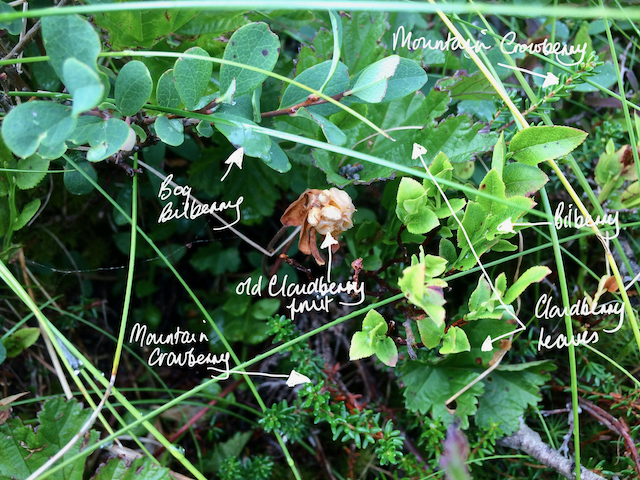
As I have already mentioned in the previous blog, there is a similarity in the fruit of the Bilberry and the Bog bilberry, but the stems are very different for starters. The Bilberry stems are very angular and last year’s branches remain green over winter and into the next season. The deer seem to like them and paw away the snow eating the shoots. The Bog bilberry stems are brown and woody; I talked more about this plant in the blogs published 14th and 18th May.
Serious times – the pandemic!
And additional serious times – moving!

By the middle of 2020 I felt that I had enough sketches for most of my final pictures  and had already decided to stop the extended period of ‘productive procrastination’. We were in the middle of the pandemic and for most people, the world had turned upside down. My daughter, living in Norway, felt we were too old to live on our own any longer and she was too far away should anything happen to us. 
The decision to move back to Norway was thought about and made quite quickly. I think we started talking about it mid June and sold our home with the large beautiful garden and the ‘shed’ – my studio, quite quickly.

The actual move came in August 2020. I had planned all my compositions before leaving the UK and when we arrived in Norway I was all set to start painting the final artwork. 

I won’t talk about all the problems moving during a pandemic caused – we were lucky to be completely healthy. But some of the benefits from moving back to the country I loved included being much nearer to the plants in my series. There were lots of others, but I leave that to your imagination.

Goodbye shed at the bottom of the garden.

In between looking for a new home and sorting out all the official stuff and additional problems caused by Brexit, I started working towards doing the first picture. Of course, it had to be the Bilberry. This plant also grows at sea level and was easy to access now.

I only had to walk up into the woods behind my daughters house where we stayed until we finally moved. There were lots of native plants along the tracks, including loads of Bilberry. In our new home, to which we moved in January 2021 when the area was ensconced in snow, we eventually found it contained a lot of Bilberry plants. Heaven or what!?

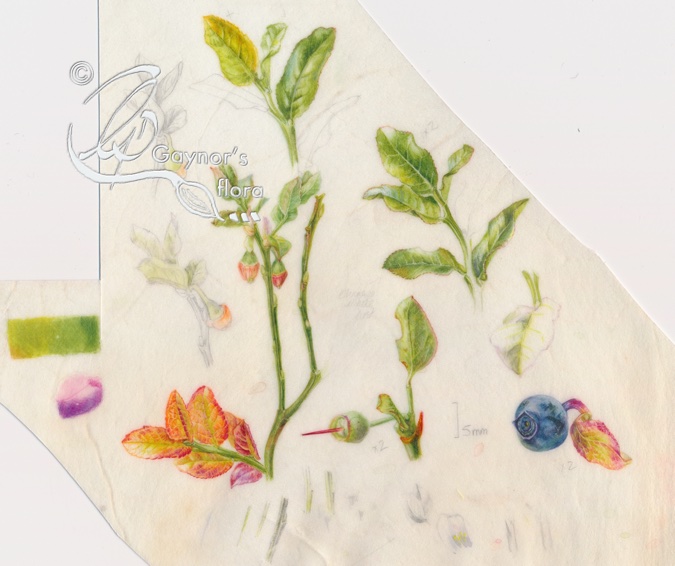
I started with a trial piece of Bilberry parts on vellum and began the final artwork in June 2021, finishing March 2022. 

You can see my work station in our new home below. As is perhaps obvious, I continued to procrastinate a little longer as I just had to do more sketches. Working on the vellum off-cut was extremely useful as I also tried out various methods of introducing graphite. Getting the colours right for the bloom of the nearly black fruit whilst I had them was also important. Painting this on paper had been a completely different kettle of fish!

Hello new ‘shed’. This is one of the bedrooms on the top floor, but now my working area consists of two bedrooms turned into one large room – with a view!
Bilberry trial piece on vellum off-cut.

Making sure that I had samples from all the plants in the series at the right time of year was like putting together a puzzle. The flower sections had to be done in the spring and the fruit at various times over the autumn. Leaves also changed through the seasons. 

But basically, I knew that I had roughly six months of the year to paint the deciduous plants (Bilberry, Bog Bilberry, Cloudberry) and those I didn’t have access to under the snow such as the Cranberry. For the remaining plants I would be able to get leaves throughout the year as long as they weren’t hidden too deeply under the snow. It became a matter of planning and making sure I knew where relevant plants were over the winter. 

The native range of this Vaccinium myrtillus is Greenland, Temp. Eurasia, W. Canada to NW. & W. Central U.S.A. It is a subshrub and grows primarily in the temperate biome. Including both Norway and the UK.

Source: Kew Plants of the World Online
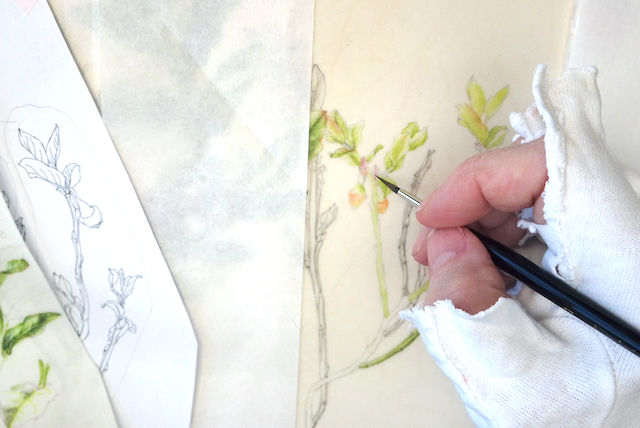
Working on the final artwork – graphite and wash section

Mor Astrid’s (my lovely grandmother-in-law) Raw Bilberry squash

3 l Bilberries 

2.5 l water

75 gm Cream of Tartar

4.5 kg sugar

  1. Rinse through the berries to clean of soil. They don’t need to be thoroughly cleaned of leaves and small stalks.
  2. Bruise/crush berries in a plastic bucket and leave for 24 hrs.
  3. Mix the Cream of Tartar into the water and add to the berries. Stir thoroughly.
  4. Let the mixture stand for 24 hrs.
  5. Strain through a muslin.
  6. Add the sugar to the strained fluid.
  7. Stir thoroughly until the sugar has melted in.
  8. Pour into bottles.

The resulting squash can be mixed with water. It is DELICIOUS.

Keep out of easy reach of children or it will be finished off in no time!!

A suggestion from Polly o’Leary after the Bilberry part 1 blog. Thank you Polly.

In this part of Wales theyre called Whinberries. We used to make them into whinberry and apple pie, or whinberry jam. Or both. Depending on how many we found. No recipes, except the usual – plain shortcrust pastry, not too much sugar, because they’re lovely and tart.
Same with the jam. Never really thought about a recipe, just made it the usual way as they were such a treat.

This came from Jane Hogan following the Bilberry part 1 blog. Thank you Jane

We used to pick bilberries on the North Yorkshire moors when visiting my grandmother. She used to line a pie dish with pastry, pile in the bilberries with sugar and top with another layer of pastry. Served with custard or cream and eaten hot. There wasn’t usually any left to have cold! It used to take ages to pick the bilberries. (A quick look online suggests a pound of bilberries and four ounces of sugar)

On 4 June 2023 I will publish the first part of the Lingonberry blog.

Foraging plants in the norwegian mountains – 21. Bilberry Pt. 1

Bilberry painted on vellum

Vaccinium myrtillus -bilberry – blåbær

It is considered to be one of the healthiest berries and has one of the richest natural sources of anthocyanin giving the bilberry its blue/black colour. The bilberry, with a high antioxidant content, is believed to be responsible for the many health benefits, more so than many other berry fruits. In traditional European medicine, bilberry has been used for over a 1000 years.

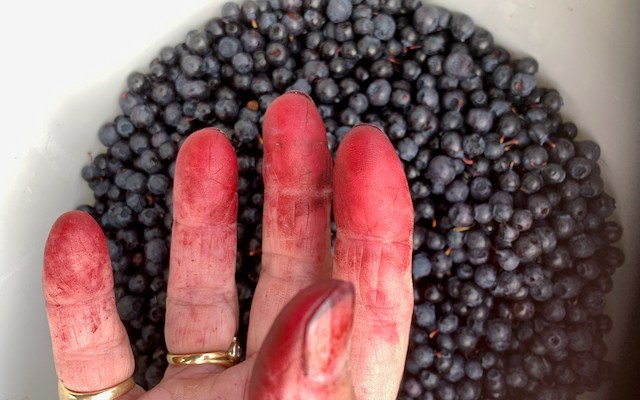
Stained hands from picking

I remember seeing the effect of picking and eating bilberries in western Norway in June 1967. I was being shown how beautiful Norway is and we were on a hill overlooking the Stavanger fjord. A future nephew was picking and eating the berries as he walked along and he turned to me laughing. His face and hands were covered with the juice and his tongue was completely black. It didn’t take me long to realise my face was in a similar state! The blue colour is the anthocyanin that make these berries so good for you. No wonder Bilberry has also been used for dying clothes and food.

I have a lovely picture of my daughter’s grinning face and tongue almost black – but I don’t think she would forgive me if I posted it here!

English bilberry flowers.

Whilst living and hiking in the UK, we often found Bilberry plants in areas on the edge of heathland as it doesn’t seem to do too well in very open areas. The New Forest was a good source an hour away from where we lived at the time. 

Bilberries and Lingonberries packed and ready to go in the freezer in Norway

In Norway the plants are everywhere in the woods and also grows well in acidic soils on heaths and marshes.

It is easy to forage and stock up each year!

Picking bilberry and lignonberry

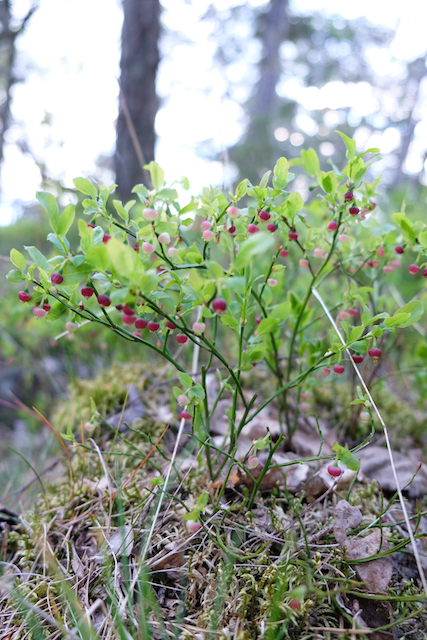
Our Norwegian garden is rocky and on the edge of woods. We have Bilberries growing in the garden and unlike my neighbours wouldn’t dream of getting rid of them to replace with other plants. I love being able to pick them  for a delicious dessert whenever I feel like it during the season. But even more exciting for this project, was being able to pick them and paint from them in the comfort of my own home. 

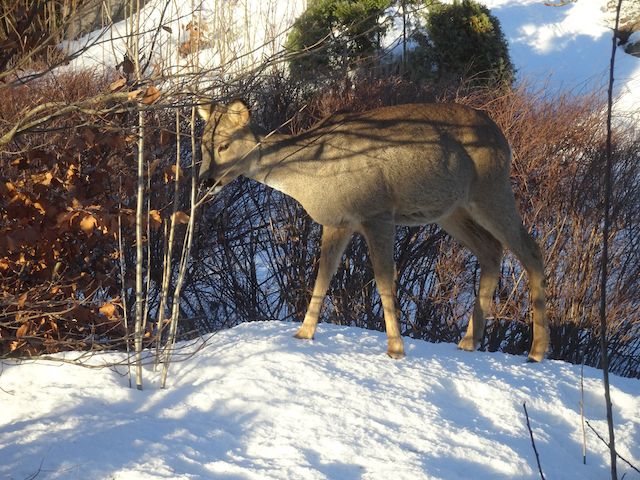
Roe deer baby nibbling the tips of the Beech in our garden.

As well as nourishment for us, the plants help to provide nourishment for the Roe Deer that visit us regularly during the winter months. I am happy to let them graze and nibble the tips of the branches as they were here long before people lived in this area. Luckily, they don’t seem to do it all the year round. This is a baby from a family of mother and three small ones that we have had the pleasure of seeing develop.

The Bilberry is not to be confused with Blueberries bought in the fruit department of your local shop. Those are Vaccinium corymbosum and a ‘high bush’’ variant. One can clearly see the difference as the High bush type have pale flesh showing they do not contain the same amount of anthocyanin – the good for you factor.

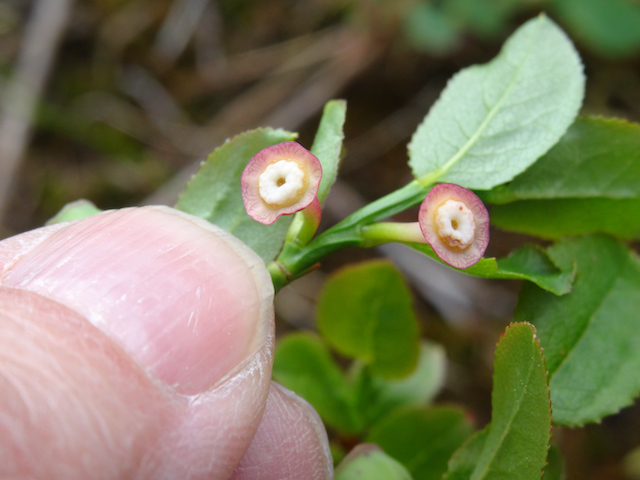
Researching Vaccinium myrtillus was just as exciting as researching all the plants in the series, even though I thought I knew it the best. I am really glad I did so before beginning to sketch as I could easily have been less observant in relation to the number of flowers and resultant fruit on a branch. Unless equally familiar with the Bilberry and Bog bilberry, these two can easily be confused. But in reality there are considerable differences. For starters, the Bilberry only has one flower in a leaf axil, whereas the Bog bilberry has two!

The next blog showing more of how I painted the Bilberry picture, is scheduled for 1 June 2023. We are rapidly approaching the RHS exhibition at the Saatchi Gallery opening to the public16 June.

Foraging plants in the norwegian mountains – 10. My working practice

Composition

Do these three pictures have good compositions? It is not easy for you to judge from these as composition is the area within the mount edge – the image and background.

  • Benton Iris ‘Farewell’ is Watercolour and graphite. The painting is part of the Cedric Morris Florilegium.
  • Dying Rosa rugosa is in Watercolour. It was one of the first paintings I did after returning to Norway. The sprig was sticking up above the snow, so it shrivelled quite fast.
  • Rhododendron impeditum is also watercolour and graphite. This picture is part of the Chelsea Physic Garden Florilegium.

Composition in botanical art is not necessarily very straightforward. As botanical art is ‘art’ it should have a main focal point that draws you into the picture. Once your eye is drawn into the picture, something needs to lead it around within that picture and prevent it from being lead off elsewhere.

On top of this, botanical art must be botanically correct. 

The first digital arrangement of my cloudberry sketches

Combining the art and botany for each picture is hugely difficult particularly when you have different sections telling a story about a plant. Having a series of plants in separate pictures that elaborate the story compounds the problem. 

To try and reduce the problem a little I started to arrange the pictures digitally. I scanned some of my sketches and moved them around within a 31 x 25cm area. It gave me something to think about when deciding what to include in each picture and how many more sketches I would need to get all the information I needed.

Scanning and arranging digitally gave me the opportunity to do something similar with my other species and the ability to compare them against each other. This composition looks nothing like the final one, but I kept rearranging until I was satisfied.

I worked hard to compose my set of pictures so that they looked a series. This can be quite difficult when some are from different families 

  1. Rubus chamaemorus – Rosaceae
  2. Vaccinium oxycoccus Subsp. microcarpum – Ericaceae
  3. Vaccinium uliginosum – Ericaceae
  4. Empetrum nigrum subsp. hermaphroditum- Ericaceae
  5. Vaccinium myrtillus – Ericaceae
  6. Vaccinium vitis-idaea – Ericaceae
  7. Arctostaphylos uva-ursi – Ericaceae

The first word in each species is the Genus name from which the plant is derived. Four are Vacciniums from the same Genus.  Six of the plants are from the Ericaceae (heather) Family and you can see this by the similarity of the flowers. One is from the Rosaceae(rose) family, and the stipules on the leaves (tags at the base of the leaves) is a clear indication of this.

Deciding the enlargement was relatively easy with the plants from the Ericaceae Family where the fruit is comparable. But as everything was larger on the Cloudberry picture, only the scale bars can give the size.

My aim with all the pictures was to let people see and understand the incredible flora and edible fruit available in the mountains. Many look at plants and think them pretty, or know where to pick certain fruits, but not so many study the plant and understand how intriguing it really is. This is an opportunity.

What to include in each composition.

I went through my sketchbook and made sure that I had enough information about each plant to fit on my vellum, mounted on blocks by William Cowley’s. I didn’t want to overcrowd each picture. 

The focus was the plant and its fruit, but one can’t do this without highlighting its flowers. I decided to introduce a picture of the flowers and fruit but restrict dissections to the fruit only. That is until I got to the cloudberry which was going to be the most difficult to integrate into the series. But it isn’t called ‘Mountain Gold’ for nothing.

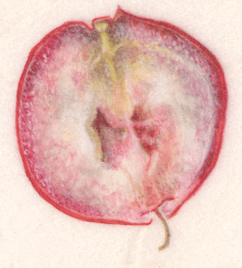
In the end, all but the cloudberry picture included a branch enlarged and branches actual size to indicate habit. Each had an enlarged flower, plus fruit with both longitudinal (LS) and transverse sections (TS). These are the finished longitudinal sections from each fruit; the largest being the Cloudberry.

In the next blog I will be talking about my transfer process. This comes 23 April 2023.

Only Eight weeks until the RHS Exhibition at the Saatchi Gallery in London;

https://www.saatchigallery.com/exhibition/rhs_botanical_art___photography_show_2023

Foraging plants in the norwegian mountains – 7. History of the project

Above are the seven plants I chose with trial pieces on vellum offcuts.

The species I chose, with common names also in English and Norwegian

  1. Rubus chamaemorus – cloudberry -multe
  2. Vaccinium oxycoccus subsp. microcarpum – small cranberry – tranebær
  3. Vaccinium uliginosum – bog bilberry – skinntryte
  4. Empetrum nigrum subsp. hermaphroditum– Mountain crowberry – krekling
  5. Vaccinium myrtillus – bilberry – blåbær
  6. Vaccinium vitis-idaea – cowberry/lingonberry – tyttebær
  7. Arctostaphylos uva-ursi – bearberry – melbær

I have listed the plants in the order according to the type of ground in which they grow – from boggy to sandy:

  • The cloudberry and small cranberry often found intertwined together in the boggy moss of a swampy lake edge. 
  • The bog bilberry is more of a bush and guards the very marshy plants perching on rocks in the marsh. 
  • The Mountain crowberry grows in various areas from rocky outcrops at the edge of a swamp, to tiny examples without much soil, clinging to the rock on mountain tops.
  • The bilberry and cowberry are generally in a similar habitat in damp woods and forests; the cowberry can be the main plant on an old wood ant heap often with bilberry and mountain crowberry.
  • Bearberry grows in sandy areas on the edge of forests or creeping down over smooth rock.

The next stage of this blog goes into my working practice for this series. After which I will talk a little about each of the species and how I painted the final pictures. I will use the above order of plants as I would love others to learn more about them, where to find them and their uses. 

The next blog will be on 13 April 2023.

Foraging plants in the norwegian mountains – 5. History of the project

Since moving back to Norway there have been two bumper years for Cloudberry fruit and this is why we have so much in the freezer now.

But back to my sketches that were incomplete right up until last summer (2022). This plant in particular is not easy to find if you don’t know exactly where to look, and even then you might miss the right period of time.

We took a couple of long day trips into the mountains to look, and we eventually found what was missing. As well as a lot of driving, I extended the workday when I got back home. The flowers don’t last long and whilst I had them, I needed to dissect and sketch with measurements before going to bed. 

Robin birdwatching

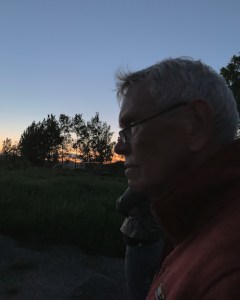
The typical demands to a botanical artist. But luckily during the summer months we have a lot of daylight hours in southern Norway – in fact around mid-summer the sky doesn’t really go dark. Birdwatching at midnight is different to say the least! The picture to the left is Robin birdwatching at 5 mins past midnight on the 12 June – still over a week to mid-summer!

The lesson learned? Make sure when sketching that you have the where-with-all to measure various aspects of your plant and to make accurate colour swatches.

Equipment for sketching outside

As you will see from the pictures at the top, sketching on location can have various problems, from ants still defending their old anthill, a very hard bottom rest and a helpful cat.

The anthills in the Norwegian forests can be huge, but so too can the ants. They have a large territory to look after and a lot of old wood to turn into something future generations of trees and ants can live off. But they do have a painful bite! One often finds several of the plant species I was considering, growing on them. One often finds lingonberry, bilberry and mountain crowberry, well established on them. It also suggests what some of the ants transport to their home.

When I am out sketching in nature I minimise the amount of equipment I have with me. I try to keep everything in the same sketchbook and for watercolour use a Stillman & Birn, Zeta series. It has stood up well to the battering it has had and takes the watercolour washes well. 

Normally I use a bum-bag when walking not too far and it will contain this kit:

Of course I go nowhere in the mountains without my mobile phone, but these days they are much more than a phone or safety net. The Victsing 3-in-1 mobile phone camera lens was introduced to me many years ago by Sarah Morrish and I use this to get the details not normally seen very well. In particular it enabled me to get a picture and draw the growing tip with flowers of the Empetrum nigrum subsp. hermaphroditum (mountain crowberry) . I keep a small piece of mm paper with it to measure within the photos.

My palette is an old one with the original student colours removed and replaced with artist quality colours. I use transparent single pigment colours and normally have a couple of yellows and Quin Gold, Permanent Rose, Perylene Violet, Purple, A cold and warm blue and this time a single pigment green.

The pencils preferred are a 3B and HB as they are easy to lift if necessary, plus a single black fine liner pen. I only need to sharpen one of the pencils so have a sharpener to fit that. Otherwise travel brushes, ruler and erasers, magnifying glass, small water holder and kitchen towel. 

Sketching in the New Forest in the UK. I got a tick bite this time, but it wasn’t infected.
A dire warning; this is what happens when an infected tick bites. This is Robin’s leg last year.

If I take specimens with me, then I have a small plastic bag ready and can add some of my painting water. Sketching back in the cottage or at home means that I have all my equipment available.

I nearly forgot an important addition to the list above; Insect repellant because of the ticks, and sun screen, particularly here in Norway where the air is so clear.

The picture to the left is Robin’s leg last summer after a tick bite! We have a lot of dear and ticks, but doctors are very aware of the dangers and are quick to prescribe treatment.

A serious start on the series in 2017

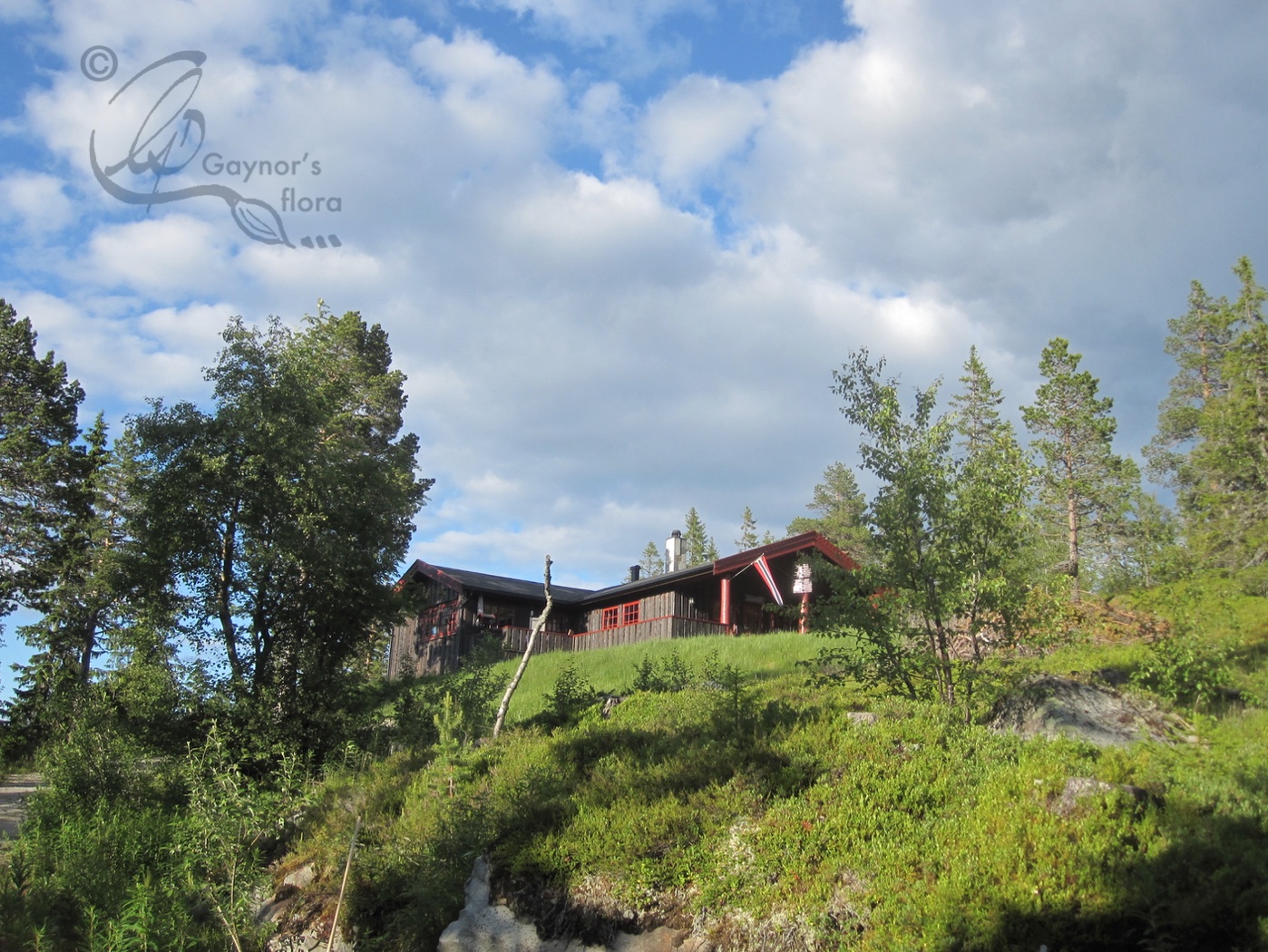
My friend’s cottage at 800m over sea level.

By 2017 I still hadn’t decided which plants I was going to paint and this first year we borrowed a cottage from one of my oldest friends in Norway. The cottage was at about 850m over sea level. 

Around the cottage we found Rubus chamaemorus (cloudberry), bilberry (Vaccinium myrtillus), cowberry (Vaccinium vitis-idaea), bog bilberry (Vaccinium uliginosum)and mountain crowberry (Empetrum nigrum subsp. hermaphroditum). This was a pretty good start. 

Notice that three of them were Vacciniums – from the heather family. In fact the Blueberries you buy in the shops are yet another species (Vaccinium corymbosum) but they are farmed and not included in my choice.

Importantly I hadn’t found a bearberry (Arcostaphylos uva-ursi) which was partly the reason for choosing to do this series.

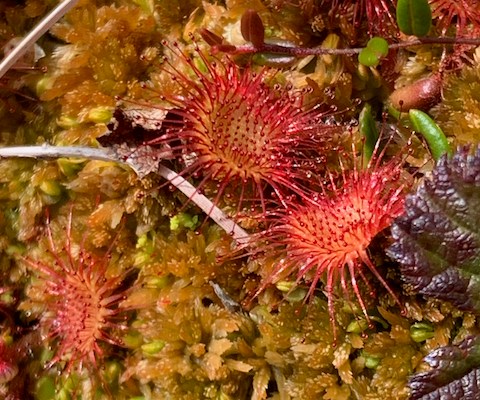
But there were loads of other lovely flowers such as Heath spotted orchids, geraniums and various insectivorous plants such as the Common butterwort. There was also plenty of Andromeda polifolia (bog rosemary) in the moss and amongst the new Cloudberry leaves. When seeing it growing at the Chelsea Physic Garden in London, I realised it was an opportunity to paint the species and the resulting picture resides in the Chelsea Physic Garden Florilegium collection.

Andromeda polifolia – Bog Rosemary

This continues on 6 April 2023

Fourth Gaynor’s Flora update

I am so glad that I have these blogs to look forward to each day. They are helping to remind me about the lovely things I have done over the last few weeks. Particularly as I am still catching up with all the undone things, including doing a coloured pencil video.

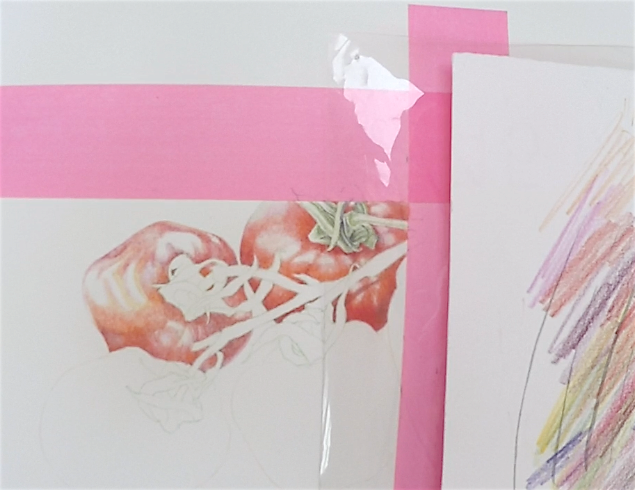
I am really struggling with the video. I expect that those who are just starting out in botanical art will be relieved to hear that someone who has been doing it for a while, continues to struggle in periods. But the reason that I am struggling is because I am trying out different papers to use with coloured pencils, so that I can advise my students. The subject is tomatoes.

I think that I am now on my third attempt. Its not that I don’t get good enough results, it’s just that I feel I have to adjust my technique for each of the different papers I use. But I suppose that is something new learnt.

First Tomato picture attempt on Strathmore 500 Bristol Plate.
Incomplete first tomato picture attempt on Strathmore 500 Bristol Plate.

Going back to catching up.

A lot had been going on over the last few months with a great deal of time spent on writing the online botanical art course, exhibitions, demonstrations and teaching. I felt I needed a break, but my head was still working ‘twenty to the dozen’. My workshop in Norway was unfortunately cancelled, therefore this time we would be taking a holiday there. I still had work to do on the botanical art course and informed family that this was the case.

I have a strong and determined family! After one day spent working, I was told that enough was enough. I was unhappy at the time as of course I still had to do the work. But since then I have every reason to be grateful to my daughter in particular. I had a holiday and had a proper rest. Maybe I was a pain to everyone else!

Whilst in Norway I didn’t get much painting done either. But we stayed with some friends at their cottage in the mountains and I think I now have a group of subjects to paint for an exhibition at the RHS. It won’t be next year, but if I get my act together, possibly the year after.

As here in the UK one is not allowed to pick certain plants. But I made a note of the plants around my friend’s cottage and I think they will make a very good subject series.

© Skinntryte page

I know that this page in my small Moleskin drawing book looks very boring. But this is how botanical art paintings start, particularly when planning a series of paintings. I’m afraid that I have written the Norwegian names, but you will also see the scientific names if you want to look them up.

Three of the plants are important for fruit picking in Norway –

  • The Vaccinum vitas-idaea is called Tyttebær in Norwegian and Lingon in Swedish (goes with your Ikea meatballs), but Cowberry in English. They are the same genus as the Cranberries we buy in the shops, but a smaller species.
  • Blåbær is Blueberry in English, but again a different and smaller species from the ones we buy in the shops.
  • Multe is Cloudberry in English. They are the most sought after and difficult to find – but generally one knows of a ‘spot’, and doesn’t tell anyone else! There are very special rules governing Cloudberries. One is not allowed to pick the flower and definitely not allowed to pick the fruit until it is fully ripe. If you are caught with red fruit you are fined.

In 1974 and long before I knew the importance of Cloudberries,  my parents visited me in Norway  and we took them into the mountains. My mother loved these delicate white flowers and picked a whole bunch of them!!

Skinntryte is also a form of blueberry. I have found several English names for it including Whortleberry and Bilberry. They grow with Blueberries and for those who don’t know the difference, they might also pick these.

Krekling is apparently becoming more interesting to harvest. It is Crowberry in English.

Of course Tettegras is the Common Butterwort, which is a carnivorous plant. When picking fruit in the mountains, I think one is very glad that there is something that digests all the buzzy, biting things!

Last of all, the Flekkmarihånd is the Marsh Orchid and just beautiful.

This is my friend’s cottage in the mountains. They have invited me back next year to continue painting the series. Thank you Eva and John.

© 1.Eva & John's hytte