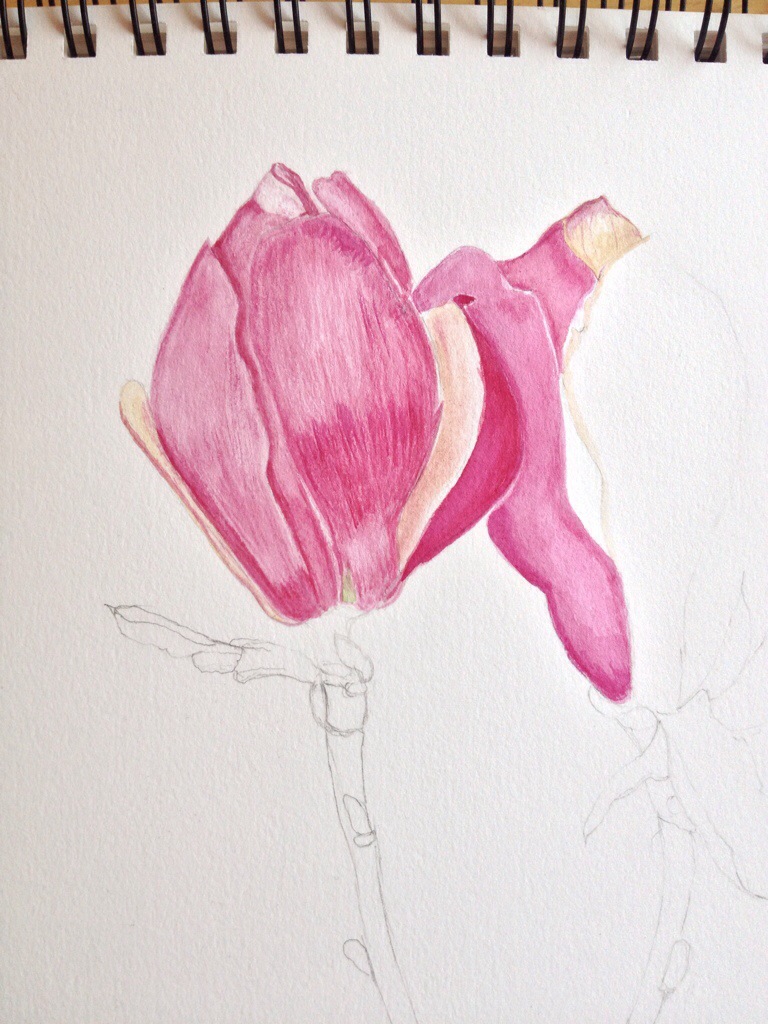
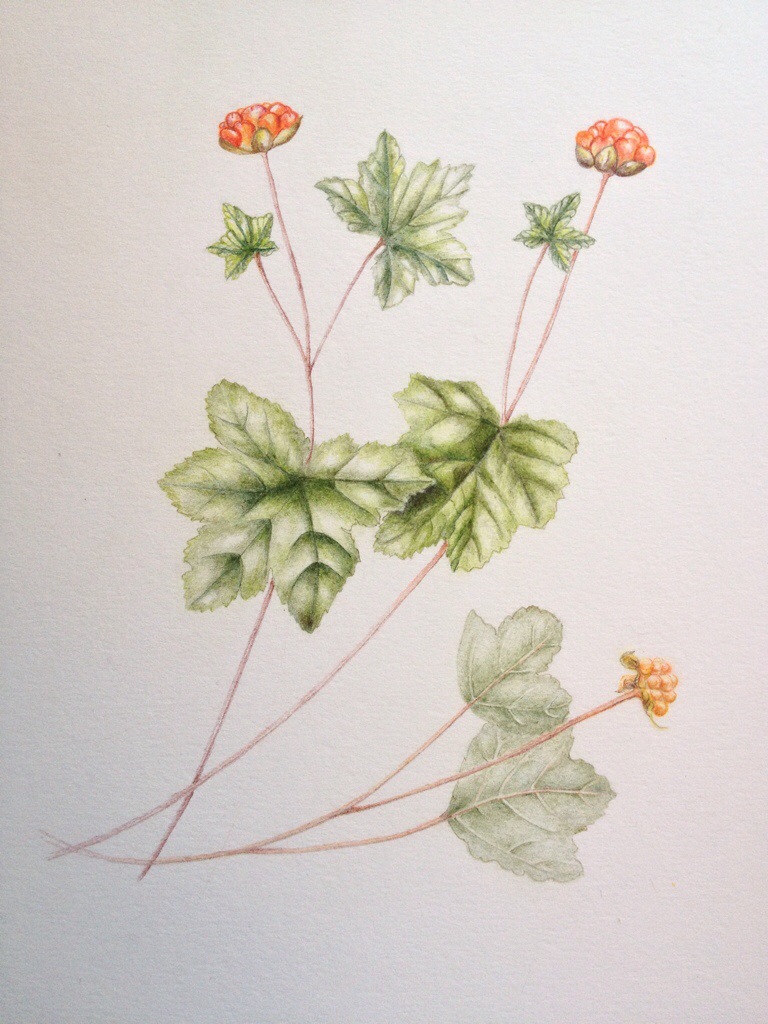
Botany and botanical art is very exciting!

On Friday and again on Sunday afternoon after church I was able to continue with my Acanthus ( in case you wondered what my new picture was all about). I finished the sketch and transferred it to the paper I am using for the final work. A warning, the following picture is not the whole composition as it will contain a third element – hopefully. It is a large project, but hopefully it will go well.
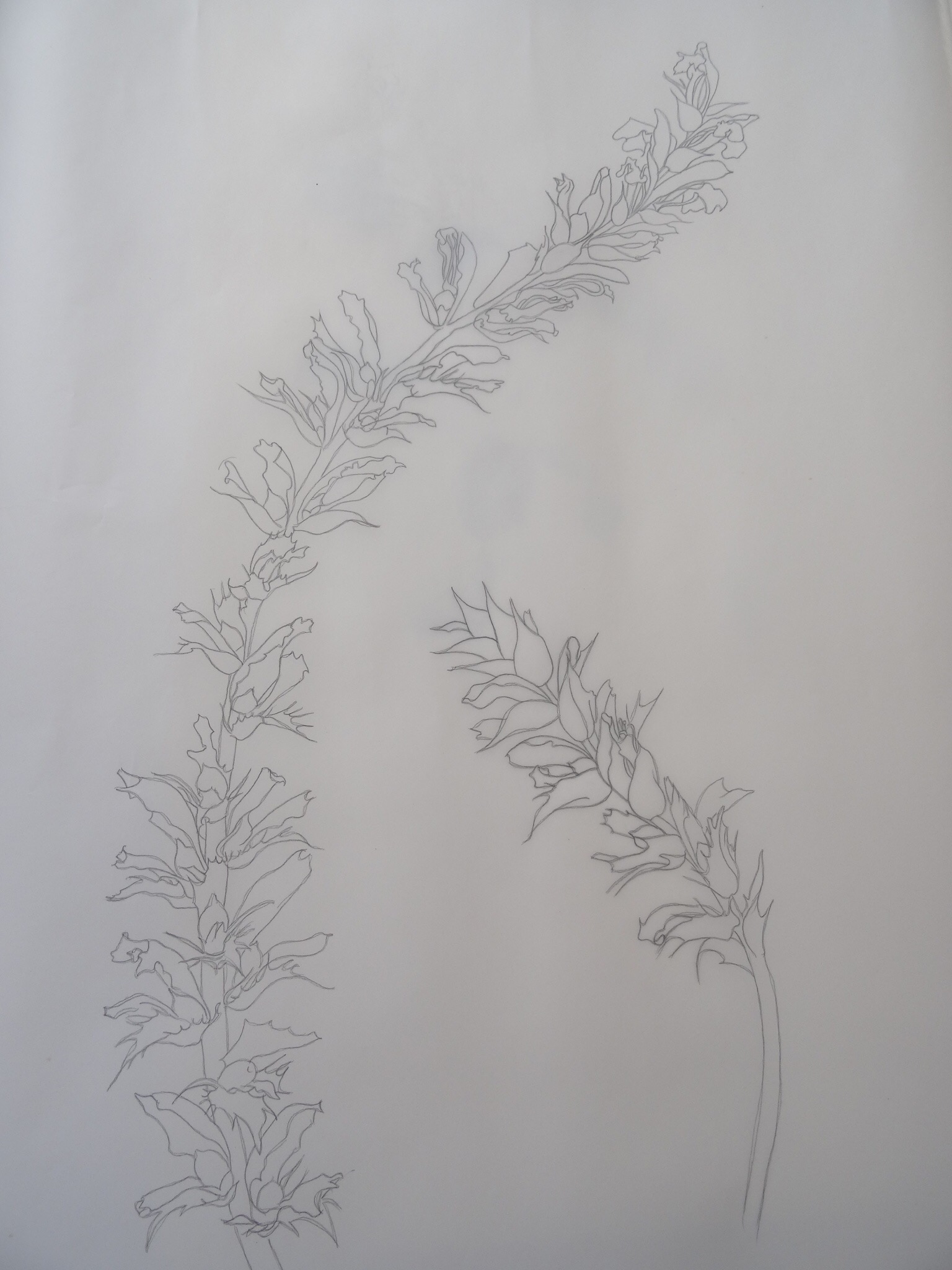
IMG_8913.JPG

On Saturday my husband and I drove up to Leicester, visiting briefly the University botanical Gardens. But we also went to an IAPI meeting on Grasses. Now many of you might wonder what was so special about grasses – and I did too. But, with just one lecture and some amazing views through the microscope, I am converted.

There were so many different types for different types of habitat and temperature zone. They may look very ordinary, but up close they are absolutely beautiful.

Think of a colour wheel and pointillism. If you mix the three primaries, you get a grey shade, depending upon the mix. Optical mixing of colours means that you don’t mix the colours on your palette, but by placing colours side by side, your brain mixes the colours together creating a third colour.

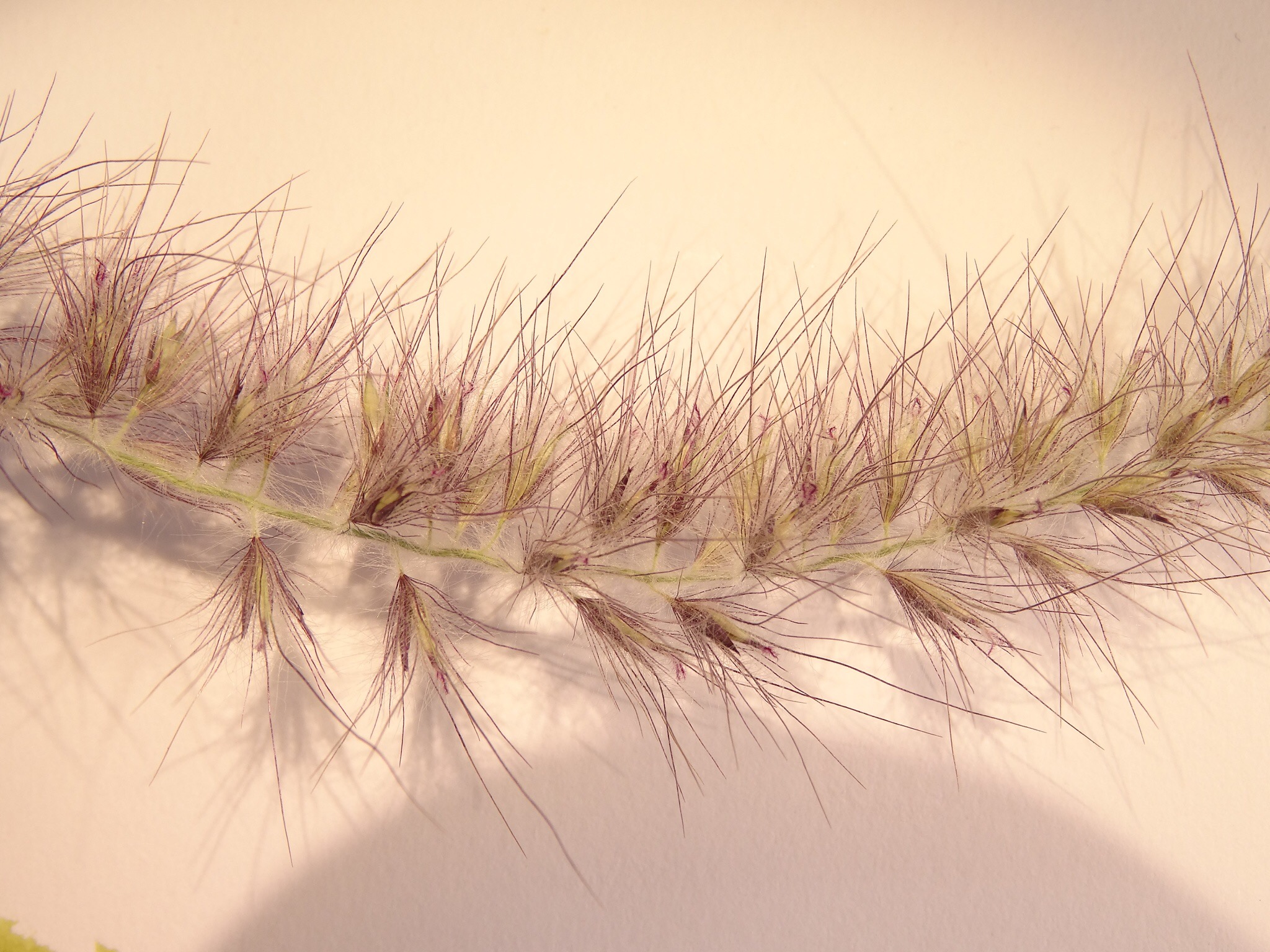
Now back to the grasses. When a grass is waving in the wind, depending upon the type, all you might see is a greyish or beige-ish colour in the frond. Well, at the height of the season, those ‘fronds’ are the ‘flowers’ (inflorescence) of the plant and contains the male and female parts.

I looked at these under the microscope and saw some tiny, really beautiful flowers. Most of all, the colours were amazing ( I know I’ve used the word again, but have to). The one I was looking at had wonderful reddish purple and green parts with the tiny style and stigma in purple sticking out of the tip. The colours glowed.

Unfortunately the pictures I have taken do not reflect the beauty that I saw under the microscope, but hopefully they will give an indication.

Back to optical mixing of colours. Bearing in mind the smallness of the inflorescence, even though the colours were individually very beautiful, they were small surfaces to the naked eye and therefore had the same effect as pointillism – the colours became optically mixed to a dull grey! Could this be natures way of protection?
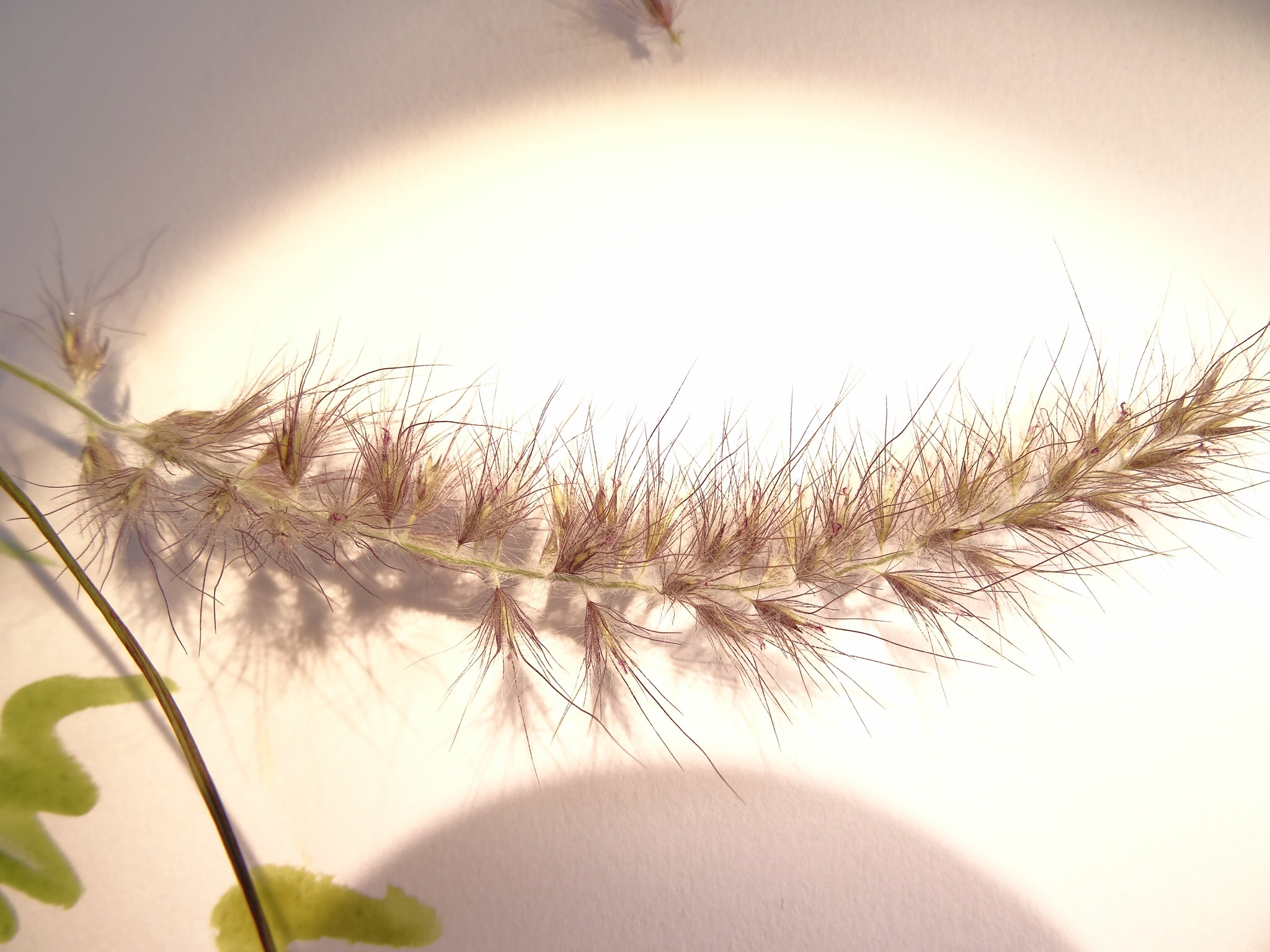
IMG_8910.JPG

IMG_8912.JPG

IMG_8909.JPG

What do you think? I know the photo does not do the plant justice, but hopefully you can see the promise of the intricate and beautiful design.

A new botanical art project started.

On Saturday I will be travelling up to Leicester for the day to go to an Institute for Analytical Plant Illustration (IAPI) meeting, Grasses masterclass, at the University botanical gardens. I am looking forward to this as I have only just joined the group and this is my first meeting with them.

Monday will again be a very early start to arrive at Goodnestone Park Gardens in Kent for 09:30 in the morning. I am teaching at one of the Botanical art workshops arranged by Field Breaks and hugely looking forward to it. Goodnestone Park is a lovely place to do botanical art and the gardens contain a lot of subjects! Already I know some of the students and some use watercolour and others coloured pencil. I enjoy this mix.

But I have started another picture. I am still doing the initial sketch! But the final picture will be in pen & ink. I have another two-day workshop 1-2 October which will be pen & ink. How far I will get with this picture by the start of that workshop, I don’t know – but it will be useful having something on the go.

So far I have only started sketching it. Guess what it is!

IMG_8902.JPG

IMG_8901.JPG

Botanical art on Vellum

Again I haven’t done too much painting over the last week as we have had family staying and we took the opportunity to have a little bit of a holiday with them.

But now I’m back to painting.

Whilst in Pittsburgh last year there were several botanical artists who tried to persuade me about the benefits of painting on Vellum. I saw some really beautiful work there and was really tempted. My husband bought me a few small sheets for Christmas and it has been lying there. Since then I have seen some more work on vellum and I wasn’t too enamoured. It definitely was not of Rory McEwen quality! You see I aim for the best.

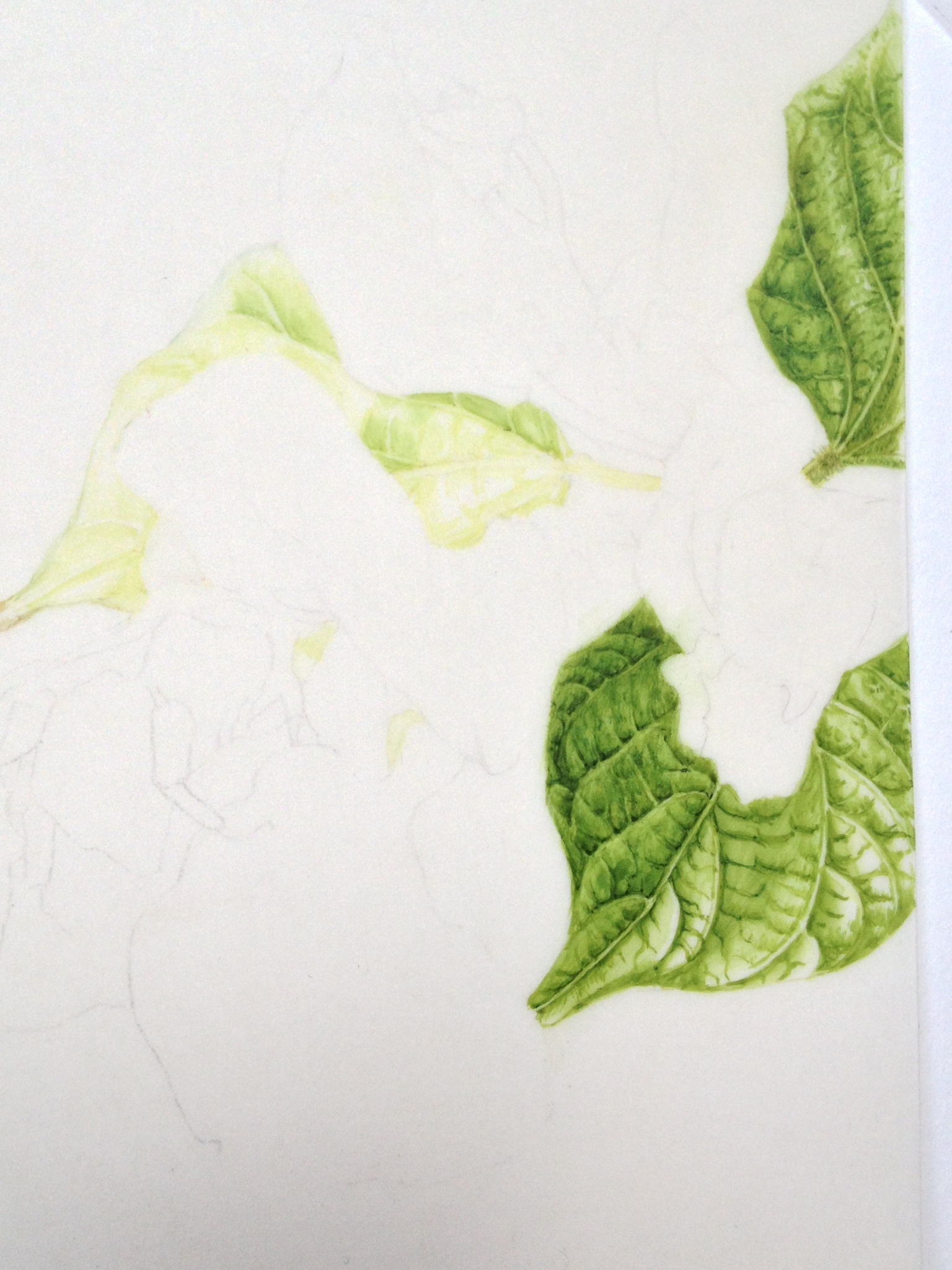
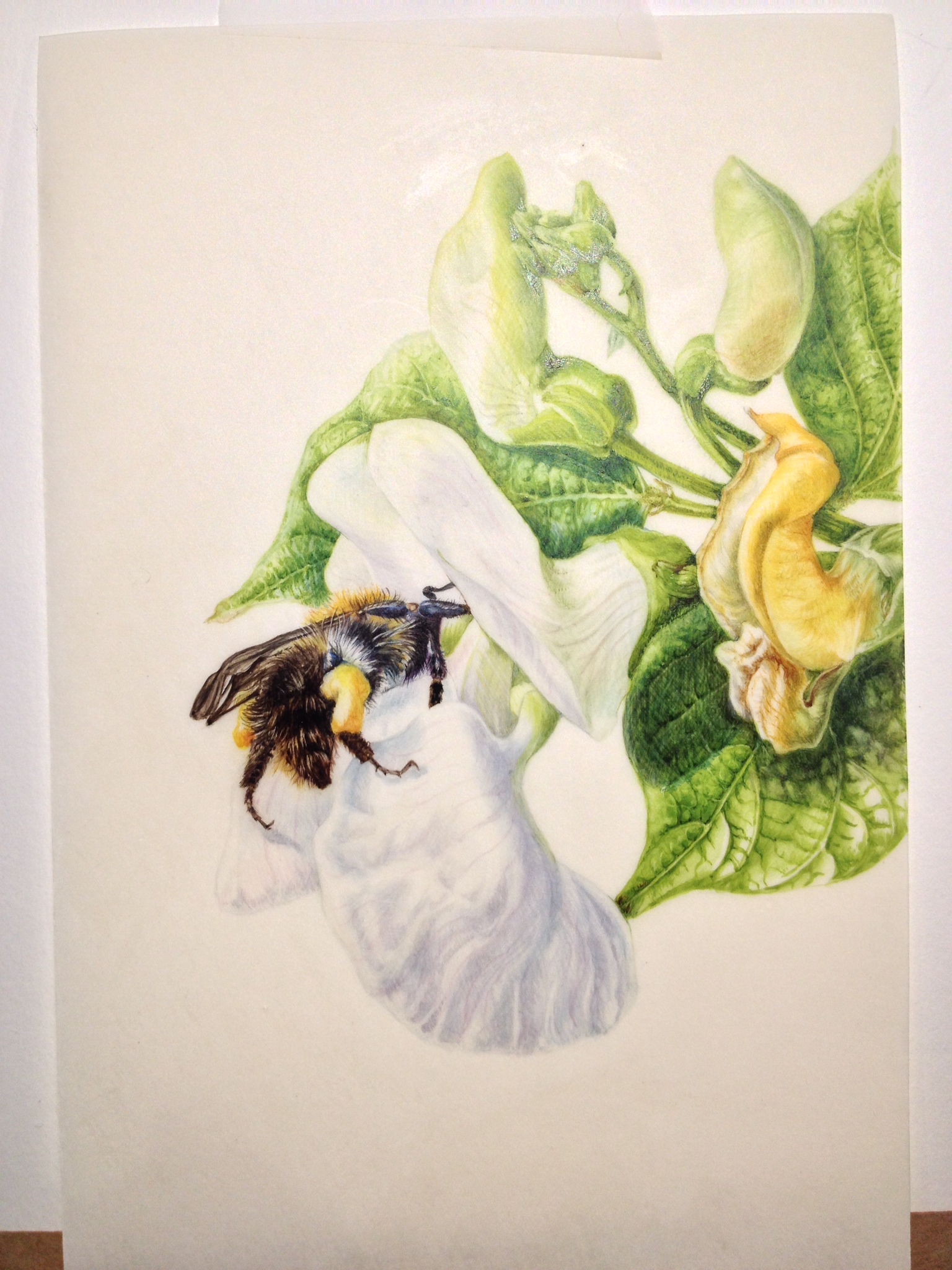
I have been painting a small picture on vellum during the last few days. I had taken a photo of a bee on the runner beans and wanted to do this. Normally I only paint from real life and obviously this was a problem as I didn’t have the bee although did have the runner beans. I did some research on the bee and found out that it is called a Bombus pascuorum worker. It also meant that I had some other bee pictures to make sure that I got the details right. I’m not happy if I haven’t got the subject actually in front of me.

For once I decided to paint it oversize. This is another thing I don’t normally do, so I have several ‘firsts’ here. I know that I had to paint using a dry-brush technique, but still wasn’t sure how. I therefore examined the pictures in the Rory McEwen book ‘The colours of reality’. I had to refer back to this book on several occasions as I built up the layers. I thought that as I had painted on Porcelain many years ago, that I could adopt a similar process. I’m afraid that didn’t work! But I gradually began to get the hang of it and also take advantage of the fact that you can lift out mistakes.

I will put a couple of pictures in this blog, but add a few more as an album on my Facebook page.

If anyone has any tips, please let me know. I haven’t stretched the vellum, but would like to do so on larger pieces.

Runner bean leaves, first washes and details
The bee
The bee
Runner bean flower
Runner bean flower
Finished painting
Finished painting

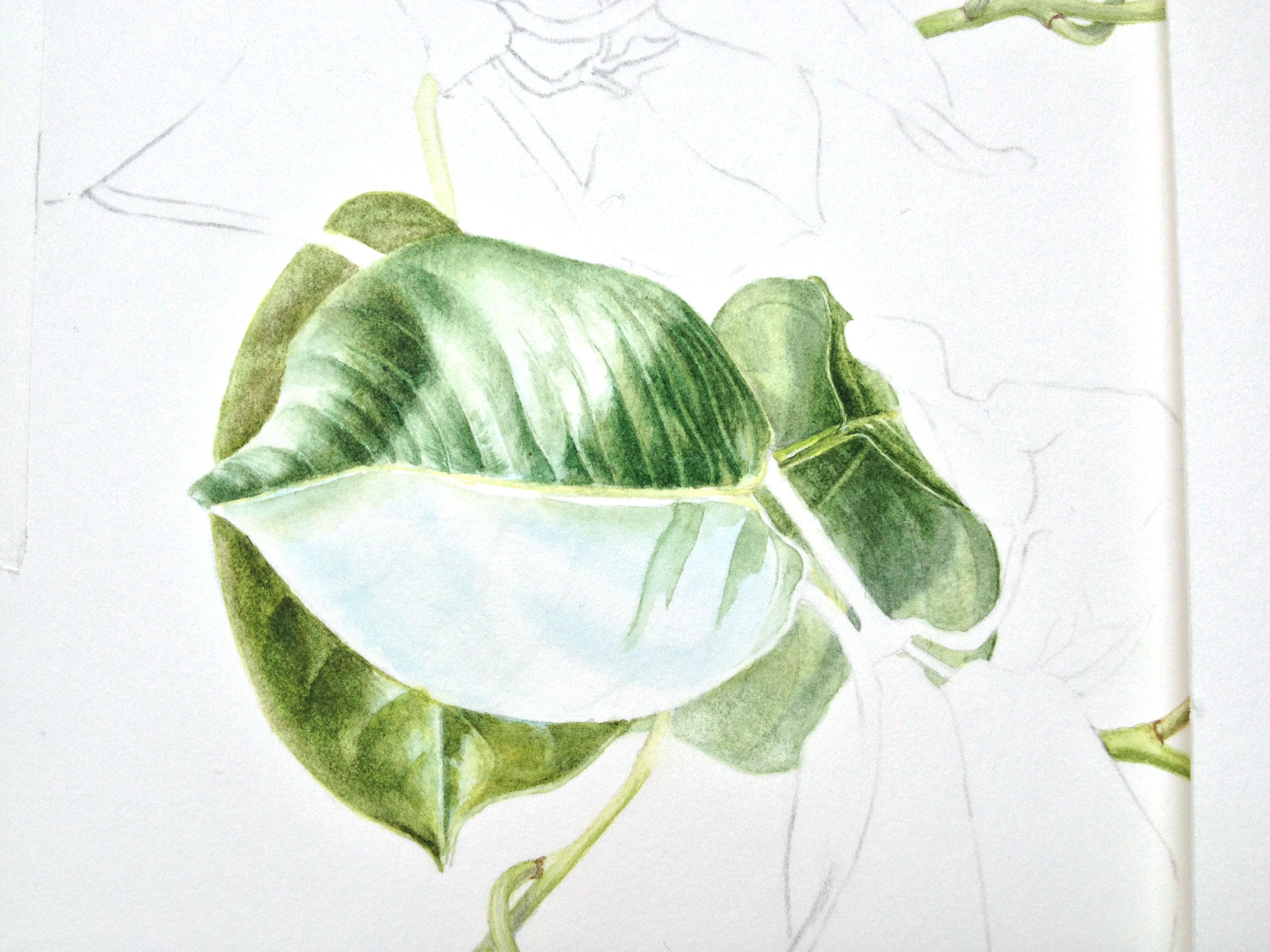
The Dipladenia: Anything missing?

In between marking assignments and receiving pictures for the SBA exhibition at Palmengarten, the botanical gardens in Frankfurt, I have been painting.

Last time I suggested you find the part in the picture where I had made a mistake, but had rectified it.

Now I have three photos of the final work on the picture – I think!

Dipladenia picture: What is needed to balance the composition?
Dipladenia picture: Notice the difference? Does it work?
Dipladenia picture: Is it finished?
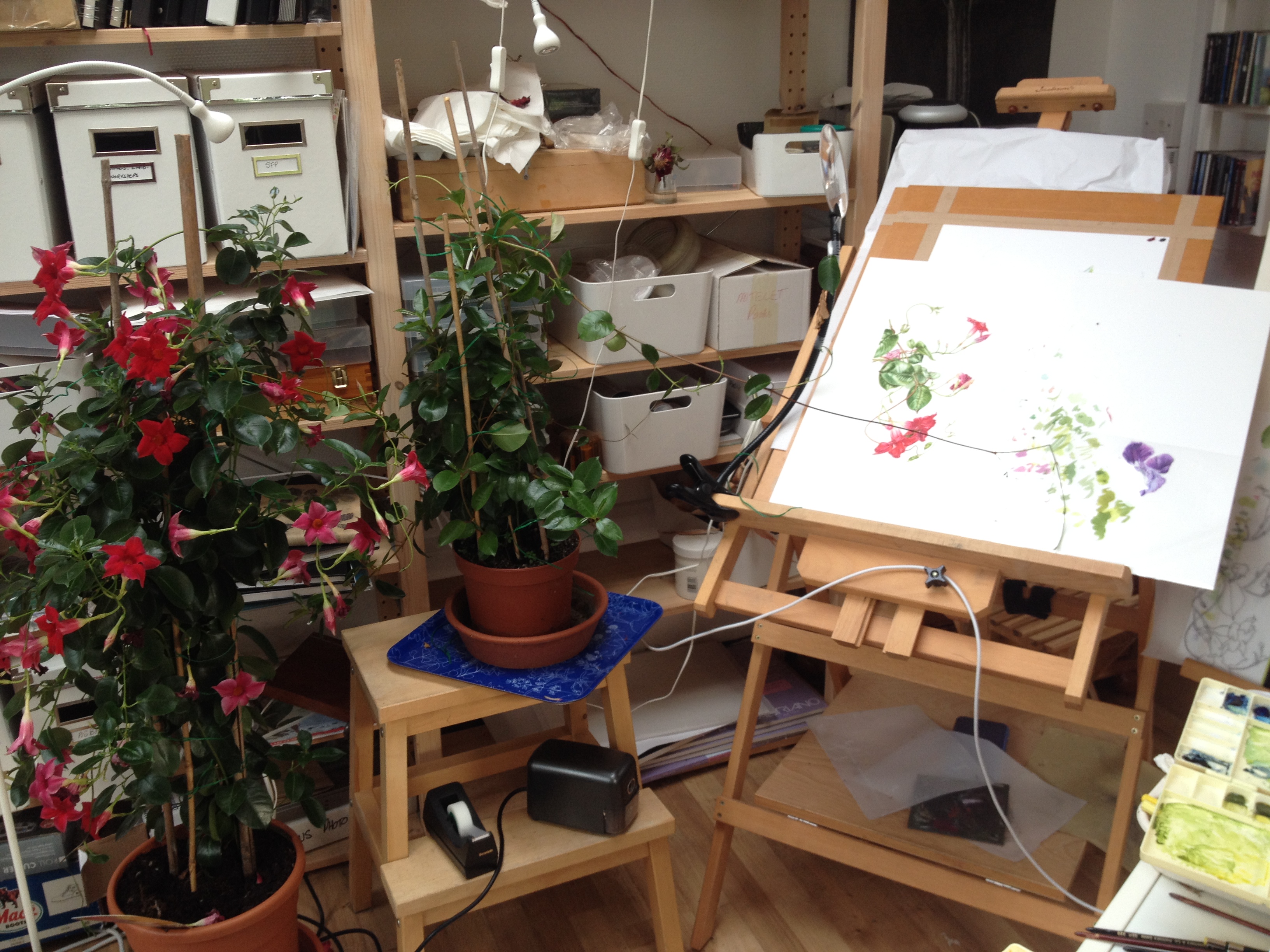
Part of my shed. The table looks as though a bomb has hit it, therefore hidden!

What to do with the plants now as it is poisonous. It nearly took the life of one of our cats and is very much a temptation to play with – as well as being very beautiful and exotic looking for our colder climate.

Spotting the near miss with a Dipladenia leaf

The sun has just come round and is shining in the shed door. It is the only period during the day that I risk the sun coming directly into the shed and shining onto my work. I had just done loads of detail on a leaf and was doing a gentle wash on top. The sun suddenly appeared and I made a mistake. Hopefully it is recoverable.

I therefore took a couple of deep breaths, went out into the vegetable garden directly outside – picked a runner bean and chewed on it to gather my wits. Whilst the work is drying I have decided to do this blog.

Did you see the detail that I showed you yesterday, which was a near miss? In actual fact I did make the mistake and it wasn’t until I was checking over the days work that I saw it.

In the top left hand corner of the second picture I showed you yesterday, there is a leaf going off the page. To the right of it is a tendril of new growth. It was meant to appear from under the leaf. Guess what I did. Without thinking I had painted the petiole of the leaf (rather than curling it round behind and out of sight) and I connected the tendril and the leaf petiole!!!! How stupid can you get? My picture therefore had the a leaf with a petiole and the tendril as a continuation of the petiole! i.e a tendril with the tip completing one end and a leaf completing the other!

I don’t know how many times I say to students, paint what you see and not what you think you see. That also applies if composing a picture from various parts of a plant to make a cohesive whole. The details in the picture have to be completely botanically correct even though taking elements from different parts of the plant.

To correct the whole, I had to lift the edge of the leaf, petiole and end of the tendril – luckily it doesn’t show. I re-painted the tendril to disappear a little lower down the leaf, and then added a stem coming in from above the leaf. That meant I also had to slightly change the direction of the stem coming out from below the leaf. All very complicated and of course that mistake has knock-on effects with the composition in other areas. Hopefully I have managed it reasonably well.

I know that some people will find the above explanation and detail unnecessary in a blog such as this. But I am already being very honest about this picture, so why not go into the detail. It might even help someone else avoid similar stupid mistakes.

Anyway, the first of today’s pictures is the corrected view. The second picture is more leaves that I have done. These include views of the underside of Dipladenia leaves, foreshortened views and a full frontal view(!). The last is not finished yet.

By the way, I have found that for these leaves I have needed to use smaller brushes than I normally use and a dryer mixture.

Finished leaf and tendril.
More leaves
More leaves
Last adult Dipladenia leaf


The Dipladenia leaf start. Help!

Well, now the start of the leaves. I am on tender-hooks all the way. I am hoping that as I am extra careful at each stage, that I will overcome this fear – whatever the fear or blockage is.

The first whole leaf actually took a whole day and I will let you be the judge as to its success or not. The result is still not as I am wanting it and I can’t even define what it is I want. I am very much a detail person, and it may be that I am concentrating too much on this without thinking enough of the overall result.

This is a picture of the start of the leaf.

A leaf or two in progress.

My fingers, toes and everything else are crossed.

The start of a leaf and part of a tendril

Spot the mistake leading to a near miss!

Fruit & Veg or Strawberries and Cream Botanical art workshop

We painted the vegetables and ate the strawberries and cream!

I was very disappointed for two students who at the last minute were unable to come to the workshop because of personal difficulties. We did think of them often during these two days.

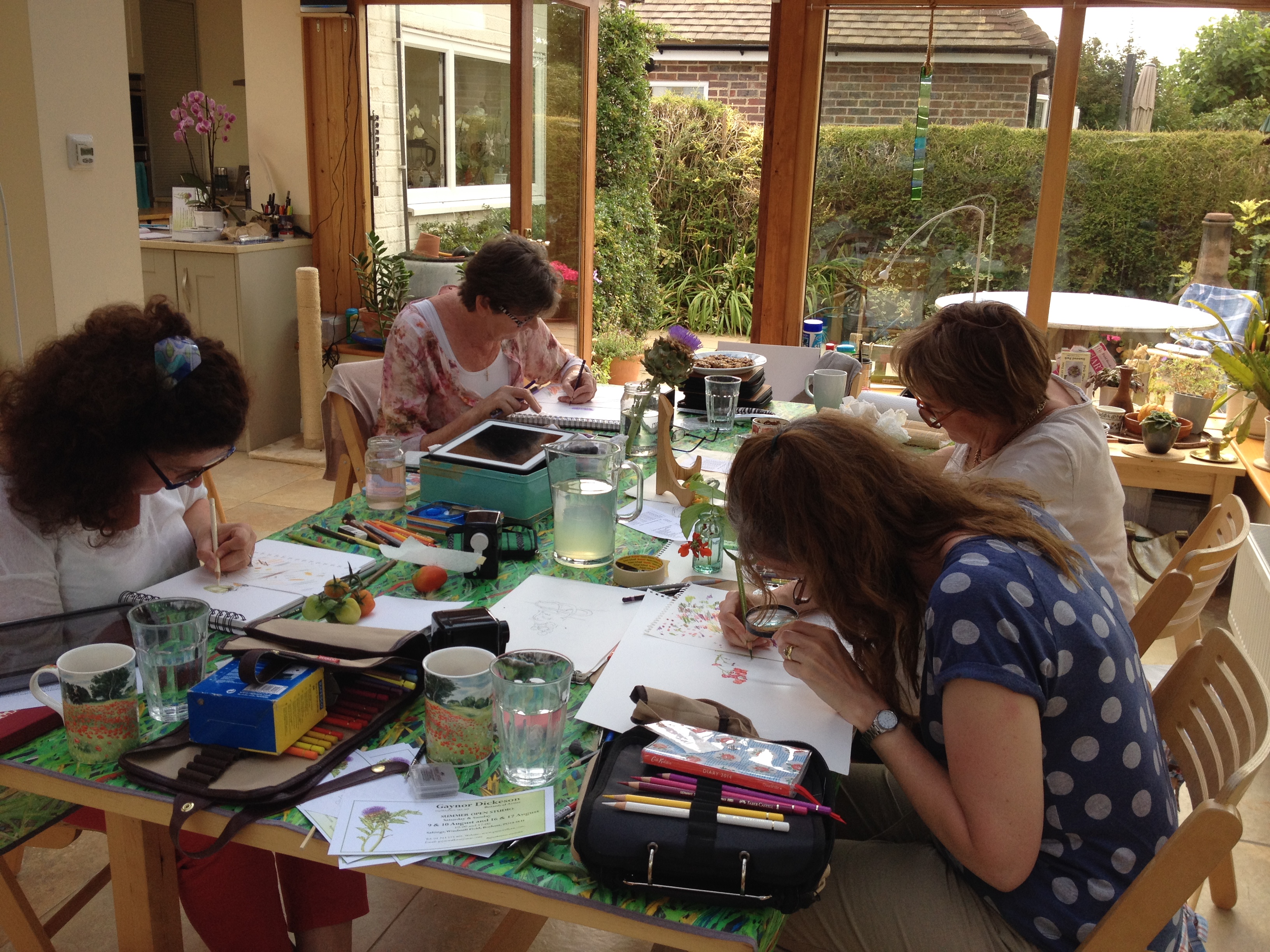
Quite early on during the workshop I felt that the students would have some results that they would be proud of. Having picked suitable subjects from the garden, as usual we spent time on the preparatory work; the composition and drawing. Having said that, one of the subjects we knew would fade very quickly and therefore it was important to get down the first layers of colour fast. This time most people used coloured pencil and only one person used watercolour. It is exciting using different media in the same workshop as each student sees how each affects the final work; although less than one would imagine.

You want pictures, so here they are.

What concentration on a lovely summer day!
What flowers are these?
A fading flower waits for no-man
Now guess what this is.

Today – at the end of the workshop. They promised to finish the pictures that still had work to do on them.

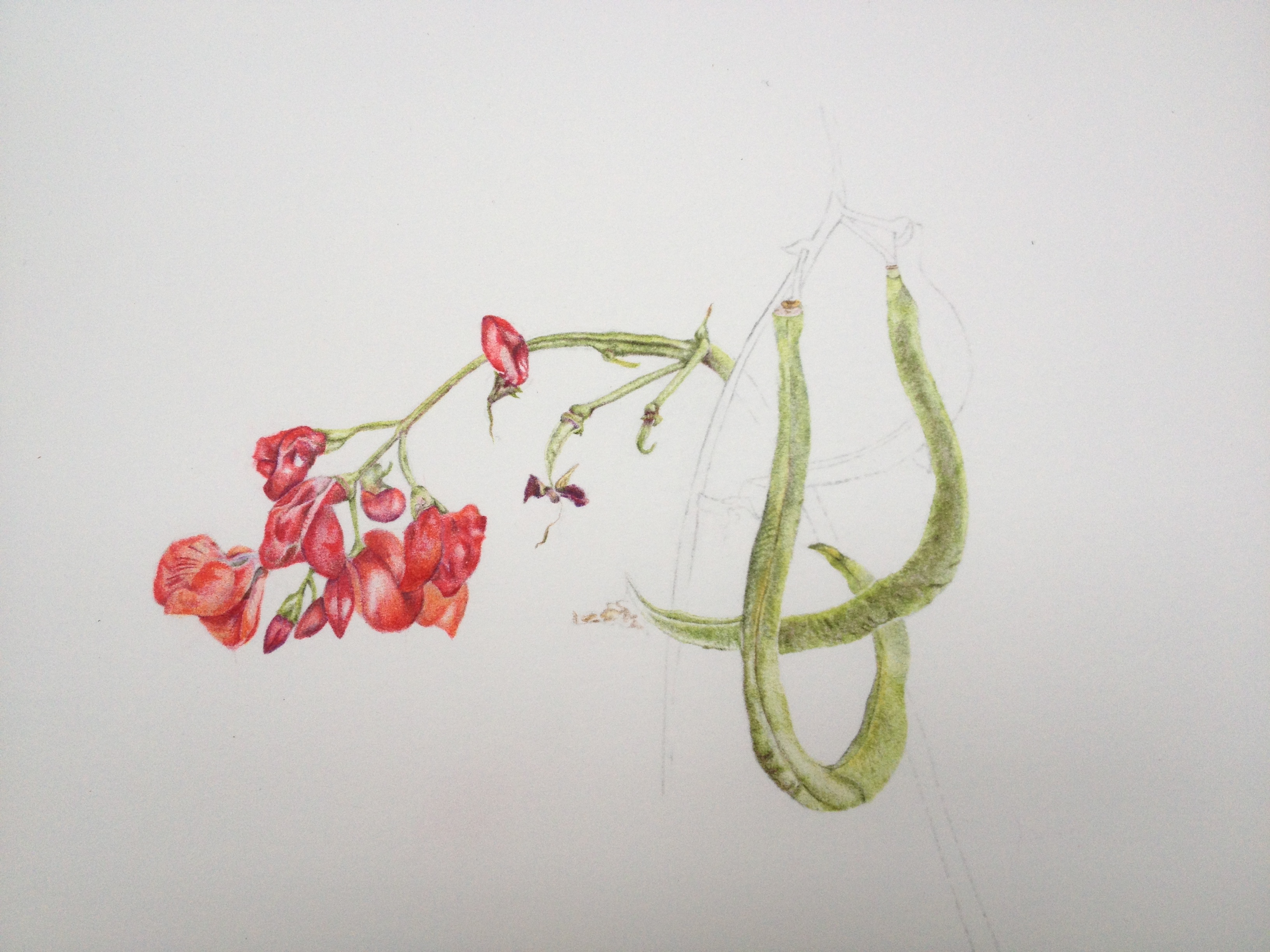
Runner Beans in coloured pencil
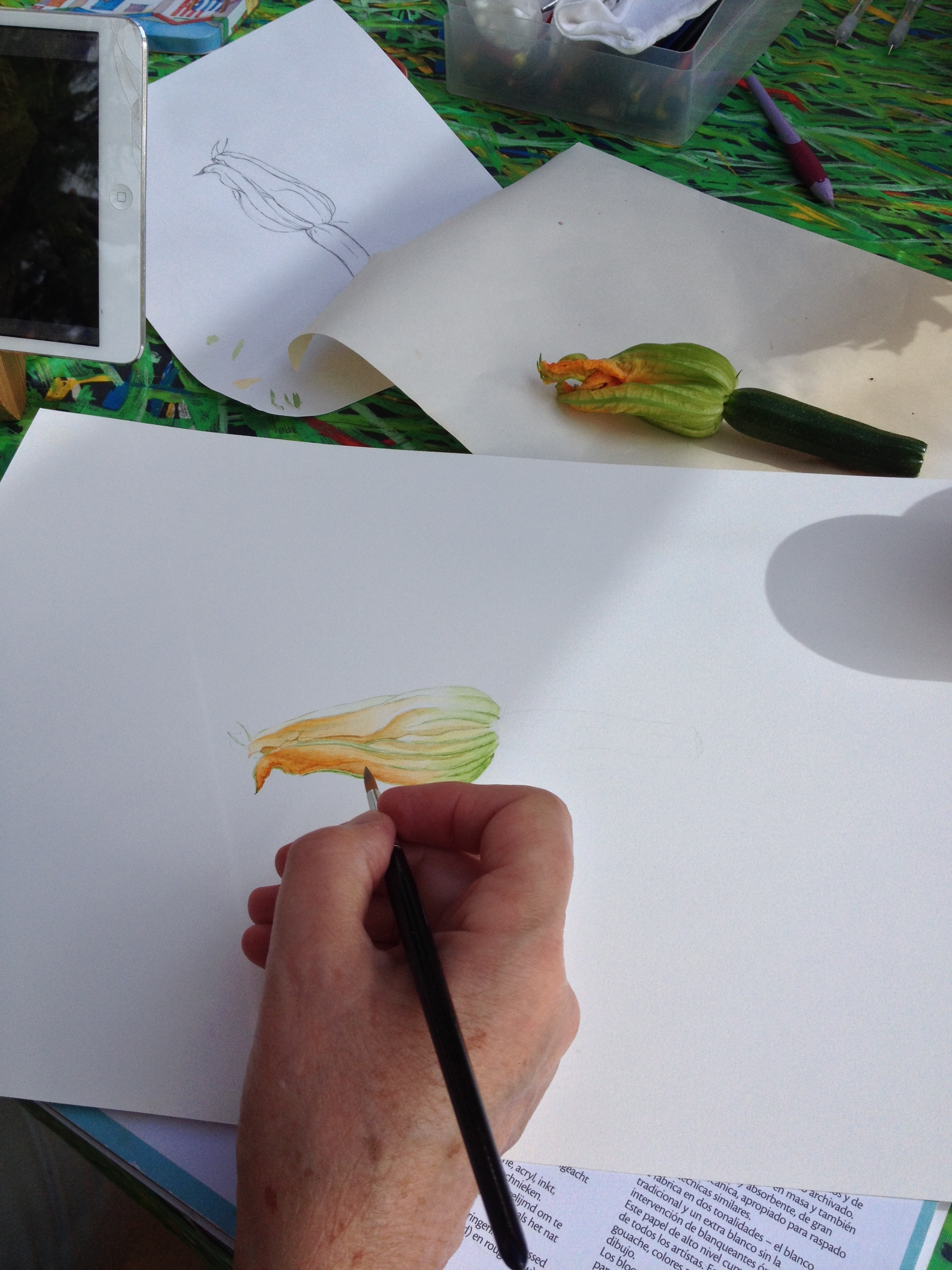
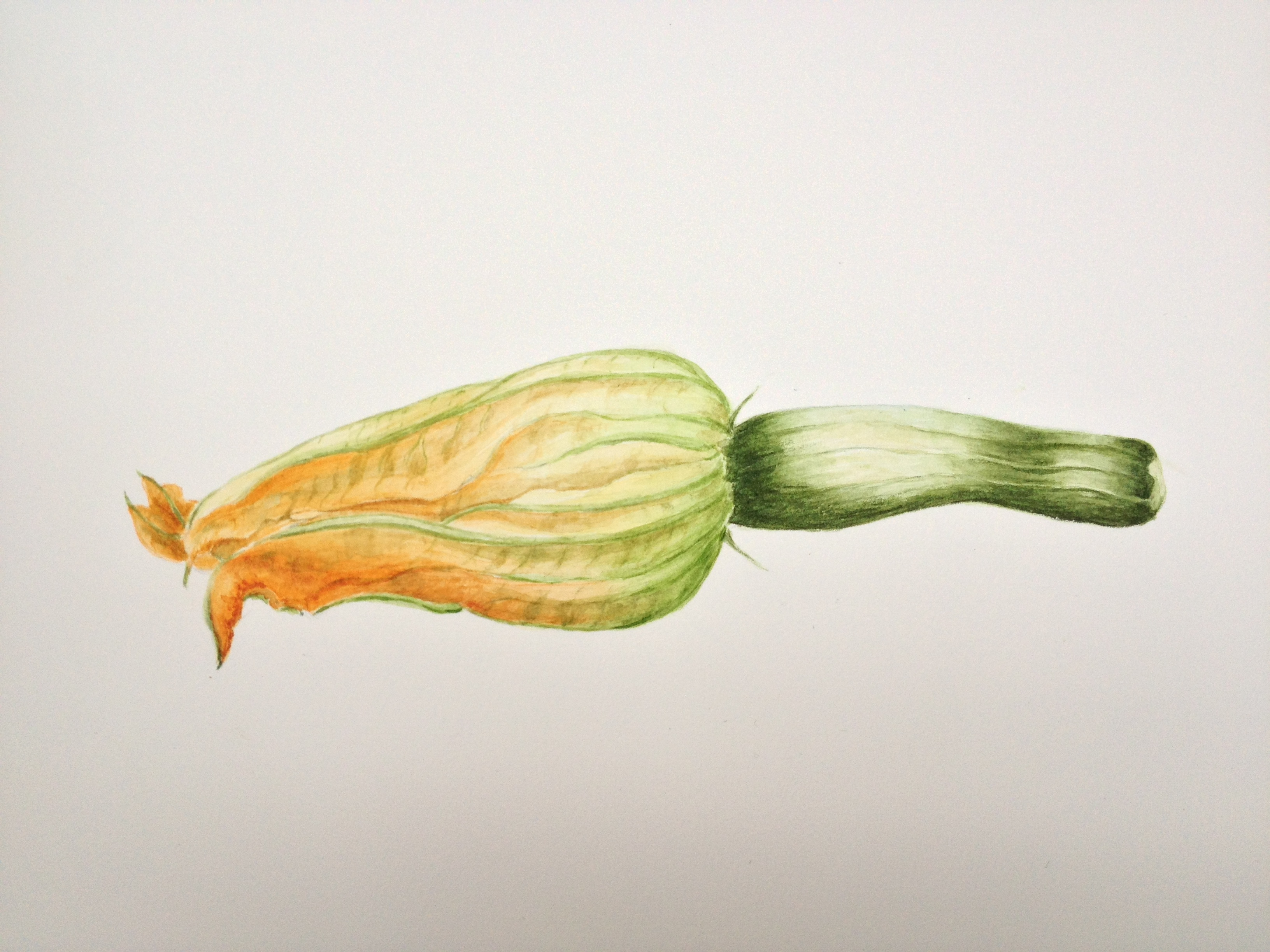
What a beautiful little Courgette. Watercolour
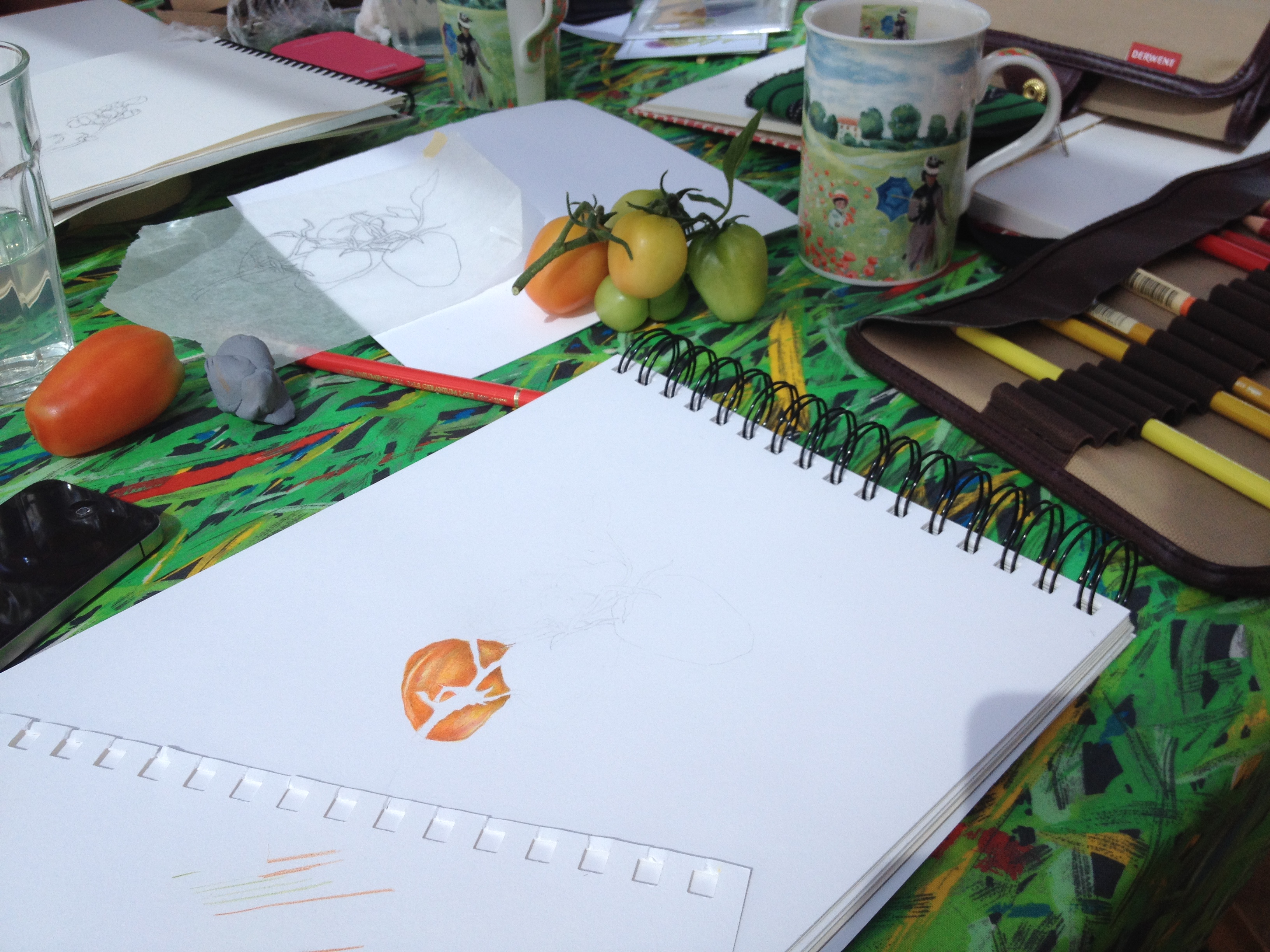
Home grown tomatoes - but not from my garden. Coloured pencil.
Home grown tomatoes – but not from my garden. Coloured pencil.
Globe artichoke before its haircut. Coloured pencil and no embossing tool.

After just two days work, aren’t these amazing?

The next workshop is entitled ‘ Hedgerow produce – those colours!’ Tuesday 2 September until Thursday 4 September. As usual it is between 10:00 – 16:00 each day with lunch included. I do have spaces on the workshop, so get in touch as soon as possible.

Workshop and Summer Open Studio

It has been just over two weeks since I last wrote a blog. In the meantime I have almost managed to forget that I had a holiday!

Since I got home I have worked continuously with the organisation of the SBA Exhibition at Palmengarten Botanical Gardens in Frankfurt. But now I have a slight breather.

Actually the breather is necessary as tomorrow I will be running another workshop. It is called ‘Fruit and Veg; Strawberries and cream’. I think I should have stuck to the Veg, or just beans and courgettes. This is from my garden at the moment. No fruit and definitely no strawberries!

Runner beans
Runner beans
Courgettes
Courgettes

Next weekend 9 & 10 August and 16 & 17 August, I will have my Summer Open Studio Event. For details have a look at my website: http://www.gaynorsflora.com.

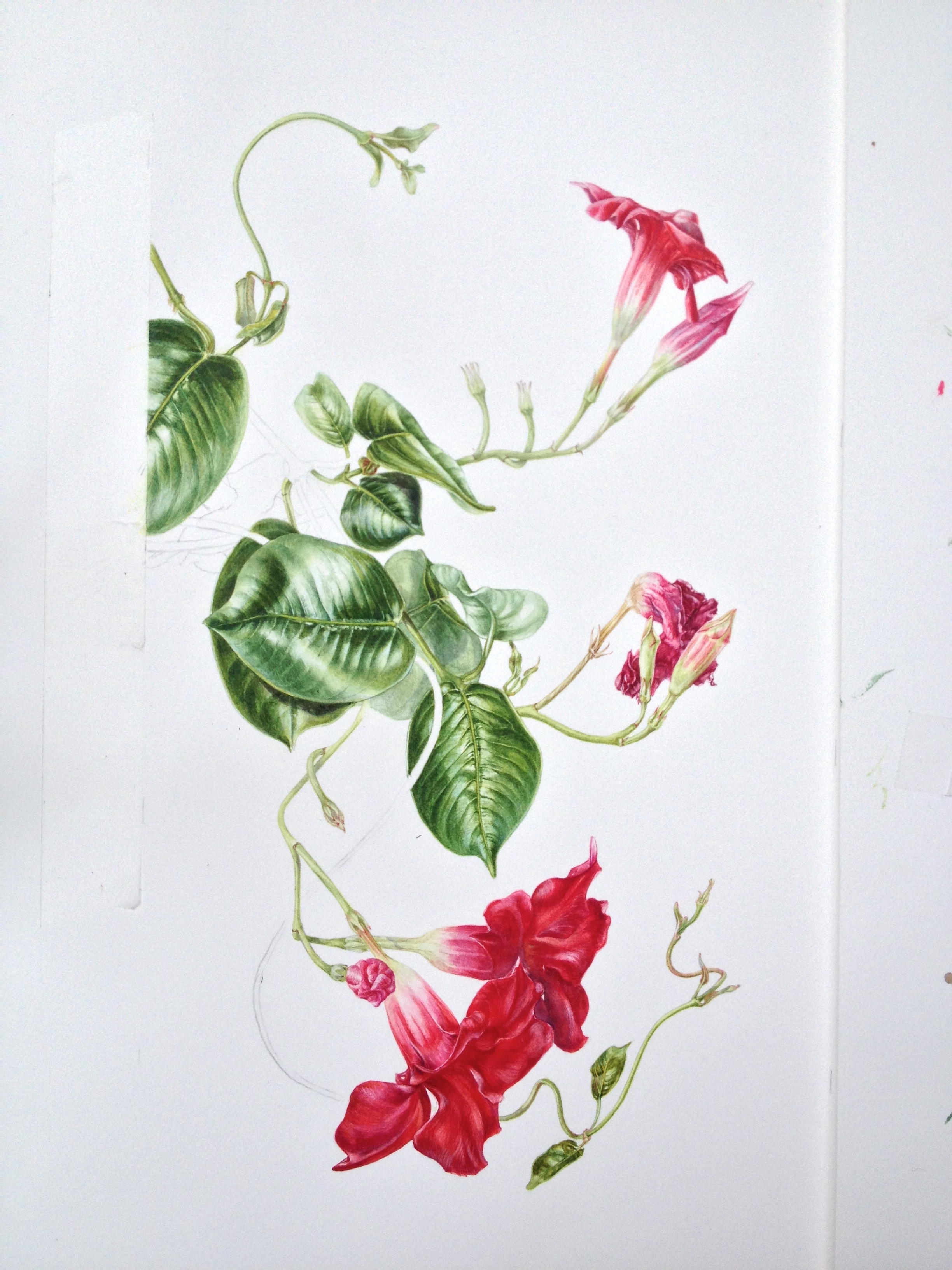
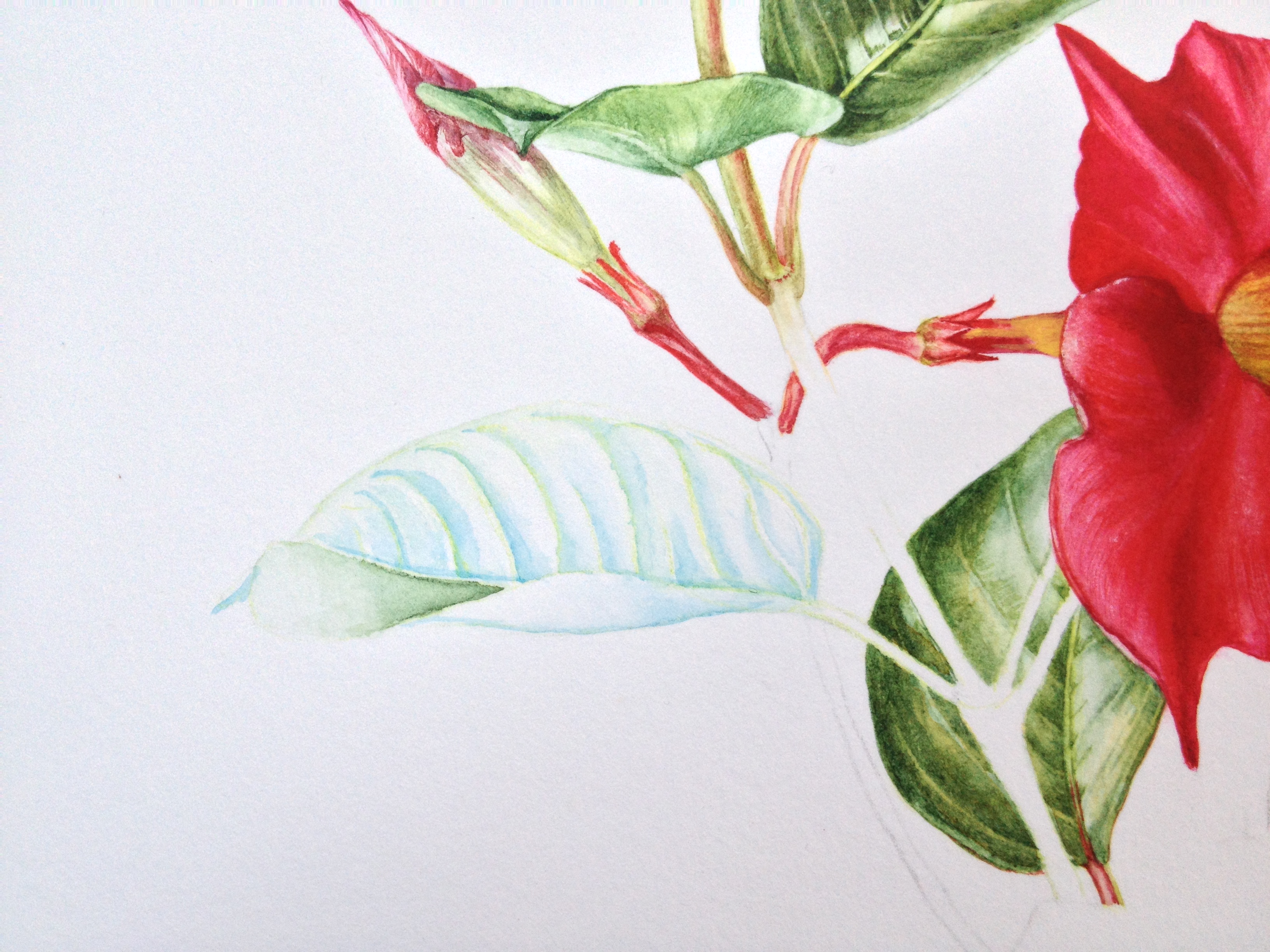
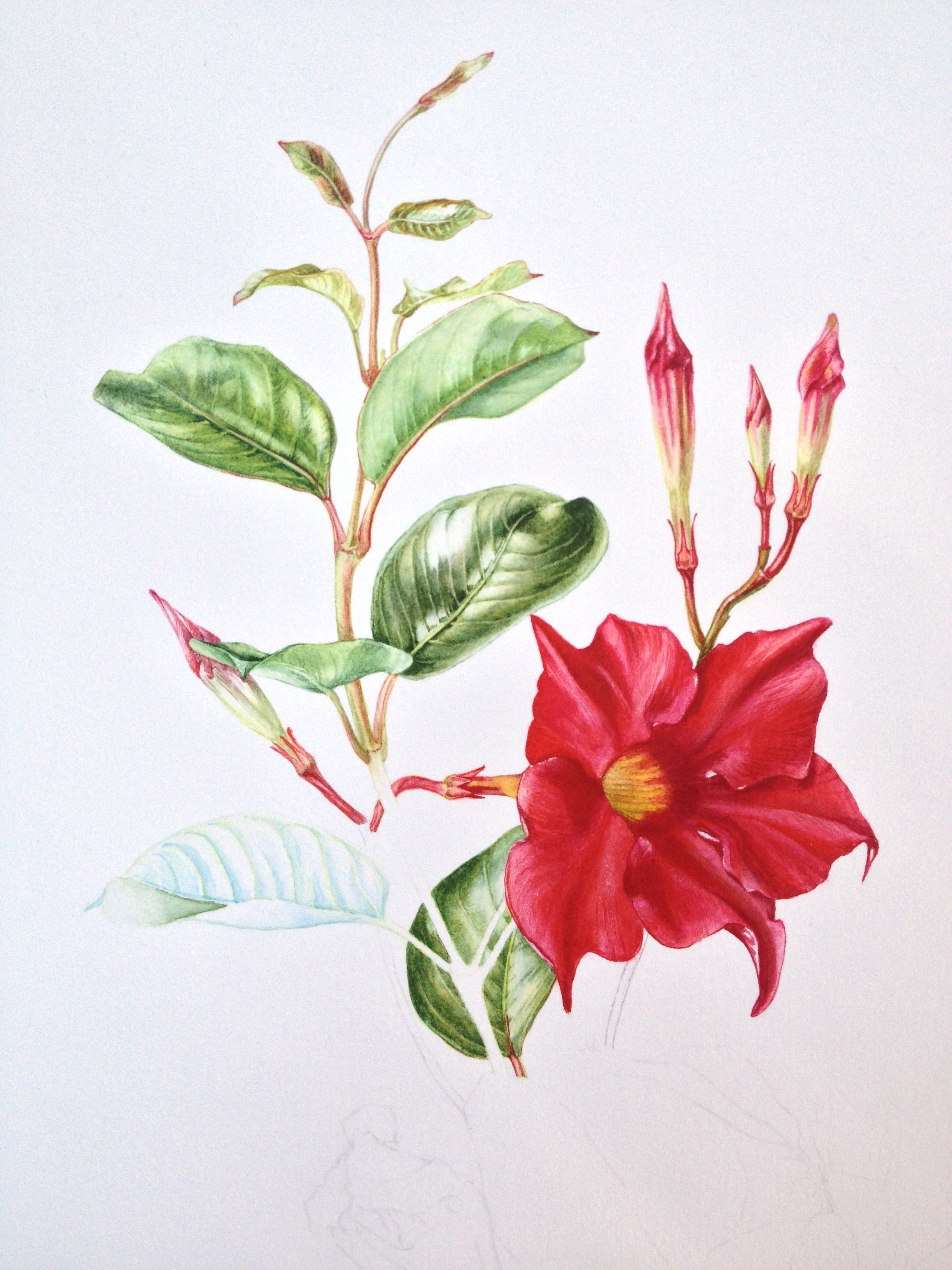
But for the last few days I have actually been painting again. I needed a new picture to exhibit at Palmengarten and had drawn a layout for the Mandeville (or Dipladenia)plant. The following two pictures are just a portion of the picture. I have to get going to get it finished in time, but I thought you might like to see how much is done so far. You may remember I started one flower a while ago, but somehow the paper was damaged and I had to start again.

Red is not easy to paint, and the right red even more difficult. By the way, this picture is in watercolour.

Mandeville leaf detail
Mandaville in progress

Last day botanical art workshop holiday overlooking the Oslo Fjord

What a day! Busy, busy and some lovely botanical art finished using both coloured pencil and watercolour.

I have to say that I was amazed at the results. Those who hadn’t painted before and those who hadn’t done botanical art before used the week extremely constructively and beneficially. Some of the results really astounded me. The change was huge. They know which ones they are!

Absolutely all of the finished paintings were very good and every person progressed. All I can say is that I am grateful to those who came – for coming. In achieving so much, they gave me a huge thrill.

The last supper!

20140706-011609-4569888.jpg

Served by Sarah,

20140706-011701-4621517.jpg

In the celebration of:

20140706-011913-4753598.jpg

20140706-011917-4757537.jpg

20140706-011914-4754377.jpg

20140706-012034-4834378.jpg

20140706-012030-4830664.jpg

20140706-012032-4832171.jpg

20140706-012031-4831466.jpg

20140706-012032-4832892.jpg

20140706-012250-4970767.jpg

Some of the plants are not common , so in case you are wondering what they are;
Gentian, Pink Cornus, Magnolia, Harebell, Blåklokke, Hydrangea Paniculata, Rose, Multe (Norwegian) or Cloudberry.