Autumn colour workshop Saturday – and Palmengarten

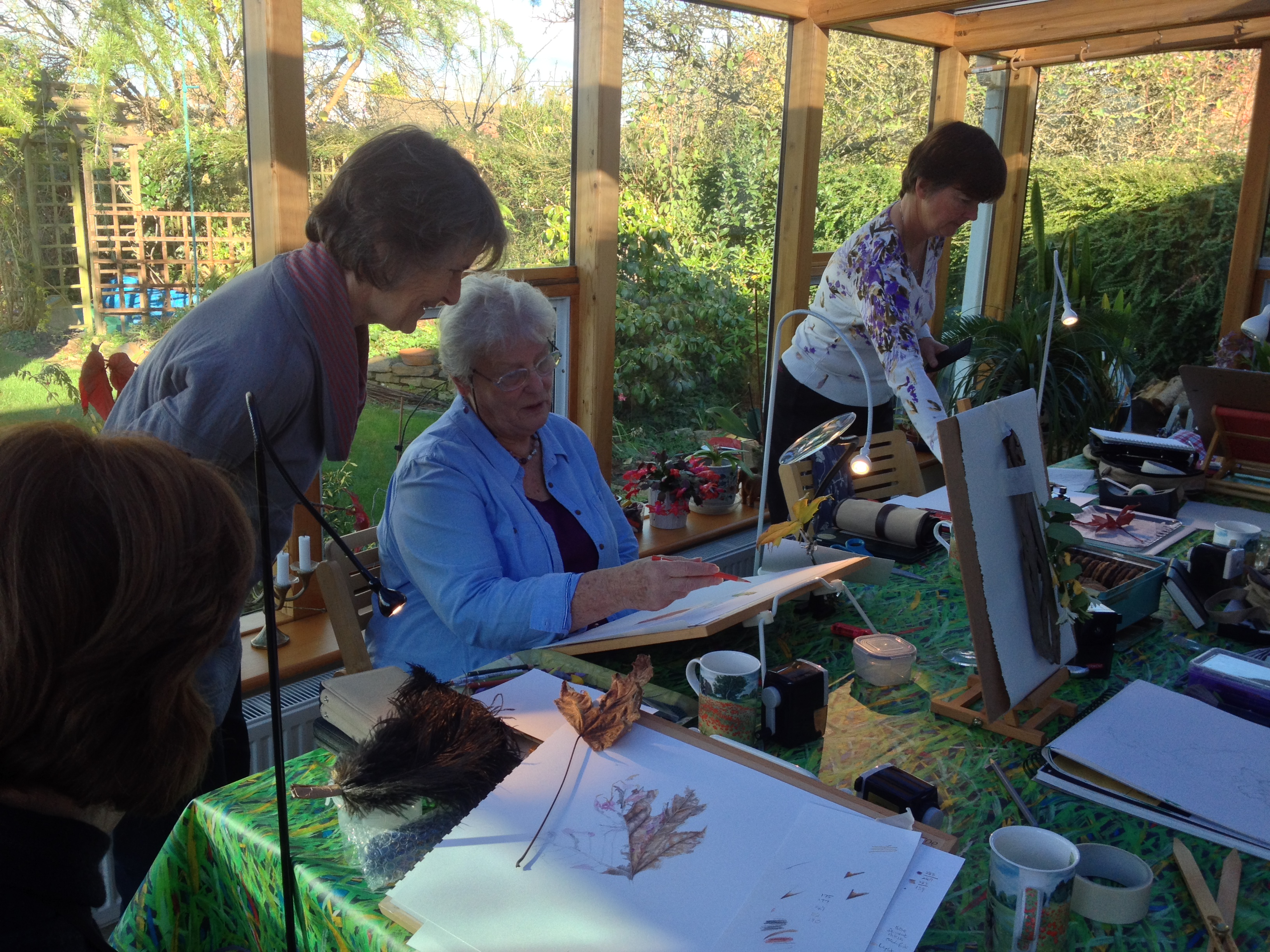
I have had a very good day in teaching this workshop. I mentioned yesterday that I had the feeling that there would be some lovely results from the workshop; that feeling persists.

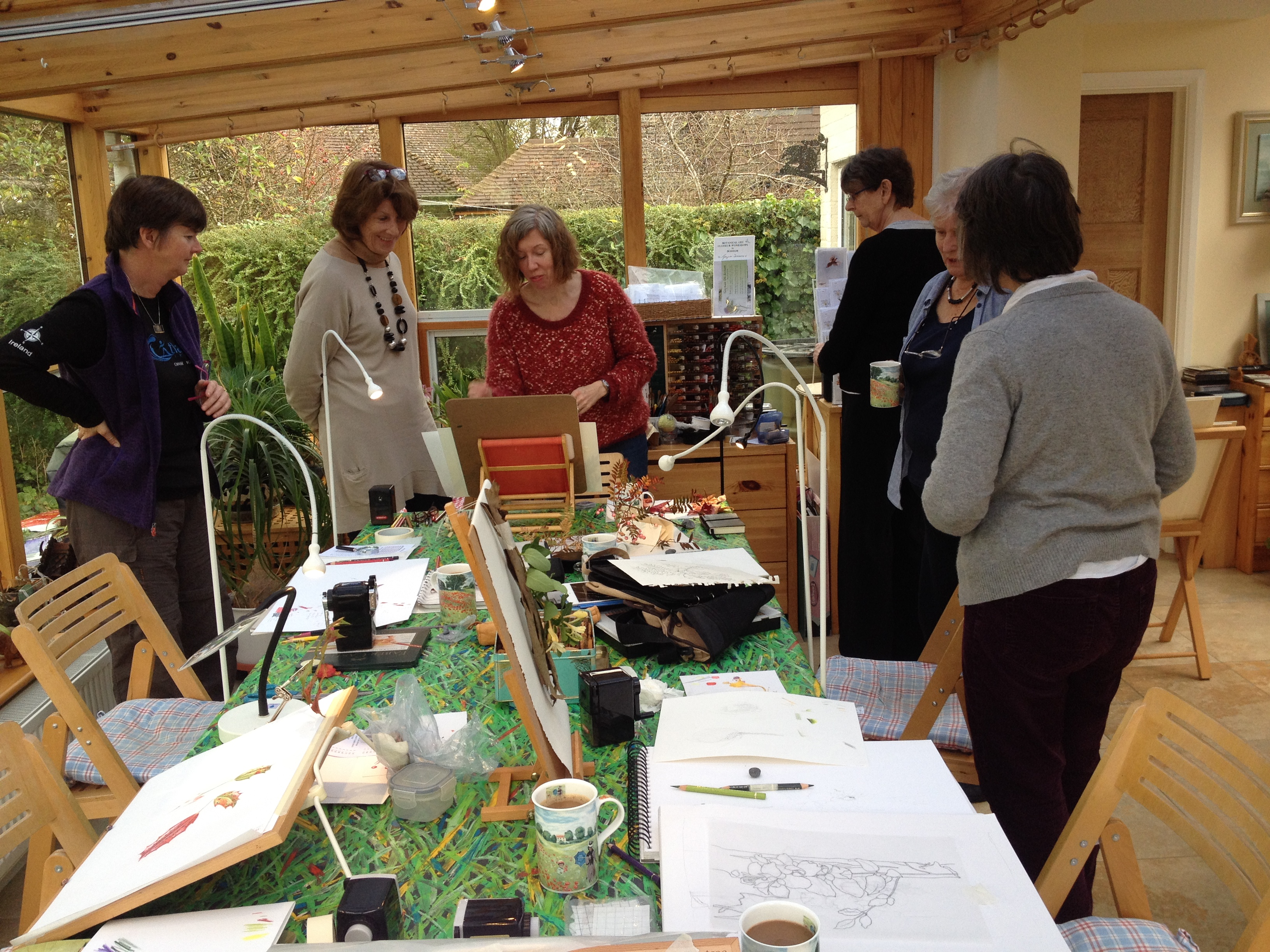
Even so, their accomplishments continue to amaze me and therefore I also need to be on my toes and give enough advice for continued development. I was glad to see that they took a couple of active breaks whilst drinking their tea or coffee, so that they could go back to the drawing board with fresh eyes. But, even though taking a break they continued to discuss their progress.

IMG_1690 IMG_1692


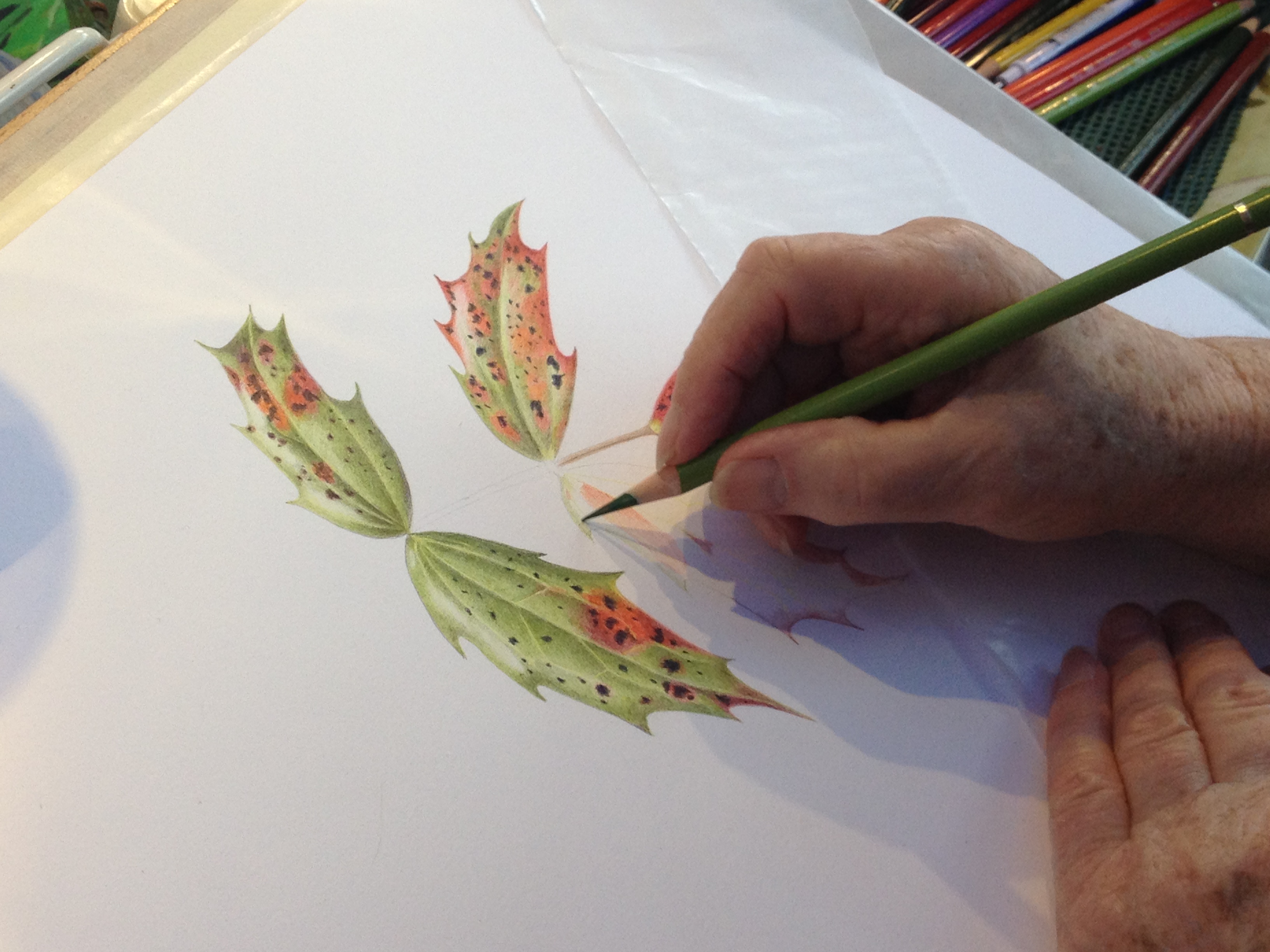
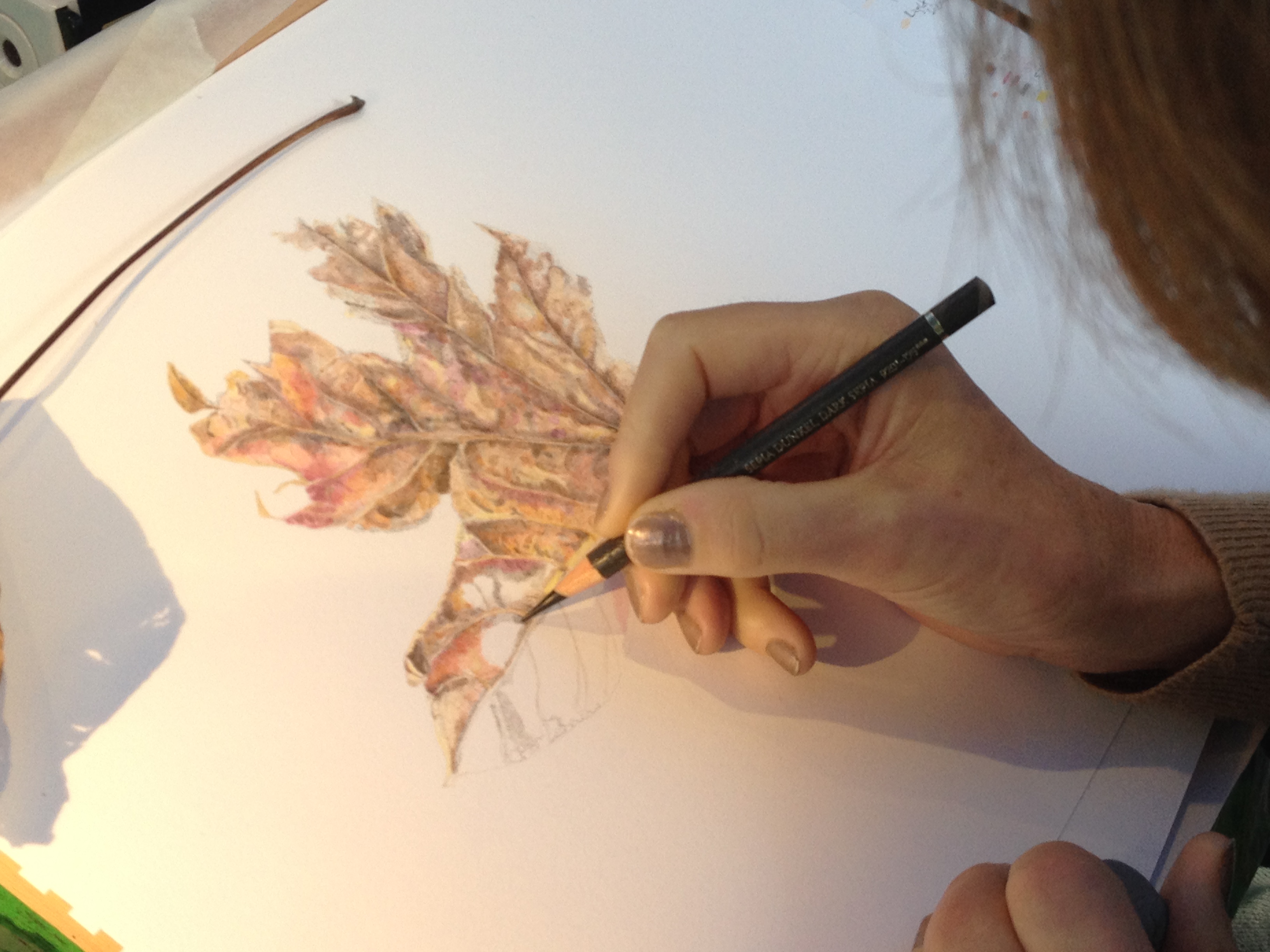
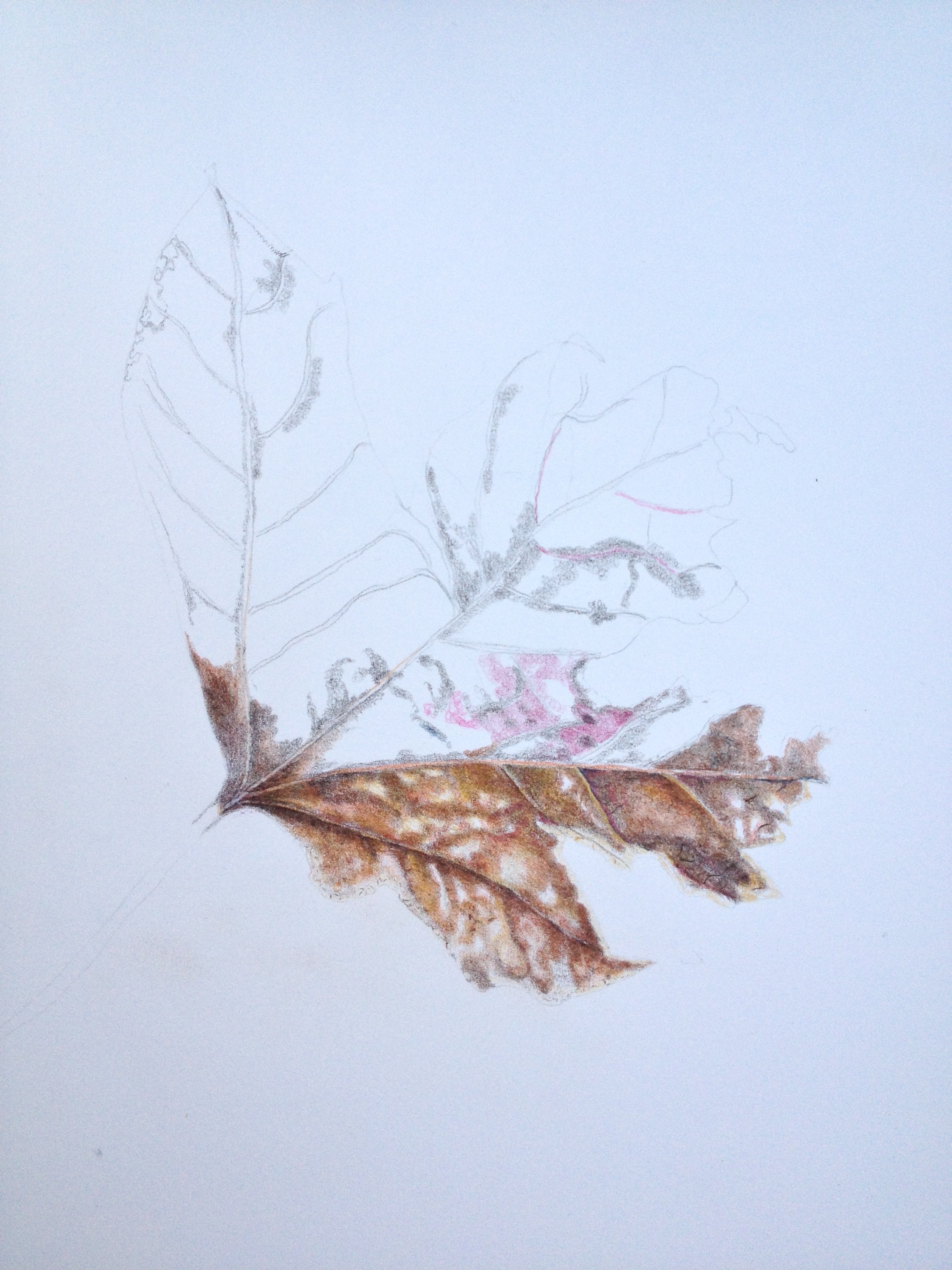
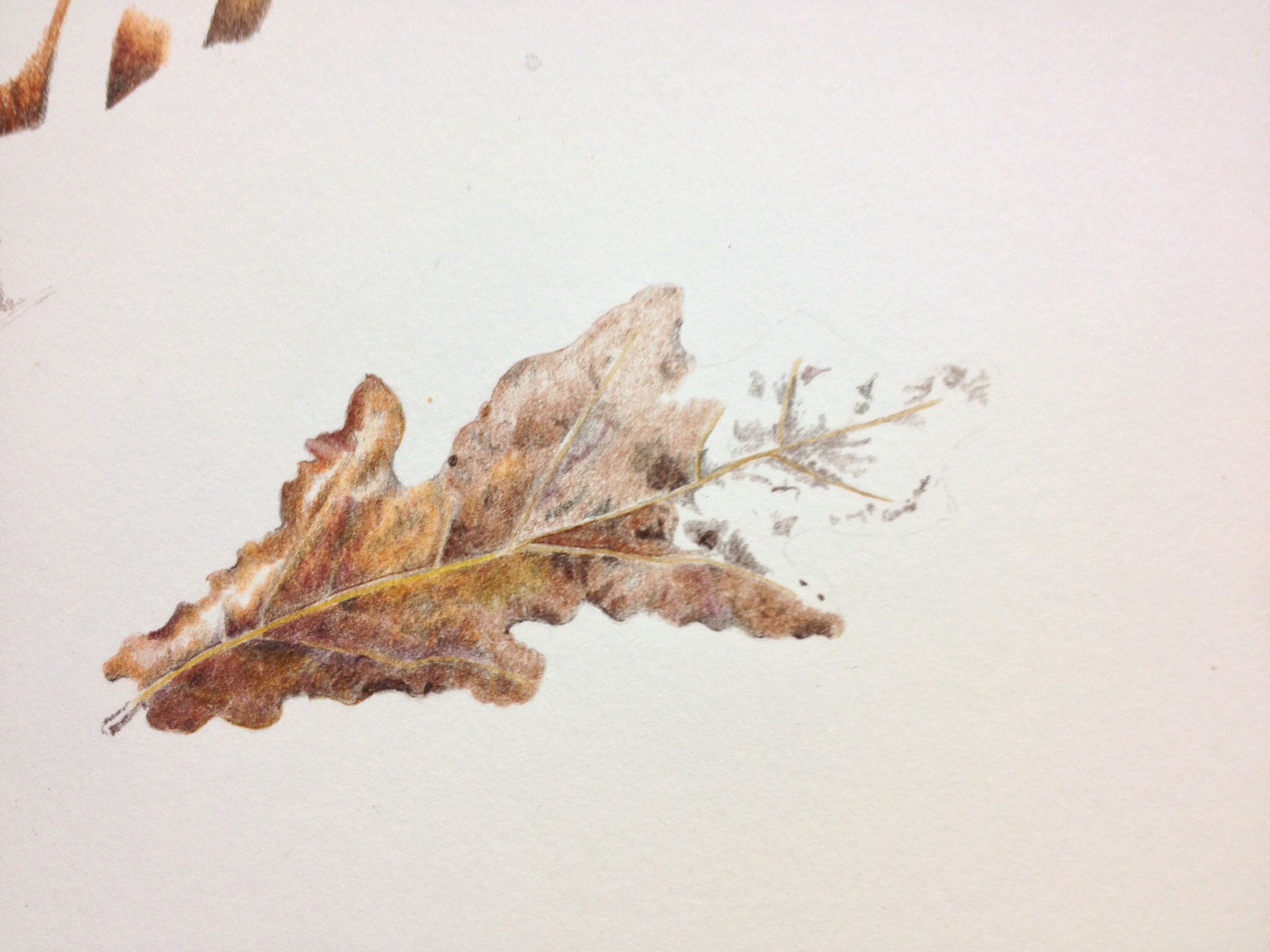
Some of the work as it is developing. There is a huge difference in each of their styles of working and every student has a struggle with a certain aspect of their picture. Two of the pictures were started on Monday at the SFP workshop, but you can see how their pictures are developing. Some have chosen very complicated pieces to draw and in fact only started using coloured pencil this morning. Not all of the pictures are shown here.
Liquid amber
Liquid amber
Liquid amber
Liquid amber
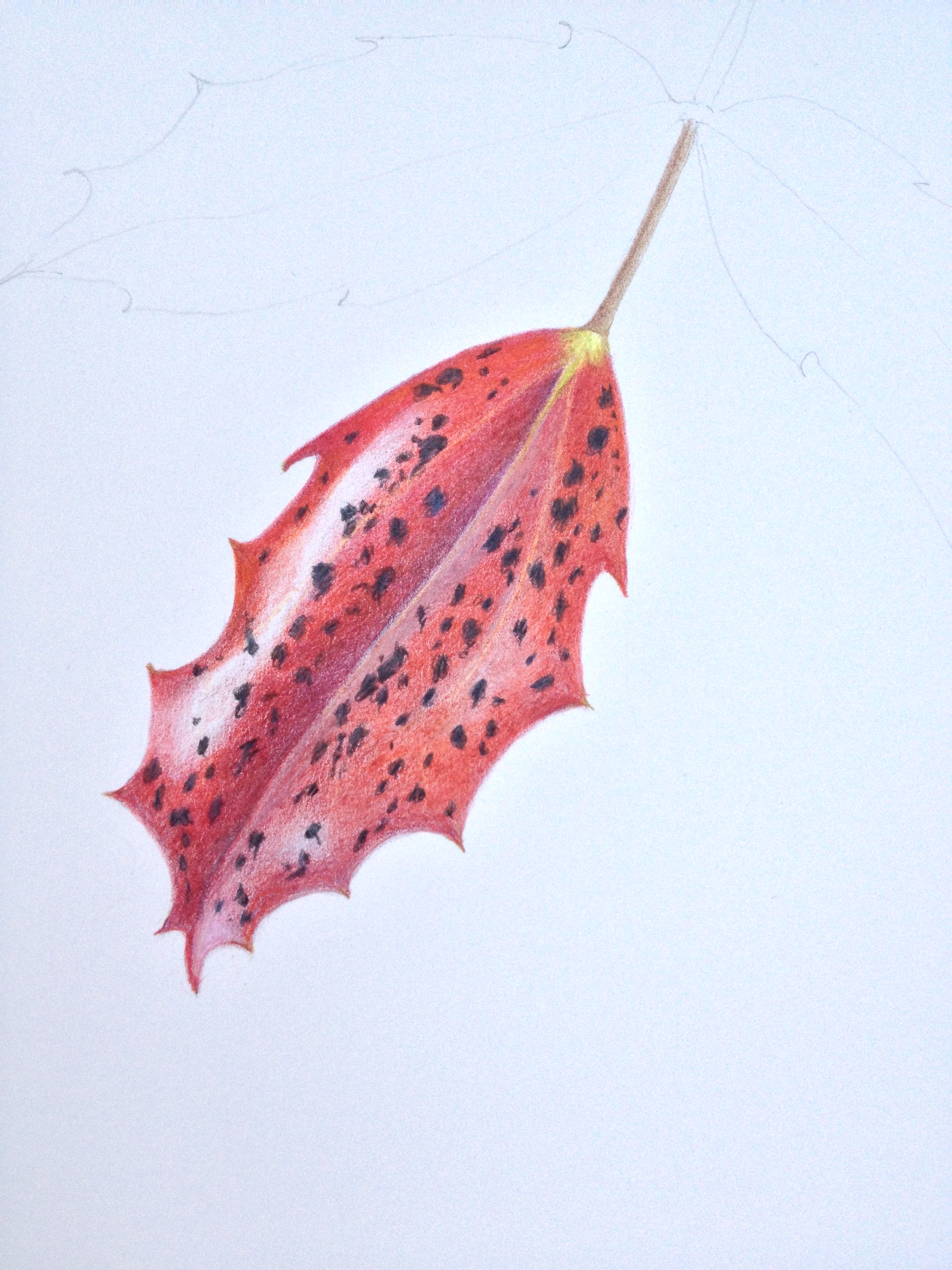
Mahonia
Mahonia
Horse Chestnut leaf
Horse Chestnut leaf

The last one shown below is the Honeysuckle. I think you might be able to understand the quandary the artist has when painting this picture. We are now in mid November, she has found this Honeysuckle still flowering, but knows that its days are numbered. In addition to the limited supply, she also wants to get done that part of the plant that is likely to die first – the flowers. This is typical of all botanical art painted from a live subject – what do you paint first and what is likely to change most?

In addition to this, if choosing to paint the flowers first, how much shading does one put into the flowers? If the dark leaves are done first, then the ‘hole’ left in the picture for the flowers is likely to need much less shading than if done without a dark background.

Painting white or very pale flowers on white is quite daunting. It is possible, but one has to make sure that the shading to create form, is not overdone. The problem is minimised if the pale flowers are against a dark background, or background of leaves. The hole you leave in the painting for the flower is a shape and therefore the problems of creating the appearance of three-dimensional form are reduced.

The form of a subject is created by light hitting the surface of the subject. Some areas will be exposed to light and some areas less exposed to light or very little light. Thus the combination of the flat shape of the object, and the tonal differences created by light exposure, give you form; and a means of identifying the object. Colour is another issue altogether.

In the case of this Honeysuckle, it was decided that a grey underpainting on the leaves would be done first so that the flowers would stand out as white shapes. Before the leaves are completed fully, the flowers will be completed delicately and the leaves finished afterwards. The bark will be finished last of all but I doubt that you will get to see that part of the picture.

Honeysuckle attached to Eucalyptus bark.

So, some more pictures from the Botanical art exhibition held in Palmengarten the botanical gardens, Frankfurt, Germany.


Artwork by Linda Pitt, Roberta Mattioli and Hazel Rush
Artwork by Nicki Tullett, Charlotte Linder, Rosemary Lindsay & Anne Lawton
Artwork by Barbara Munro, Charlotte Linder
Artwork by Sue J. Williams and Janet Pope

Autumn colour workshop – and Palmengarten

I didn’t realise, until everyone turned up for the workshop, that everyone was going to be using coloured pencil. This is the first workshop that I have had that is wholly coloured pencil – that is except for workshops that were only for coloured pencil artists. It was therefore celebrated!

Celebration of 'all' Coloured Pencil class, with fizz and of course water.
Celebration of ‘all’ Coloured Pencil class, with fizz and of course water.

We thought that we were to expect rotten weather, but it has been lovely. The weather inside was very good too.

All of the students really wanted to improve on their coloured pencil techniques and even on the first day I think that there will be some lovely results. You will see from the following picture that everyone is very willing to share knowledge and that makes for an even better workshop.

Two CP botanical artists sharing their knowledge.

I’m amazed at how much easier it is, as a teacher, to only teach in the one medium – as of course most of my workshops are suitable for both CP and watercolour artists. Additionally, all of the students had been to my workshops before and knew my routines. They were very good self-starters.

From the above, it would seem that I only teach people who can already paint botanical art. That is not so as even some of the people there today, started off with me and without very much knowledge of how to use coloured pencil. You have to start somewhere and as the classes are small I can give everyone the attention that they need – experienced or new beginner.

I mentioned on Monday that two of the students on that day were coming to my worksop this weekend. Here is their start today.

IMG_1674 IMG_1676

You will see their work again on Sunday.


In the meantime, Palmengarten is still on.

Artwork by Joanna Craig-Mcfeely, Yvonne Glenister Hammond and Jennifer Jenkins
Artwork by Penny Brown  and Bridgette James
Artwork by Penny Brown and Bridgette James


Artwork by Eiko Takano, Denise Heywood-Mills, Pat Regnart and Janet O’Connor
Artwork by Pat Regnart and Janet O’Connor

Palmengarten – Thursday week three

I hope that you realise why I’m titling the blog in this way. It is to let you know how long the Palmengarten exhibition is on and therefore how long before you miss the opportunity to go and see it. (That almost sounds like a double negative). Next week is the last week.

I have been working on the pamphlets to advertise the workshop 28 June to 5 July 2015 in Norway. I hope that it won’t take too long, but I am waiting on flight schedules for summer 2015 to Oslo Torp airport.

Tomorrow, and for the next three days I have a workshop based on the beautiful, autumn colours. It will be interesting to see what sort of subjects students will bring with them. I will of course show some of the results.

But back to Palmengarten.

IMG_0995.JPG
Artwork by Claire Ward, Rosemary Lindsay, Anne Lawton, Denise Heywood Mills and Gael Sellwood.

IMG_0987.JPG
Artwork by Maya Thomi-Luck, Gael Sellwood, Janet Pope and Penny Gould.

IMG_1051.JPG
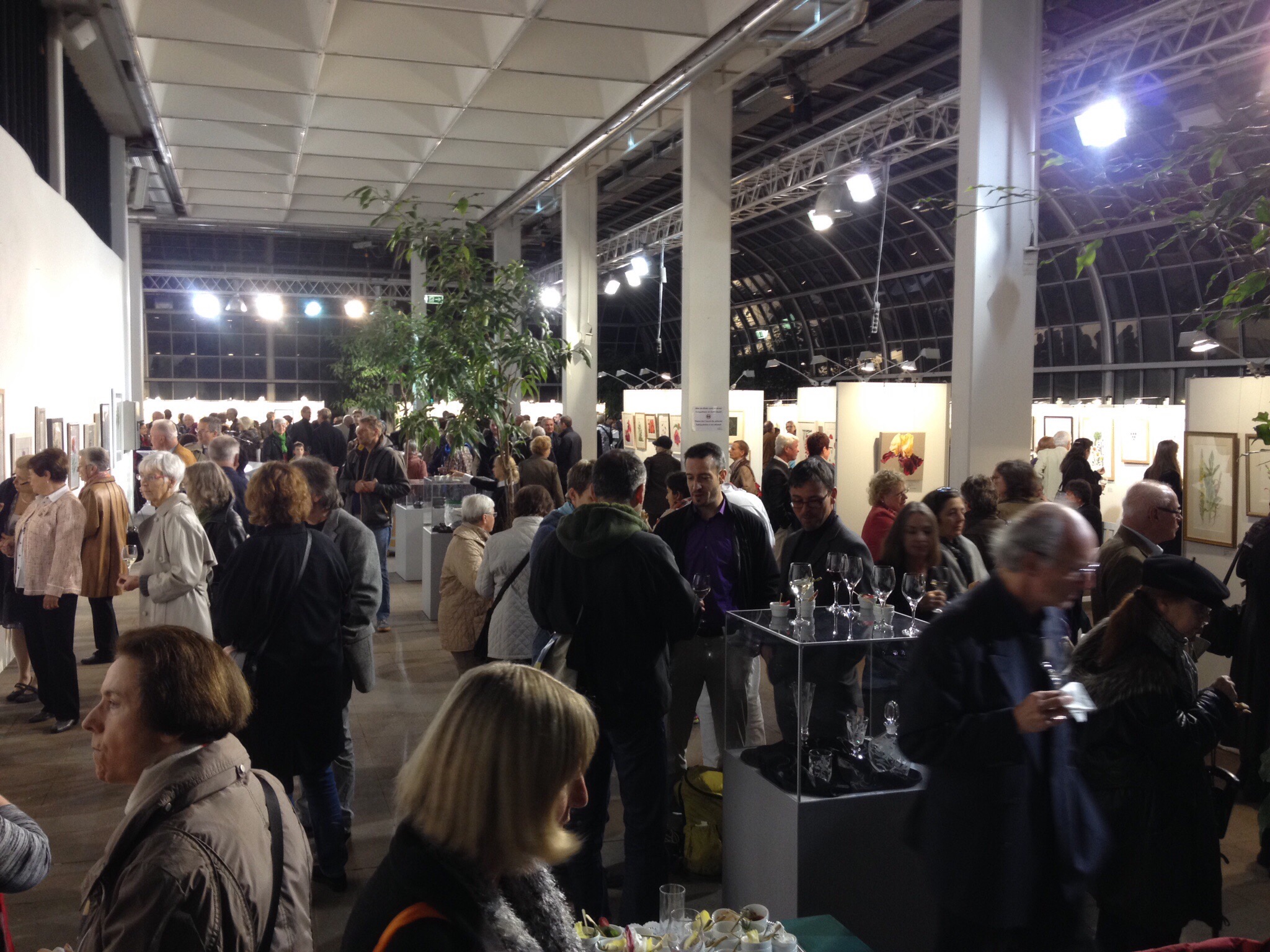
Milling visitors at the opening of the Palmengarten exhibition.

IMG_0755.JPG
Artwork by Maya Thomi-Luck

IMG_0752.JPG
Artwork by Penny Brown, Christine Flintham, Charlotte Linder and Sheila Etchingham

Palmengarten – Wednesday week 3

The Society of Botanical Artists had their Christmas meeting in London today. It is a time to meet other full members, associate members (those on the way to getting full membership) and Distant Learning Students.

It is a good time to meet and talk about what people are doing and for me, the opportunity to mention a little about Palmengarten and what will happen when the exhibition finishes at the end of November.

There is still the opportunity to go and see the exhibition in Frankfurt and it is worth seeing. I know that some SBA members are going to see it before it finishes.

Today I am posting a picture from today’s informal meeting. It was taken while member Brenda Green was entertaining us. As you can see, we all enjoyed ourselves.


Audience participation enjoyment

More photos from the exhibition. I do hope that you are enjoying them.

Artwork by Maya Thomi-Luck, Gael Sellwood, Janet Pope and Penny Gould
Artwork by Yvonne Edwards & Sandra Armitage
Artwork by Kath Baker, Vivien Burgess, Gillian Geary
Artwork by Penny Gould, Linda Pitt, and Gillian Geary
Ian Coulson preparing the table with the CV and visitor book.
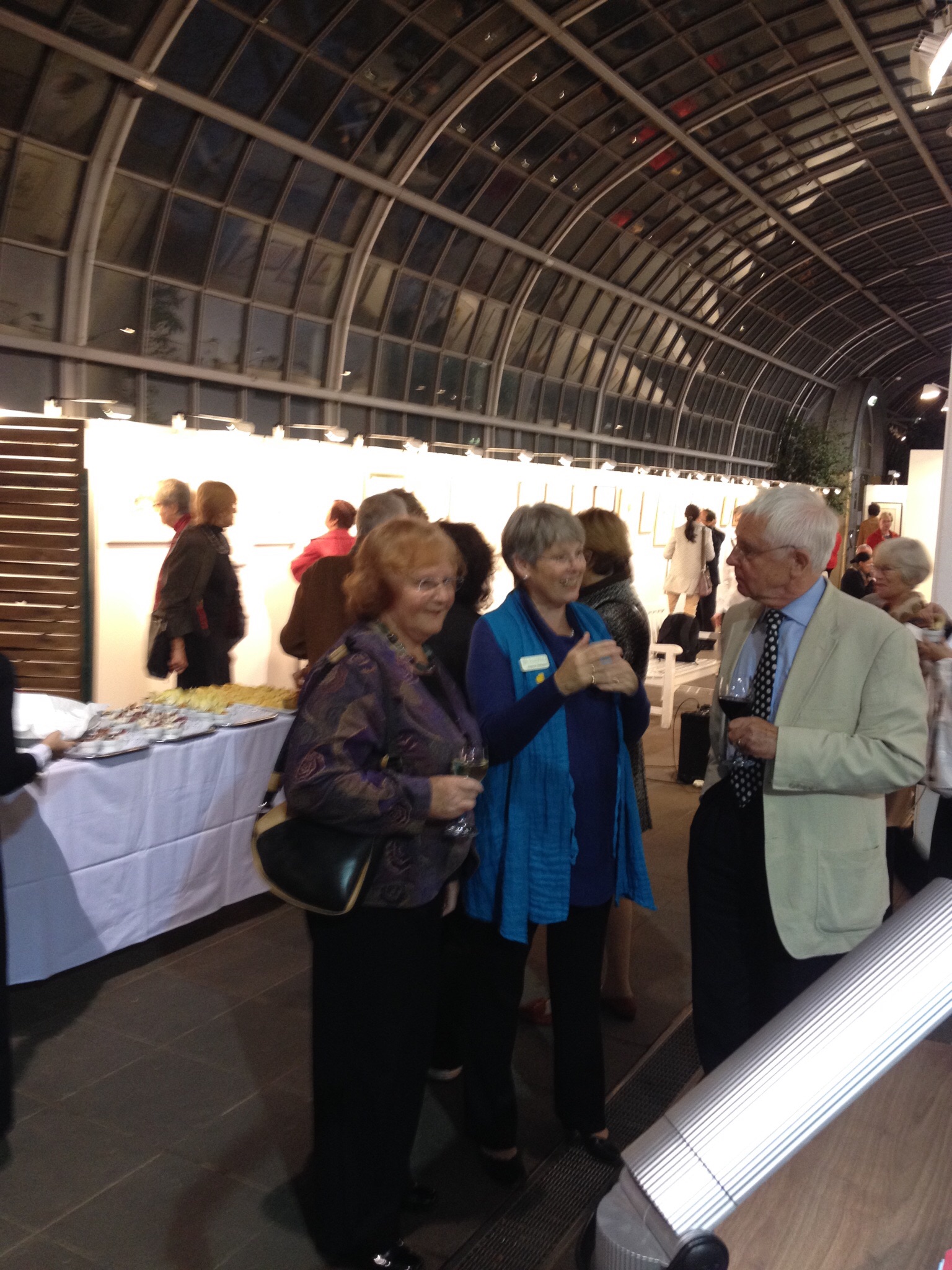
SBA member Alister Matthews at the opening in Frankfurt, with her husband.
SBA member Alister Matthews at the opening in Frankfurt, with her husband. ( and me of course).

Palmengarten – Tuesday week 3 (and botanical form tips)

Back to almost normal for one day. I had my weekly class today instead of tomorrow as we are going up to London for the SBA Christmas meeting.

A lot of the teaching today was based around form and observing tonal values relative to the light source. Sometimes students find this a difficult area, particularly if the surface area of the subject is very uneven and absorbs the available light.

It can sometimes help to use a substitute smooth shape, to work out the underlying tonal values and thus the form. For example, with a spherical shape there might be difficulties in determining where the light falls and what is in shade, depth of shade and areas of reflective light. One can use a ball as a substitute and cover it with cling film to make the surface smooth. This will in turn reflect light well and highlight differences in tonal values creating a clearer three- dimensional form. The complications of texture, patterns and colour are reduced during this phase and can be added once the shape and form have been established.

Palmengarten news. Sue has had a good day at Palmengarten with a lot of interest again both in the gardens and the botanical art exhibition. She was very relieved to experience that this evening the trains were at last running normally and she got home at an acceptable time.

There are three new green dots on pictures indicating that they have been reserved!

IMG_0952.JPG
Artwork by Sue Wickison

IMG_0984.JPG
Artwork by Sarah Caswell & Linda Hampson

IMG_0951.JPG
Artwork by Angeline De Meester & Sandra Armitage

IMG_0983.JPG
Artwork by Elisabeth Sherras Clark & Sue Wickison

IMG_0918.JPG

Society of Floral Painters (SFP) workshop day & Palmengarten

For a change I will tell you a little of what I have been up to today.

I mentioned a couple of days ago that I would be doing a fair amount of teaching this week. Today I did a workshop for the SFP. A couple of times a year they arrange workshops for members at a place called Bursledon just outside Southampton.

Bursledon is by the River Hamble and its Elephant Boatyard is on the site of the old ship building yards where Henry VIII’s fleet was built. But I didn’t get to do any sightseeing unfortunately.

The village hall where the workshops are held is very light and airy, but the light comes in all directions giving all round light. Difficult when you want to emphasise contrast and shadows creating form.

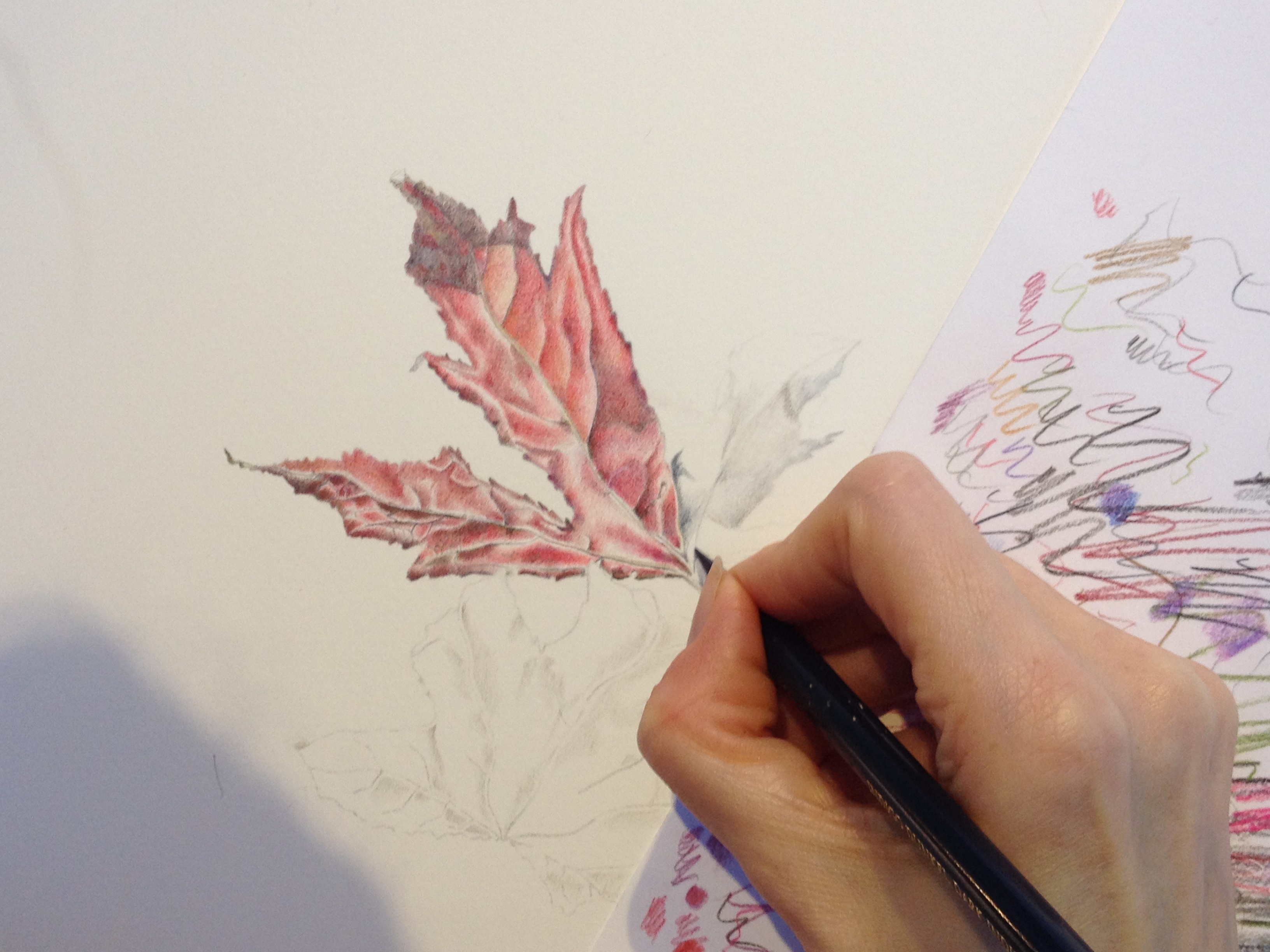
The topic of the workshop was Autumn Colours and the medium was coloured pencil. Some of the students were well into using coloured pencil in botanical art, some had played a bit with CP and some had collected the odd pencil and wanted to learn how to use them. We had only one day.

Because of time limitation (1 day), and unlike my usual workshops, I had to stay focused only on CP techniques, rather than the whole picture – initial drawing and composition. This meant that people had to have taken decisions about subject and composition before today, to be in readiness for laying CP.

I demonstrated the technique, answered questions and then let people put into practice what they had picked up from the demo and instruction. After that it was a question of going round and continuously checking progress, giving advice and solving individual issues.

I’m afraid that I only took a few pictures as I waited a little too late before remembering to take them. But there are two people from further west who are absolute gluttons for punishment, they got off on time, but are coming back for my three- day workshop at the weekend. I will definitely take photos of their results then.

Here are four of the results from today.

IMG_9617.JPG

IMG_9619.JPG

IMG_9621.JPG

IMG_9616.JPG

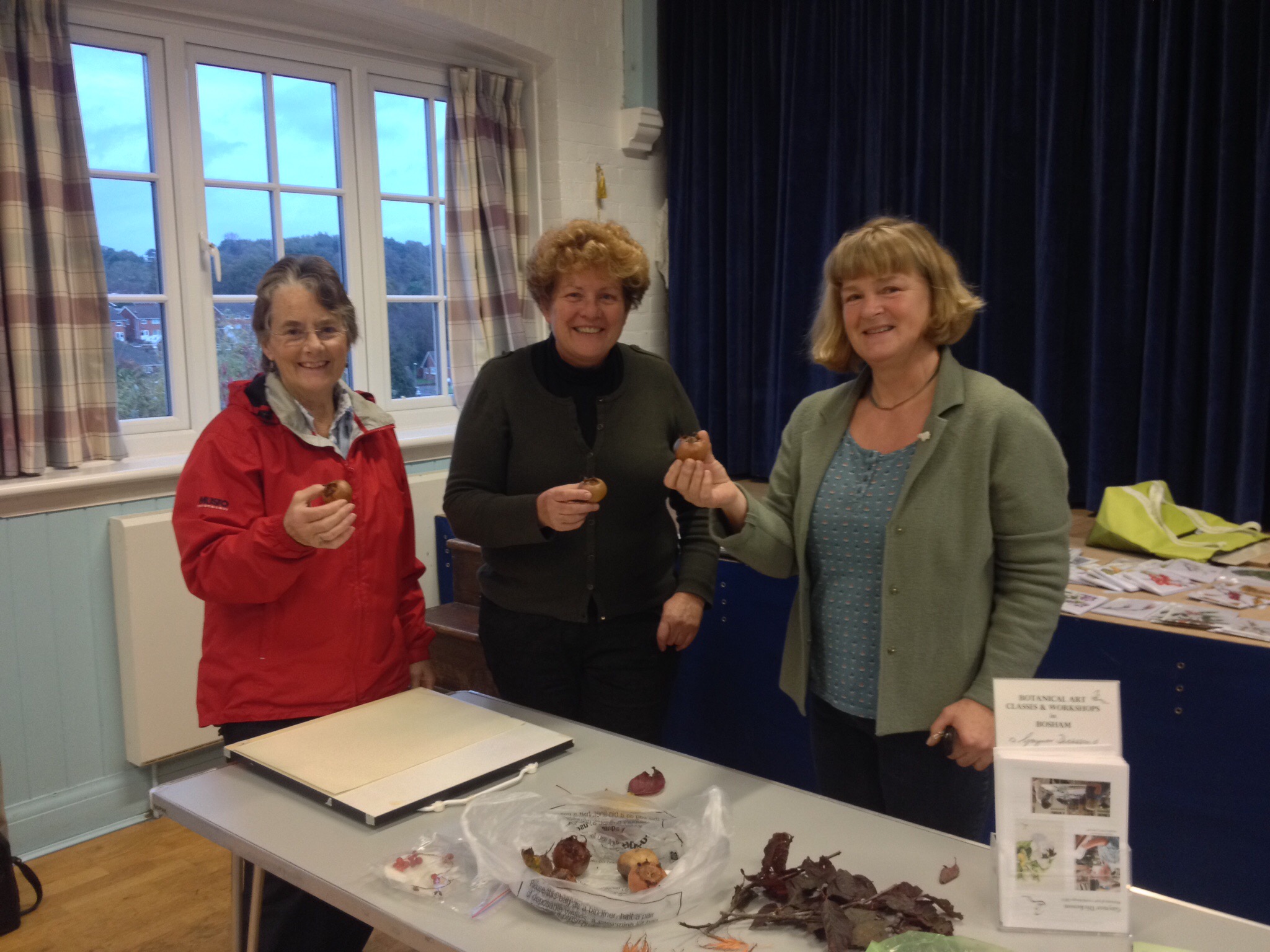
Don’t you think they are stunning? Three of the happy ladies (Maggie Roberts, Barbara Sampson and Ruth Roberts) considering if they are going to paint Medlar or not. I think that they were amazed that when painting subjects such as dead and dyeing leaves, you can really play with colours. They were so surprised to find out that dull brown also contains pale pinks, exhilarating magentas, delicate blues and of course vibrant reds and yellows.

IMG_9625.JPG

To finish off this blog a few more of the exhibition pictures at Palmengarten.

IMG_0946.JPG
Artwork by Sandra Armitage & Vickie Braithwaite.

IMG_0945.JPG
Artwork by Cheryl Wilbraham & Yuriko Kojima

IMG_0949.JPG
Artwork by Shevaun Doherty & Elisabeth Sherras Clark

Palmengarten – Sunday week 3

Sue Henon is at last back home after the train strike. Apparently it had completely paralysed Frankfurt – as well as the rest of Germany of course. The day before the strike happened, there was a mass exercise to find hotels in the city and if you weren’t early enough – too bad.

Speaking with Sue this evening, she told me just how empty the city was. Palmengarten always has a lot of visitors, but not over the last few days – that is until today. This of course affected the botanical art exhibition  as no-one came in to view the works of art. However, the emptiness gave Sue an opportunity to plan her next talk for a tour round the exhibition.

But today, although transport was not hugely reliable, life returned to Palmengarten and she was very busy. Two more pictures got red dots on them and hopefully things will be fully back to normal tomorrow. Sue is looking forward to her one day off.

Artwork by Caroline Jackson Houlston, Marion Wilson and Sheila Etchingham
Artwork by Sue Wickison & Simon Williams
Artwork by Yoriko Kojima & Victoria Braithwaite
Artwork by Janie Pirie & Libby Carreck
Artwork by Angeline De Meester & Billy Showell
Artwork by Angeline de Meester & Billy Showell
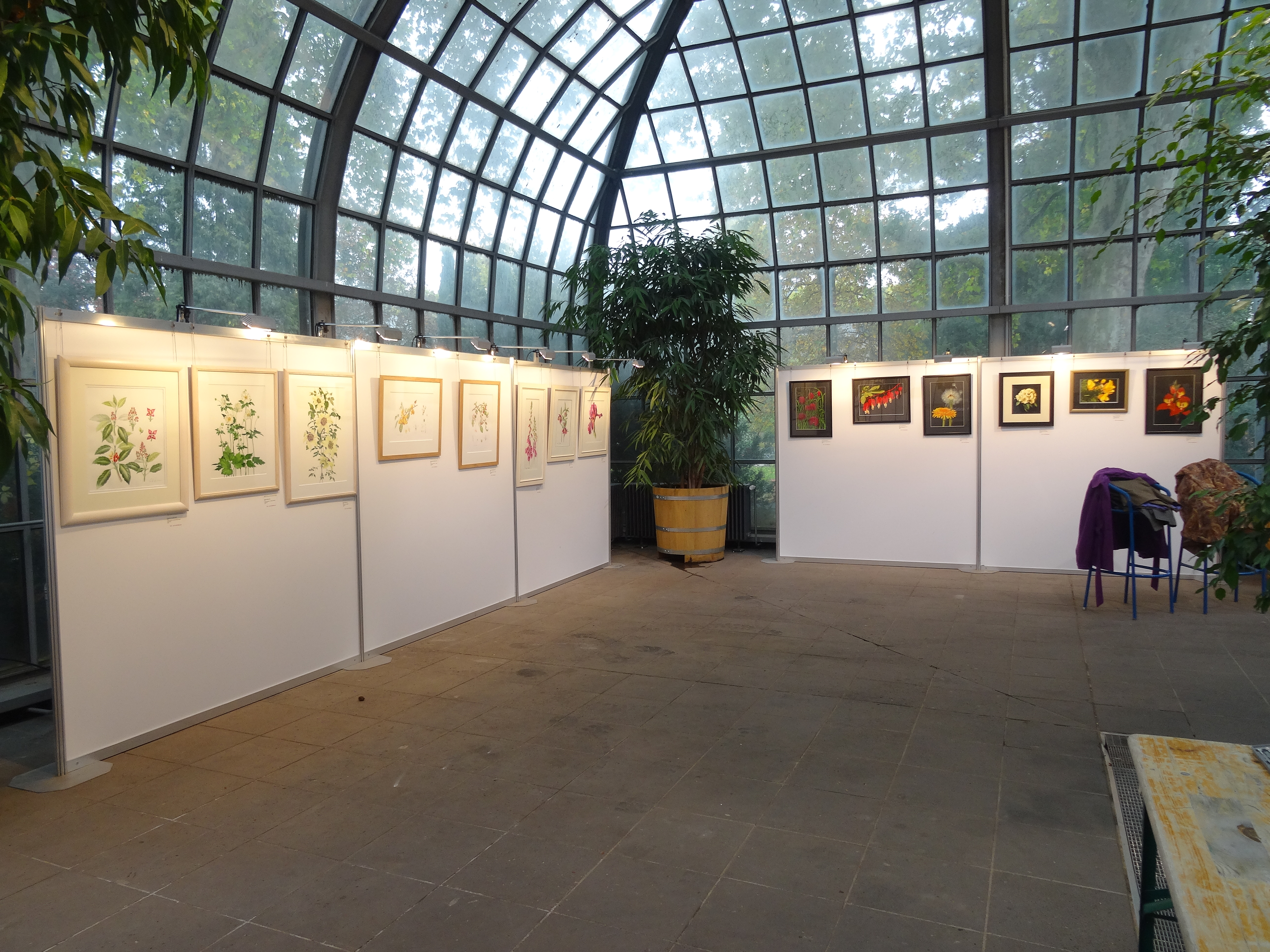
Yet another view of the Palm house on the morning of the Private view and opening, which was held that evening.

Palmengarten botanical art exhibition – 3rd weekend

What miserable weather we are having now – a reminder that winter is on the way. Only one week ago we had really warm weather – unseasonably so. It put us into a false sense of the cold and wet was still a long way away.

Now I have actually caught up with marking the assignments for the London Art College, so tomorrow I will have to catch up on other admin work as on Monday I am holding a coloured pencil workshop day for the Society of Floral Painters (SFP) just outside Southampton. When will I get back to painting?

I have moved my Wednesday class to Tuesday as I will be going up to London on Wednesday for the Society of Botanical Artists(SBA) Christmas meeting. Christmas!!?

Friday I start another three-day workshop on Autumn colours. I have one vacancy if anyone wants to fill that place let me know. Watercolour of Coloured Pencil.

More pictures from the Palmengarten exhibition? Here they are.


Artwork by Billy Showell
Artwork bySarah Wood, Amber Halsall & Sue Linton
Artwork bySue Linton & Jennifer Jenkins
Artwork byLisa Tomassi
Artwork byCaroline Jackson Houlston and Rosemary Lindsay,
A very unfortunate view along the other part of the L-shaped Palm House. Picture taken prior to setting up of Sales desk. Get a real idea from the picture shown in the blog 4 November.

Palmengarten – Friday week 2

Still no news from Sue at Palmengarten and none expected until Monday. But people are very obviously interested in the botanical art exhibition in the Palm House in Frankfurt. For those SBA members and associate members who sent in work for this exhibition, there is a lot of positive feedback from your pictures shown on this blog.

The Palmengarten exhibition title is ‘Poisonous and medicinal plants’. An item in the news today was very much in keeping with this and also a reminder as to the properties some of our beautiful plants actually have. It means that we can still see their beauty in our gardens, but some of these plants need to be treated with respect. That is where it is important to find out what we have in our gardens.

Apparently an inquest has heard about the death of an experienced gardener on an estate where there is Aconitum – common name ‘Wolfsbane’. There seems to be a possible association between tending the garden, symptoms and the death of the inividual concerned (you can tell I have worked with environmental exposure statistics – slightly different wording to the newspaper).

A quote from today’s Independent paper:

Tom Wells, from the Chelsea Physic Garden, said to the Times that wolfsbane was one of the most dangerous plants found in Britain’s gardens.

“The roots are where the highest level of poison is found, although it is still found in the flower,” he said. “If there were cuts on his hand, it would enter his bloodstream and affect his heart very quickly.”

In severe cases the poisoning causes heart arrhythmia, paralysis of the heart and respiratory problems. Other symptoms include vomiting, dizziness and diarrhoea.

We have three pictures of Aconitum in the Exhibition and I will highlight only those pictures in this blog.

Artwork by Eiko Takano. Title: Aconite napellus - Monkshood (watercolour)
Artwork by Eiko Takano. Title: Aconite napellus – Monkshood (watercolour)
Artwork by Caroline Jackson-Houlston. Title: Aconite lycoctonum - Wolf's Bane (watercolour)
Artwork by Caroline Jackson-Houlston. Title: Aconite lycoctonum – Wolf’s Bane (watercolour)
Artwork by Yuriko Kojima. Title: Aconitum japonicum - Torikabuto (watercolour)
Artwork by Yuriko Kojima. Title: Aconitum japonicum – Torikabuto (watercolour)

I wish that I had been able to take the photos without the reflection on the glass, because in reality all three pictures are very beautiful and the style of each artist is completely different.

Go and see the exhibition at Palmengarten, the botanic gardens in Frankfurt. It is well worth a trip.