Botany and botanical art is very exciting!

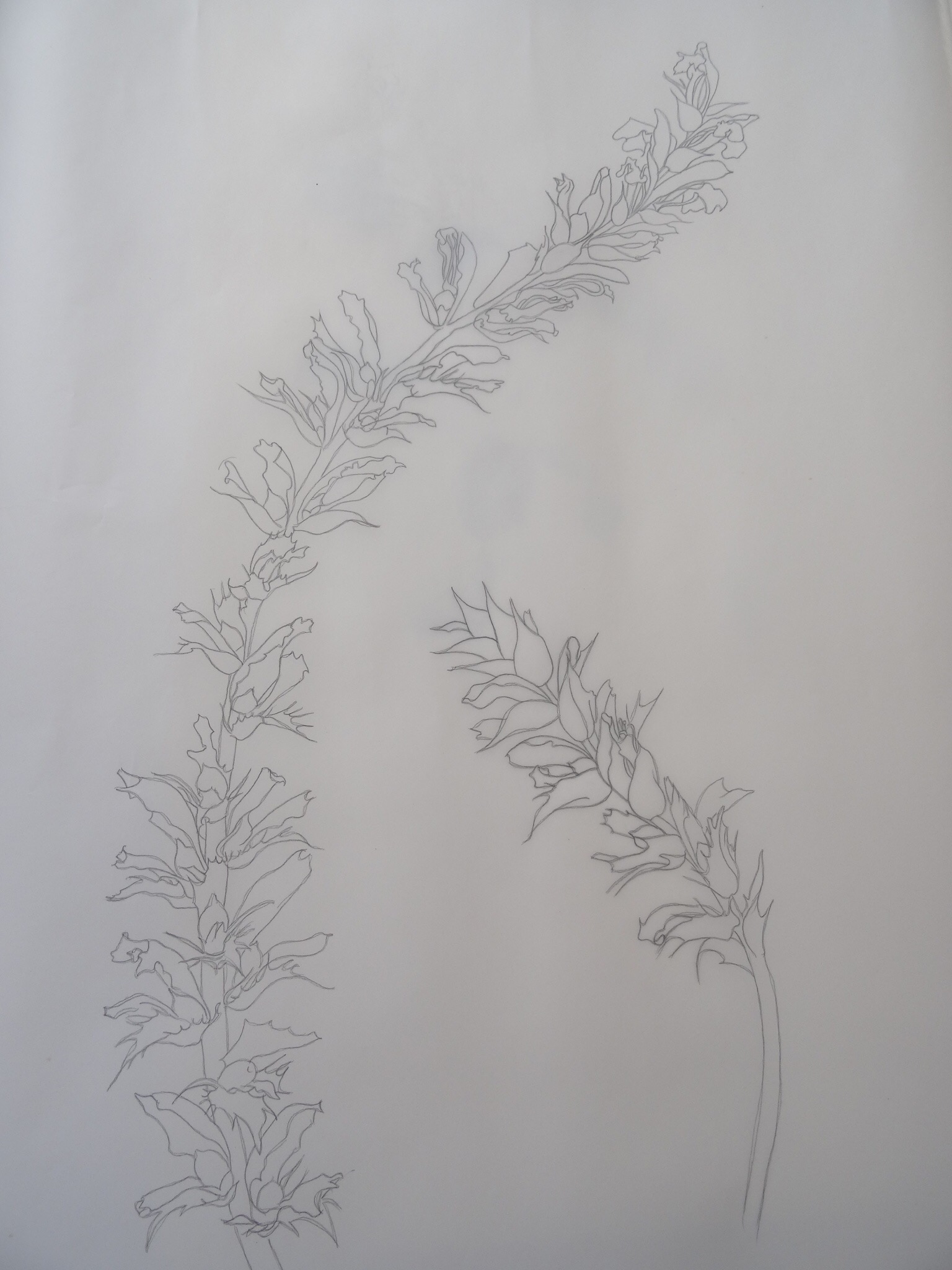
On Friday and again on Sunday afternoon after church I was able to continue with my Acanthus ( in case you wondered what my new picture was all about). I finished the sketch and transferred it to the paper I am using for the final work. A warning, the following picture is not the whole composition as it will contain a third element – hopefully. It is a large project, but hopefully it will go well.
IMG_8913.JPG

On Saturday my husband and I drove up to Leicester, visiting briefly the University botanical Gardens. But we also went to an IAPI meeting on Grasses. Now many of you might wonder what was so special about grasses – and I did too. But, with just one lecture and some amazing views through the microscope, I am converted.

There were so many different types for different types of habitat and temperature zone. They may look very ordinary, but up close they are absolutely beautiful.

Think of a colour wheel and pointillism. If you mix the three primaries, you get a grey shade, depending upon the mix. Optical mixing of colours means that you don’t mix the colours on your palette, but by placing colours side by side, your brain mixes the colours together creating a third colour.

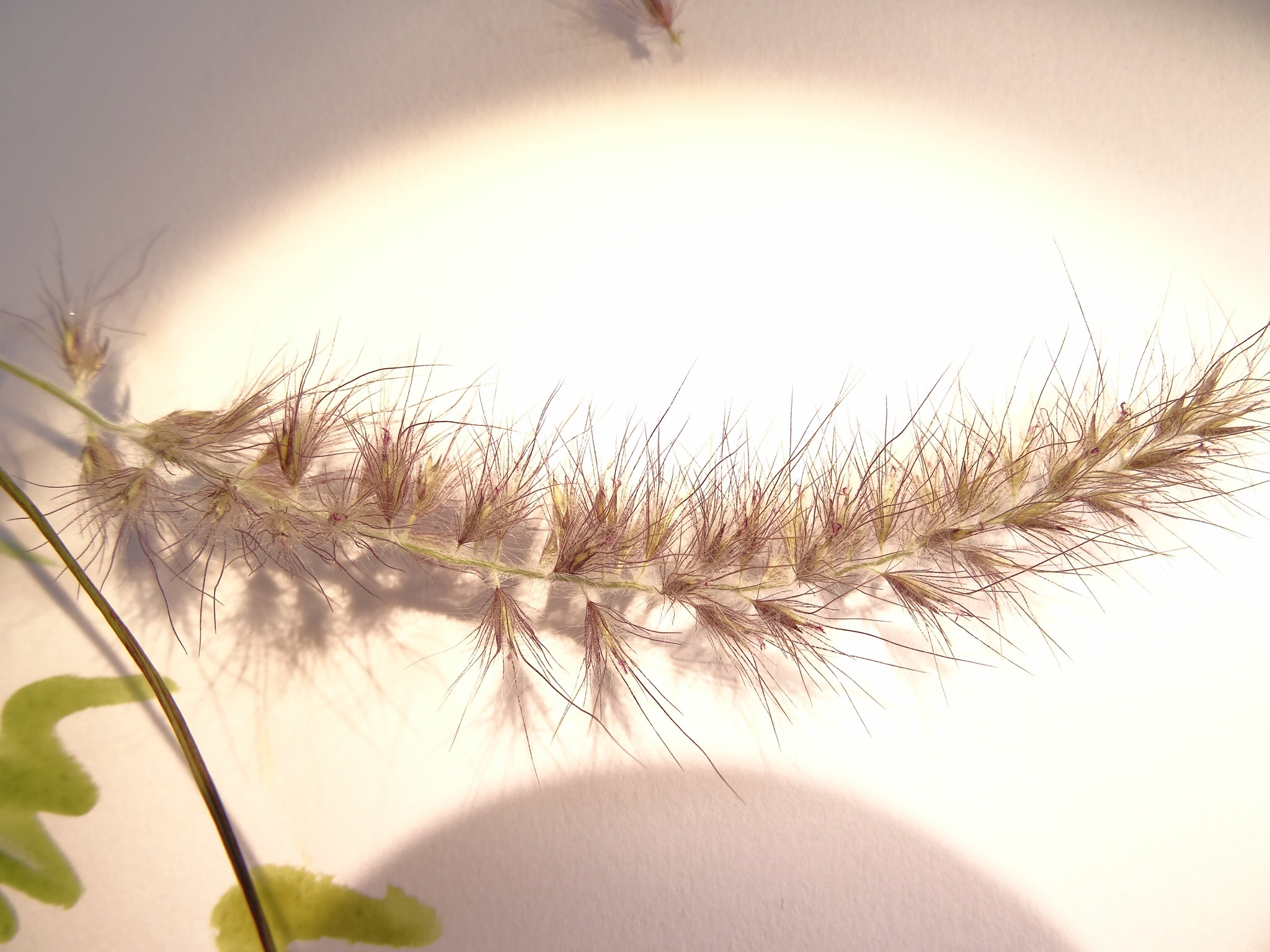
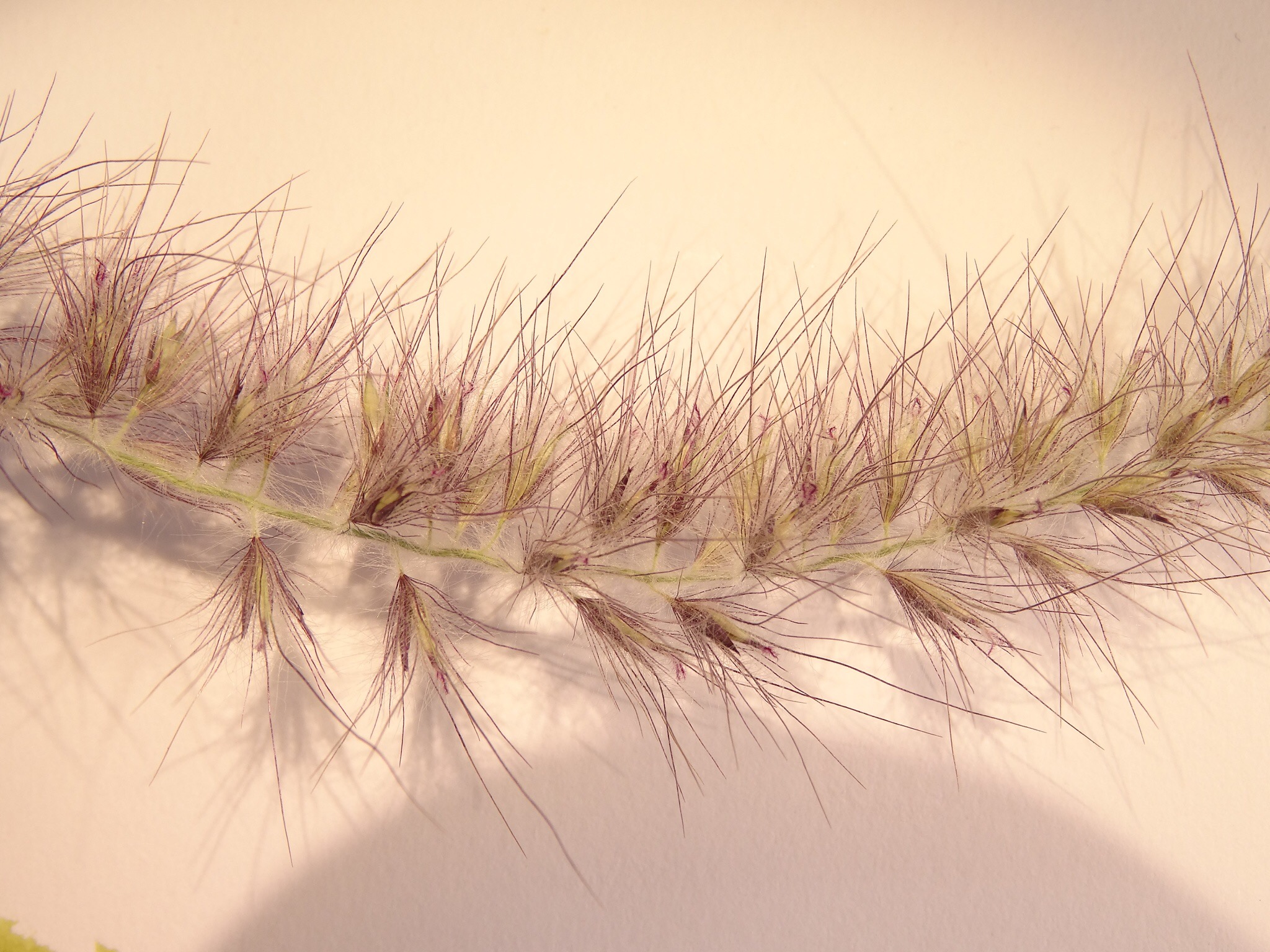
Now back to the grasses. When a grass is waving in the wind, depending upon the type, all you might see is a greyish or beige-ish colour in the frond. Well, at the height of the season, those ‘fronds’ are the ‘flowers’ (inflorescence) of the plant and contains the male and female parts.

I looked at these under the microscope and saw some tiny, really beautiful flowers. Most of all, the colours were amazing ( I know I’ve used the word again, but have to). The one I was looking at had wonderful reddish purple and green parts with the tiny style and stigma in purple sticking out of the tip. The colours glowed.

Unfortunately the pictures I have taken do not reflect the beauty that I saw under the microscope, but hopefully they will give an indication.

Back to optical mixing of colours. Bearing in mind the smallness of the inflorescence, even though the colours were individually very beautiful, they were small surfaces to the naked eye and therefore had the same effect as pointillism – the colours became optically mixed to a dull grey! Could this be natures way of protection?
IMG_8910.JPG

IMG_8912.JPG

IMG_8909.JPG

What do you think? I know the photo does not do the plant justice, but hopefully you can see the promise of the intricate and beautiful design.

A new botanical art project started.

On Saturday I will be travelling up to Leicester for the day to go to an Institute for Analytical Plant Illustration (IAPI) meeting, Grasses masterclass, at the University botanical gardens. I am looking forward to this as I have only just joined the group and this is my first meeting with them.

Monday will again be a very early start to arrive at Goodnestone Park Gardens in Kent for 09:30 in the morning. I am teaching at one of the Botanical art workshops arranged by Field Breaks and hugely looking forward to it. Goodnestone Park is a lovely place to do botanical art and the gardens contain a lot of subjects! Already I know some of the students and some use watercolour and others coloured pencil. I enjoy this mix.

But I have started another picture. I am still doing the initial sketch! But the final picture will be in pen & ink. I have another two-day workshop 1-2 October which will be pen & ink. How far I will get with this picture by the start of that workshop, I don’t know – but it will be useful having something on the go.

So far I have only started sketching it. Guess what it is!

IMG_8902.JPG

IMG_8901.JPG

The Dipladenia: Anything missing?

In between marking assignments and receiving pictures for the SBA exhibition at Palmengarten, the botanical gardens in Frankfurt, I have been painting.

Last time I suggested you find the part in the picture where I had made a mistake, but had rectified it.

Now I have three photos of the final work on the picture – I think!

Dipladenia picture: What is needed to balance the composition?
Dipladenia picture: Notice the difference? Does it work?
Dipladenia picture: Is it finished?
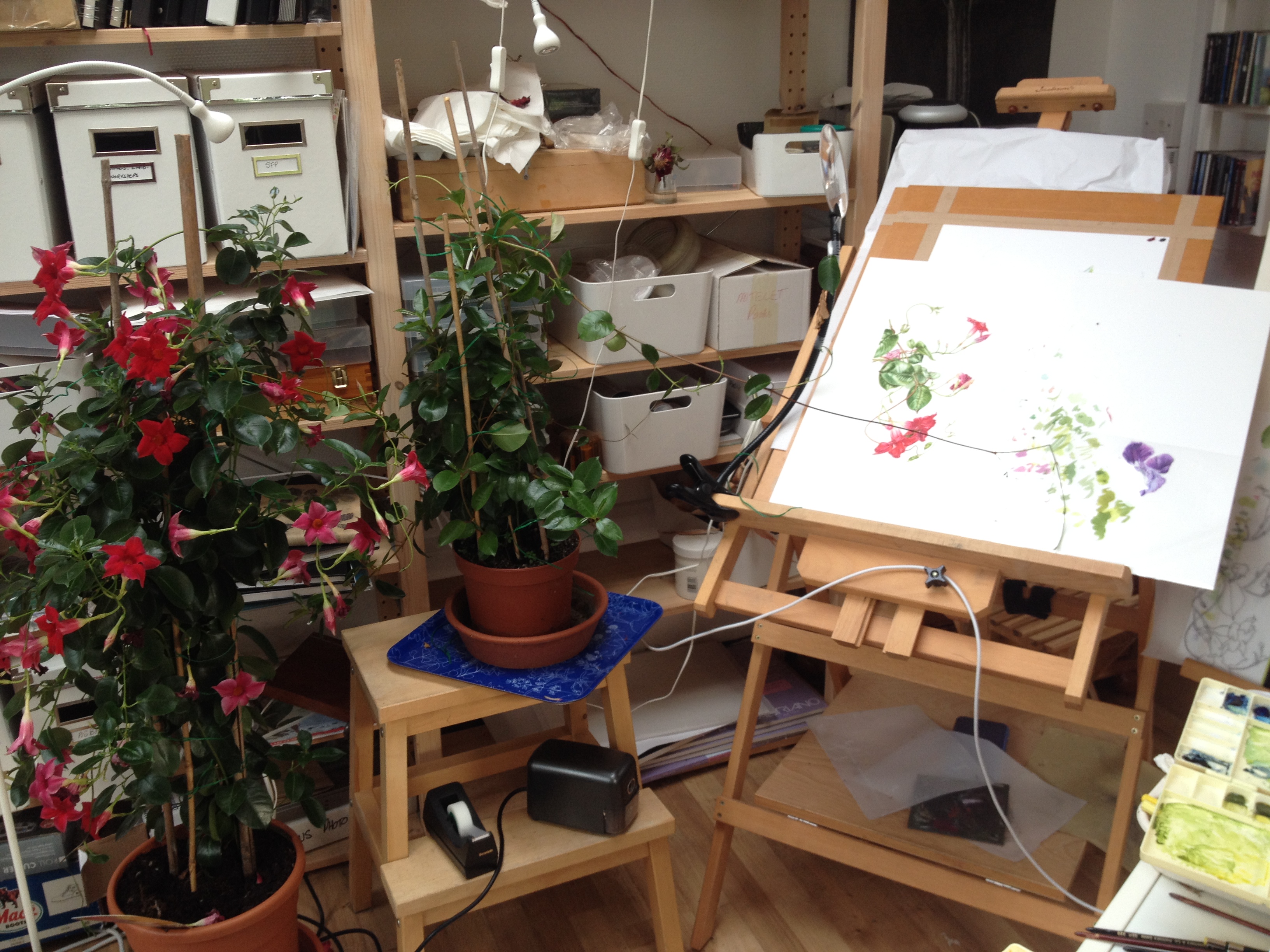
Part of my shed. The table looks as though a bomb has hit it, therefore hidden!

What to do with the plants now as it is poisonous. It nearly took the life of one of our cats and is very much a temptation to play with – as well as being very beautiful and exotic looking for our colder climate.

Dipladenia – again

I am now on my 6th attempt – I think. I’m losing count.

It is a while since I last wrote a blog and since then I have been trying to get my head around my temporary(!) lack of skills. I had decided to paint a Dipladenia plant for the Botanical art exhibition at Palmengarten, Frankfurt in October. The title of the exhibition is Poisonous and Medicinal plants.

Prior to going to Norway I had sketched out and gently started the picture. For those who may not know, the Dipladenia is as poisonous as Poinsettia. But it grows long tendrils and these are a temptation to a playful cat. Unfortunately I didn’t know how poisonous the plant was and I now know that when the cat suddenly became seriously ill before we went away, that in fact he had been poisoned by the plant.The trouble is it also seems to have had a negative affect on my painting skills.

The plant is now in the shed – well away from playful cats, and will be given away once the picture is finished. I will not give up.

This time I have reduced the design and have painted most of the flowers first. I suppose that is asking for trouble as I seem to get a blockage when I get to the leaves. I know what I want to do, but somehow there is a disconnect between my head and the messages sent to my hand and skills with the brush, pigment and water!

I am taking some photos as I go along.

Dipladenia flower 1
Dipladenia flower 1

First layer of the dipladenia flower. Note what looks like a heavy dark tracing. It is in fact not heavy and is traced in the method I have demonstrated in an earlier blog. Because no sharp tool, even a pencil is used to do the tracing, the graphite is easily lifted off completely with a putty rubber, leaving NO indent.

Dipladenia flower 2
Dipladenia flower 2

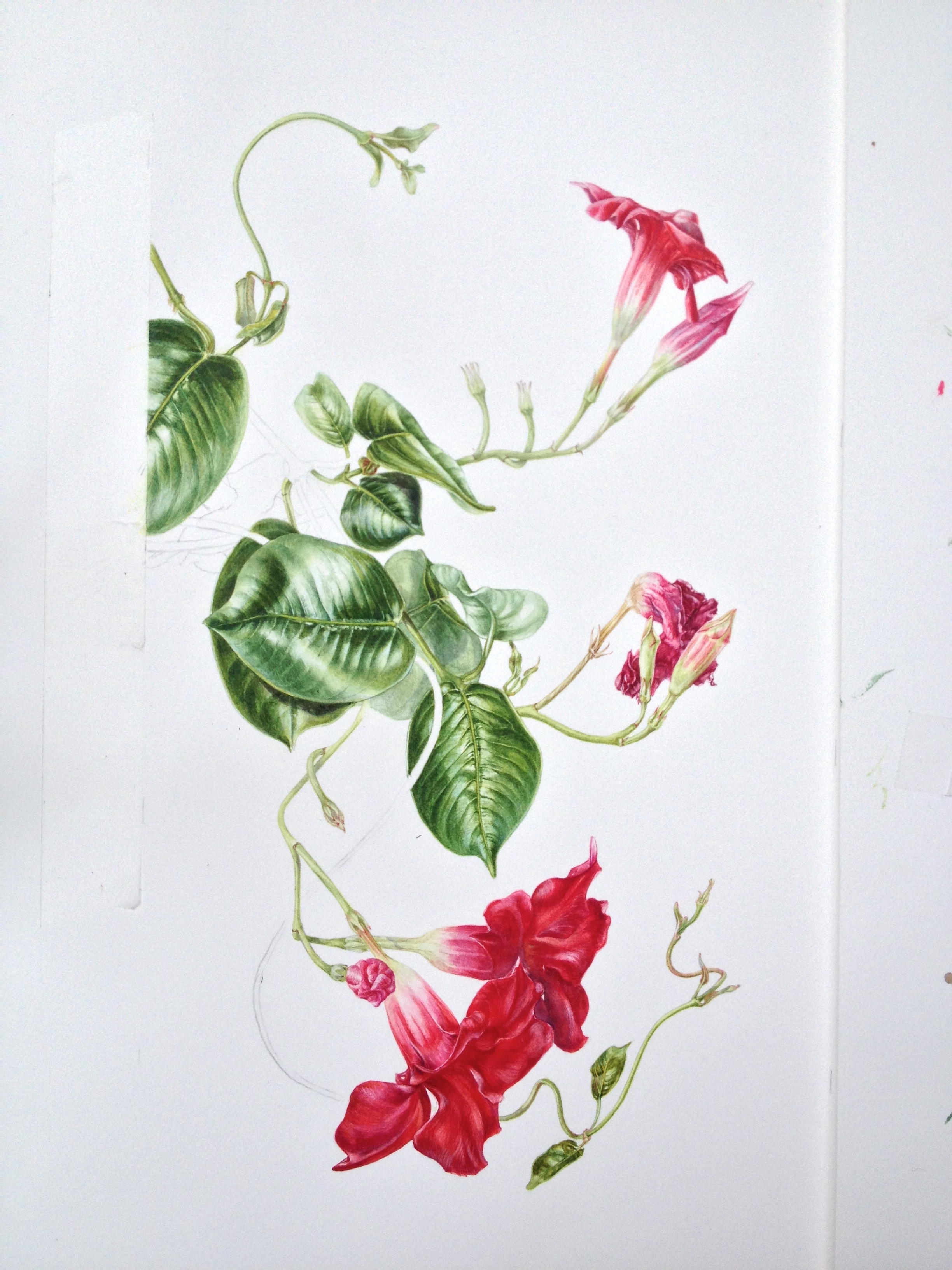
The layers of watercolour are almost complete.

Summer botanical art show and open studio in Bosham

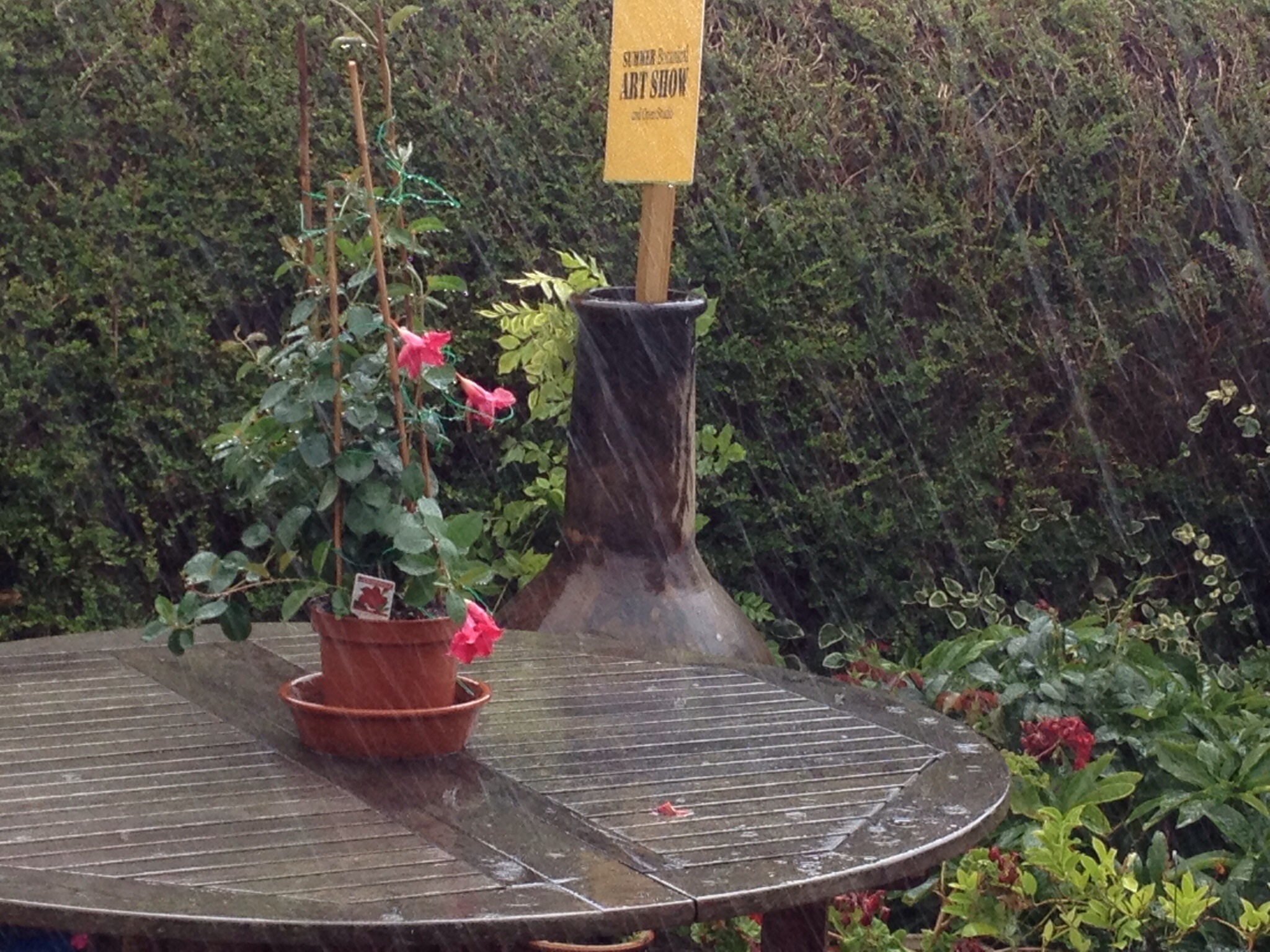
It’s raining,
It’s pouring,
The old man is snoring.
He went to bed,
And banged his head, and couldn’t get up in the morning!

Yesterday was beautiful and we had quite a few visitors. This exhibition and open studio is the one I normally have once a year for two weekends during Bosham’s Junior Week. Bosham is a sailing community and all events associated with sailing are very important.

For me, my open studio yesterday was successful in many ways as we had a lot of interested visitors. There is also evidence of a returning economy. But for the young sailors this week, the weather is awful. They want wind to sail – but not dangerous gusts as we are having now. Rain isn’t too off-putting as they get wet anyway. But sun is much better and the norm at this time of year.

How the remnants of Hurricane Bertha will affect the Open studio today I don’t know. It might mean that I paint undisturbed! But time will tell.

I will not show you pictures of my ongoing painting at the moment. I have shown you a little of it previously, but I think the photos were from my first attempt. I am now on my fifth and I have a severe blockage.

The picture is a Dipladenia. The flower is elegant and beautiful and the leaves soft and shiny. Think of Camellia leaves that for a change are very soft and shiny and with clear side veins. I know what I want to do and how I want to do it (watercolour), but the result is not how I feel it should be and I have now thrown aside four pictures. Had I put them all together the picture would have been finished.

People looking at the pictures cannot see what is wrong with them, but I can and that is what is important. But I’m now dreaming about it all. And I have a deadline. It is a picture that will go to Palmengarten this Autumn. I cannot be the one organising everything from the UK and unable to paint a picture!

Any suggestions?

Maybe I should stand outside in this very windy and very wet weather and have everything washed and blown away. I hope you can see what I mean from these photos outside the conservatory.

IMG_0718.JPG
a>

IMG_8684.JPG

IMG_8685.JPG

Botanical art workshop starting tomorrow

Tomorrow morning I will be having another botanical art workshop. The subject is roses.

People often think it is very difficult to paint beautiful roses, but think about how the petals are attached in the flower head. Use that knowledge to create a proper line drawing and tonal drawing, then add the colour.

I am glad to say that as the weather has been a little cooler the last few days – and cloudy, there are still quite a few roses of differing levels of difficulty ready to be plucked to have their portraits drawn. It will be interesting to see which roses the students will choose. Watch this space to see the progression of some of the work.

Today I have spent most of the day on work in relation to the SBA exhibition in Palmengarten, Frankfurt in October. There is a lot of preparation in organising the collection and exhibiting of work from across the whole of the UK, Ireland, USA, New Zealand, France, Germany and Japan at Palmengarten. But it will be a fantastic exhibition with so many SBA members taking part.

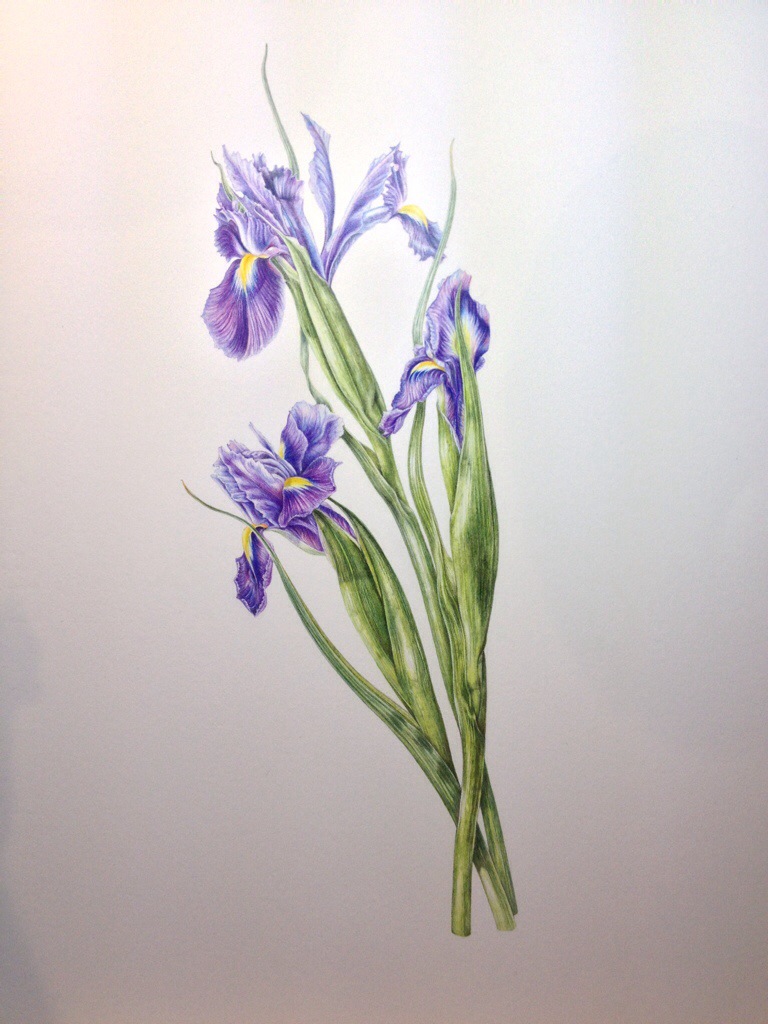
I had hoped, to finish the Irises painting in coloured pencil yesterday, but think I have completed it today. I don’t feel the colours come out so well from a photograph, but will be better and easier to show online once I get time to match them on Photoshop.

20140616-233108-84668847.jpg

Stansted Park Garden Show – the night prior to setting up.

It is 12:57 in the morning. My husband Robin has put his foot down. It’s time for bed.

This morning I had my last weekly botanical art class until the students return in the Autumn. This year they were positively dismayed at the idea of not having a weekly class again until then. I felt guilty.

After everyone had gone I caught up on emails about the Autumn botanical art exhibition being arranged between the SBA and Palmengarten in Frankfurt. Apparently the forms I had taken so long to do so that they could be filled out online, didn’t quite work! I had to sort that out and resend them – having tested them thoroughly this time. At least I’ll know how to do it another time.

At last I could get on with packing things to take to Stansted. Of course, I thought that I had a handle on everything and that it would go smoothly. How many small things (and not so small) one can forget! I have a list for tomorrow morning as I wasn’t allowed to do it tonight.

At the last moment we ordered a new hanging system with the hope that it will arrive early. My husband also went out and bought two folding tables rather than taking good ones. Last but not least he also bought some plastic sheeting to put over the stand at night in case there are any horrendous downpours that find leaky points in the marquis.

Robin has got the stand itself into the car already and all that remains to pack in the car is this lot – plus some, and not forgetting my easel and a chair, and another table, and……………

20140605-012014-4814234.jpg
As you see one of the cats has started wondering if we are moving!

Don’t forget, the Garden Show is Friday, Saturday and Sunday.

Demonstration at Society of Floral Painters in Chichester

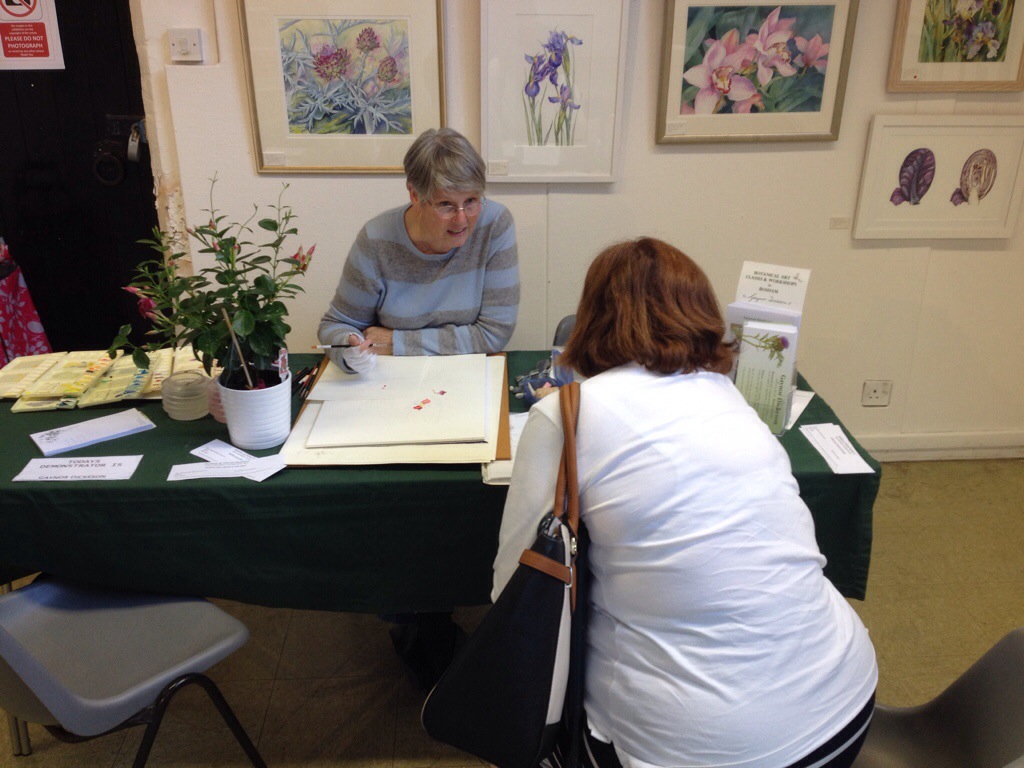
Following a lot of preparation on composing and drawing a new botanical art picture, I spent the day starting the watercolour painting as a demonstration for the SFP.

The day dawned sunny and warm; the first nice day for a while. Watching the weather forecast as I write this, it reverts to cooler and wetter weather for a few days! Has spending the day inside demonstrating botanical art been worth it?

I am told that the SFP exhibition at the Oxmarket in Chichester, has attracted a lot of visitors. Visitors who I spoke with today, found the exhibition to be very interesting and many were amazed at the variety of floral painting; from very loosely painted Irises in oil, through the tighter botanical art, to strict botanical illustration. There is something there for everyone.

From previous experience, I knew that even though warm outside it can be cool sitting and demonstrating. I was well prepared. We didn’t have huge numbers of visitors and I am told that Sundays do not seem to attract the crowds. However there were quite a few people interested in my demonstration and I was able to talk a little of what I was doing.

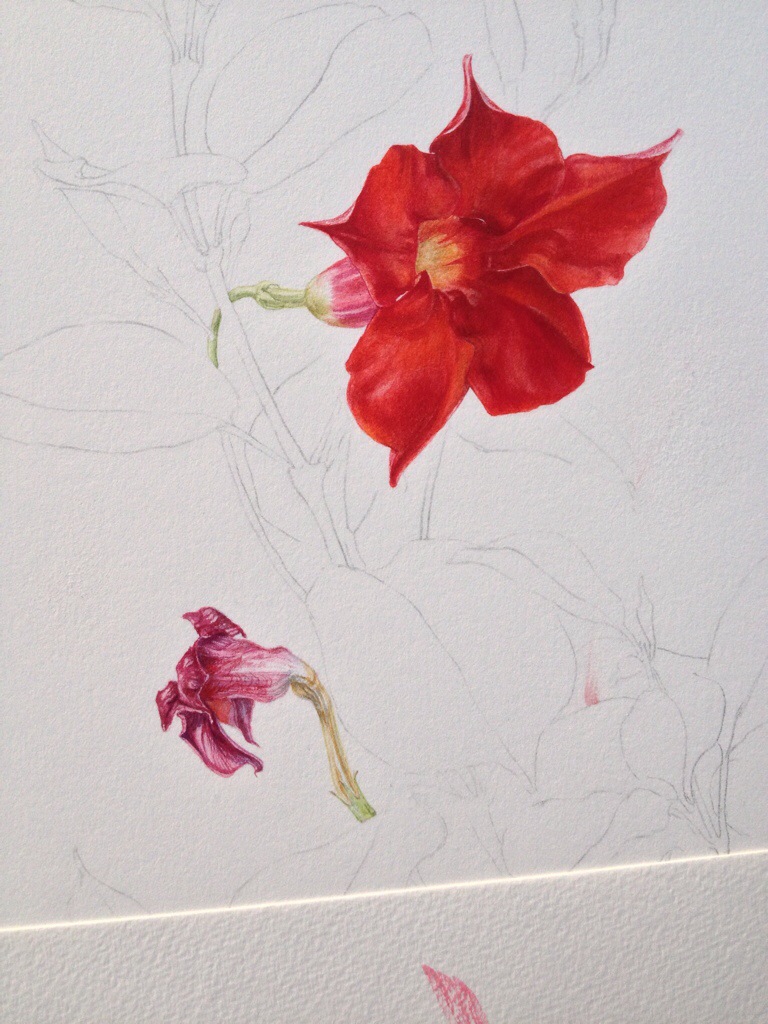
The following is pictures from today finishing off with what I have done so far. The plant is a Mandeville, or Dipladenia.

20140602-000931-571714.jpg

20140602-000932-572696.jpg

20140602-001005-605837.jpg

Tomorrow I will be catching up:
– with London Art College assignment marking;
– preparation for the exhibition in Palmengarten Botanical gardens in Frankfurt, Germany. A joint exercise between Palmengarten and the SBA. My husband and I receive botanical art from across the UK and take it over to Frankfurt in October for the exhibition;
– preparation for the Garden Show at Stansted House (http://www.thegardenshowonline.com/gardenshow_stansted/) this coming FRiday, Saturday and Sunday. We have a stand there for the first time. Do come and support us. I intend to demonstrate some more.

Botanical art workshop today – demo tomorrow.

The last day of this workshop was today. The sun shone for most of the say and obviously affected positively everyone in the room.

The workshop went well. The students seemed to be satisfied with both some of the things they had learnt, as well as what they achieved. To top it all we had a lot of fun. There seemed to be longish periods of almost silence, interspersed with hilarity.

A good workshop from the point of view of the tutor (me), but in the end everything depends on what the students got out of it.

Have a look at some of the results.

20140601-003420-2060367.jpg

20140601-003421-2061136.jpg

20140601-003419-2059491.jpg

The next workshop is Tuesday 17th until Thursday 19th June and is all about beautiful roses. How difficult can they be? Not so difficult once you are given tips in what to look for in your subject; and how to translate this onto your paper. Do get in touch if you can join me.

But tomorrow I will be demonstrating at the Oxmarket Art Centre, for the Society of Floral Painters (SFP). This time I will be demonstrating watercolour.

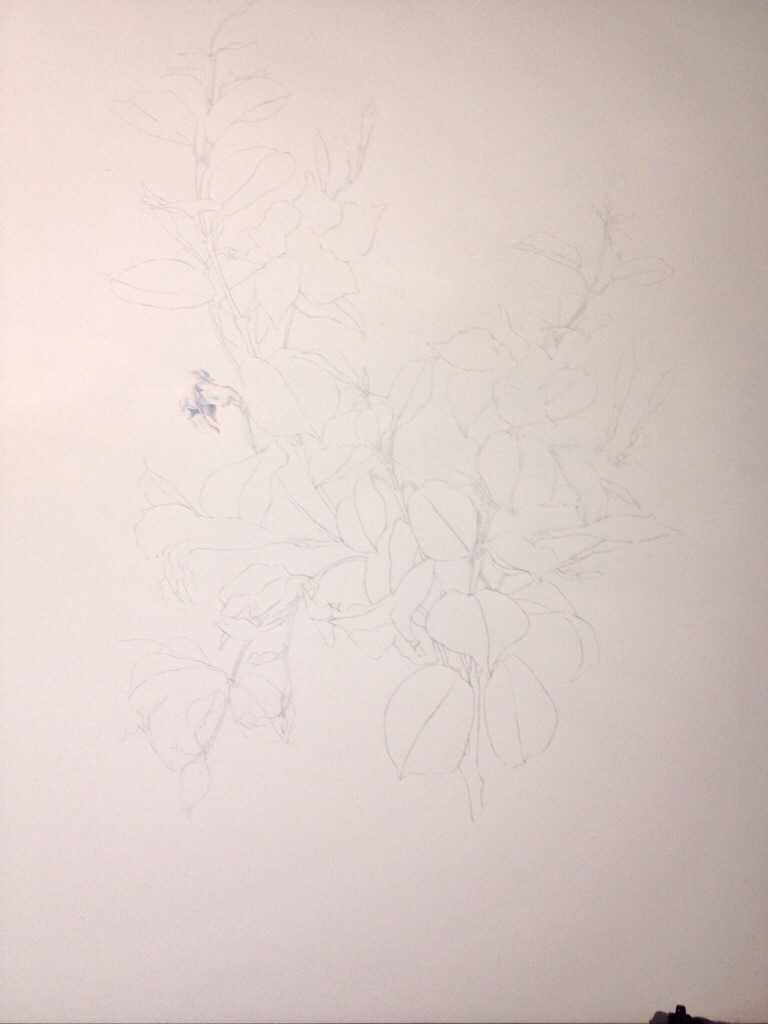
Over the last three days whilst discussing composition and drawing, I started off my composition as an example for the students today and for the demo tomorrow. My next picture has taken three evenings to draw. It is a Mandeville plant. It is quite a complex composition because of the growing habit of the plant – which needs to be shown.

My students from the last few days all wanted to come back to Chichester to see the demo, but unfortunately live too far away to be able to drop in. I promised that I would use the blog to show them how the picture develops.

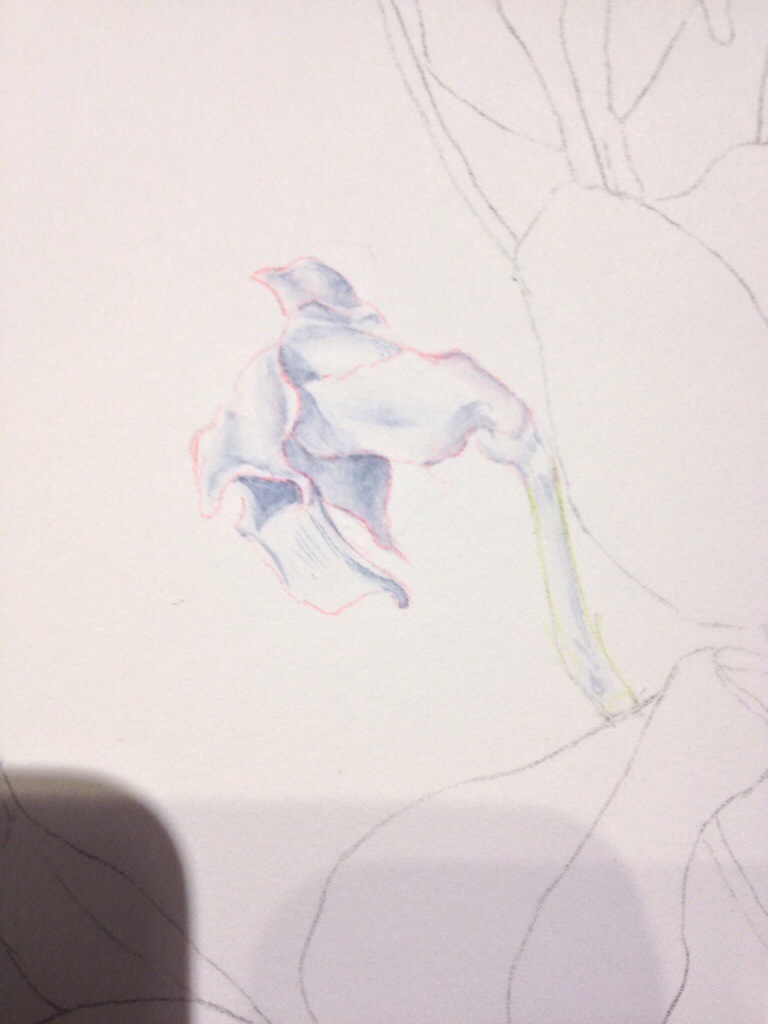
These are the the first two photos, but I am not sure whether you will see clearly enough the drawing in the first one. The second shot is the tonal under painting of a dying flower.

Hopefully one of the many buds will open tomorrow so that I can do one of the spectacular flowers.

Come and see the demo at the Oxmarket, Chichester 11:00 – 16:30.

20140601-010130-3690718.jpg

20140601-010131-3691656.jpg